
European River Sojourn, July 2026
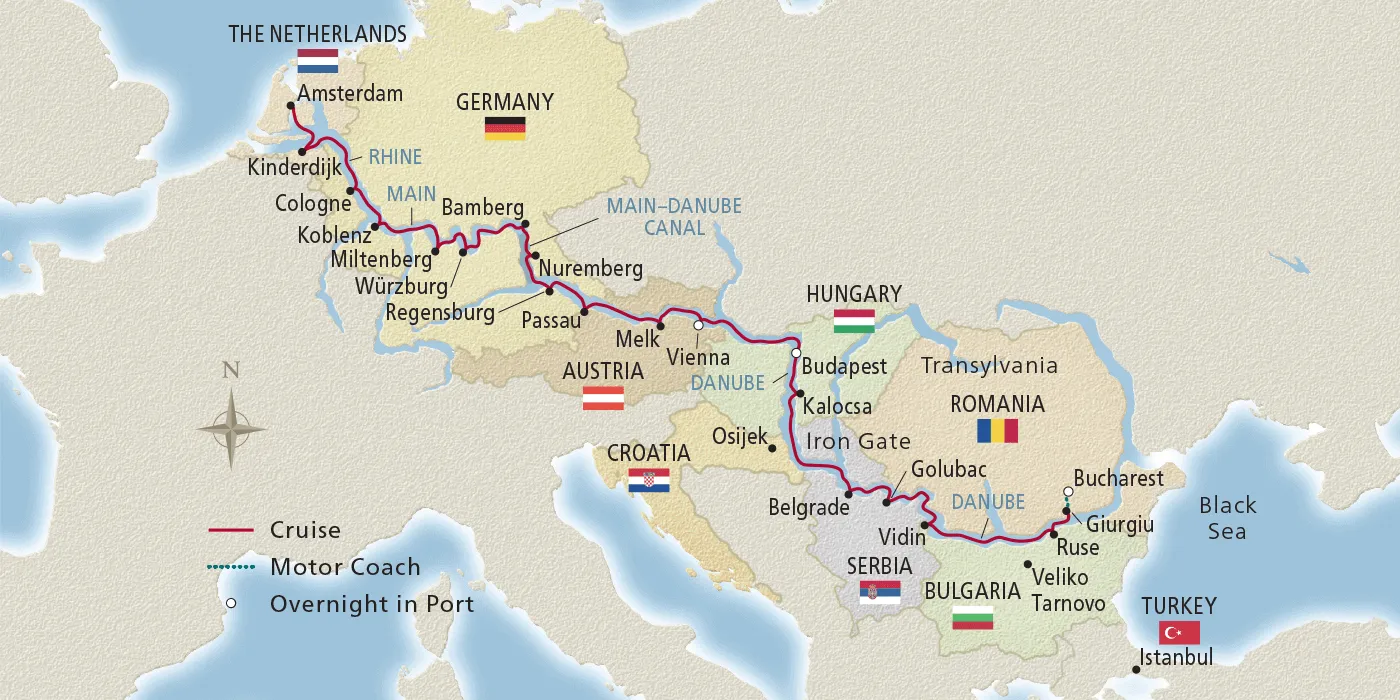
We are now on a
27 day Viking
European River Sojourn
from Istanbul, Turkey
to Amsterdam, The Netherlands
After spending 3 days in Istanbul, we fly to Bucharest and board our ship.
We will cruise down the Rhine,
Main and Danube Rivers, taking two dozen shore
excursions along the way, ending up in Amsterdam. We
will explore the very heart of central Europe.


July 3, 2026
Leave Orlando and fly
to Istanbul, Turkey
Day 1
Saturday, July 4
Istanbul
Today we arrived in Instabul, went to our hotel.
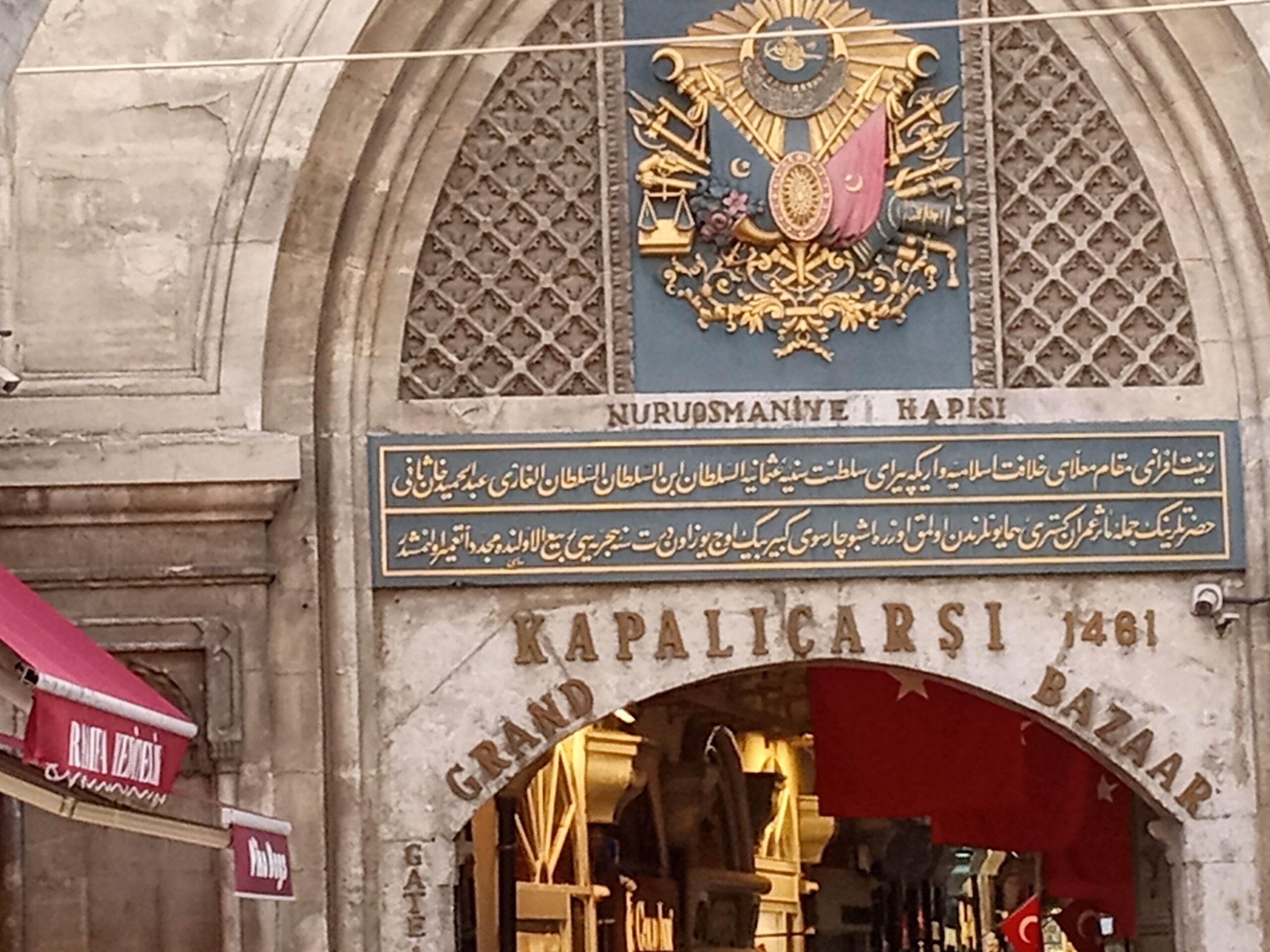
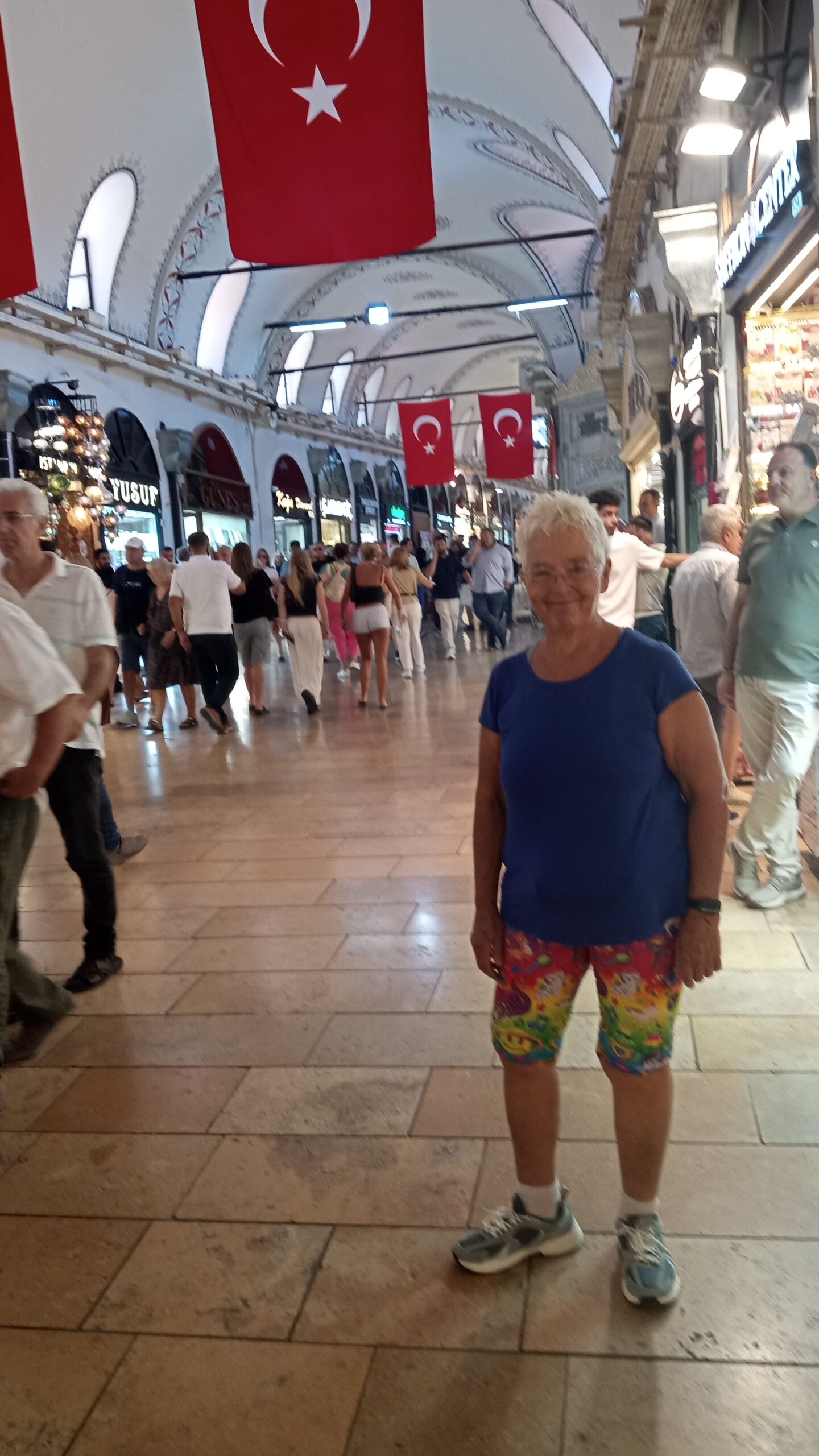
After check in, we took a cab to the Grand Bazaar.
We spent 2 hours walking around, seeing hundreds of
different kinds of shops in the enclosed bazaar.
You name it, they had it. Candy, clothes, jewelry, rugs,
spices, Turkish treats – with free samples – and more.
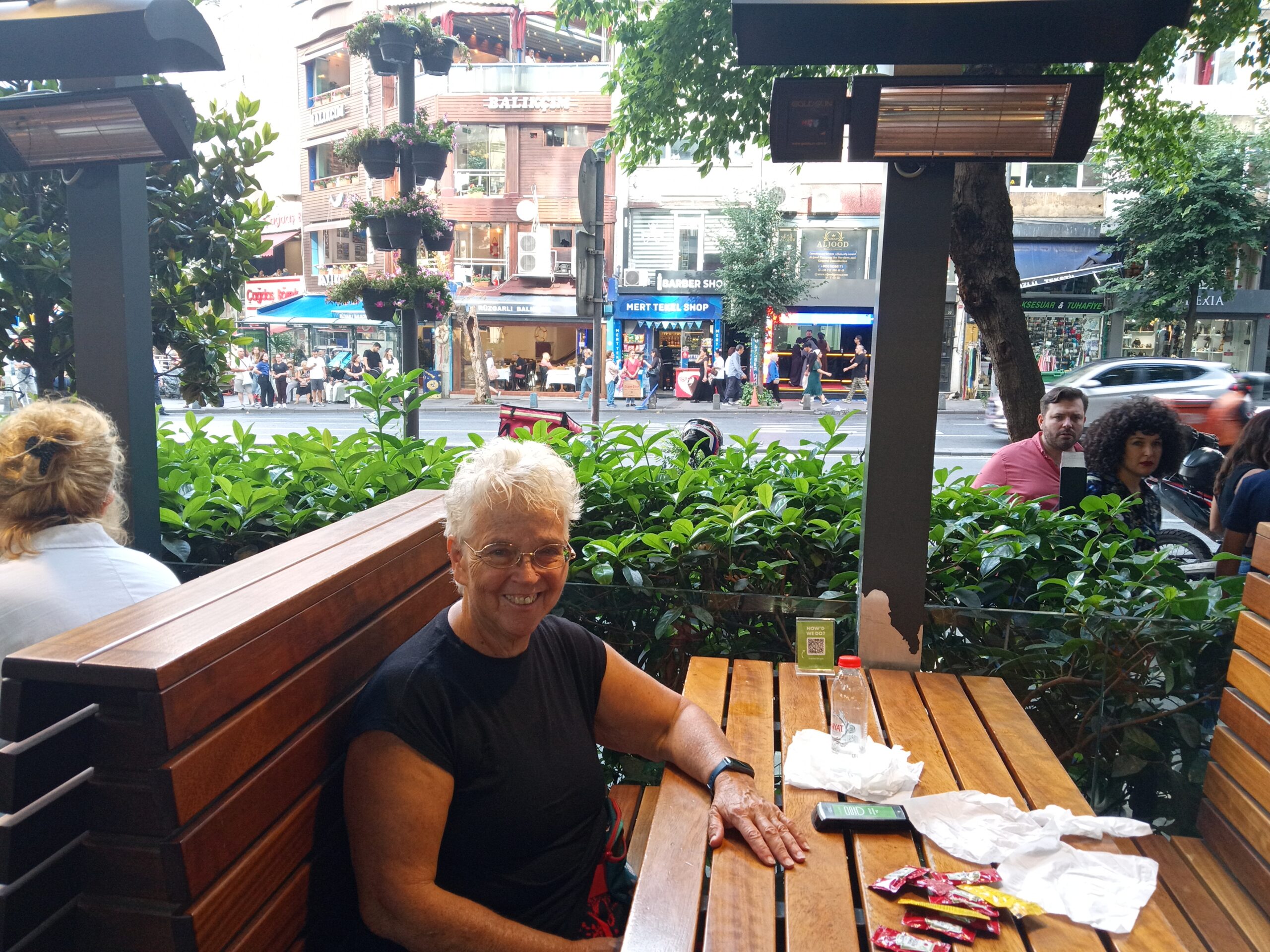
For dinner, we ate at a hamburger joint in Istanbul.
Day 2
Istanbul, Turkey
Sunday, July 5
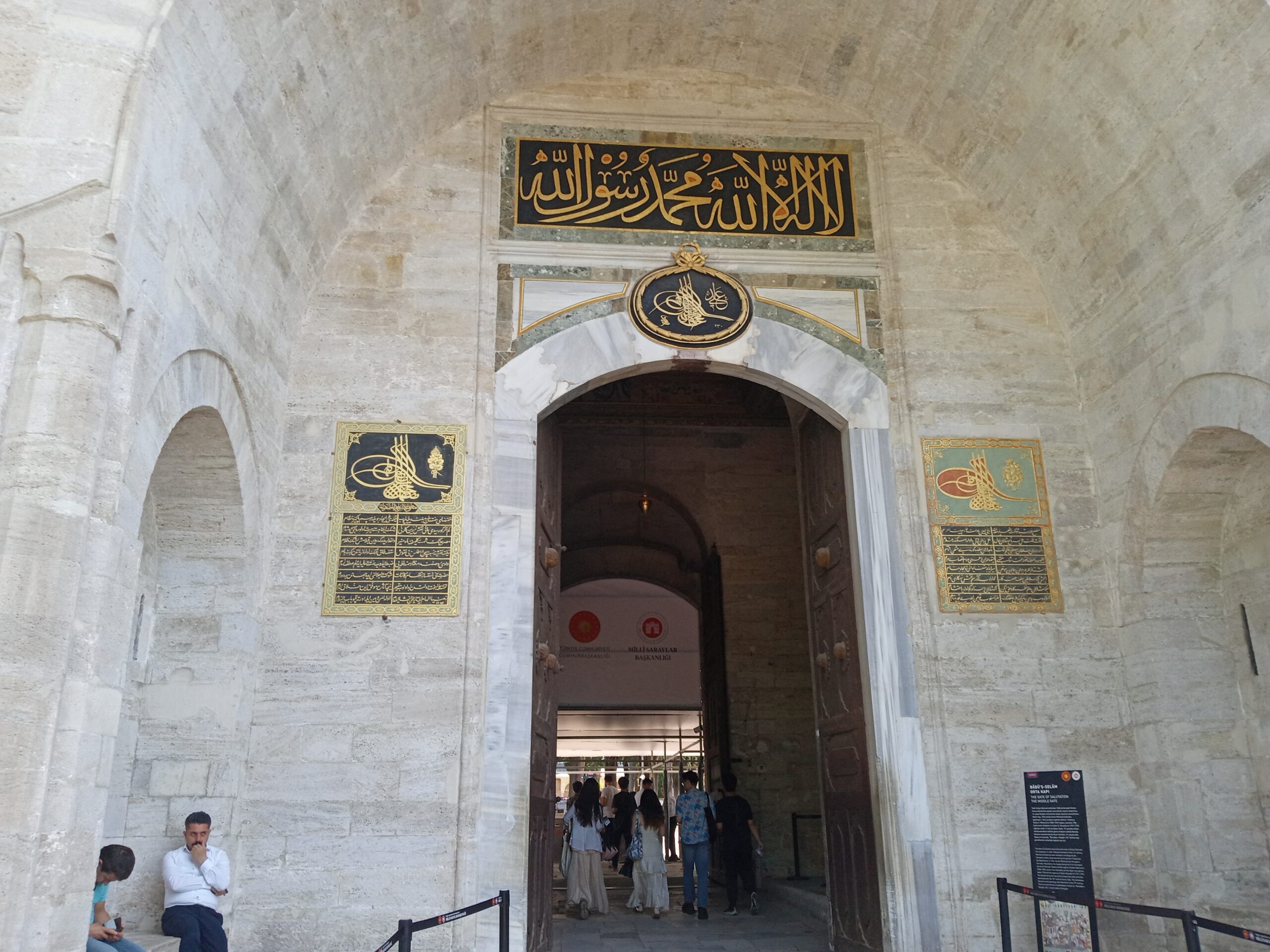
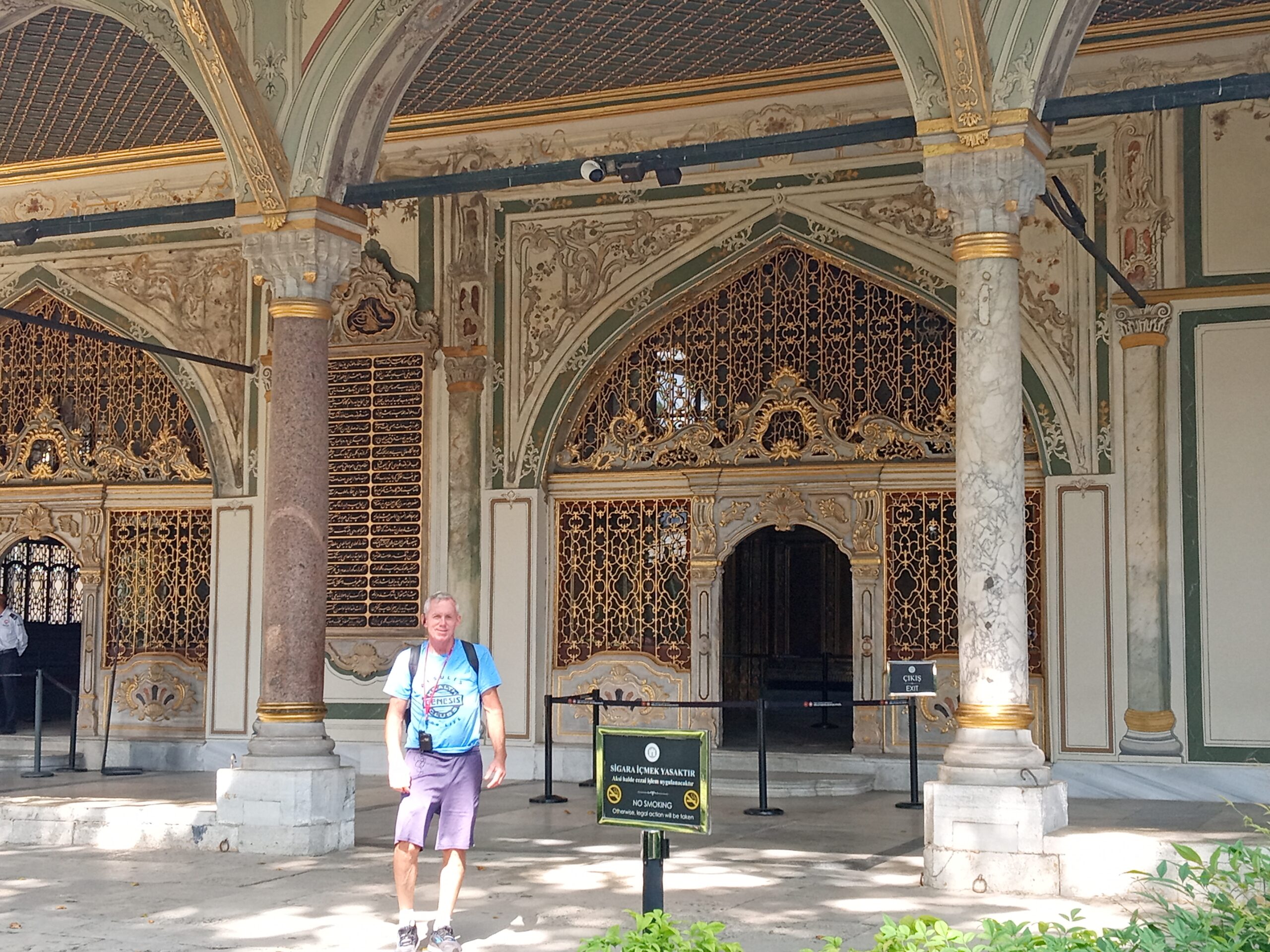
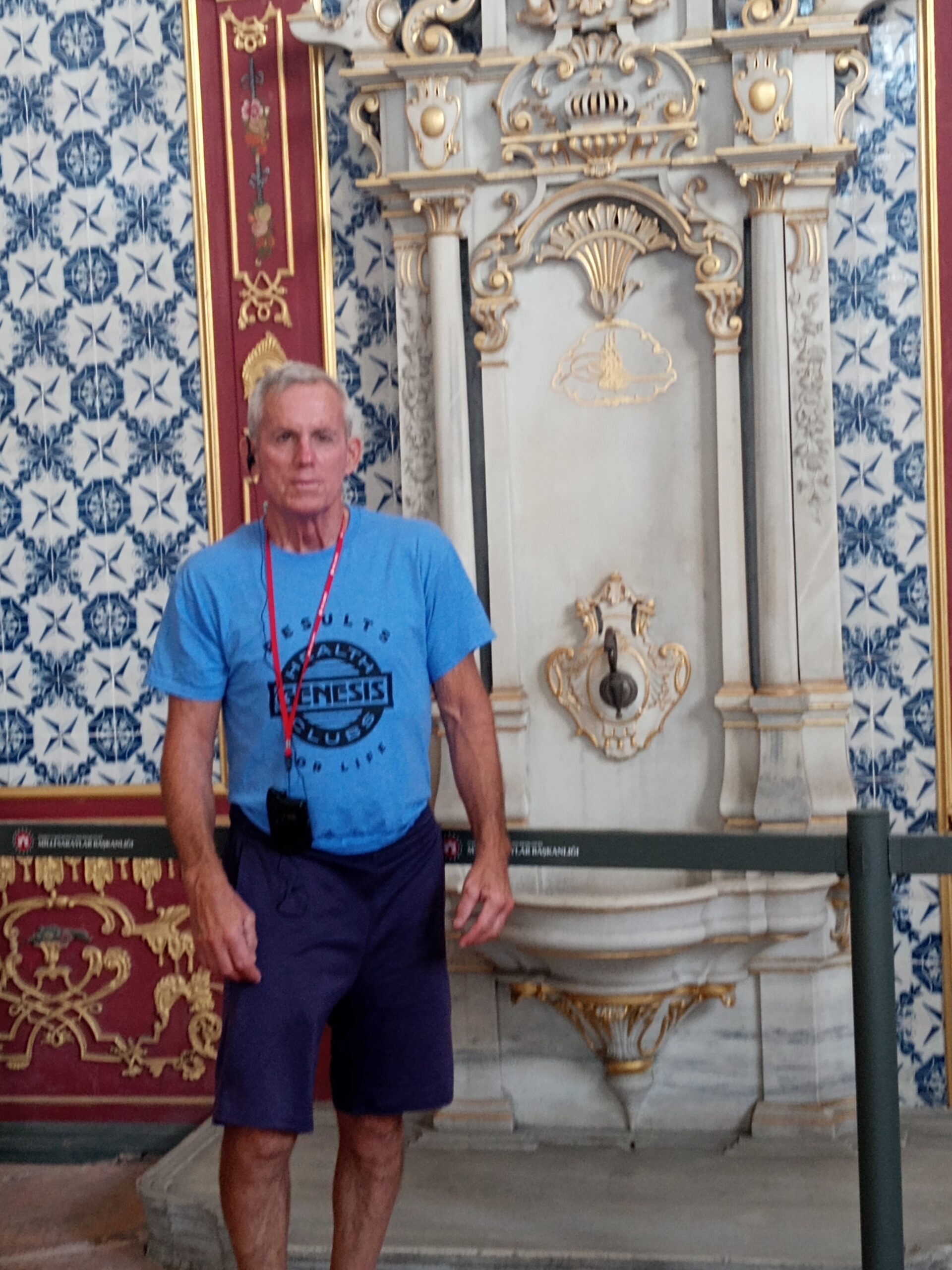
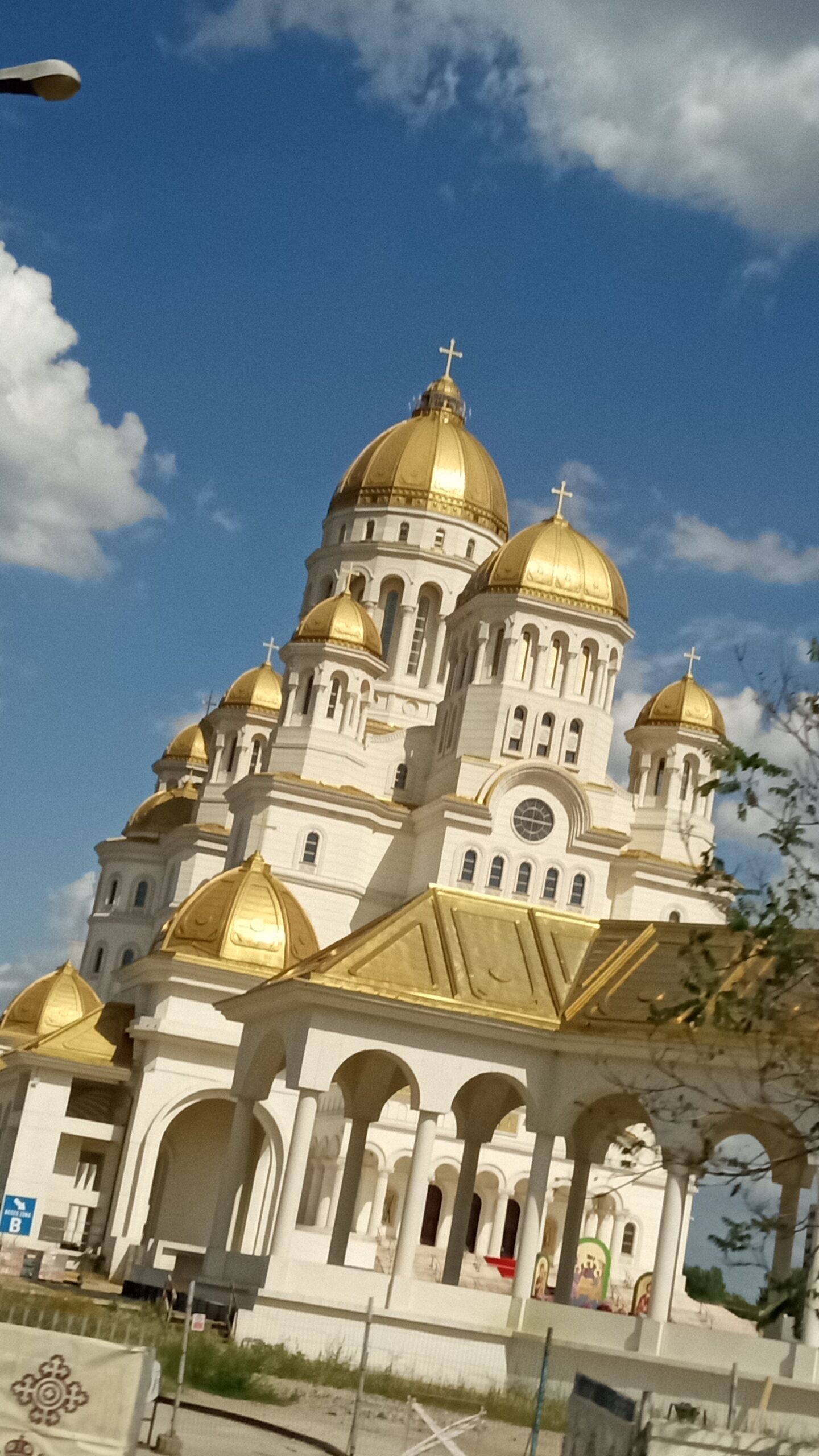
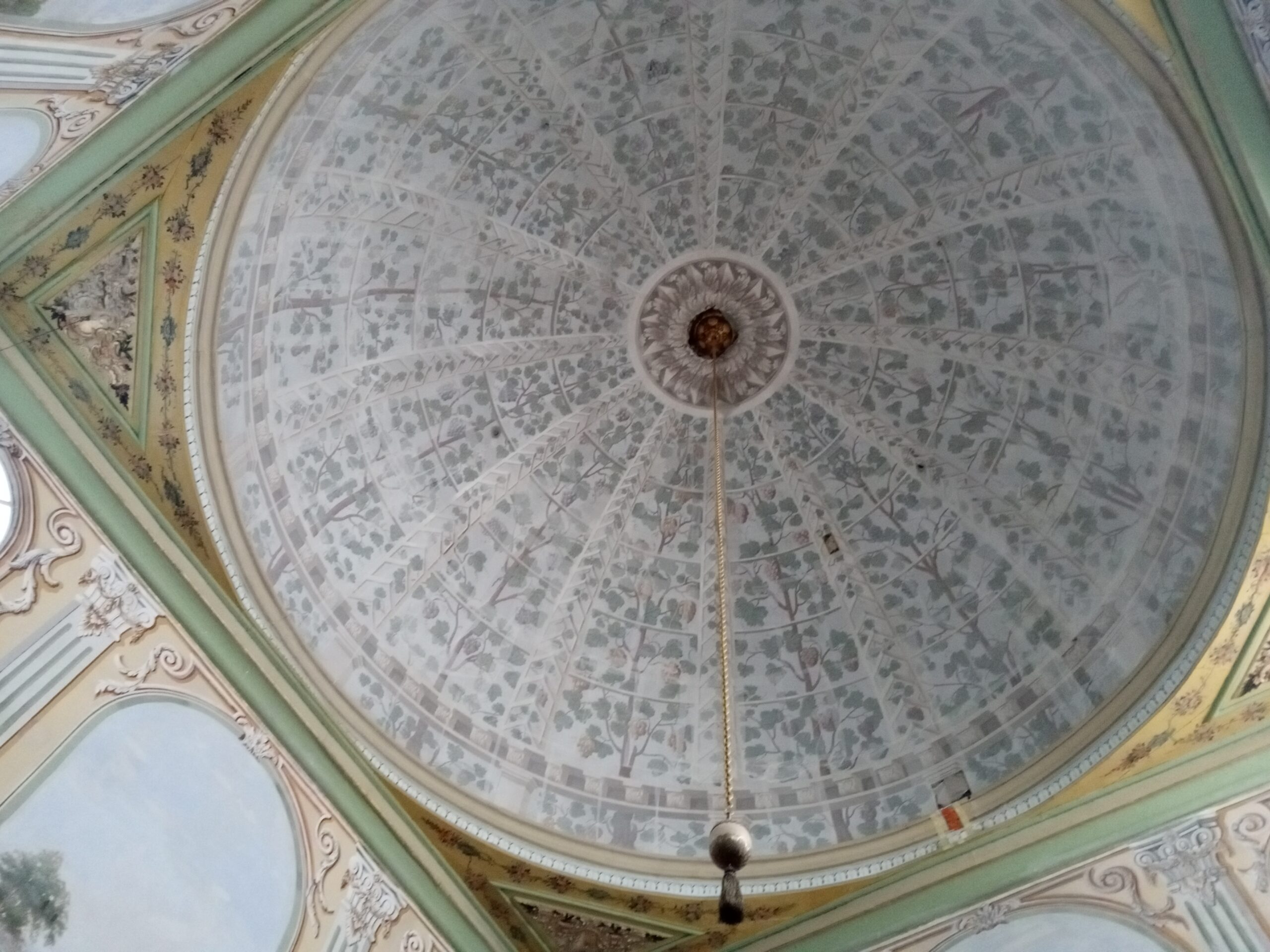
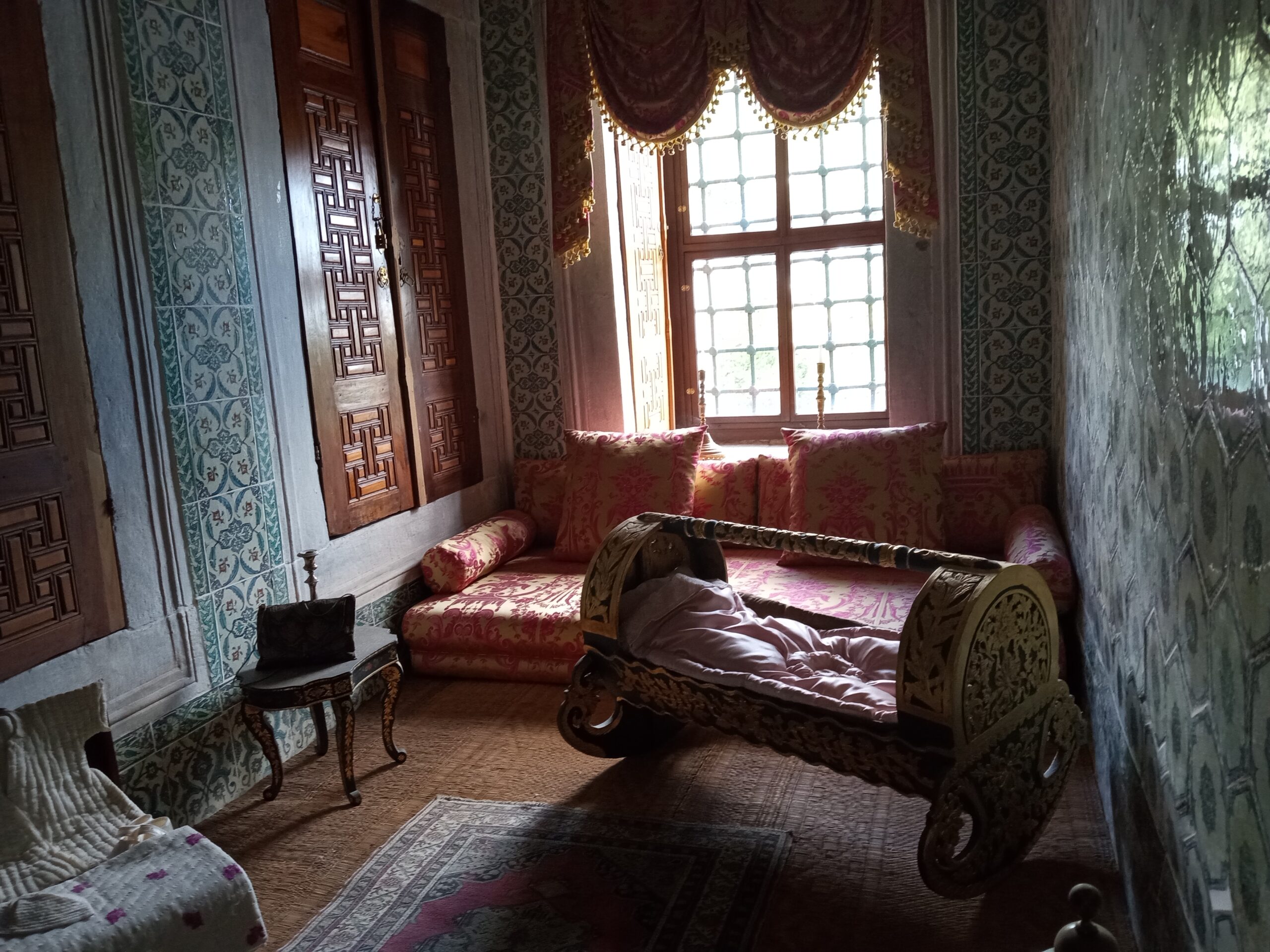
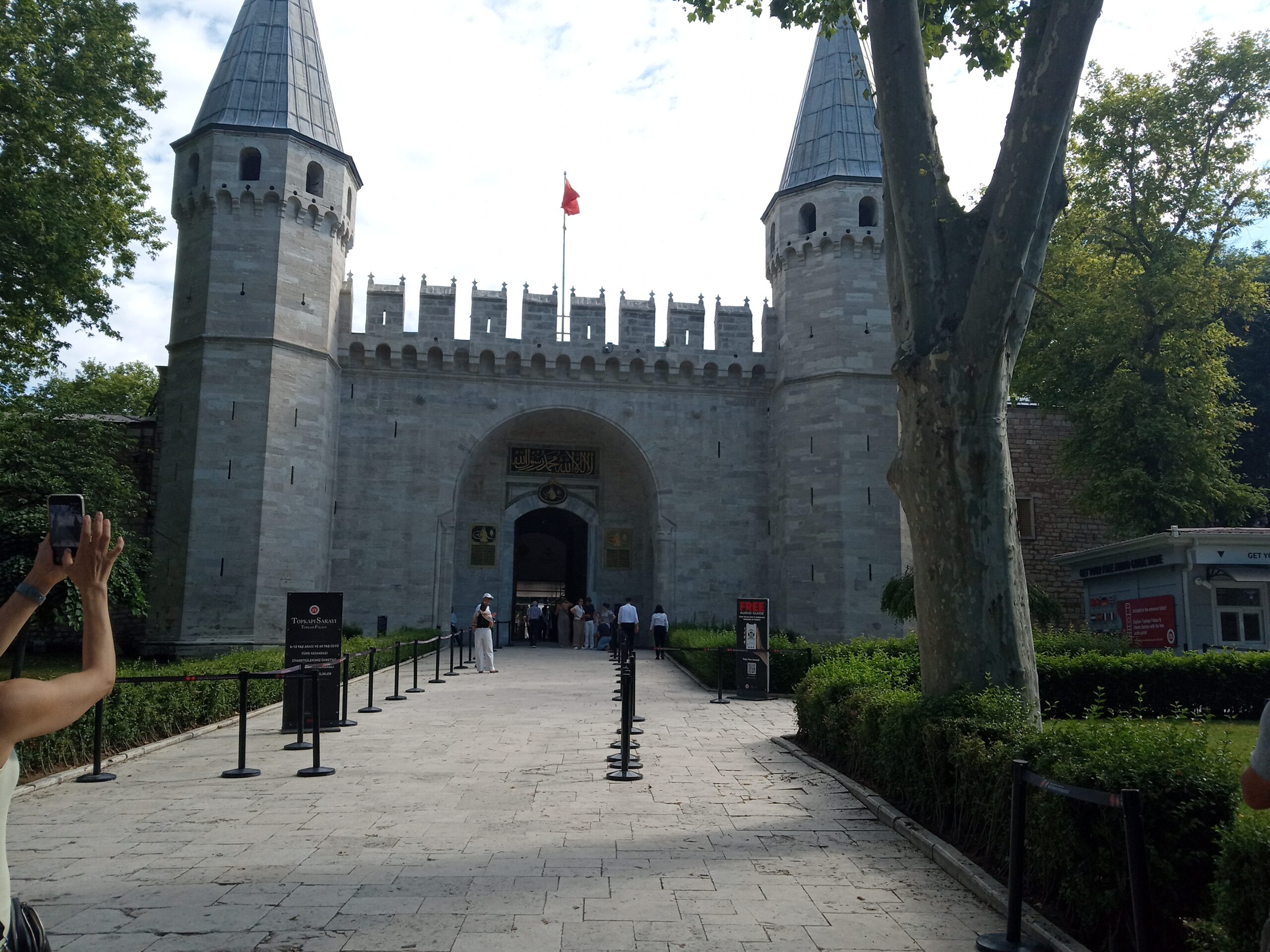
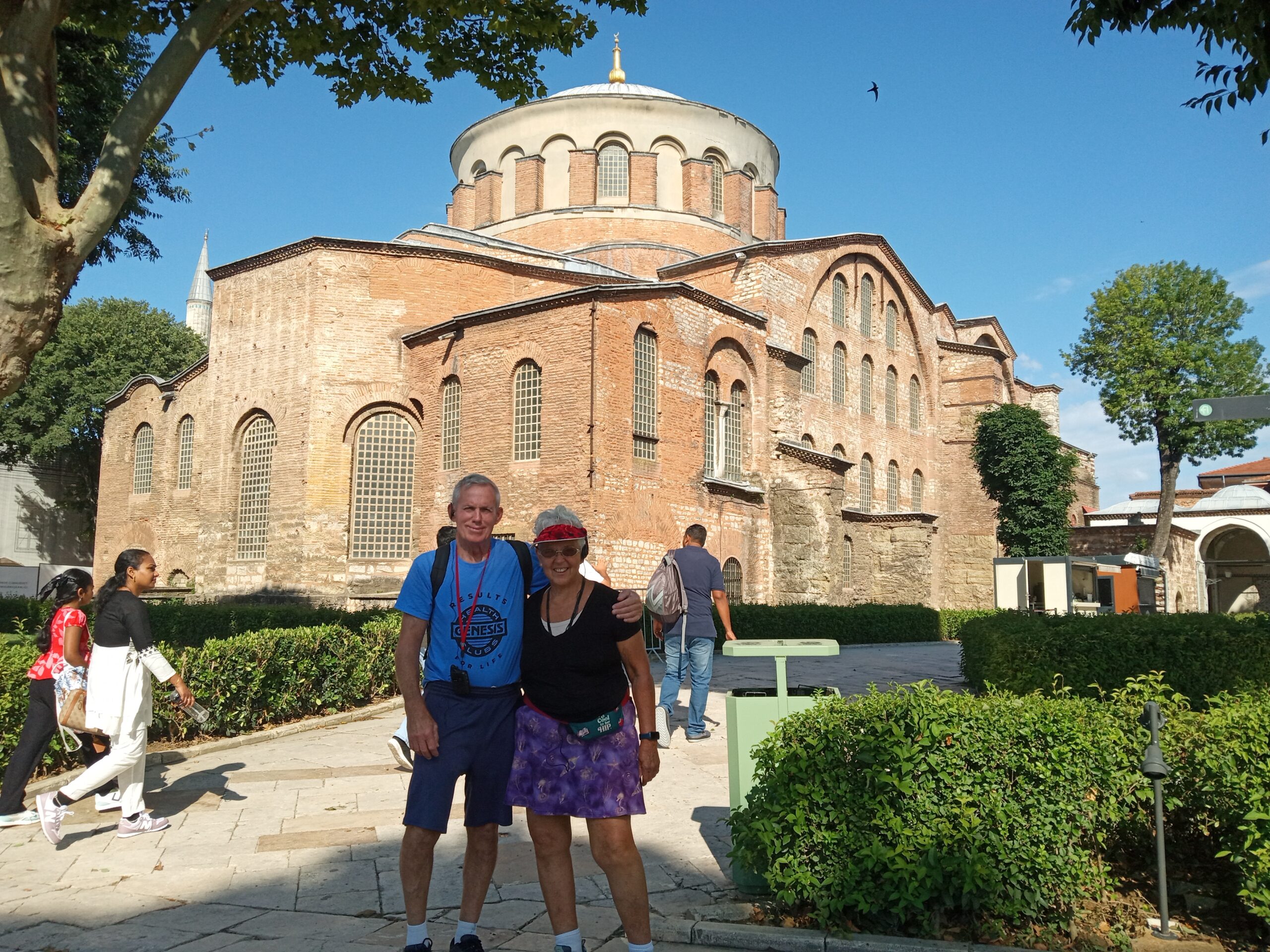
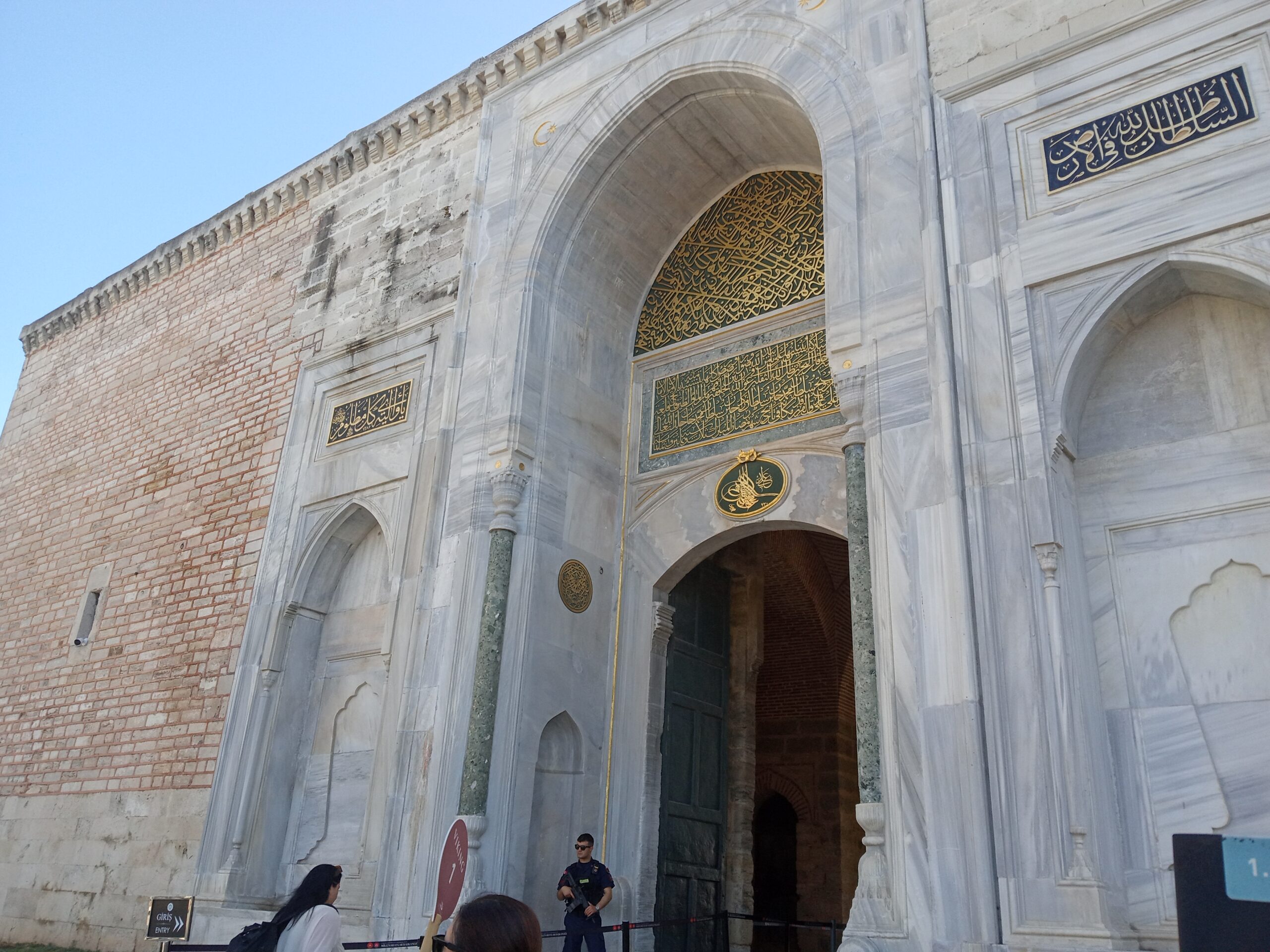
Topkapi Palace
This morning our group of 6 with a knowledgeable tour guide
went to Topkapi Palace in Istanbul. We took 3 hour tour of a
vast complex where the Sutans ruled this area 500 years ago.
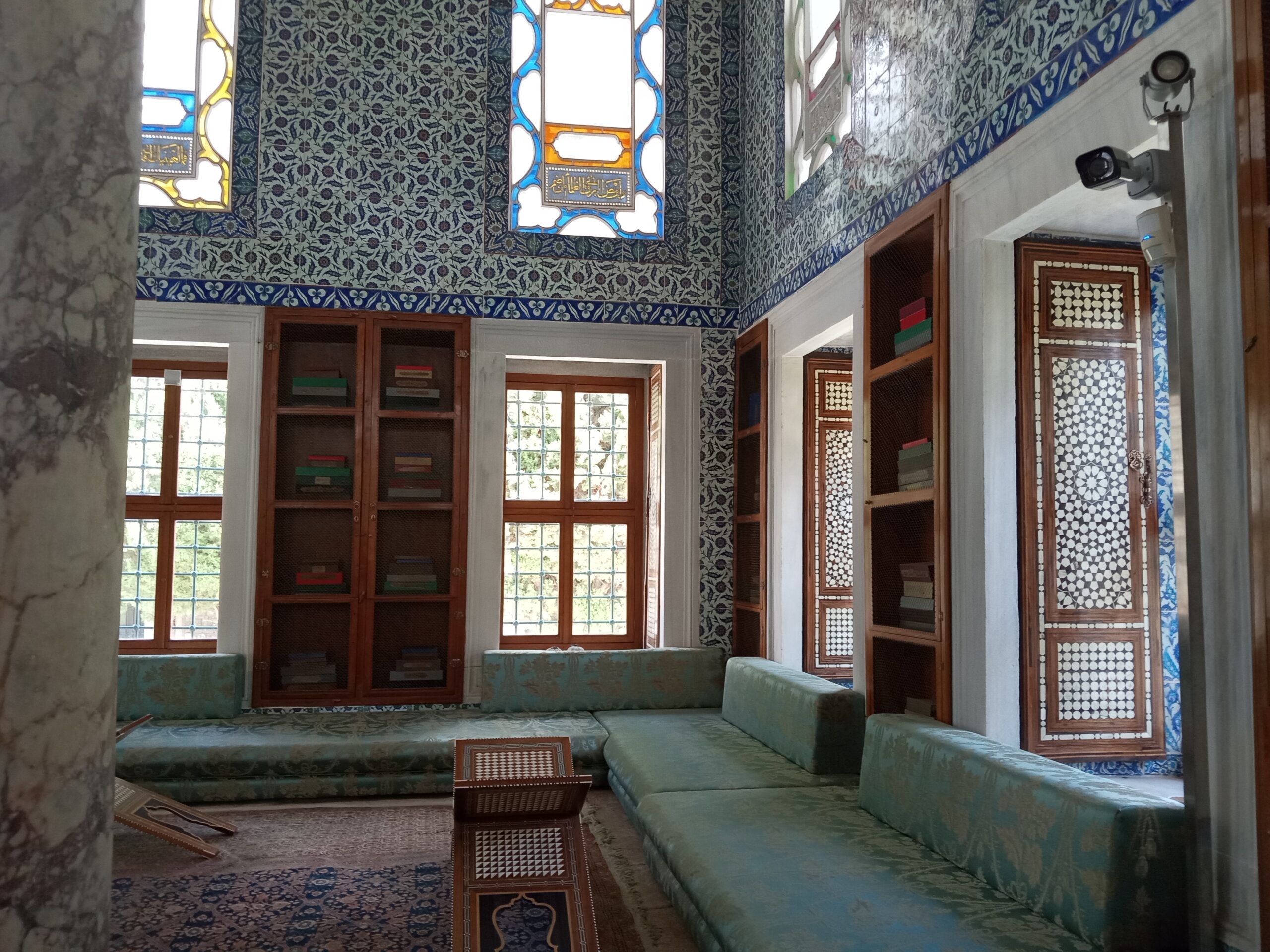
We saw the ornate and lavish rooms of the harem, beautiful
porcelin tiled walls, many domed roofs and the living quarters
where the royalty of the day lived.
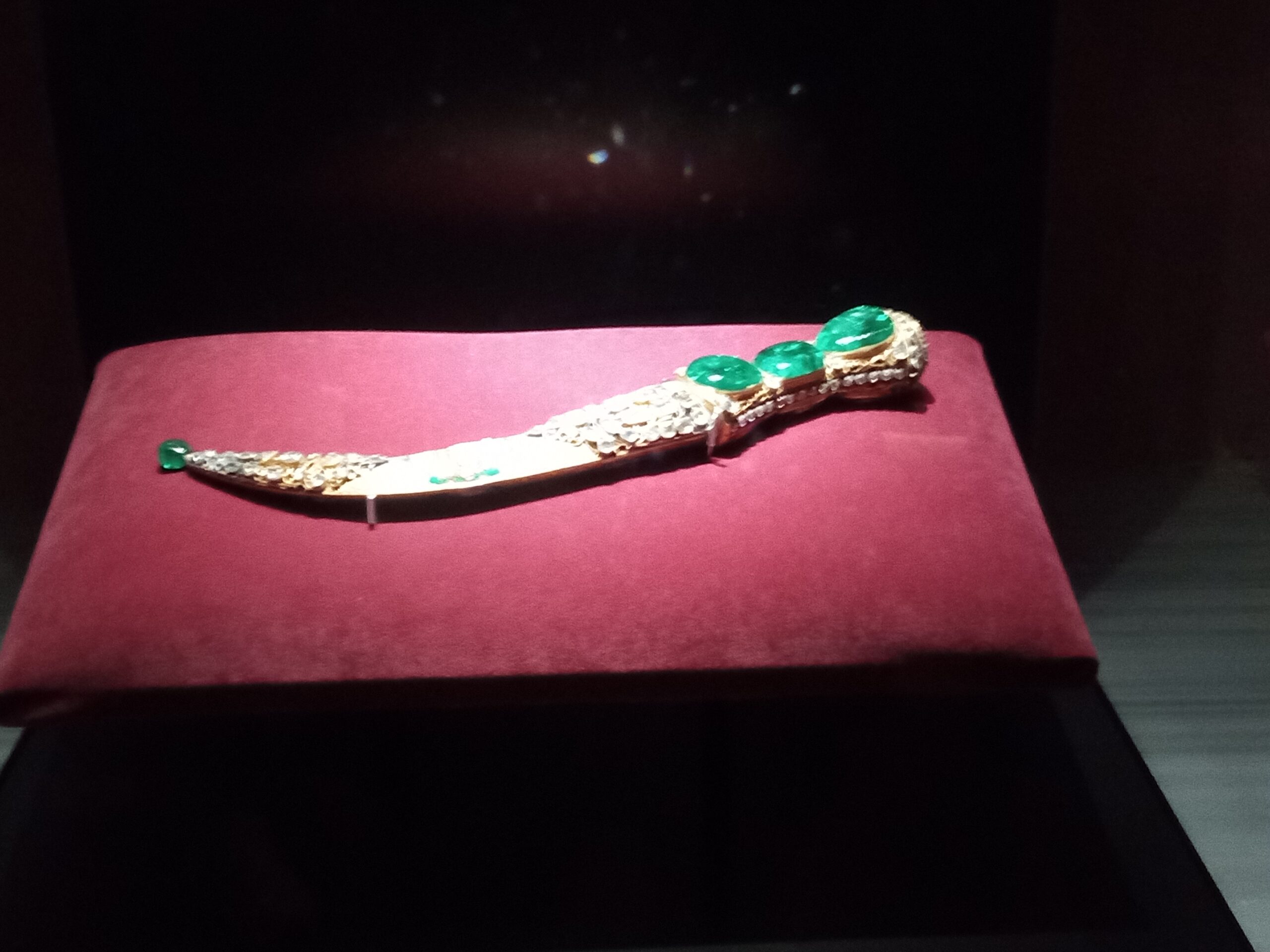
We also toured the Treasury where the jewels,
ornate swords, weapons, serving dishes and items encrusted
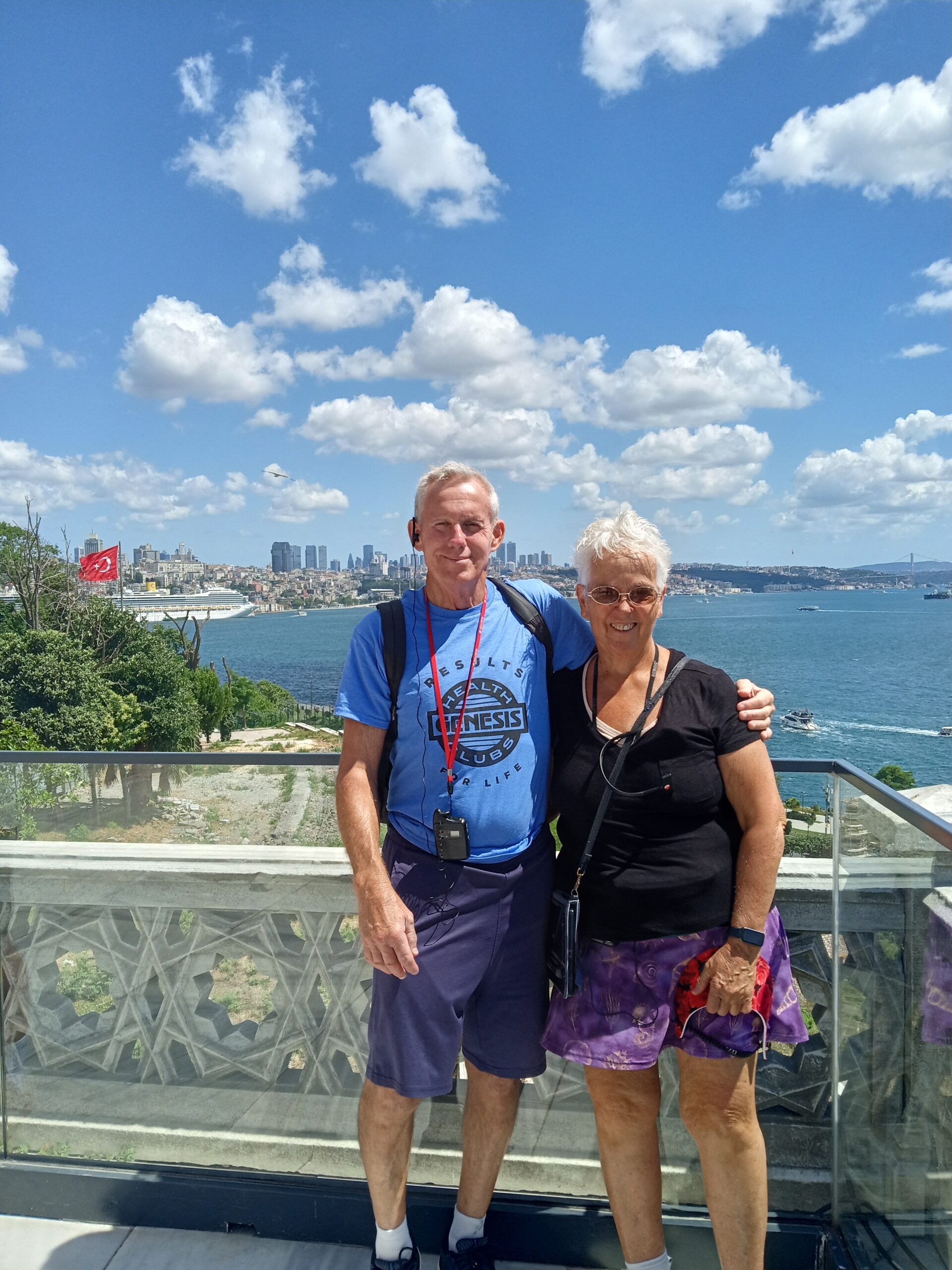
with gold were displayed. Plus we got fantastic views of the
Bosphorus Straight, and saw other buildings displaying
fine royal garments, books, indoor water fountains and rooms
of the attendants of the court.
Bosphorus Straight Cruise
and Egyptian Spice Market
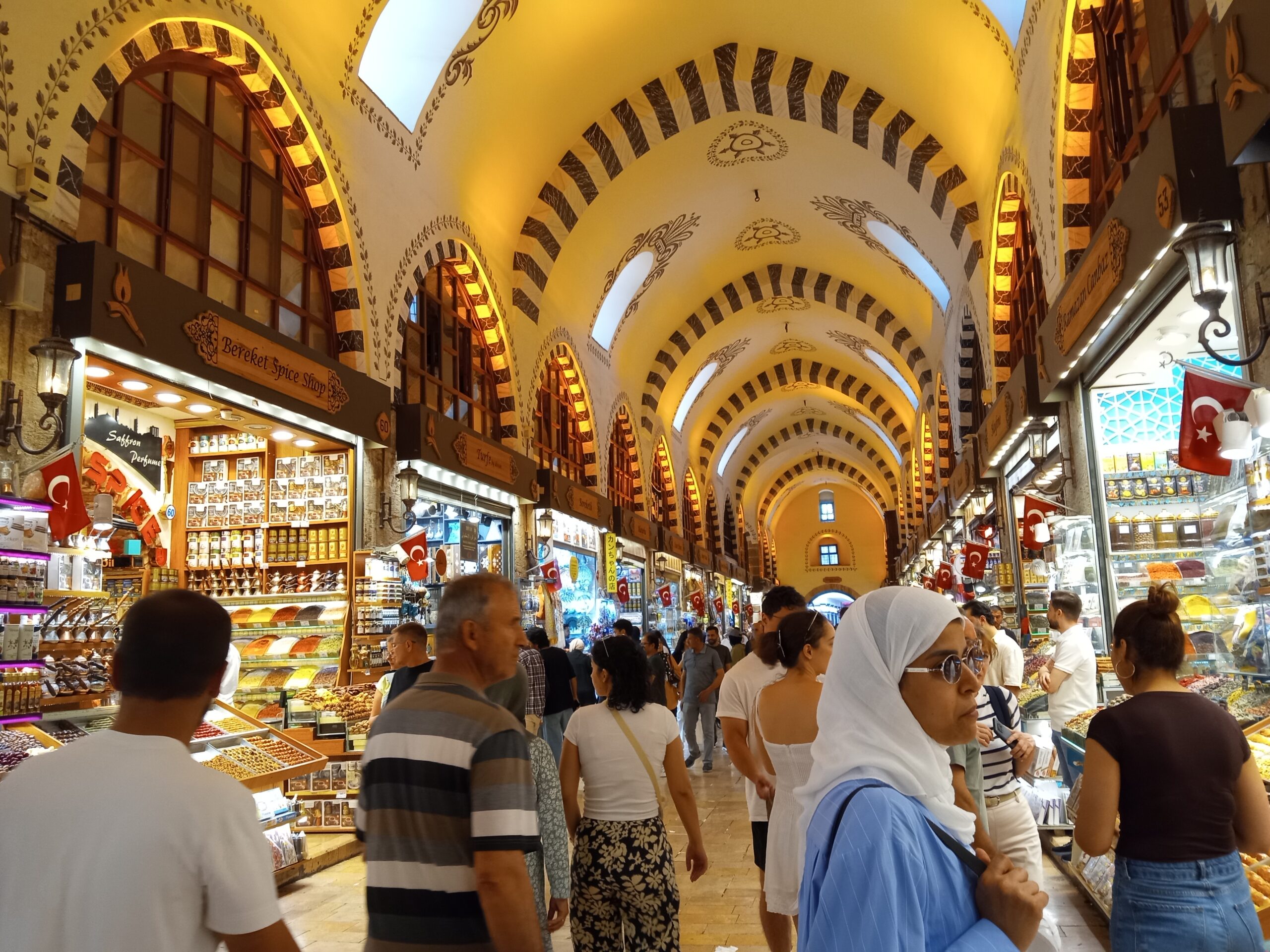
This afternoon our group went to the indoor Egyptian
Spice Market in downtown Istanbul. It was filled with
tourists and locals as there were 90 stalls filled with
spices, dried and candied fruits, Turlish treats, candy,
exotic nuts and delacacies. The air was full of
wonderful smells.
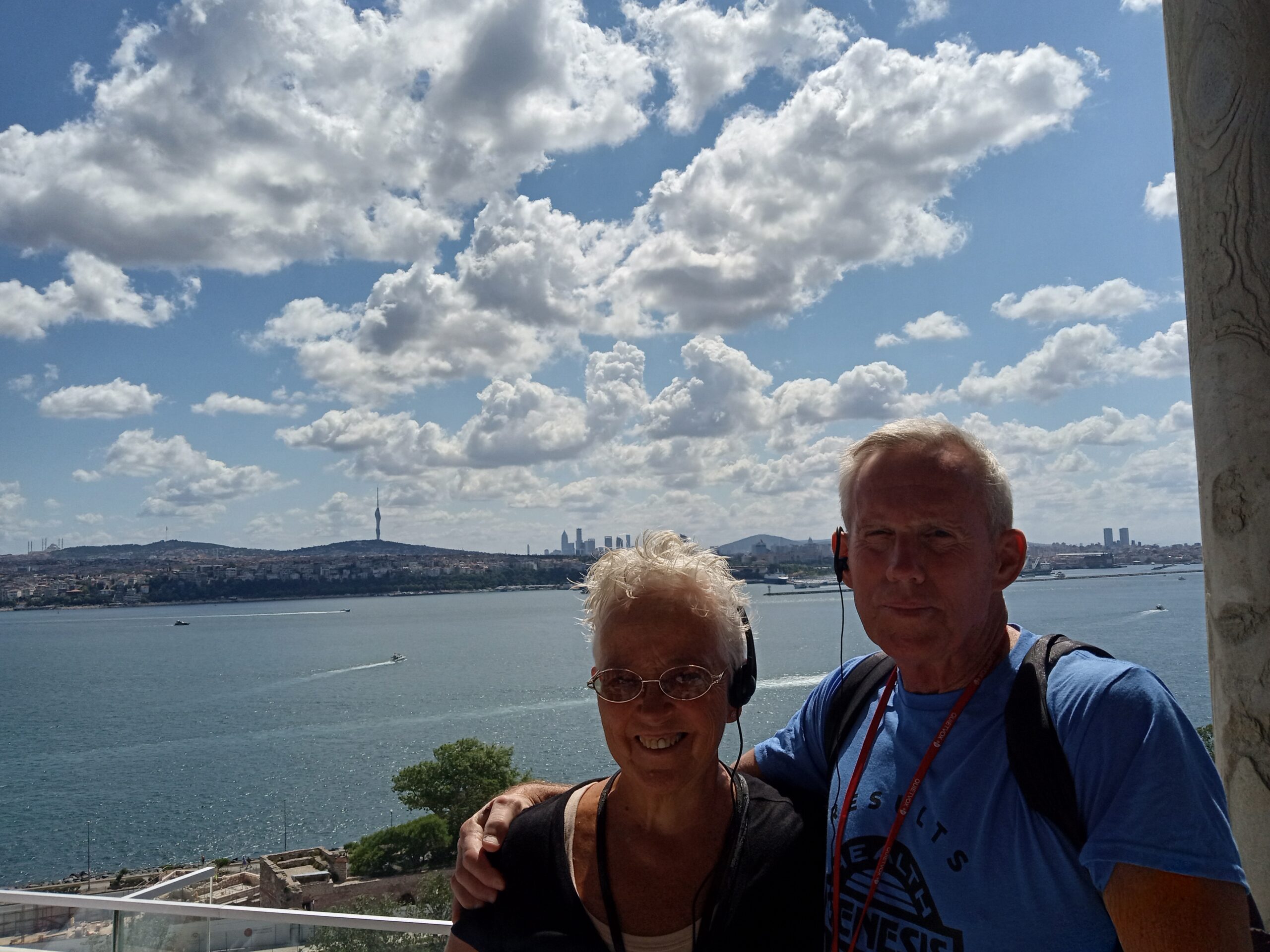
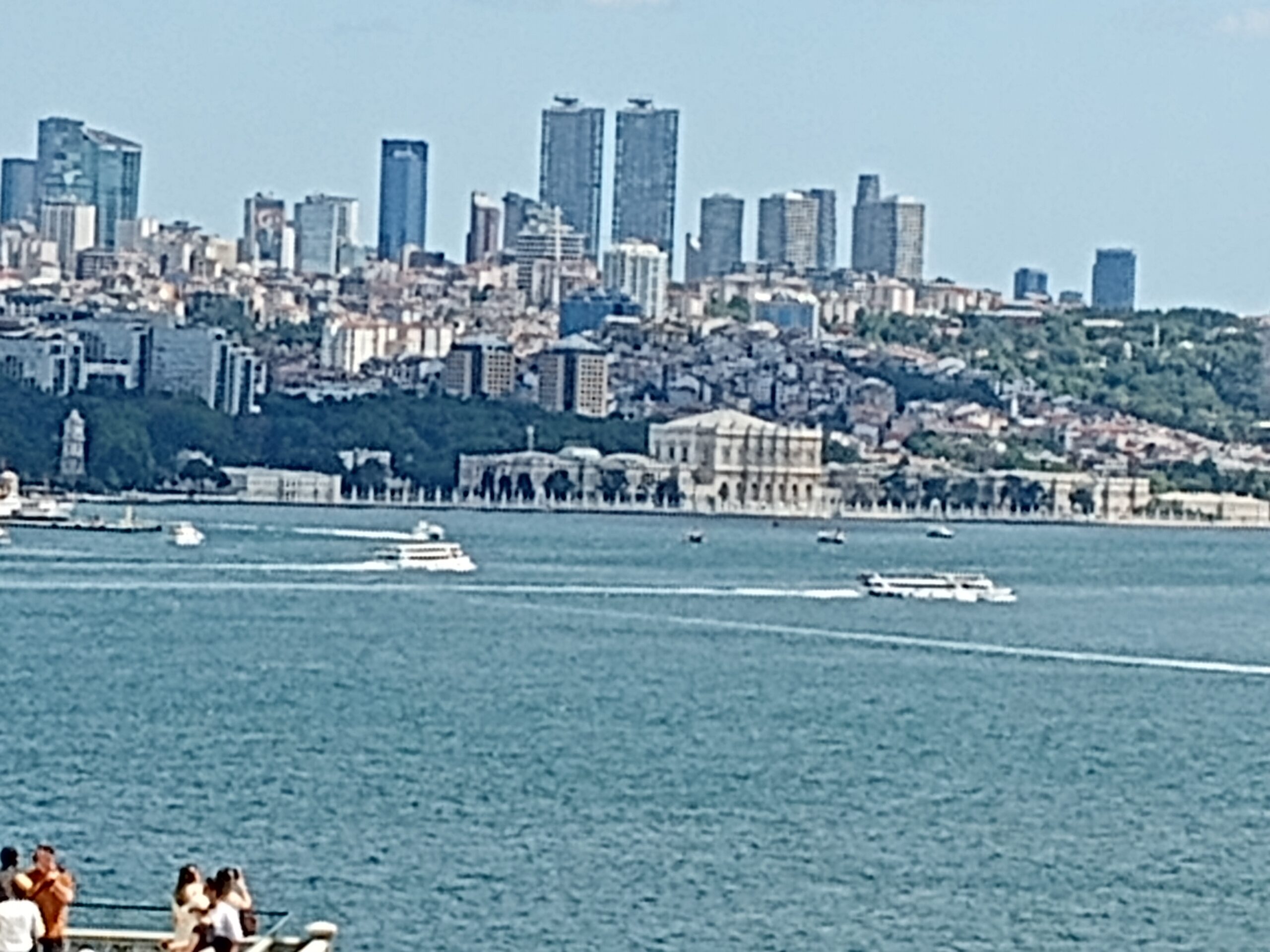
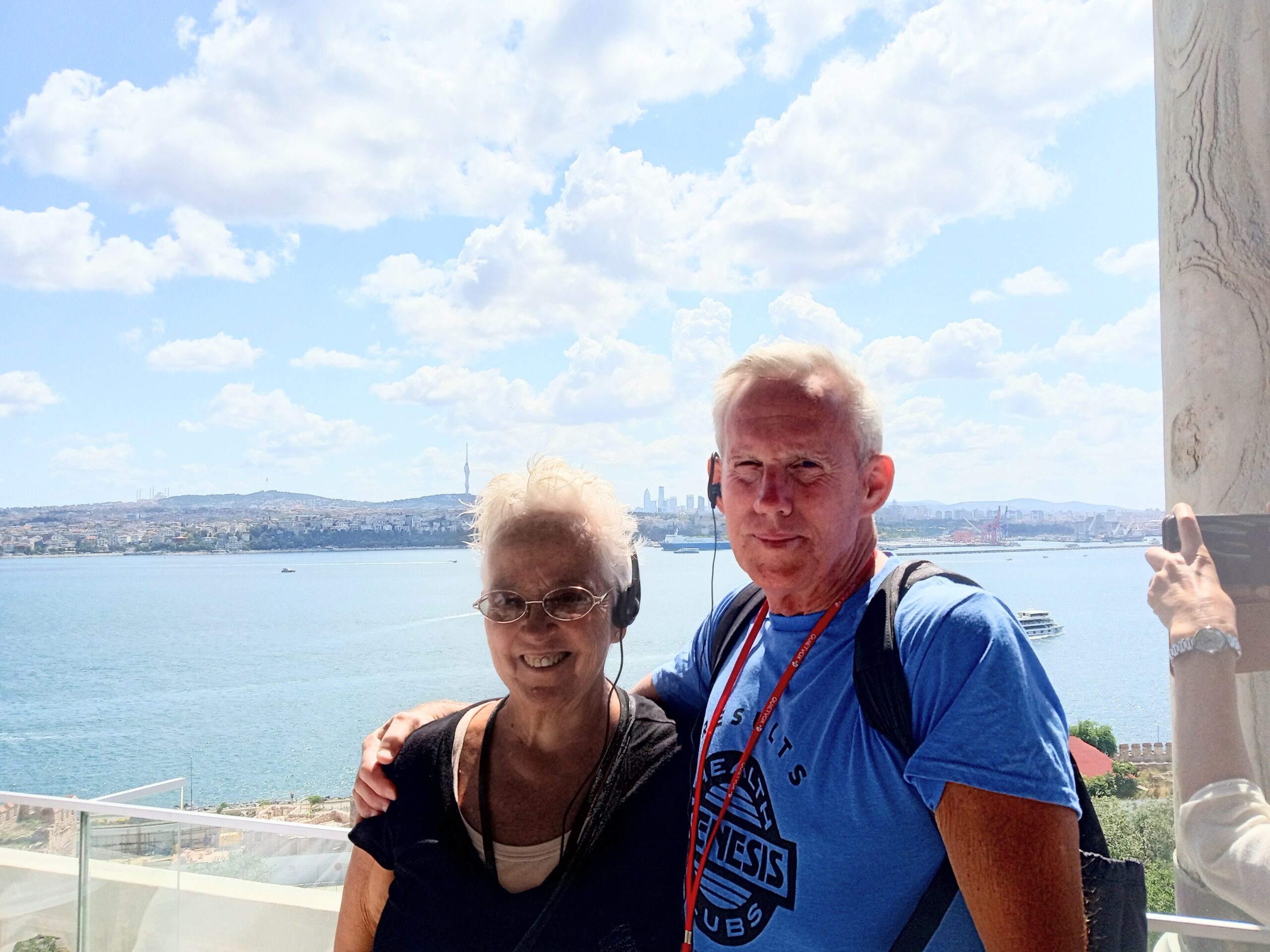
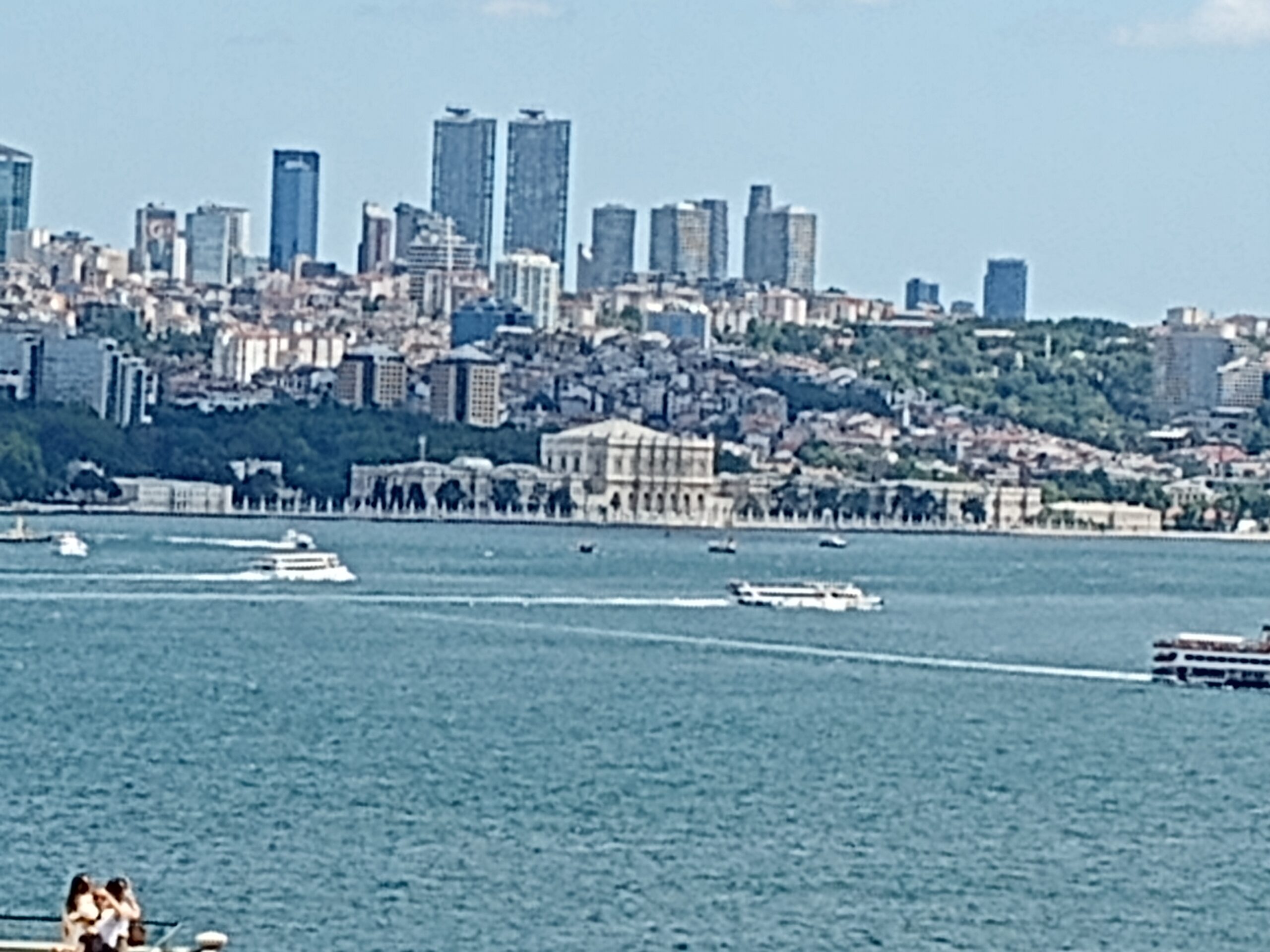
We then took a private boat ride in the Straight of
Bosphorus for almost 2 hours. We saw the entire skyline
of Istanbul, passed under 3 huge, long suspension bridges,
passed dozens and dozens of opulent houses on the
shore, past mosques, minarets and marveled at the
beauty of houses that overlooked this important and
beautiful straight. We also stopped for a photo shoot
with us standing on the continent of Asia, while the other
side that we were staying on was Europe.
Day 3
Istanbul, Turkey
Monday, July 6
6
Hippodrome, “Blue Mosque,”
Hagia Sophia, & Basilcia Cistern
Iconic Landmarks of
Byzantine and Ottoman Empires
This morning our group took in some of Istanbul’s
famous and endearing iconic landmarks.
First we visited and went inside the 6th century
mosque – Hagia Sophia. This huge mosque was once
a Catholic church for 1,000 years – now converted
into an Islamic mosque. We saw all the scaffolding
up inside as they are restoring it. We saw the main
180 foot dome inside, the smaller half domes,
the arches and columns inside holding up the walls,
took in all the famous mosaics on the walls – all
from a second story level.
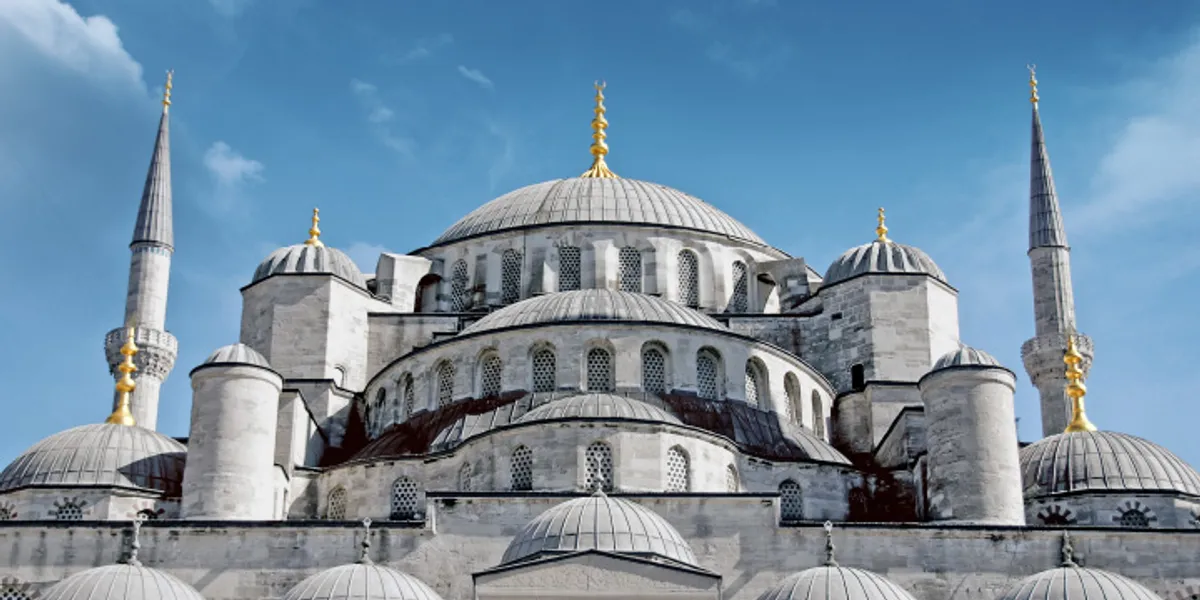
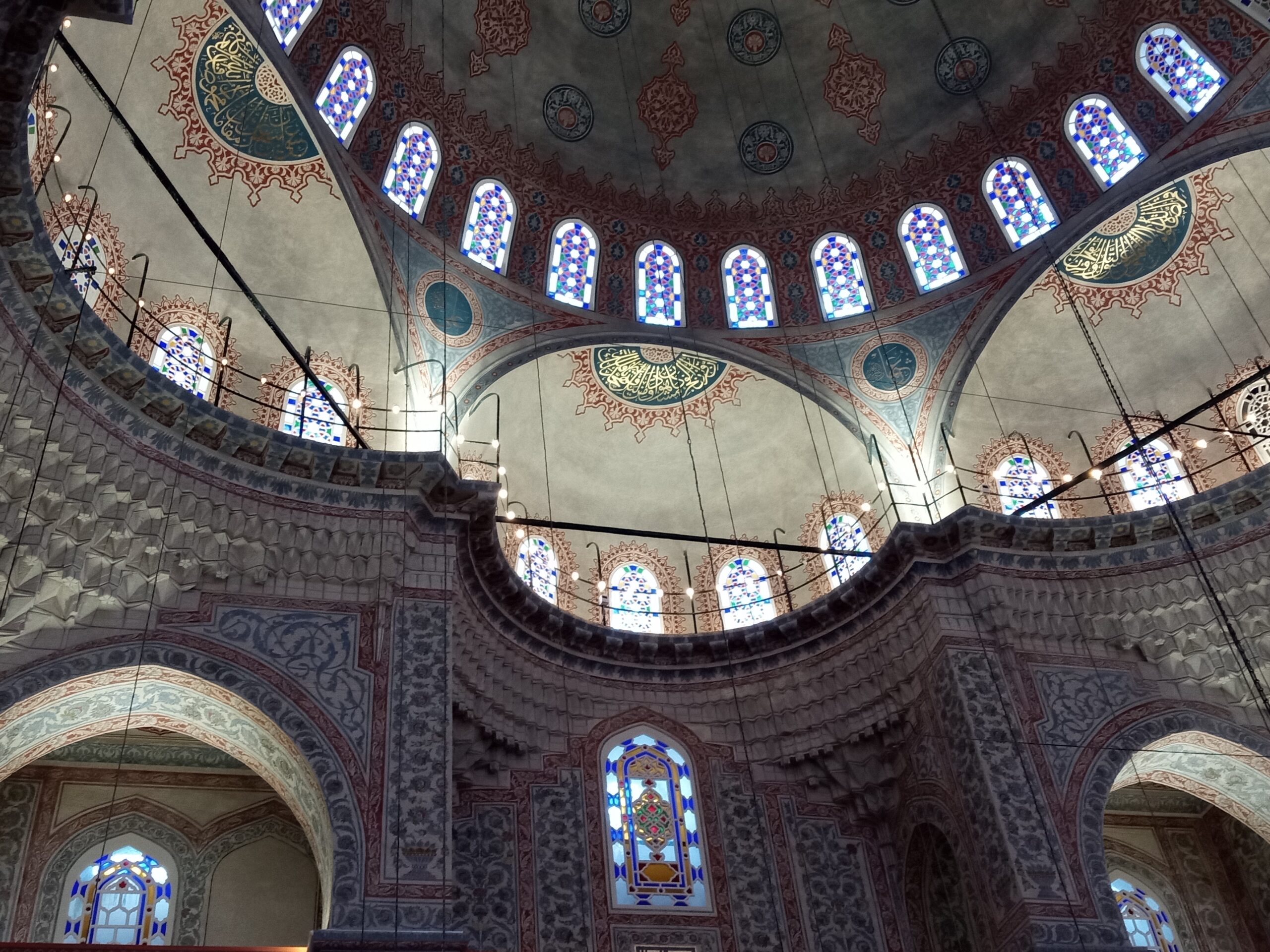
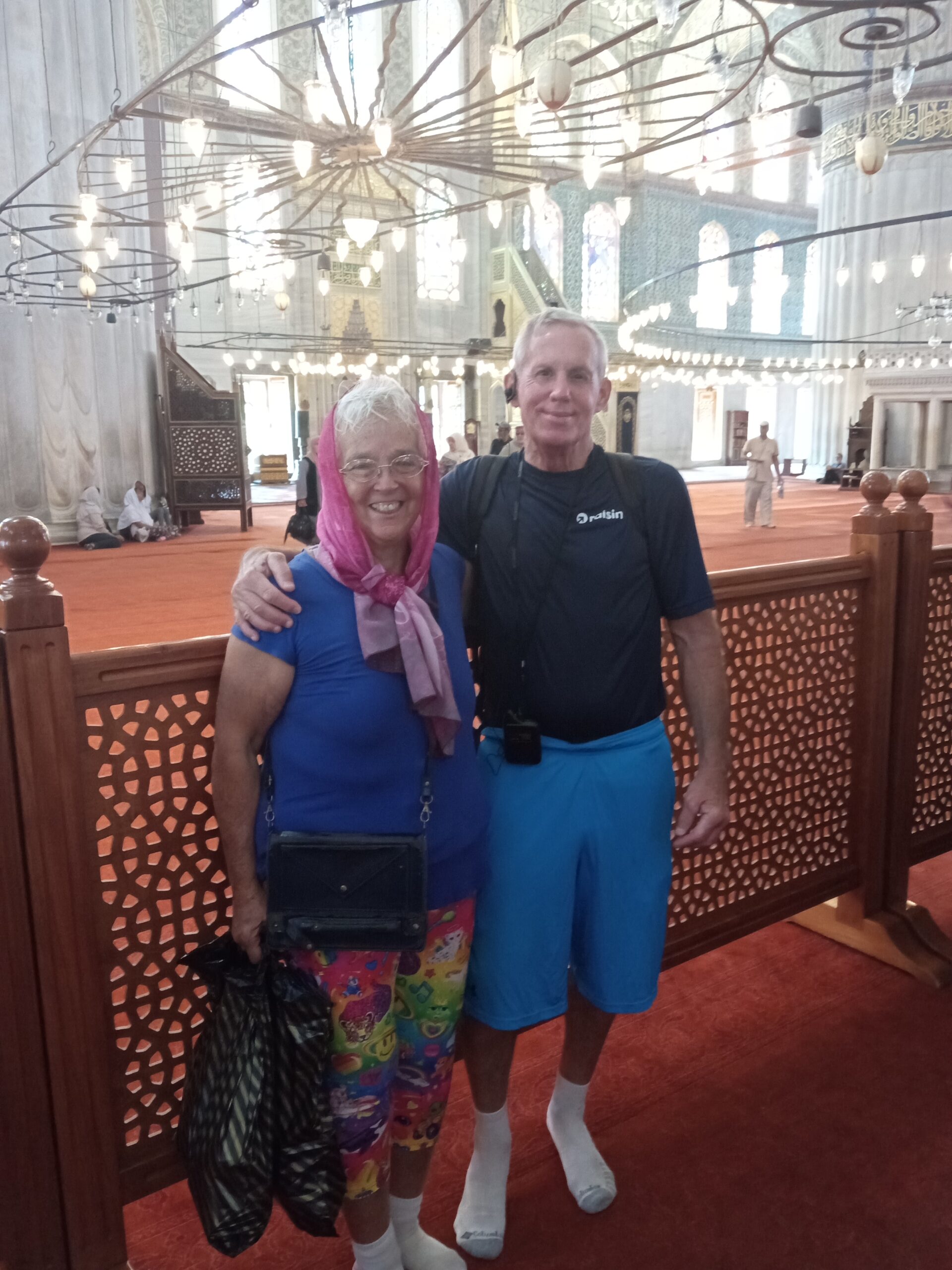
Next, we went to the Blue Mosque, which is a huge
500 year old mosque with stained glass windows
everywhere, a beautiful main dome surrounded by
half domes. Of course we had to take off our shoes,
and make sure our knees and shoulders were covered.
From there we took in what was left of the Hippodrome
– or where they once raced horses in a circular track –
but is now all gone. Instead is an empty space or
long outside courtyard with some Egyptian obelisks in it.
We then seperated from the main group and took
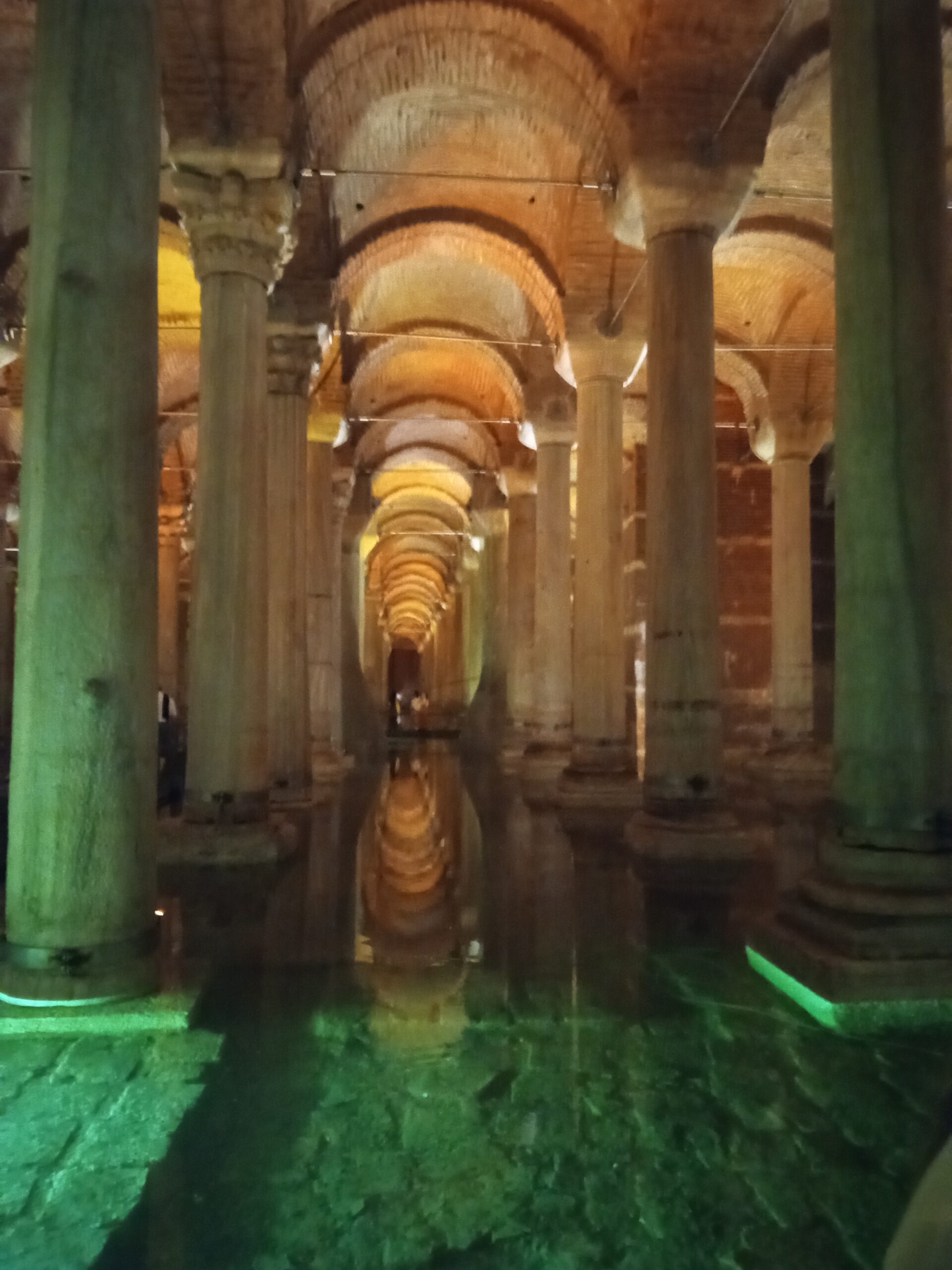
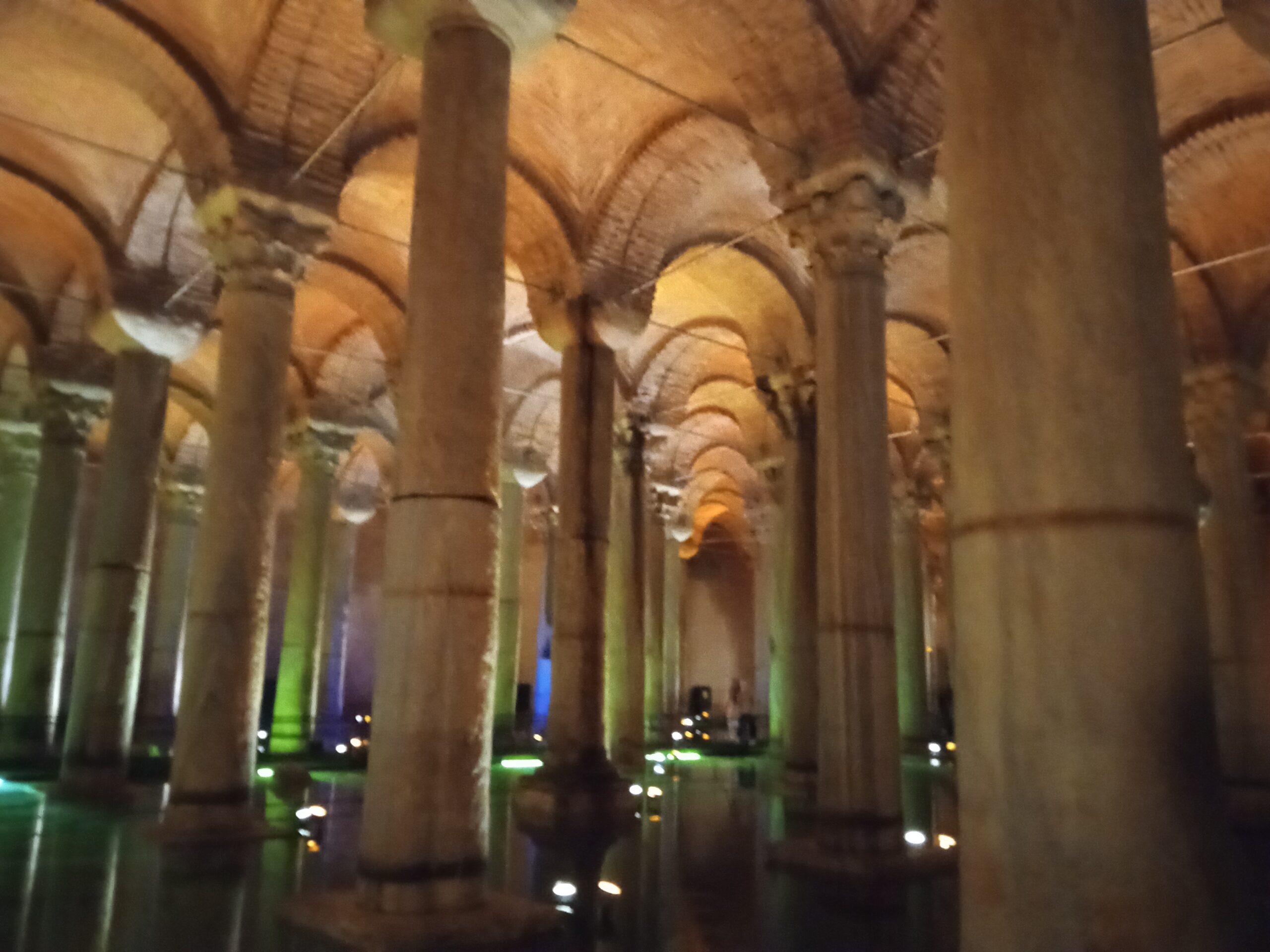
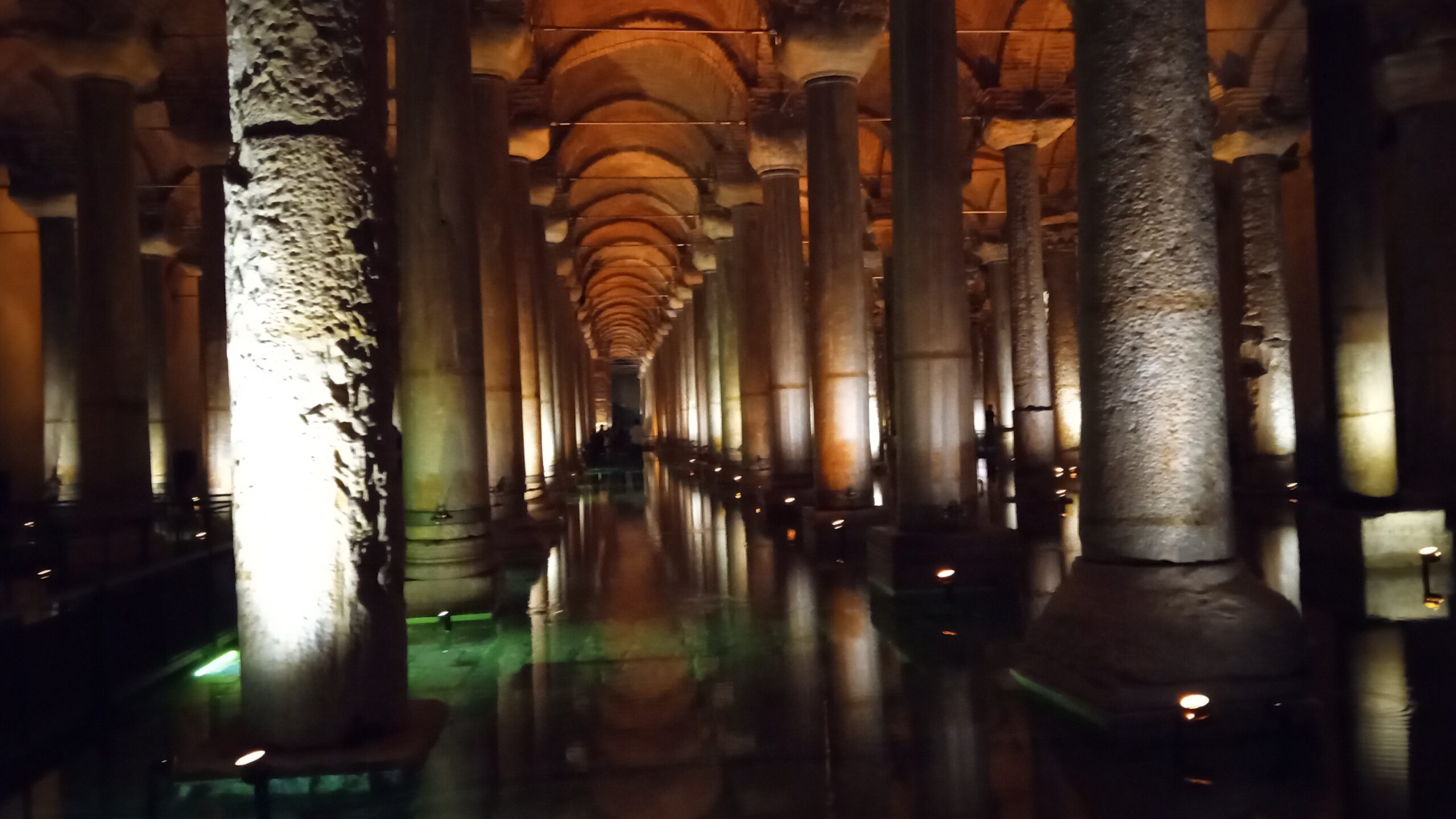
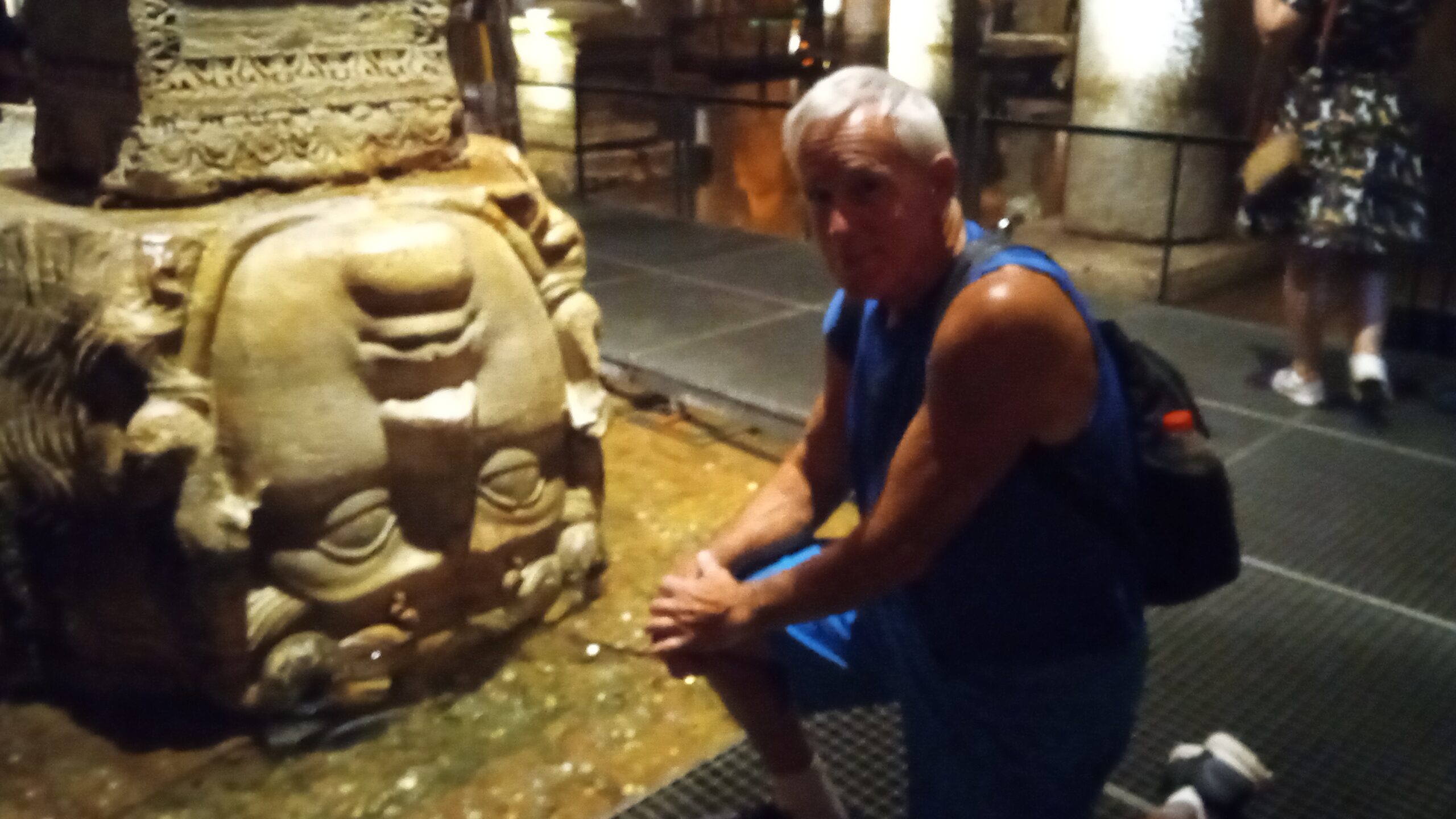
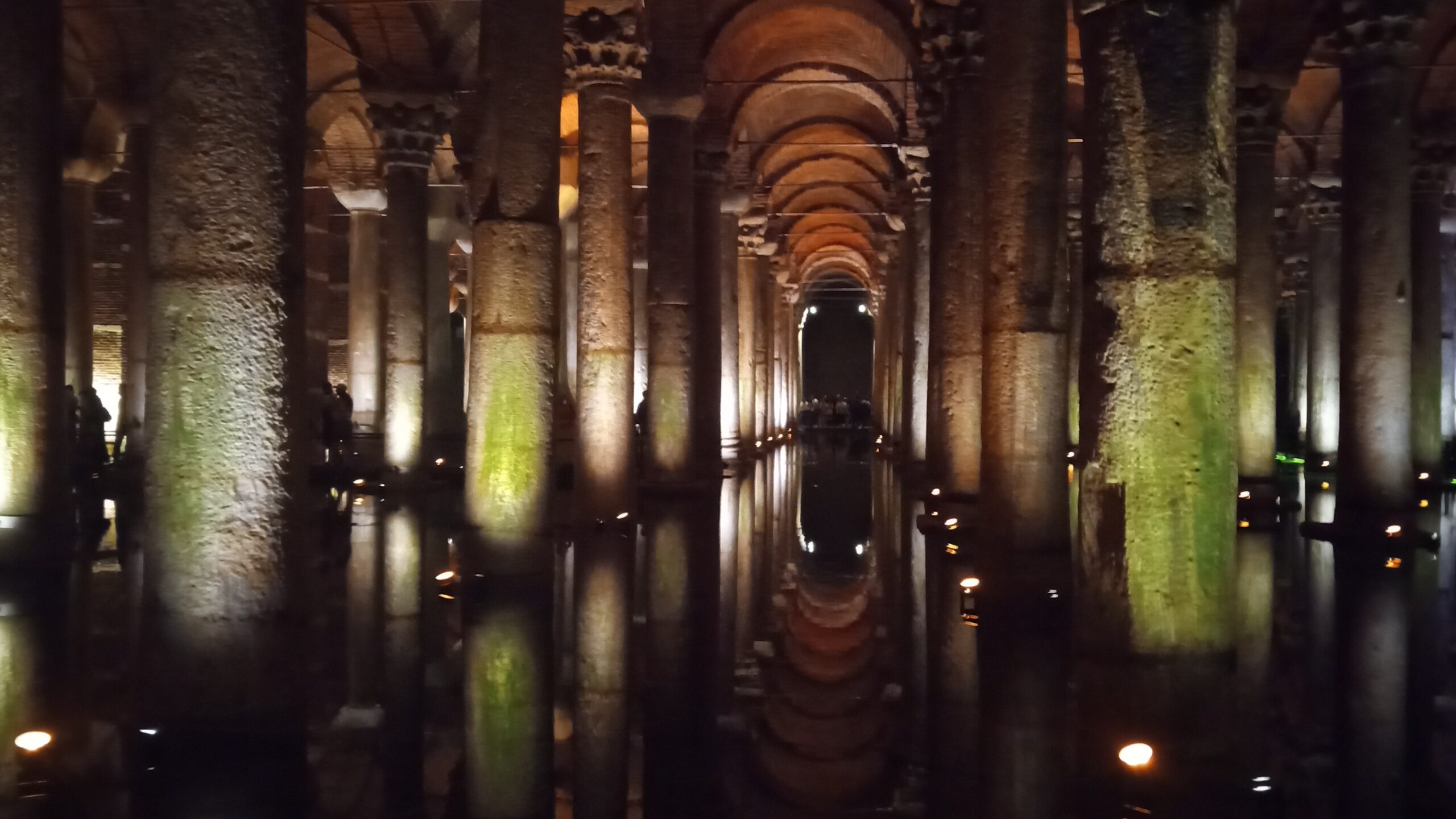
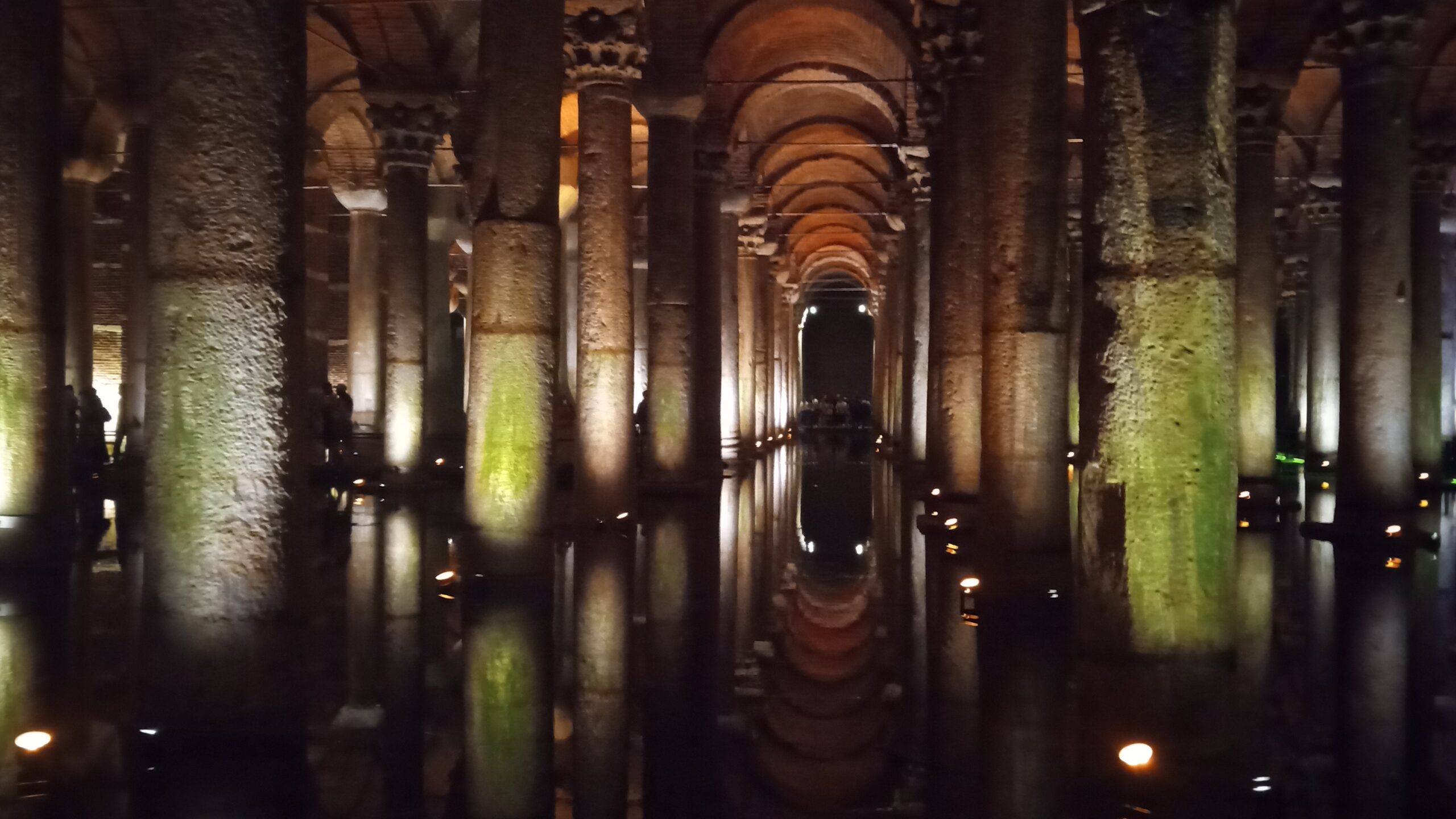
a tour of the Basilicia Cistern. This is an underground
water storage cistern that the Romans built in 200 AD.
Inside were 336 tall columns supporting this well.
This was 200 yards long with spring fed water that
naturally flows underground. It was all lite up with
elevated walkways that went all through it. We
marvelled at this ingenious 2,000 year old system of
storing fresh water – and have never seen anything
like it in our travels.
We then meet our tour group at the Grand Bazaar
to look at the all the shops. BTW this bazaar is known
worldwide as there 4,000 shops selling everything
anybody could need.
Day 2
Istanbul, Turkey
Sunday, July 5
An Evening in Istanbul
Panoramic Drive and Traditional Turkish Flavors
Tonight we savored a traditional Turkish dinner and took
in the important sights of Istanbul after dark.
We embarked on a scenic drive to restaurant, admiring
views over the Bosphorus Strait and the Golden Horn.
We sampled a selection of delicious Turkish fare.
A range of delicious grilled meats, salads and other
accompaniments was served.
We boarded the coach and set off on a panoramic nighttime
drive through the city. The route took us past notable
landmarks, such as the illuminated facade of
Topkapi Palace, Istanbul’s historic old town, the
18th-century Beyazit Tower, ancient city walls and more.
7-5 6
7-5 7
7-5 29
7-5 30
7-5 31
7-5 32
7-5 33
7-7 5
7-5 24
7-5 23
7-5 22
7-5 21
7-5 20
Day 4
Istanbul, Turkey
Tuesday, July 7
Transfer to airport to fly to
Bucharest, Romania
We said goodbye to Istanbul this morning and took
a bus to the airport to fly to Bucharest, Romania.
After a 1 hour flight, we took a bus to our hotel.
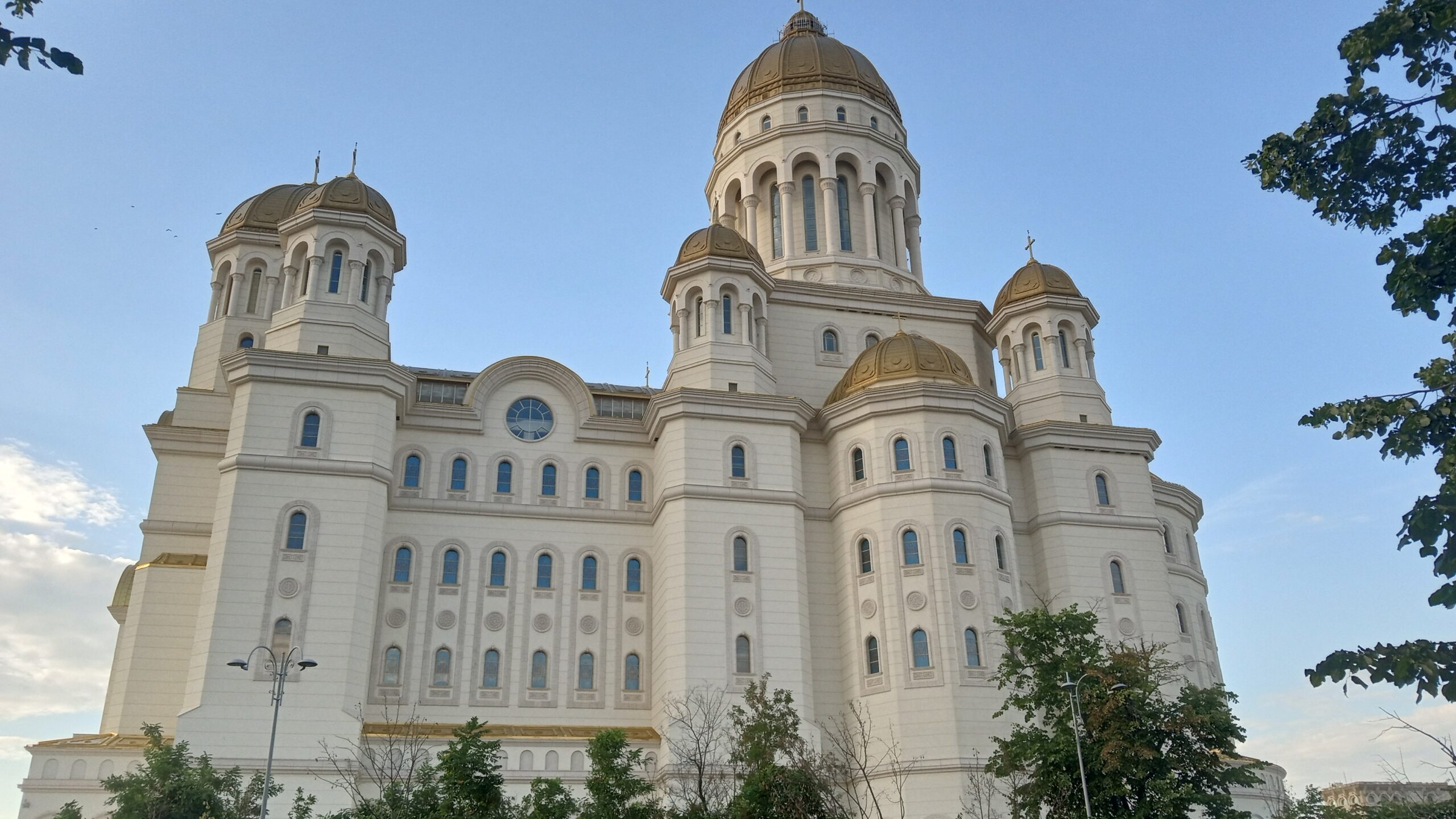
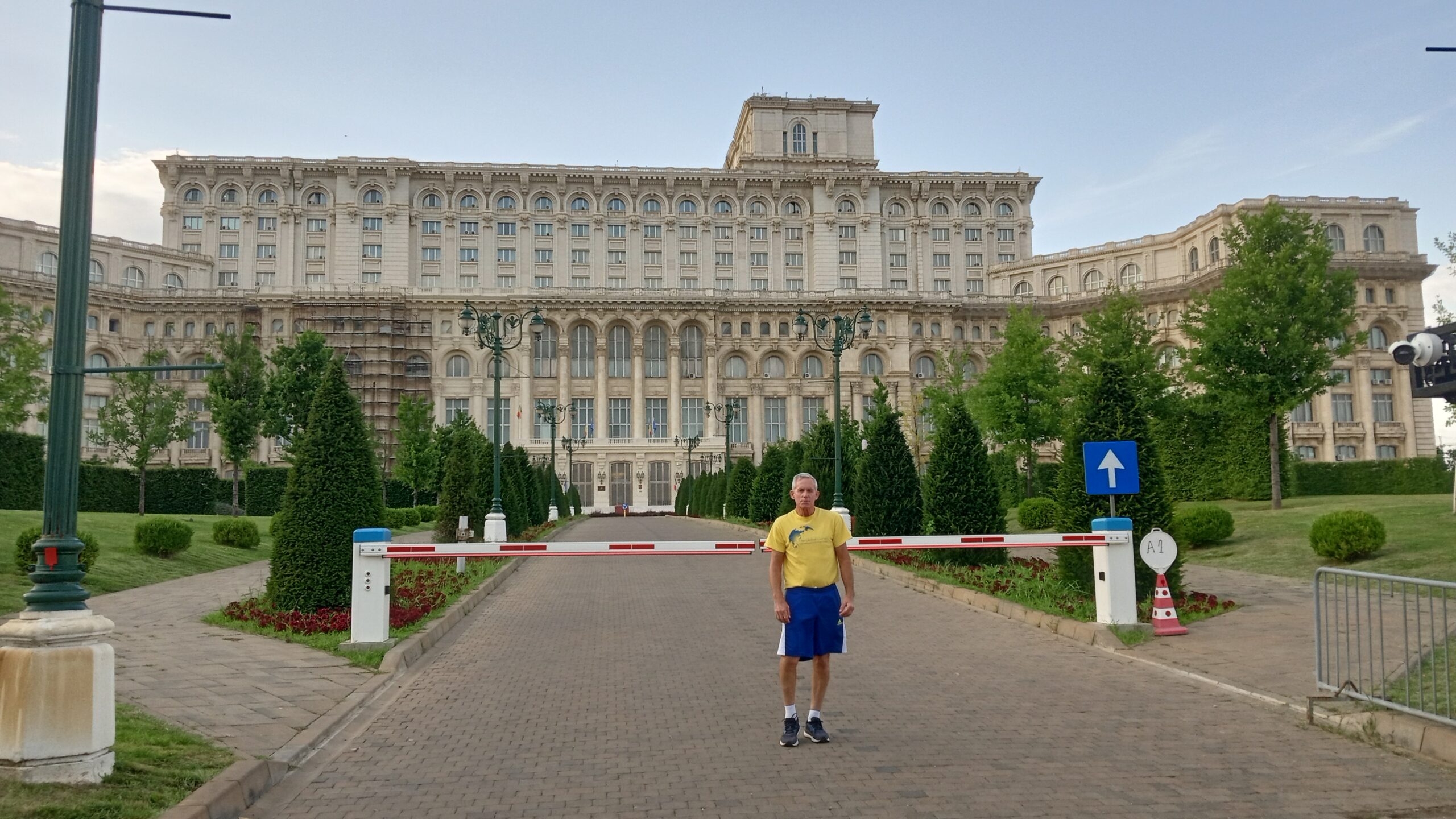
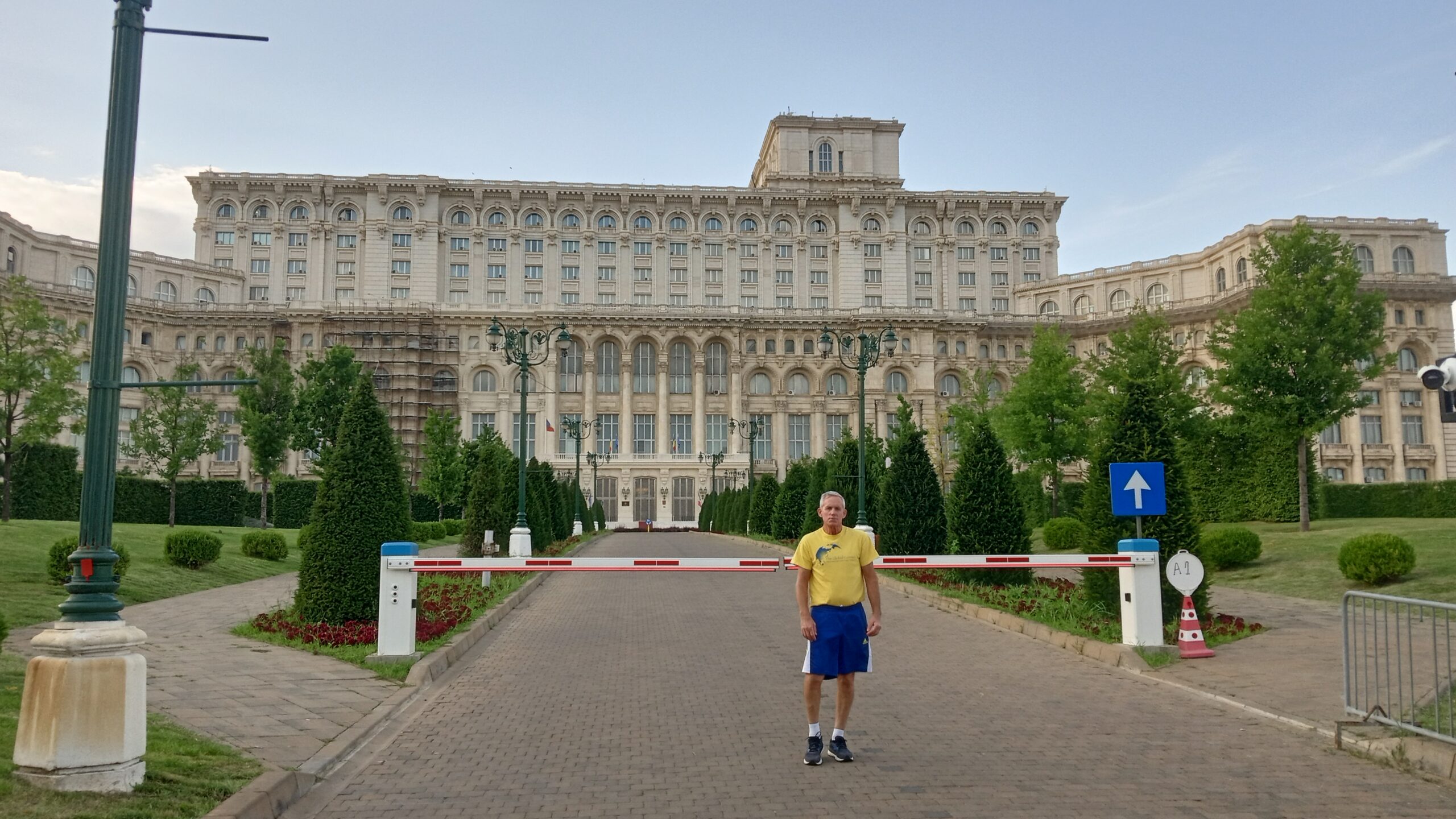
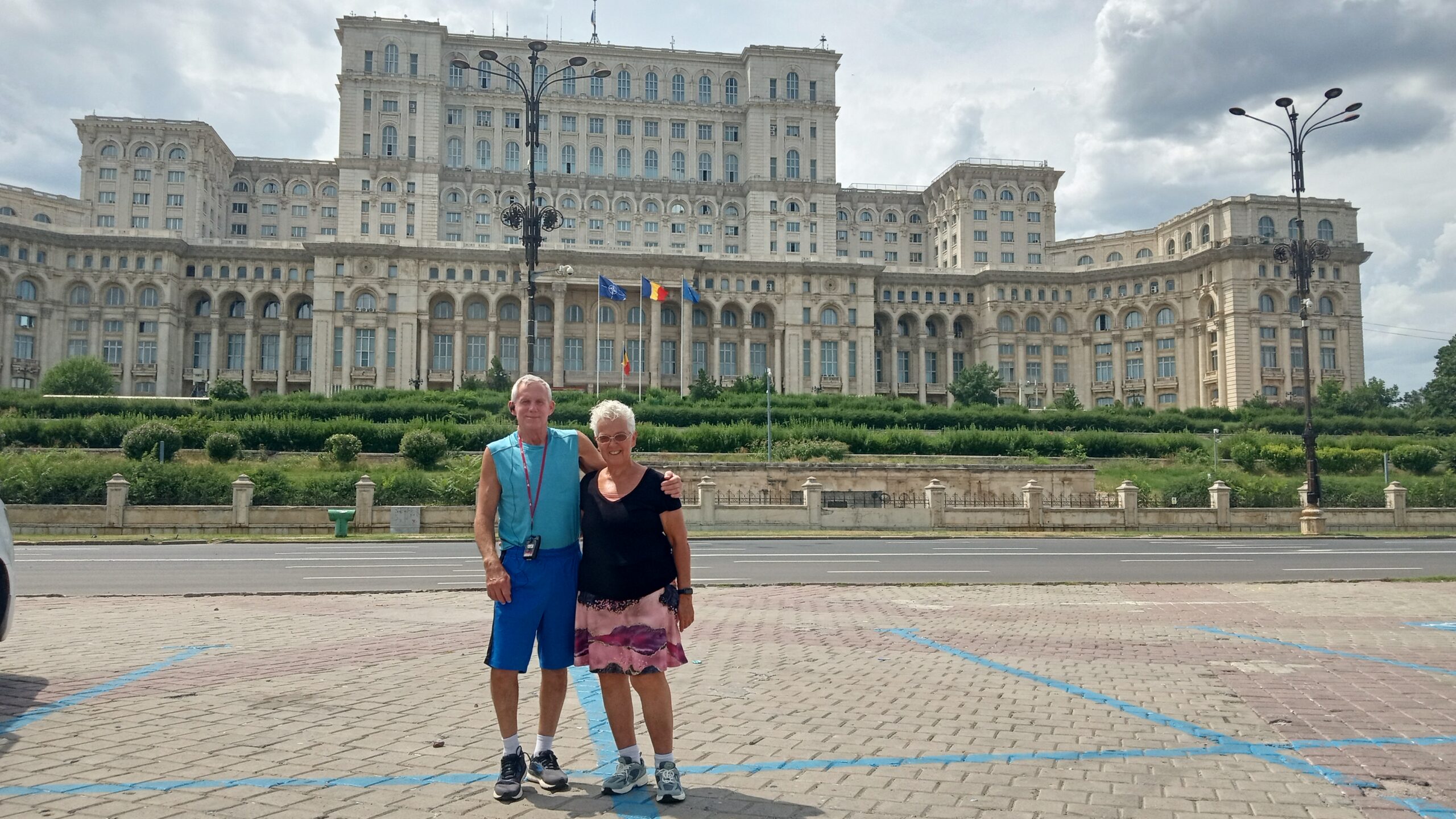
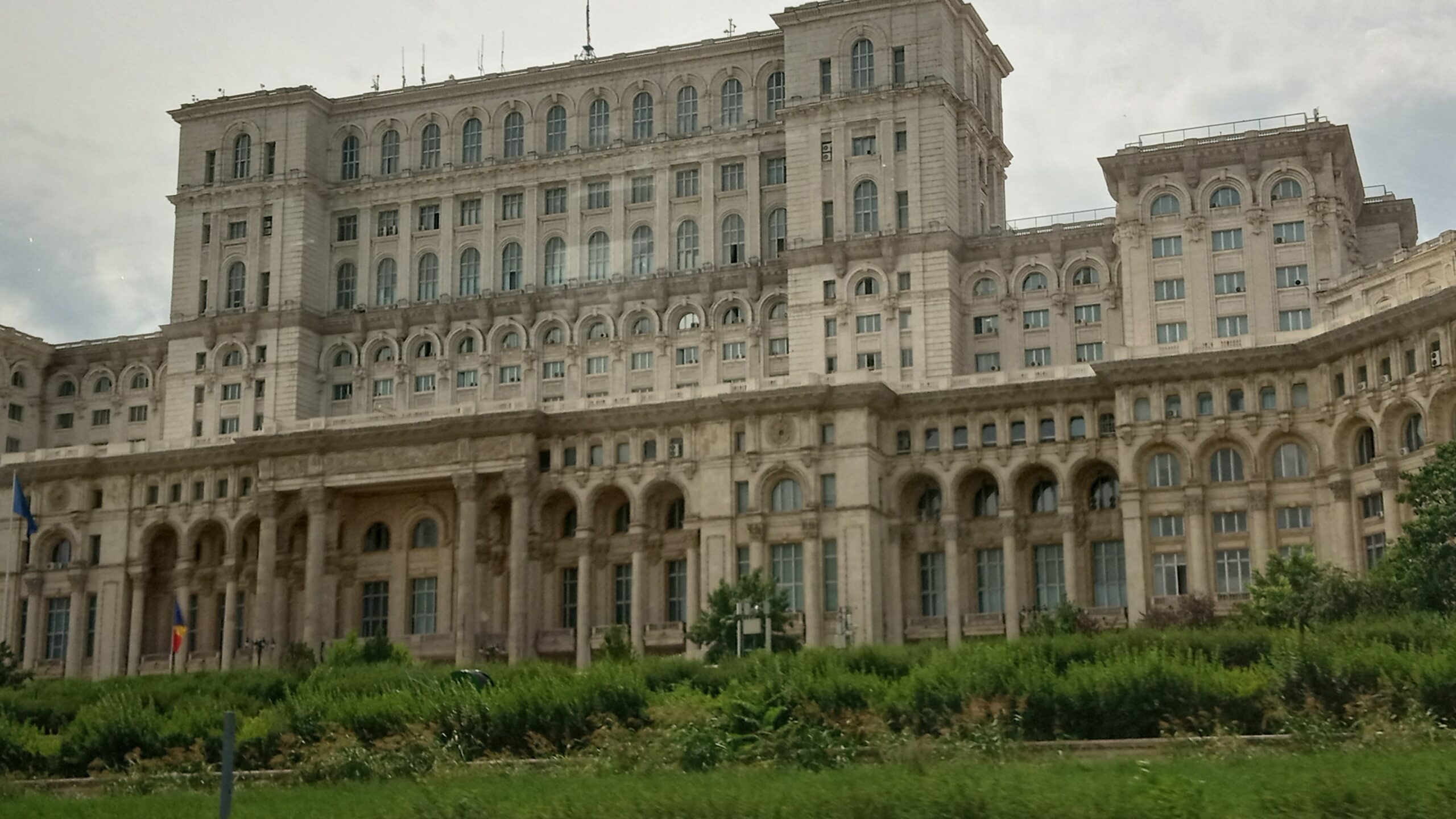
We then walked from our hotel to the city Parliament
building, had a meal and relaxed at the
hotel’s swimming pool.
Day 5
Bucharest, Romania
Wednesday, July 8
Highlights of Bucharest
This morning we got in a small bus with 6 other Viking
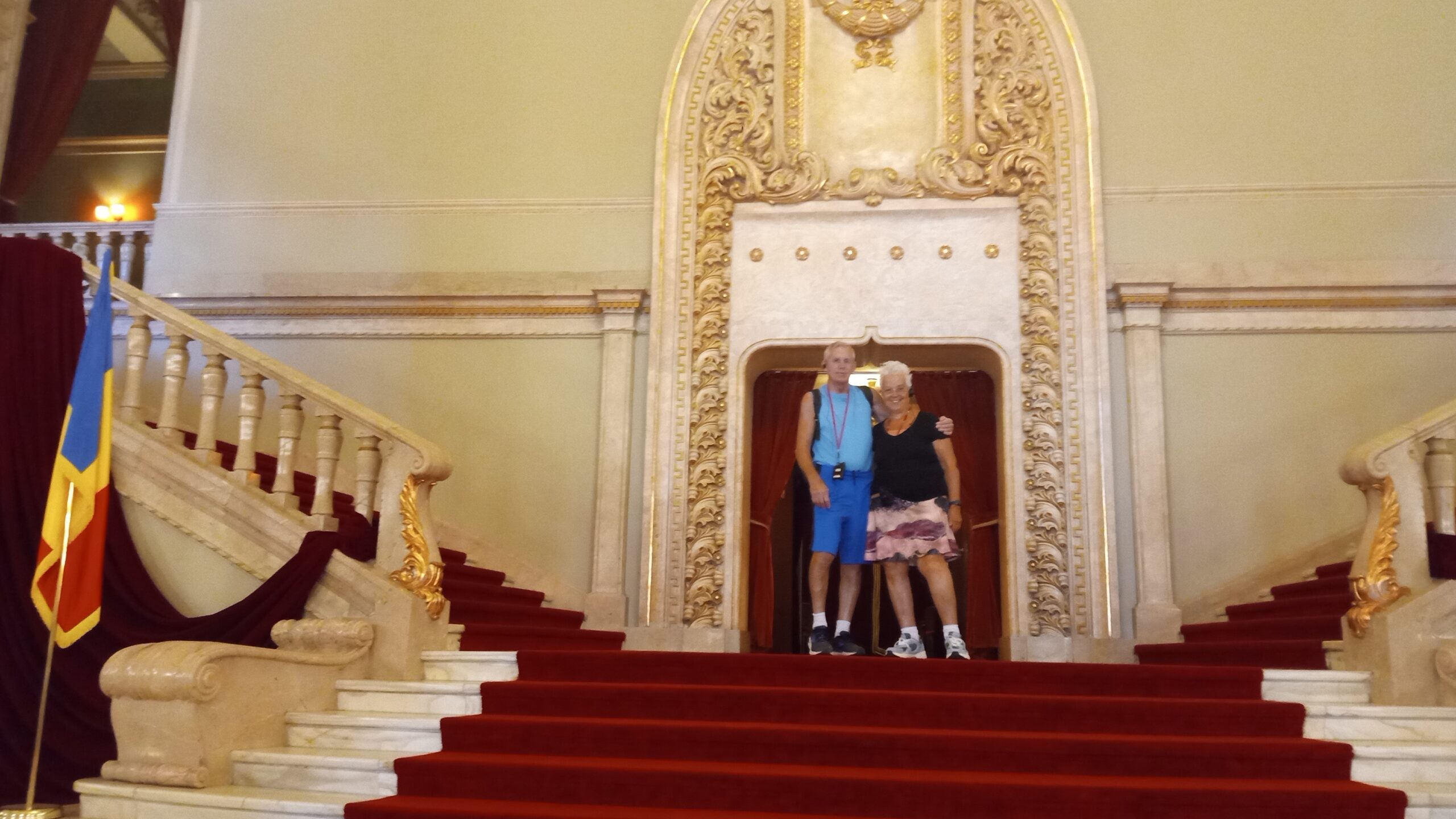
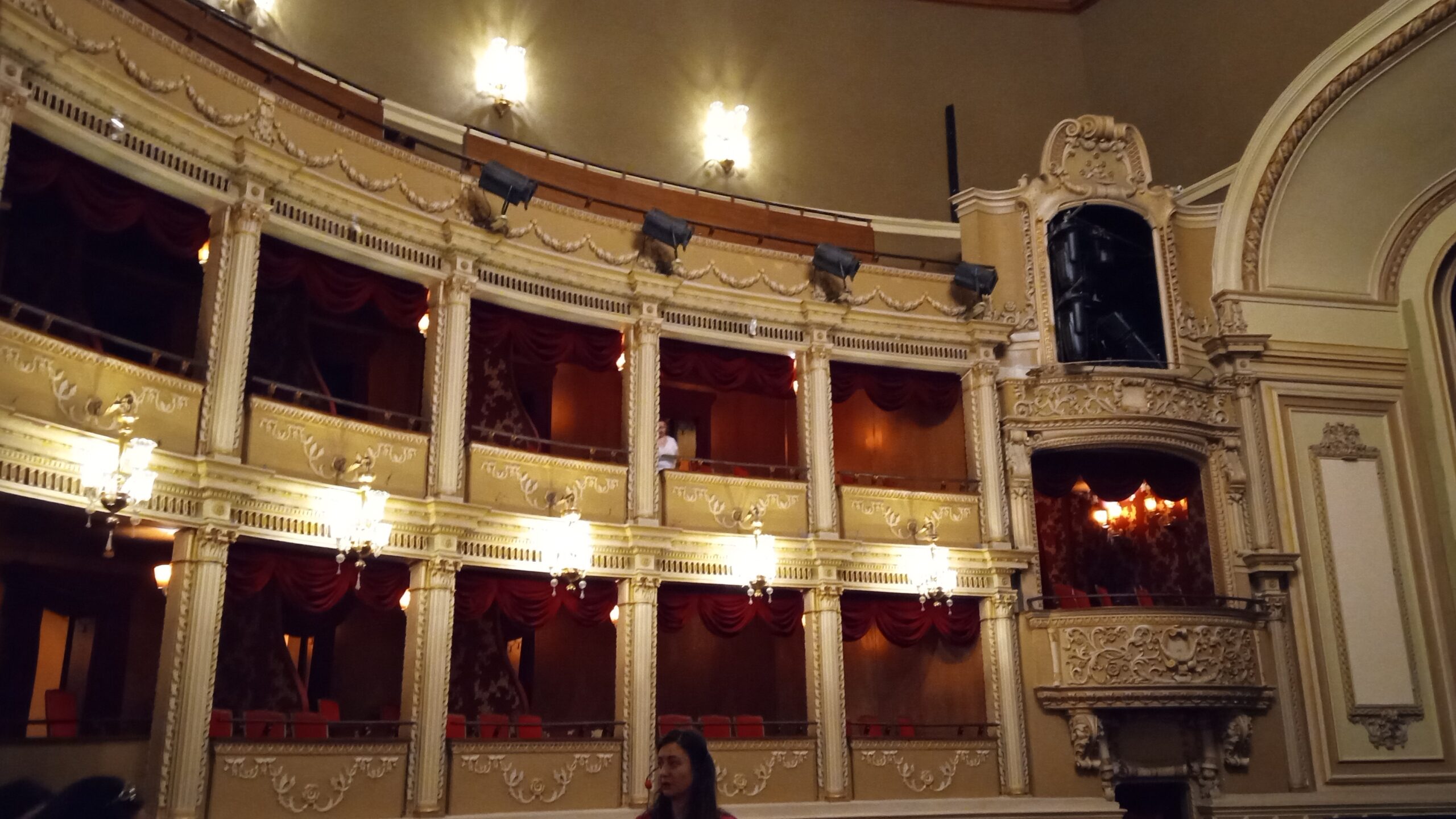
guests to start our tour. We first went to the Bucharest
Opera to see the theater, backstage area and learned
how they put on operas.
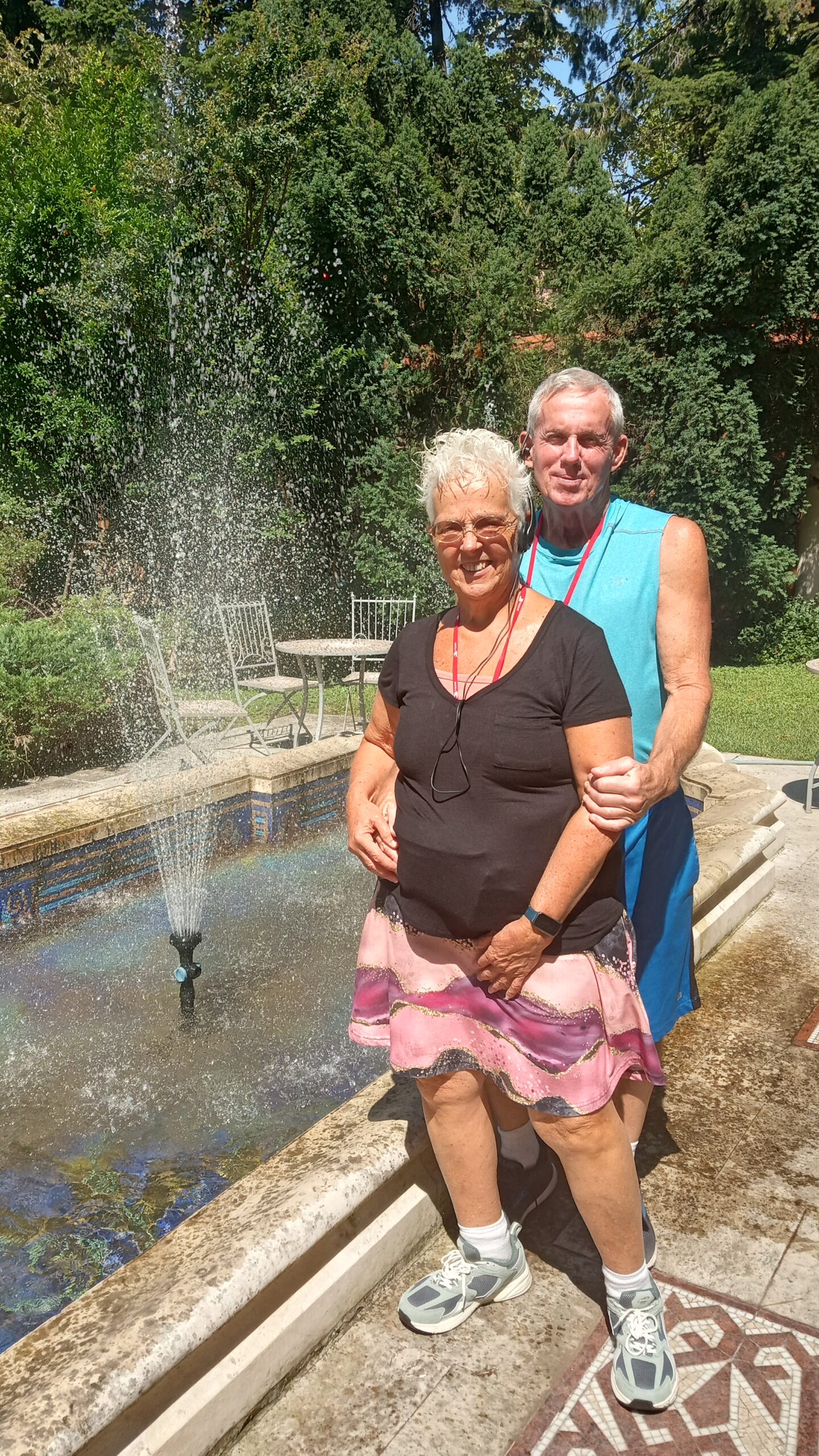
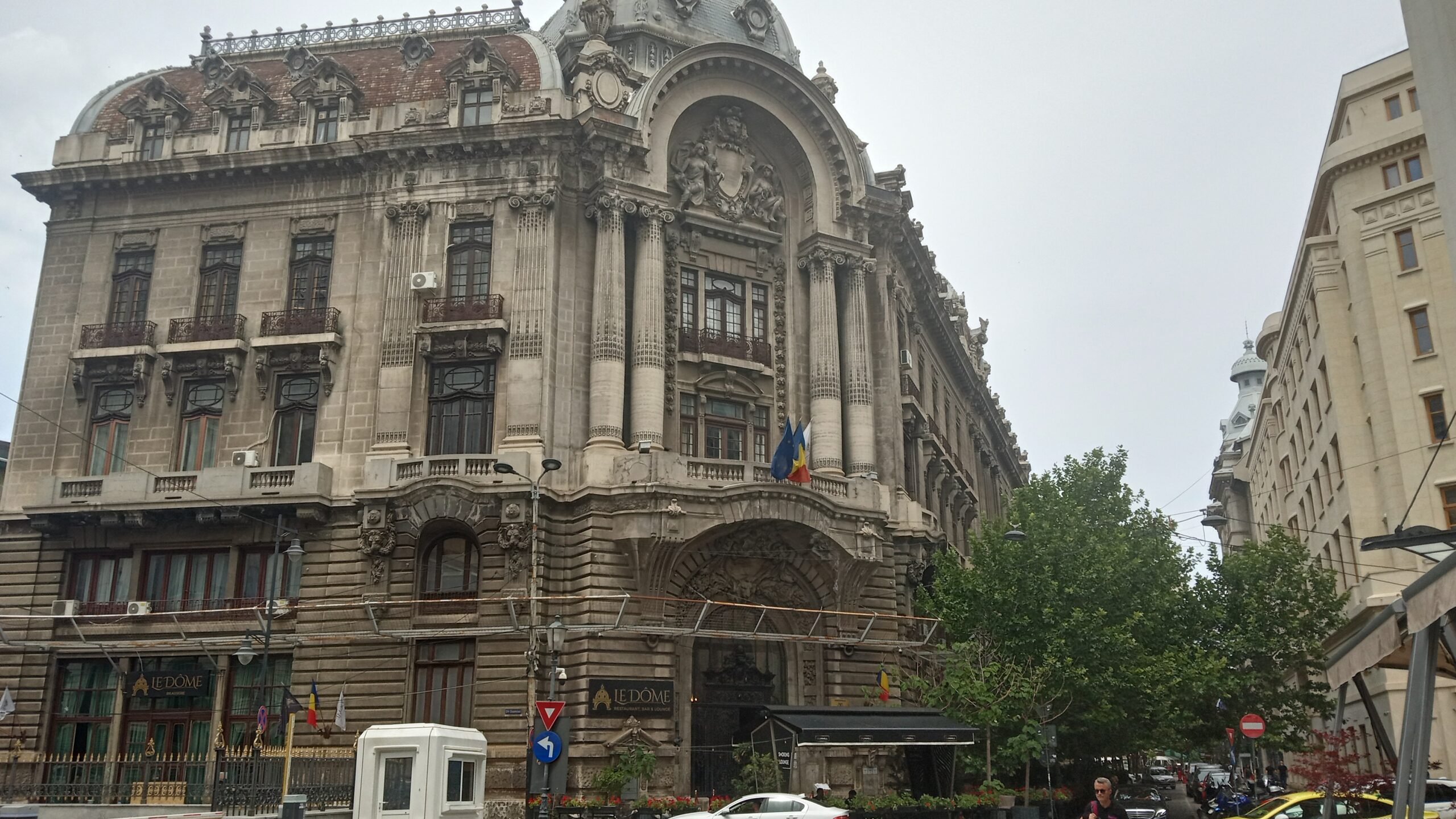
We then went to the opulent, large and ornate mansion
where the former dictator/president of Bucharest,
his wife and 3 childeen lived. It was over the top with 20+
rooms, swimming pool, fancy rugs, tables, chairs,
bathrooms etc. This dicatator was overthrown and killed
in 1989 – so his mansion was in a frozen time period.
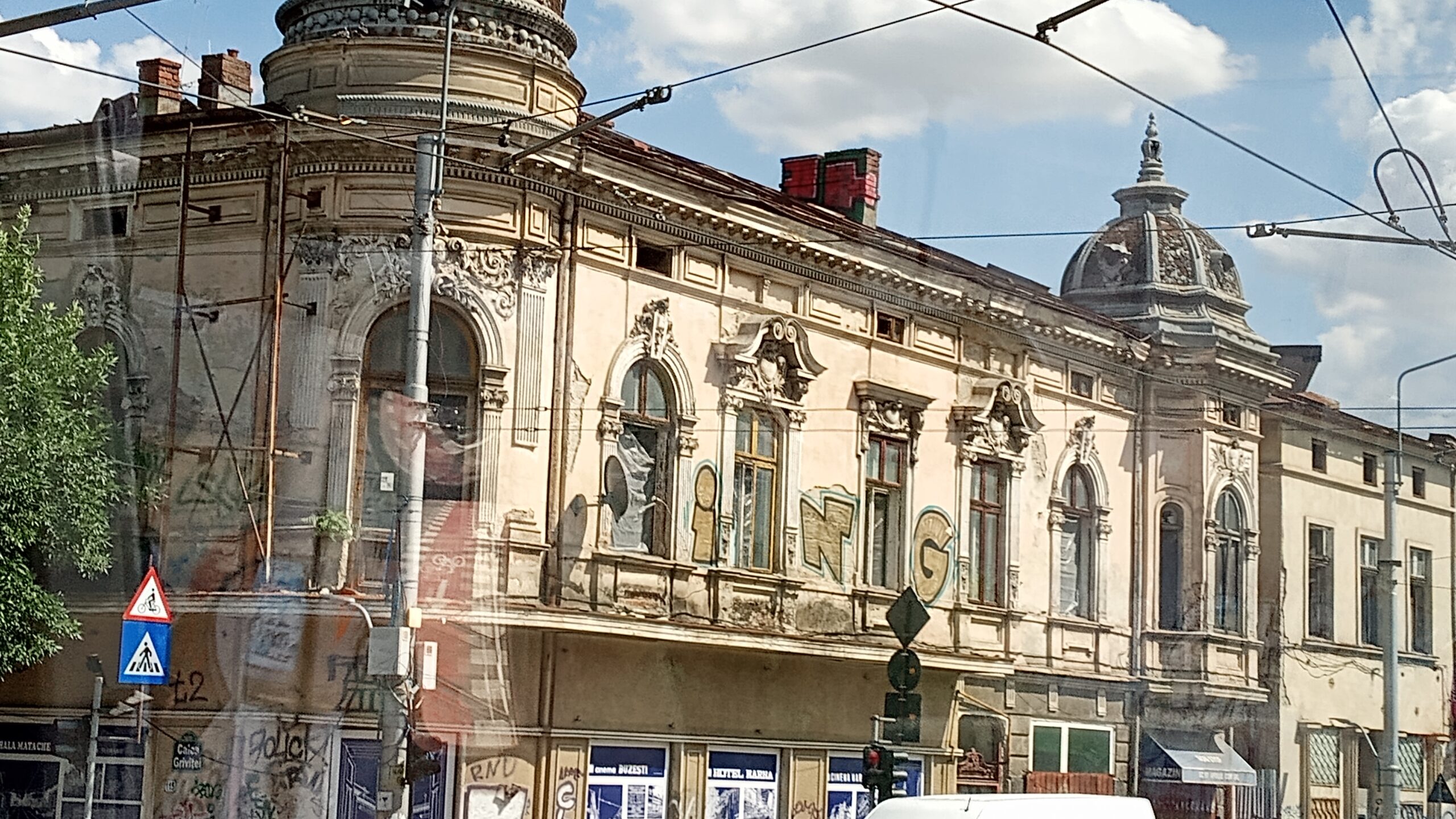
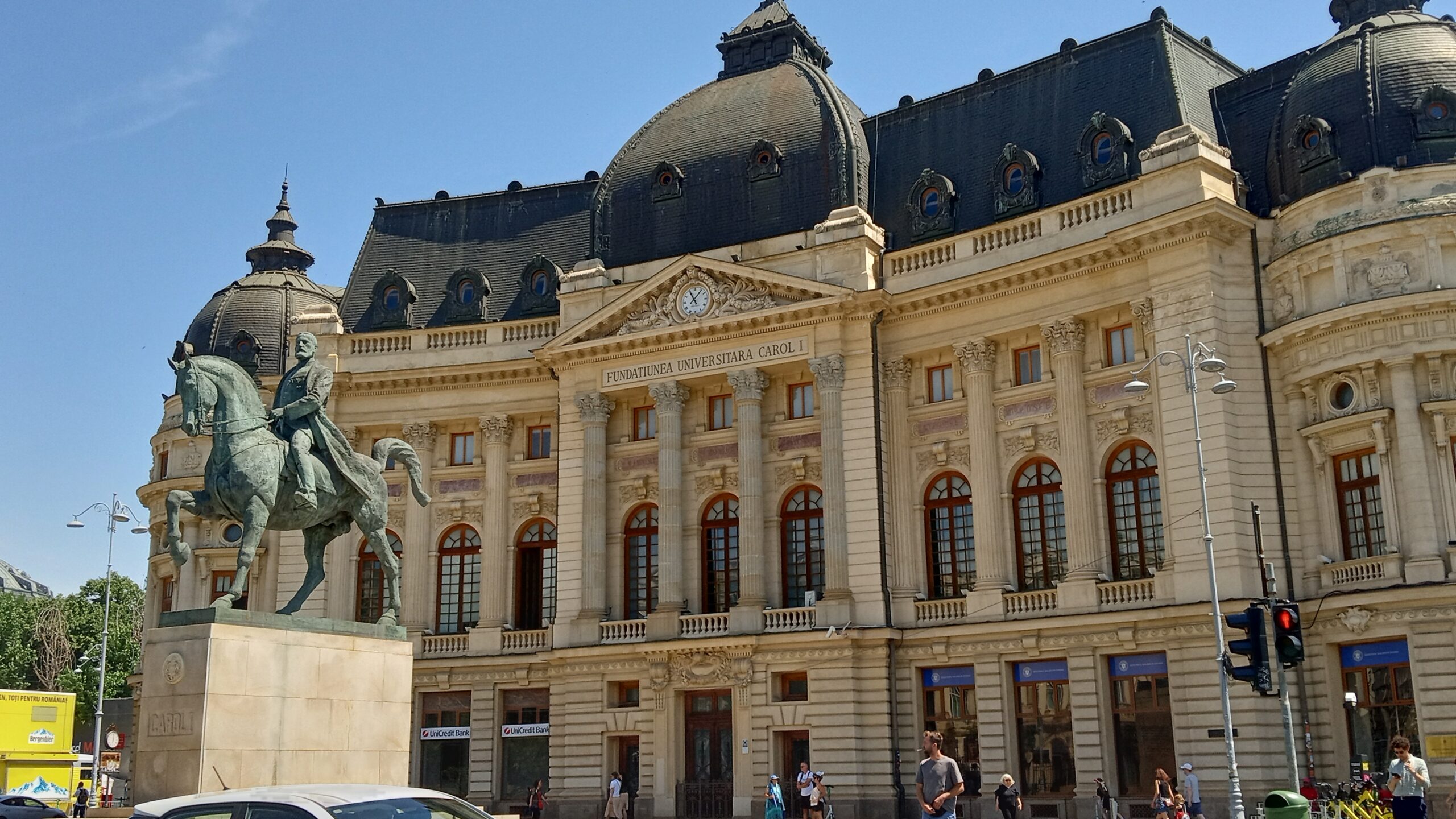
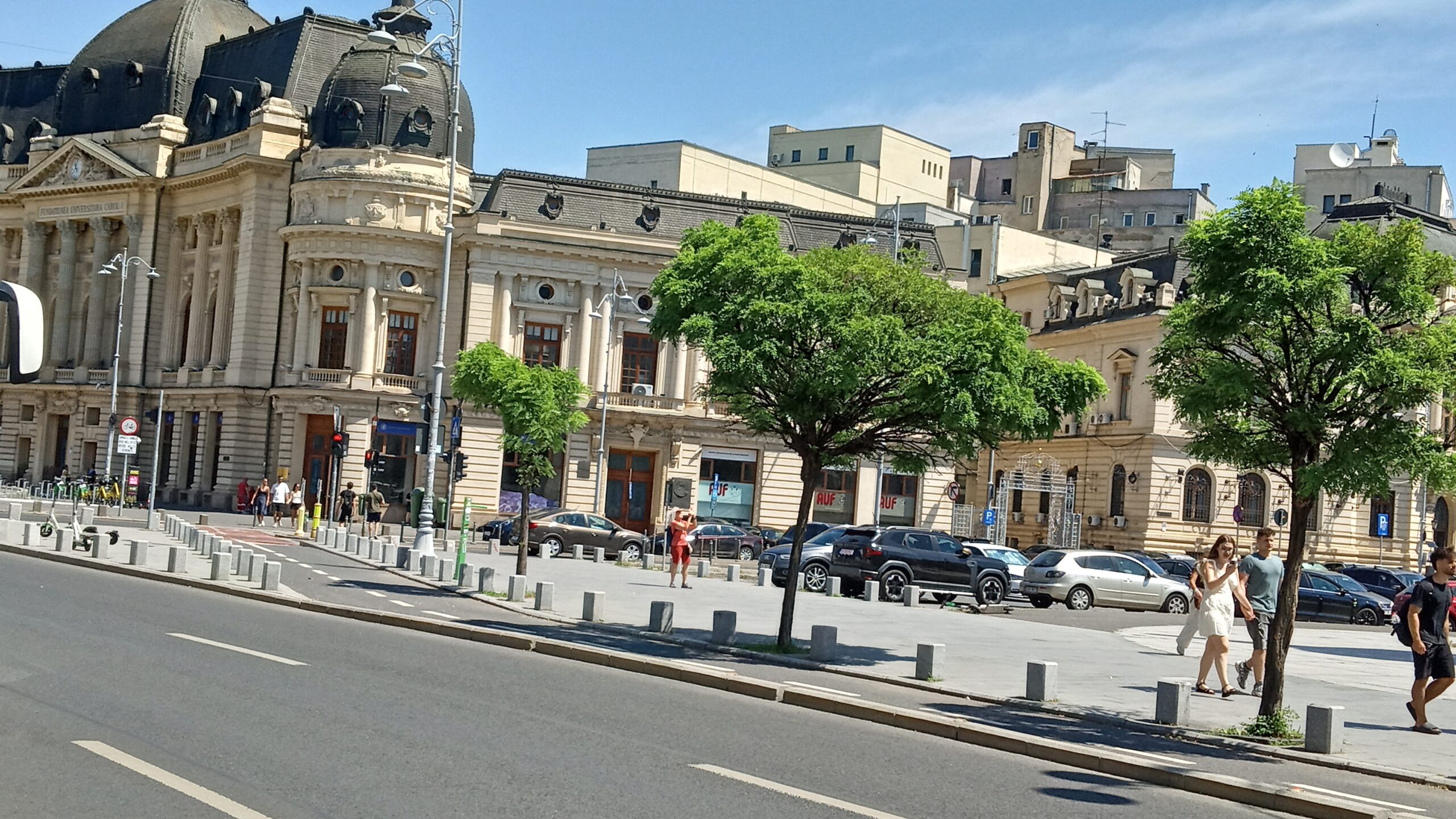
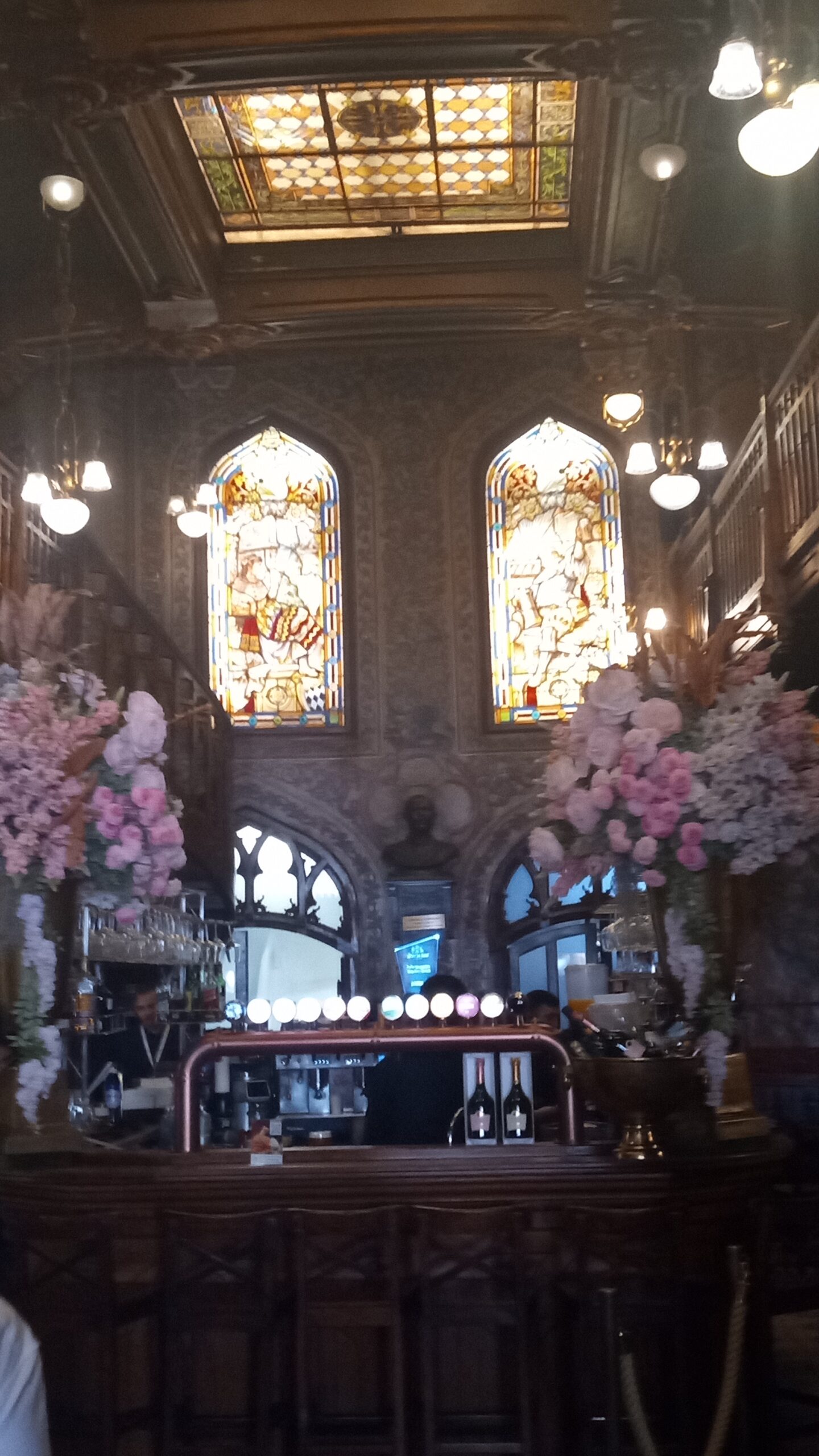
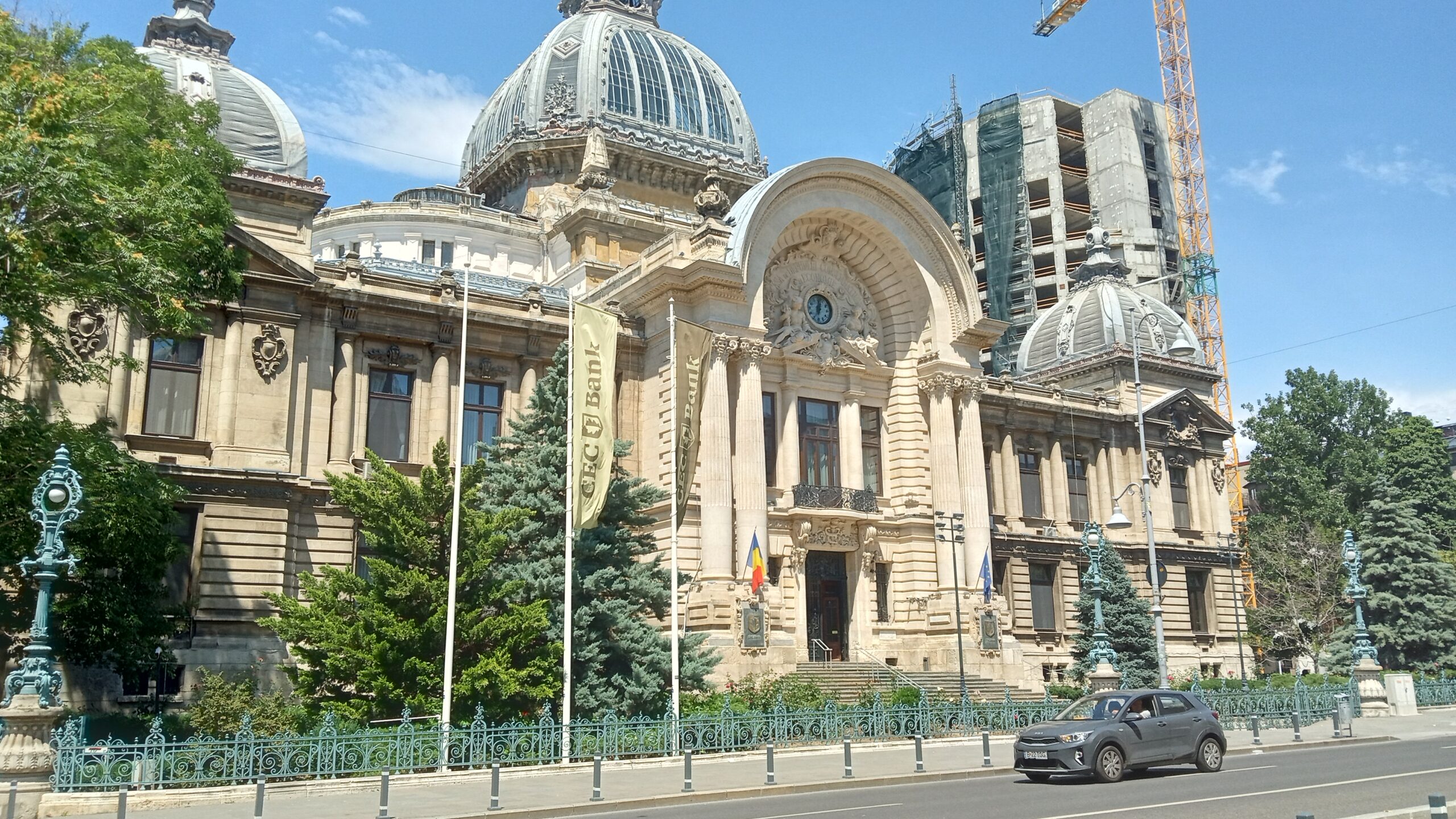
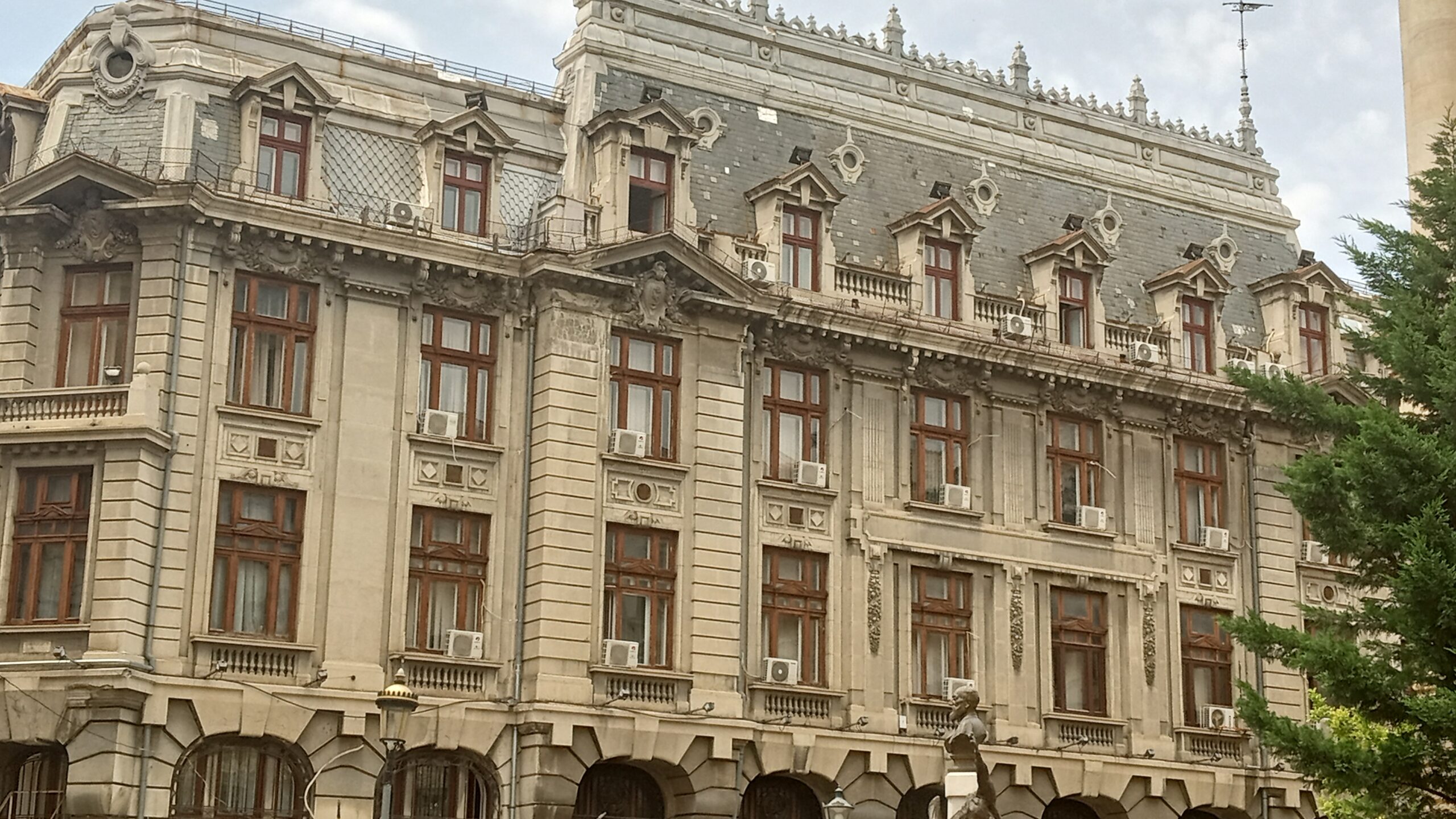
Our guide then took us into the old part of downtown
Bucharest where we saw dozens in buildings in a mish-
mash of architectural styles. We saw many Soviet style
dull, monolithic block style buildings, French Baroque,
Art Nuvous, neoclassical and late 19th century buildings
on many streets in the older part of town.
We then had lunch at a nearby traditional Romanian
restaurant with a five course meal.
After lunch we finally got to our Viking ship where we
settled in a 170 square foot room with a large window
that opens up to view the rivers we will be sailing on.
We unpacked, had a large orientation meeting with
180 other Viking guests and then had
a wonderful meal in their restaurant.
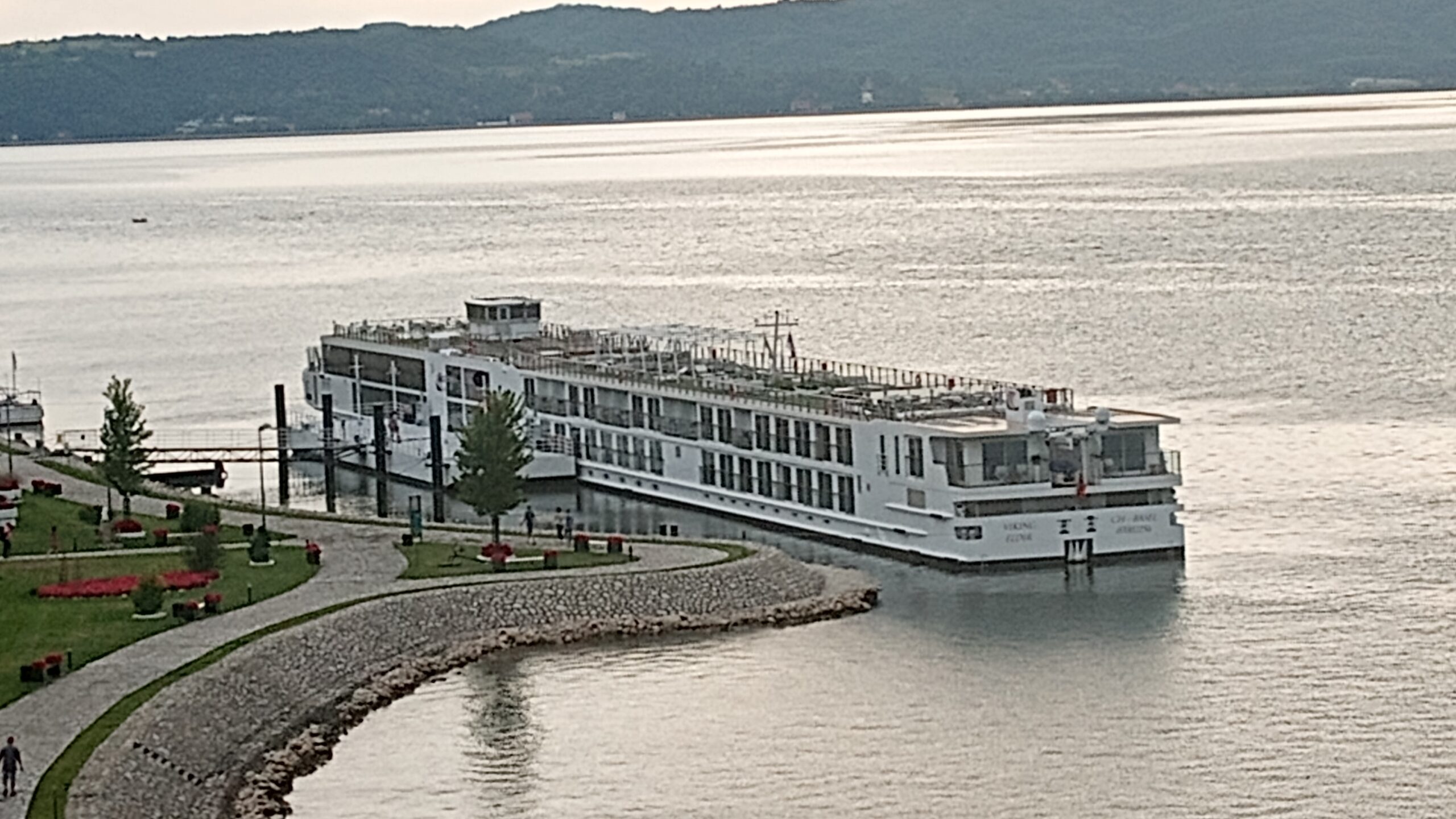
A few words to describe
our ship, the Viking Eldir.
She holds 190 passengers plus crew. Her length is
440 feet with 4 main levels. The top level is a lounge
and sun deck – we are on level 2. Our stateroom is
170 square feet and it’s tight. Not much room to
manuever, but has a nice full open up sliding balcony door.
We eat in the Restaurant either buffet style for
breakfast or sit down, order from a menu for lunch
and dinner. We always eat with other people
at tables that sit 6 or 8.
We have been treated well, are well fed and the scenery
going up river is nice with sandy riverbanks. We travel at
10 mph or 10 knots. The ship parks on the banks
with a gangplank to get off and on.
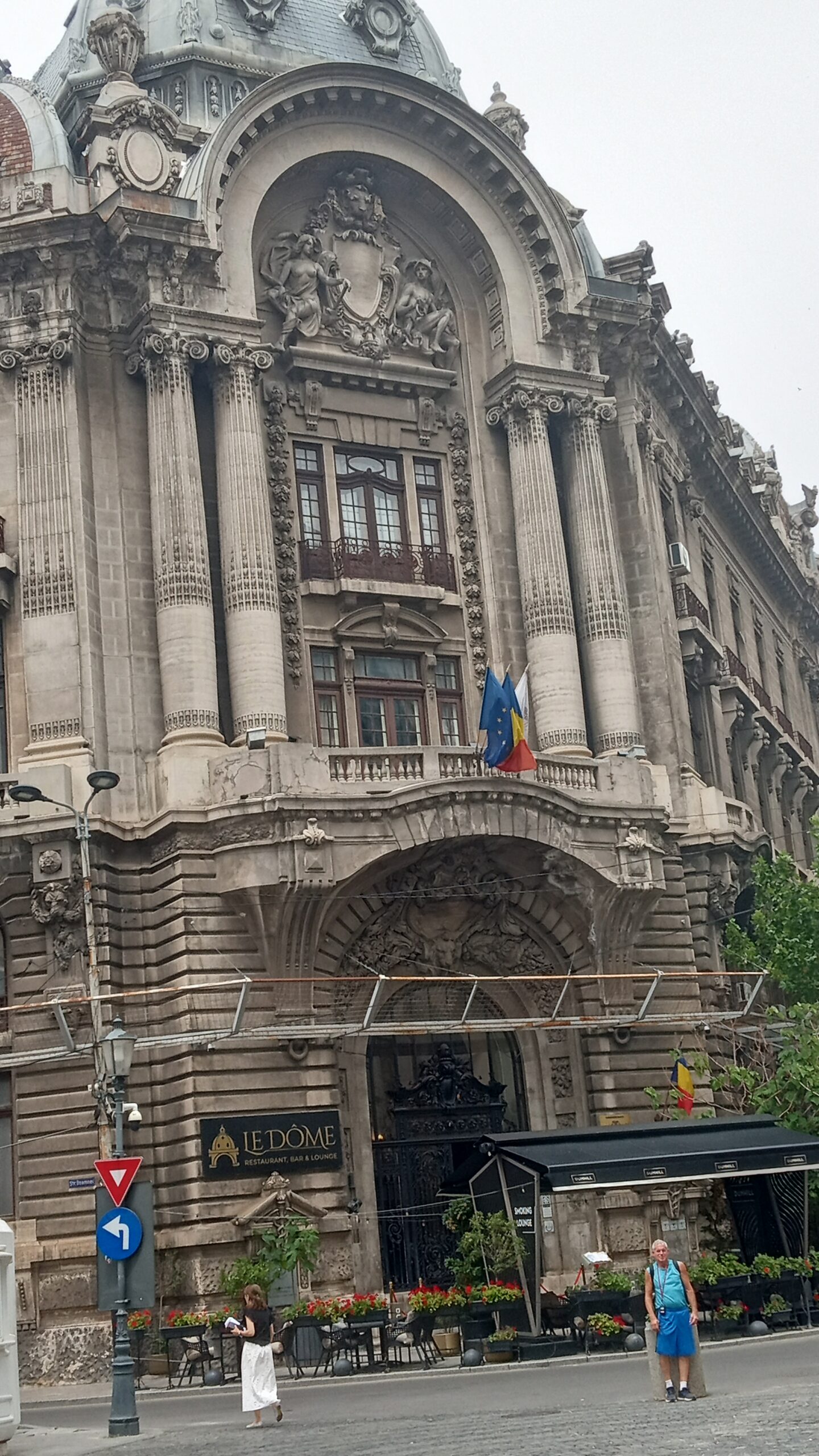
Day 6
Ruse, Bulgaria
Thursday, July 9
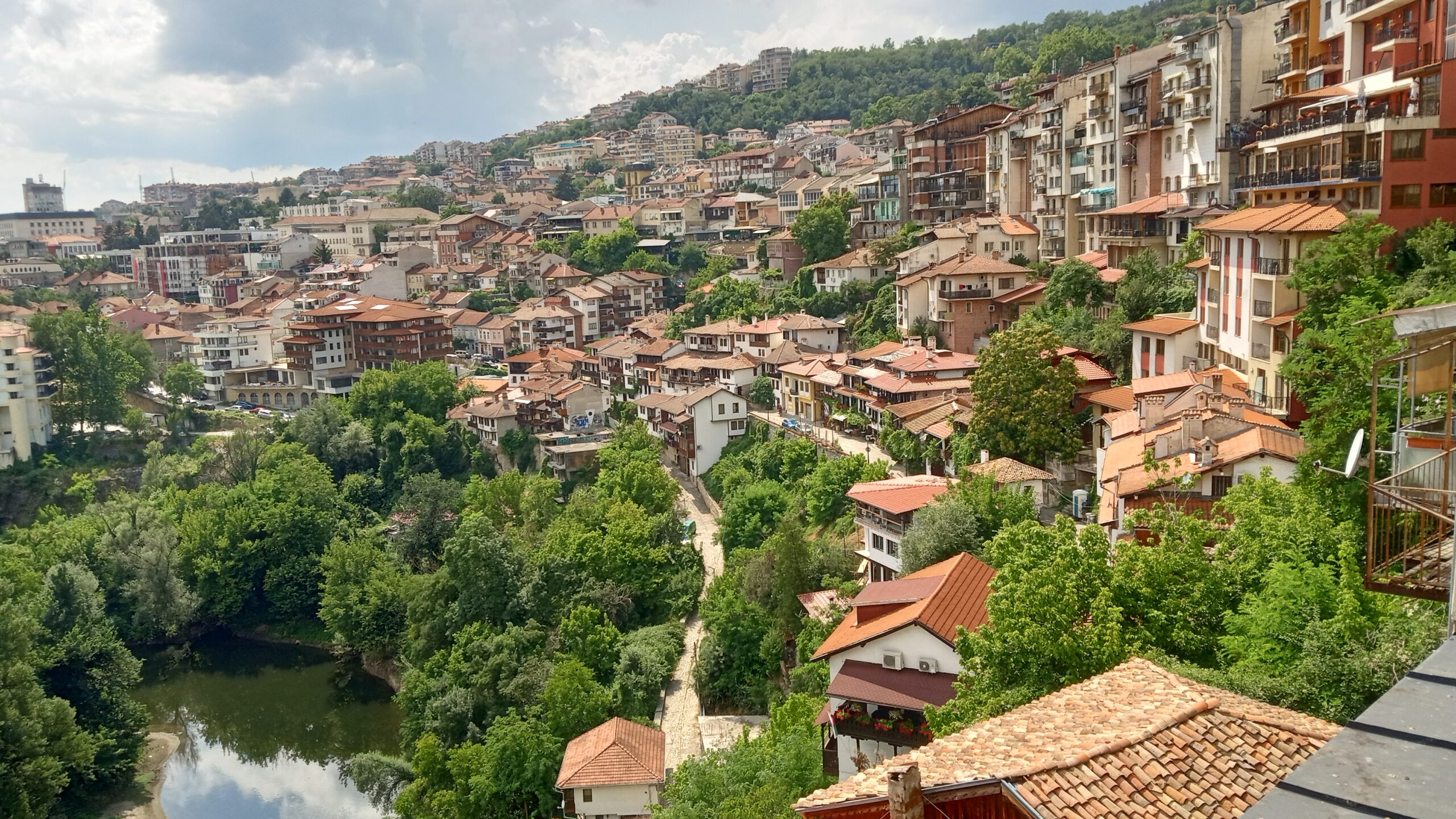
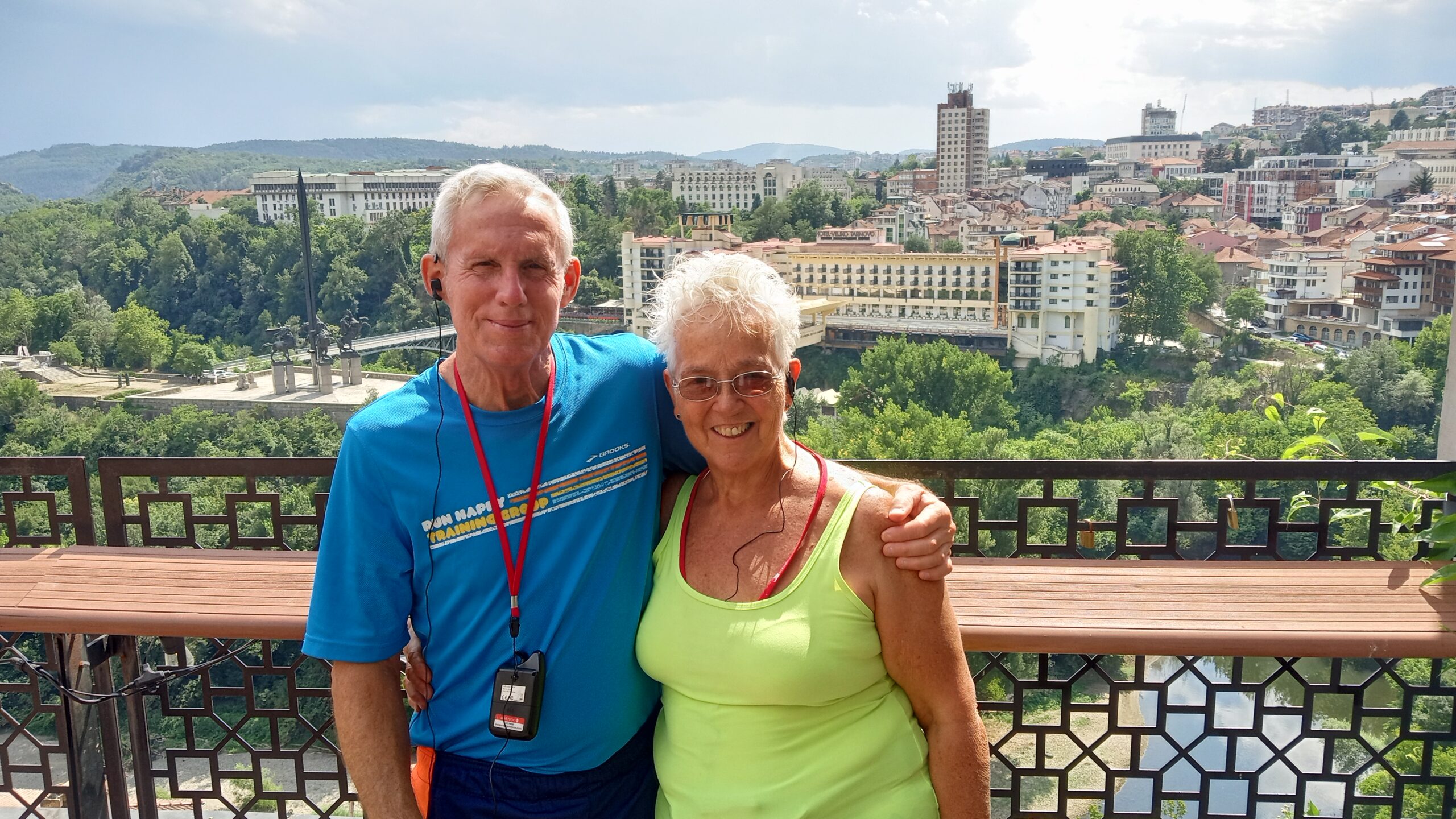
Veliko Tarnovo & Arbanasi
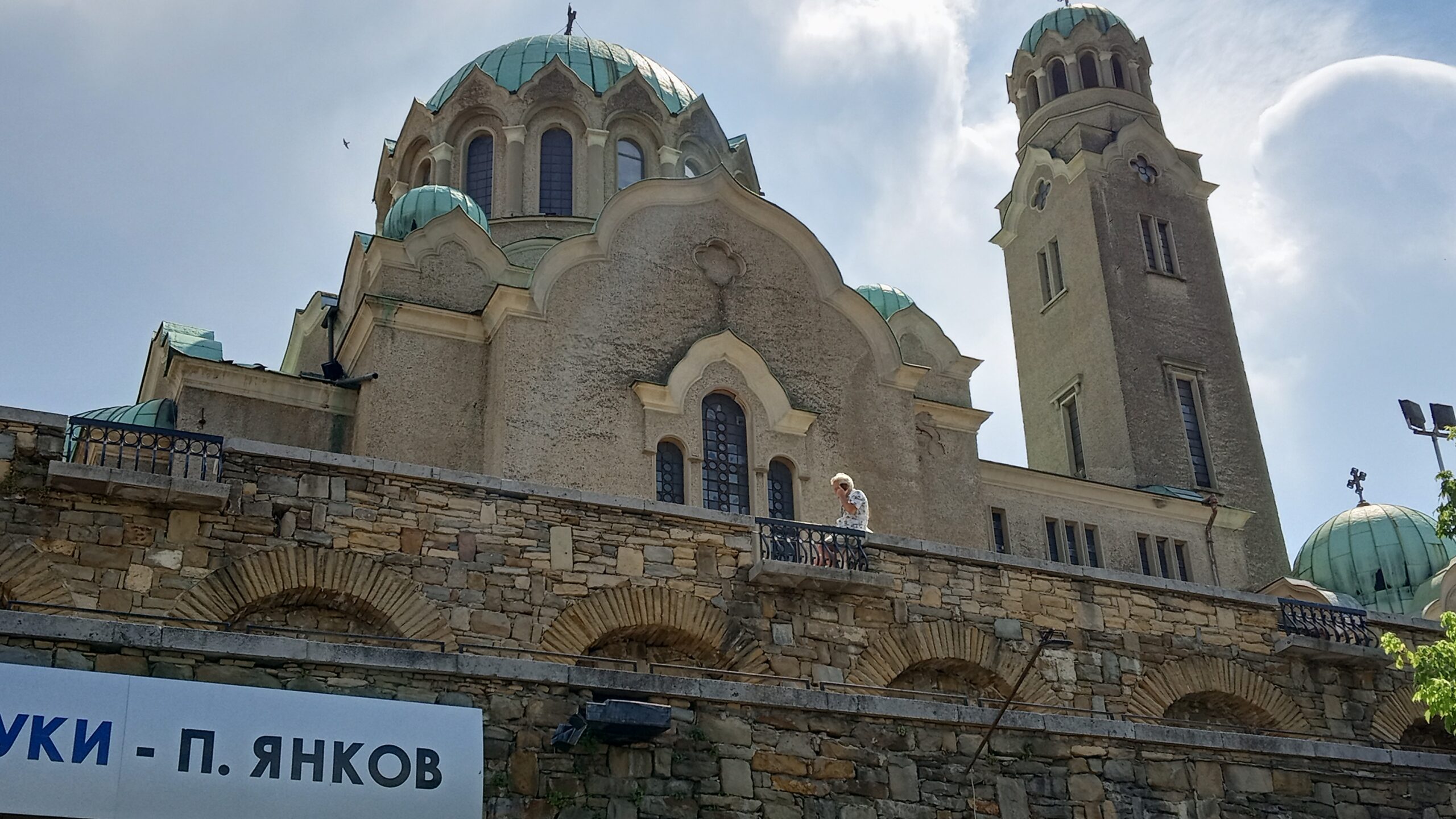
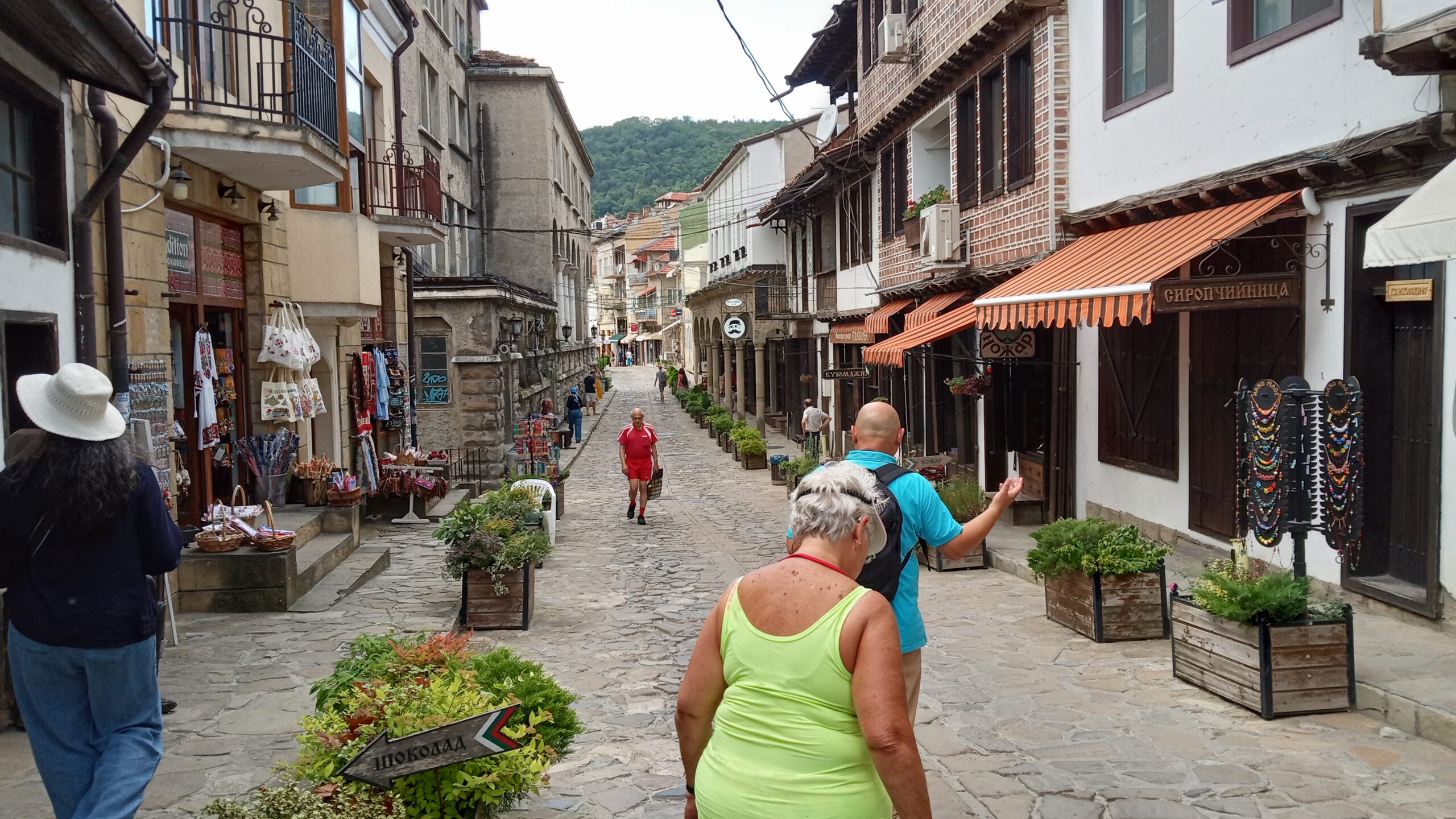
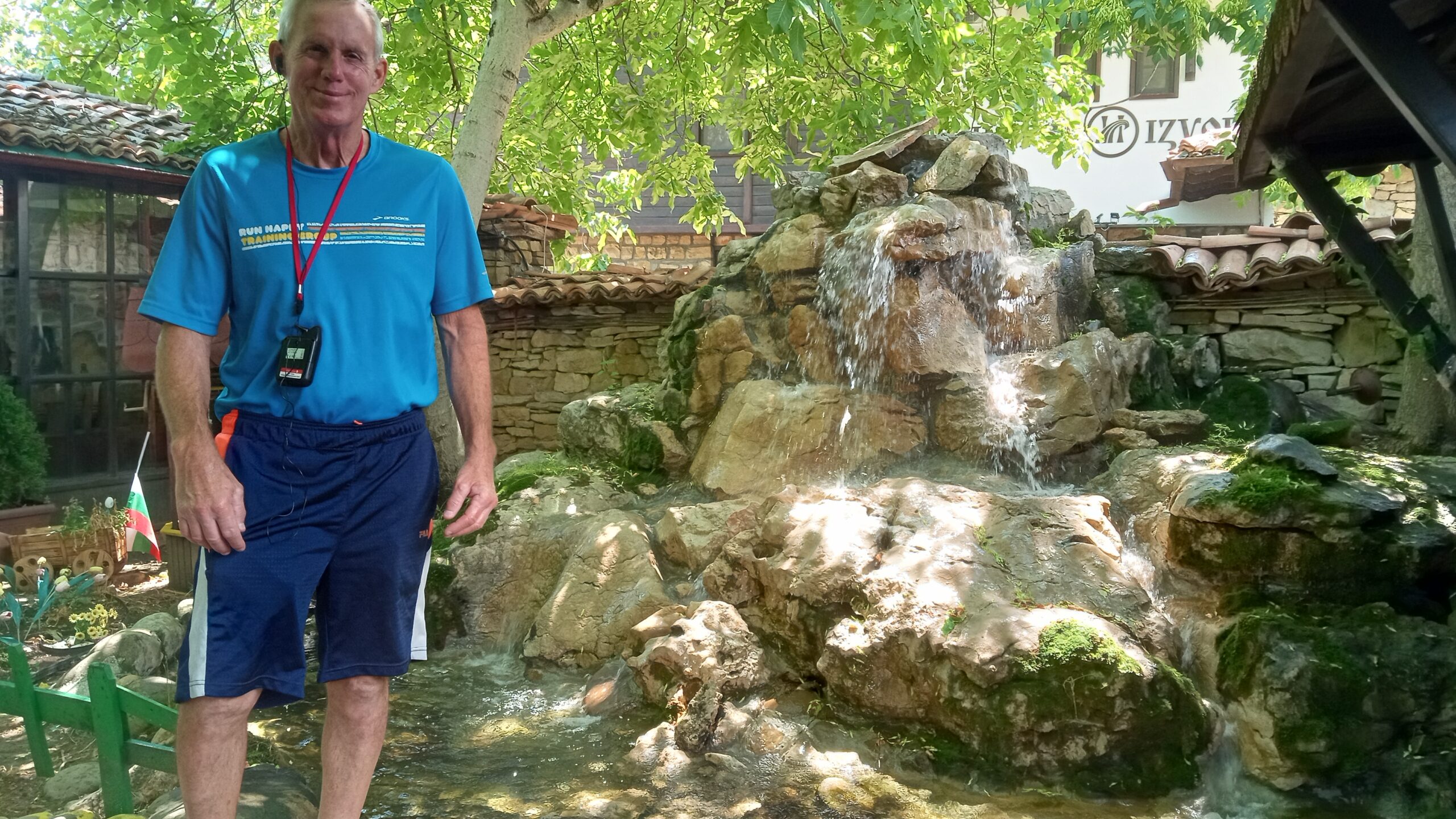
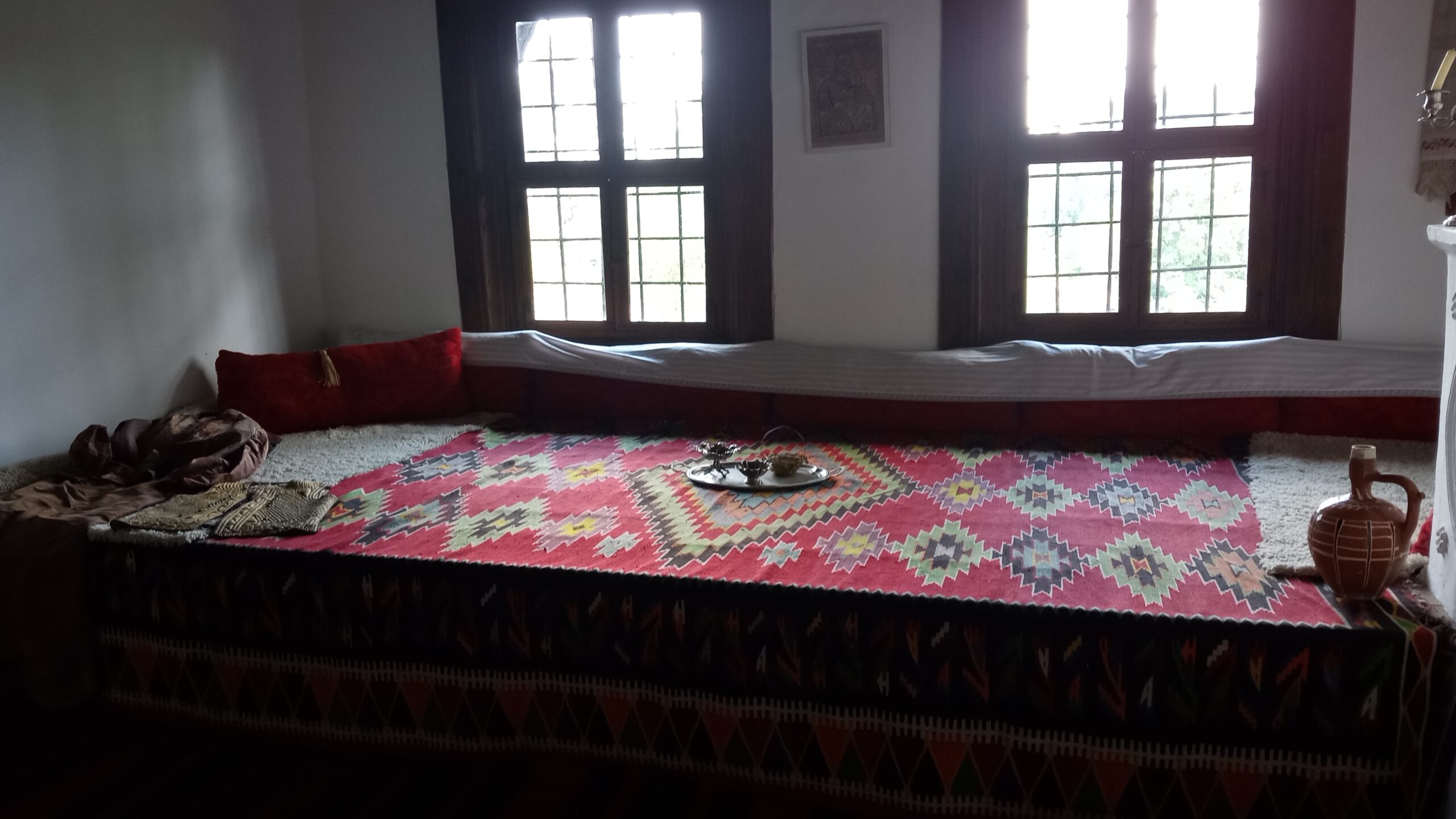
This morning our bus tour took us deep into Bulgaria. We
stopped at a medieval town that was restored to its original
17th century condition. The house and surroundings was
called Veliko Tarnovo. We saw how rich people lived
hundreds of years ago.
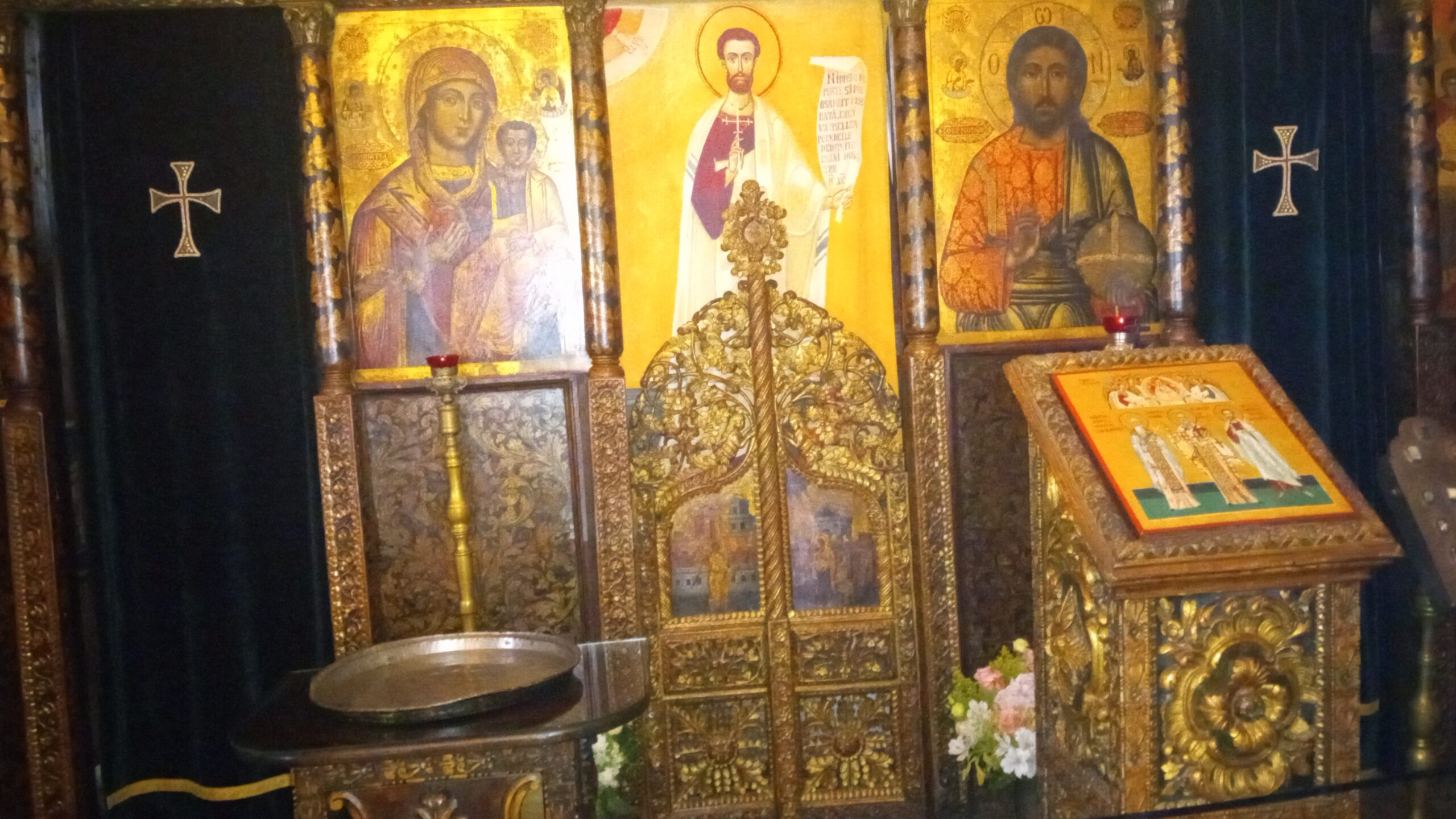
We then took a tour of a Christian wooden church
complete with painted walls and ceilings, frescos and
Greek Orthodox art from way back in the day.
We had a traditional Bulgarain lunch at a local restaurant
with costumed folk dancers.
We had gulash, salad and soup.
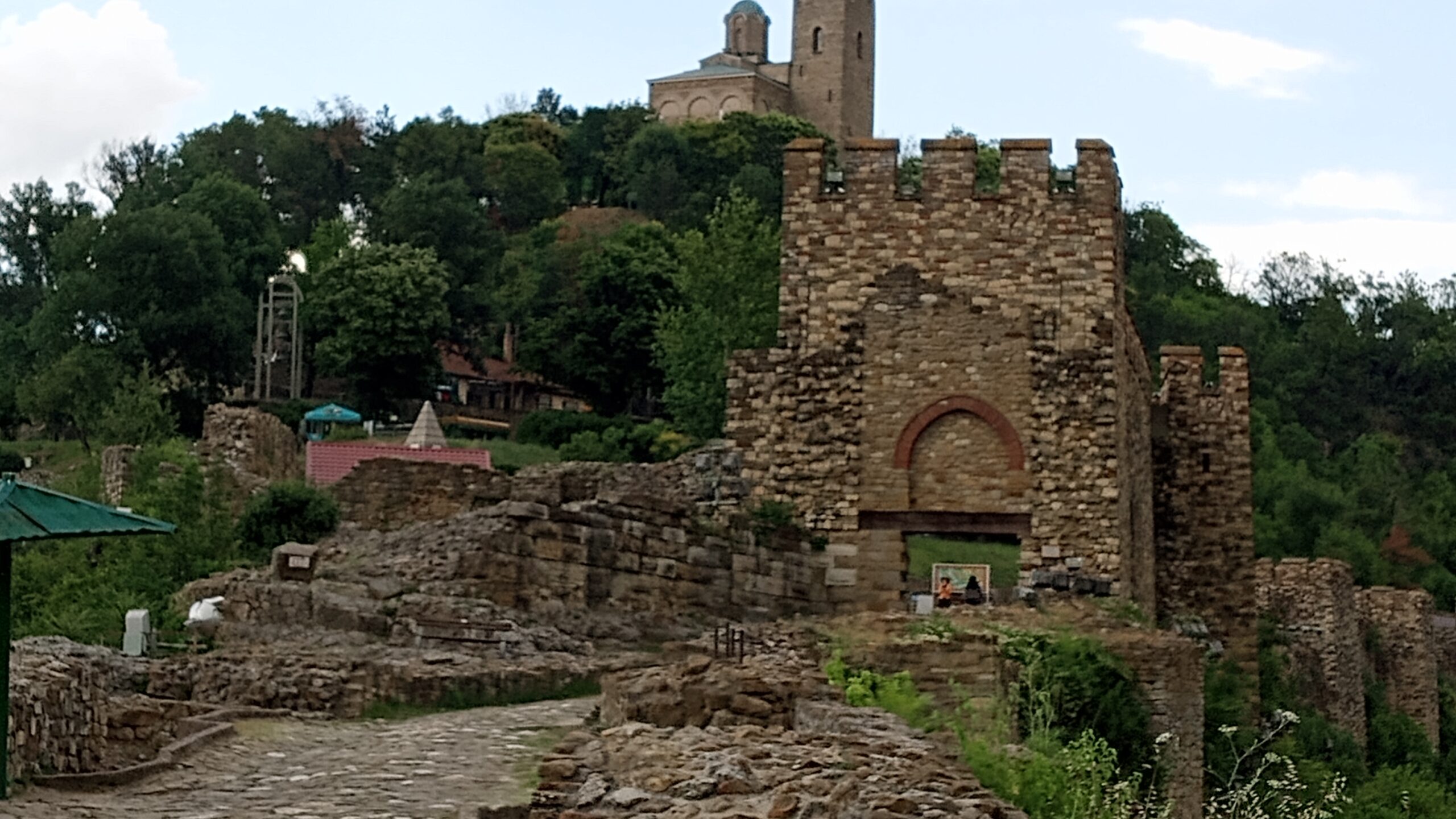
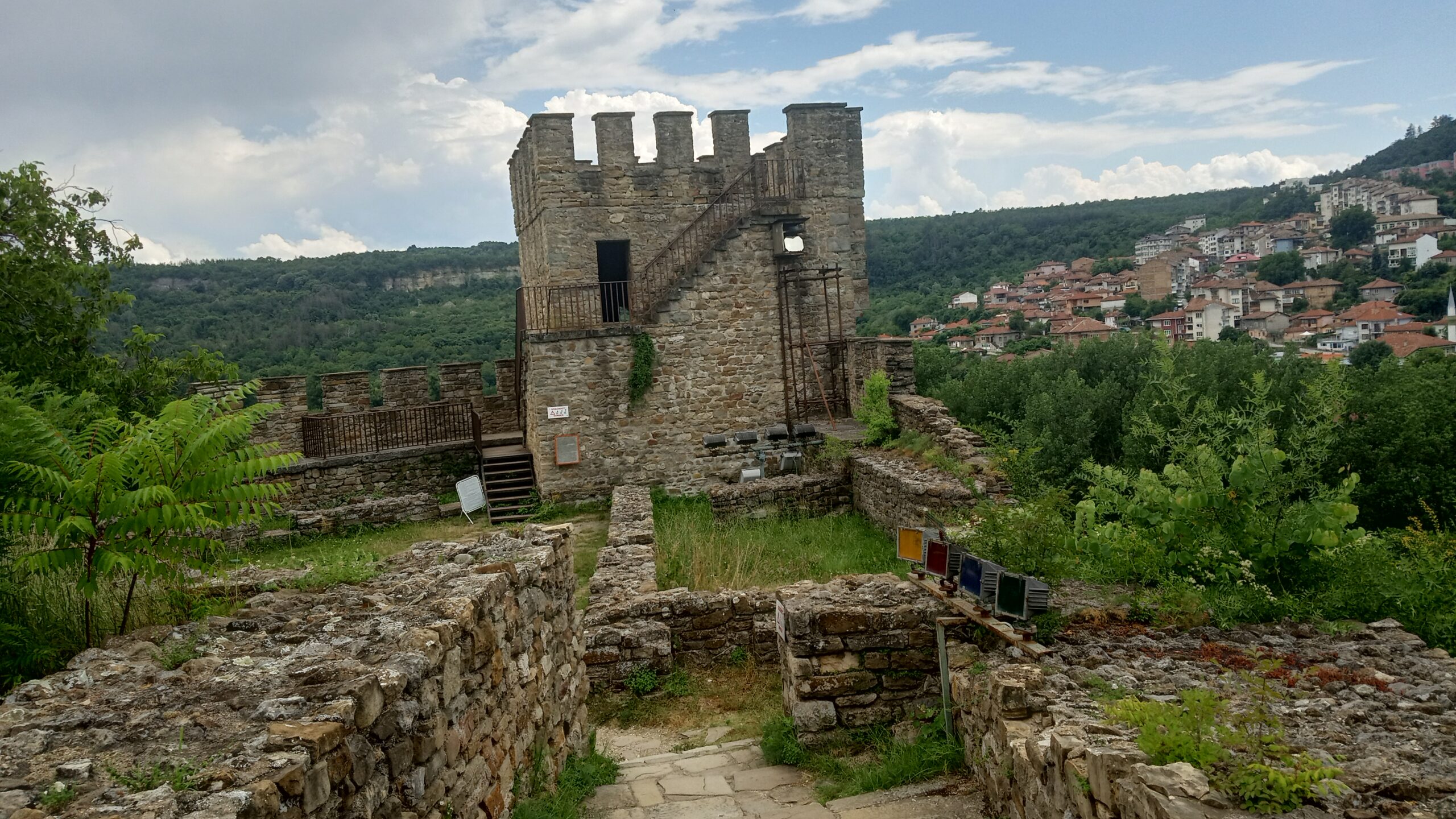
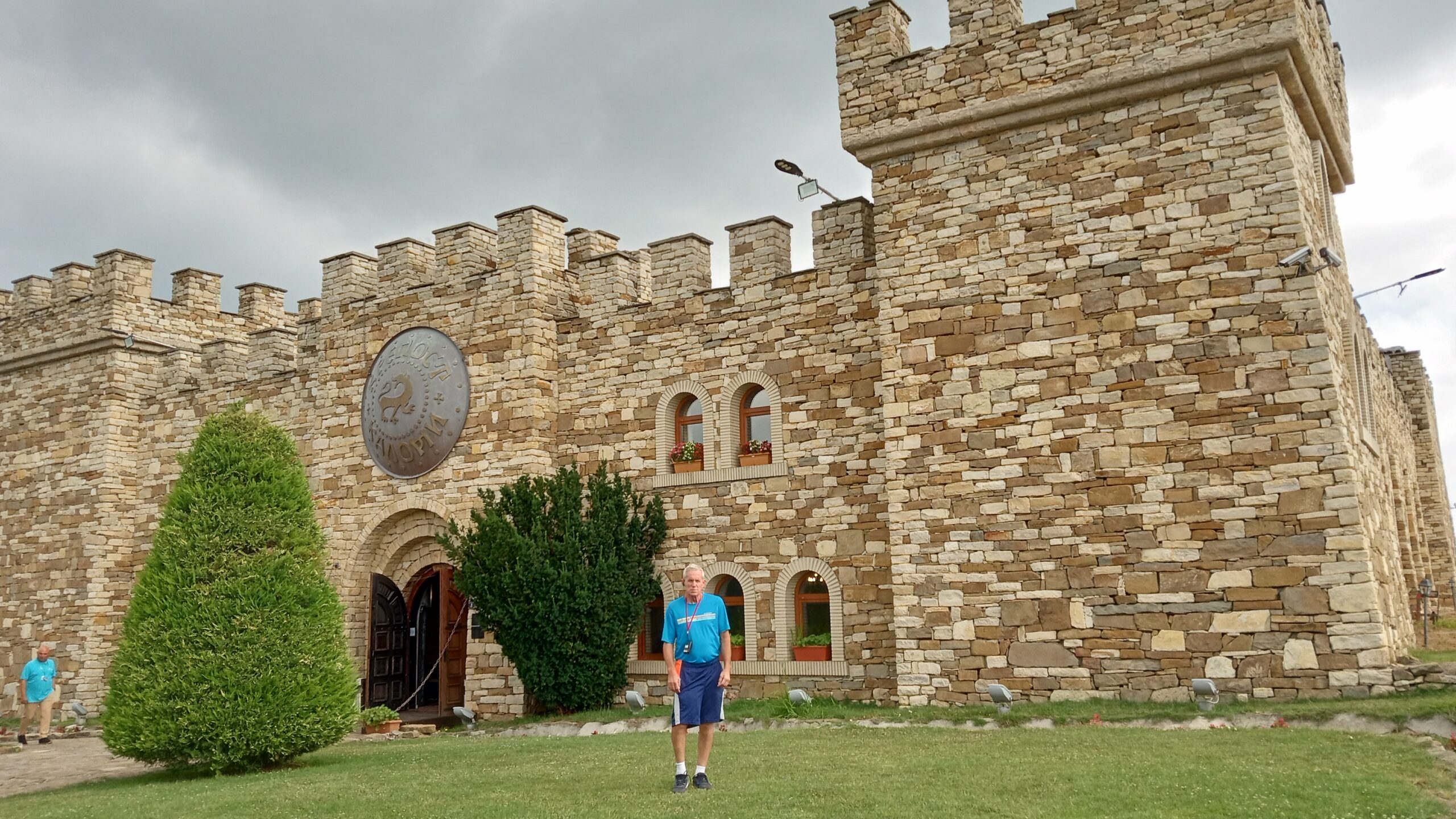
The best part was where we stopped at another
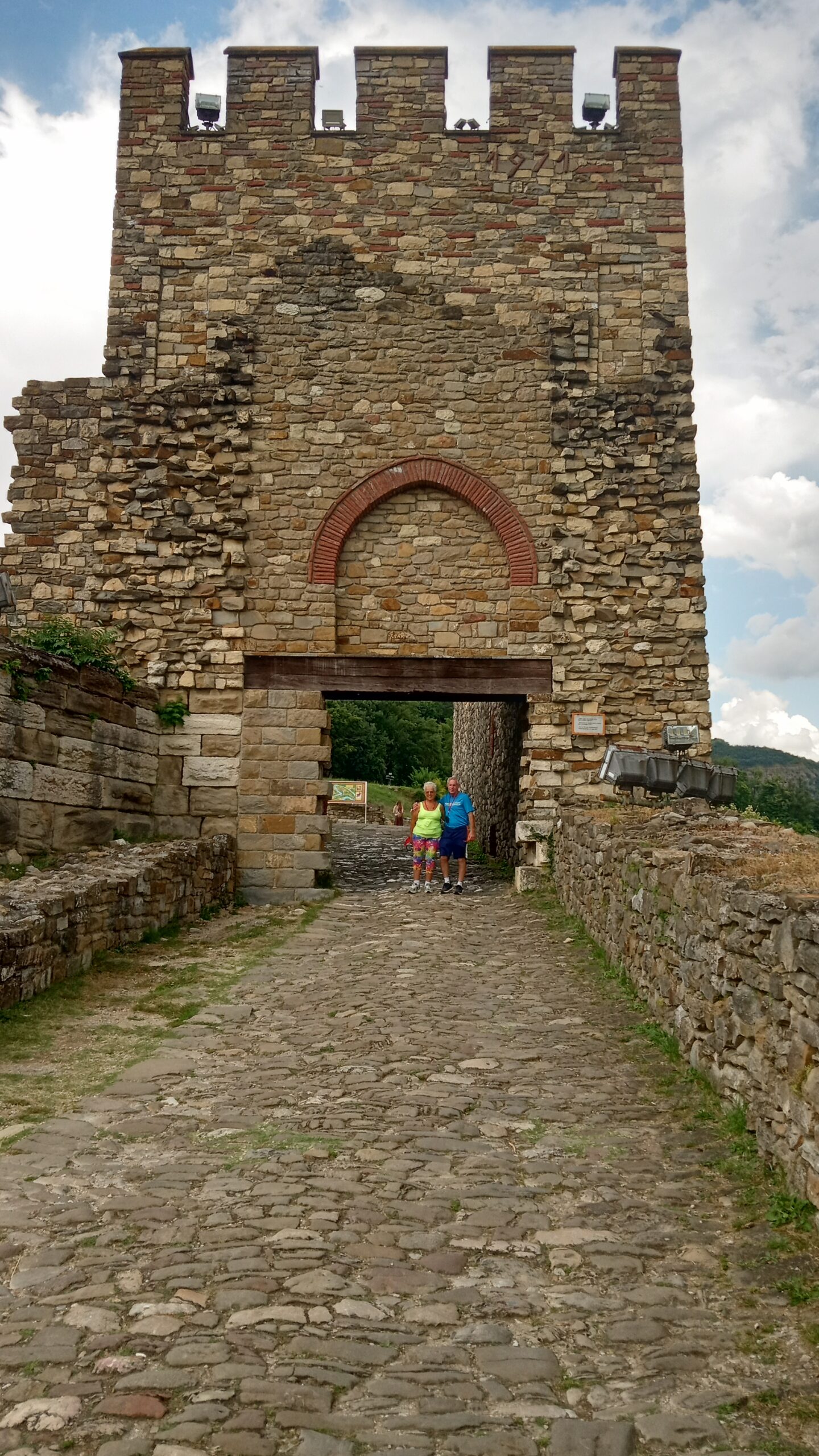
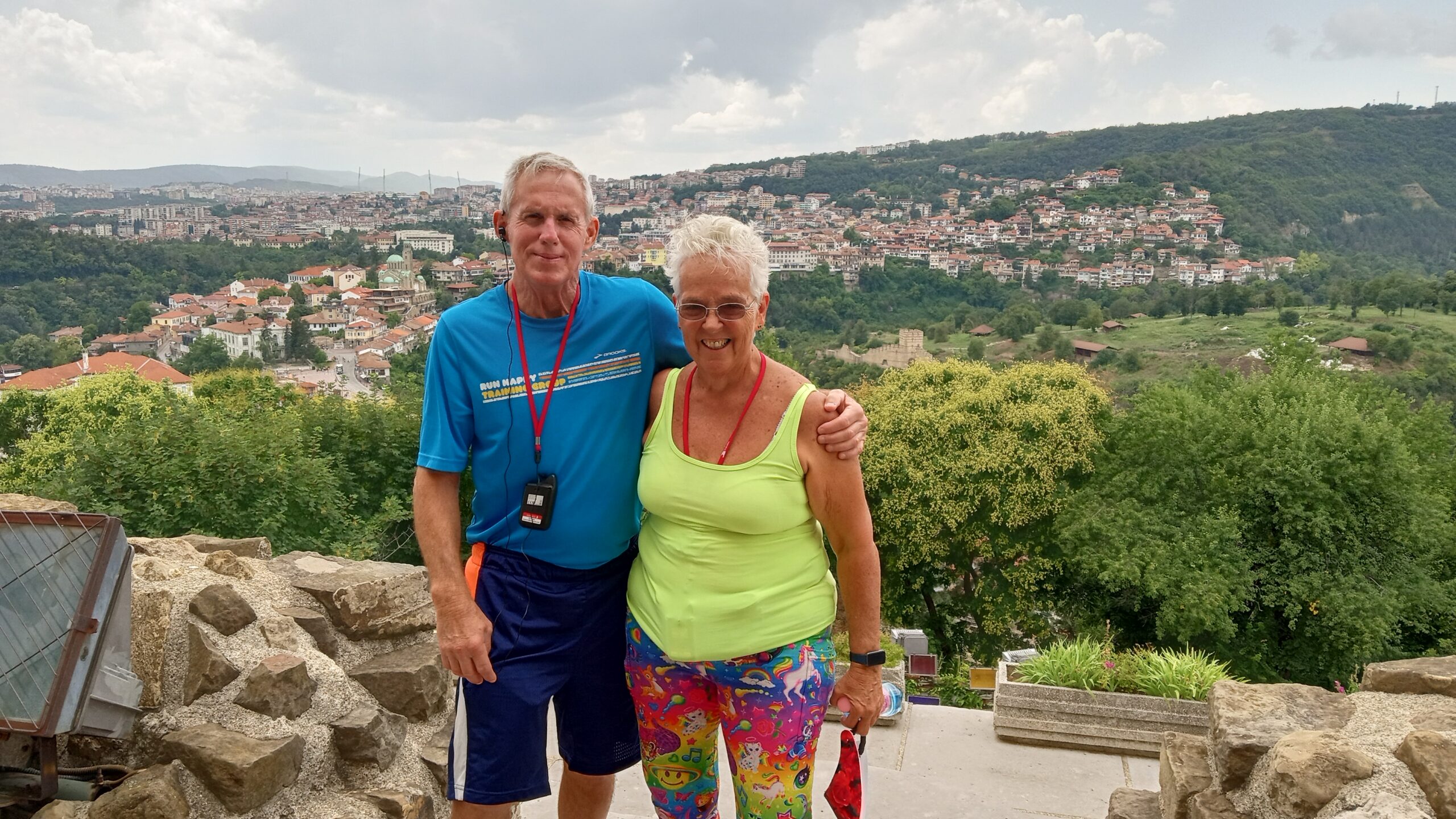
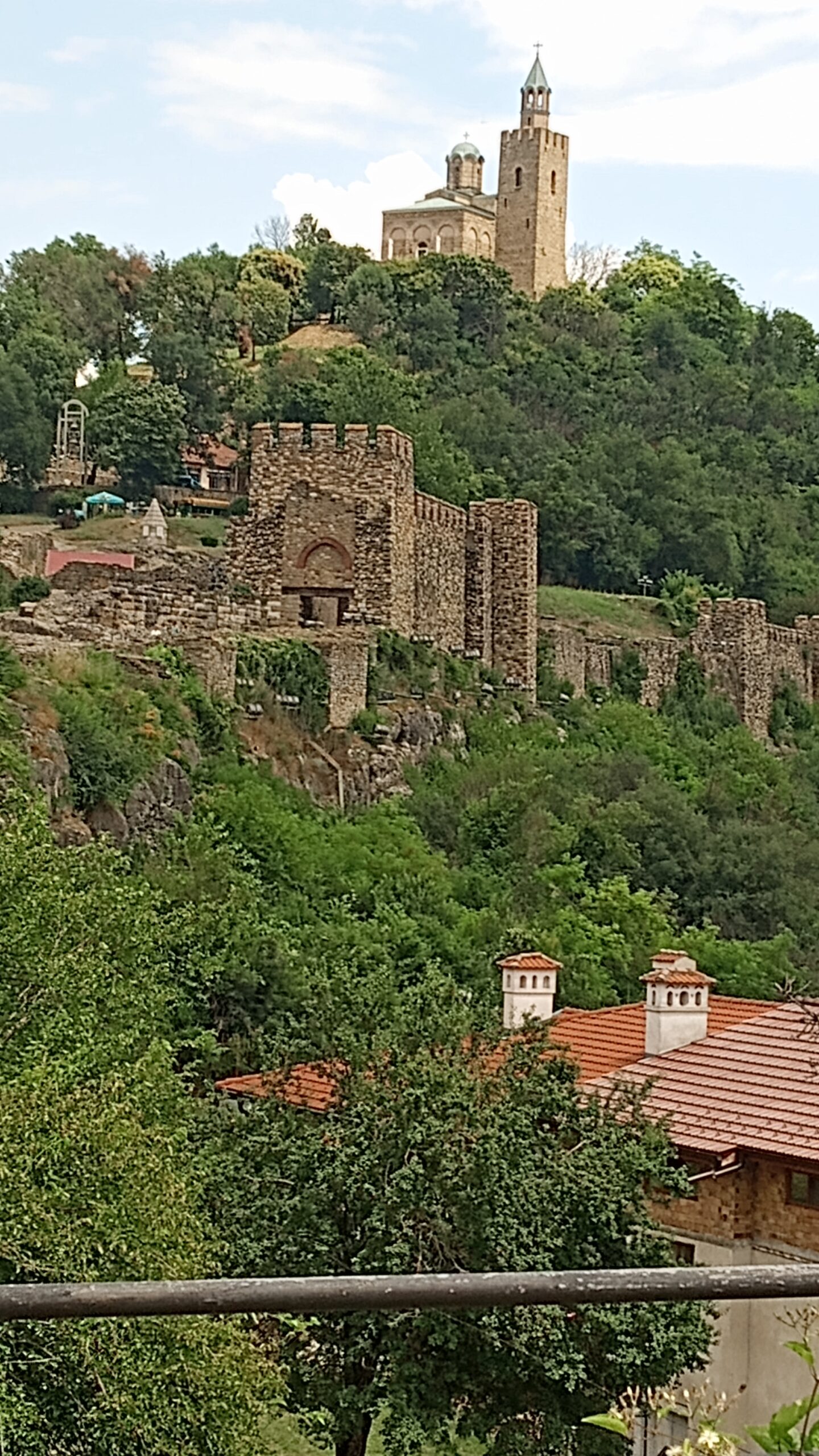
town called Arbanasi. There we hiked to a restored
castle with a few tall brick lookout turrets, long walls
to fortify it and all built on cliff tops that we climbed
on stairs to get to. We climbed high up and got impressive
views of the Bulgarain town surrounding it and went inside
the turrets.
Our guide then showed some craft making/artisan shops
in town before we got back on the bus to get back to the
ship. We had a full day – taking 9 hours to get this all in.
7-8 20
Day 7
Vidin, Bulgaria
Friday, July 10
Belogradchik Rocks and Fortress
Spectacular Rock Formations and the Defensive
Structure They Helped Shape
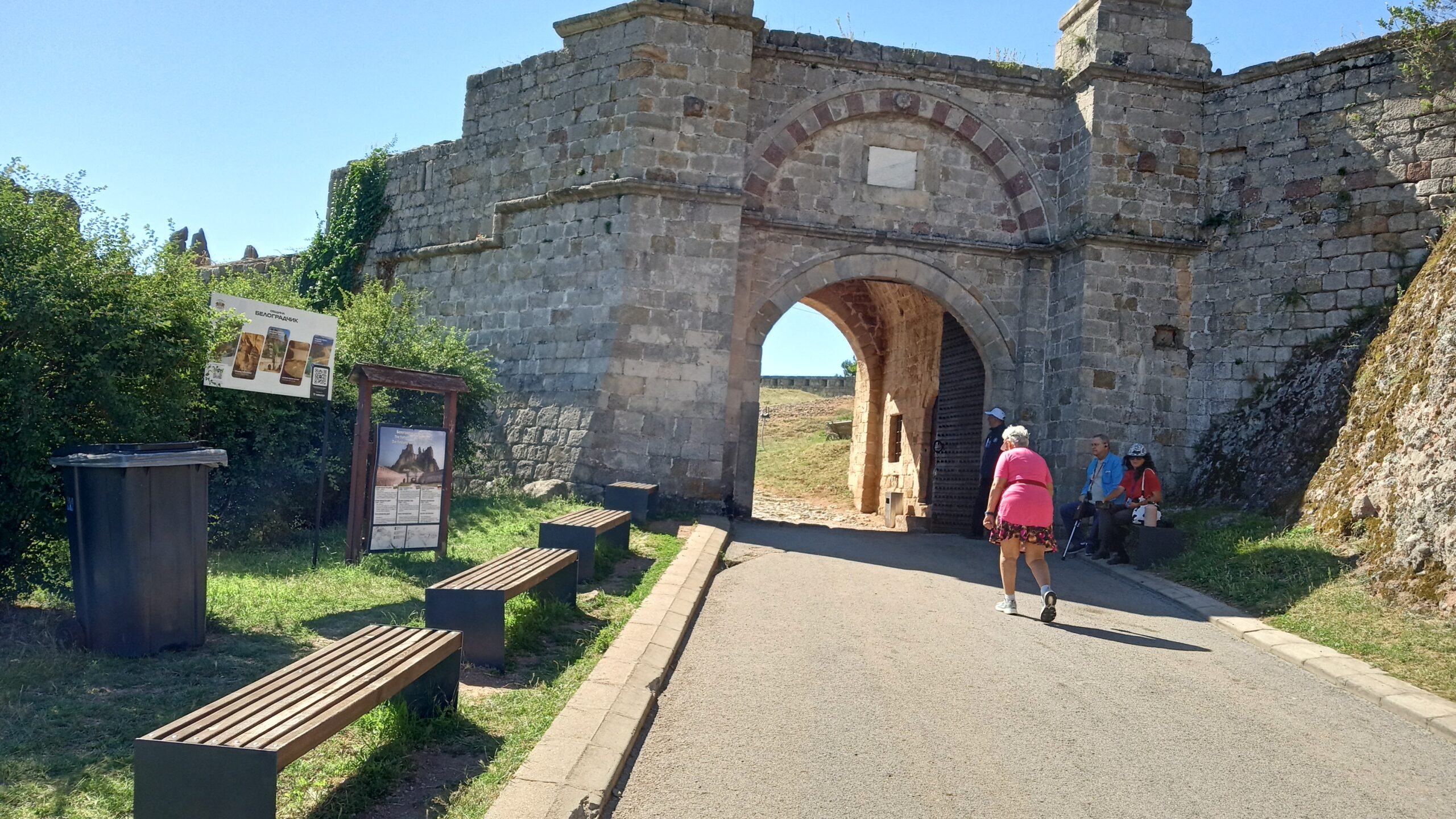
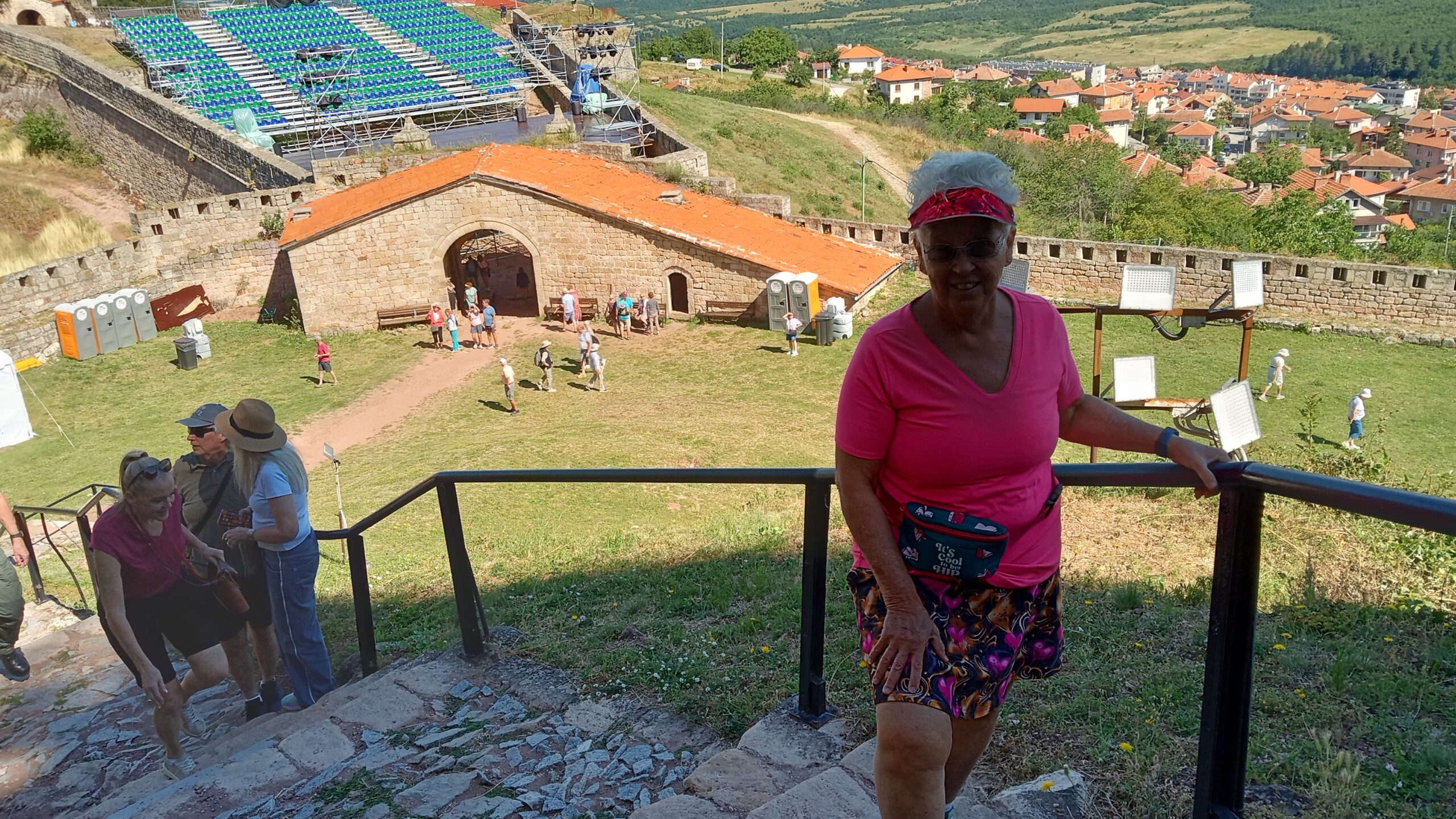
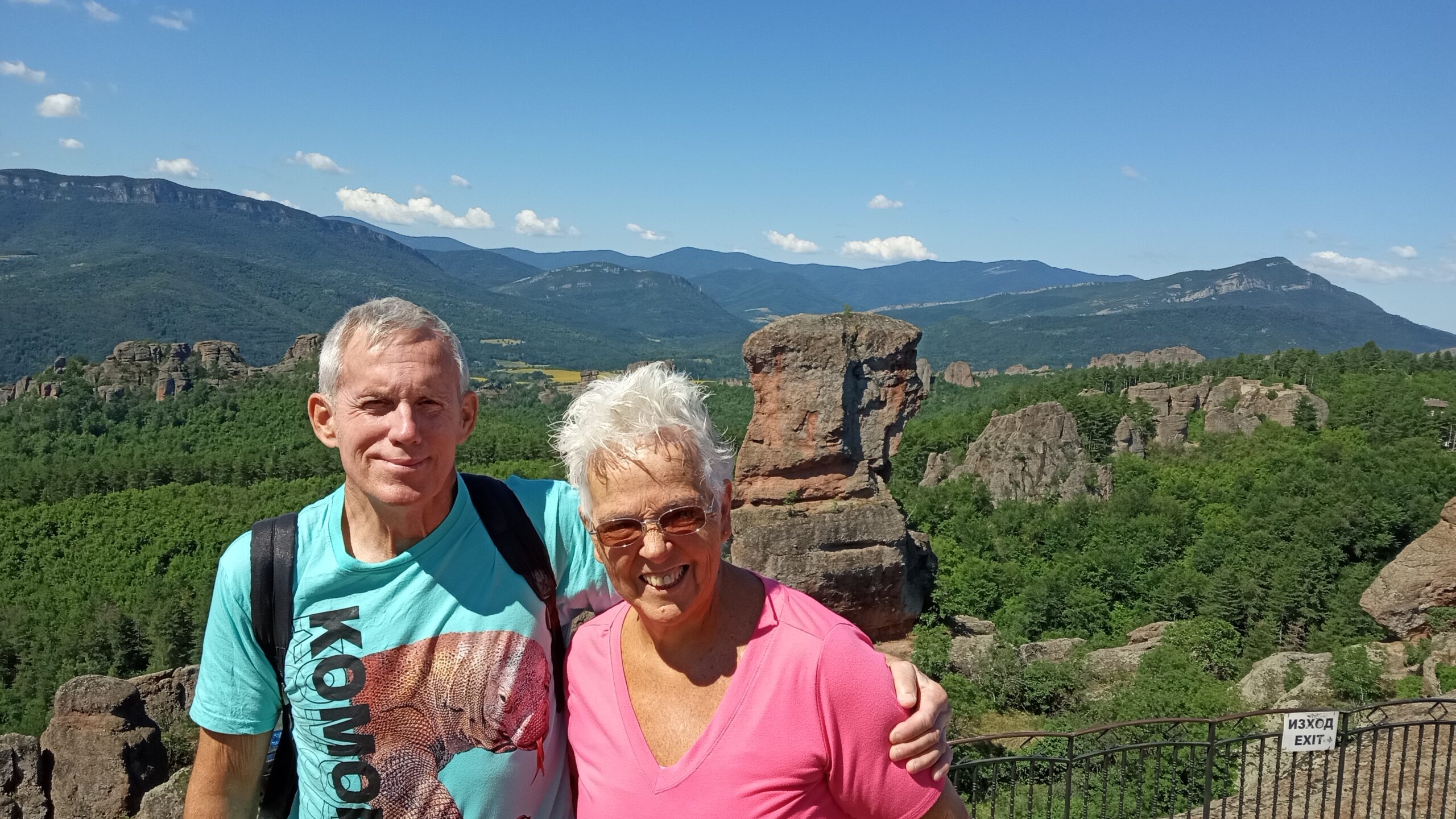
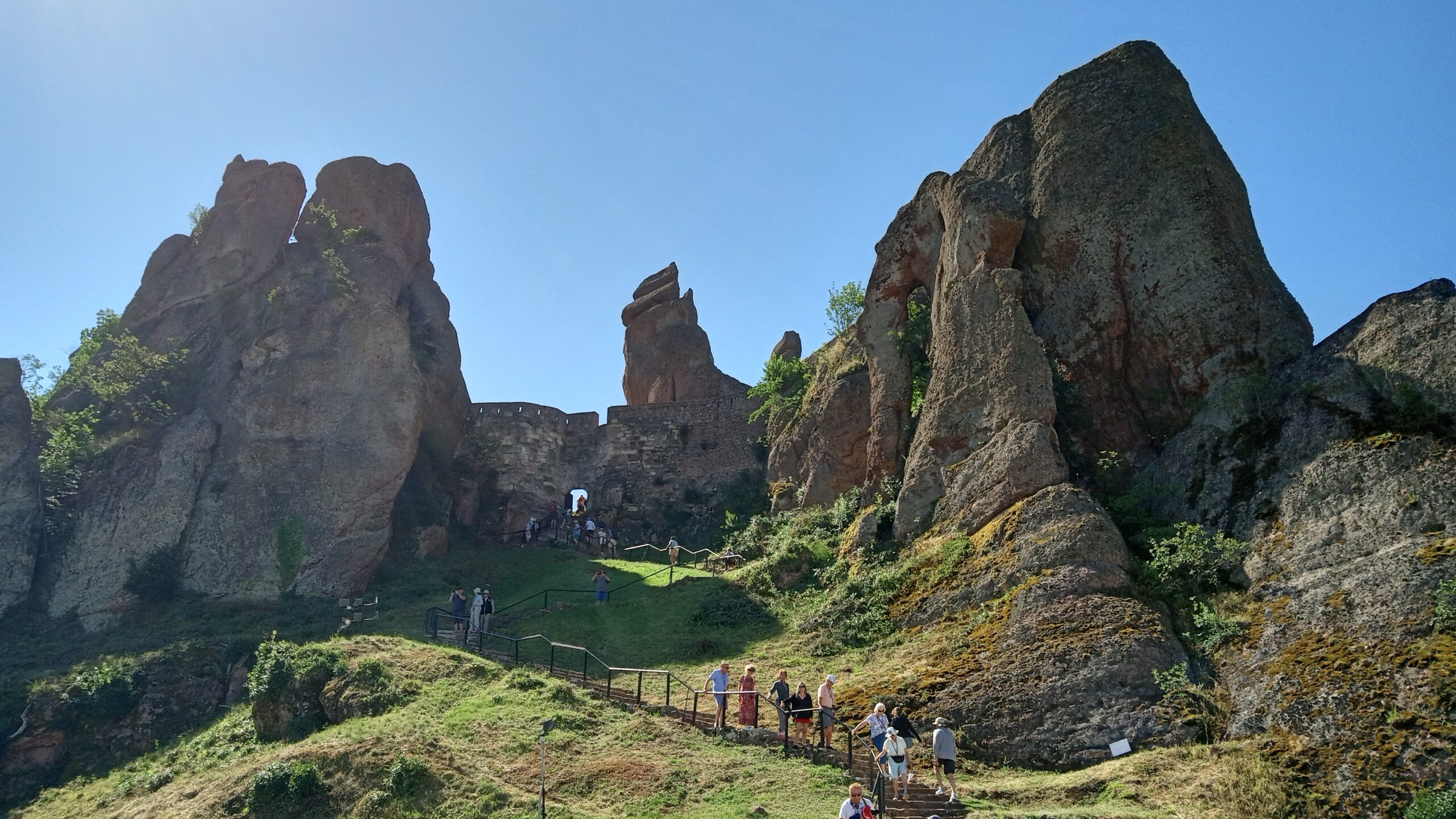
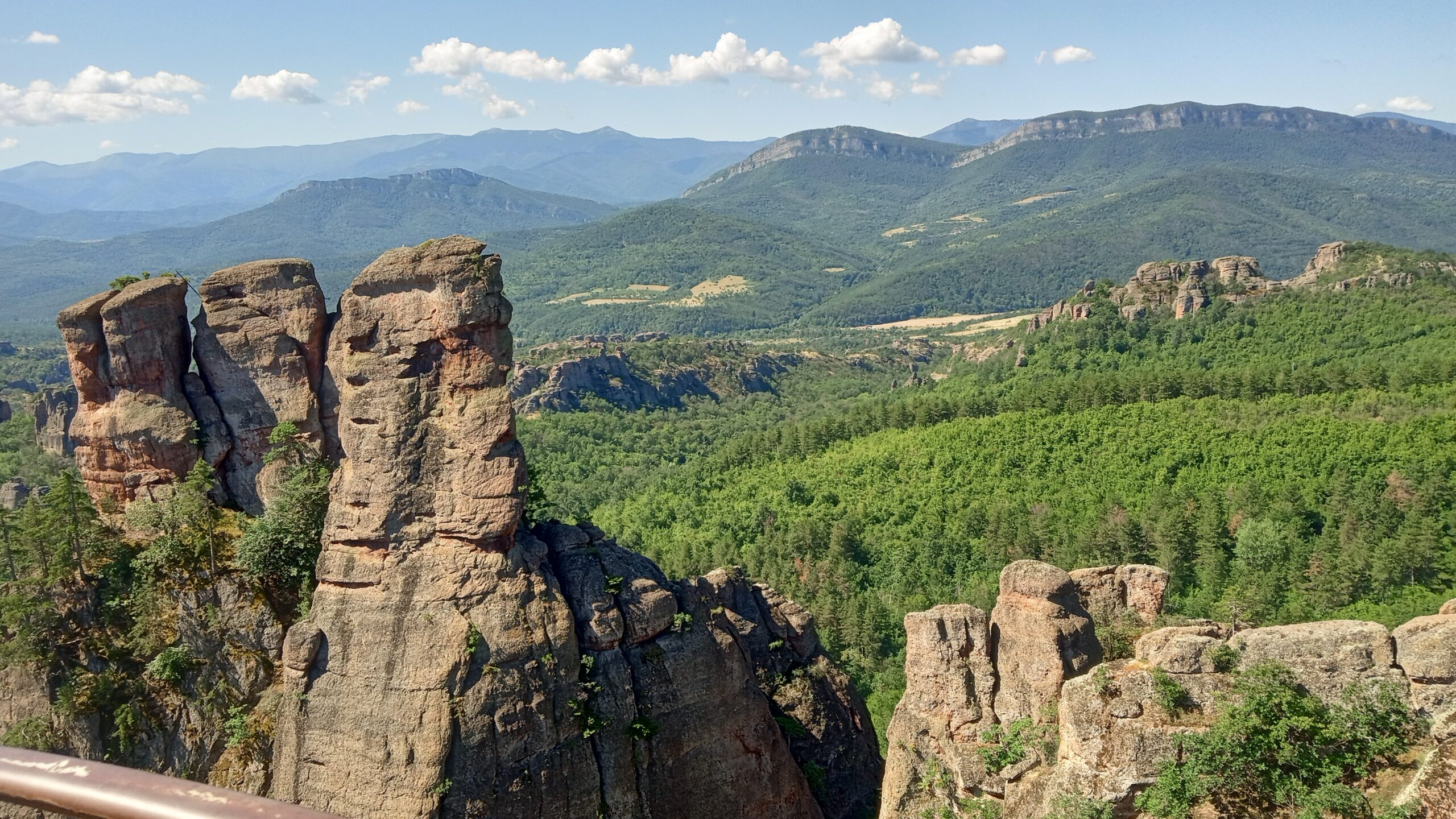
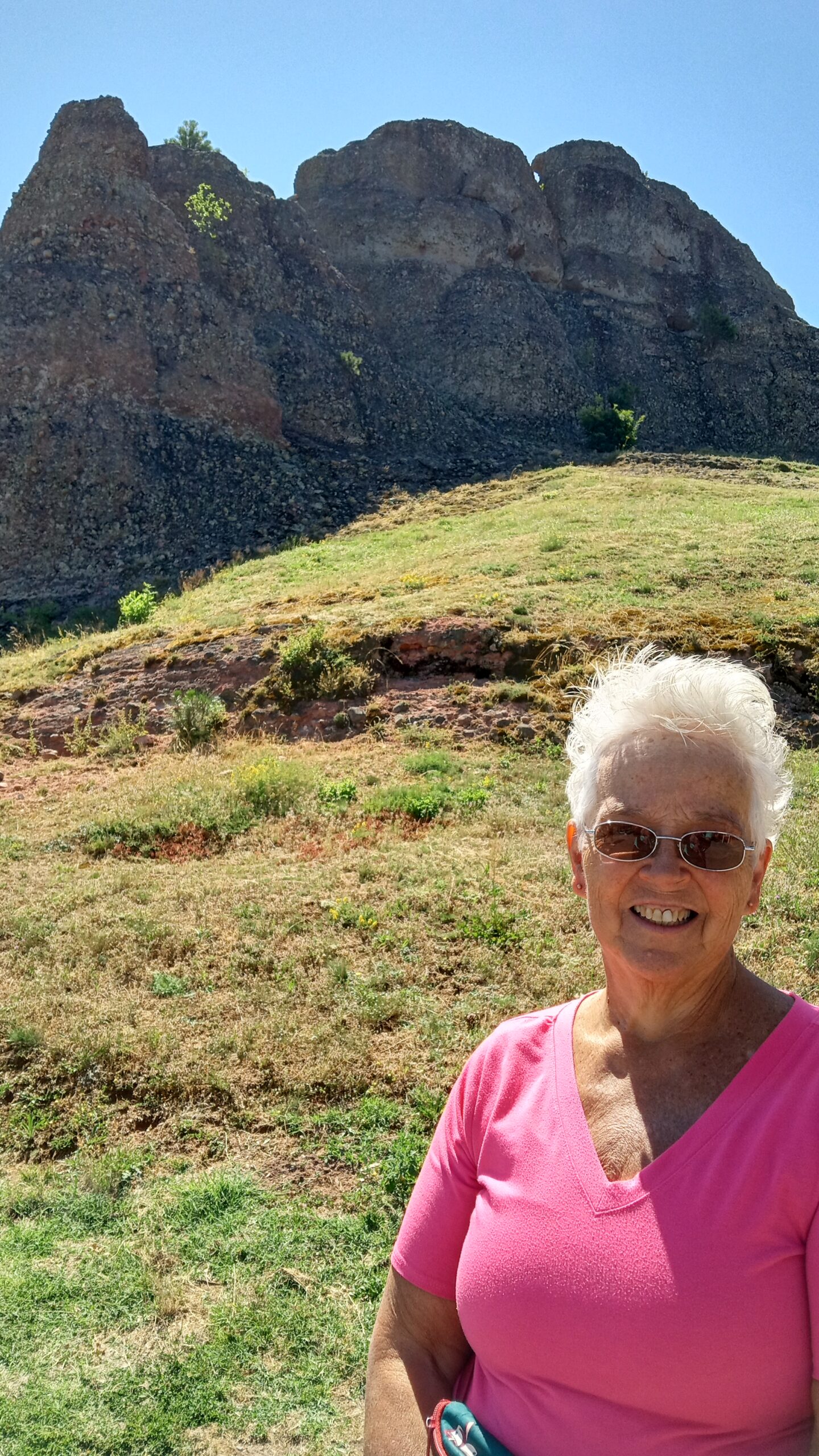
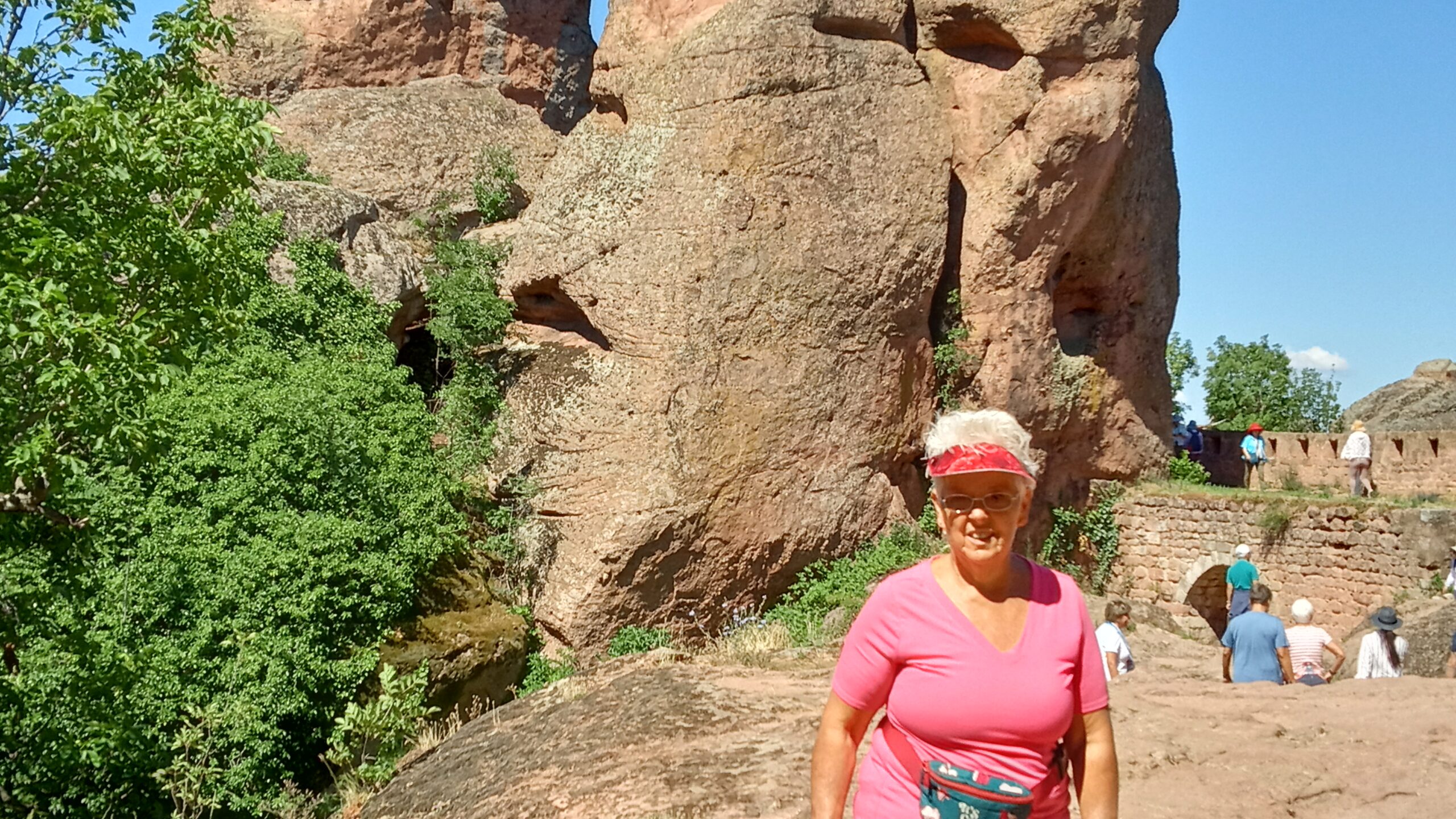
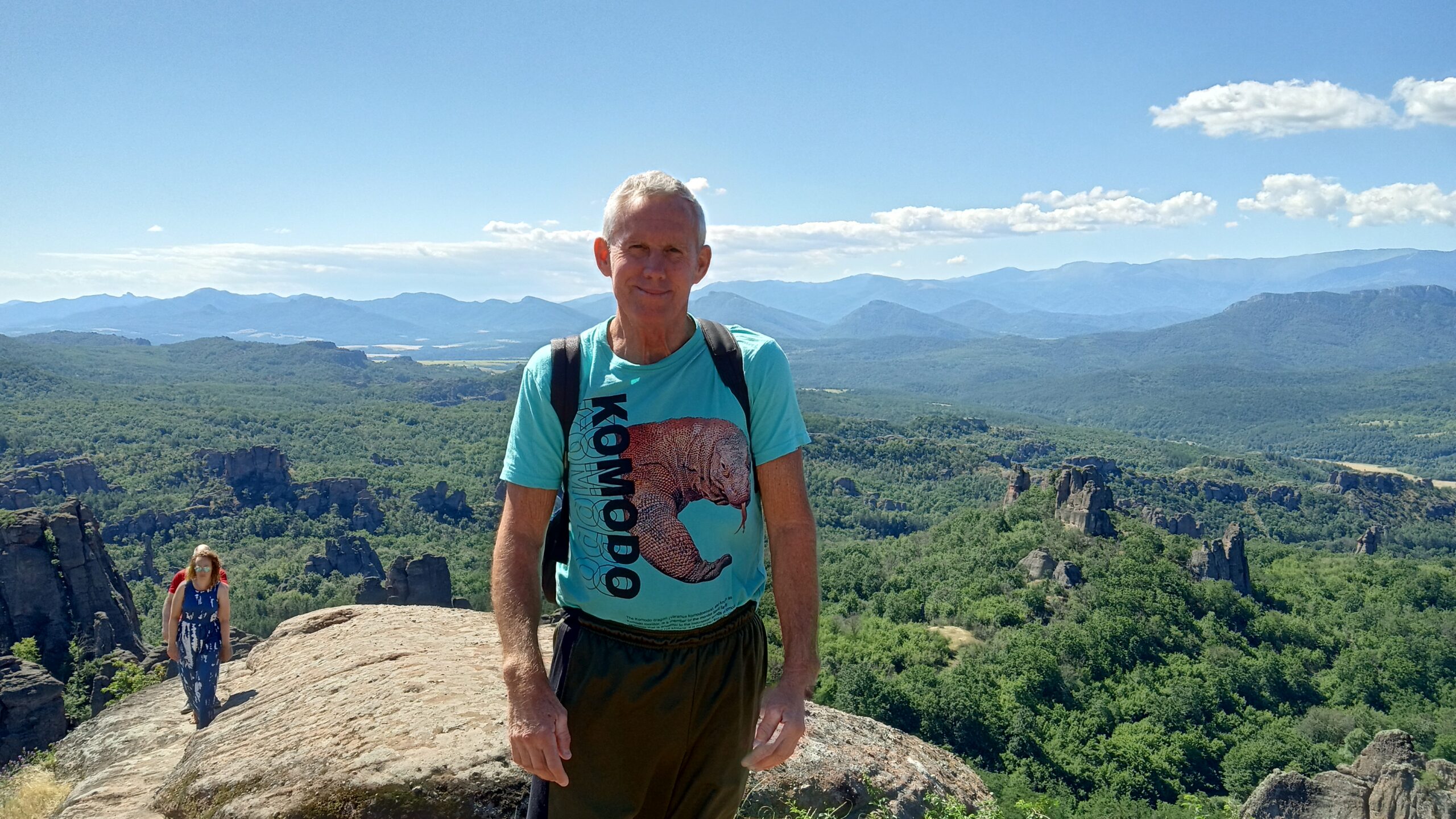
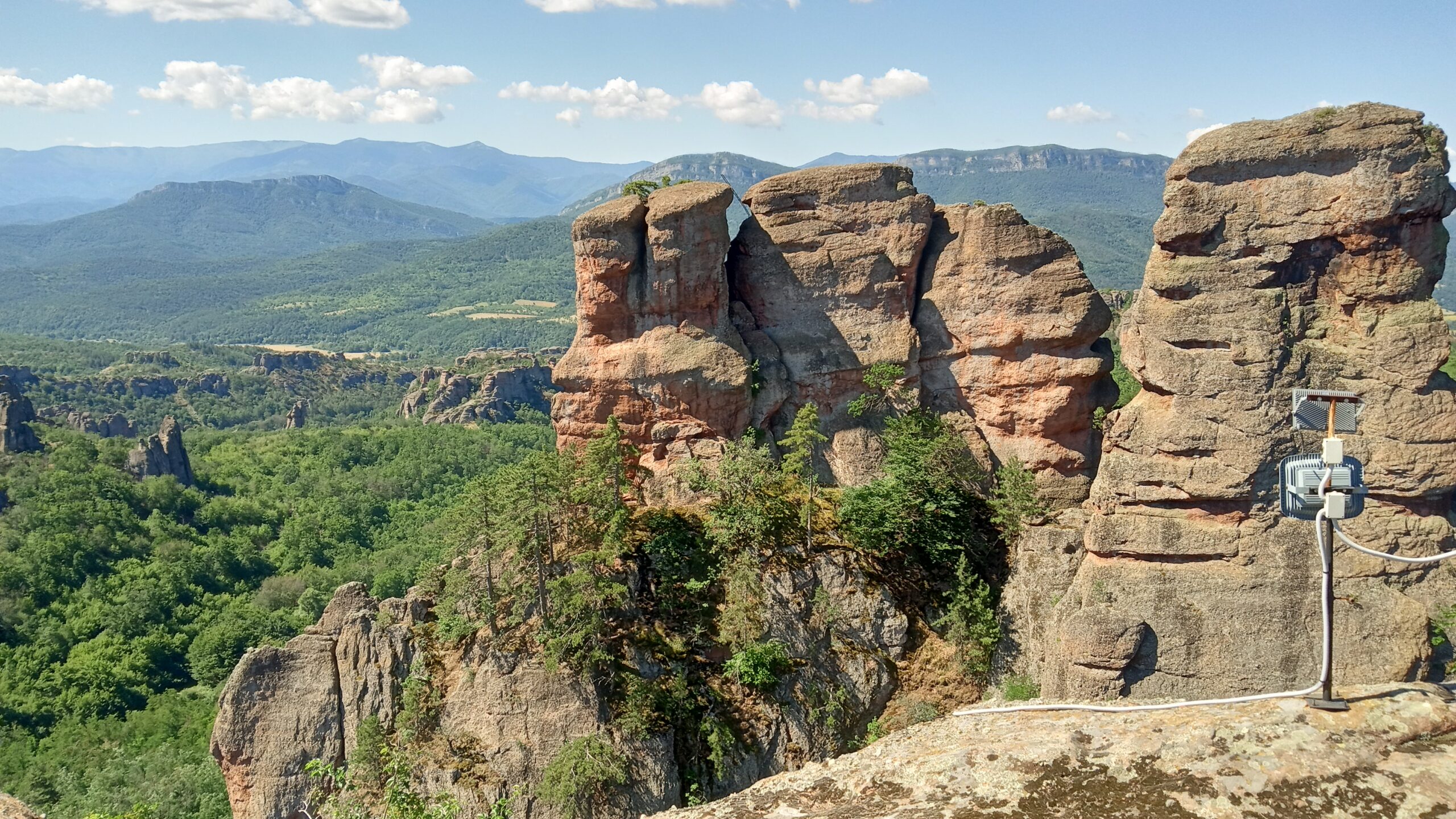
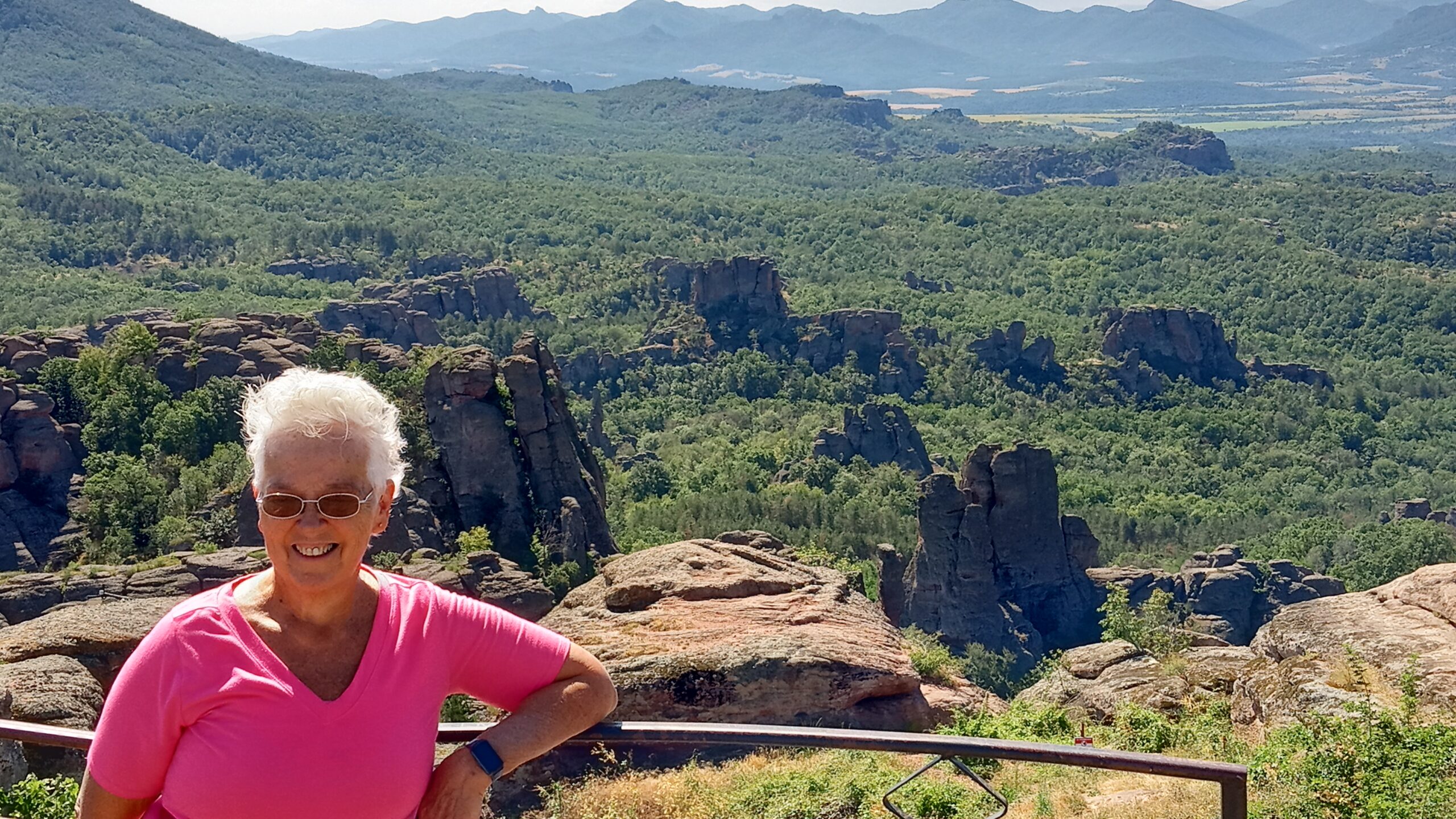
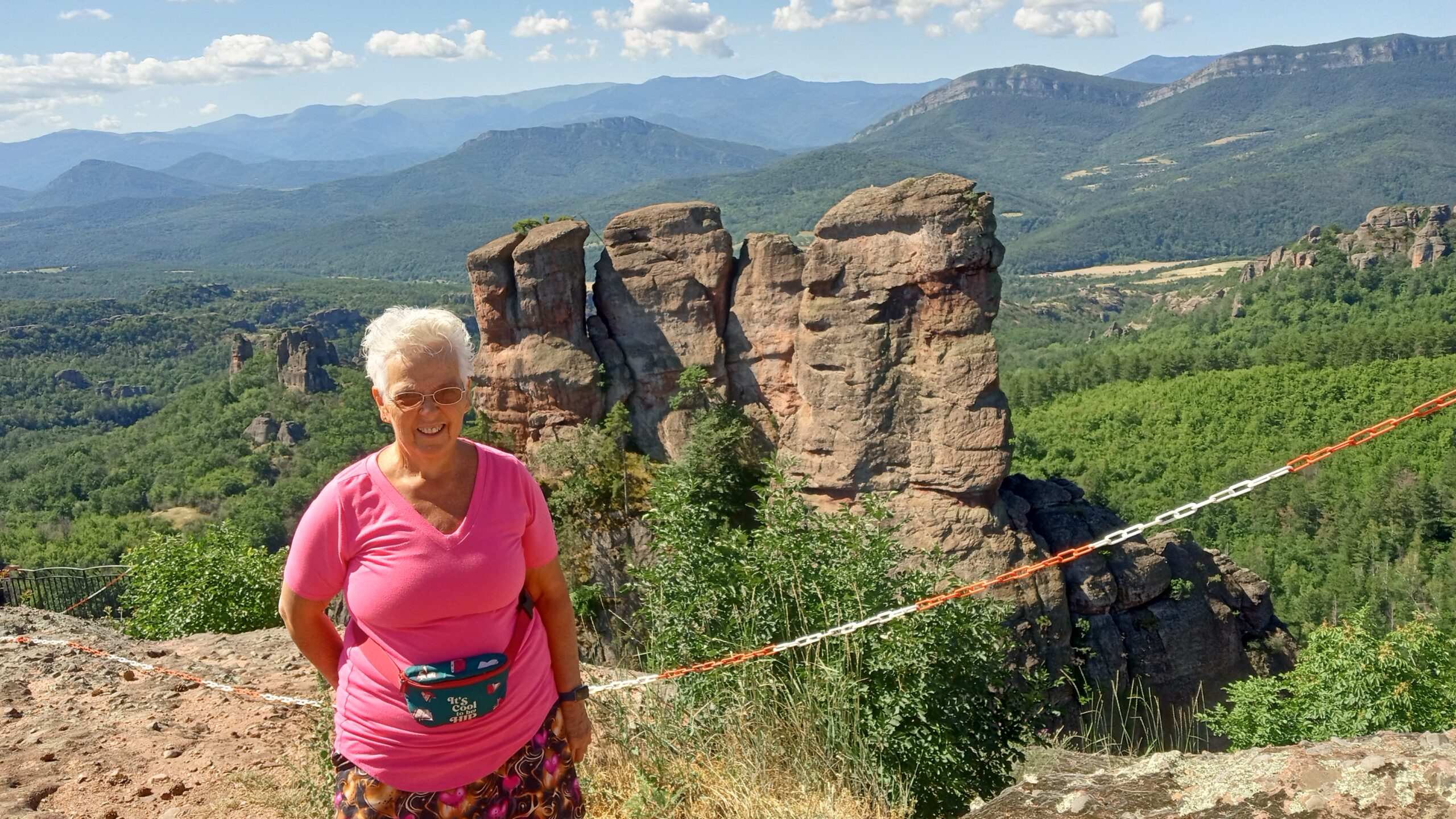
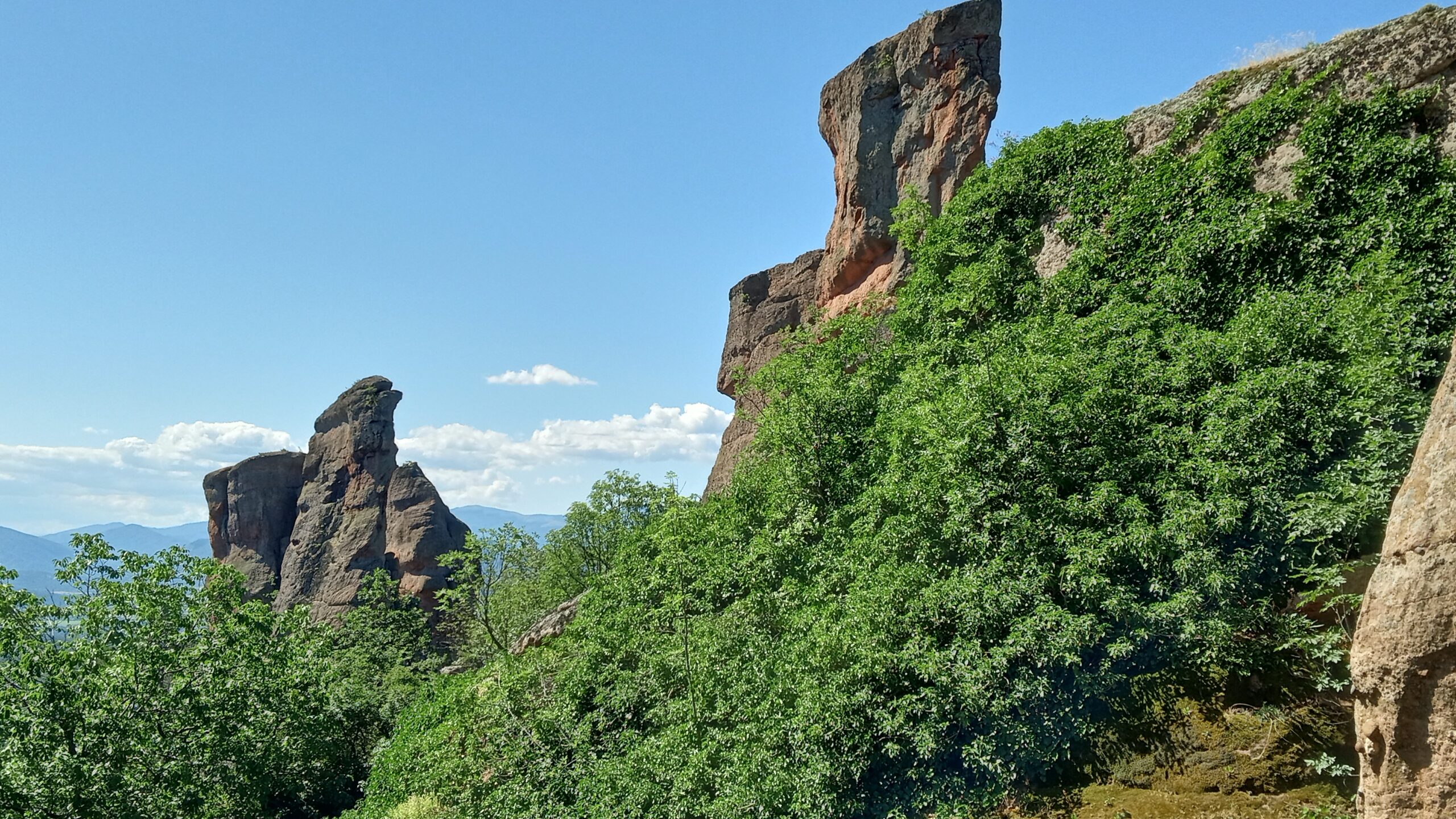
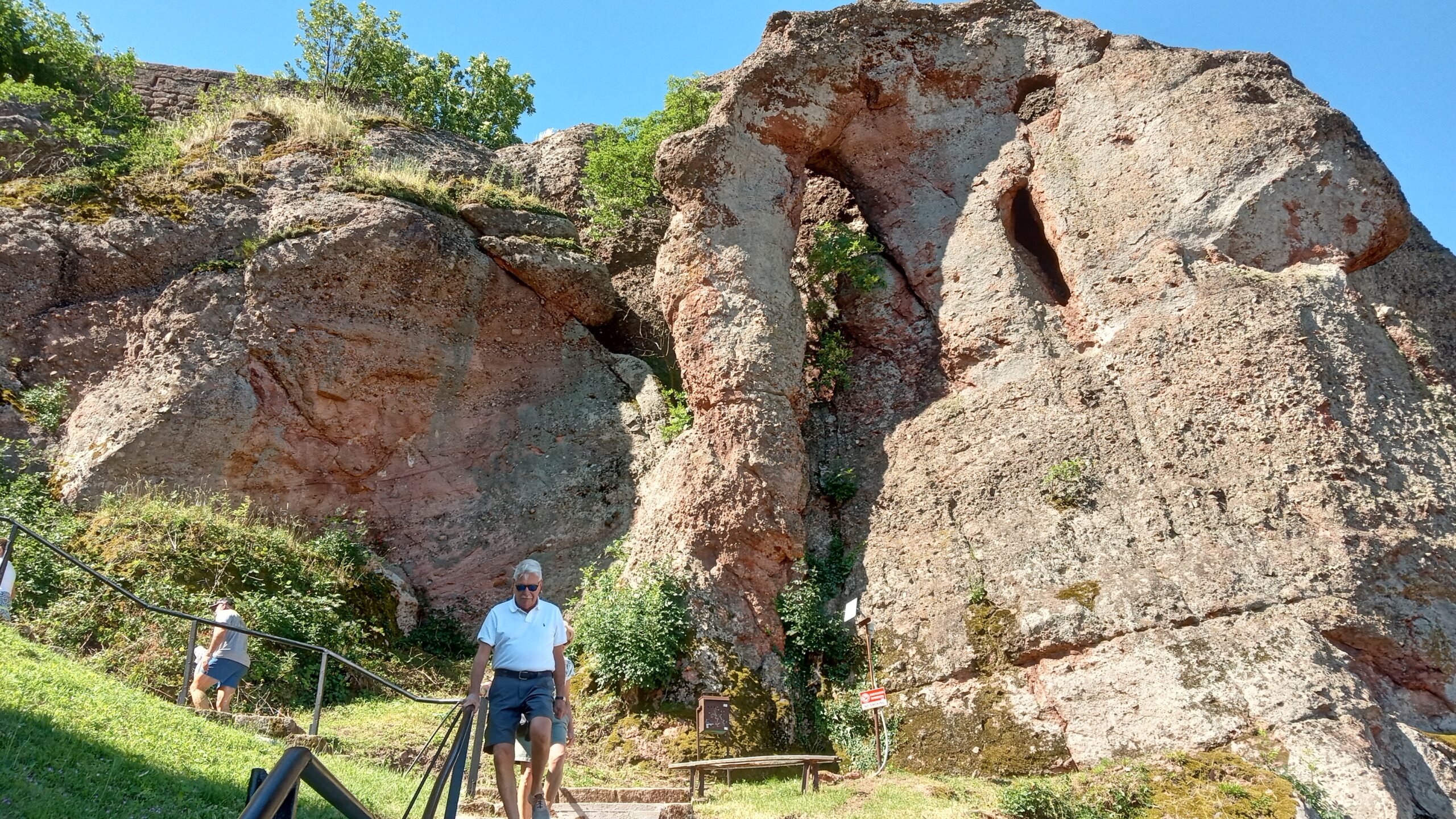
This morning in Bulgaria we took an hour long bus
ride to the Belogradchik Rocks and Fortress. This is
a natural mound of sedimentary rocks in towering, tall
stone shapes that rose up. The Bugarians made a path
of 220 steps up to the top that we climbed up using
handrails. They made it into a medieval fortress with
some added walls, stone gates and fortifying this natural
occurance for their defences.
The views were fantastic, the climb
was worth it, we got goods pics.
Day 7
Vidin, Bulgaria
Friday, July 10
Baba Vida Fortress
& Bulgarian Wines
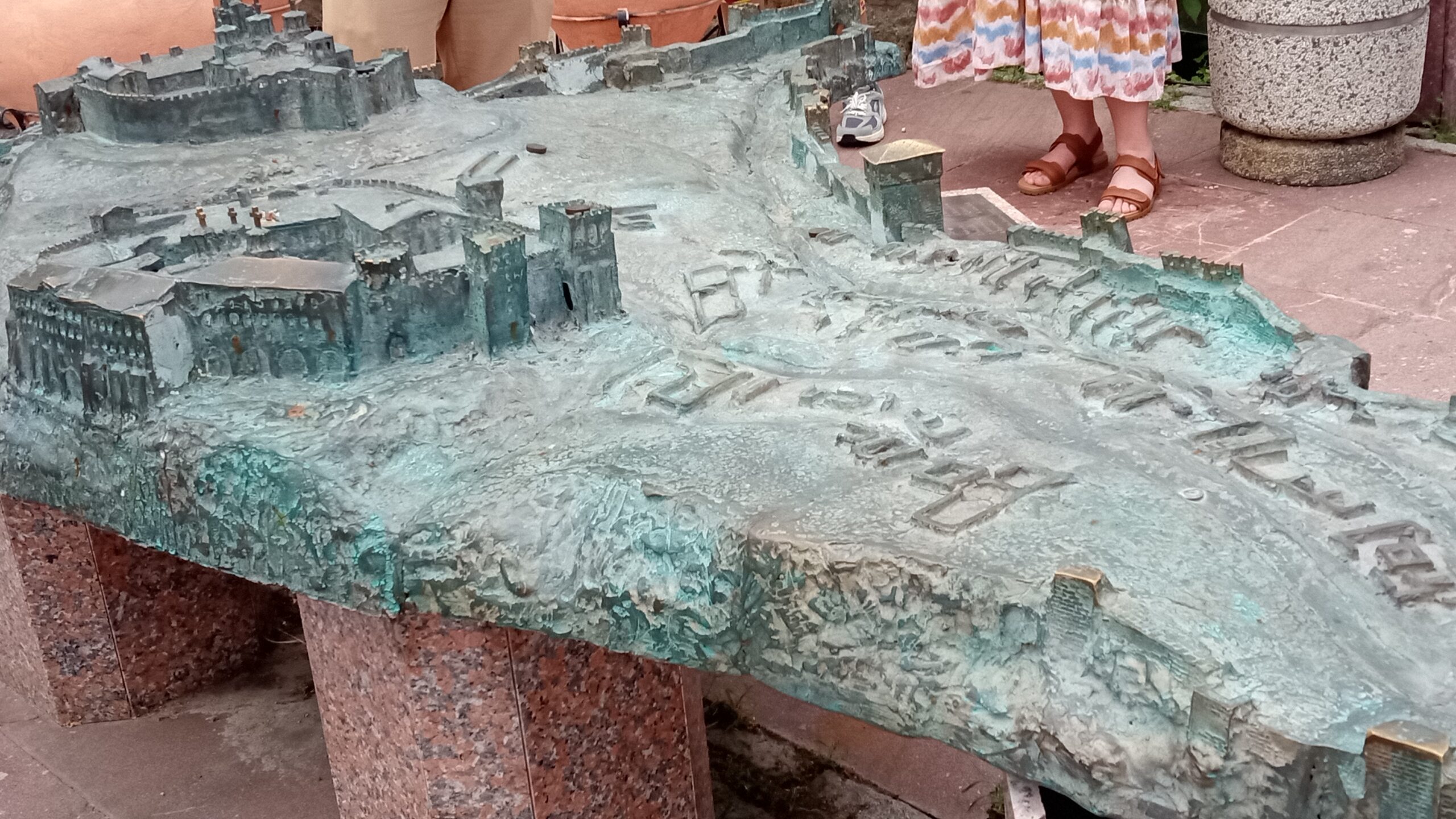
Later this afternnon we took a short bus ride to the
Baba Vida stone fortress in Vidin. This castle like
fortified structure and intact fortress was built up for
over 2000 years.
We climbed to its top by taking steep stone internal
twisting stairs, hiked around the ramparts and saw their
museum diplays of period medieval costumes.
Afterwards, we took a bus to the Los Alamos winery just
outside of town. There we learned how they make grapes
into wine from start to bottled finish. Although we don’t
drink wine it was nice to be informed about their process
that were proud of. What a day!
Day 8
Golubac, Serbia
Saturday, July 11
The Vistas of the Iron Gate
Scenic Viewpoints,
Golubac Fortress and
Kapetan Mišin Breg
Stretching out along the Danube River and covering more than 245
square miles, the park is famous for its sweeping views of the
Iron Gate gorge.
Scenic Sailing on
the Danube River
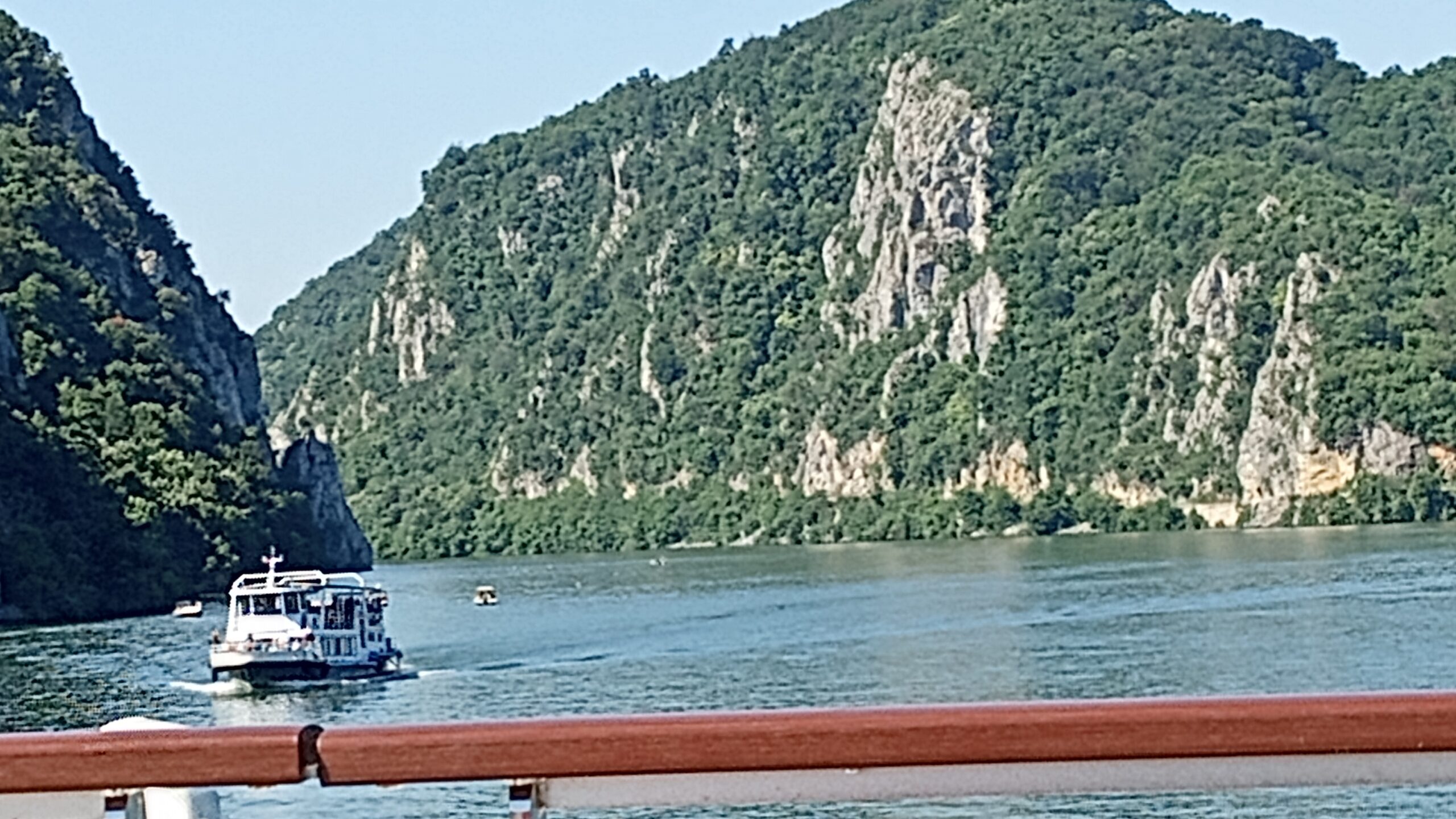
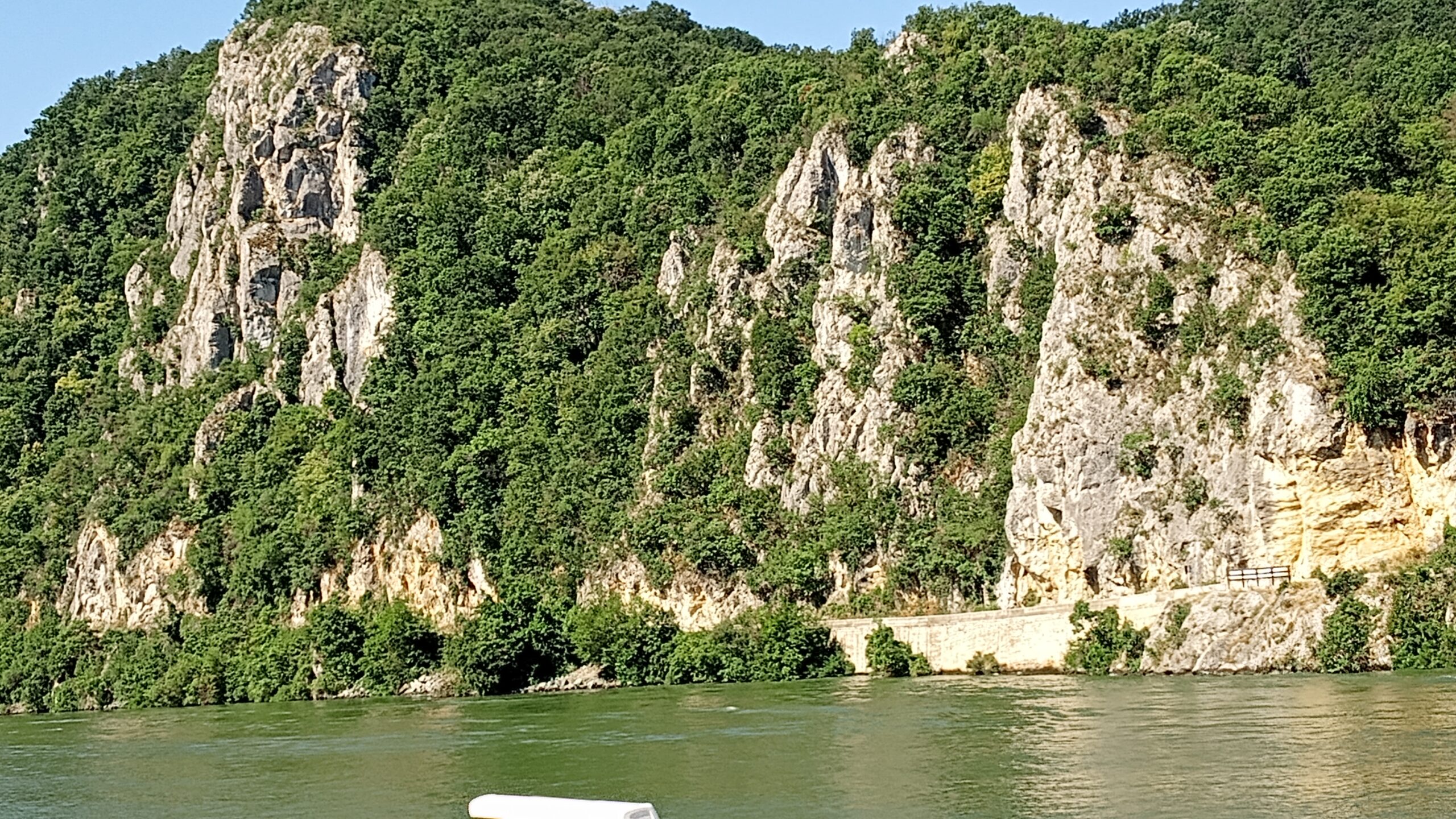
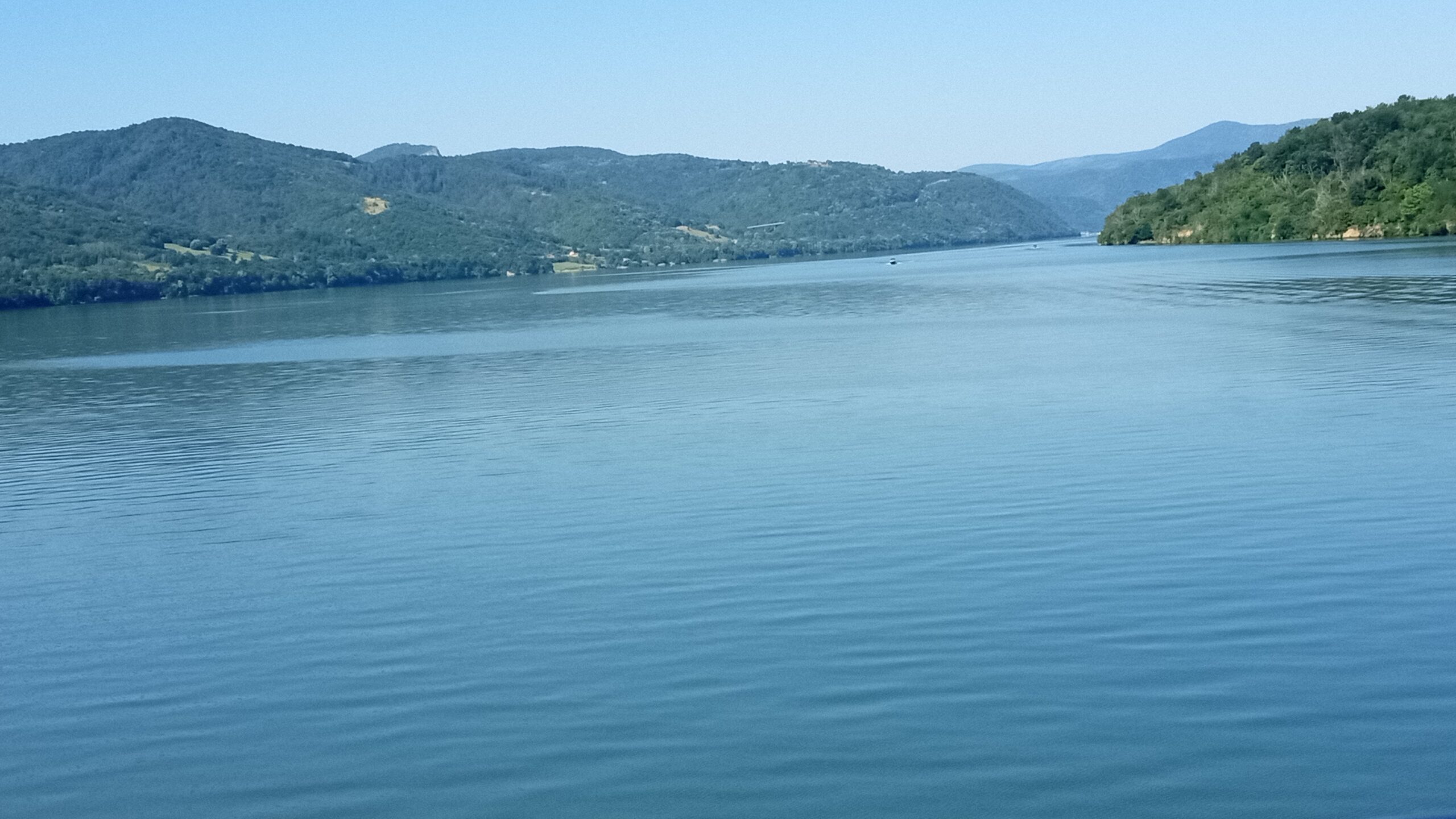
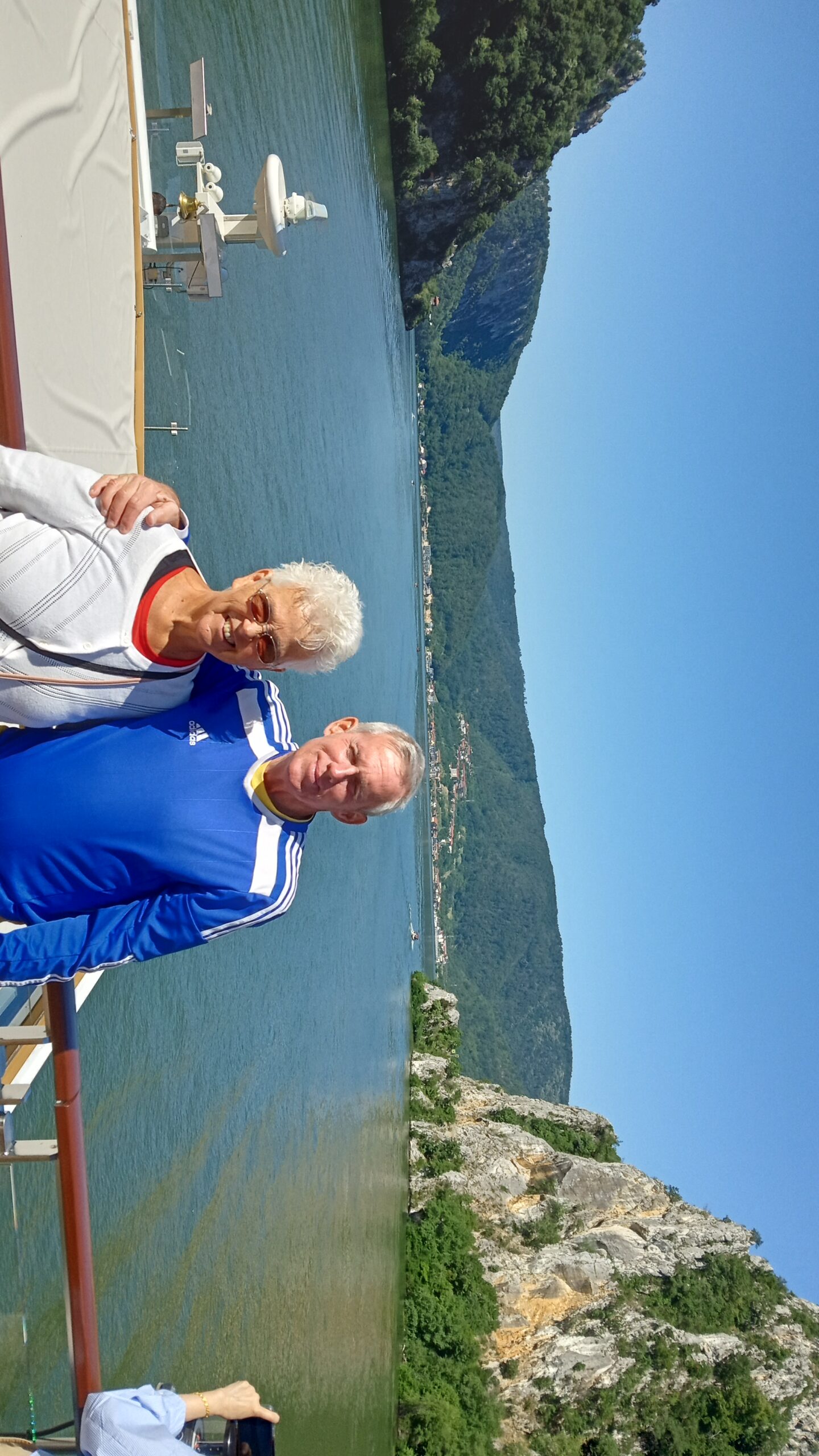
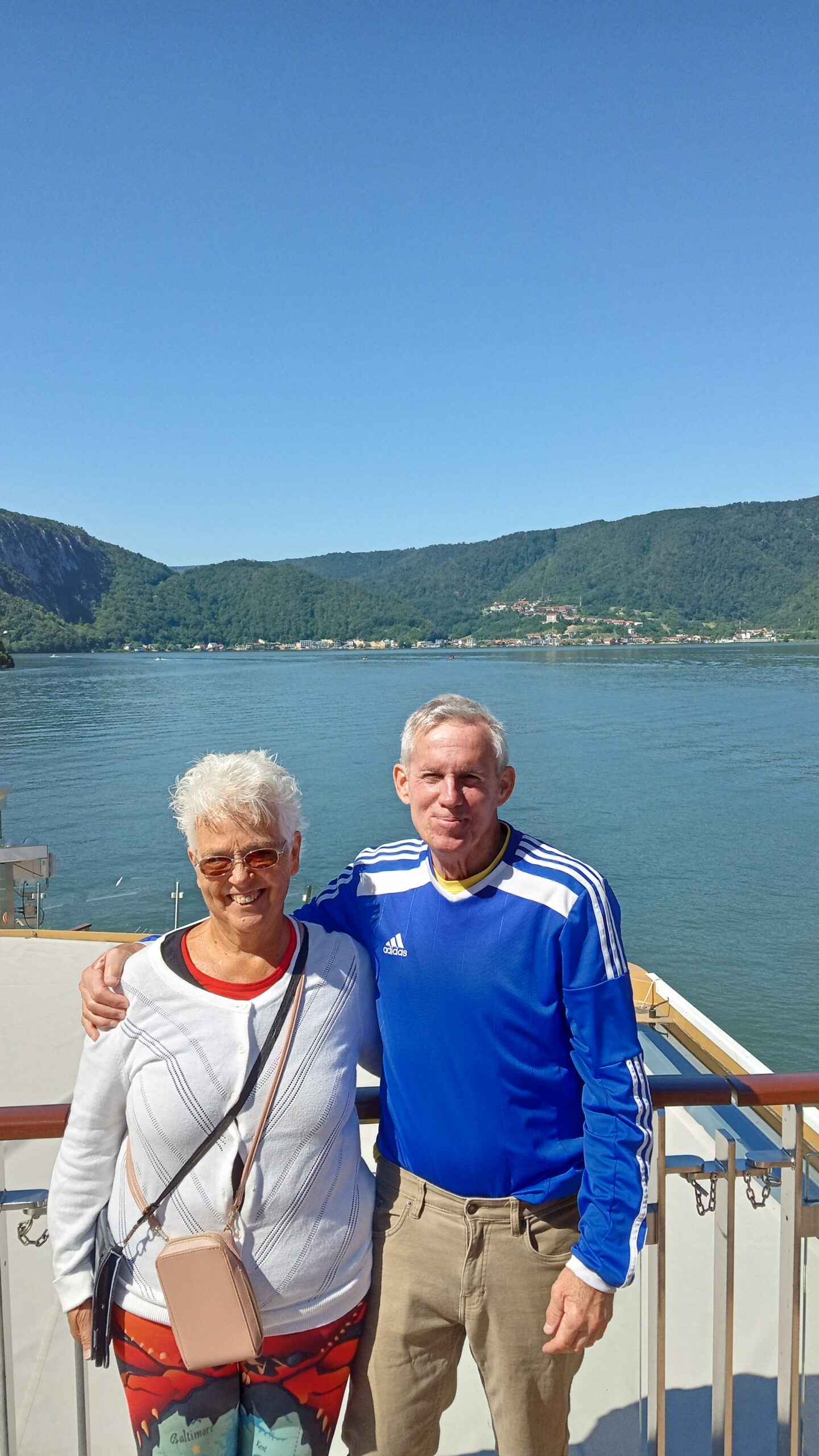
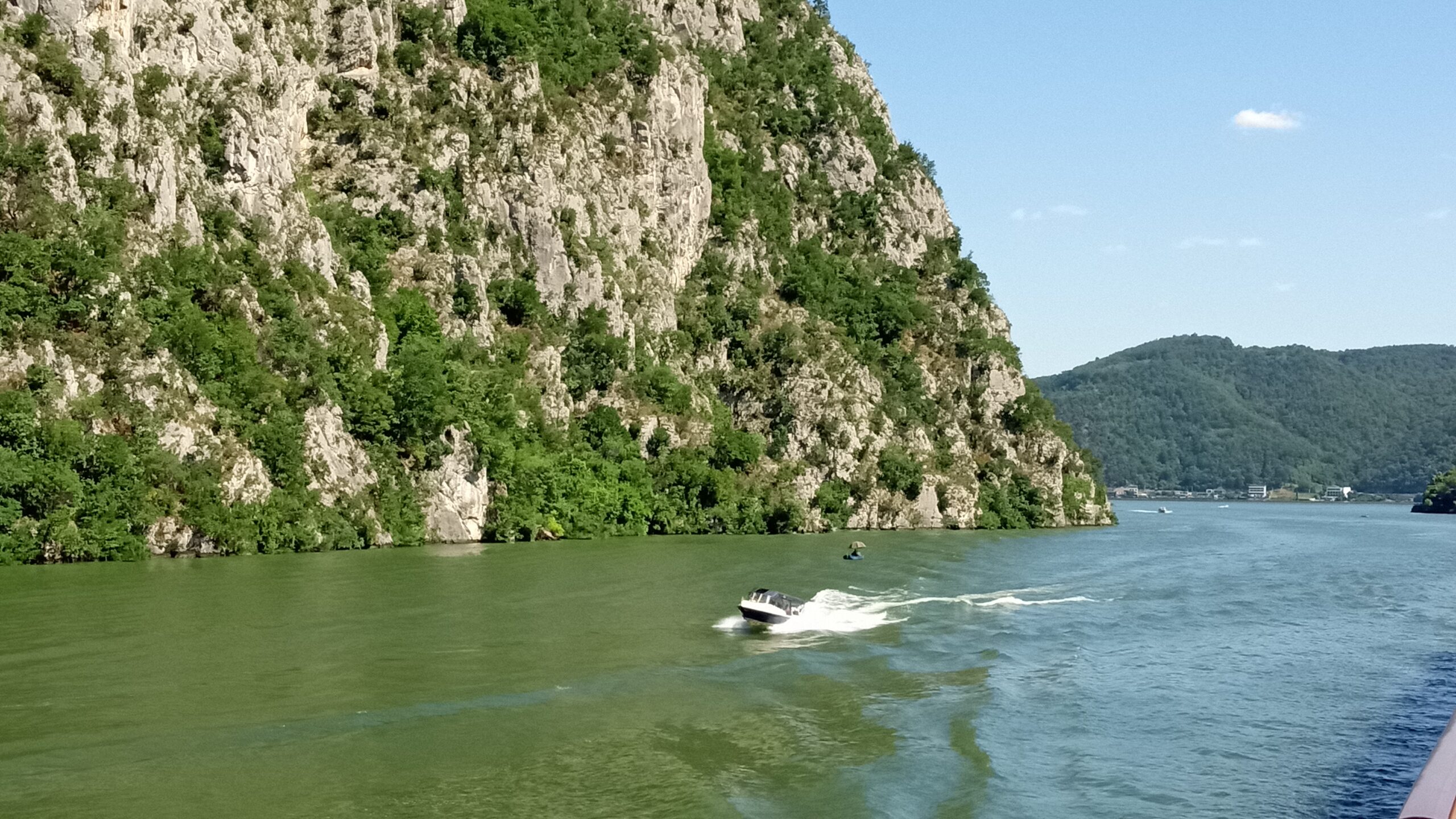
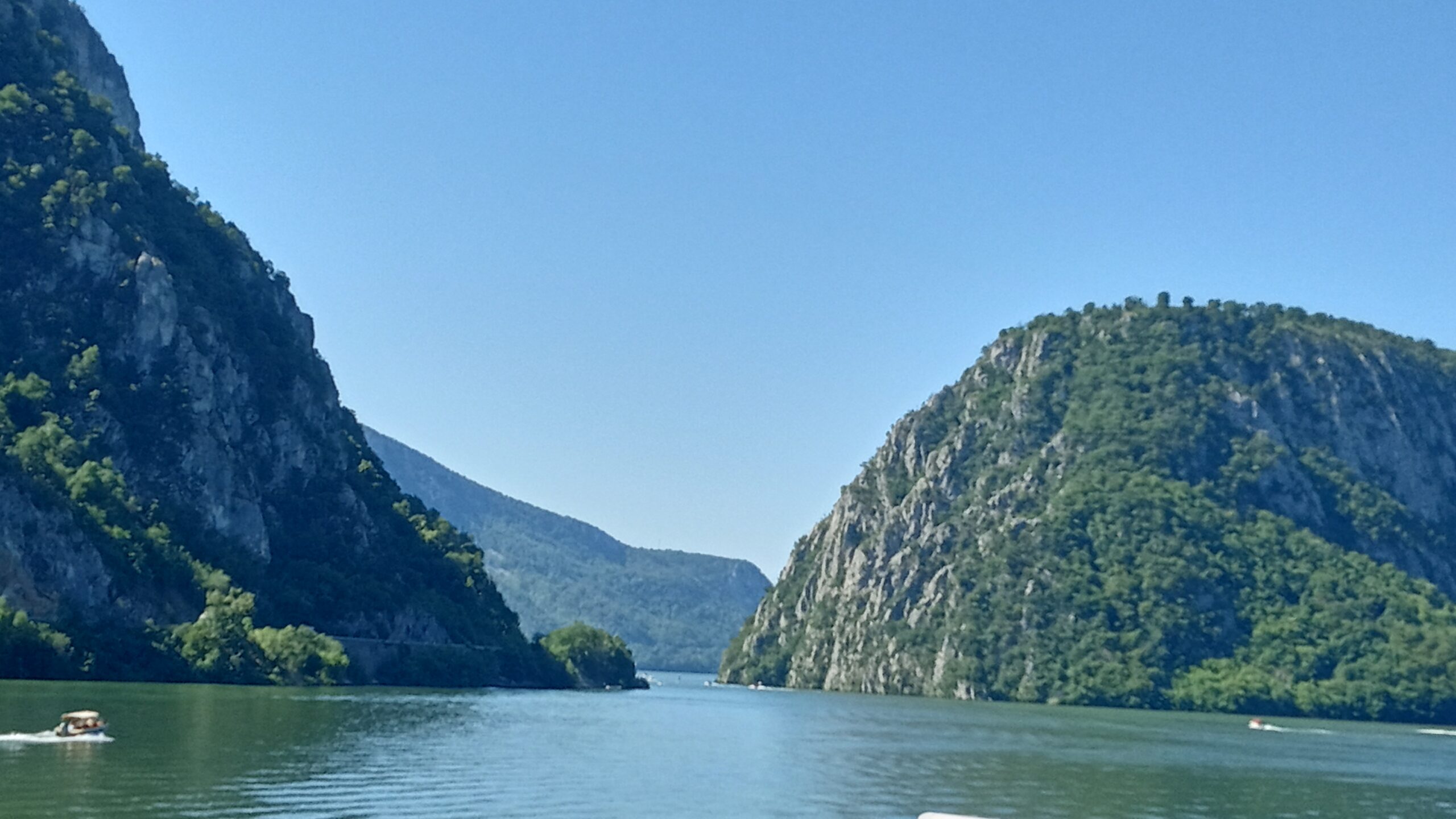
Still on the Danube with Serbia on one side and
Romania on the other, we sailed through a very pretty and
dramatic area. The waterway narrowed with huge, towering
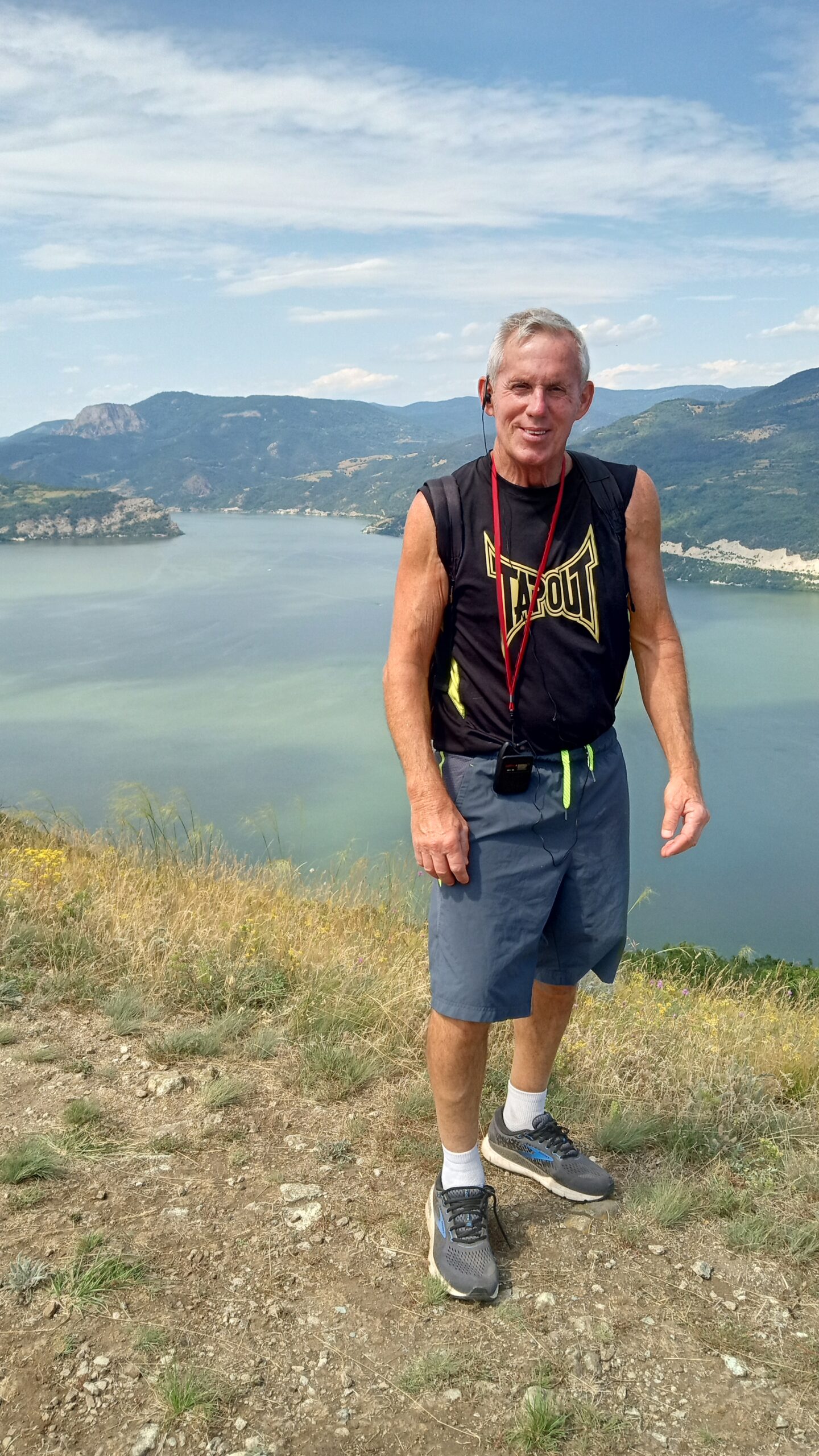
granite cliffs on both sides. We took pictures from the top
open deck of the ship as these vistas went on for a few
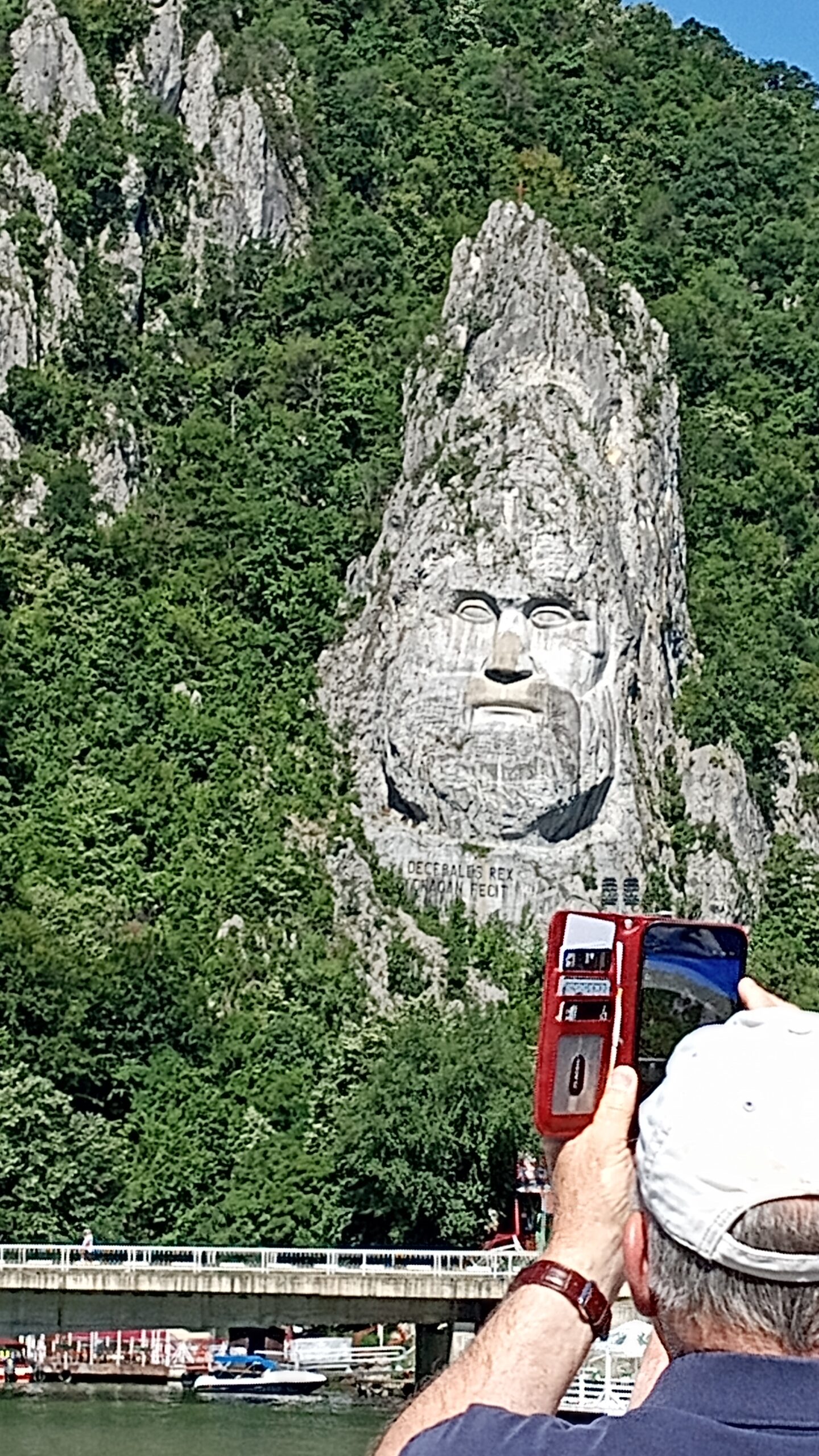
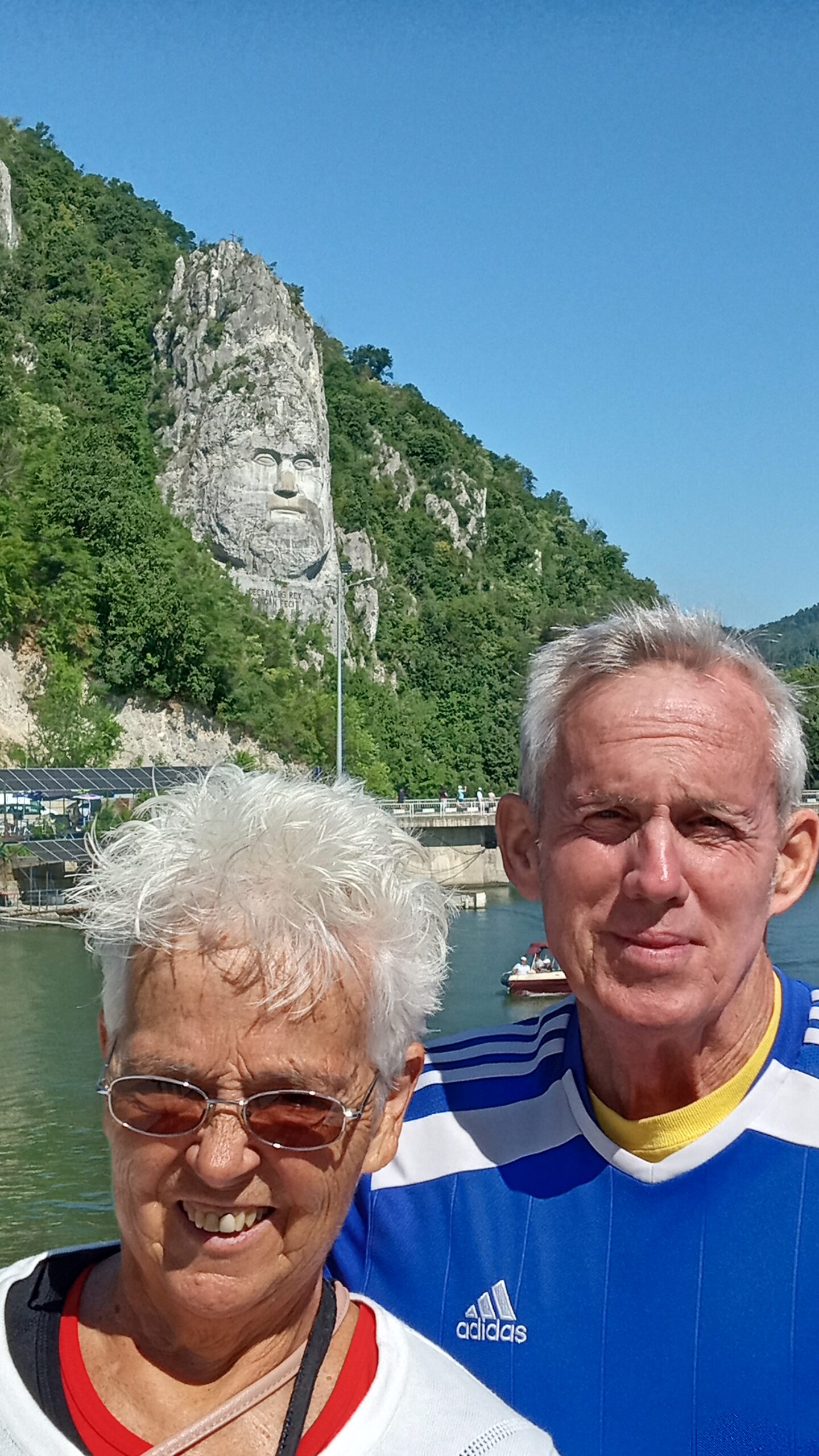
miles. A large carving embedded in the rock wall of an
ancient Roman leader of the day was a highlight. This
whole passage through this gorgeous gorge
was outstanding.
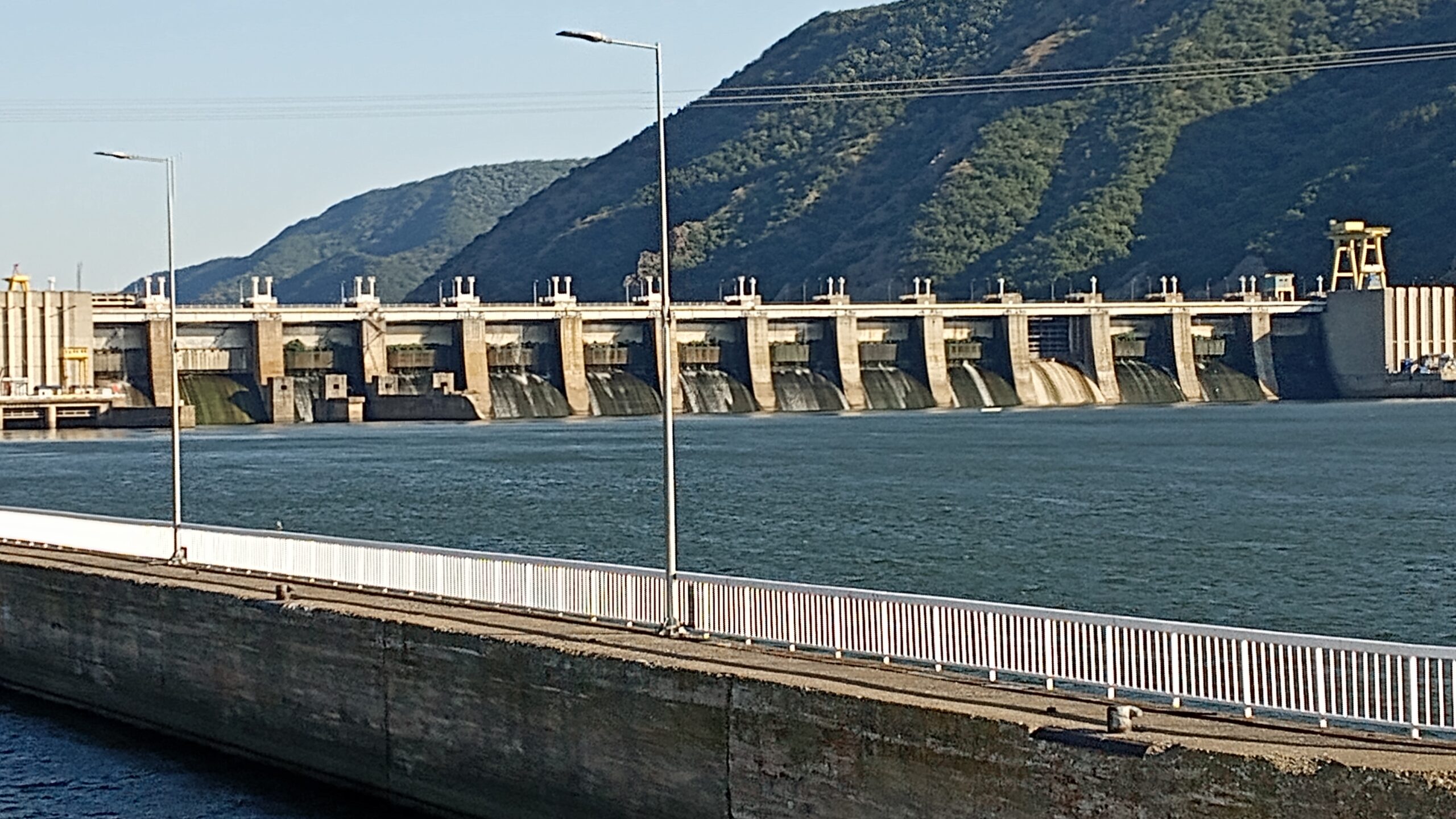
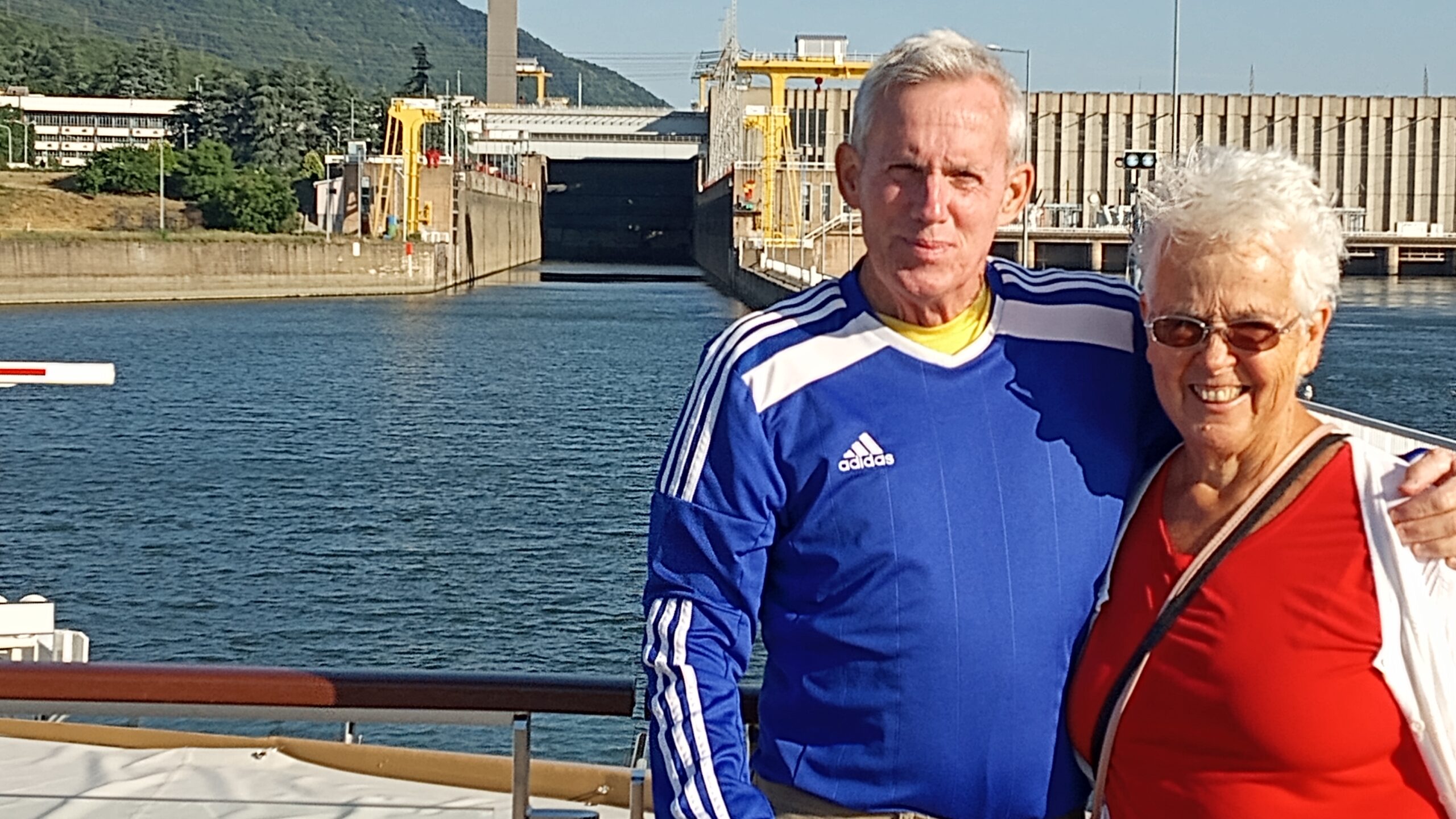
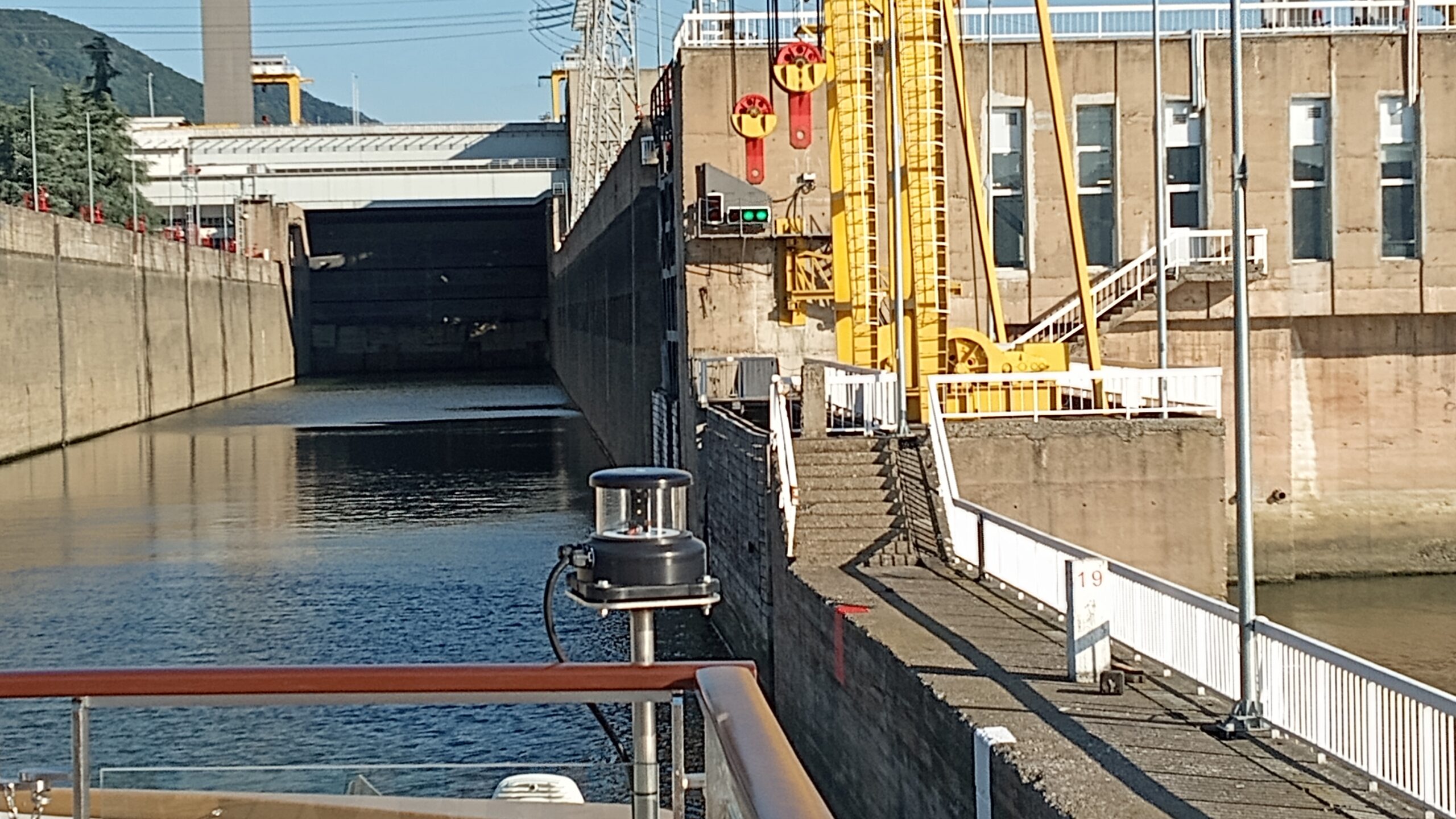
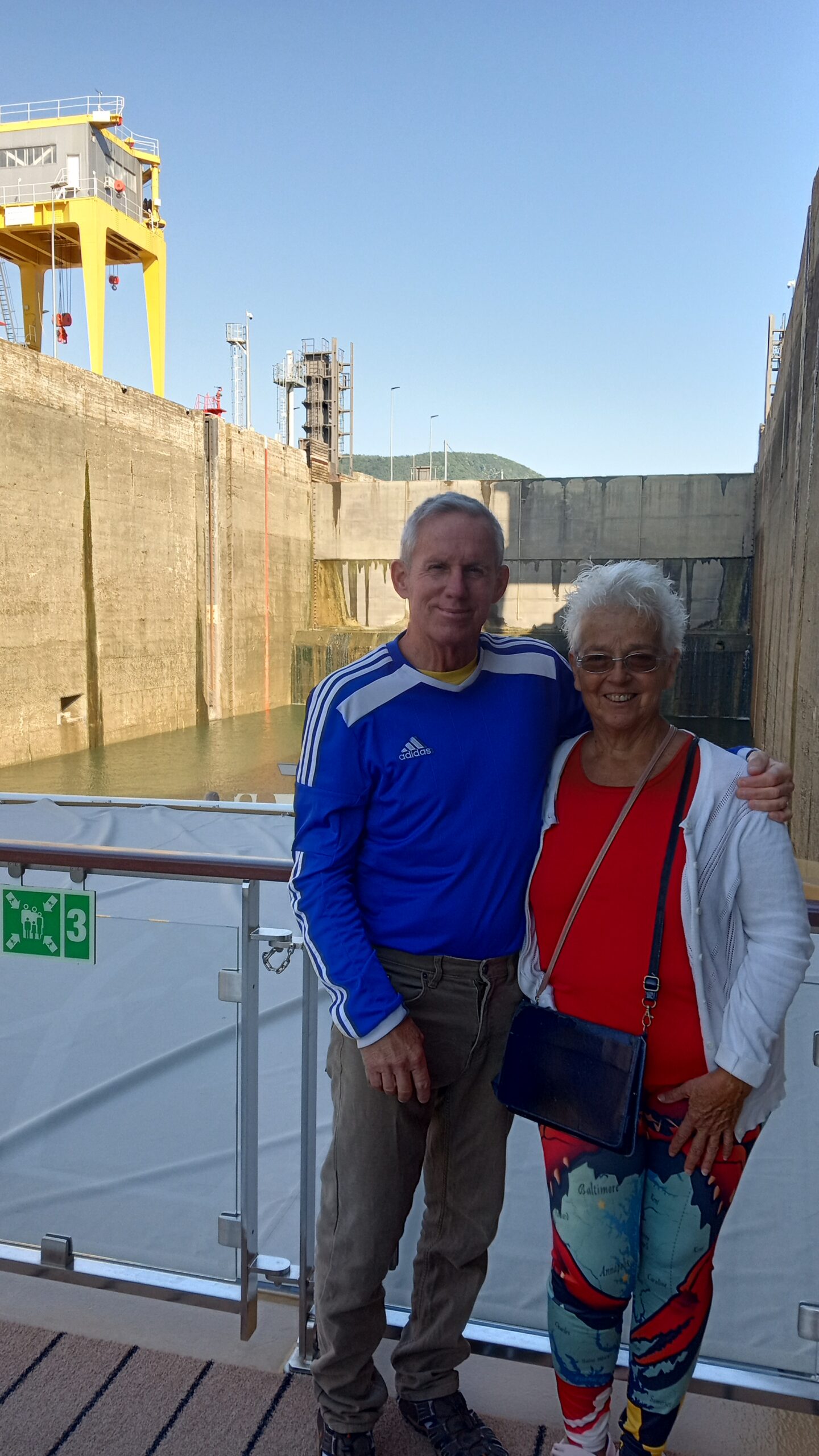
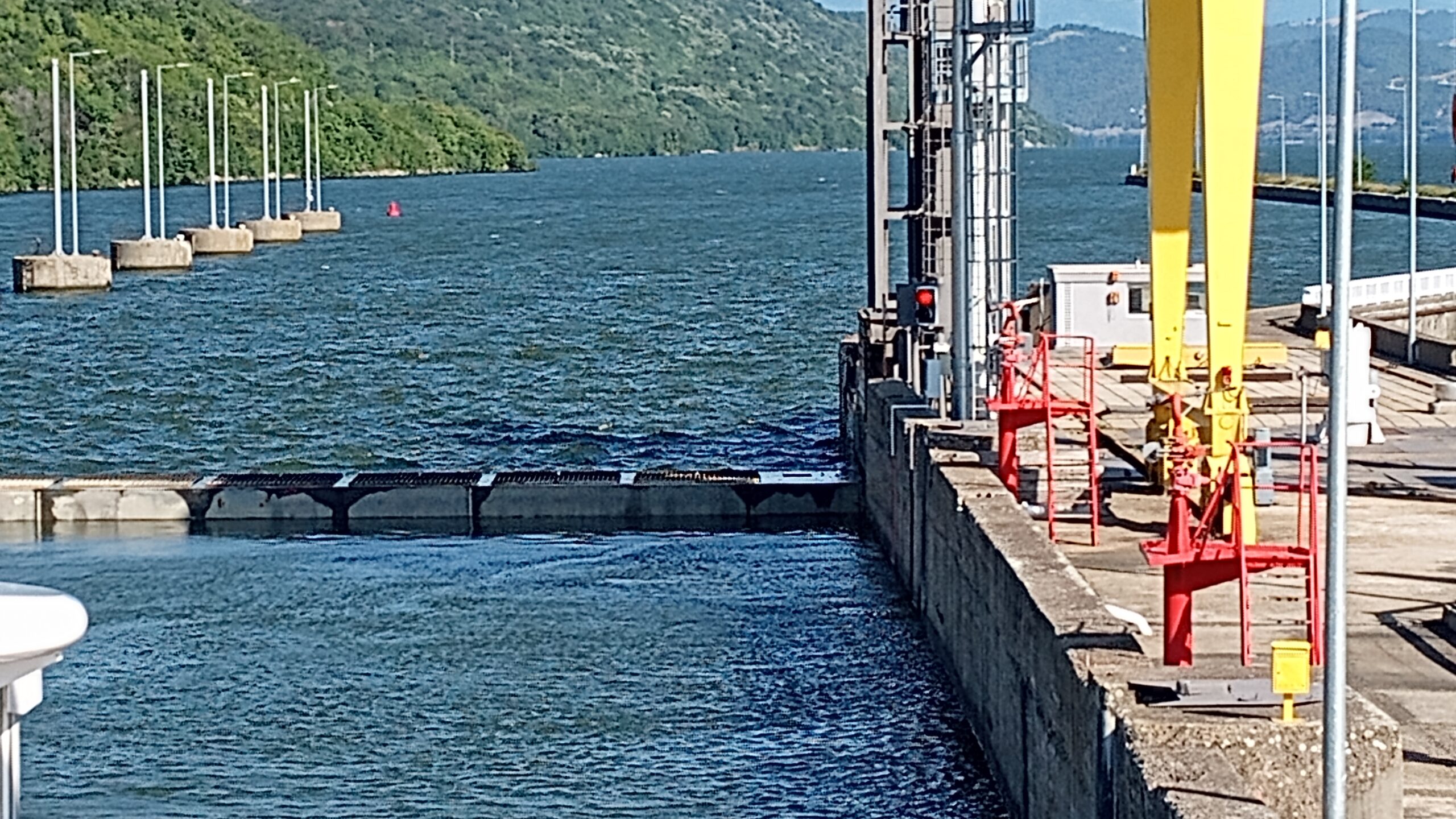
We also passed through a lock and dam area where our
ship had to raised up approximately 50 feet with 2 locks.
This took about an hour. Next to us was a large
hydroelectric dam that was called the Iron Gate.
The whole area with the gorge and dam was a special
excursion as our Viking staff explained the area
as we went through it.
After the Serbian port officials inspected our passports,
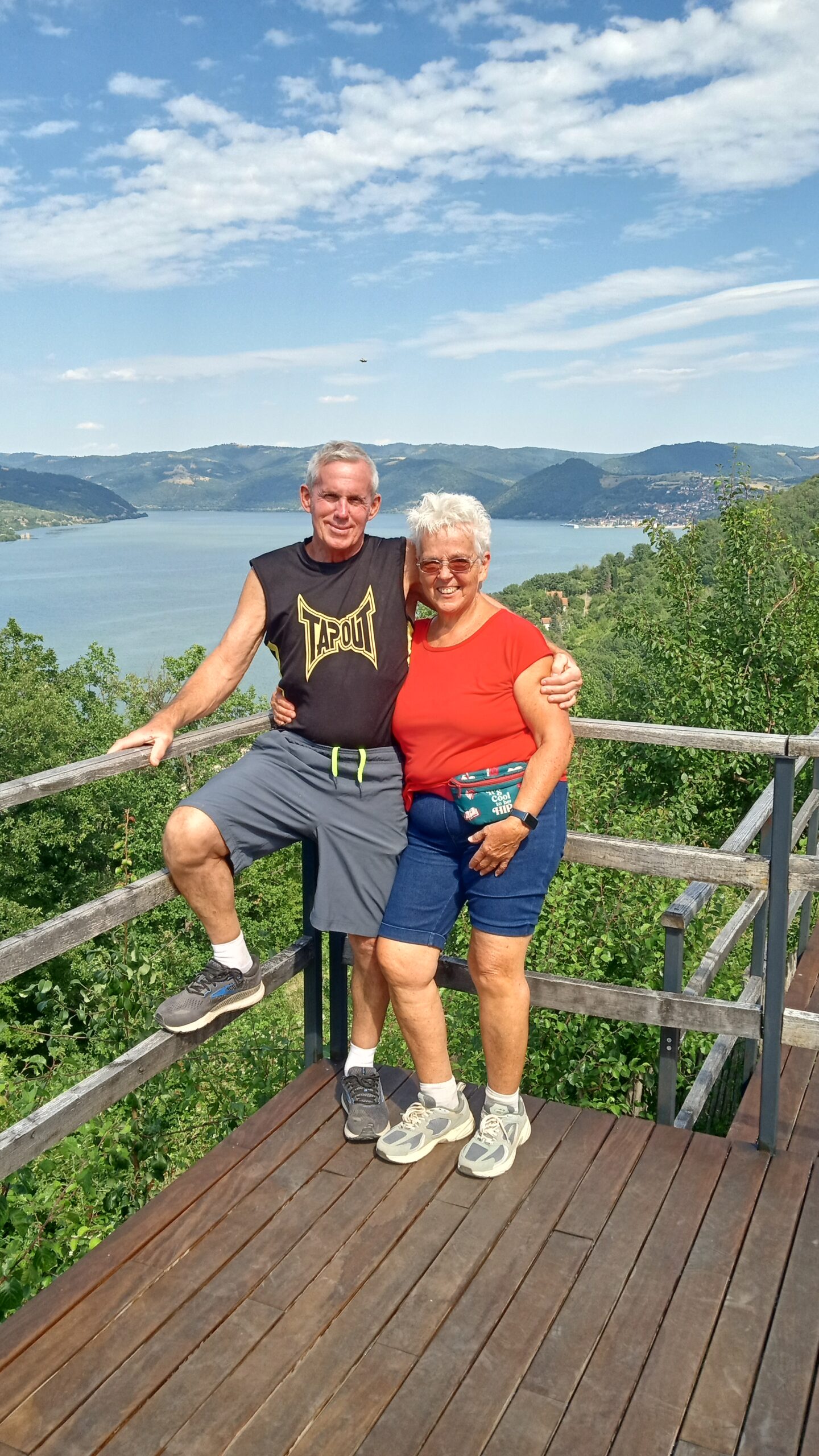
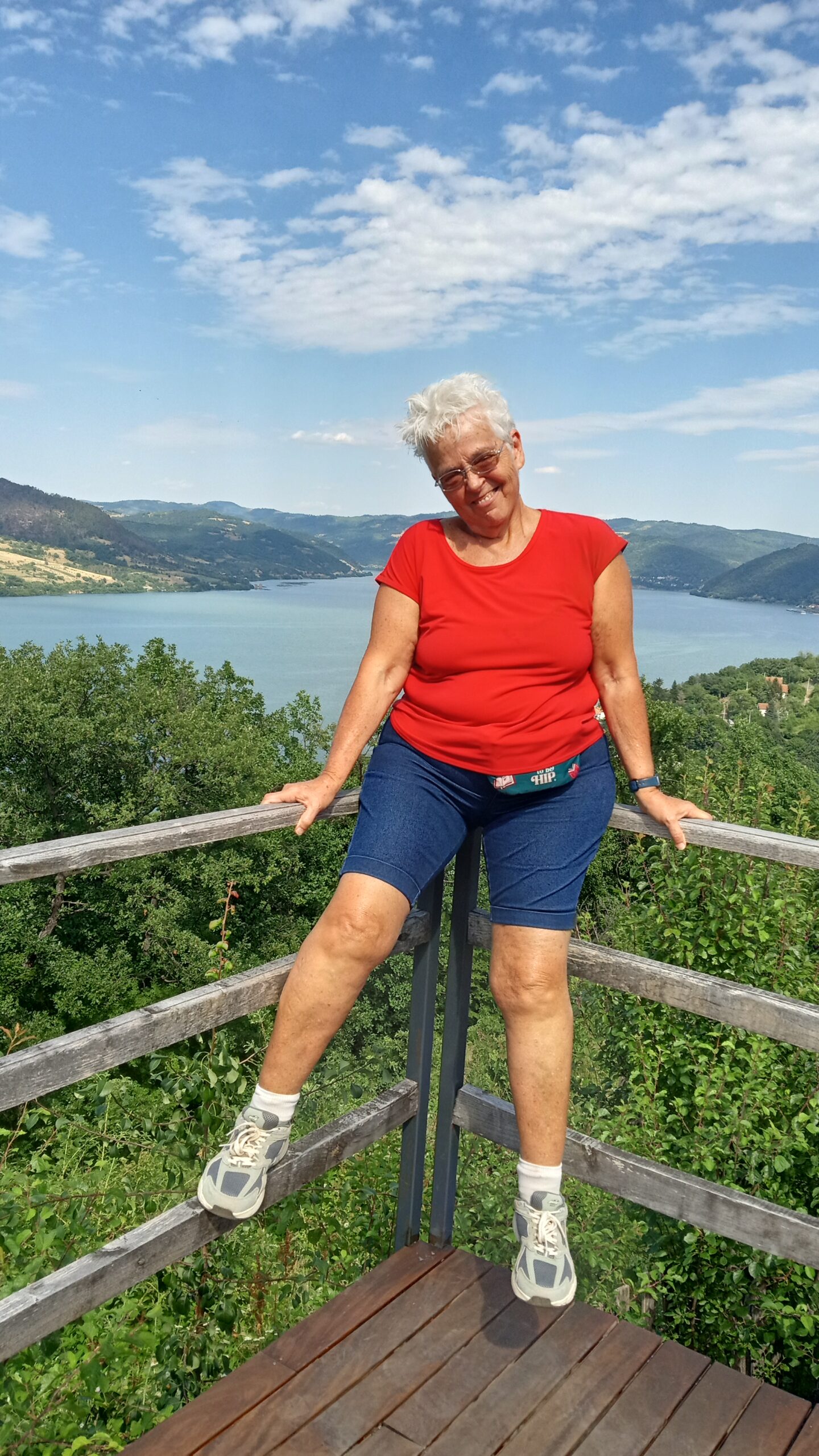
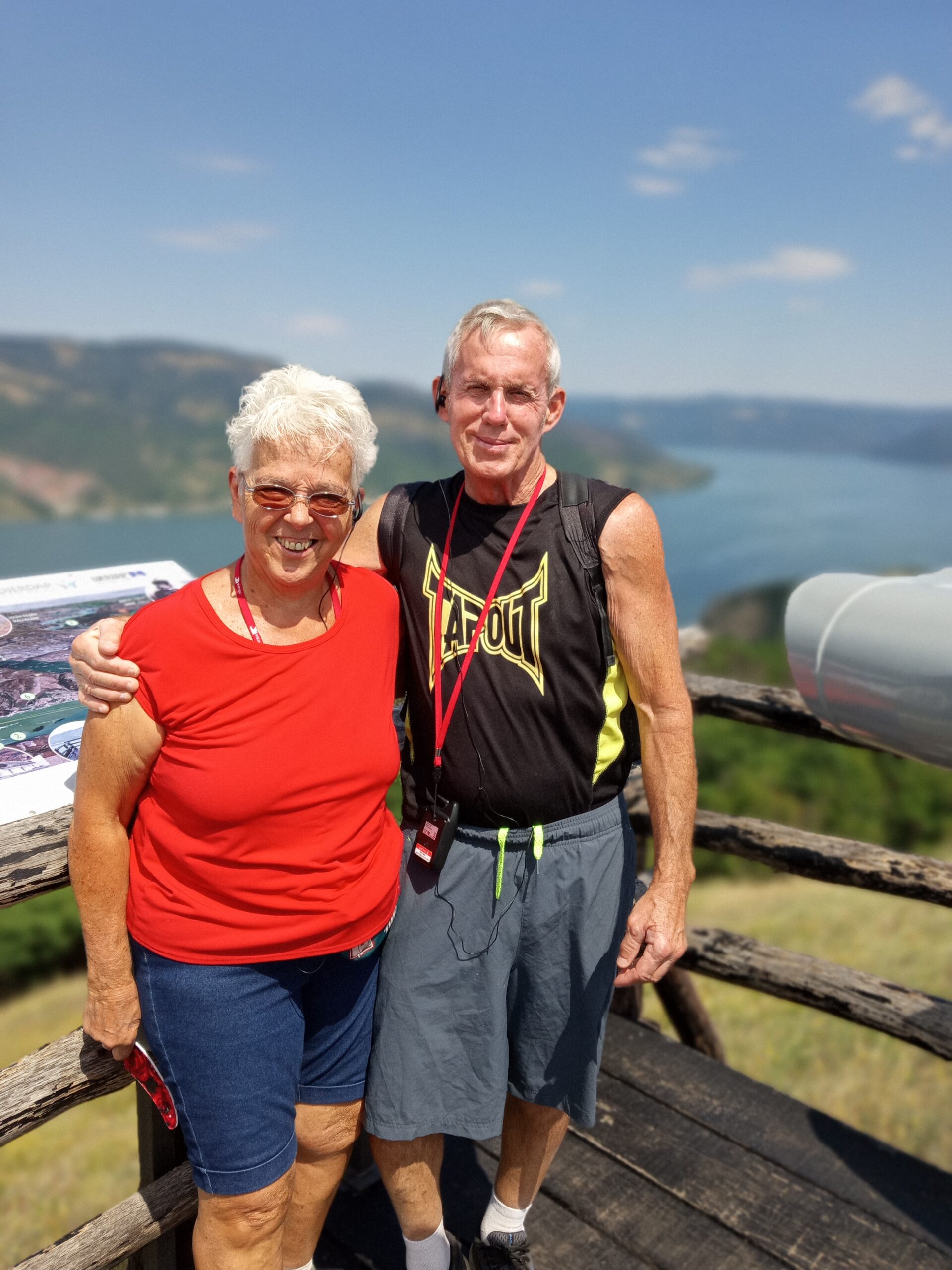
we took a bus excursion to Djerdap National Park.
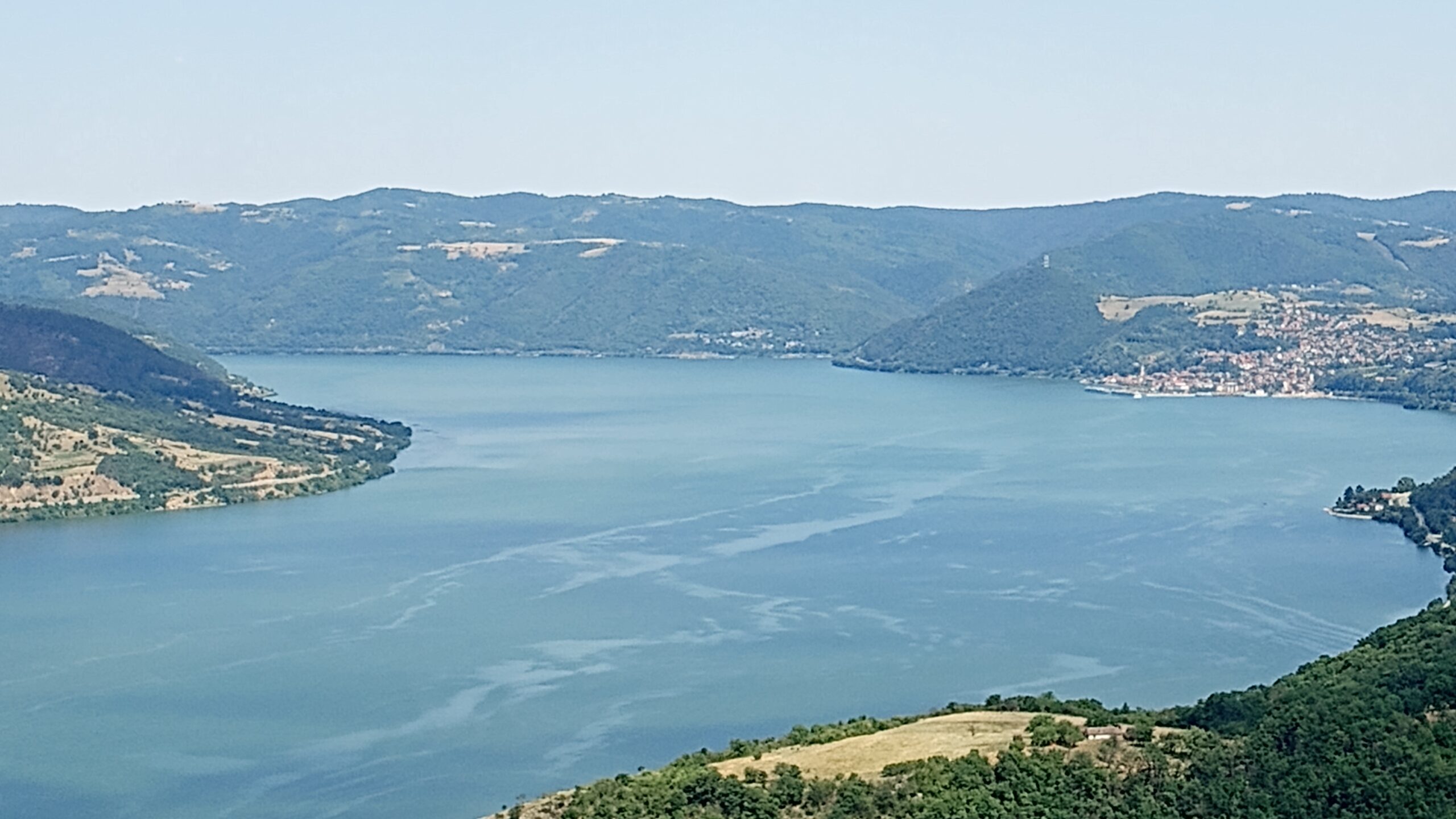
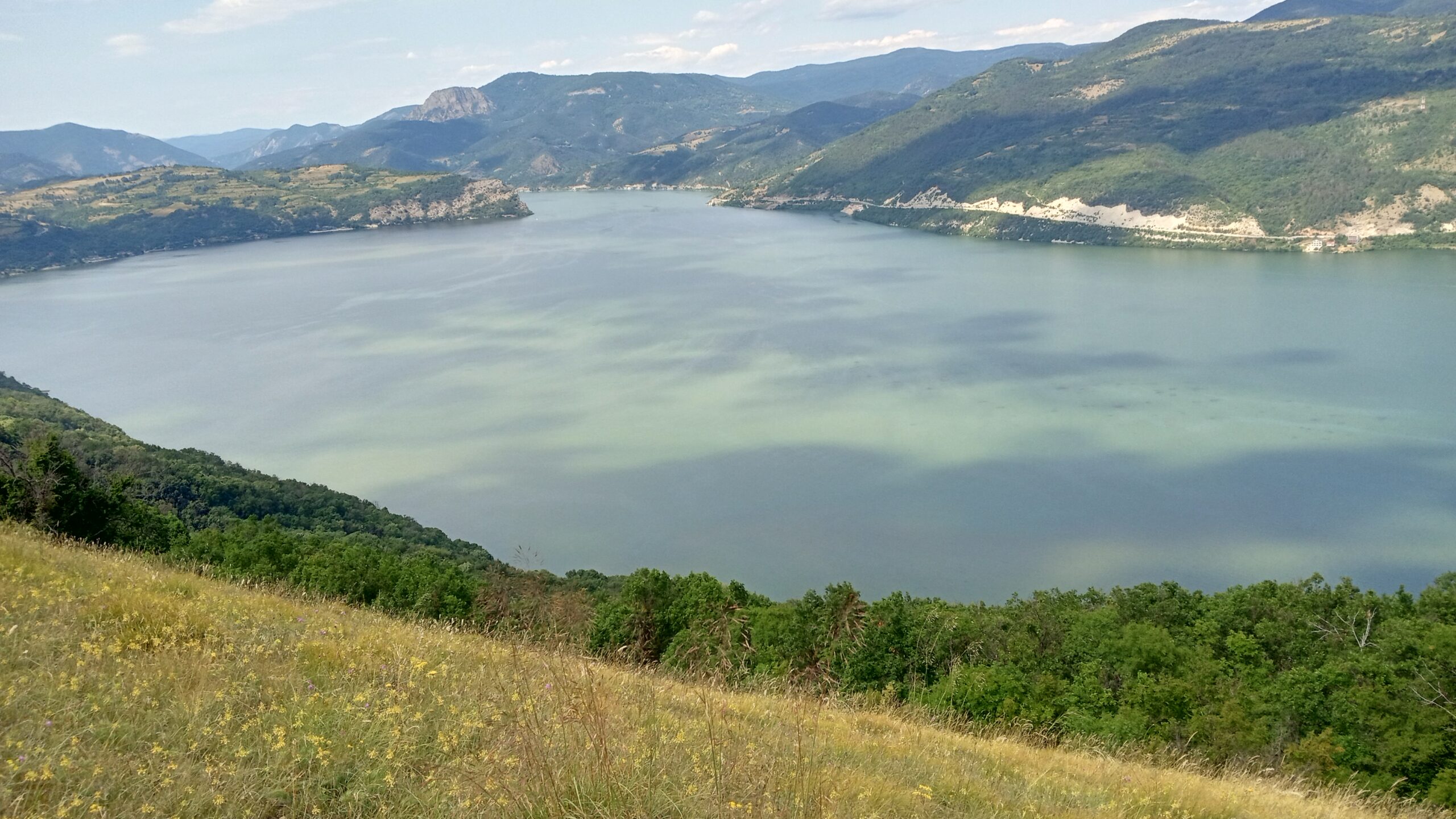
This large national park skirts the Danube River. We walked
a mile on a path and our group made it to the top of
a scenic overlook where we could see the wide and deep
Danube River and towering granite walls. The area was
beautiful. We took pictures and admired the wide open
vistas that overlooked miles of riverfront forests, rock
outcrops, small colorful towns and the bluish gray Danube.
Then our bus took us to a family run art center where
we were fed apricots, plums and local fare. They had a great
view of the riverfront and massive cliffs.
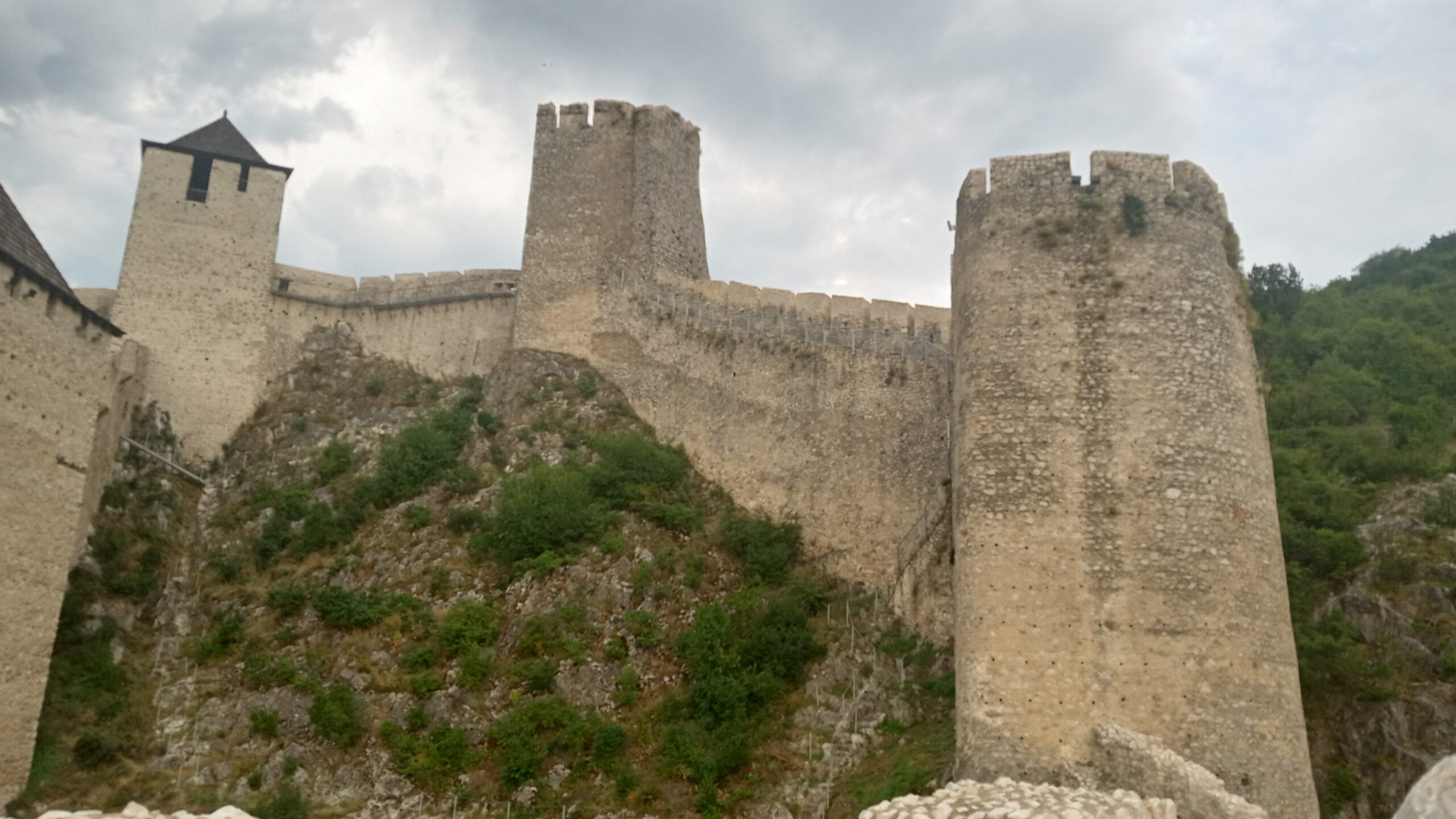
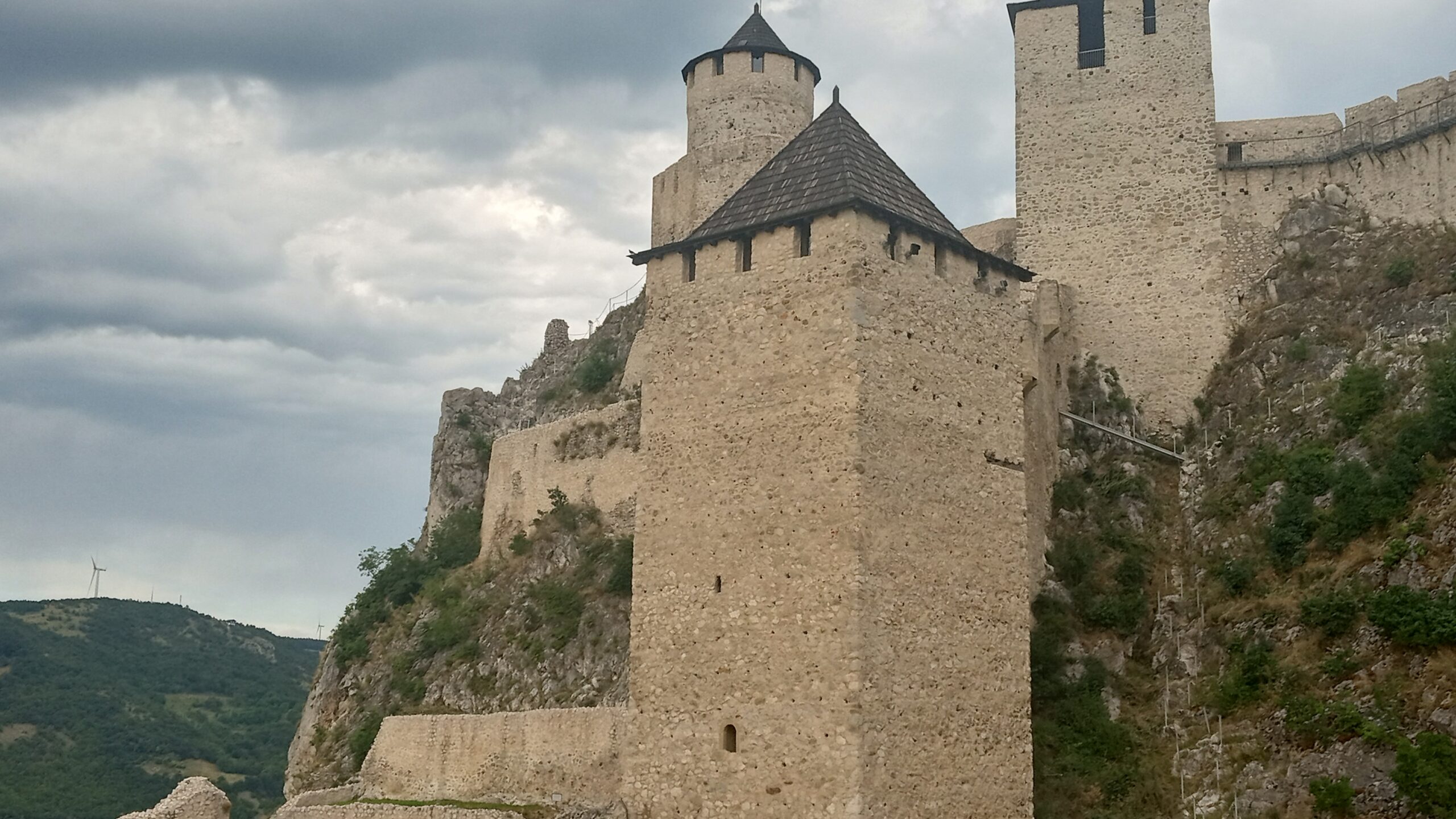
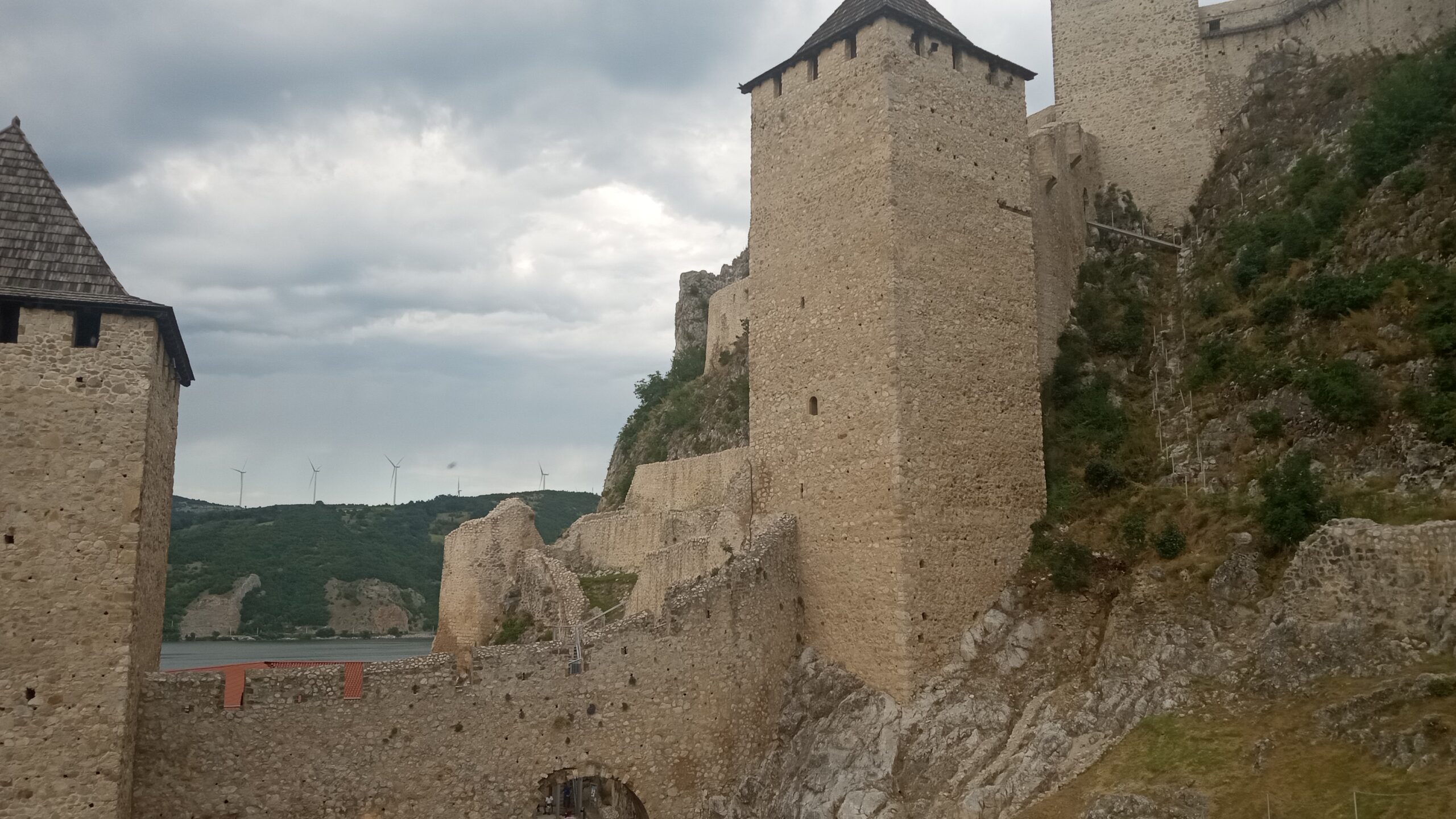
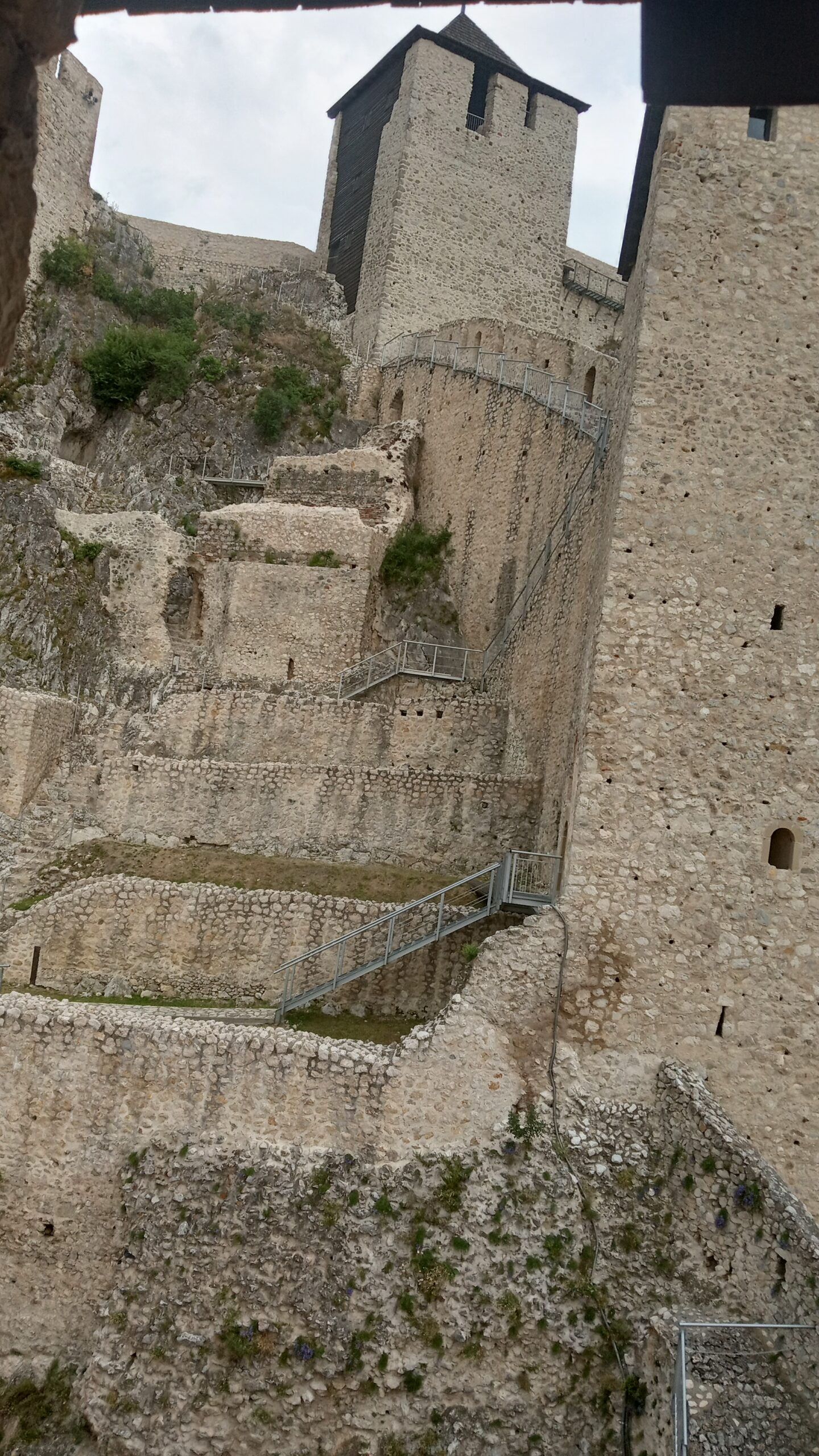
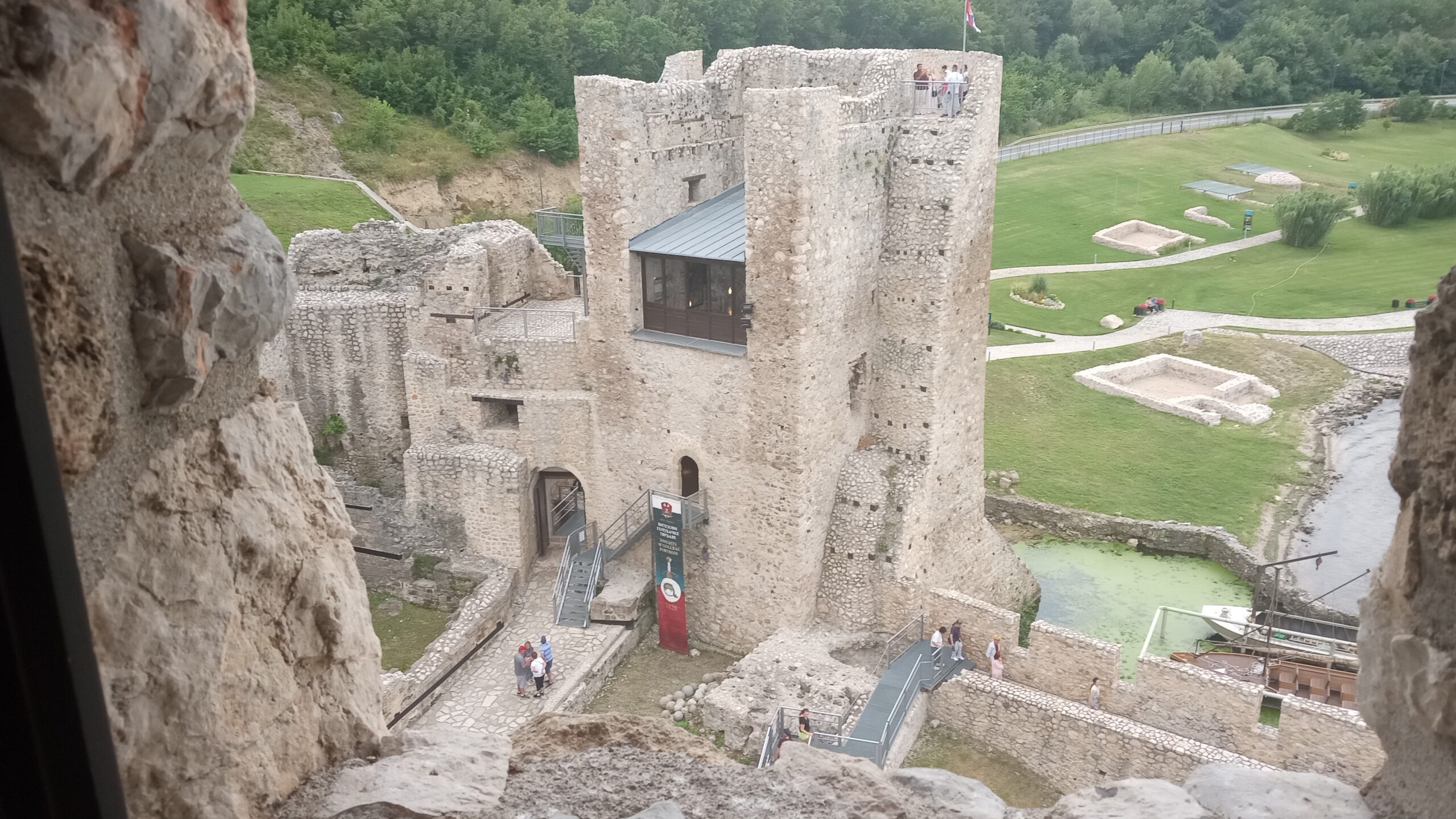
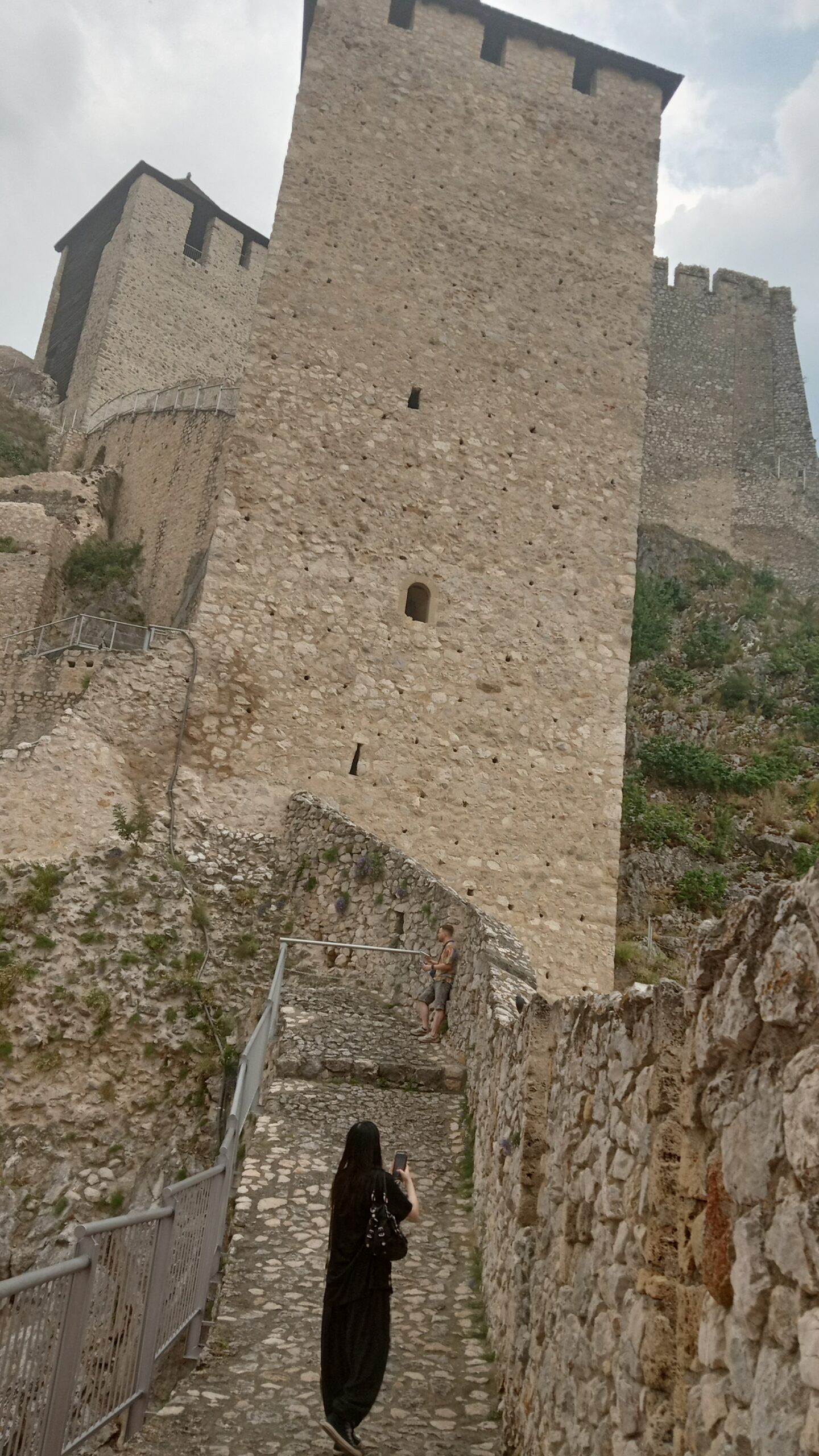
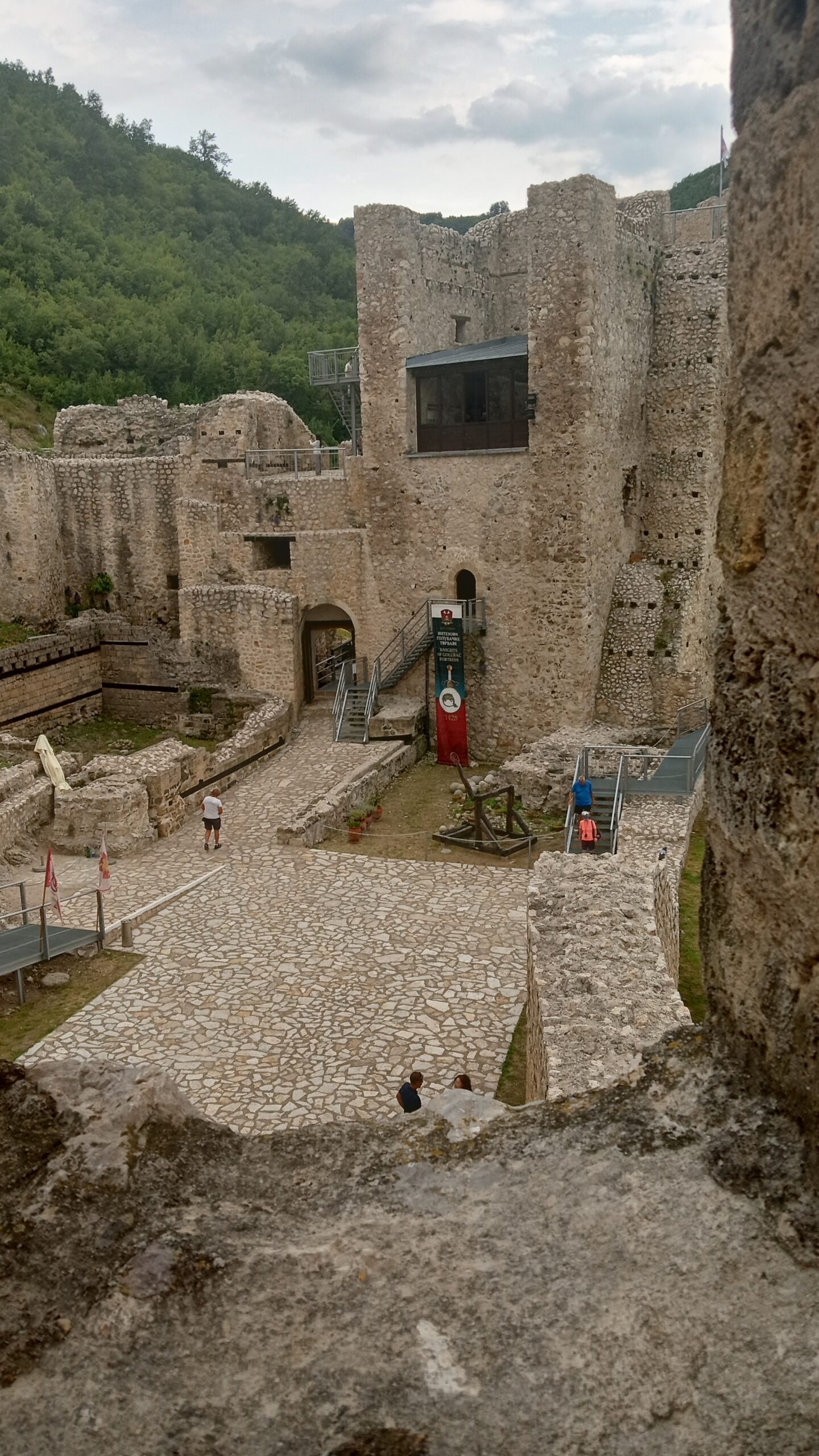
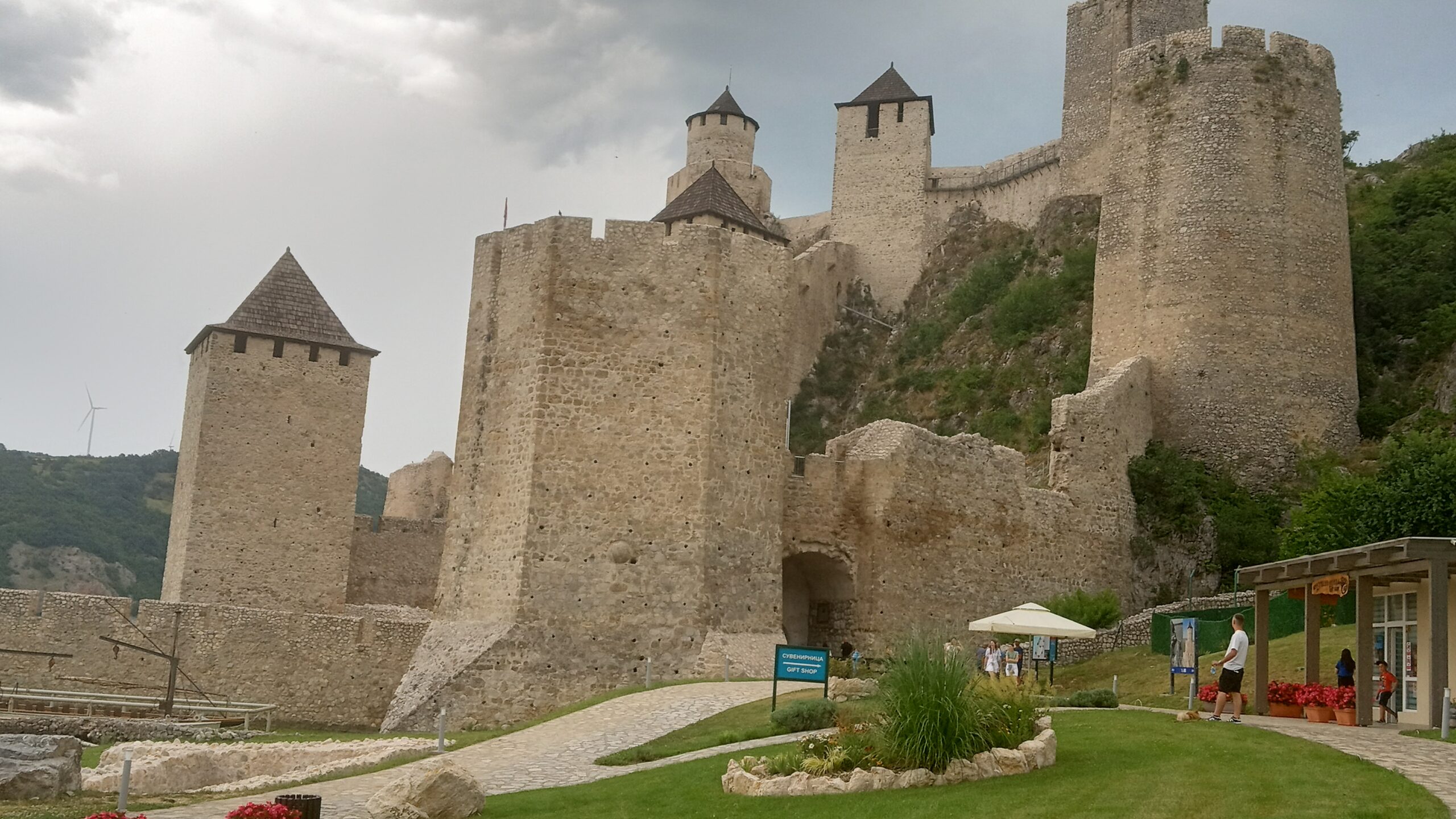
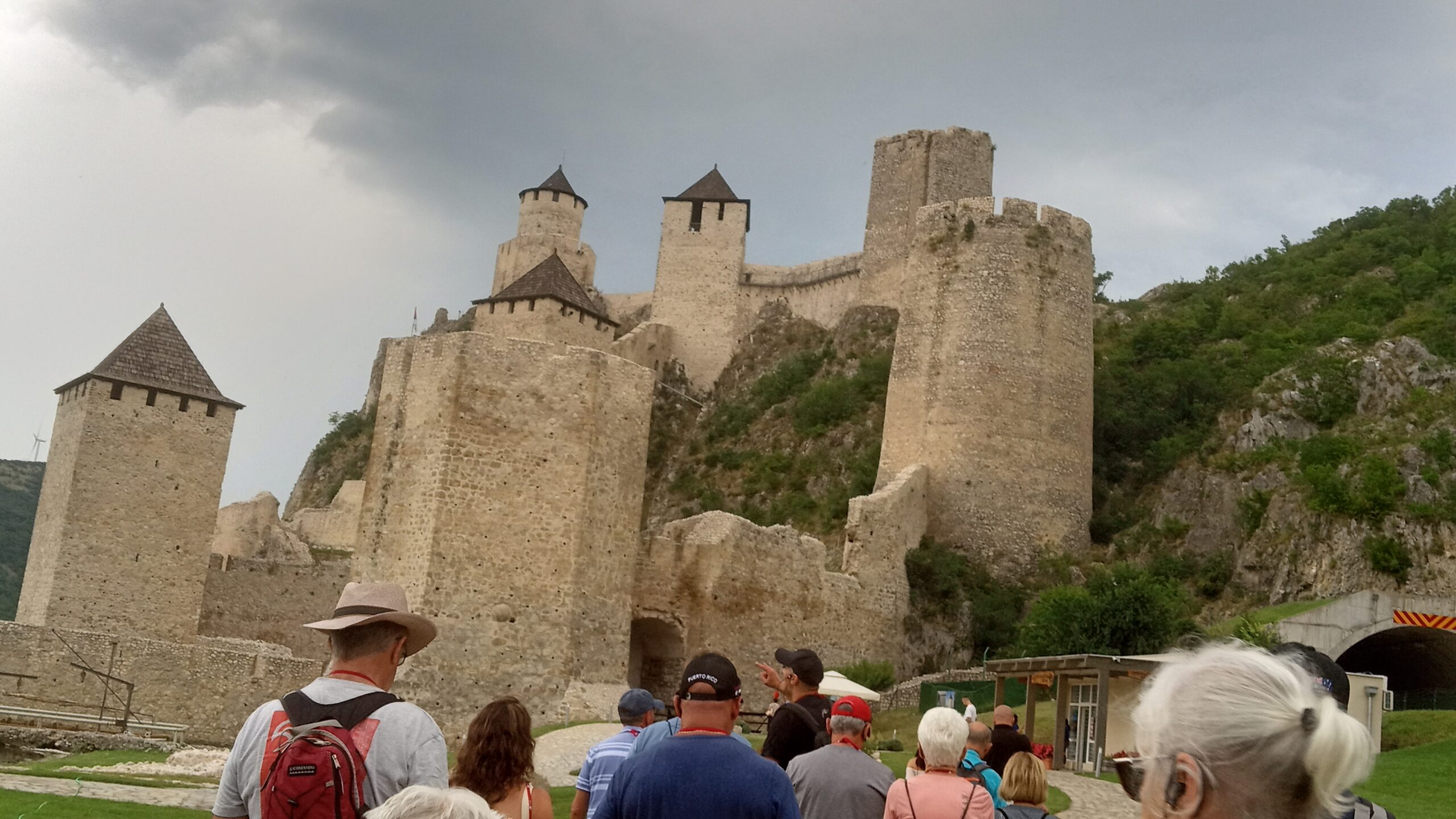
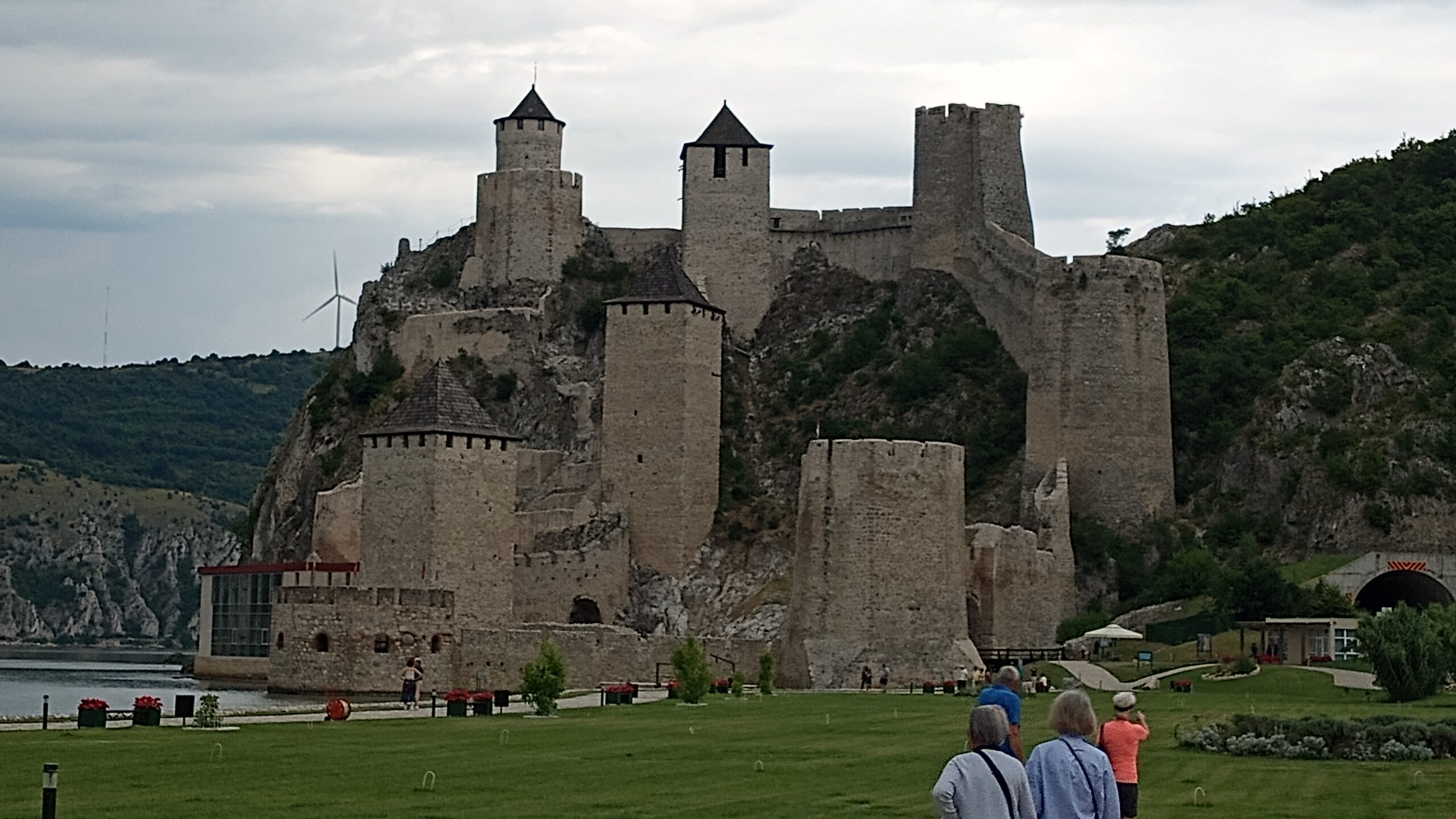
Next our bus took us the Golubac fortress located on the
banks of the Danube. This stone fortress had 7 turrets
that were each over 200 feet tall. We
climbed up stone, metal and wood steps to the top of
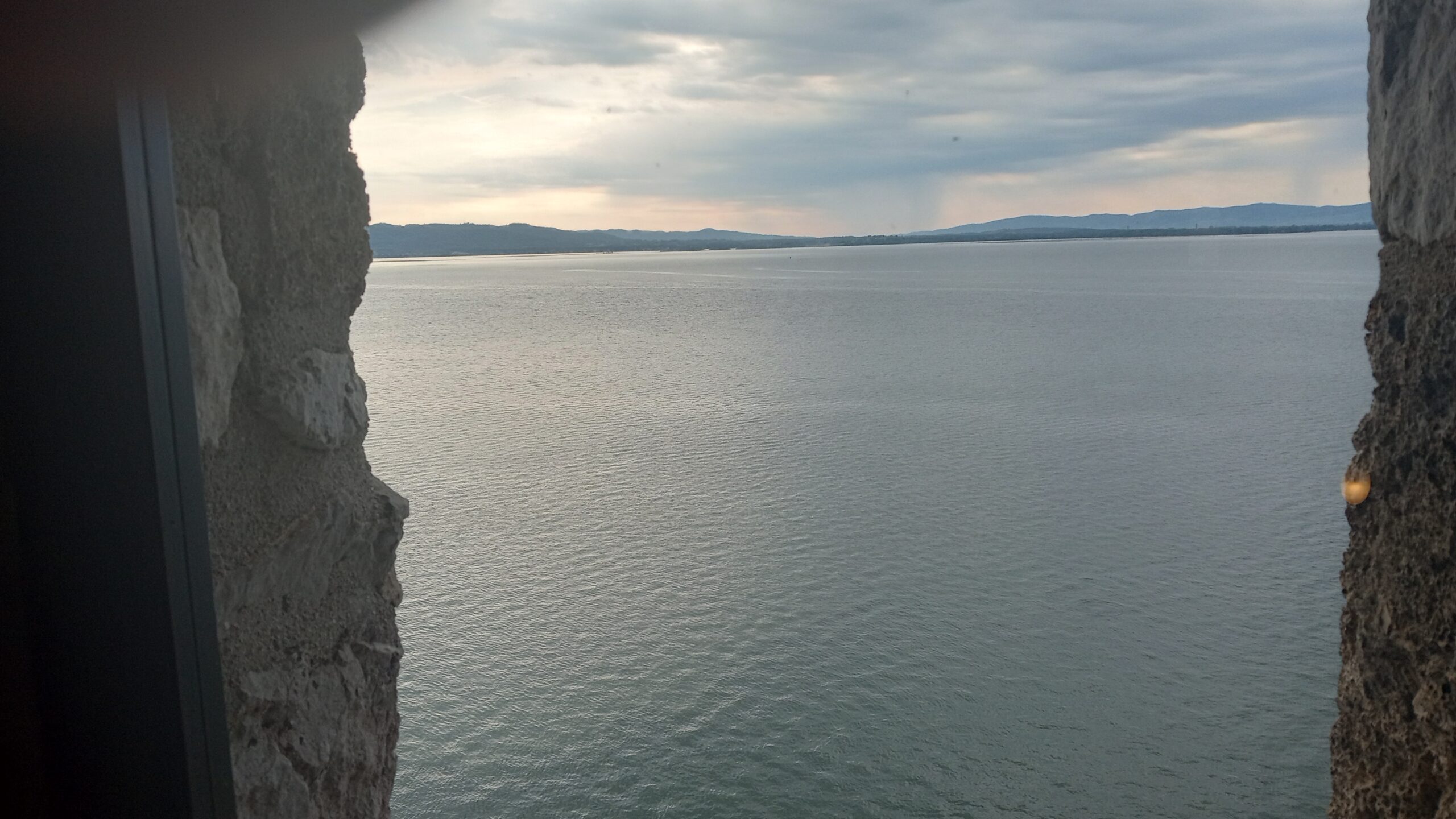
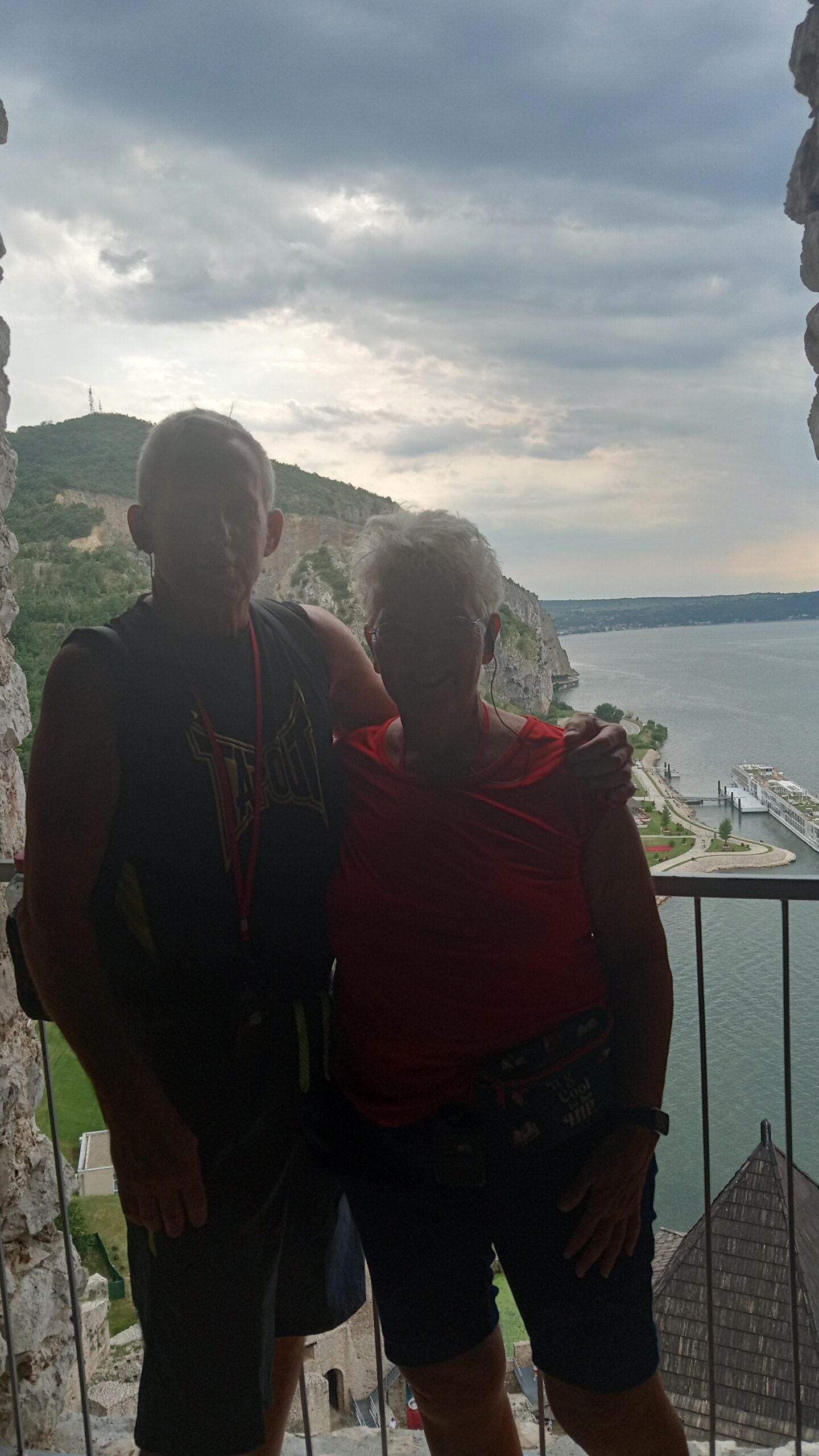
each turret. The views at the top were again of the Danube,
cliffs and waterways. This medieval place was classic –
just like in the movies.
We had a good time and were sweaty and tired
afterwards from climbing.
Another great day!
Day 9
Belgrade, Serbia
Sunday, July 12
Panoramic Belgrade
Tour the “White City” at the Scenic Confluence of Two Rivers
This morning our tour group went by bus to the
nearby Kalemegdan Fortress. This fortress protected
the town from a high point overlooking the
confluence of the Sava and Danube Rivers. We toured
the outside of the ramparts and restored angled
moat high walls, stone archways and cobbled
narrow entrances to this fort. We then got caught
in a torrential downpour where we took refuge in
nearby shopping mall.
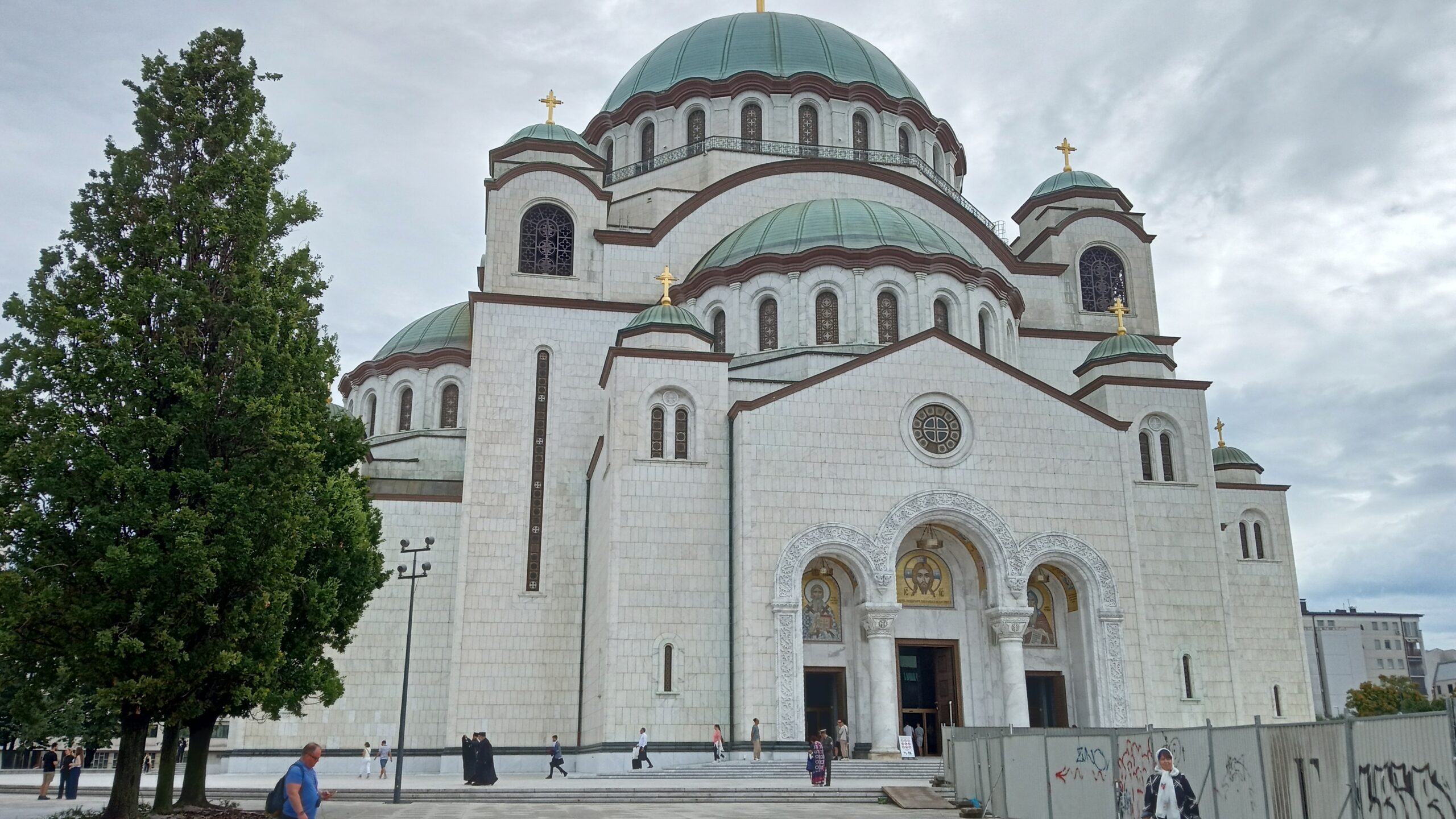
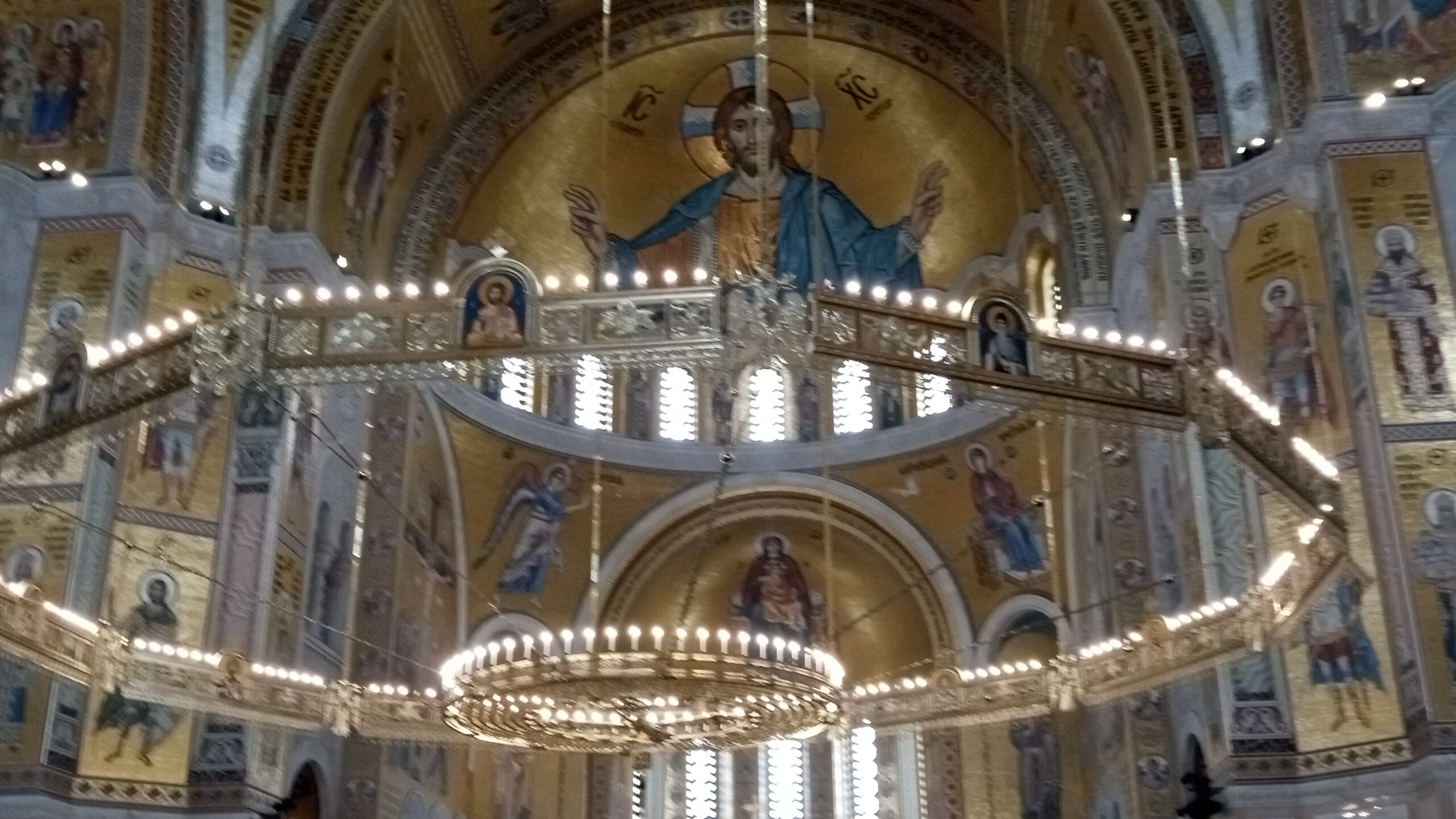
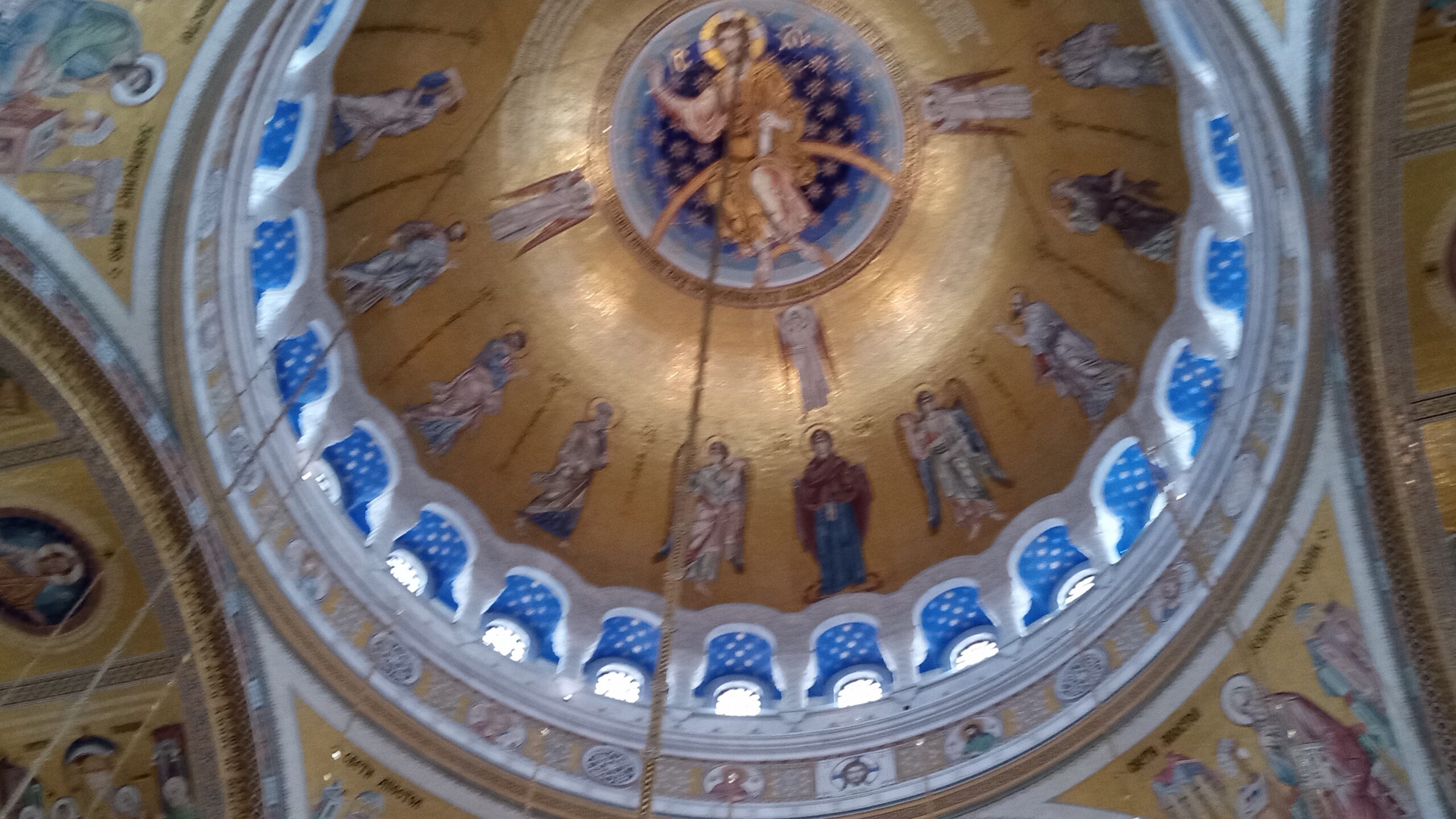
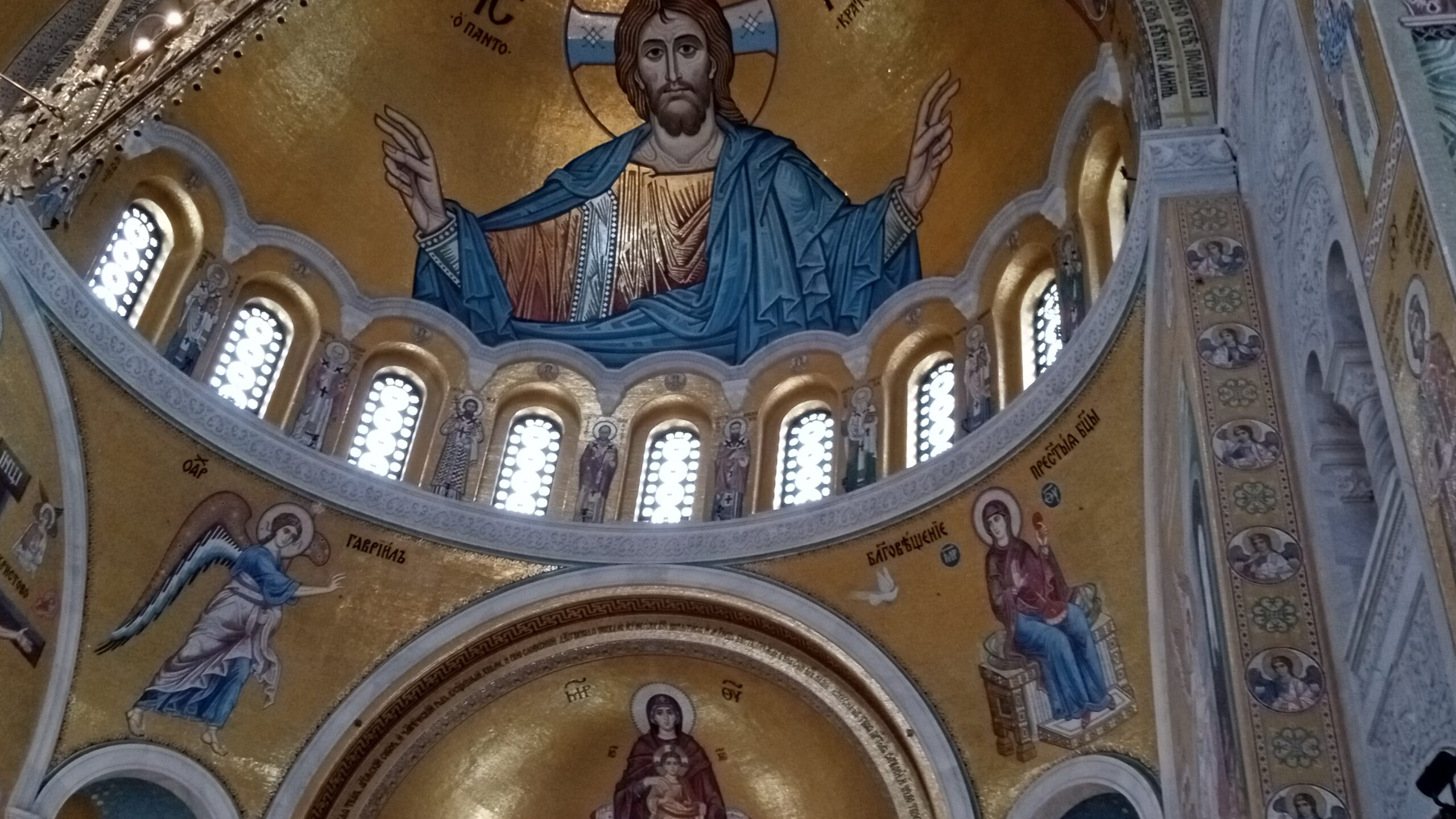
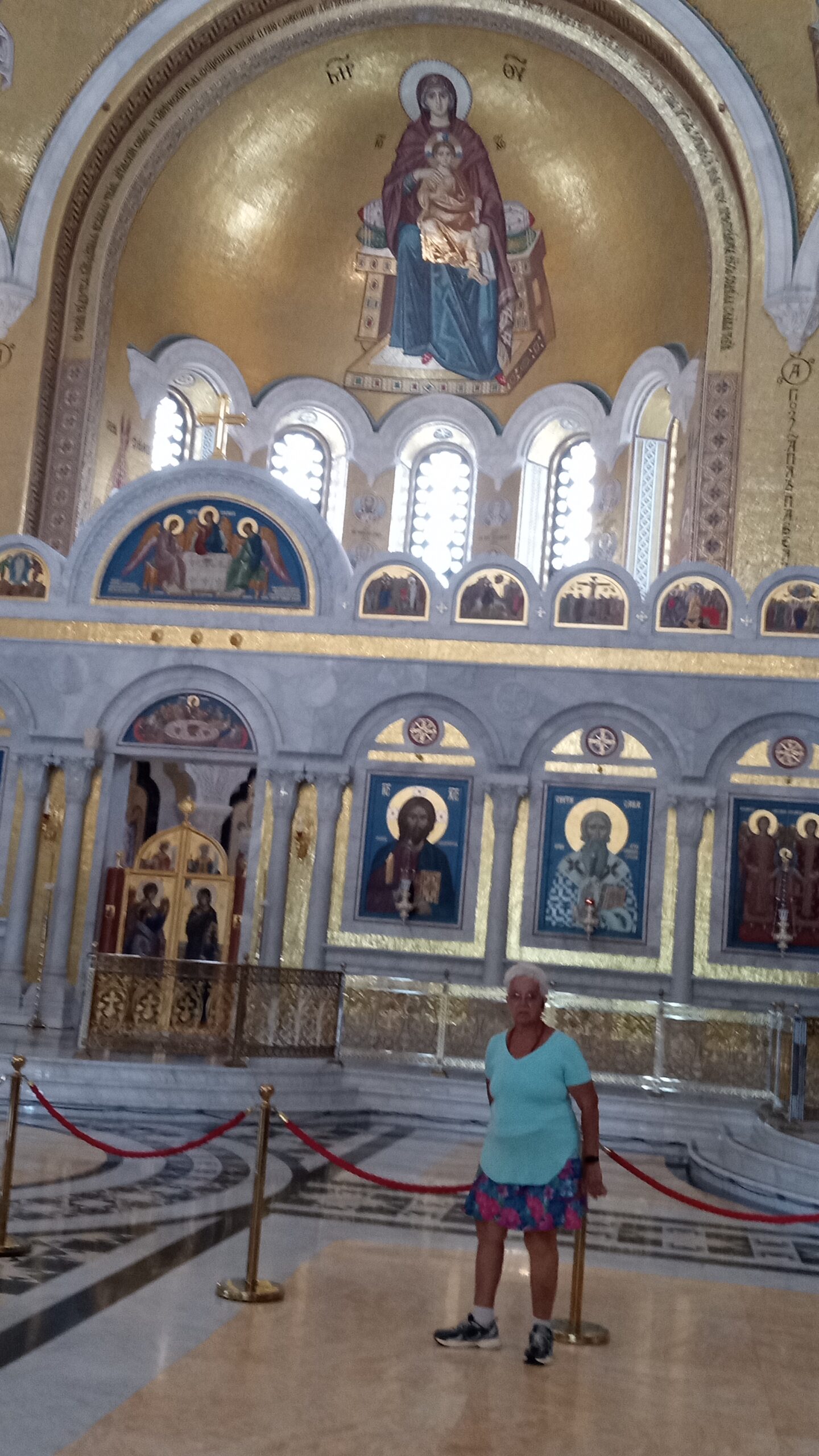
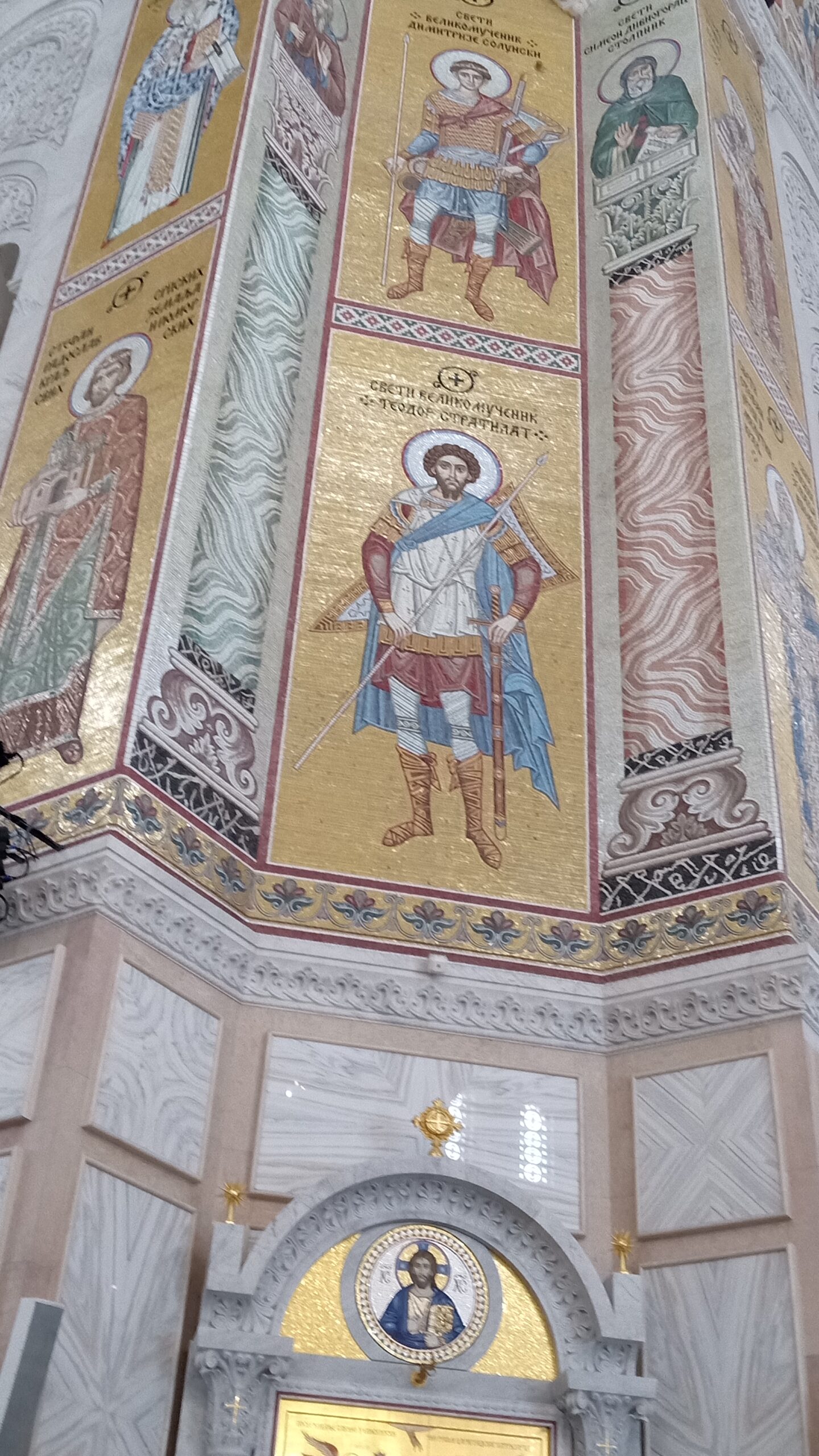
Our bus then took us to the innercity immense
and relatively new Greek Orthodox Church of St. Sava.
It was a replica of the Hagia Sophia Church in
Istanbul, Turkey. It had a tall central dome flanked
by 4 half domes at angles of NSEW, half arches
beneath that and stone pillars at the base of each
side. The iconography and mosiacs of Jesus, Mary
and biblical scenes were impressive.
After lunch we took a walk on our own from the ship
to see more of the fortress area we missed in the
morning. The area around this old fortification was
made into a park where dozens of tourists and local
residents all strolled around. We both went up by
stairs on walls, took scenic shots, explored and
climbed turrets.
We then found a place by accident in this park where
there was an ancient Roman stone well that had
been restored in the 17th century. It was 180 feet
deep. An engineering marvel.
Day 9
Belgrade, Serbia
Sunday, July 12
Dine in Belgrade’s Bohemian Quarter
Savor a Tasty Meal of Local Fare
Stroll the vintage streets of Belgrade
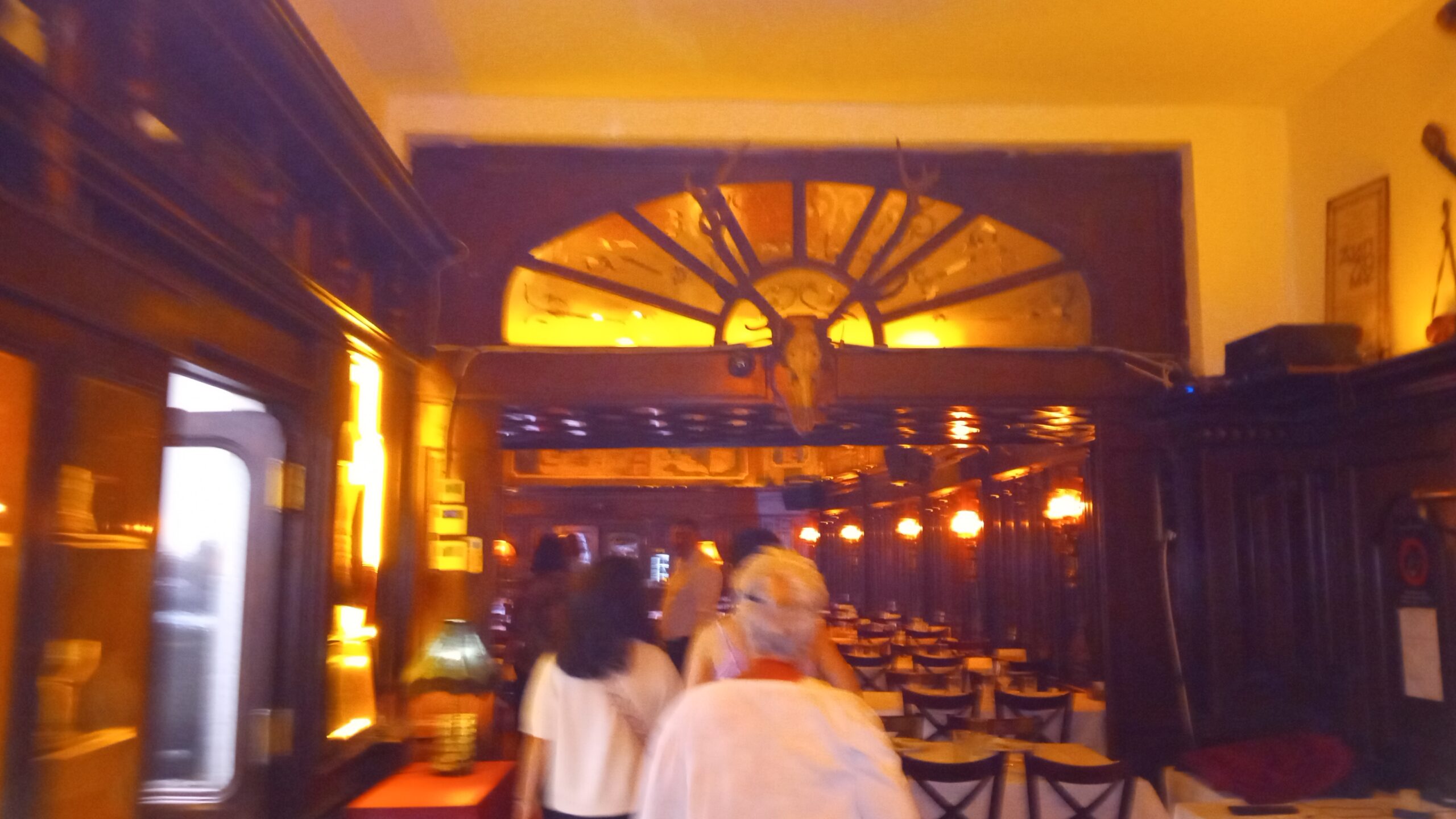
Tonight a group of about 20 guests and 2 guides
were picked up and were taken to a local restaurant
in Skadarlija, the bohemian quarter of Belgrade. We
had a sumptuous 5 course meal consisting of
appetizers, salad, a variety of meats, drinks,
and dessert. A local 3 piece band entertained us
with ethnic music while we ate. It was nice.
Day 10
Osijek, Croatia
Monday, July 13
Osijek & Vukovar
Tour Two Major Croatian Cities and Visit a Local Family
See the highlights of Vukovar and Osijek
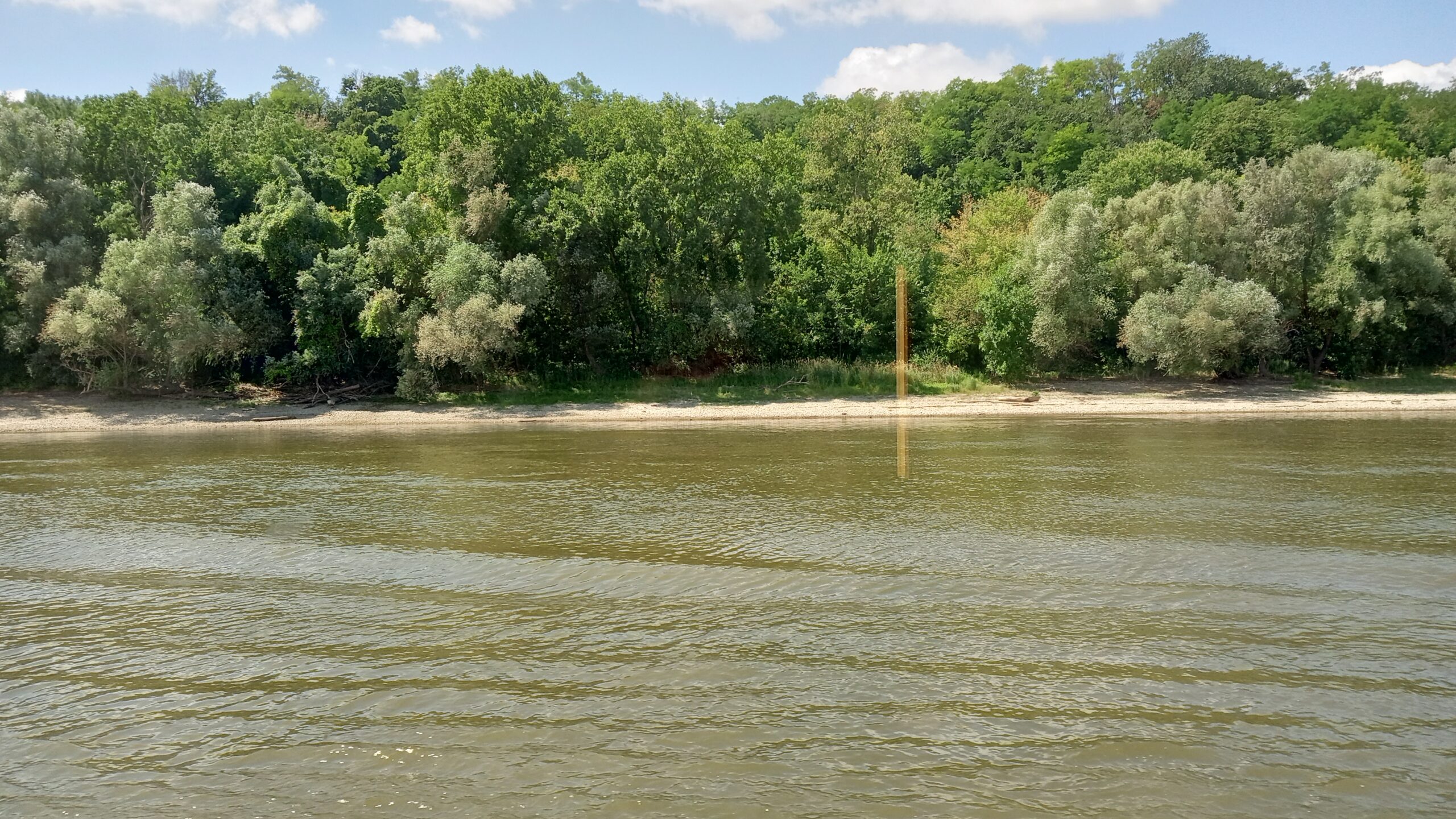
Now in Croatia, our boat is slowly heading northward up
the Danube. Here the river is more narrow with greenish
water, and rocky banks with lush vegatation. Sometimes
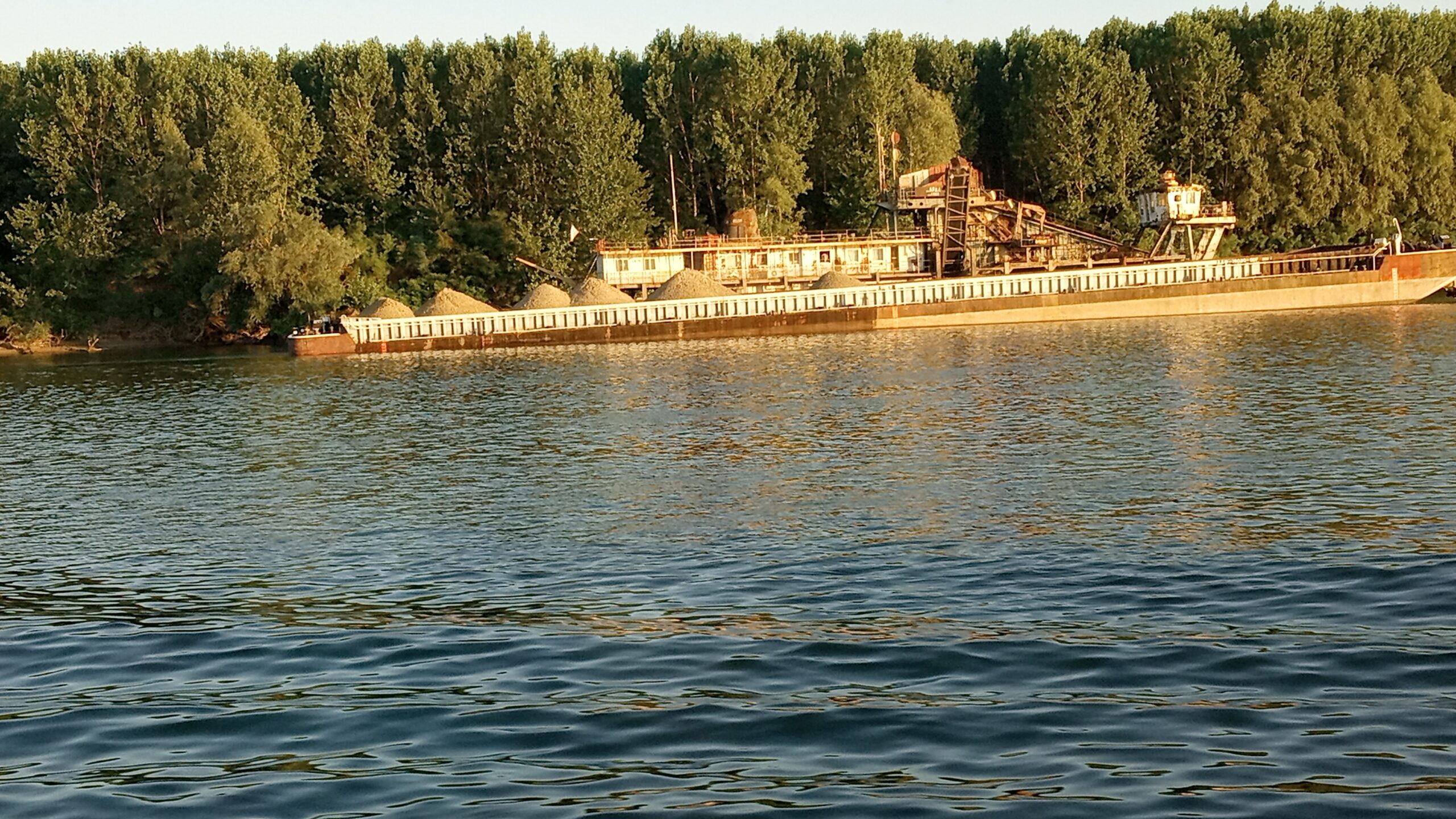
we see barges with cargo, fishing boats, and speedboats.
So this morning we spent a few hours on the upper deck
just watching the scenery unfold. The temperature
and weather is wonderfu,l in the mid 70’s with sunny skies.
Other guest are on the deck too with time to kill its
fun just to relax.
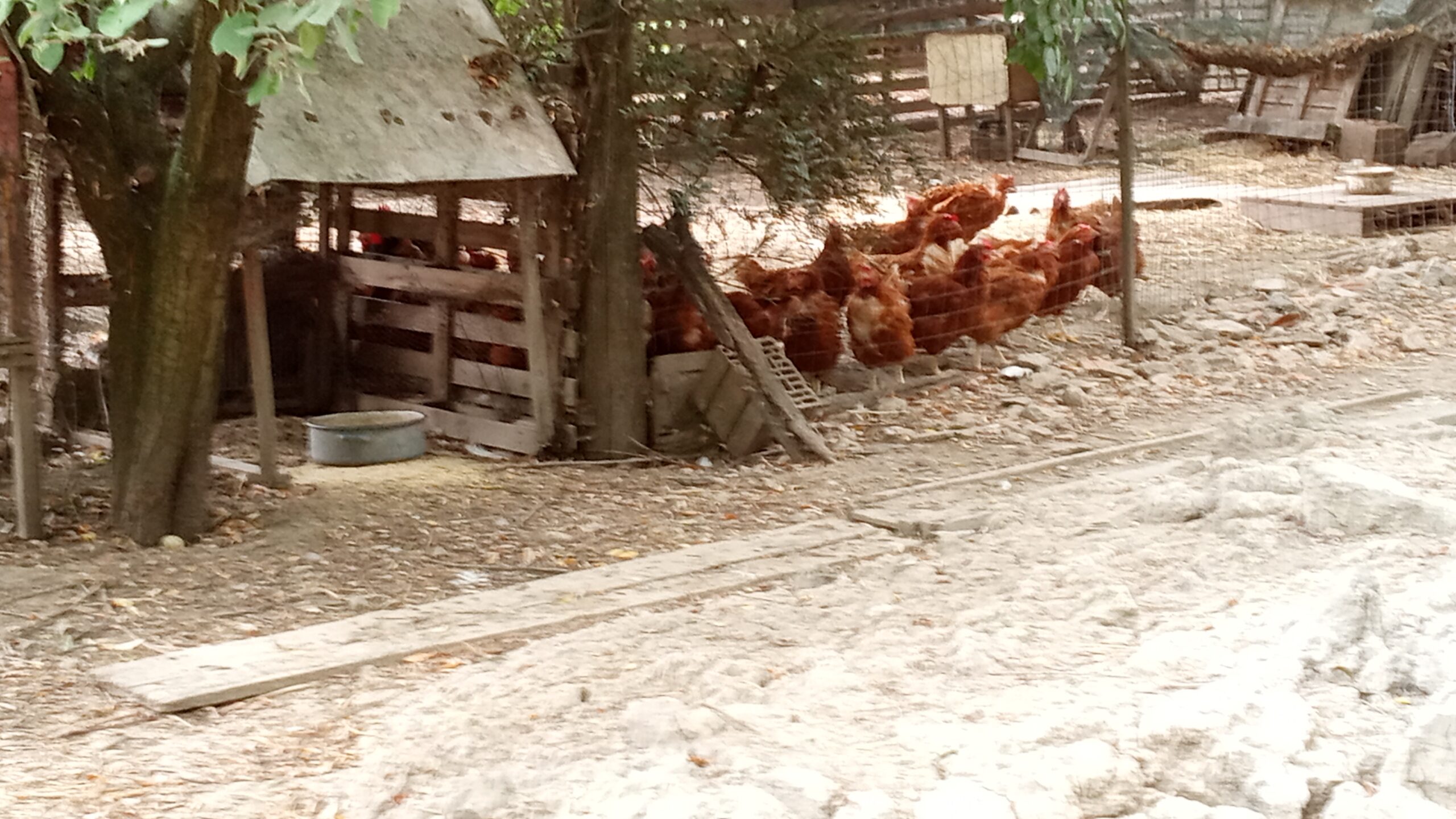
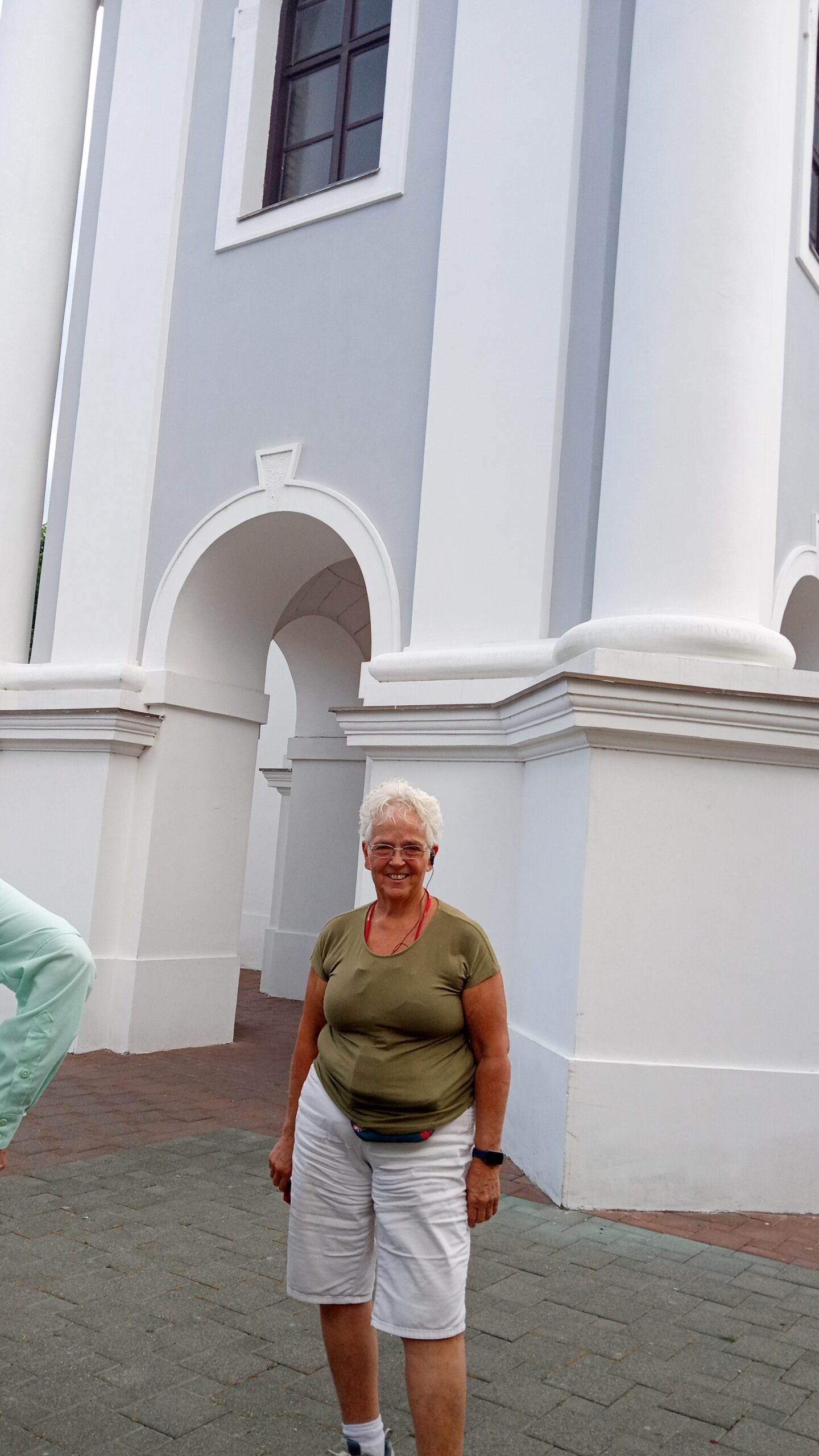
This afternoon our group took an hour bus ride to two
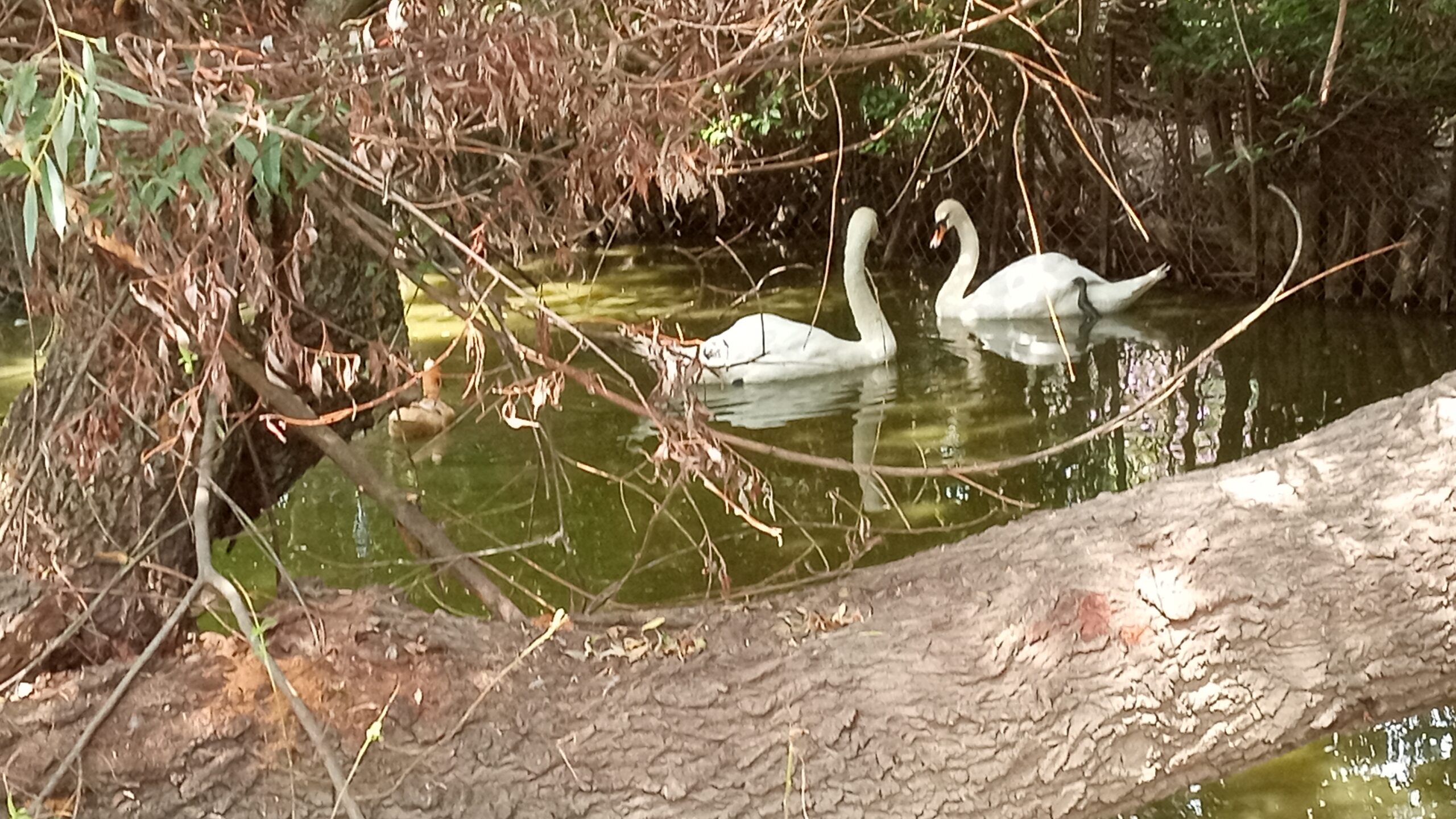
towns in Croatia. In Osjek we visited with a family who
owned a 2 acre farm that had fruit trees, vegetable
garden, berries, many chickens, geese, swans and
even goldfish in large ponds. The father showed his
eco-friendly place as we had a snack inside his
quaint yet nice home.
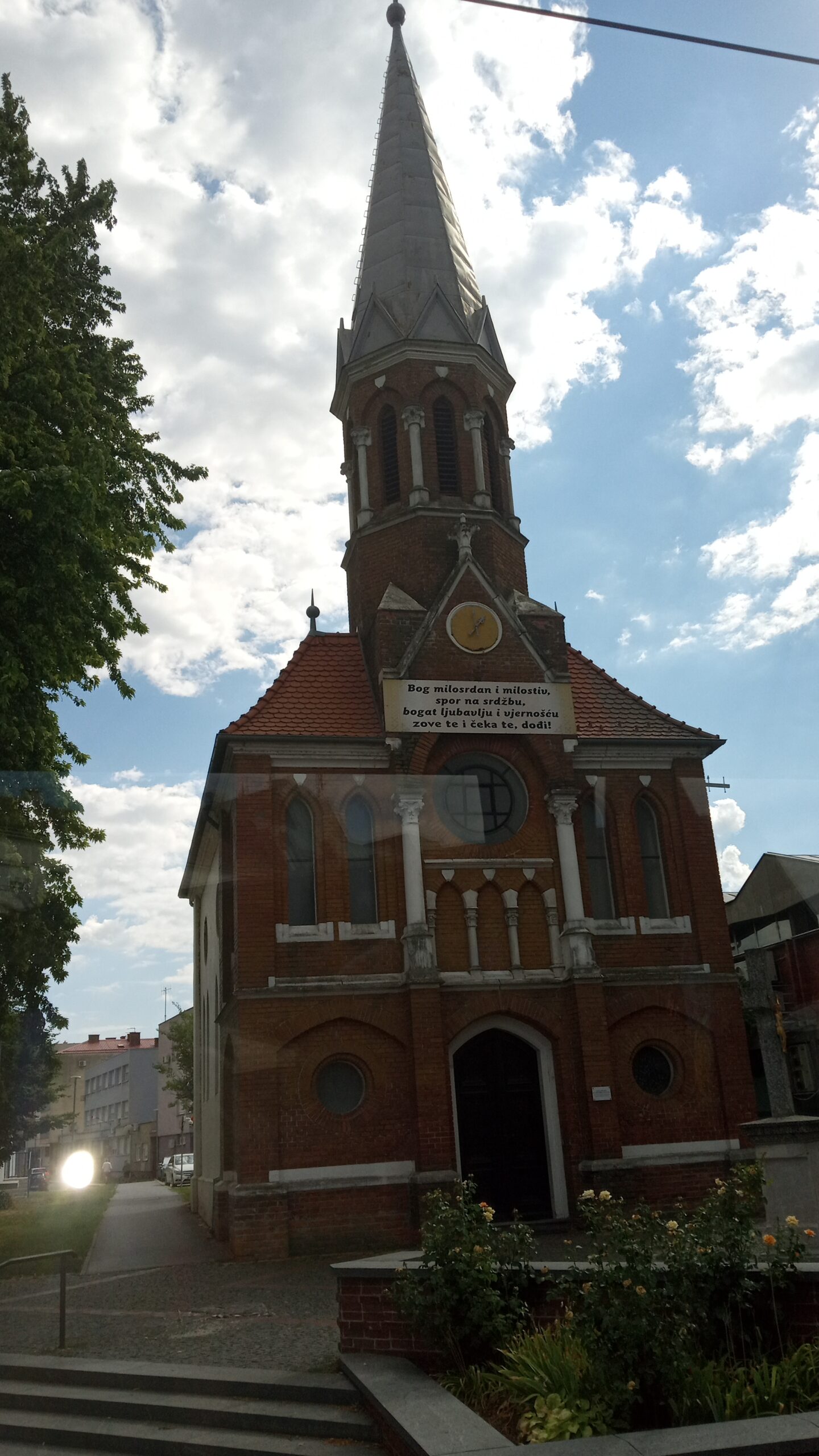
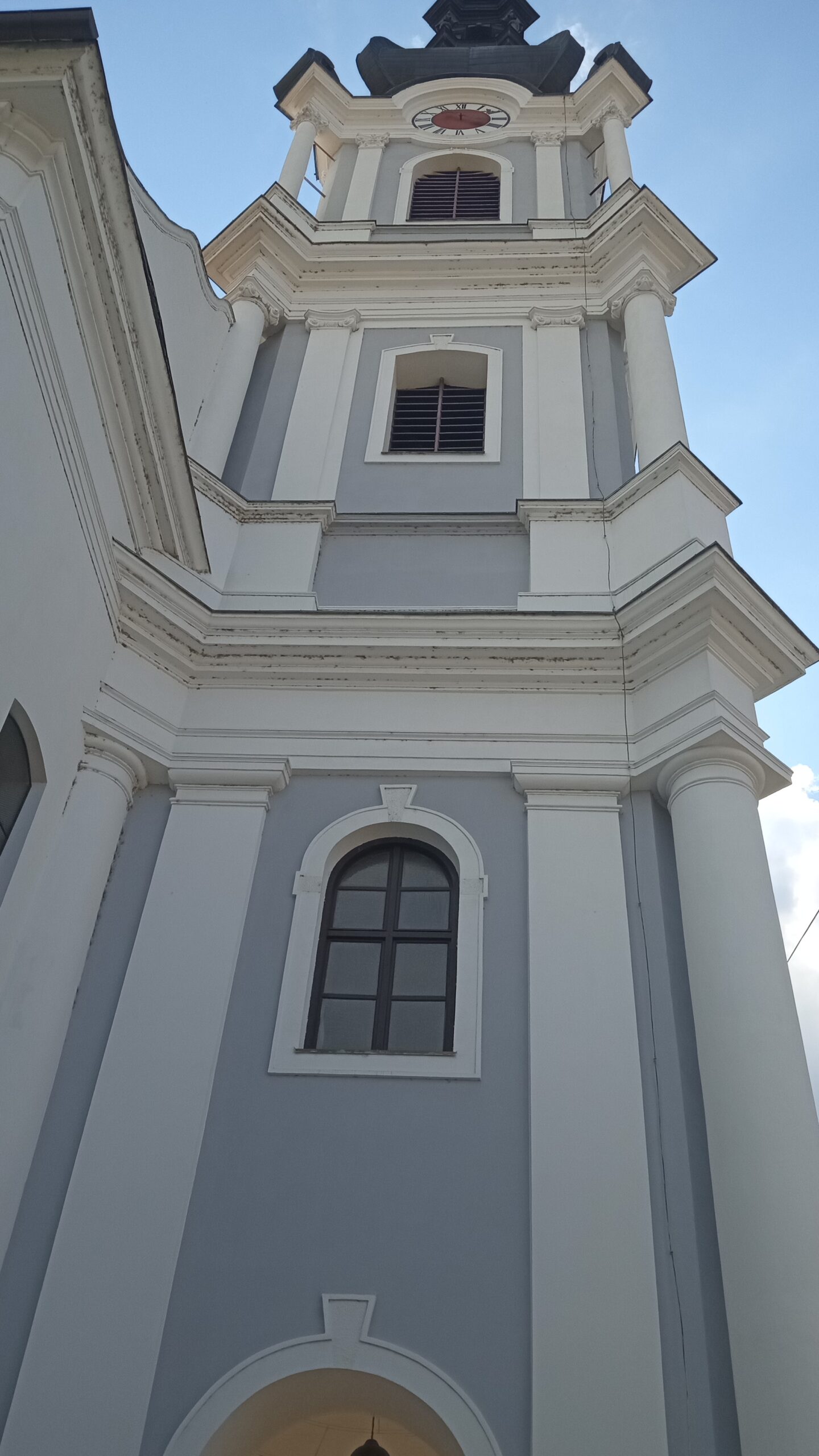
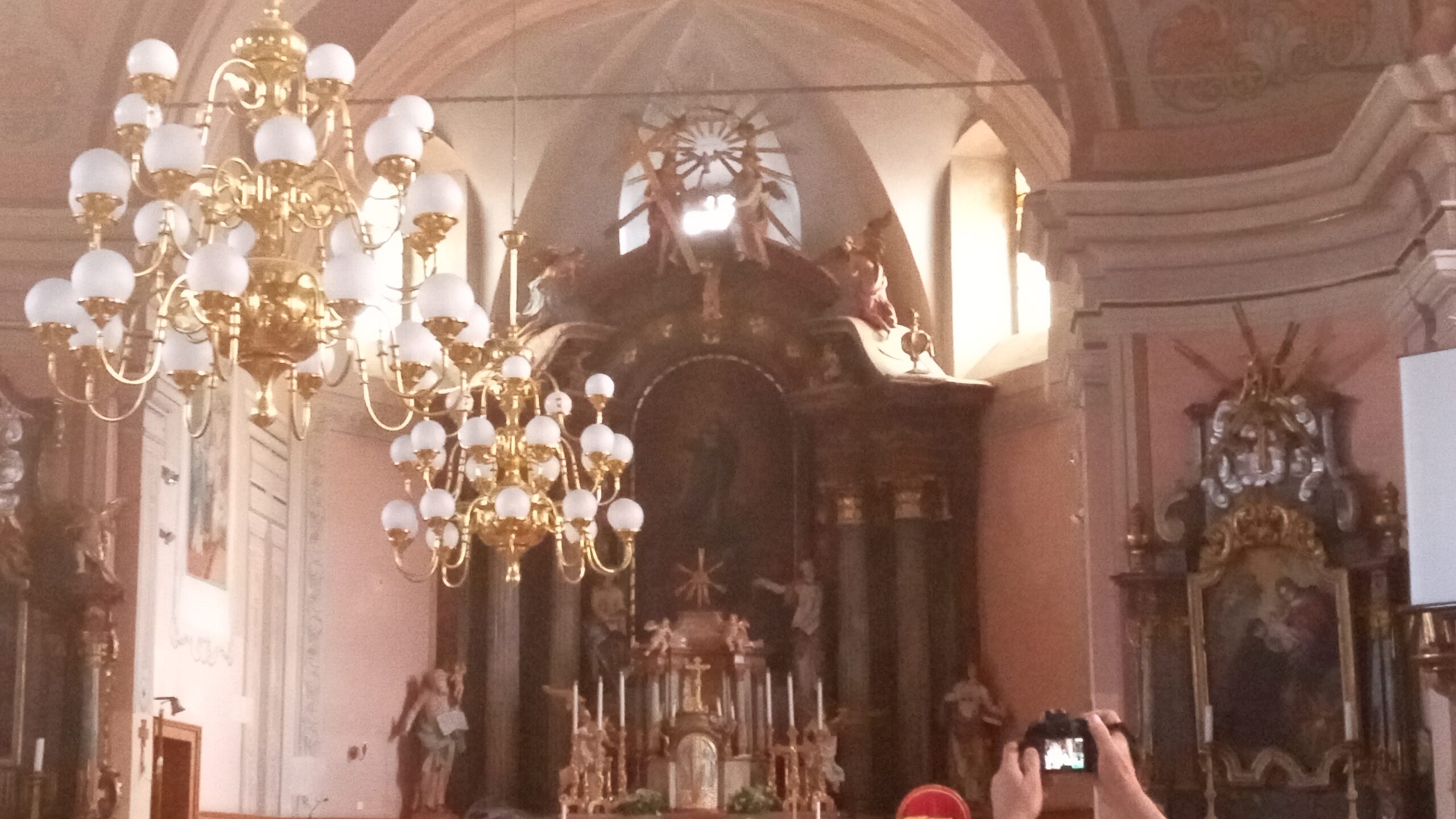
We then were taken to The Rising of the Holy Cross Church
– which is a Catholic Orthodox church. Inside a lady with
a nice soprano voice belted out some Catholic hymns.
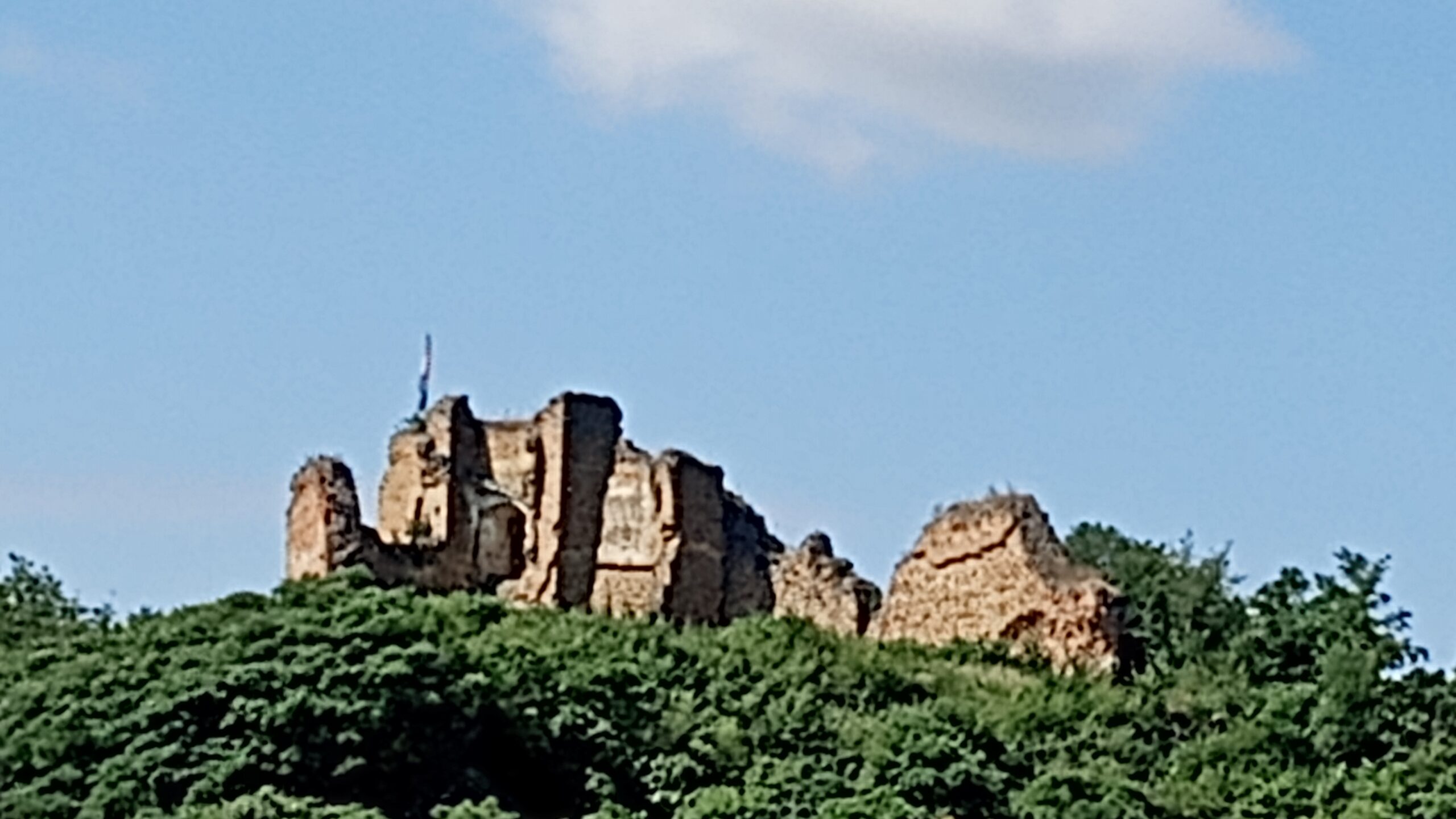
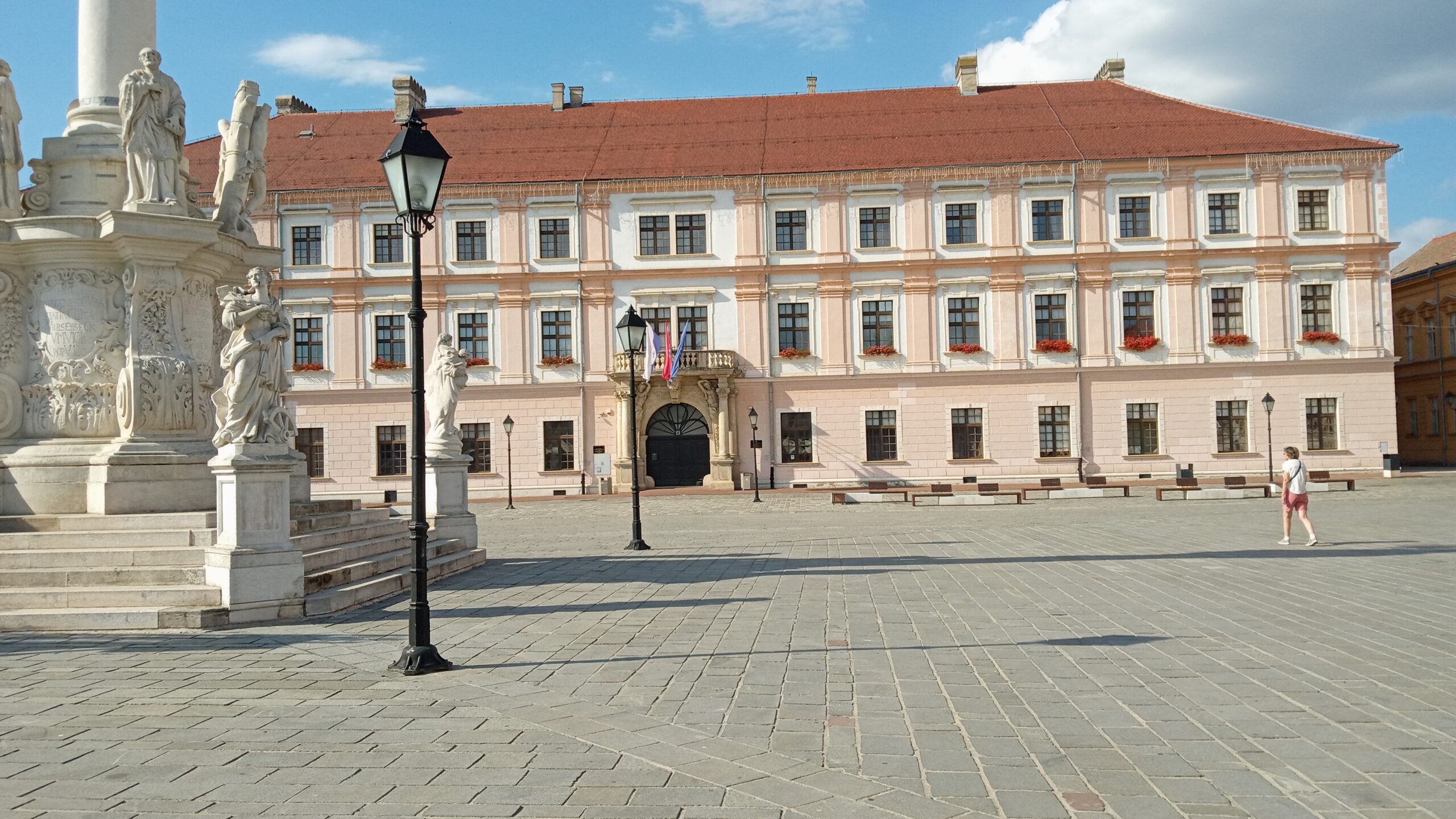
From there we visited a partially restored stone 17th
century fortess in Osjek. We saw some ramparts,
old administrative buildings, a courtyard square and
another Catholic church. Plus we were told how this area
changed hands from Muslim Turks control to Christian
control. This is how Croatia has changed over the
centuries as every small town we passed on our bus had
modest homes, a central church and a proud heritage.
Day 11
Pecs, Hungary
Tuesday, July 14
Today there was a change of plans. The Danube River is
way too low for our ship to continue upstream any farther.
So to accommodate us guests, some changes and and
compromises were made by Viking.
Our ship stayed in port another day, and we took a
2 hour ride to a town called Pecs, Hungary. There we
had a walking tour of the town.
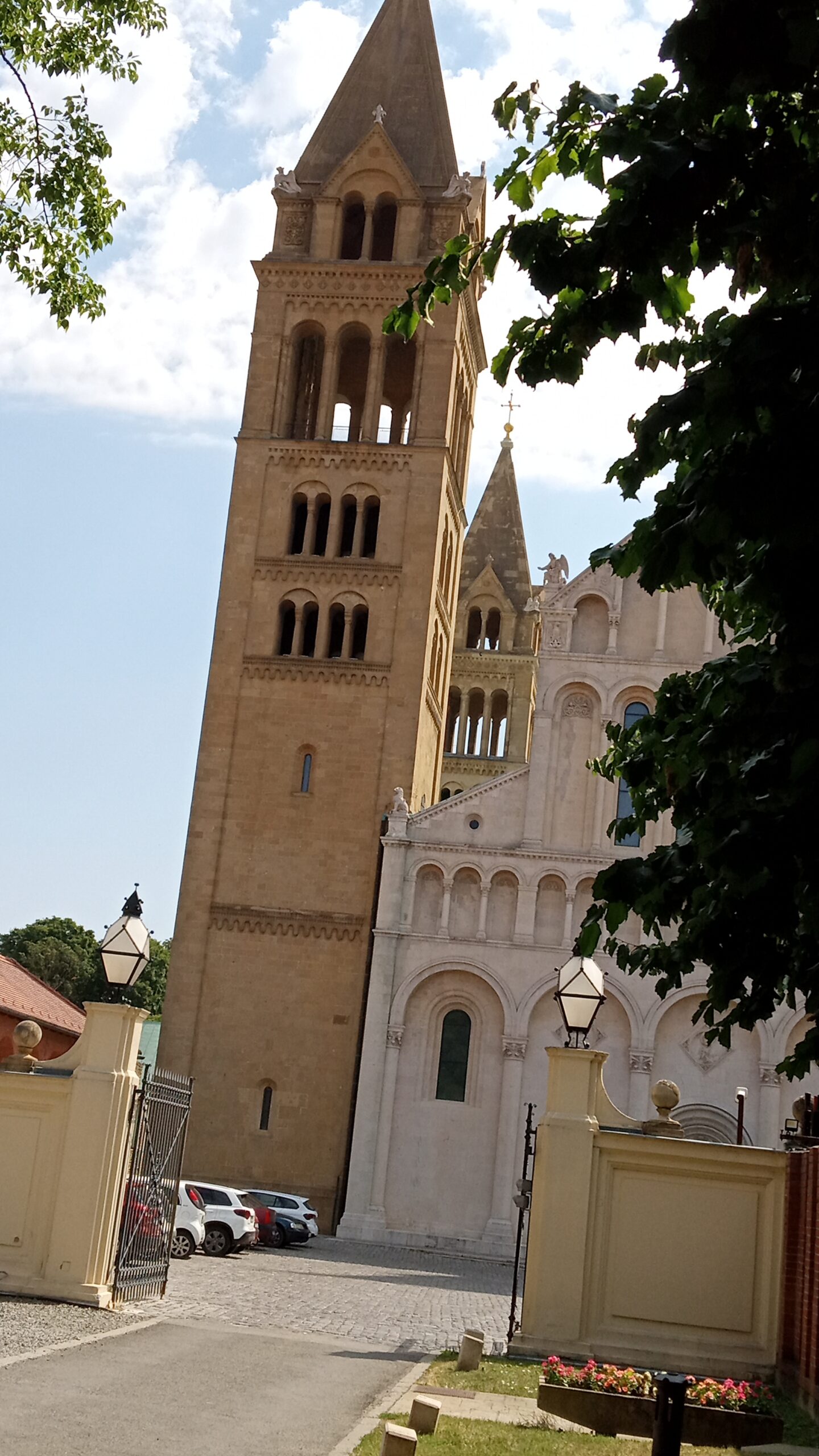
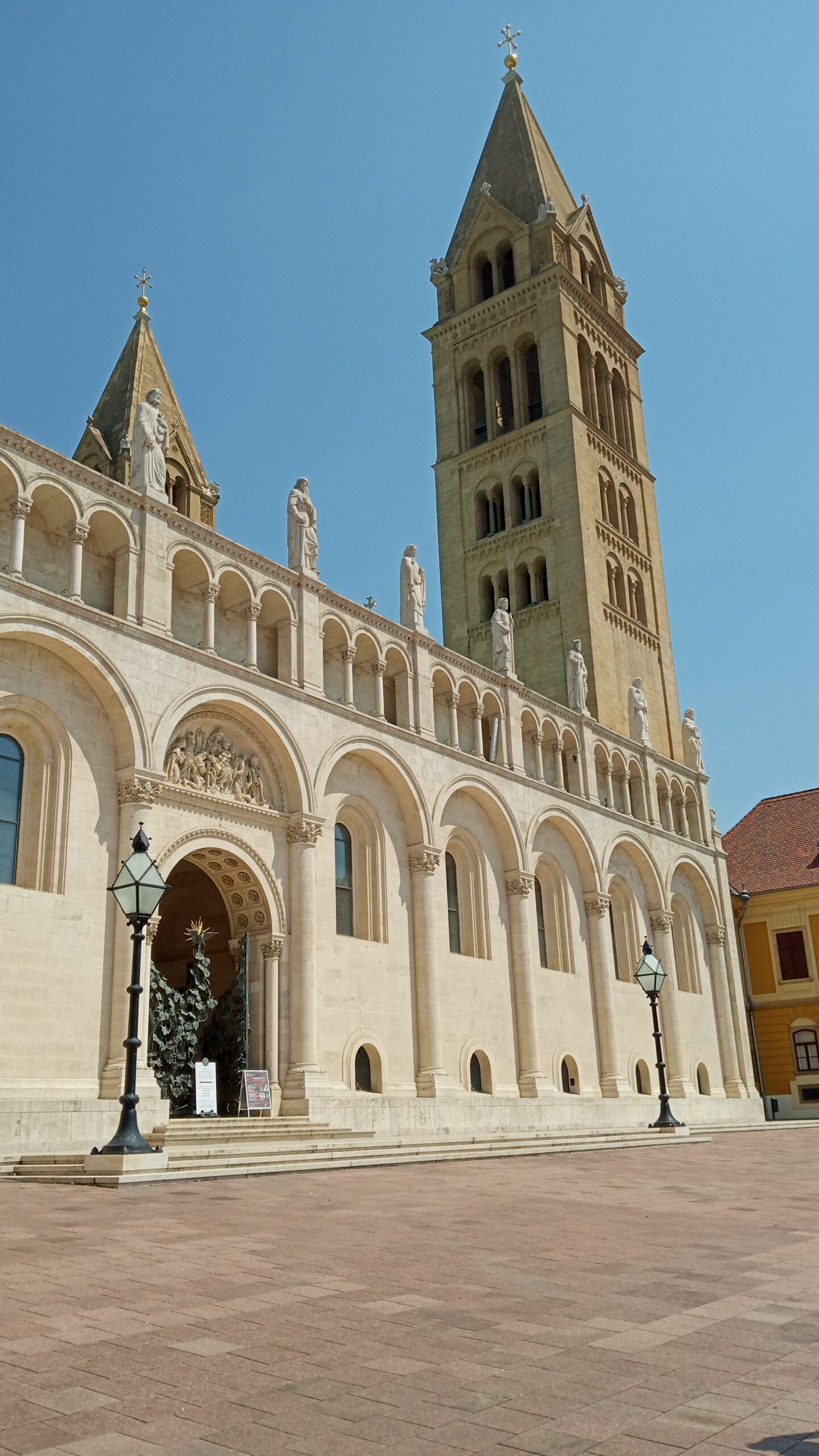
About 16 of us with a local guide were shown a
Roman Catholic cathedral dedicated to a saint.
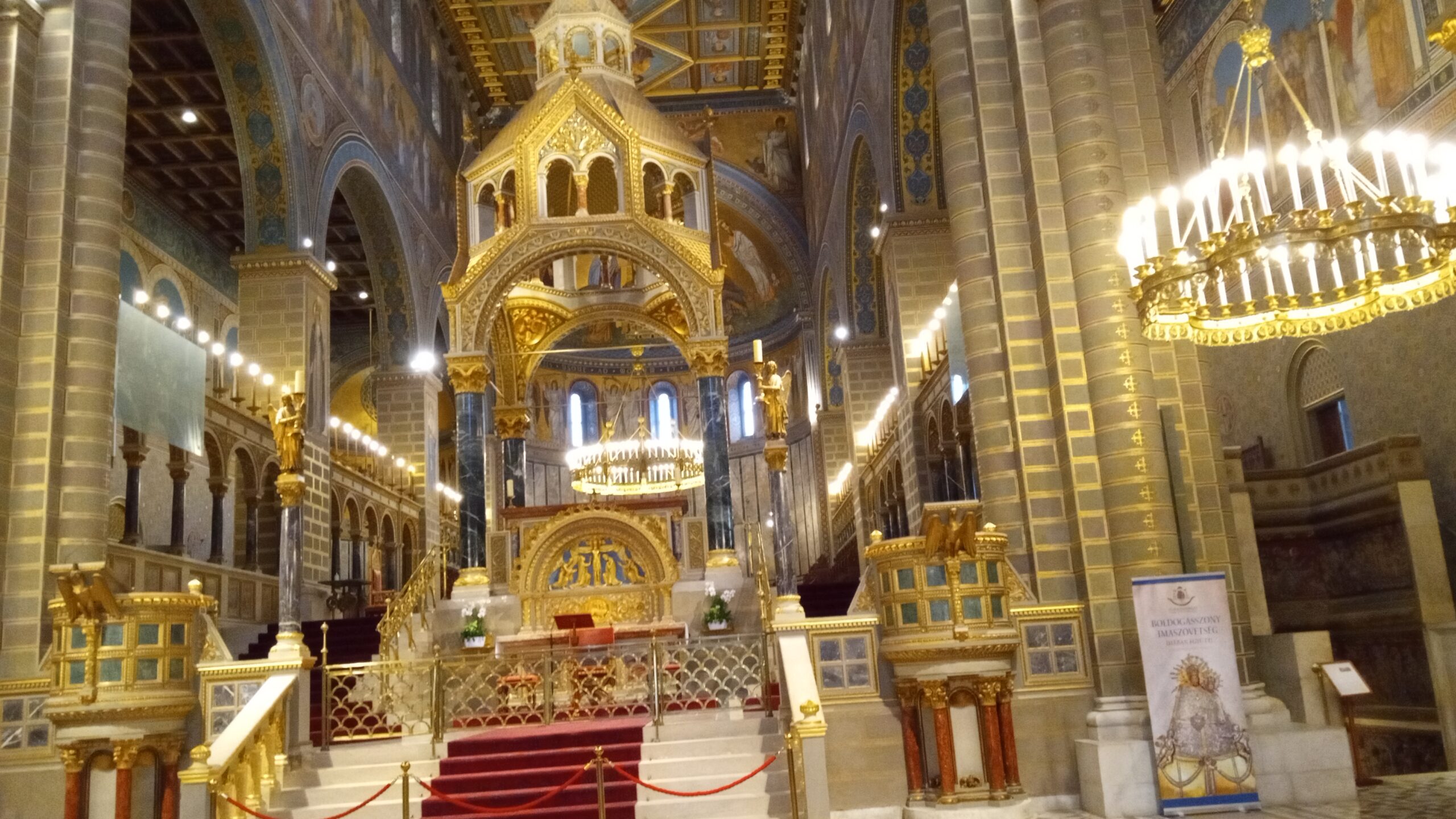
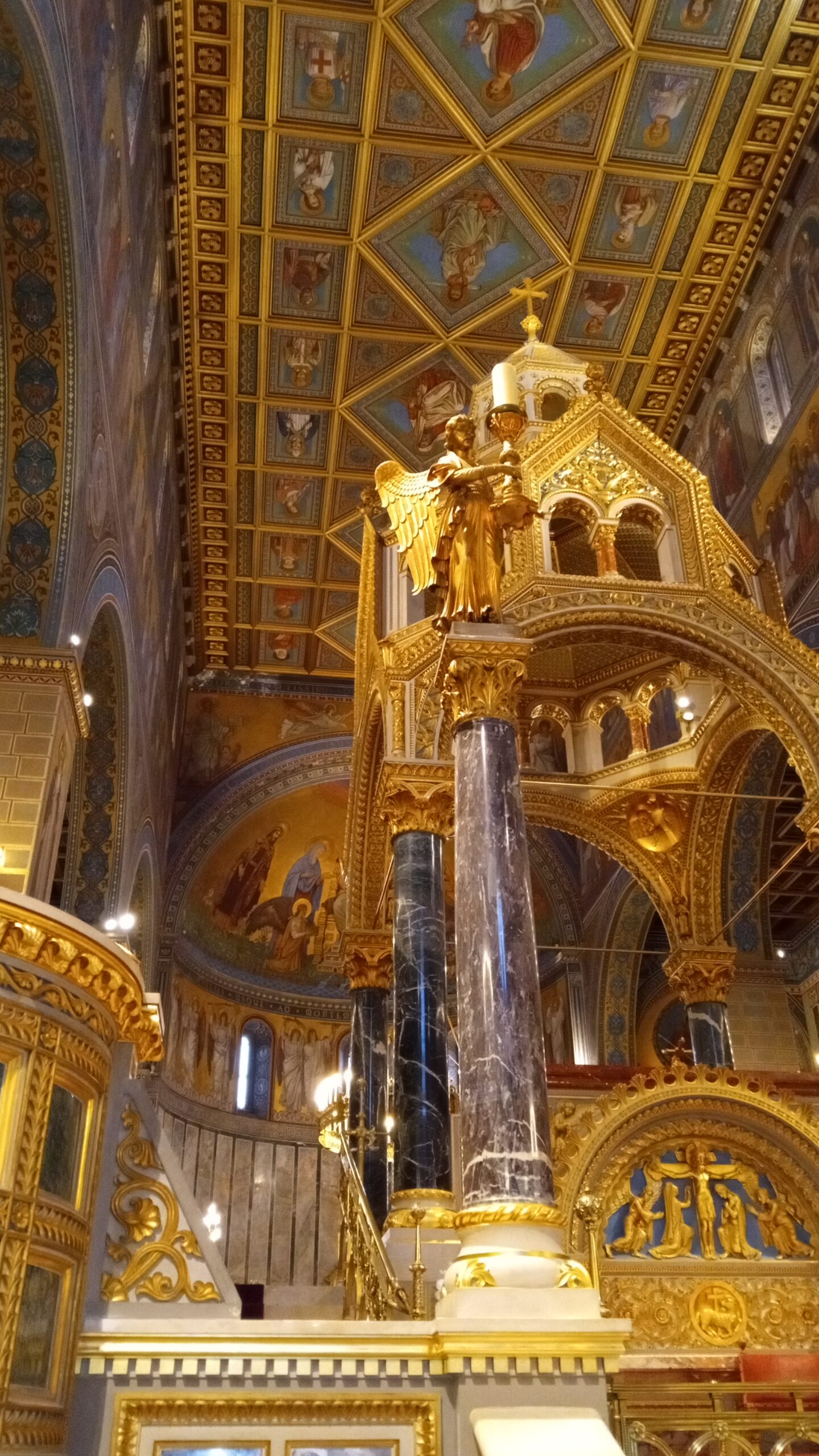
This cathedral was a mosque and later made into an
ornate 17th century Roman Catholic church
complete with a fancy Baroque alter, underground crypt,
large pipe organ, finely decorated walls, magnificant
painted ceiling, mosaic tiles and great craftsmanship
throughout.
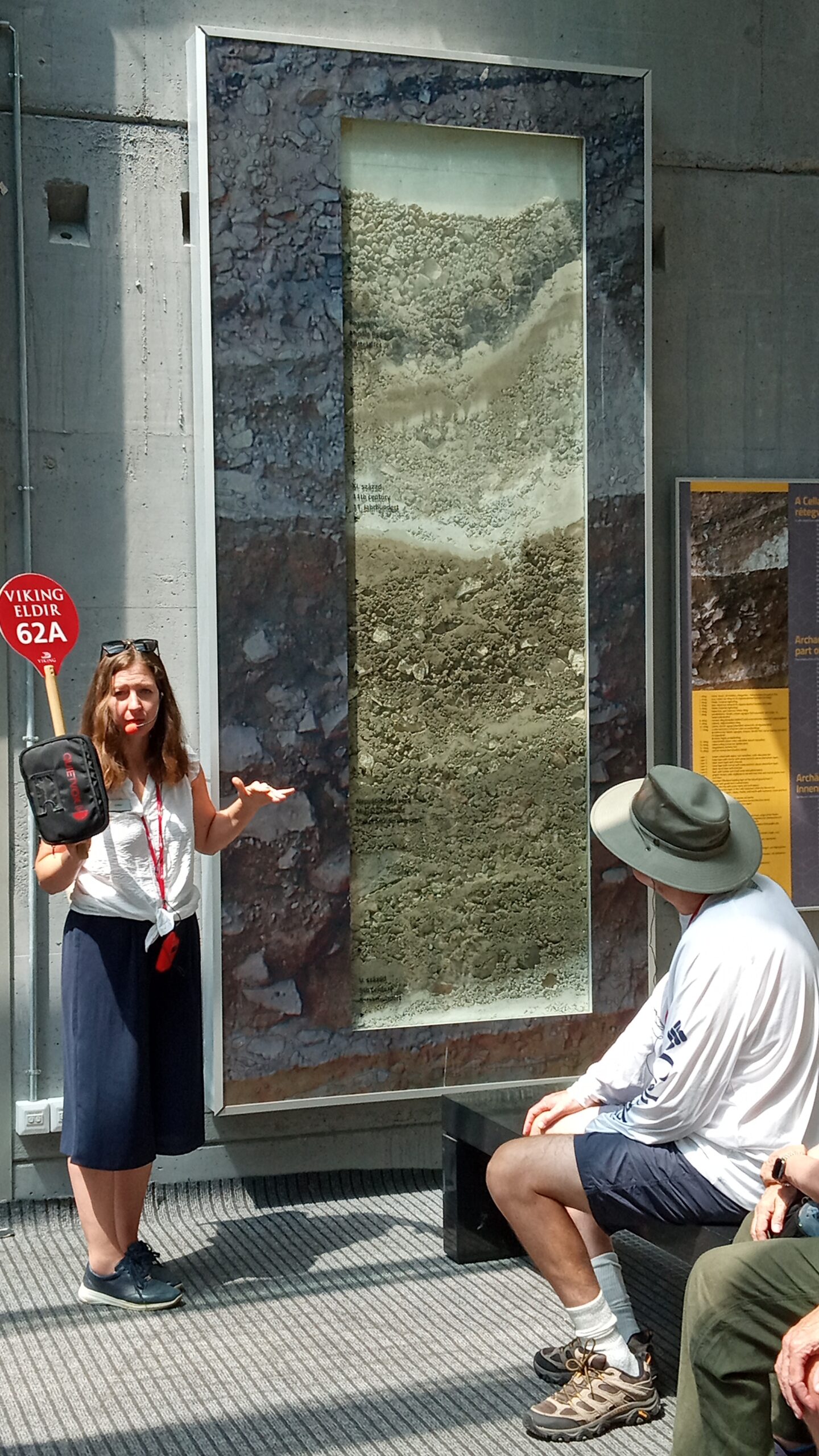
We then went nearby to an ancient Roman cemetery
that had been excavated and was a UNESCO World
Heritage site. We proceeded into a protected area to
see where there were stone burial chambers, crypts and
stone walls. 2,000 years ago the Romans made a
settlement here and left a unique burial chamber.
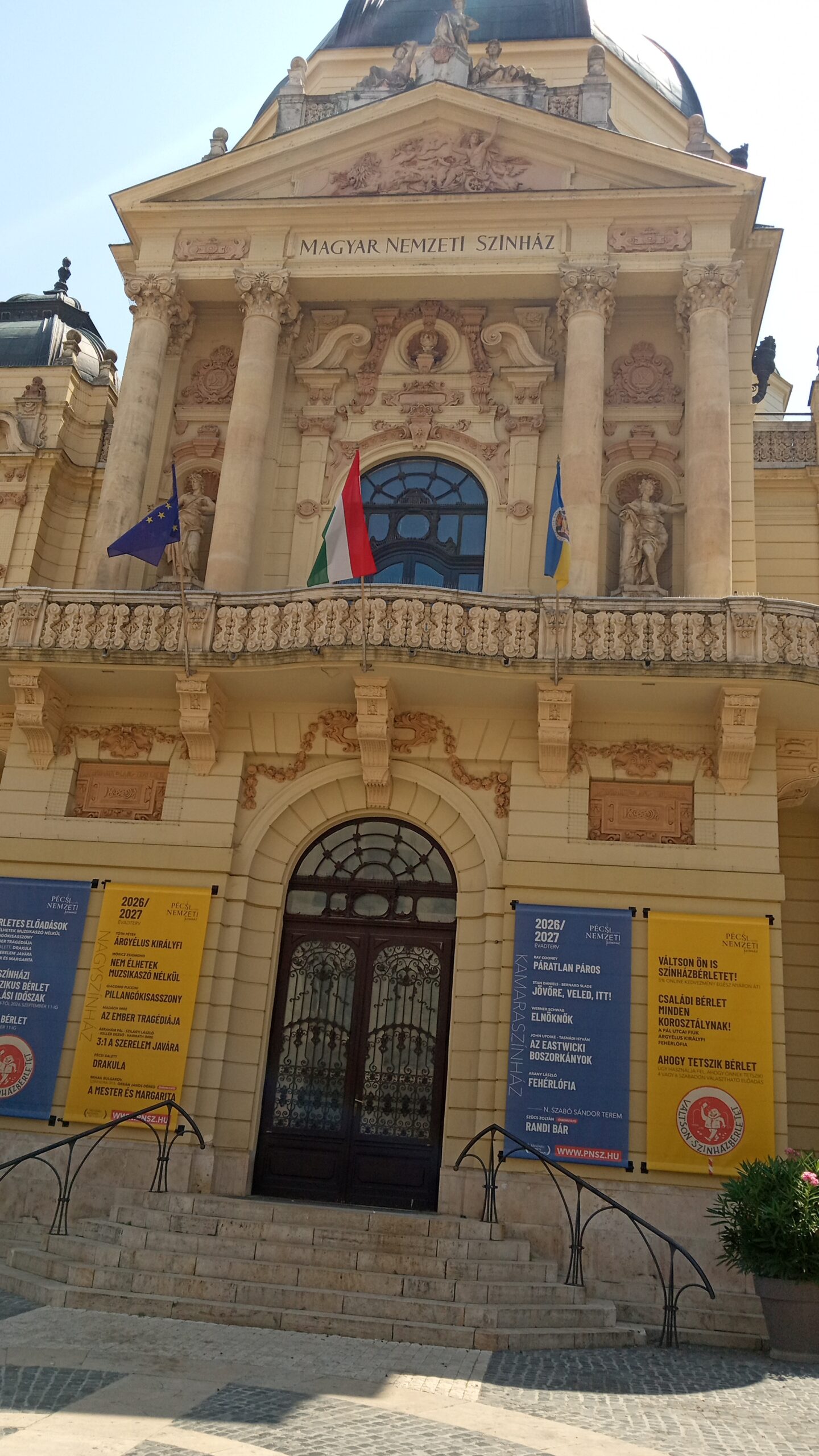
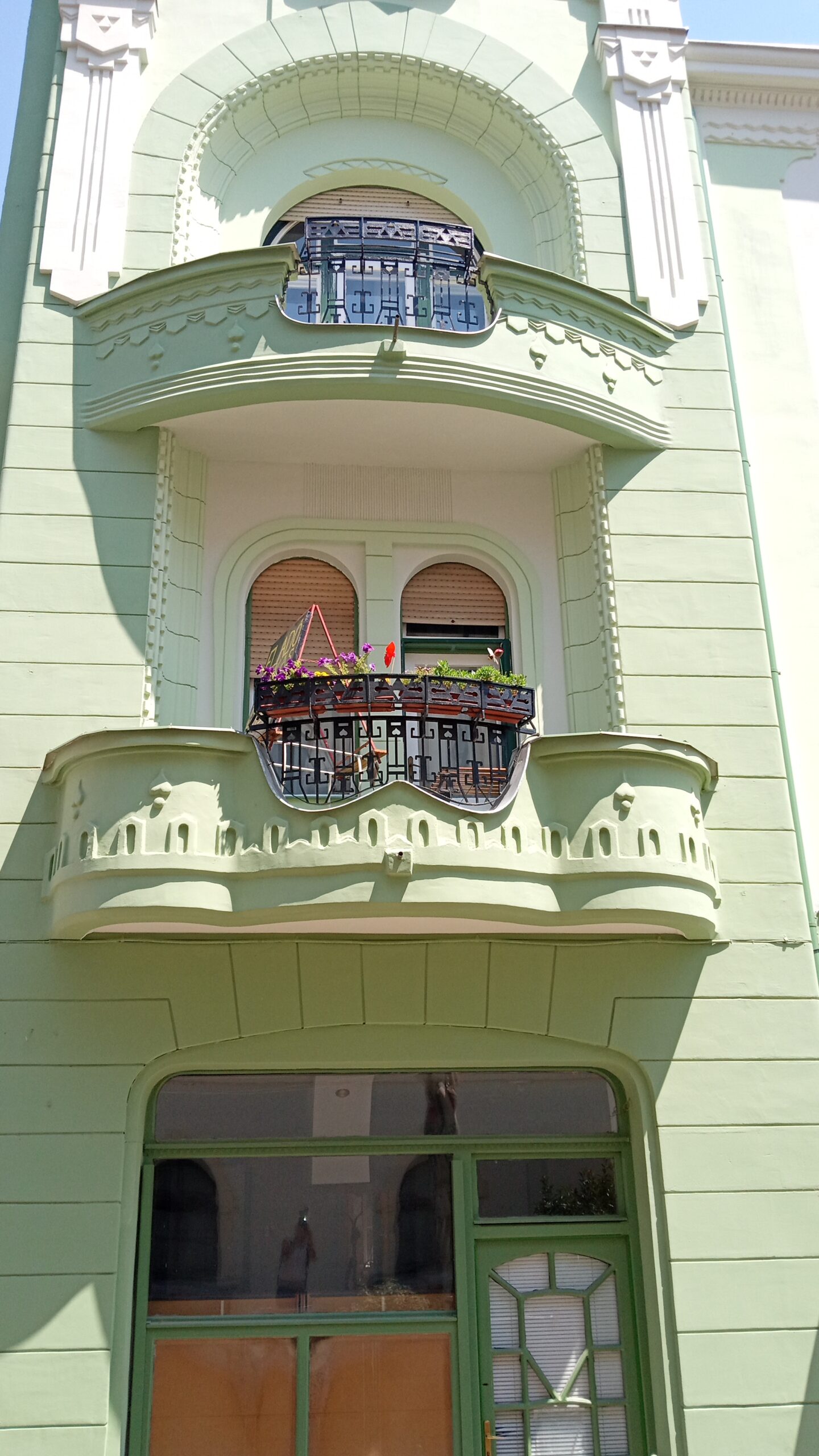
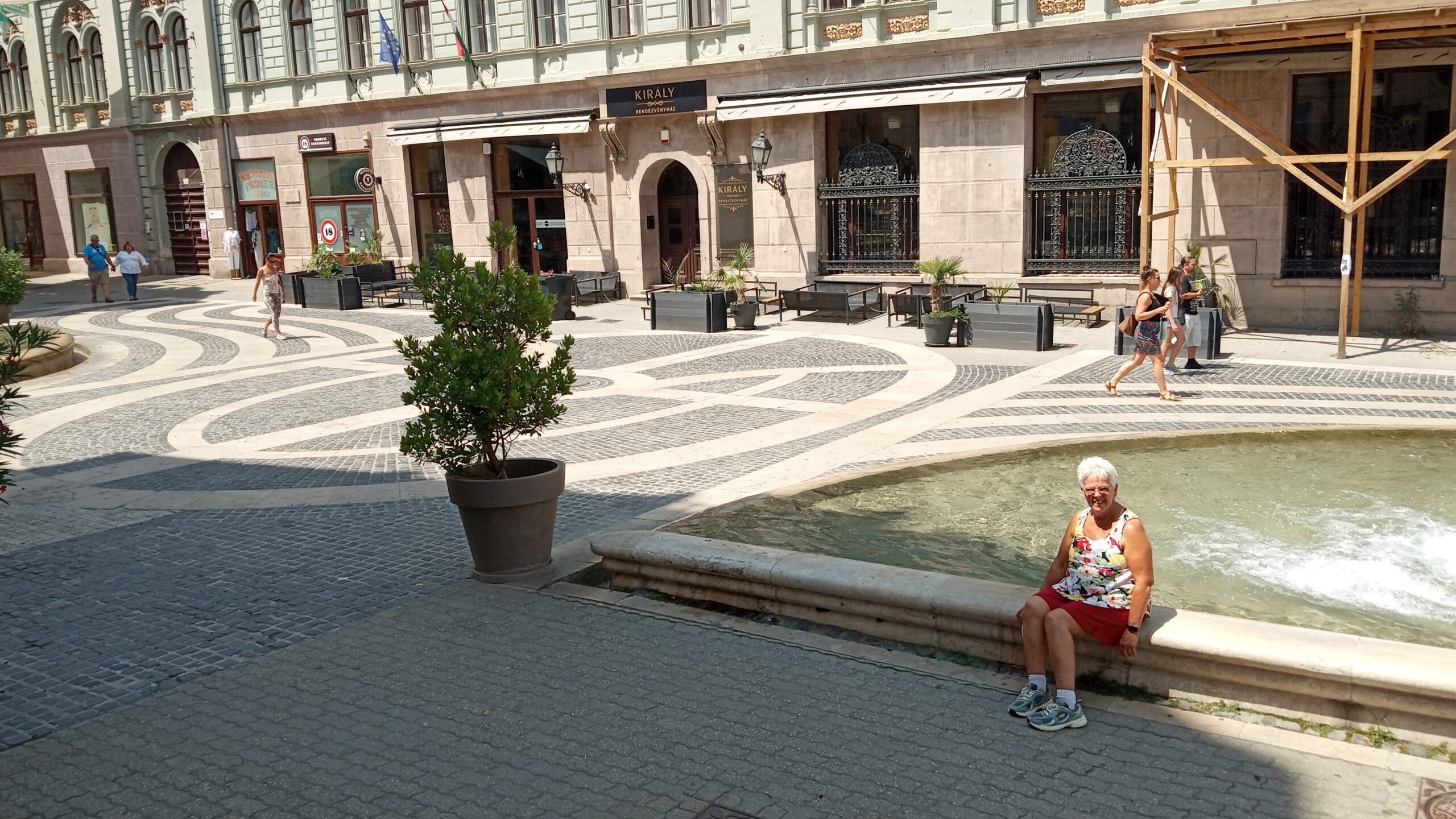
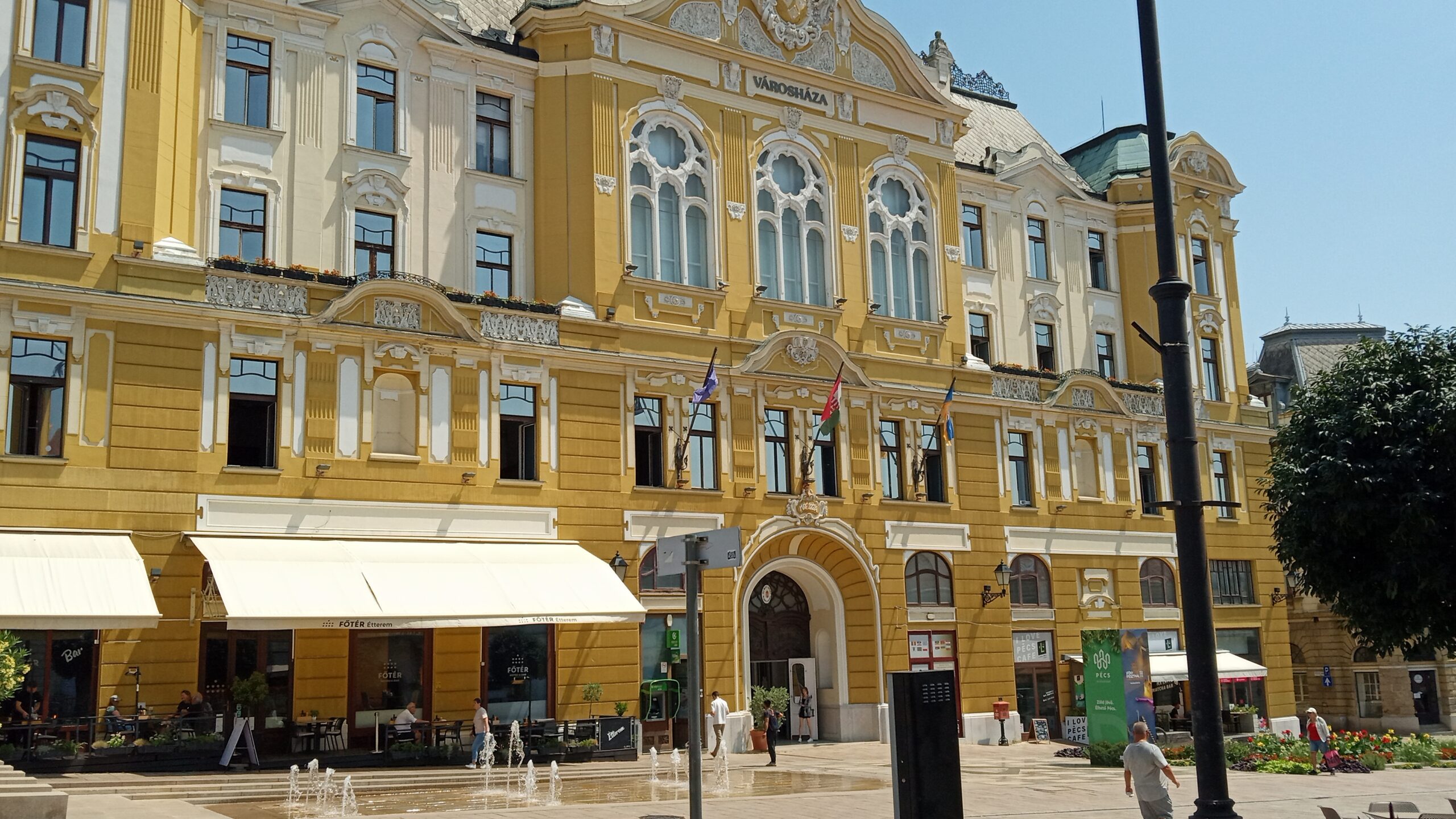
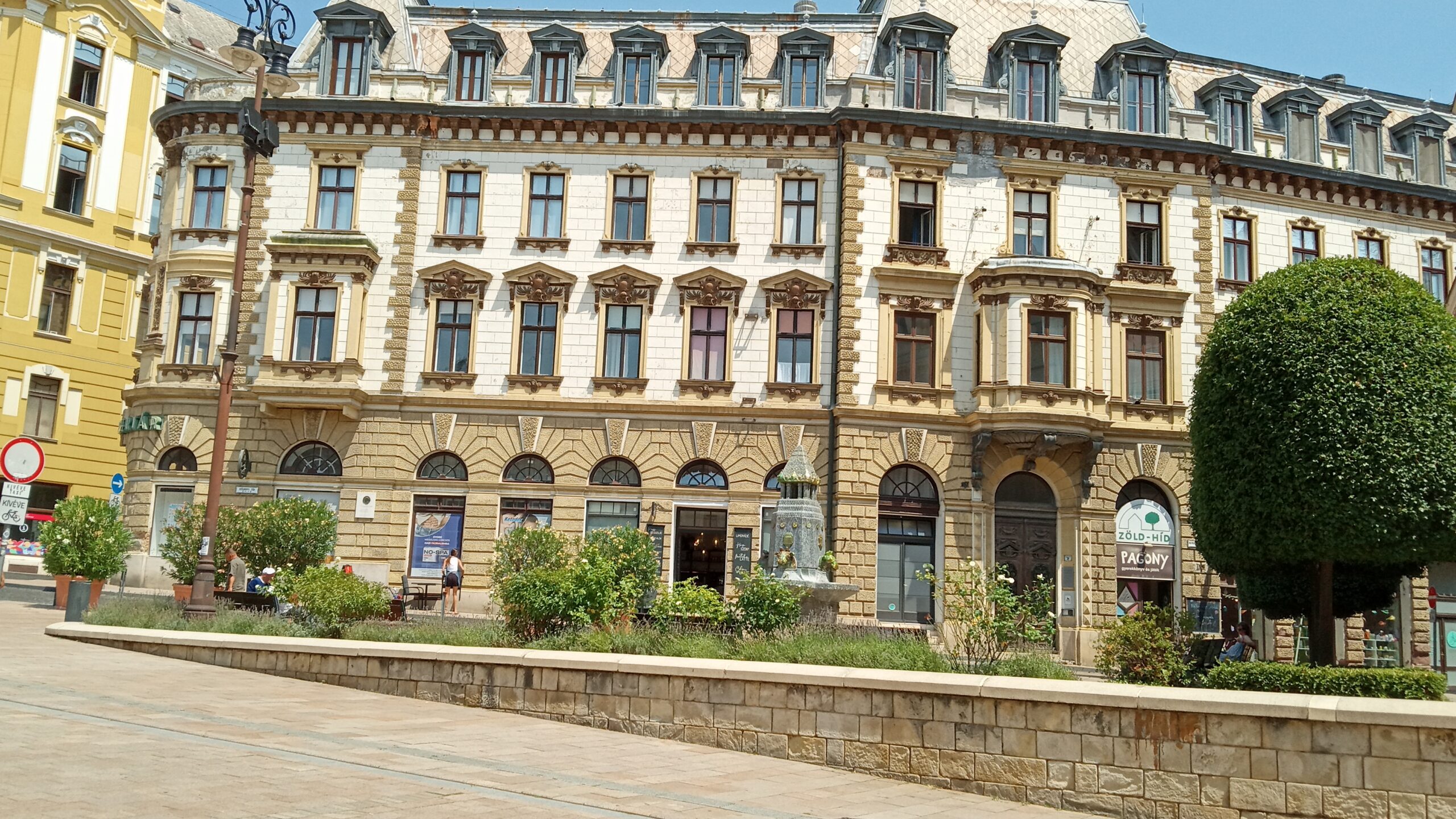
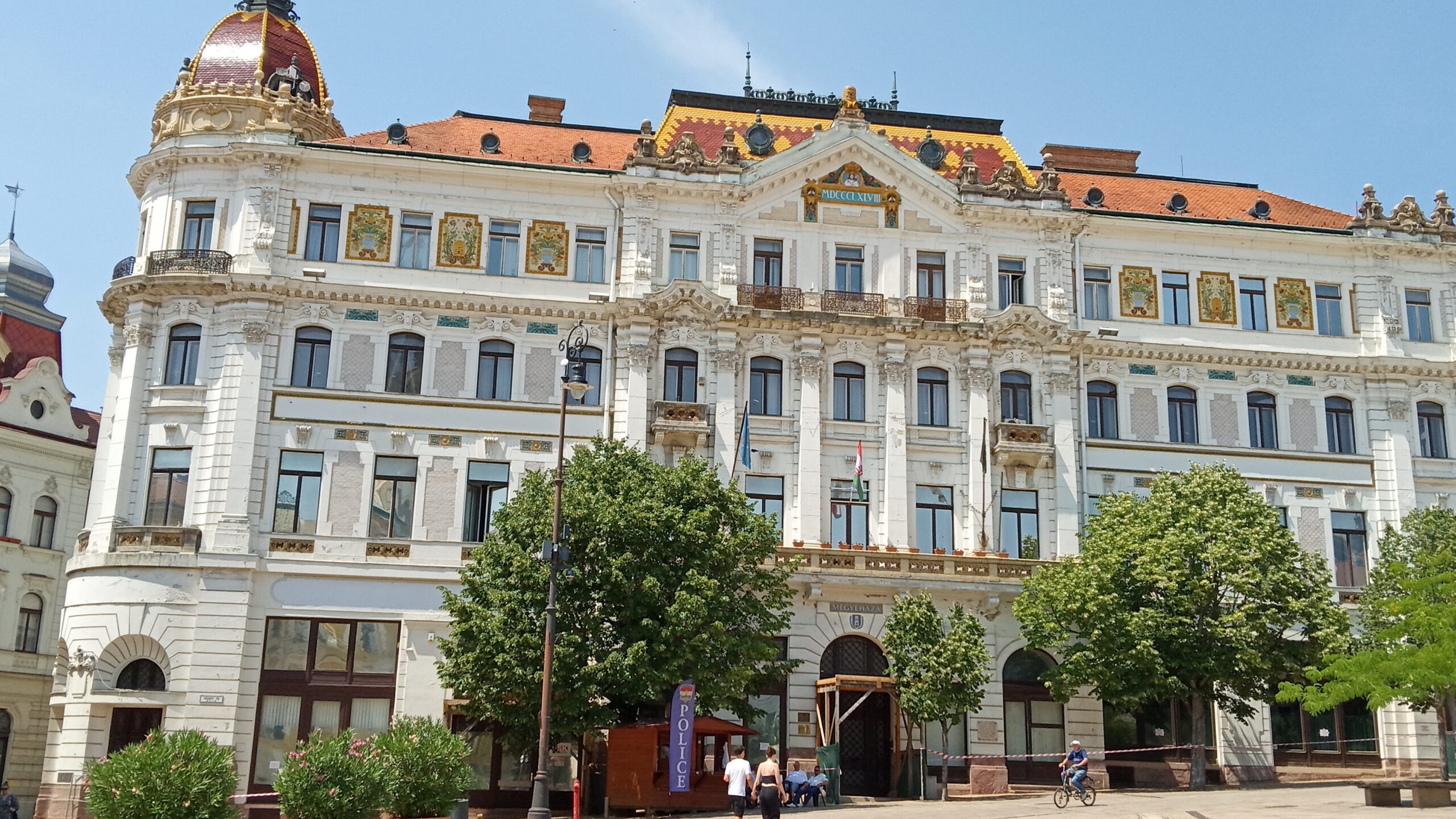
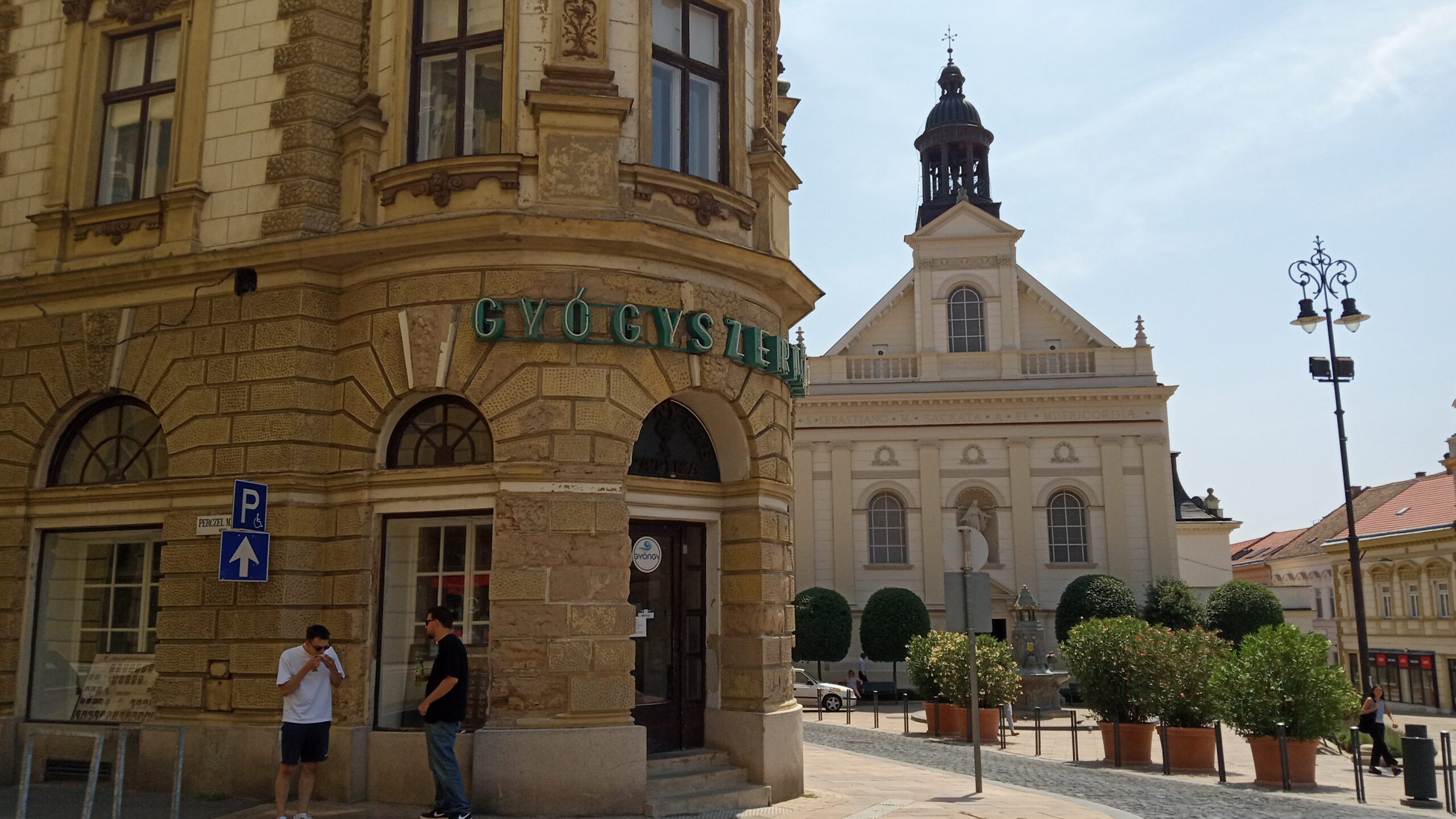
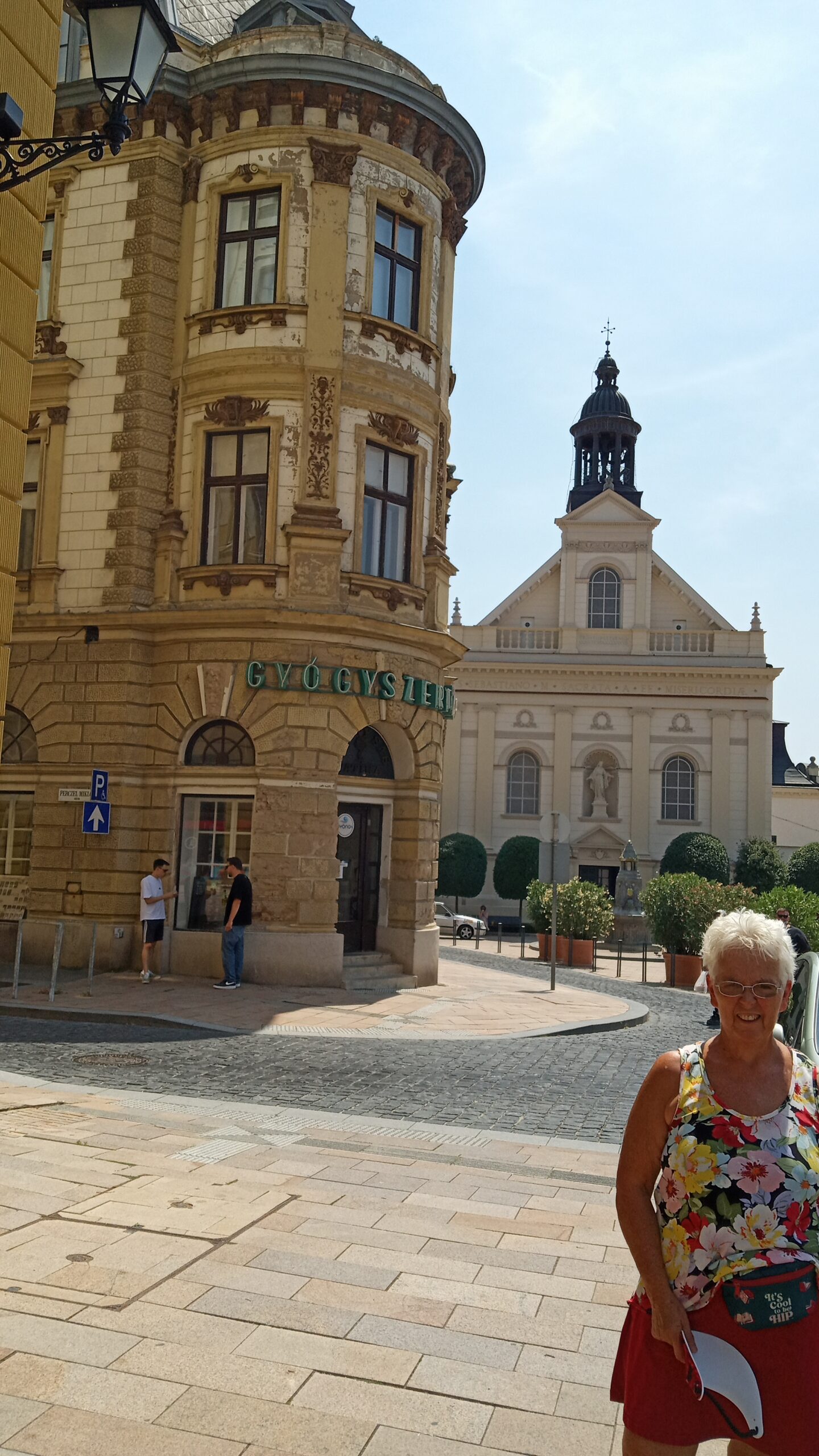
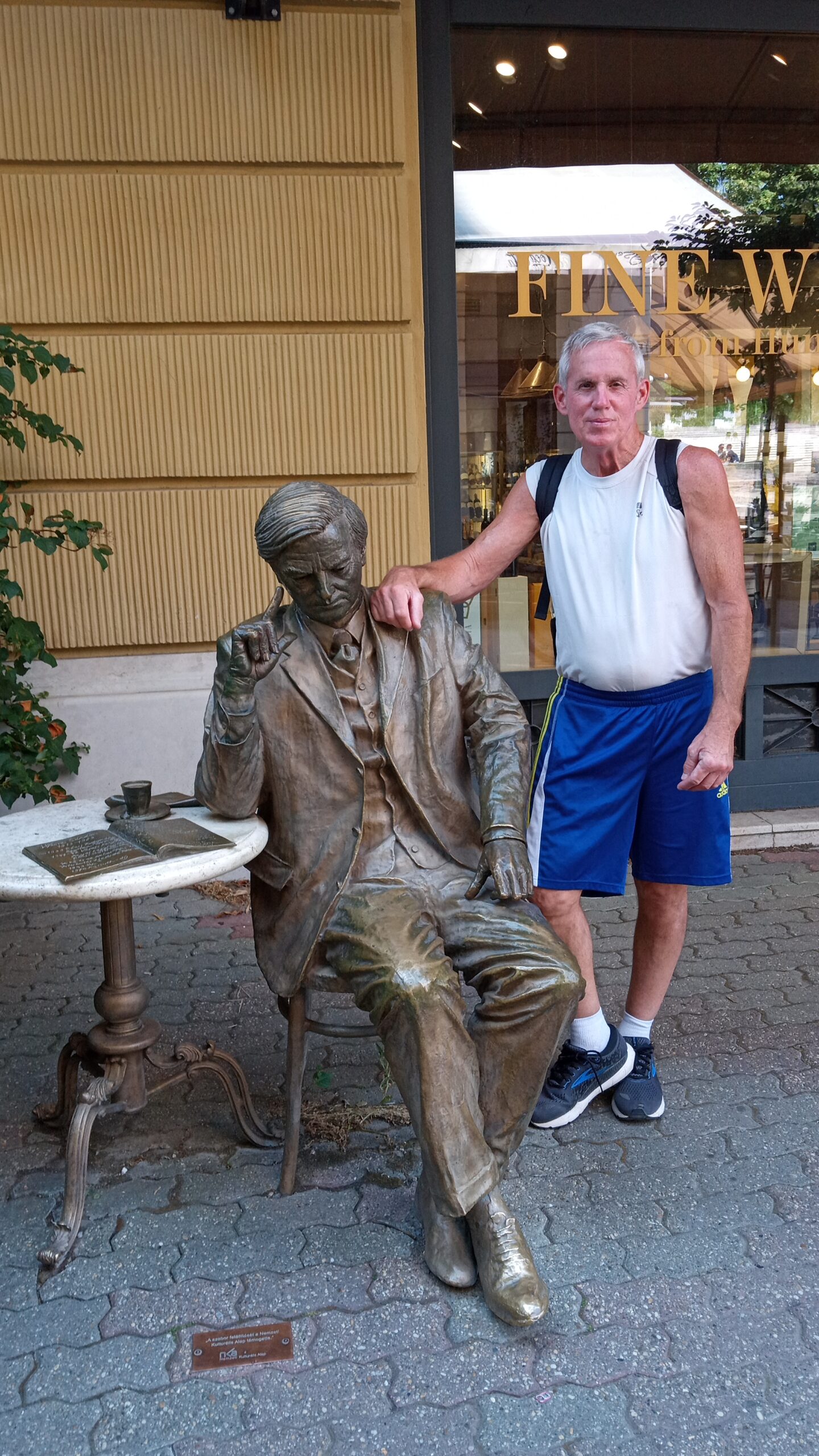
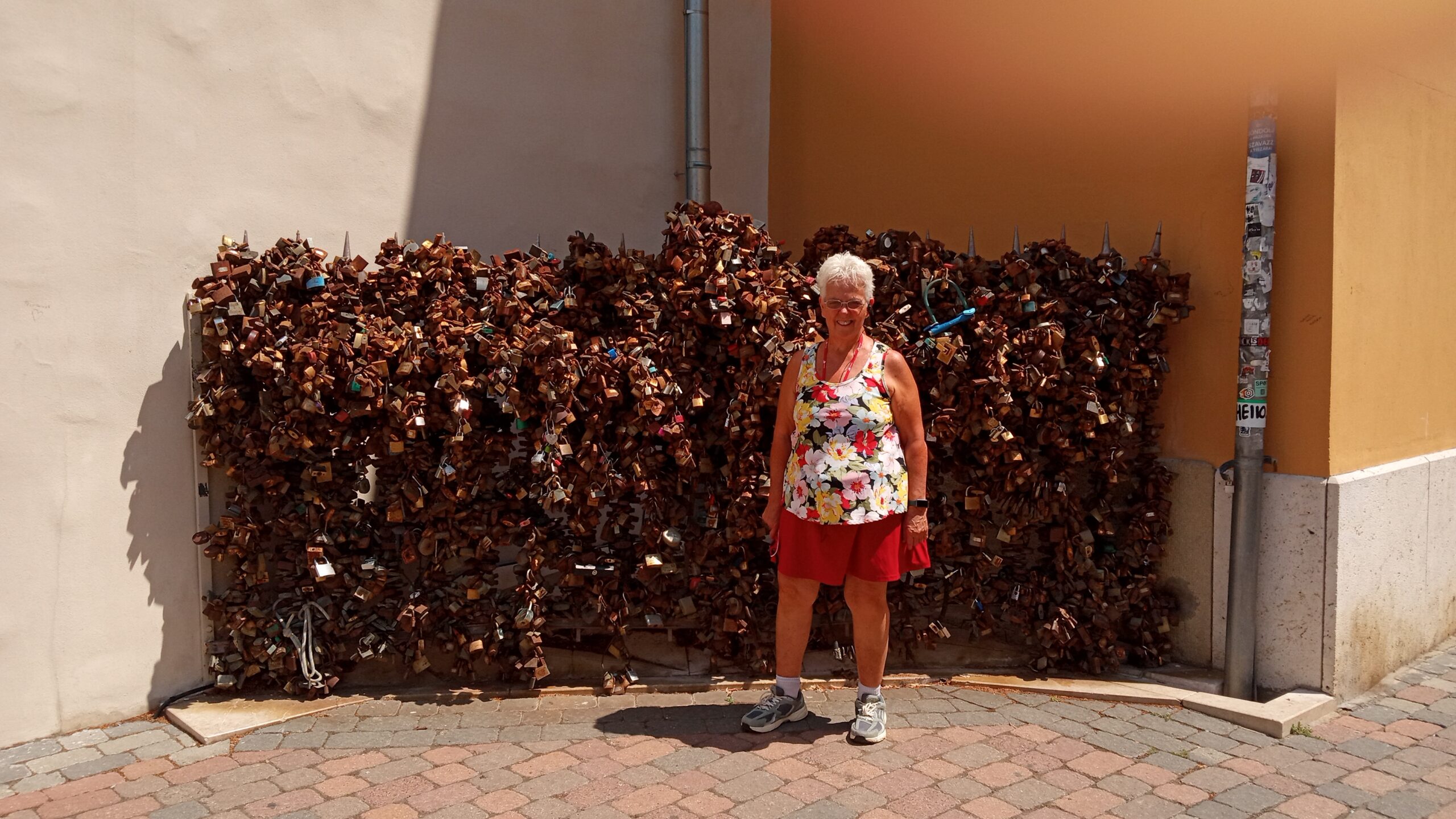
We then walked into a large town square in the middle
of Pecs. We were surrounded by ornate buildings
with highly decorated facades from 200 years back.
Complete with town sqaure fountains, and
pedestrian cobblestone streets filled with assorted
cafes, shops, as all this had a quaint old feel to it.
We ate our lunch in this town square, walked all
around as we had 2 hours to mill about on a bright
warm July day. Our bus then took us back to our ship.
Day 12
Budapest, Hungary
Wednesday, July 15
Snapshots of Budapest
Hungary’s Graceful and Inspiring Capital
Take in one of Europe’s great cultural capitals.
Day 12
Budapest, Hungary
Wednesday, July 15
Komarom, Hungary
On the Danube
As mentioned yesterday, Tuesday, we had to change
ships today. There is severe draught in the area and
the water level is non navigable. We were taken by bus
to a port on on the Danube called Komarom. However,
our bus ride was 5 hours long. We ate lunch on the
bus with a prepackaged affair.
We got on another Viking river boat called Lif. This
ship is the exact copy of our last boat. After unpacking,
and with others, we took a short shuttle bus ride across
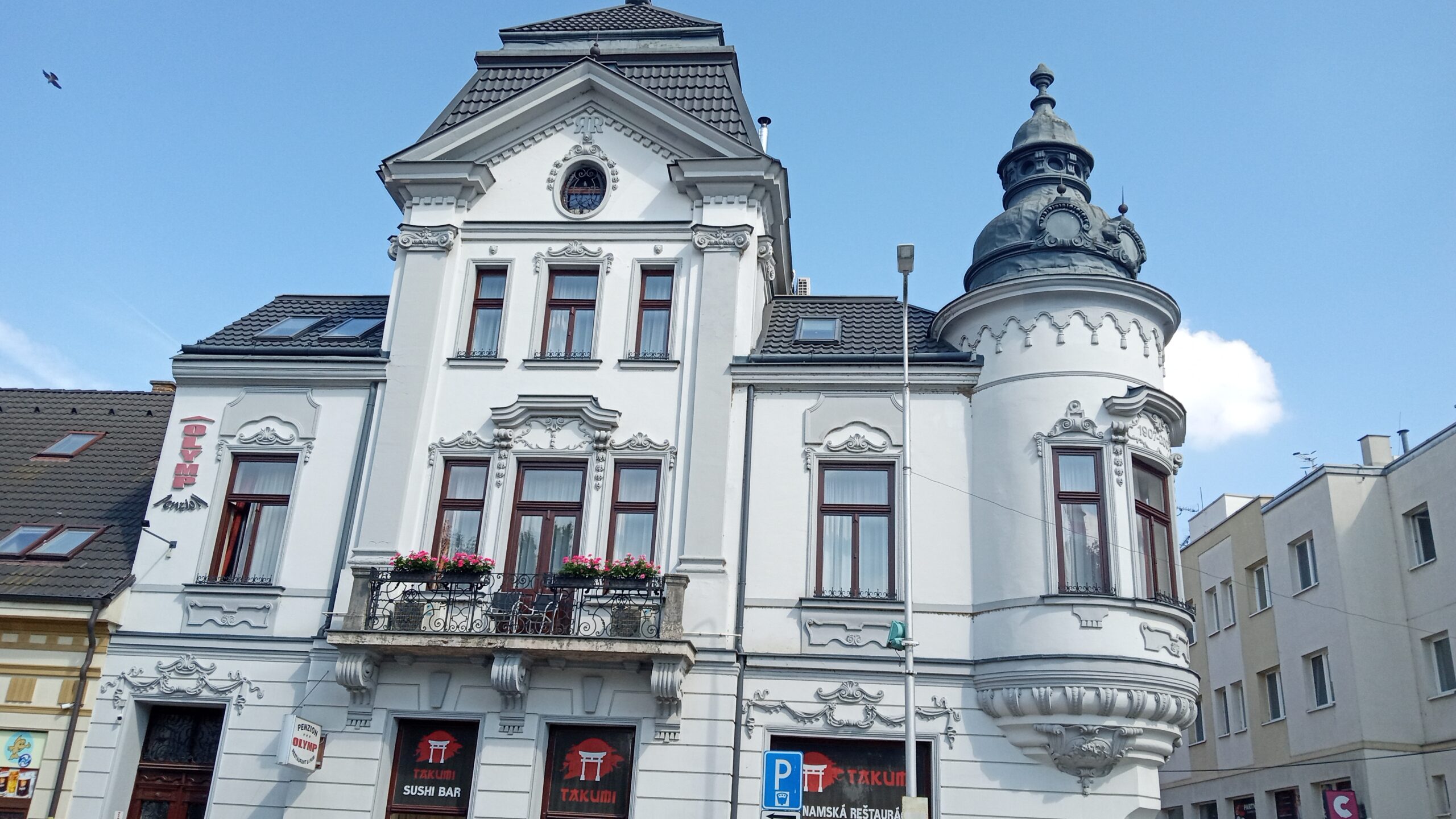
the Danube into the country of Slovakia. There we took
a 90 minute walking tour of a classic south
eastern European small city called Komarom.
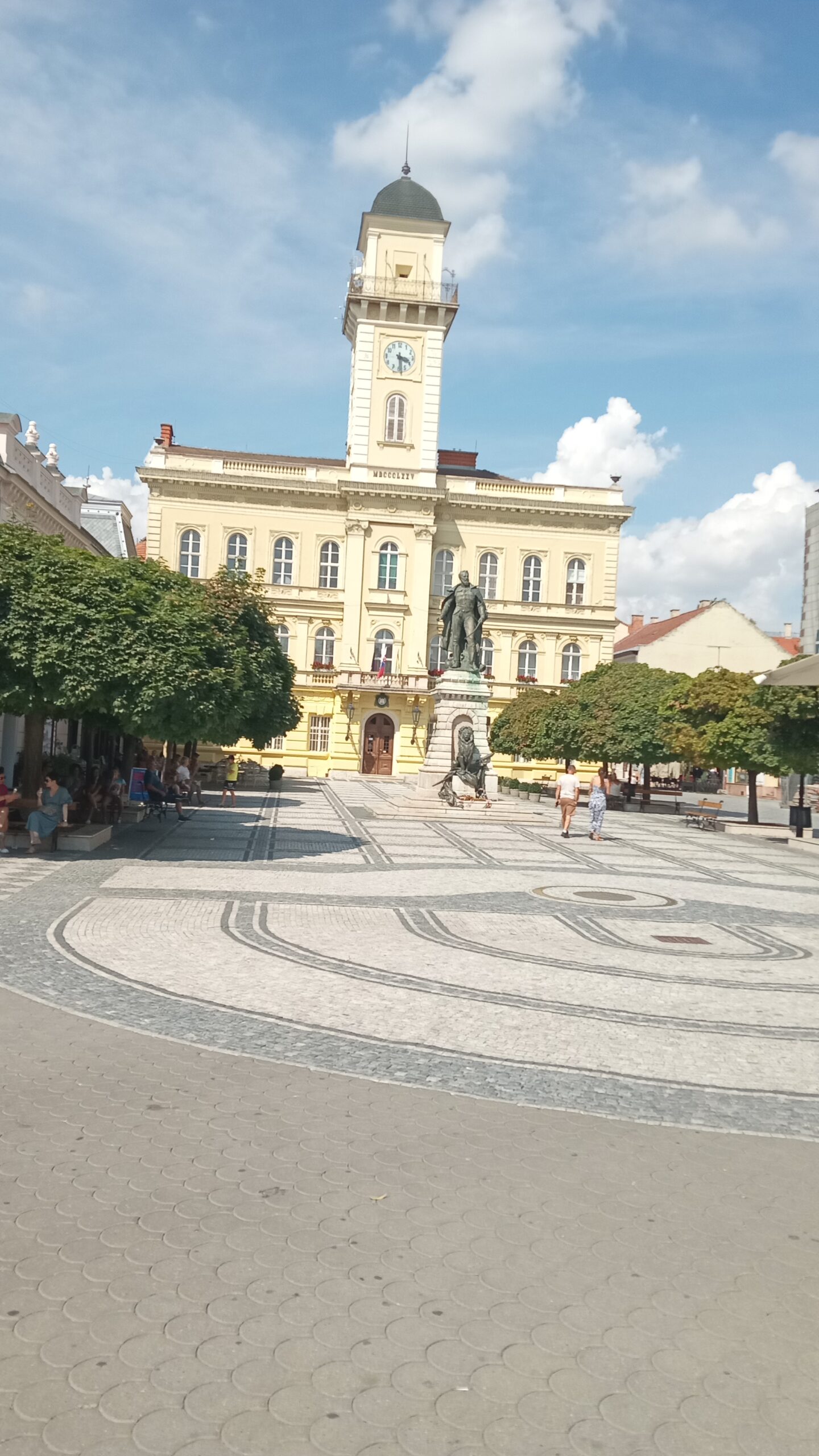
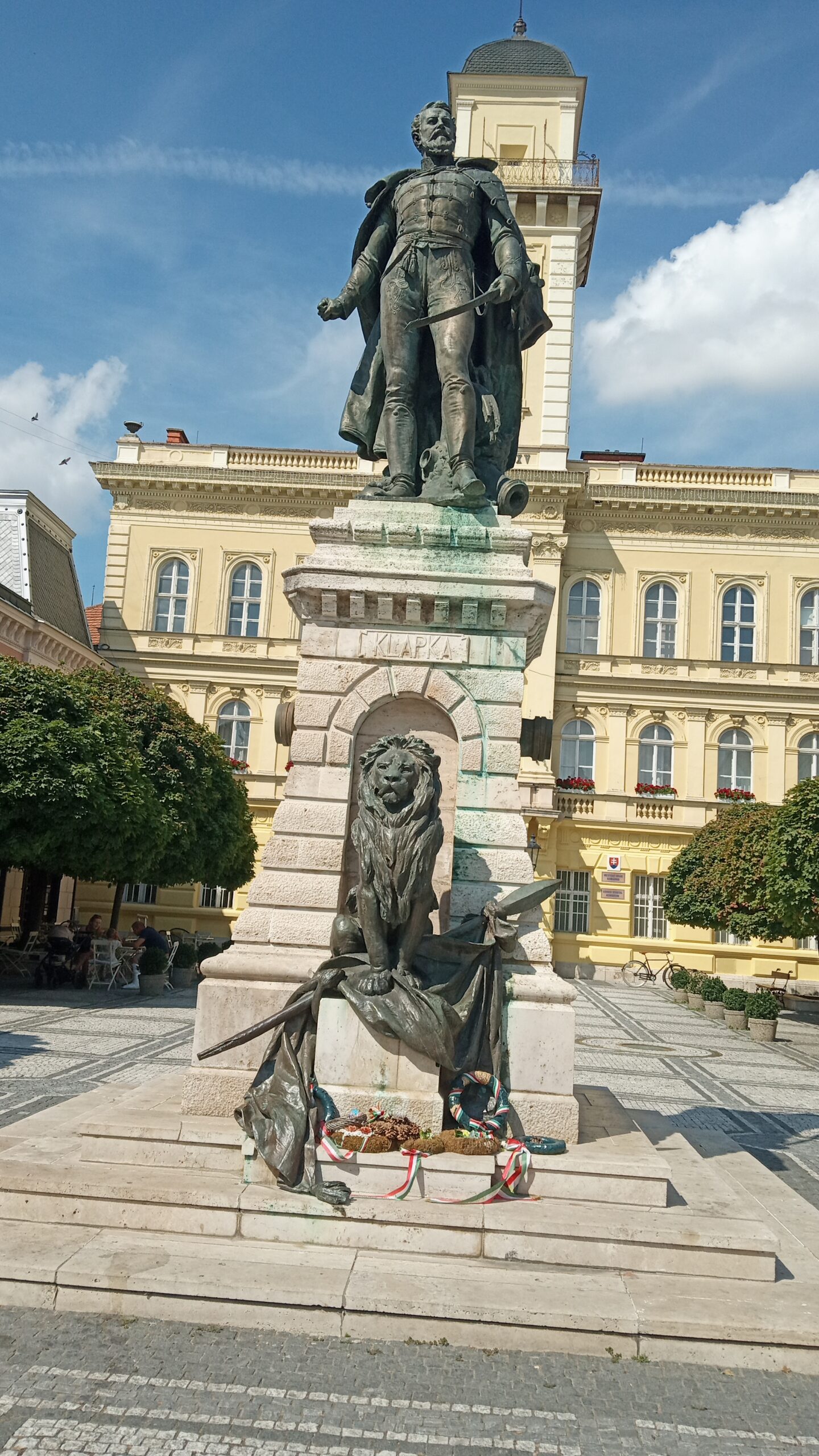
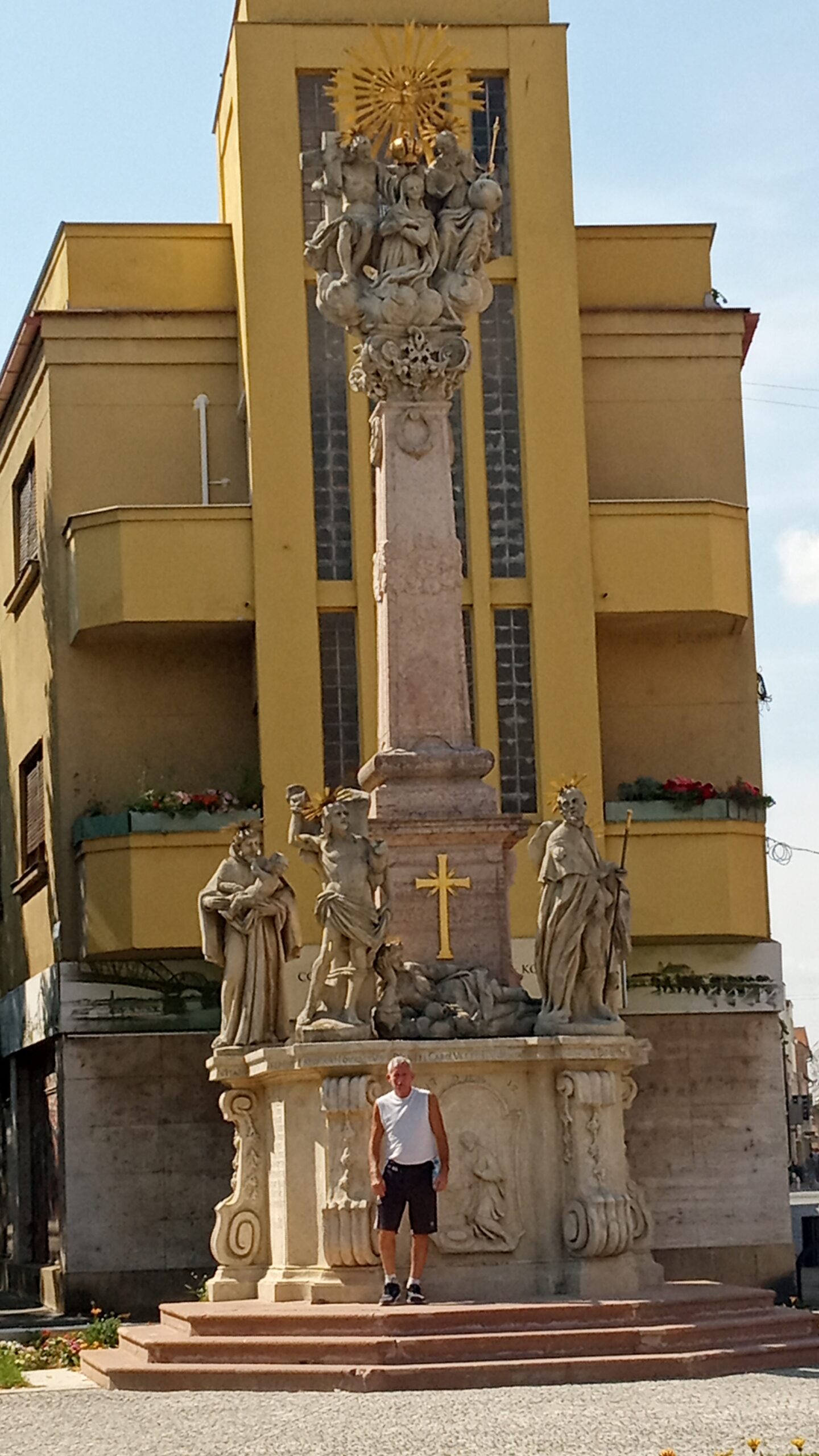
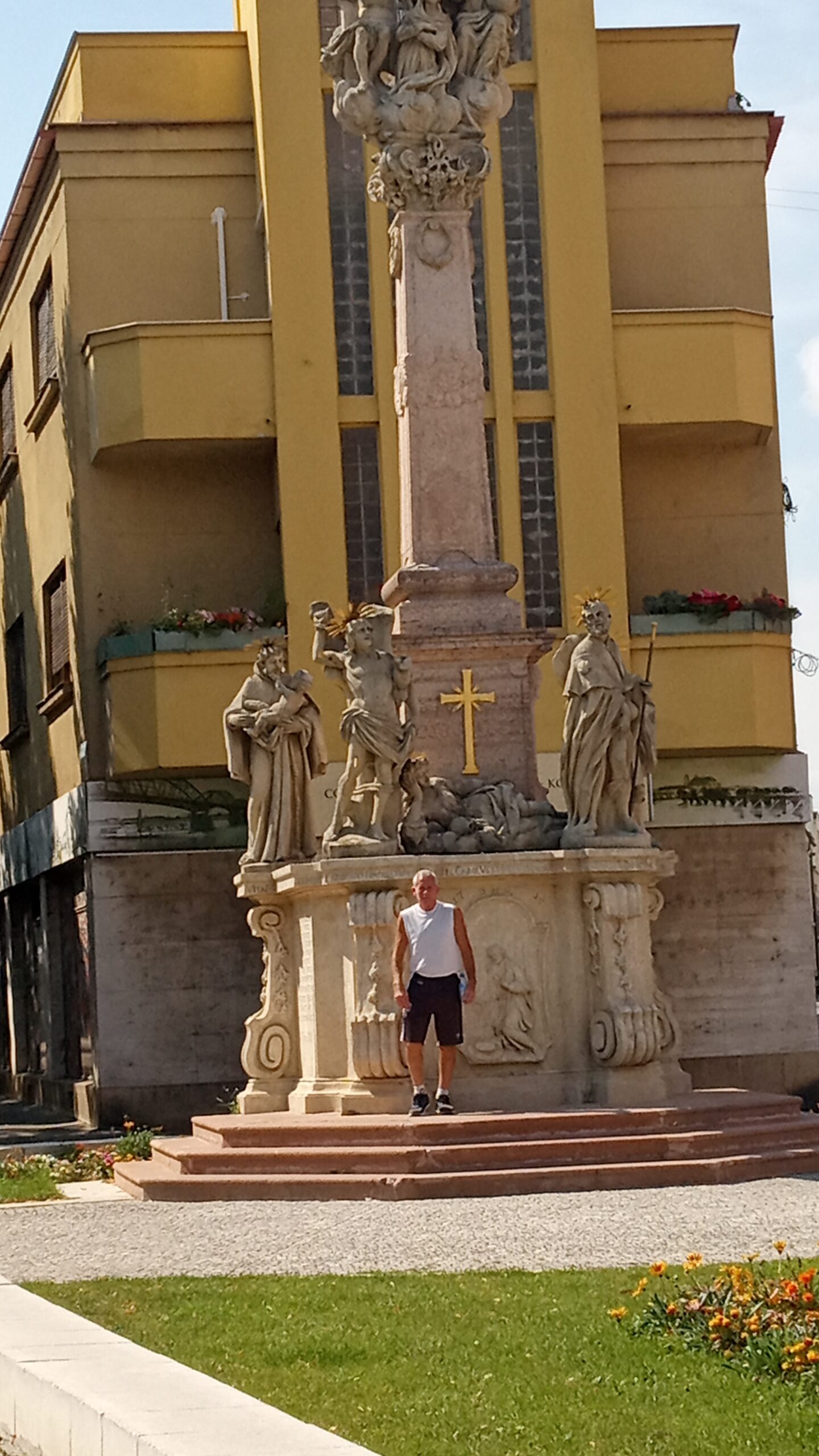
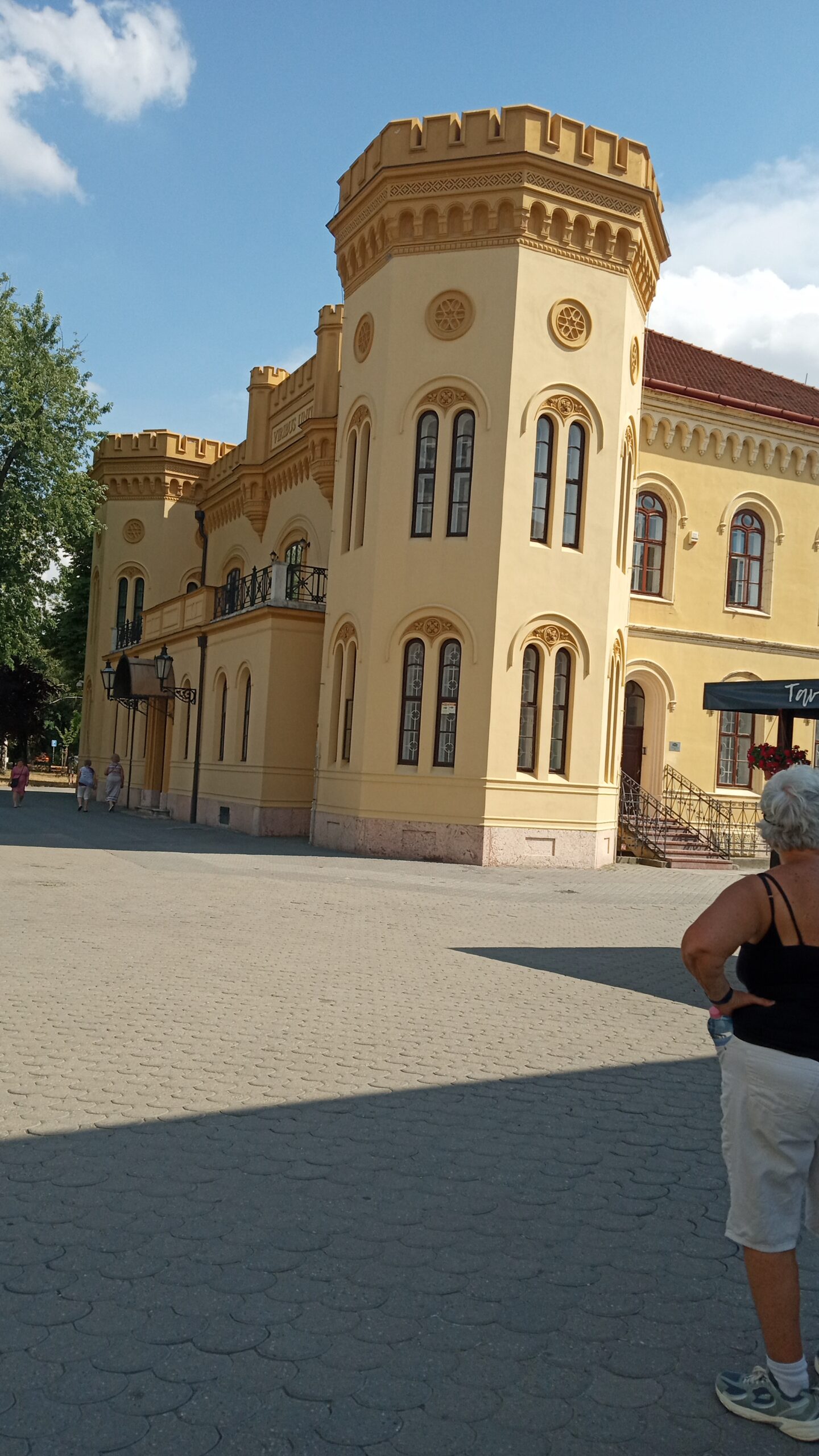
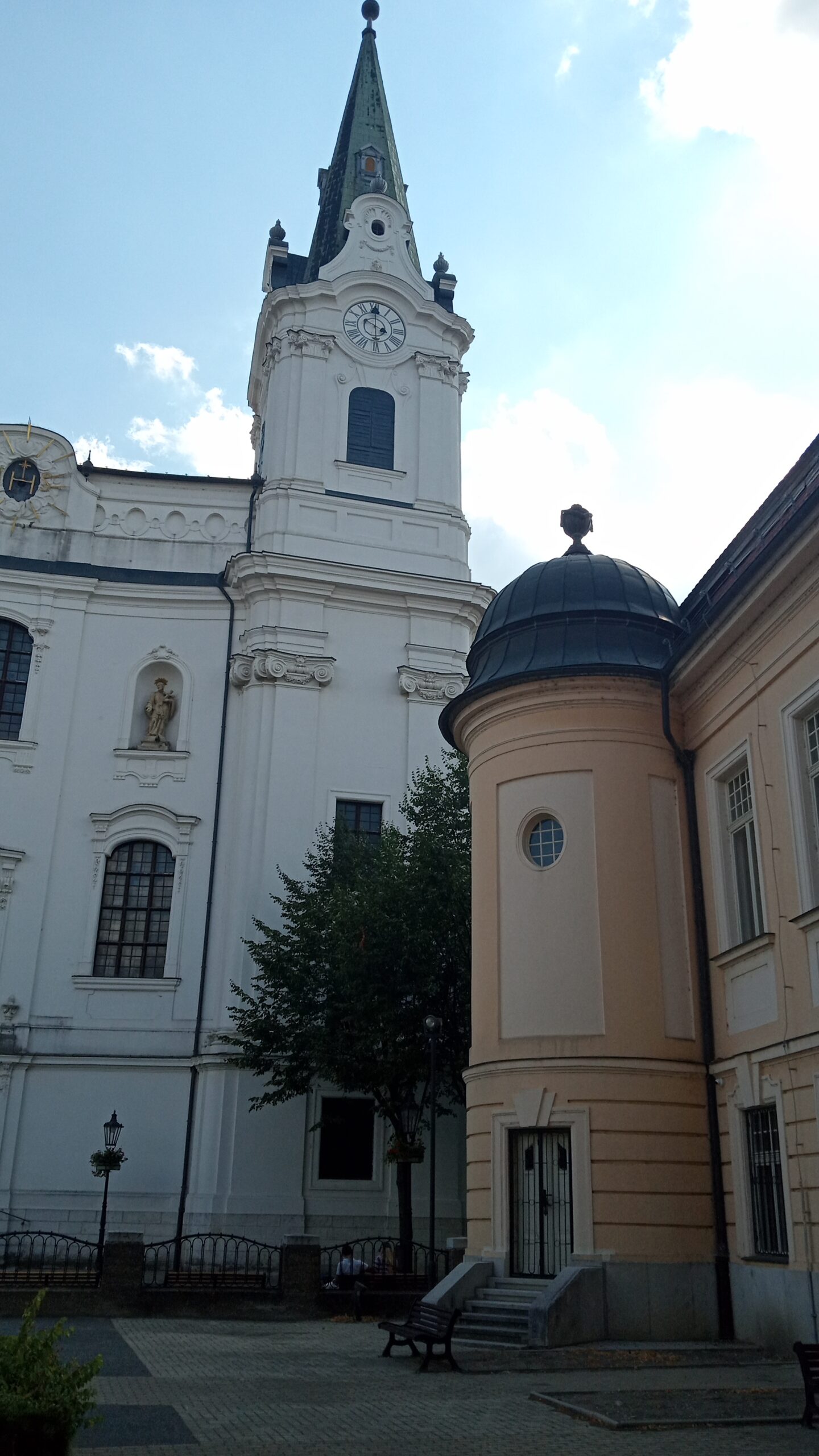
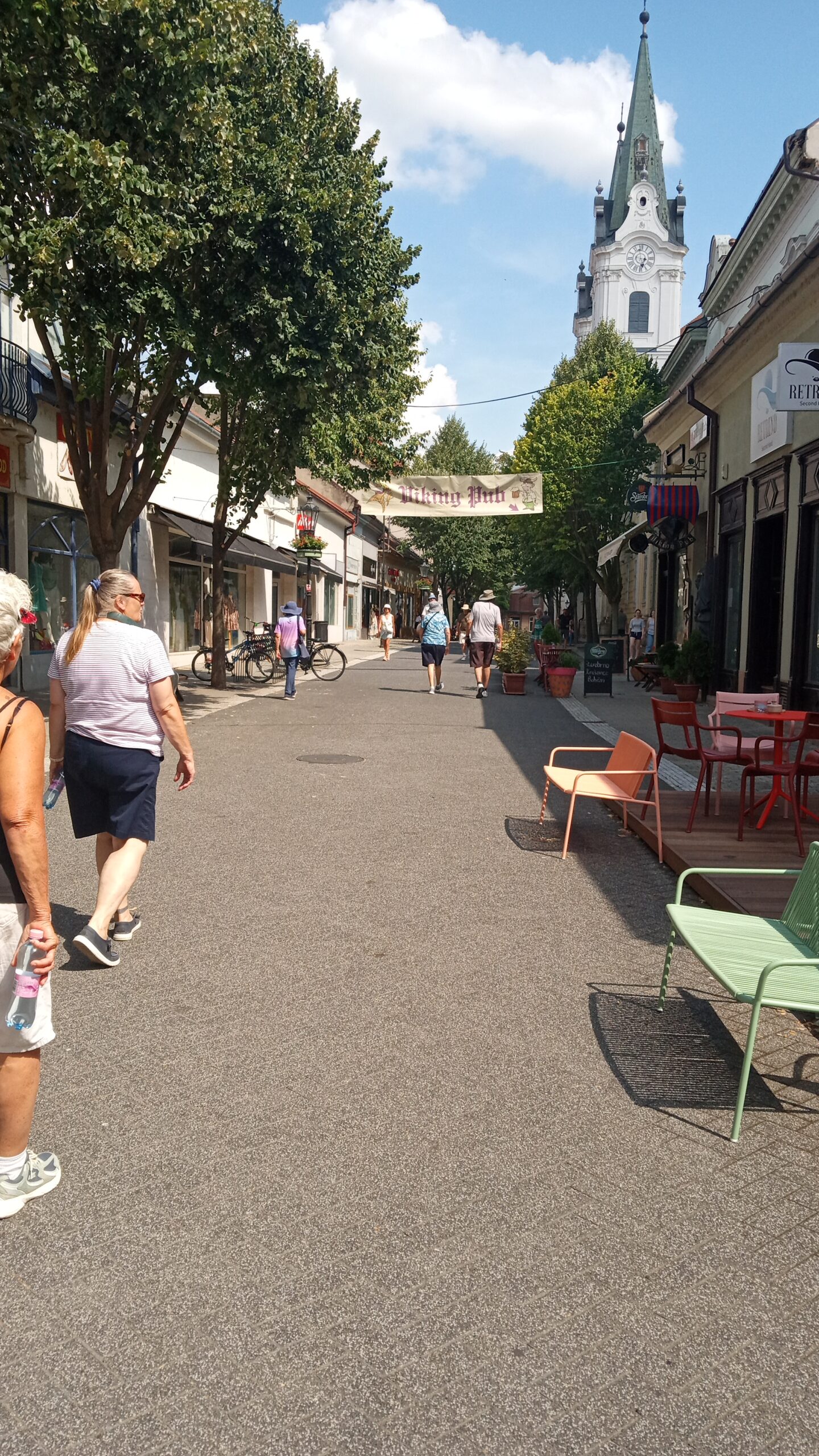
There was again a long pedestrian only street filled
with a central ornate church, shops and cafes. This
street then led to a large open town square bordered
by large buildings, cafes and stone monuments of
some important figures.
Because of our ship location change, some tours
for today and tomorrow of Budapest were cancelled
or morphed into the next day.
Day 13
Budapest, Hungary
Thursday, July 16
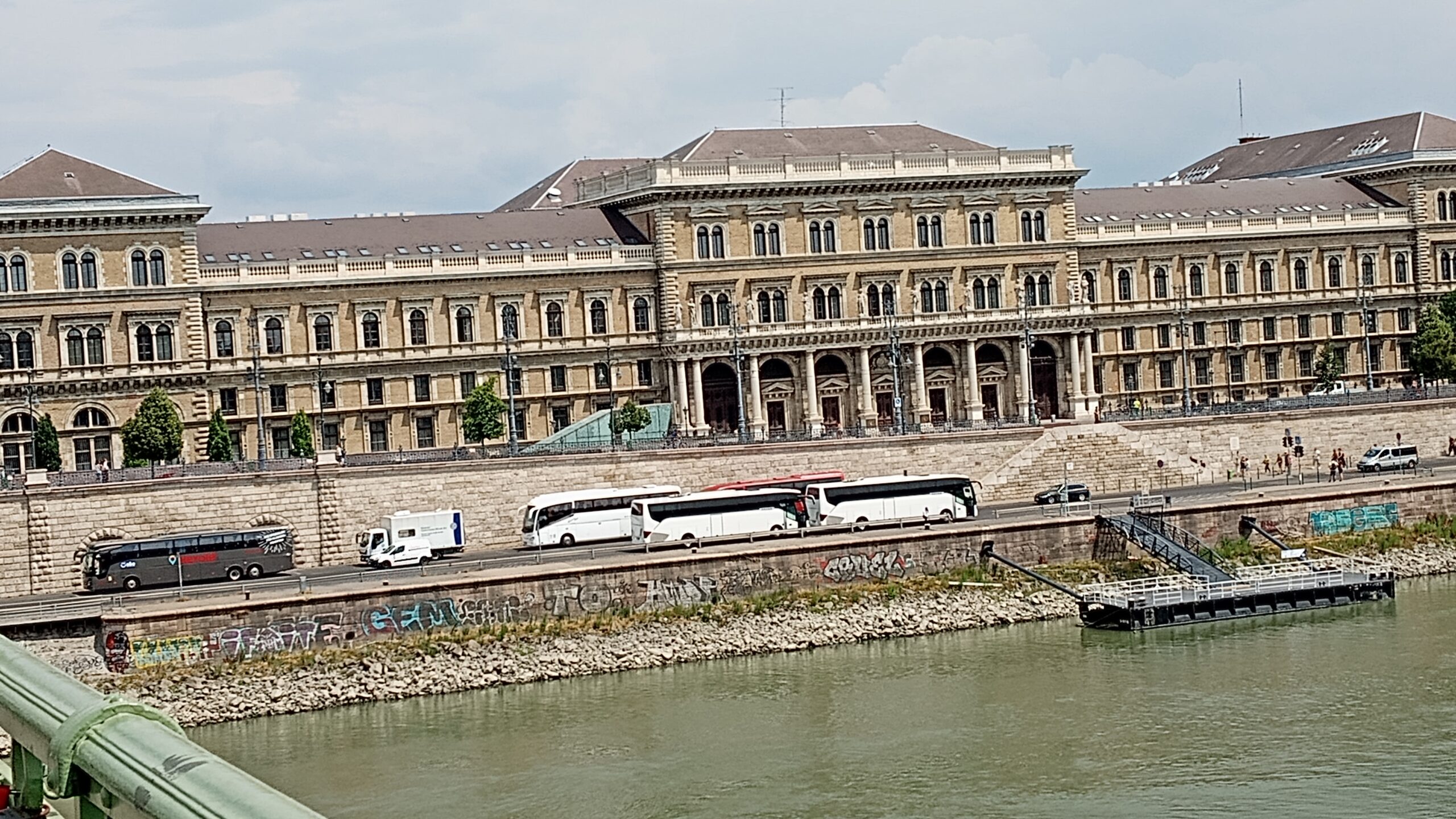
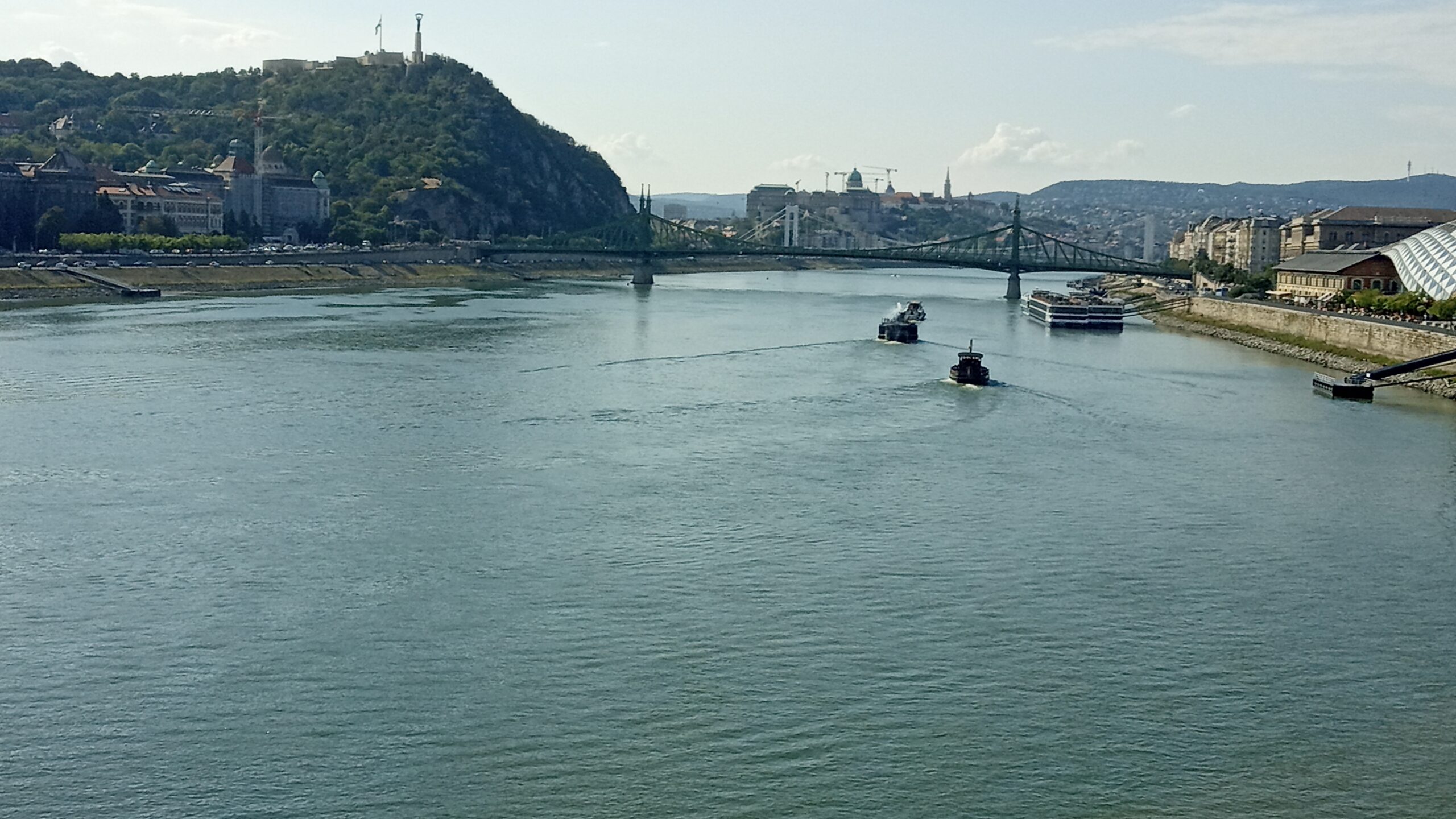
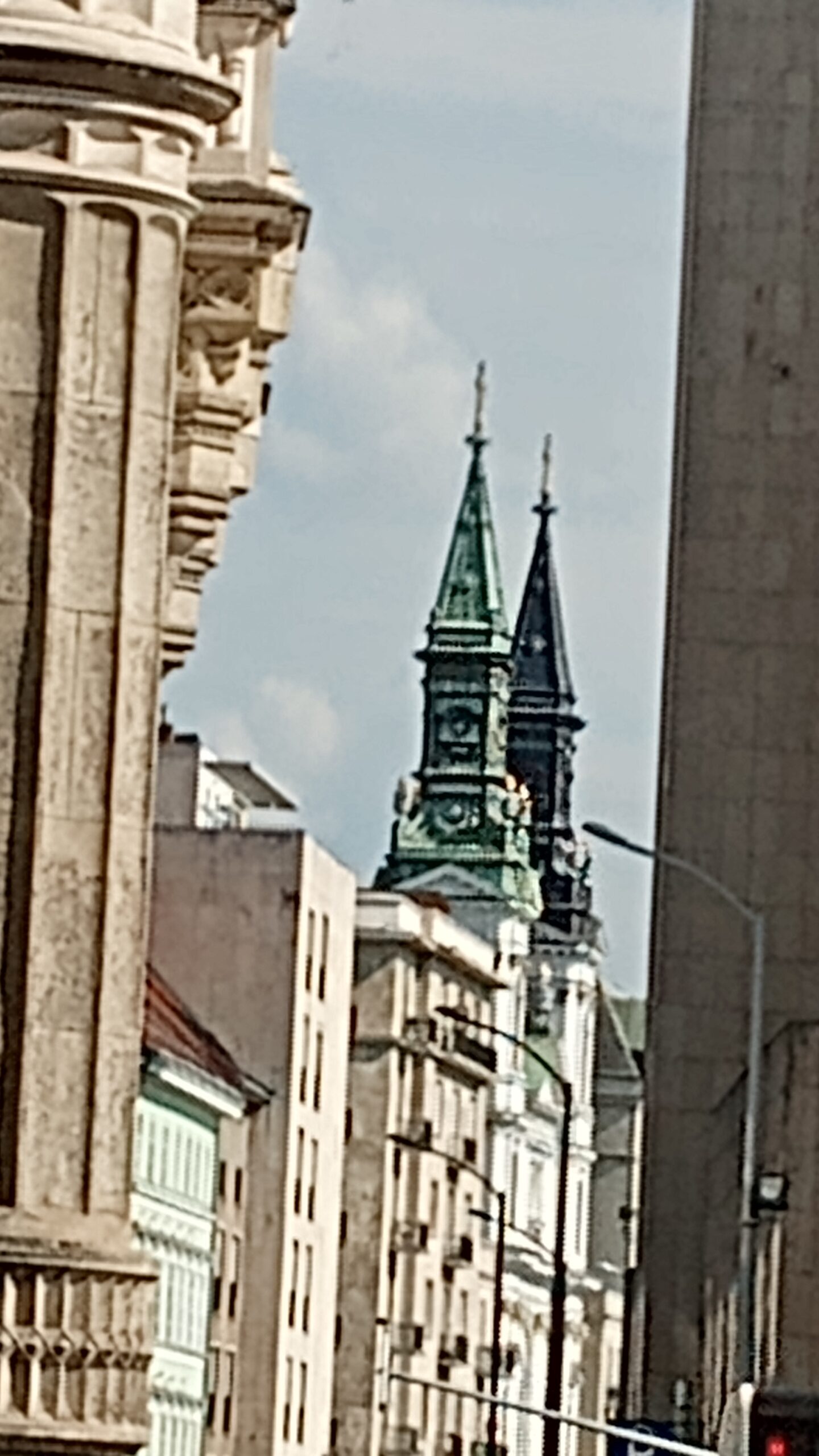
Panoramic Budapest
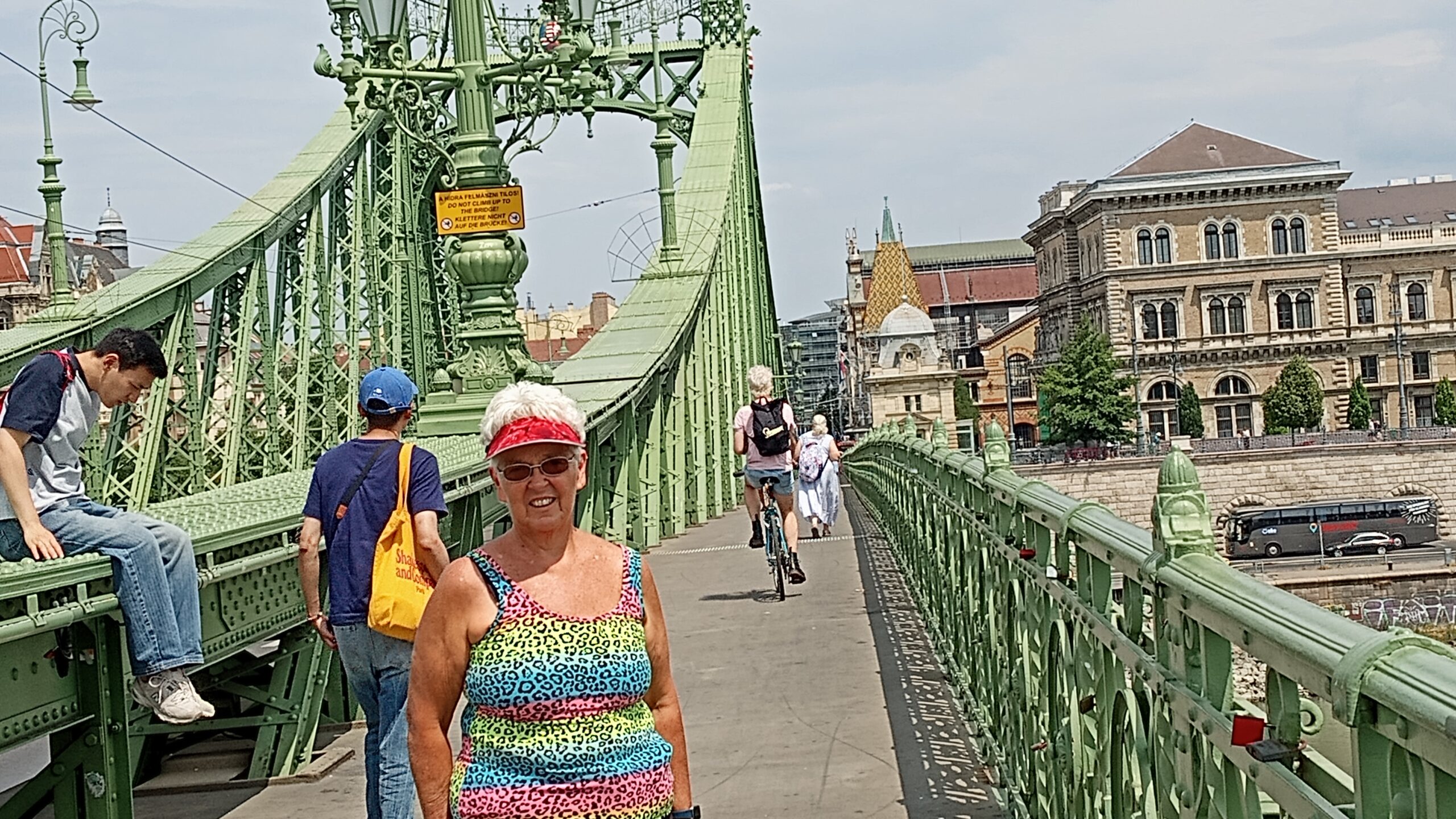
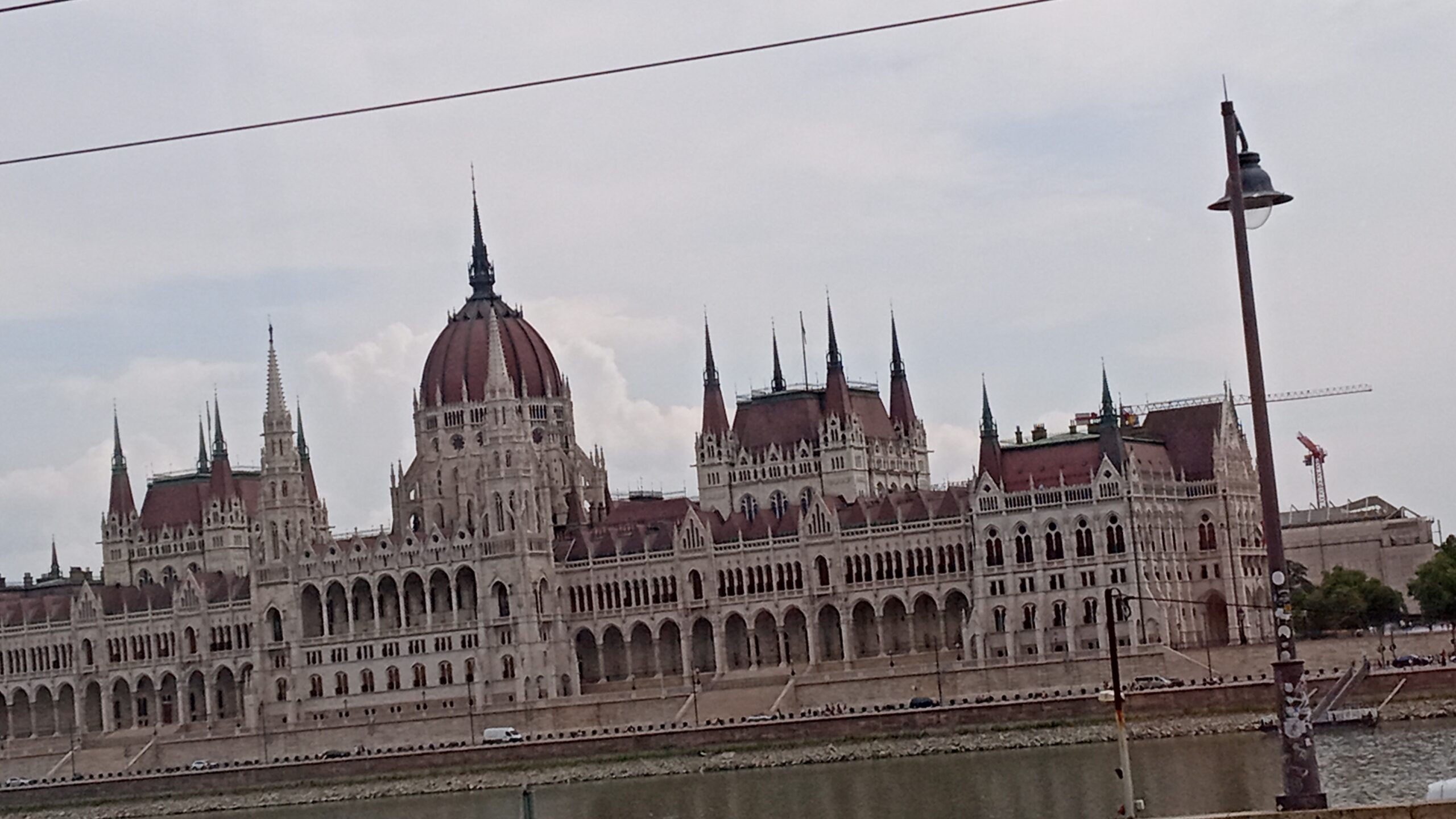
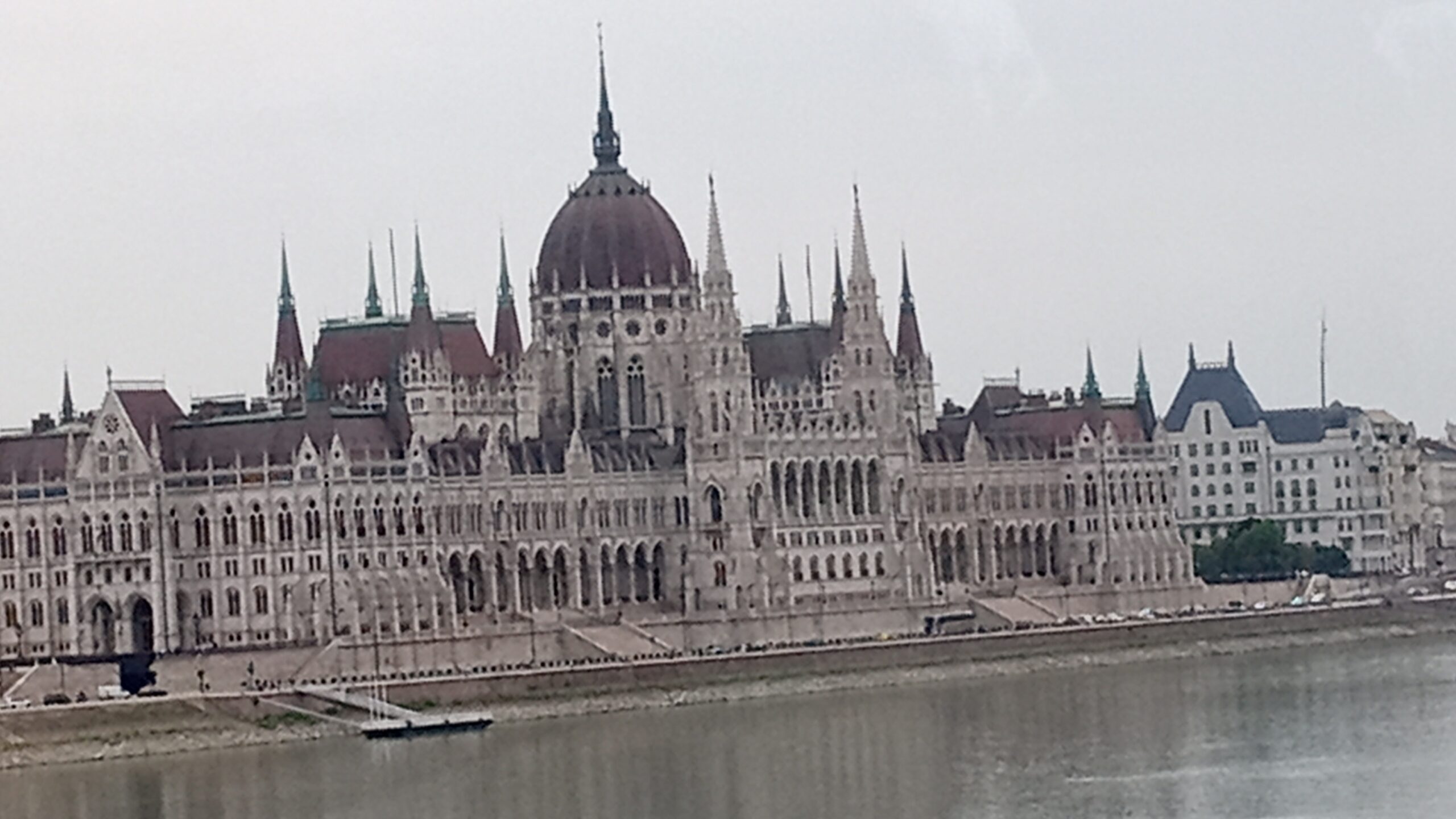
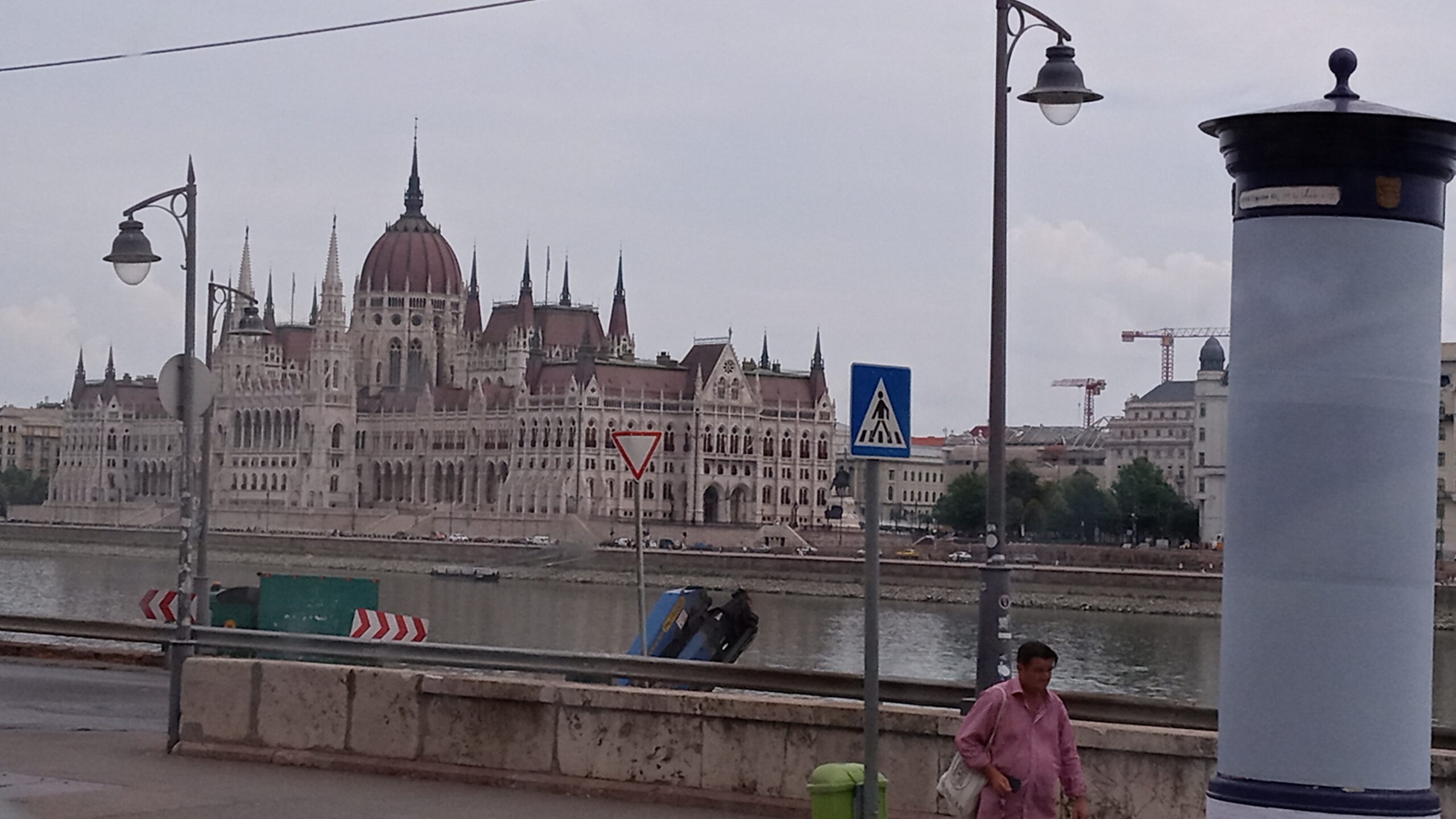
We took a bus ride into Budapest, Hungary from the
boat. Our bus took as around the city. We loved
the numerous Baroque and neoclassical buildings.
The ornamentation with stone balconies, terracotta
figurines, arches, columns and fancy facadework
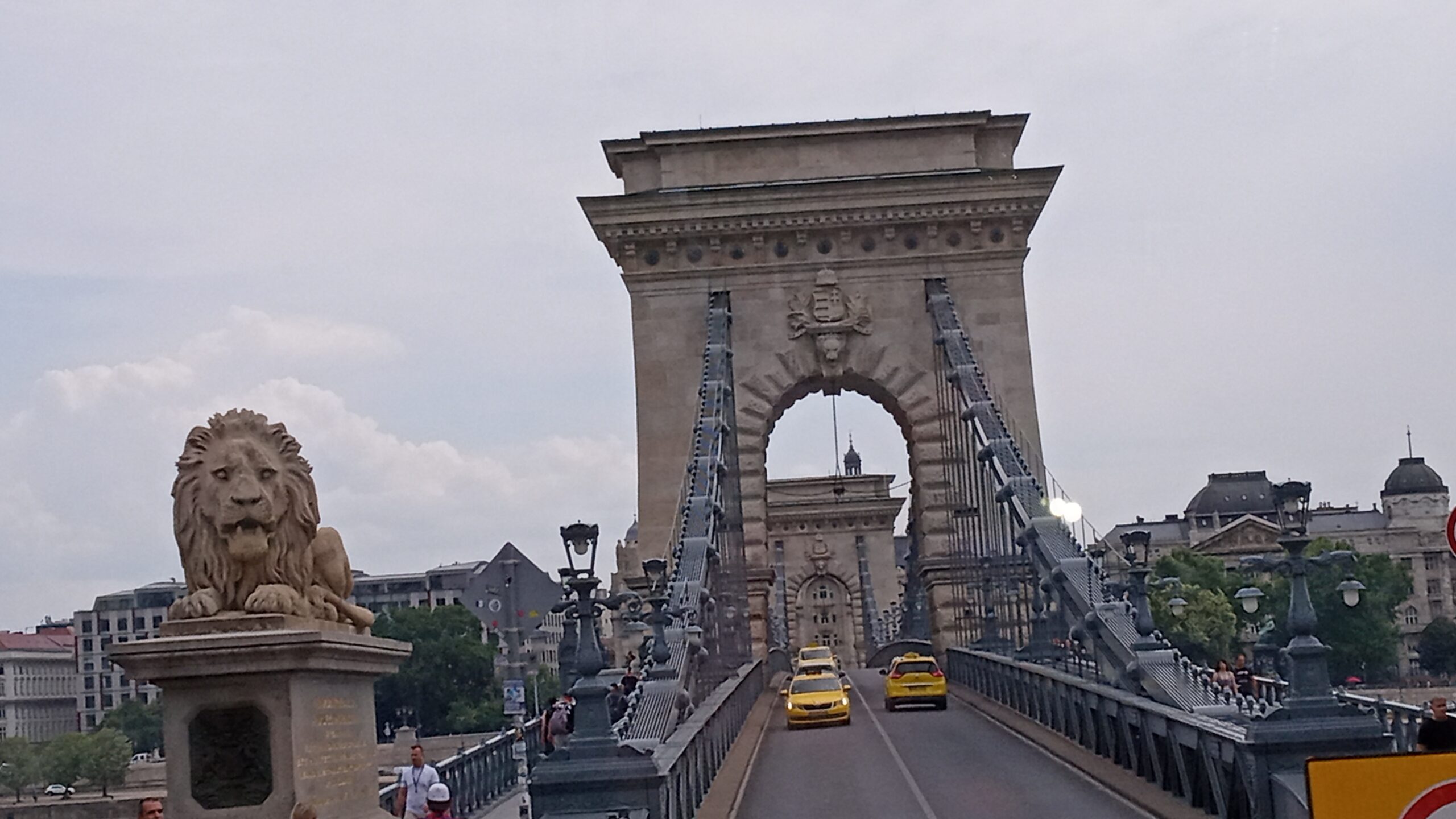
in stone was wonderful. We also saw the famous
Chain Bridge, and other bridges connecting
Buda and Pest.
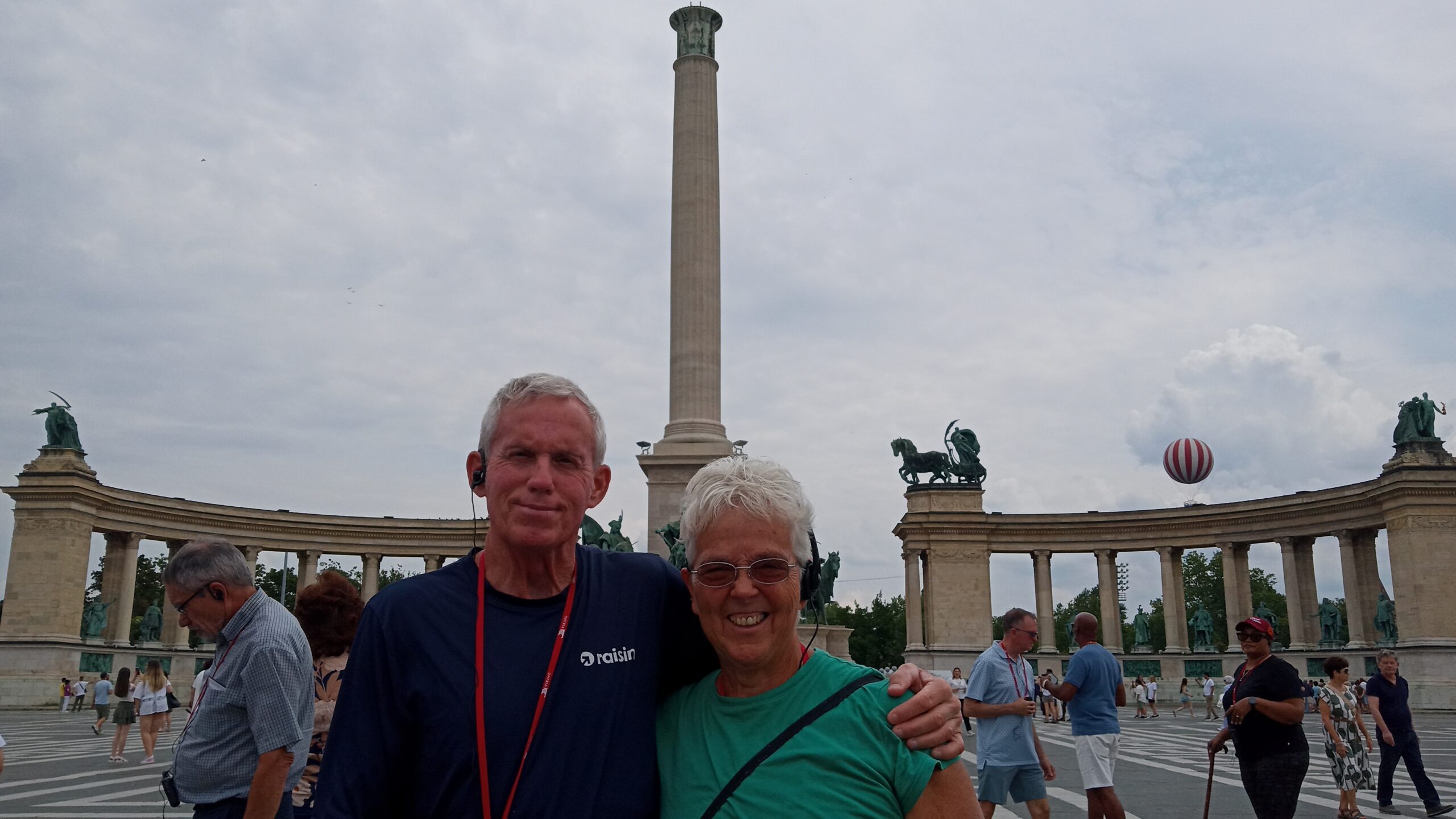
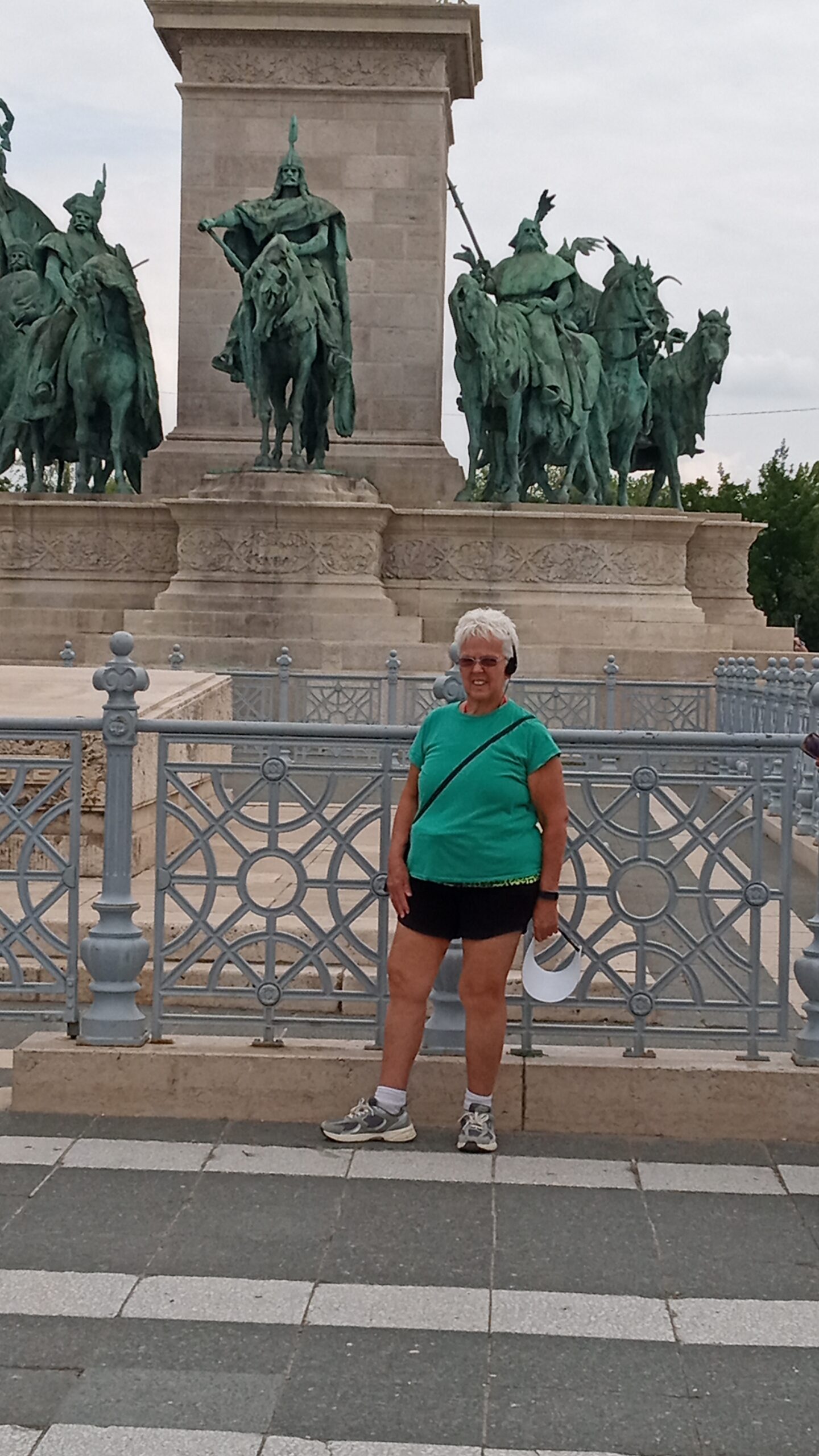
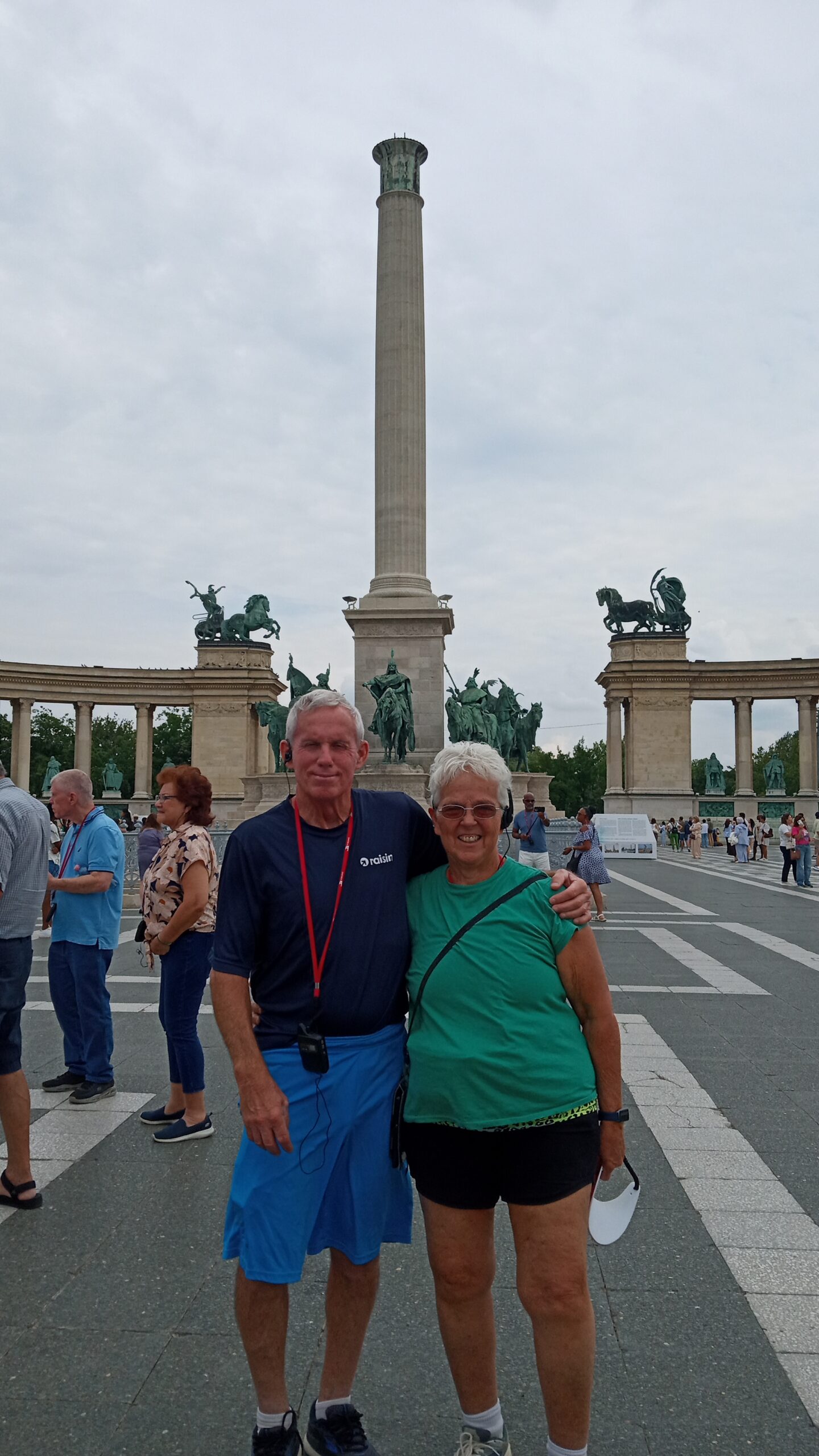
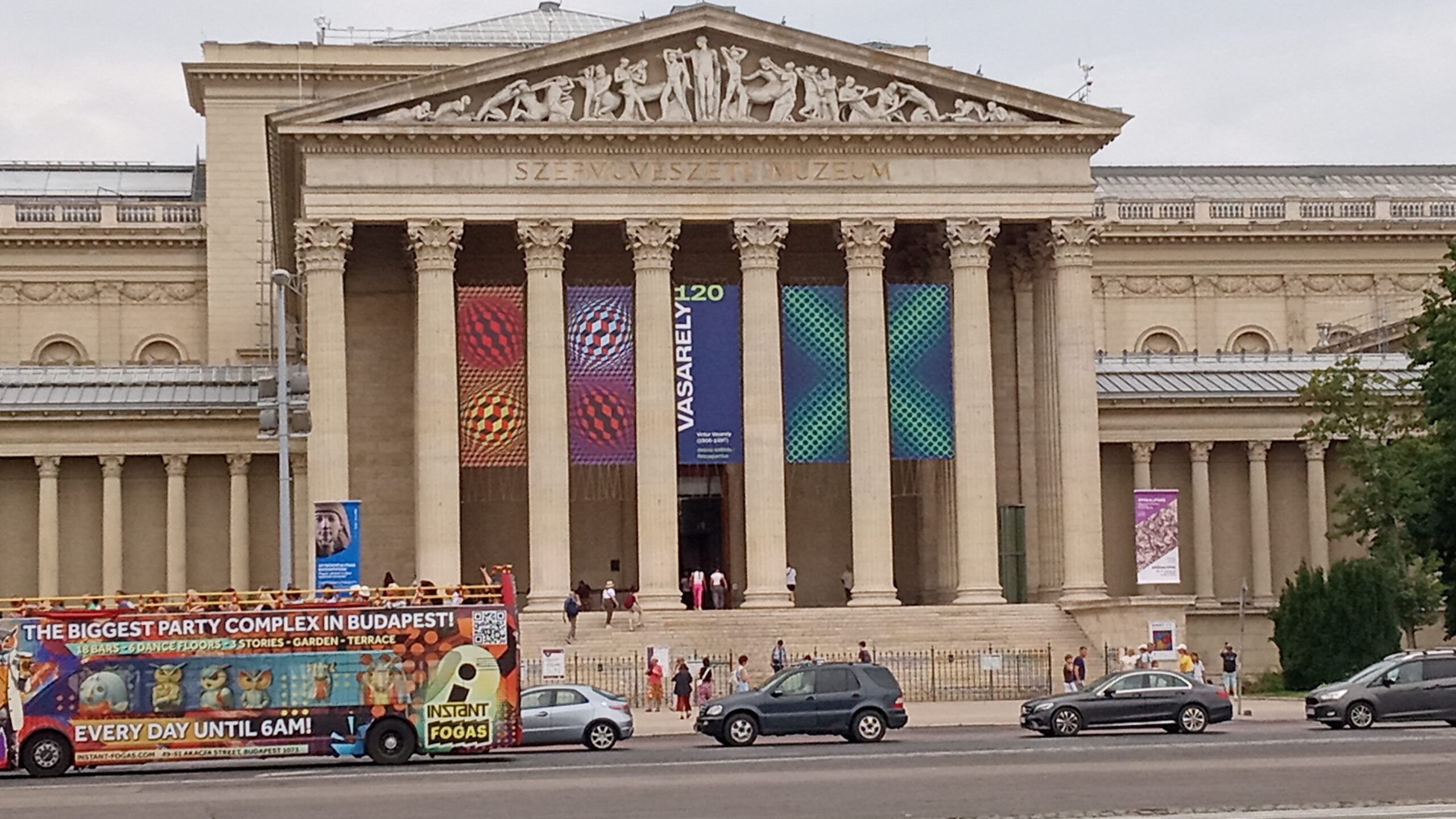
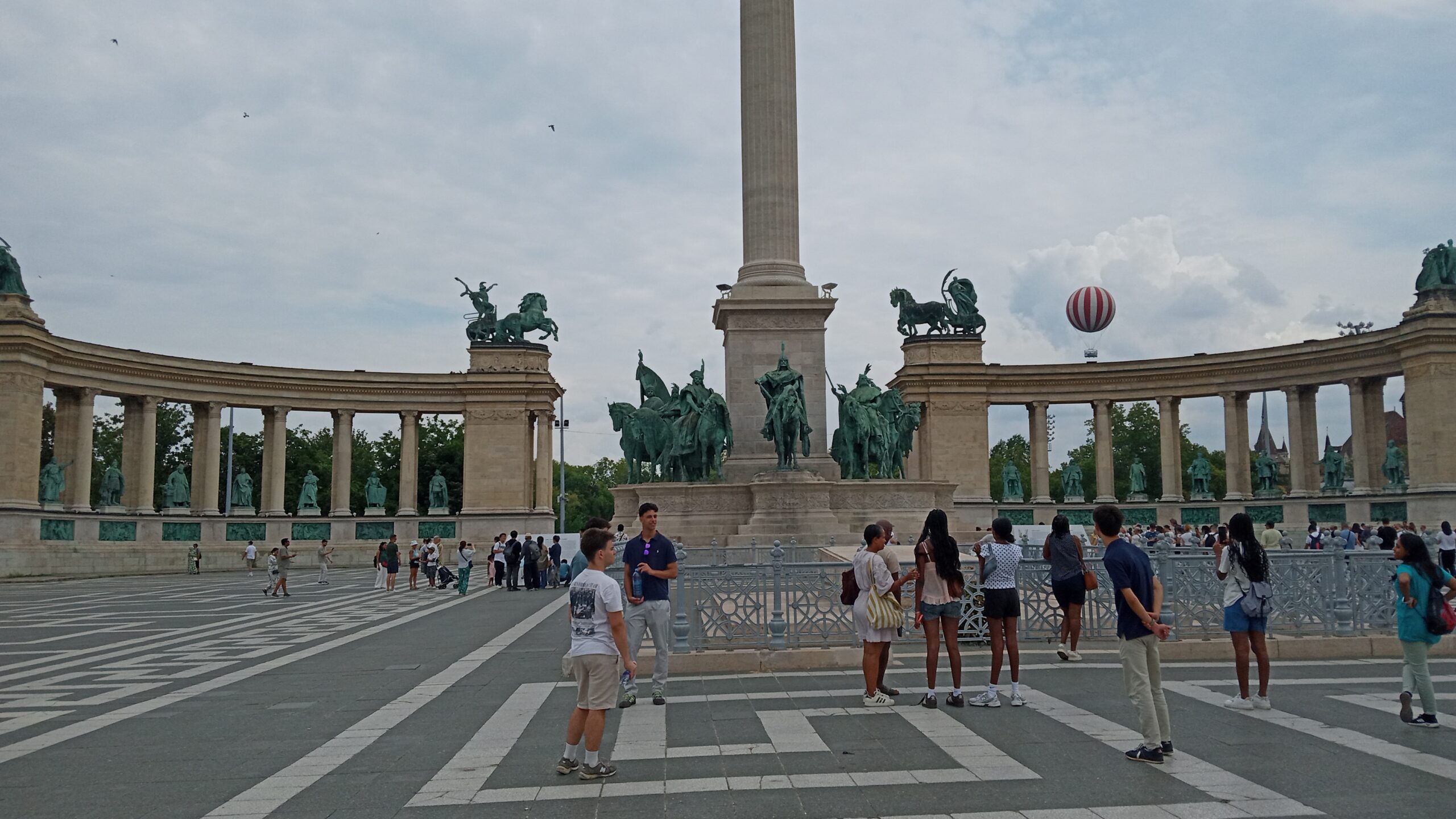
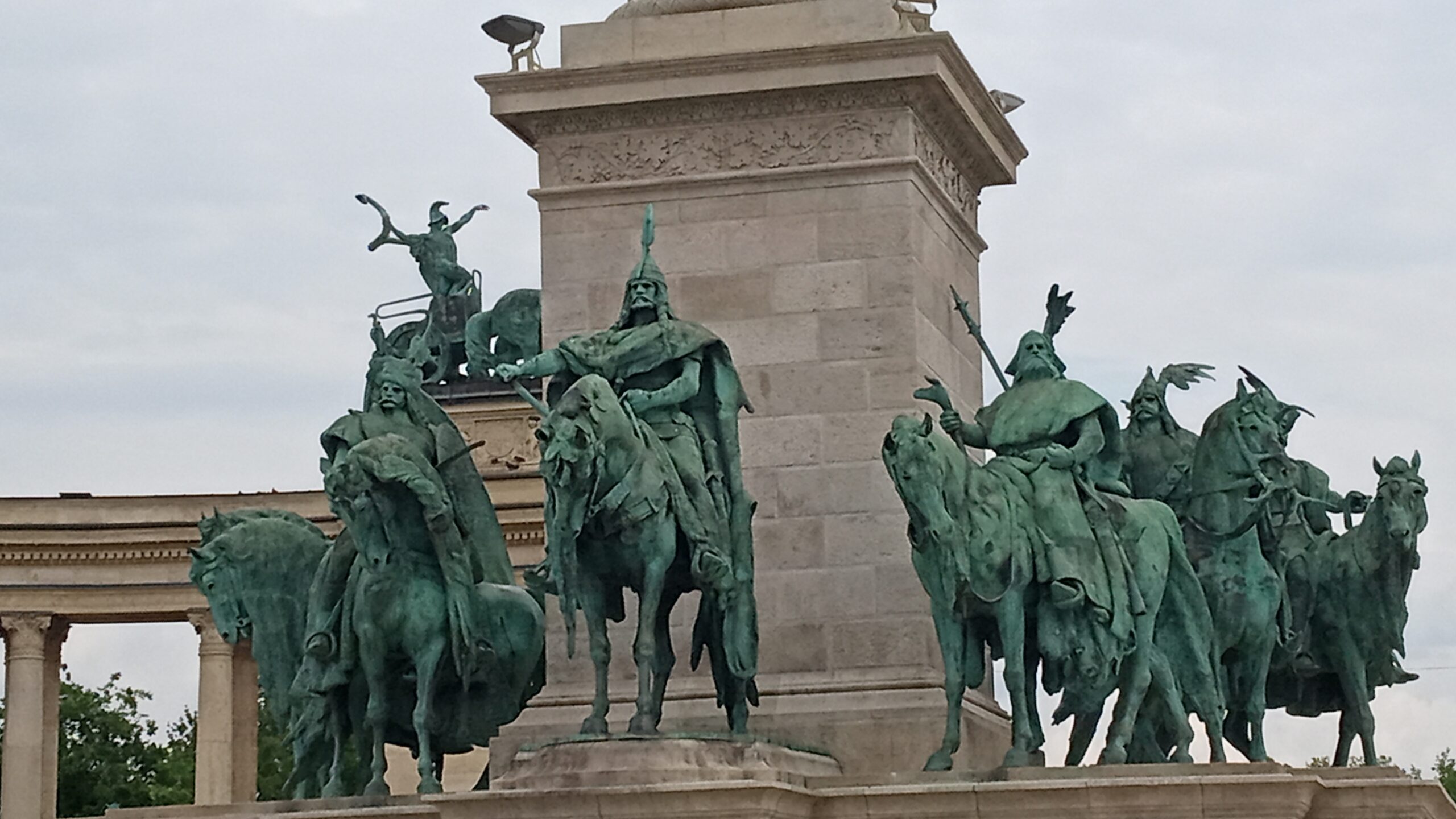
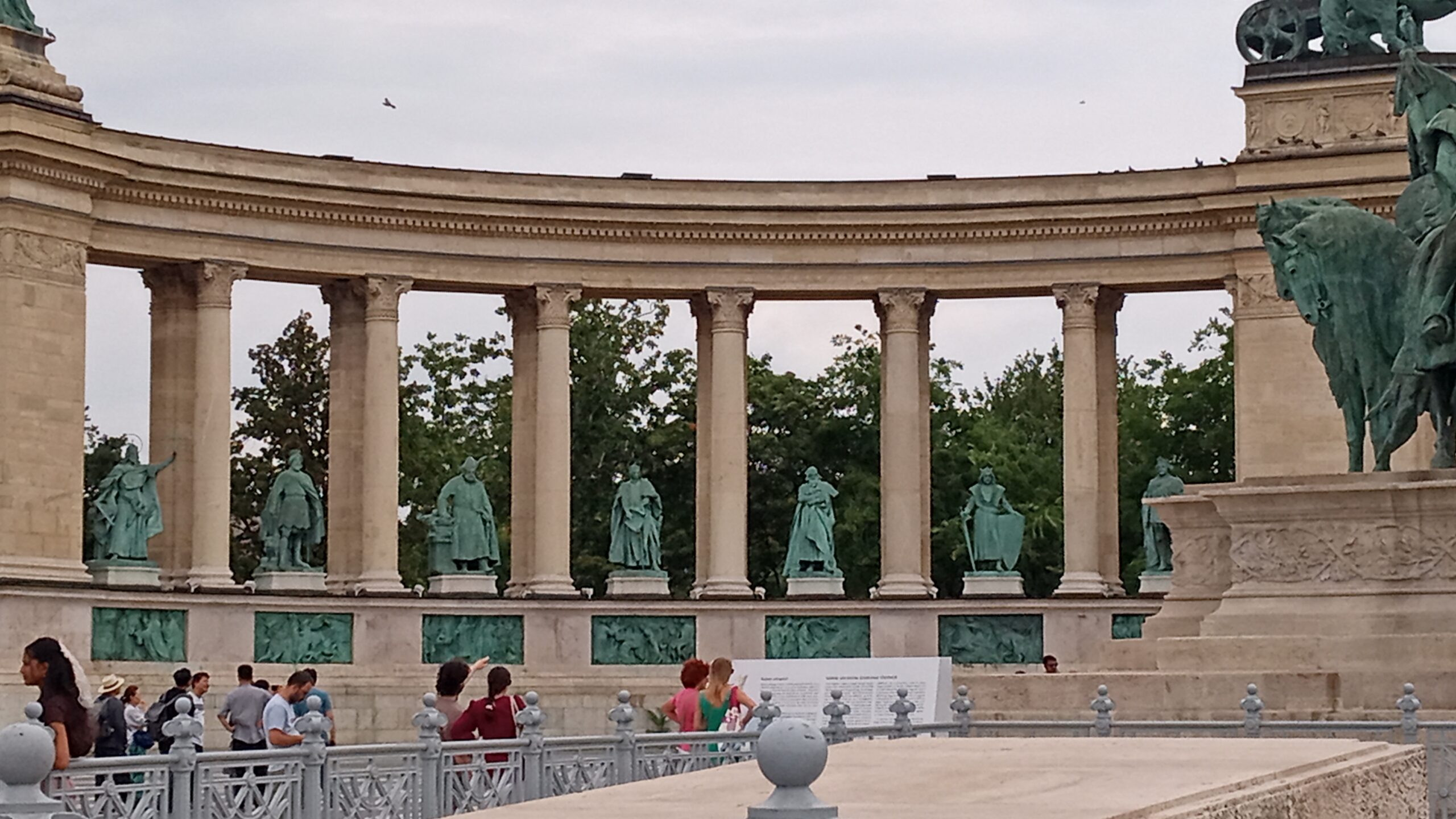
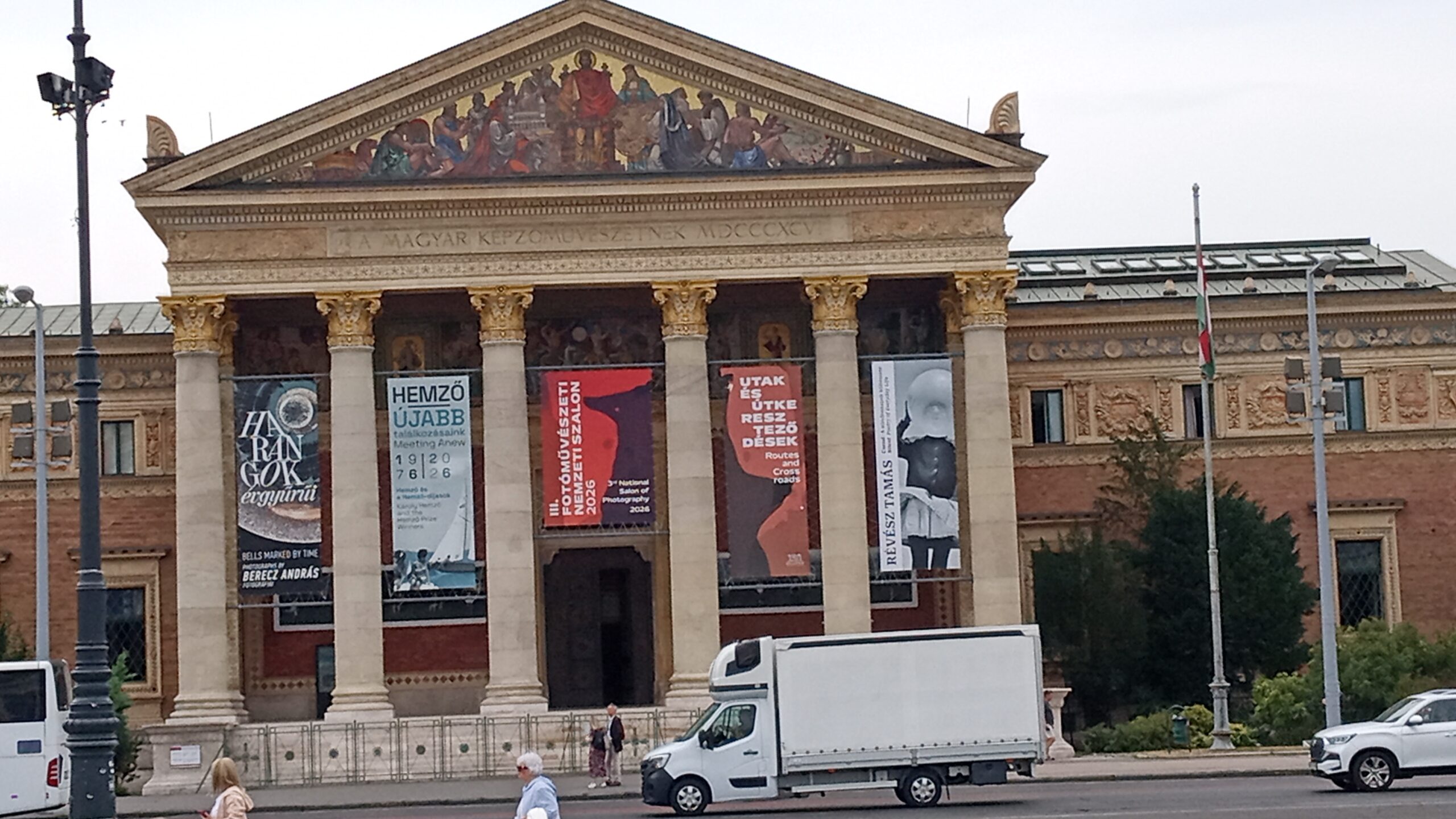
We then stopped at the main town square, Hereos
Square, and marvelled at the large open space
flanked by wide old ornate buildings, some large
stone monuments with columns as this whole area
had a very European flavor to it. It feels like we
stepped back in time seing this city.
We had lunch on our own and took a hike. We
stopped at the indoor market in Budapest. This was a
huge building that had hundreds of vendors in
selling meat, caviar, sausages, souvineers, treats,
shirts, tourist trinkets etc. It was busy and fun.
Day 13
Budapest, Hungary
Thursday, July 16
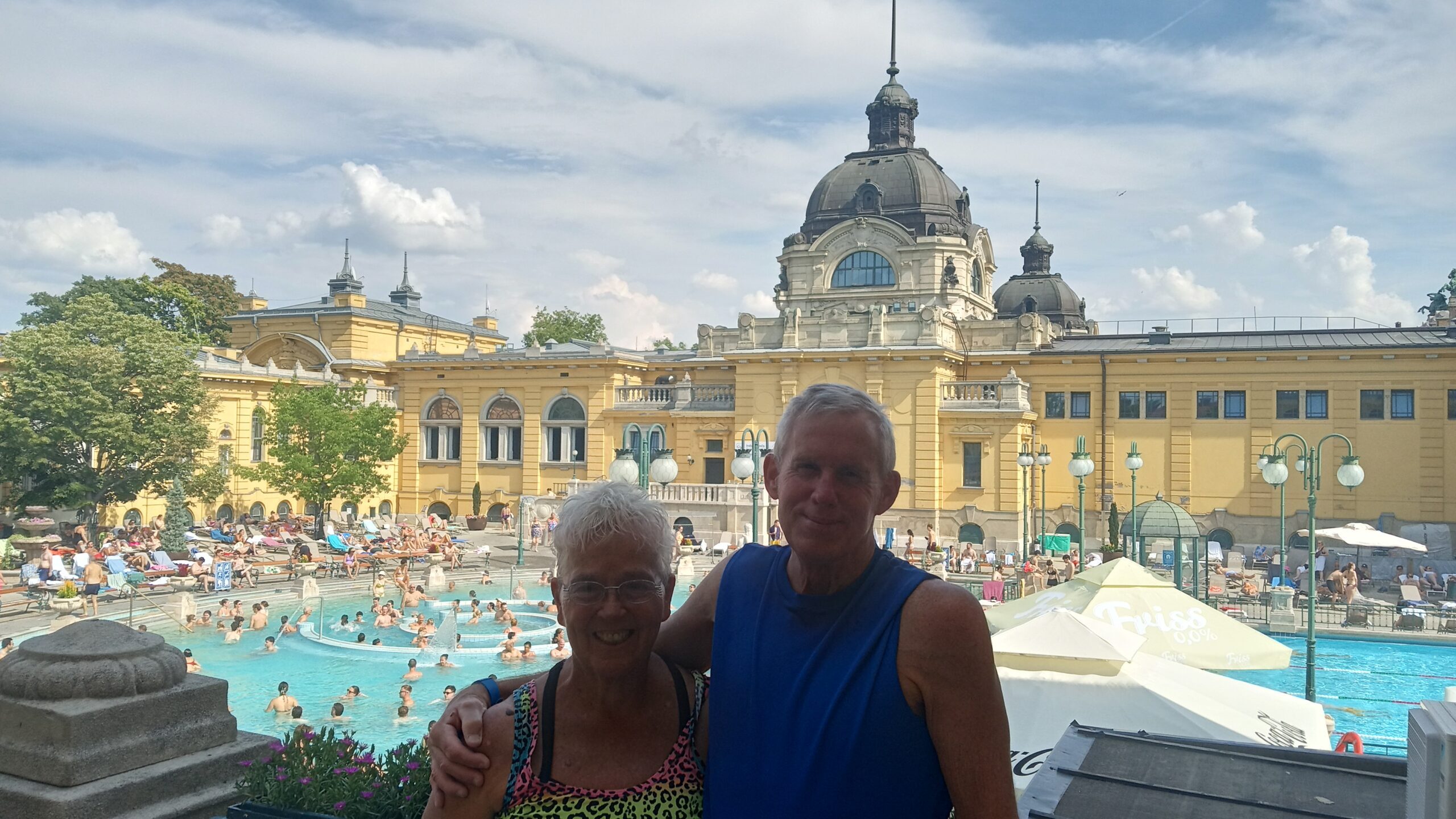
Budapest Thermal Bath
Take to the Waters, Budapest Style
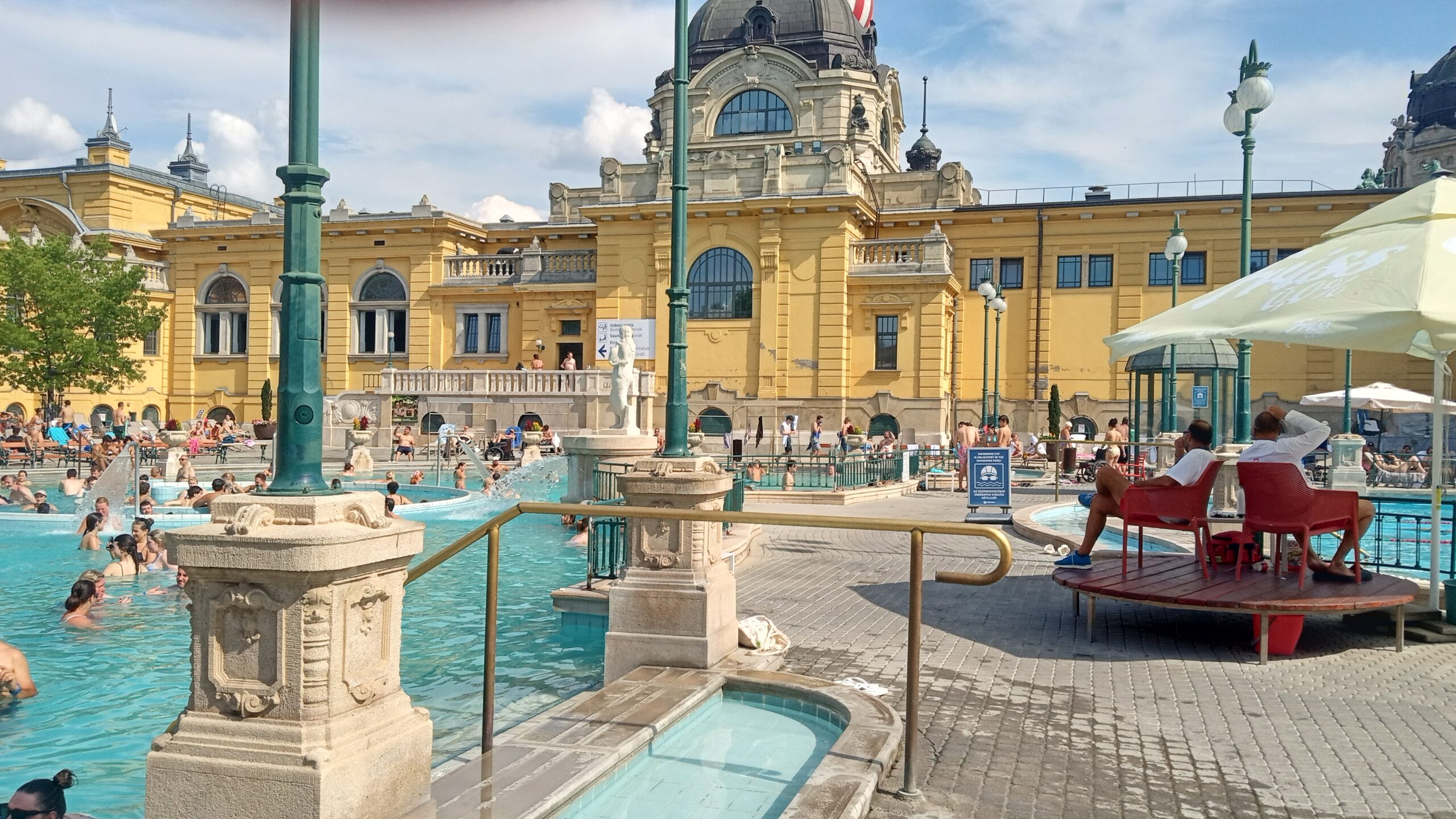
After a lunch on our in Budapest we went to
the Thermal Baths. Natural hot spring waters from
1,000 feet below are piped into some very large
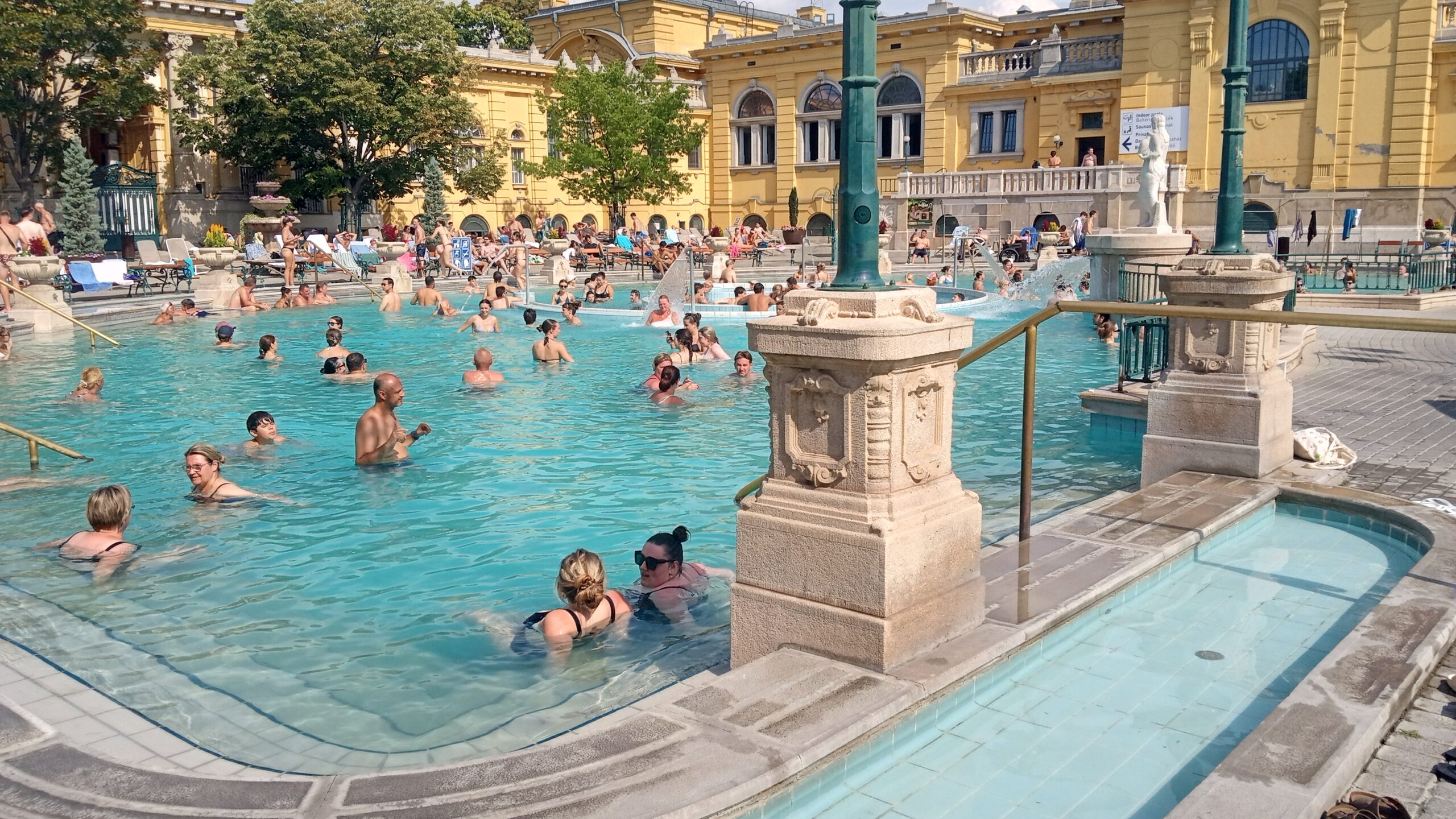
outdoor and indoor swimming pools. The place is very
popular as hundreds of people came to enjoy
different pool experiences. The spa had very
hot indoor pools – about 100 degrees. Other pools
were cooler. The outdoor area had 3 pools – one hot with
pool patrons soaking up the heat, another long
Olympic sized pool was cooler for lap swimmers.
The fun one was medium temp – with an inner circle
of very fast water that took us and others for a fast
merry-go-round type spin. Young adults loved this
spin pool and the speed of jets of water that
accelerated us was fast and exhilerating.
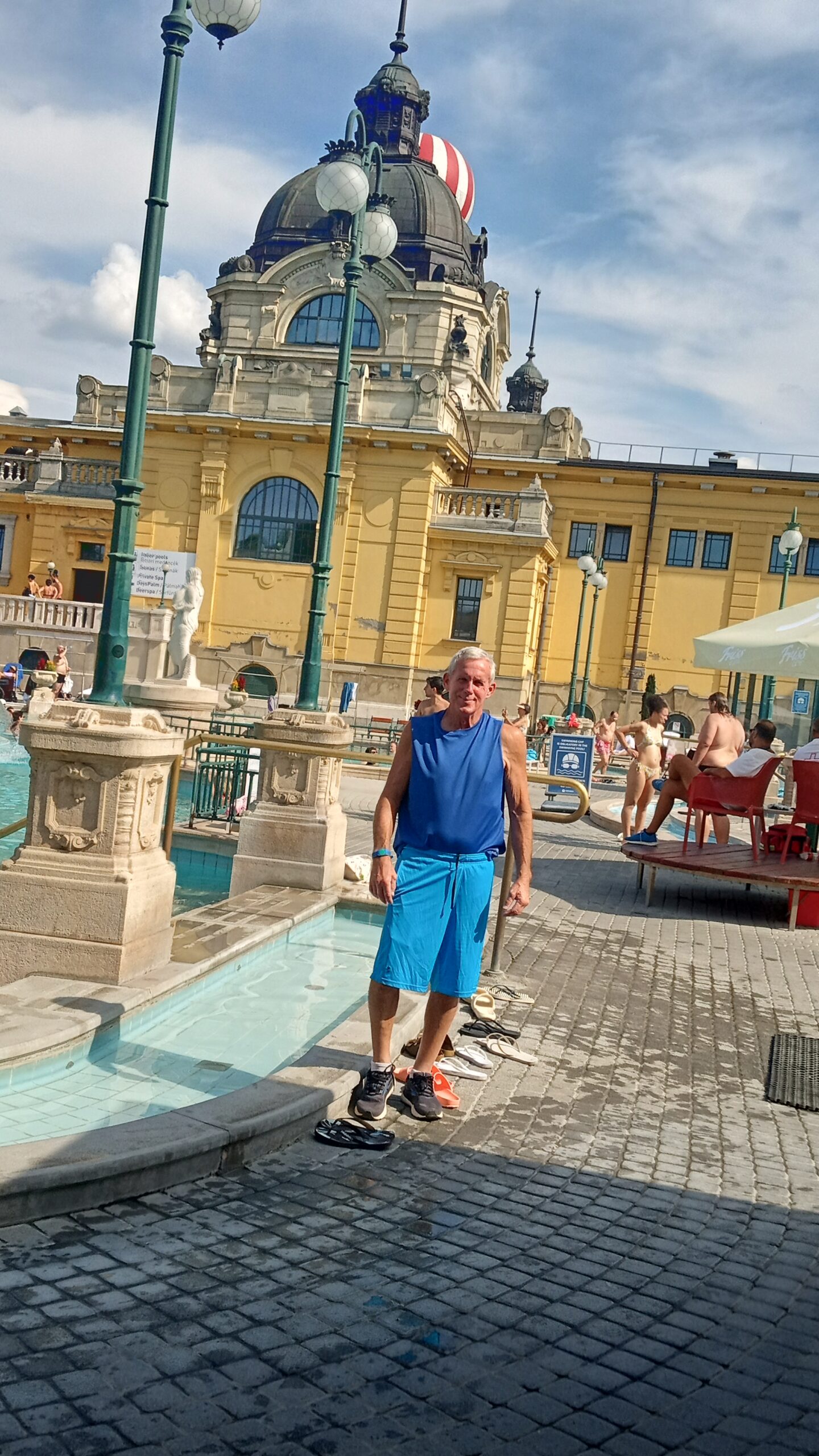
We stayed at the pool complex for an hour and
20 minurtes. All the while we admired the
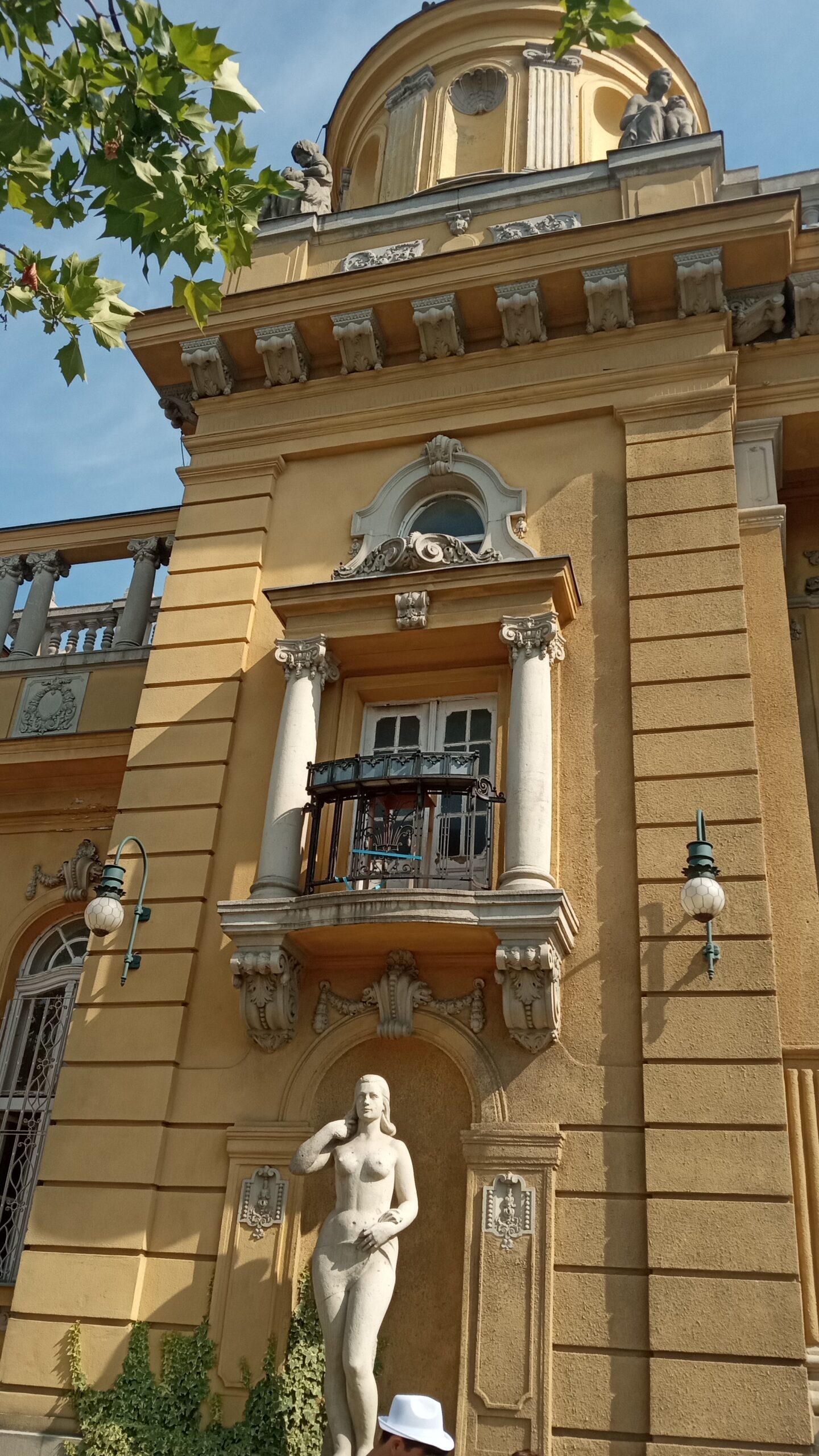
neoclassical facade of the inner outdoor building
complex which was adorned with statues of water
nymphs, domes, columns, old bric-a-brac yellow
decorations and had a 1880’s feel to it. We
changed clothes and kept our day bags in a
small cabin in the complex.
All the pool areas were filled with people
enjoying a warm, sunny July day in Budapest.
Day 14
Vienna, Austria
Friday, July 17
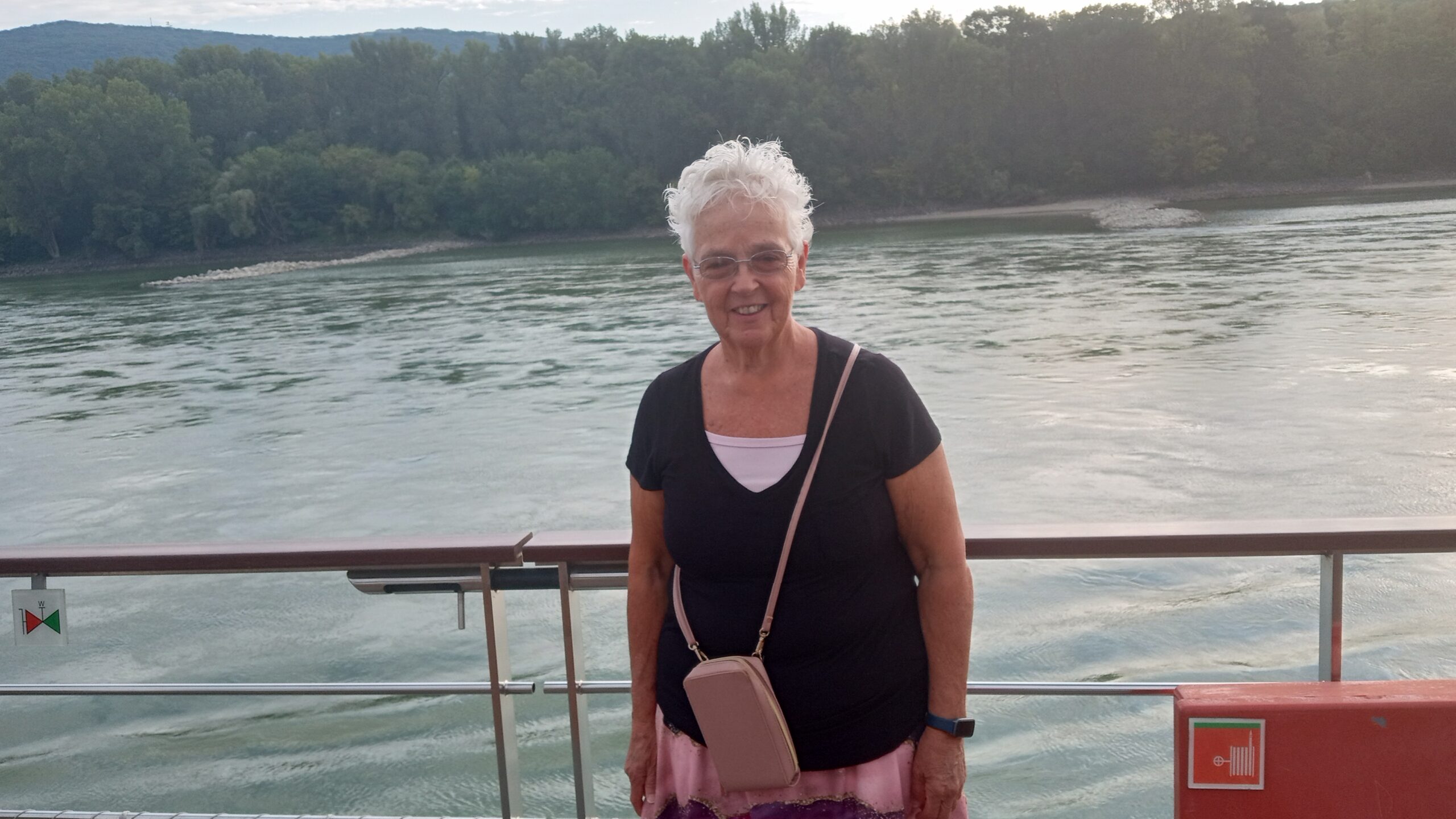
On our river journey today we spent it as a sailing day.
The Danube was still low but navigable. The river was
narrower than before and the rocky shoreline was more
exposed due to low water levels. The banks were full of
trees, bushes, vegetation and occasionally a small town
would appear as we sailed. Our morning was spent
reading and relaxing on the top deck.
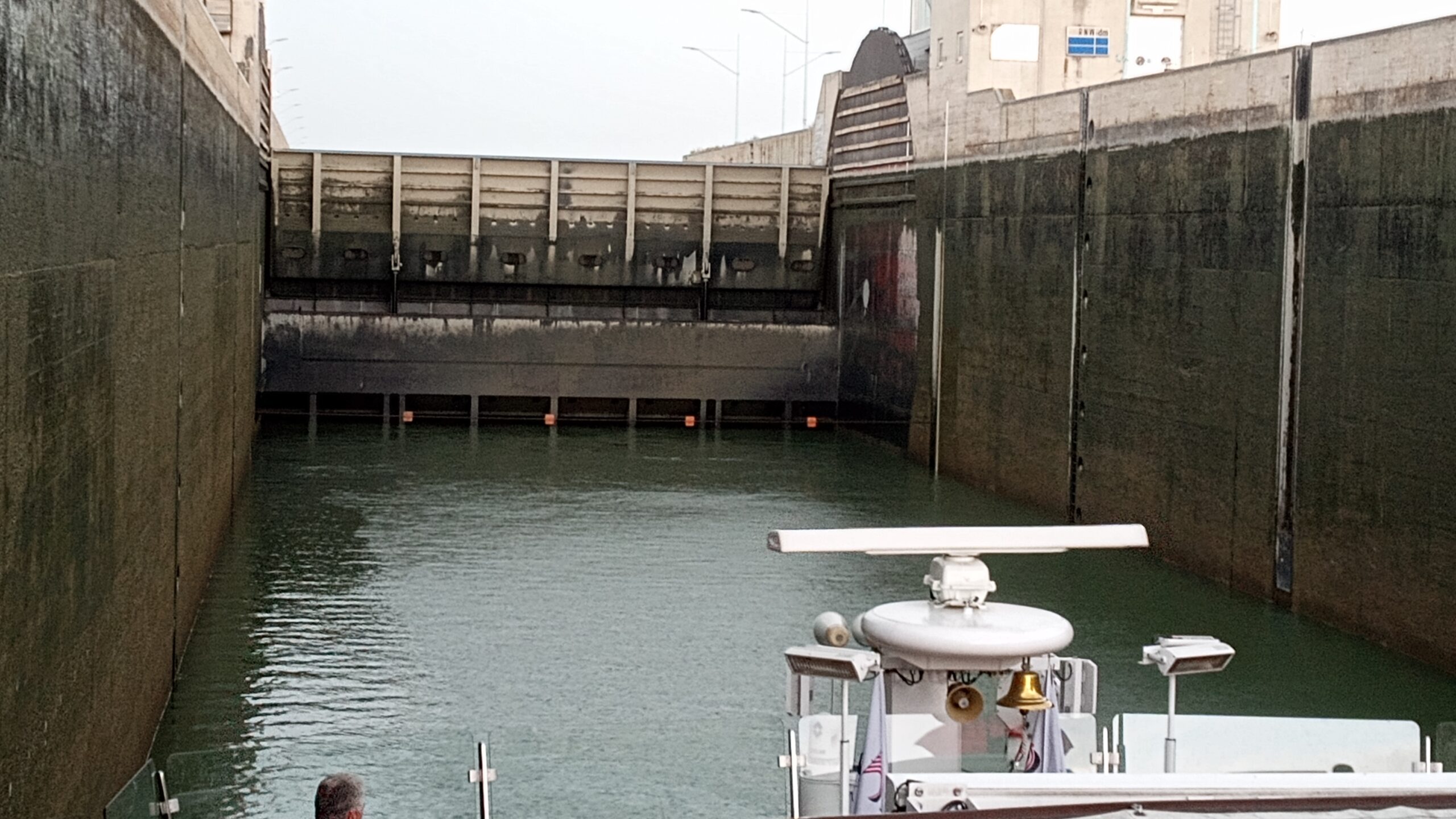
In the afternoon we went through another lock with
a dam off to the side. It took over 3 hours
to clear the lock.
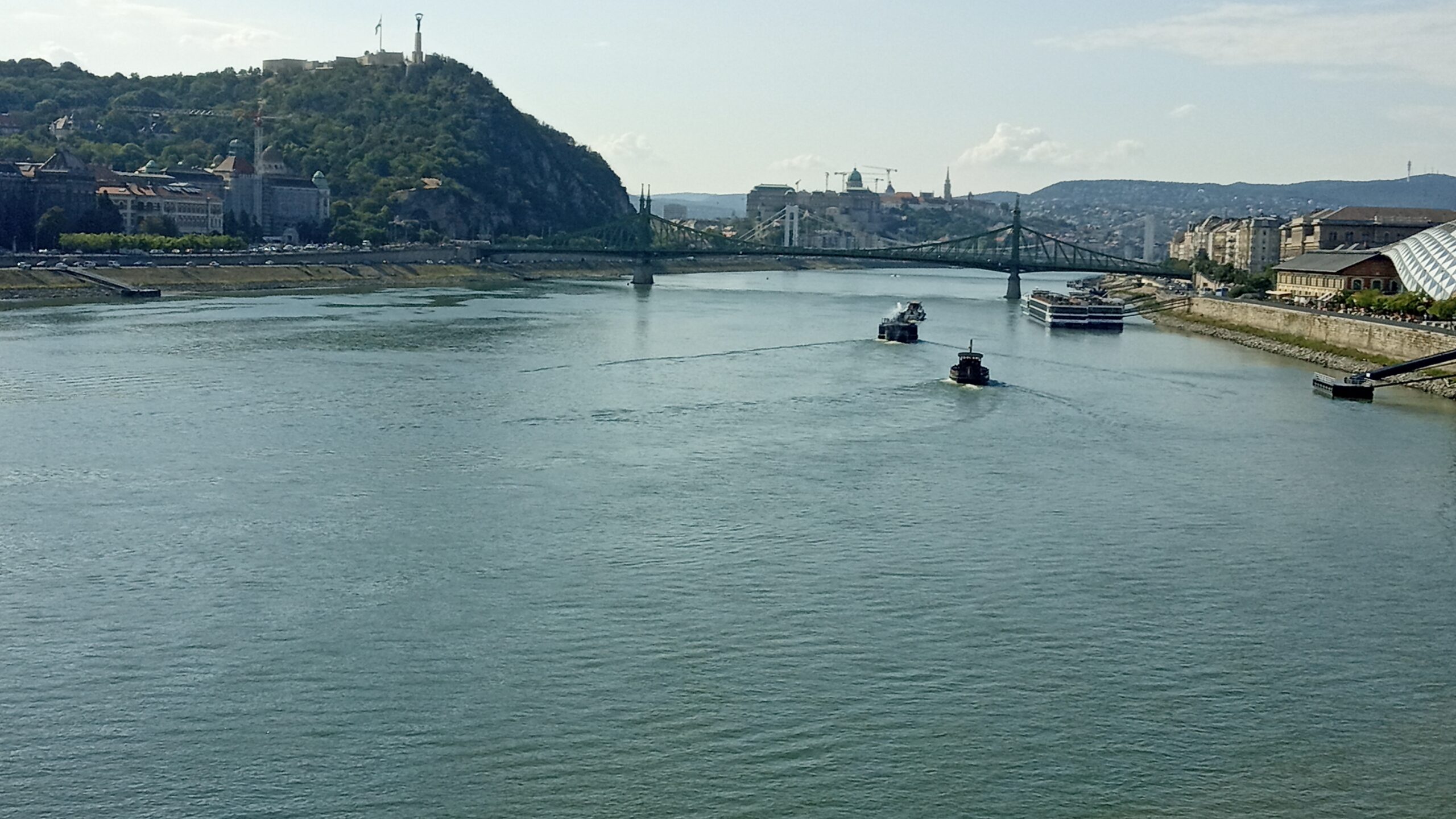
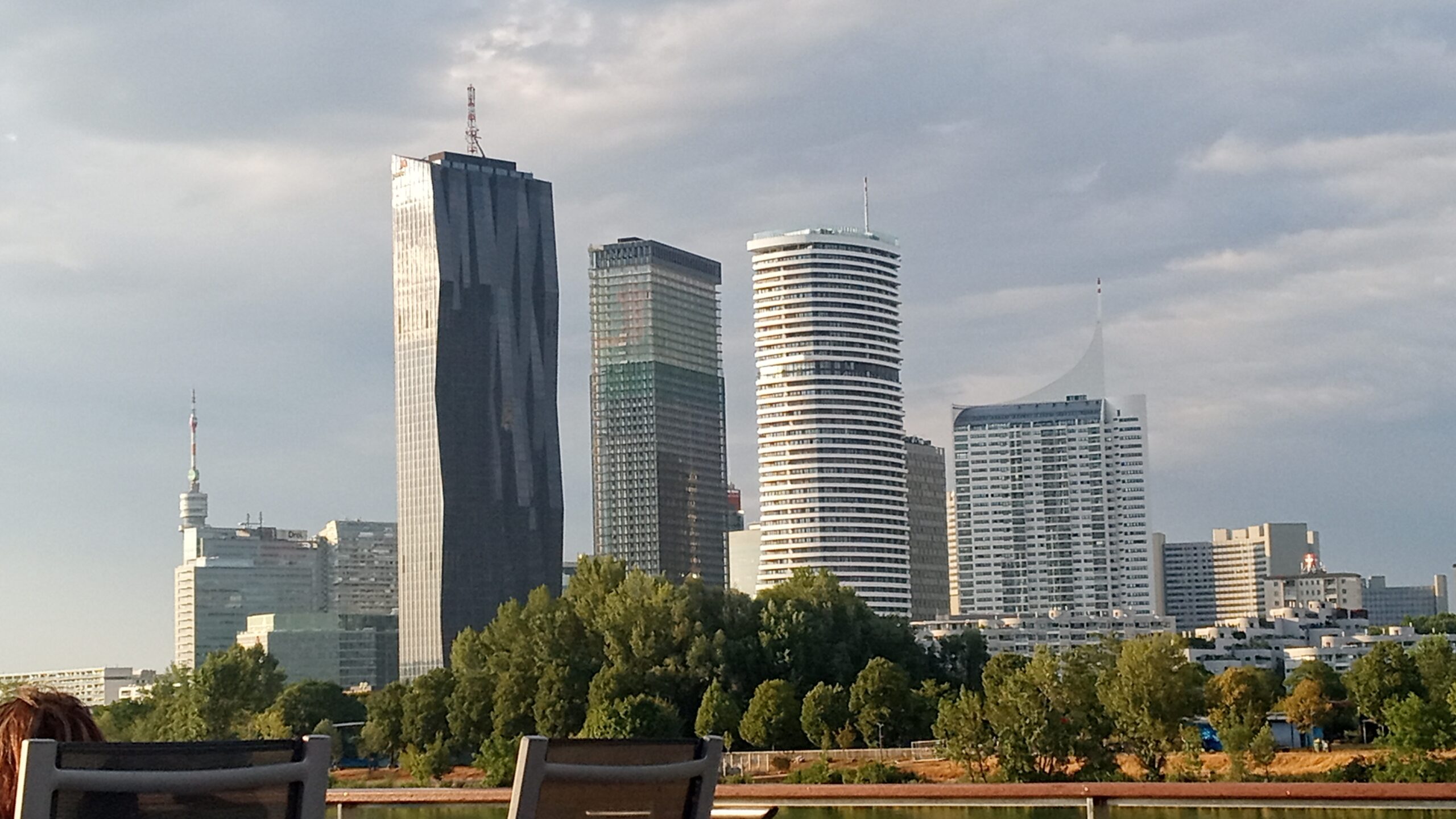
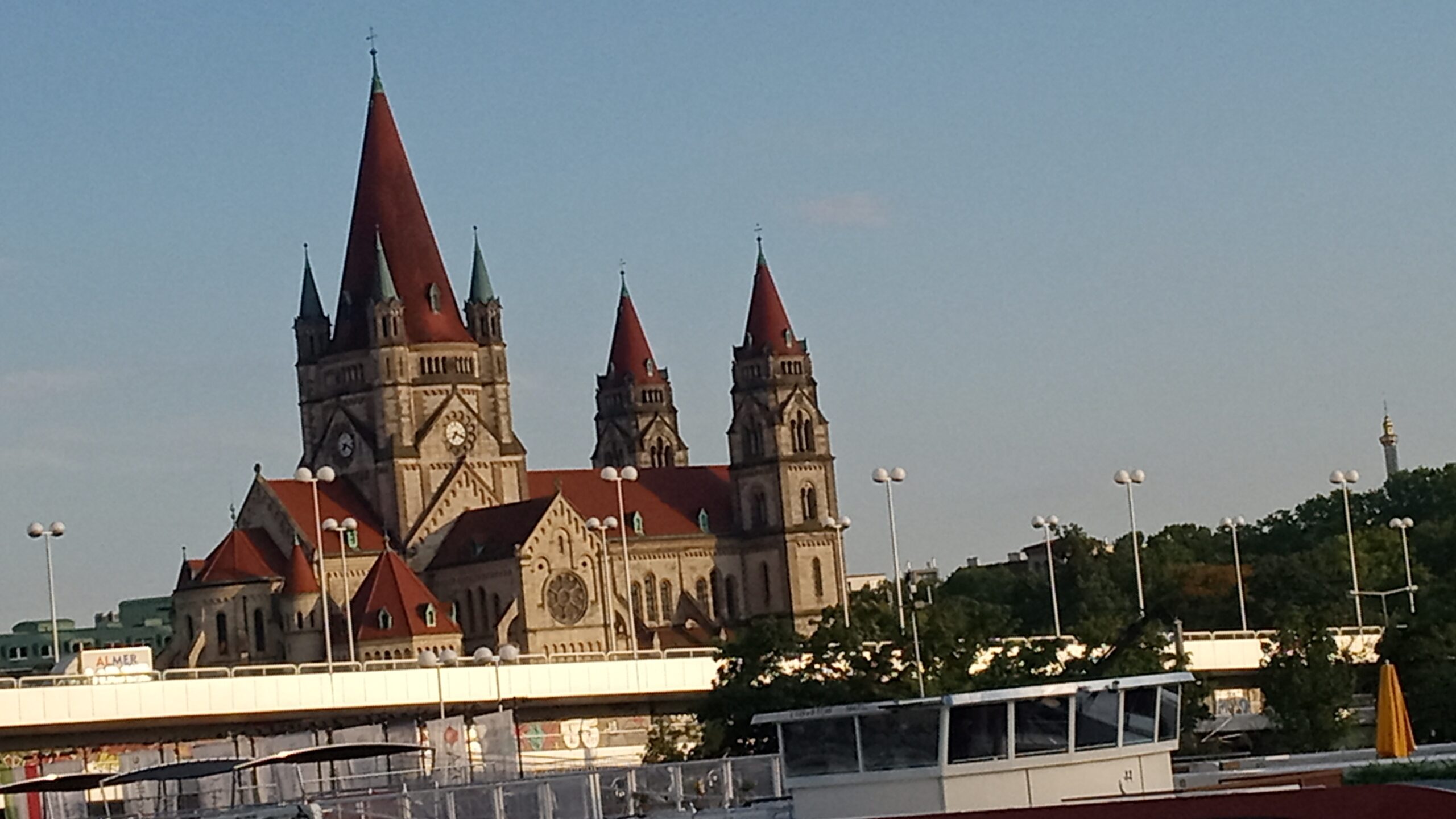
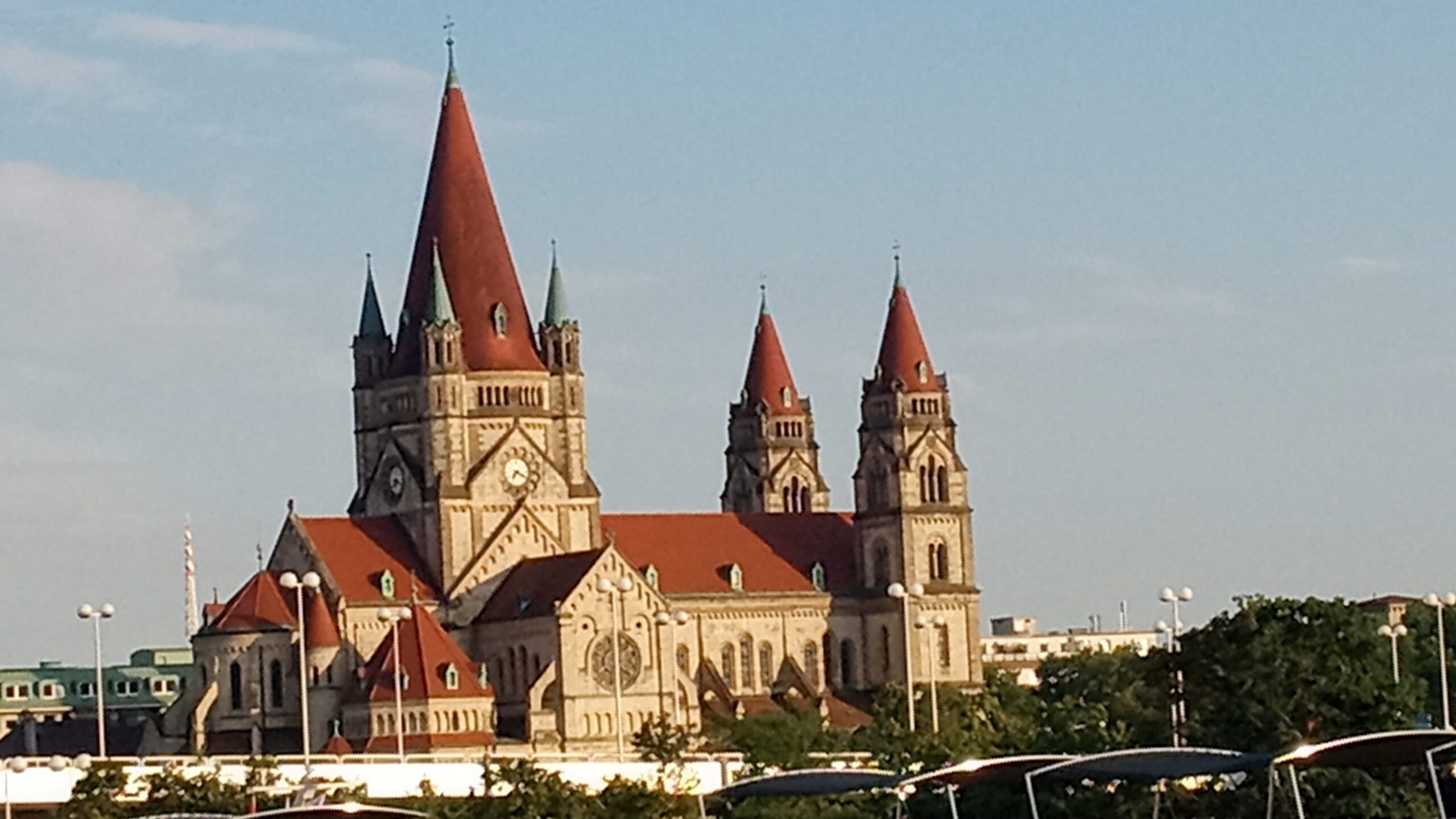
Sailing into Vienna was full of surprises. Their skyline
was real nice with tall, modern, futuristic buildings. Off
to the side was a classic Gothic church called St. Francis.
We also sailed under a bridge where the Viking guests on
the top level were told to stay seated because of the low
clearance. The ship even lowered its own control tower
to squeeze under.
Just after dinner we arrived in Vienna, Austria. We chose
not to attend an expensive classical concert. However,
with a city map, we found out that there was a popular
amusement park a few miles from where our ship the
Lif was docked.
With the help of another couple who were going the
same way, we got on the Vienna subway system and took
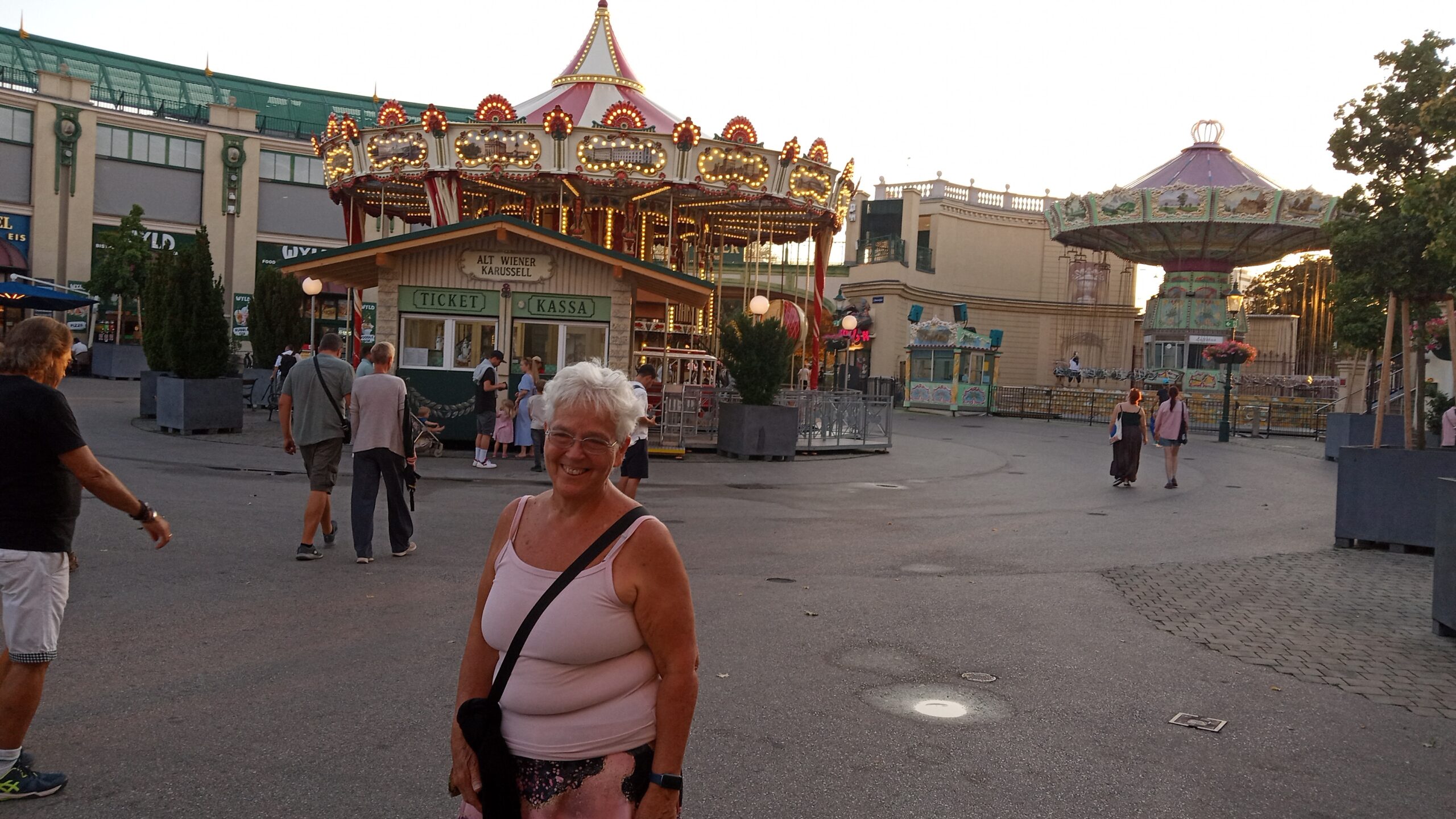
a short train ride. We then bumped into an innercity
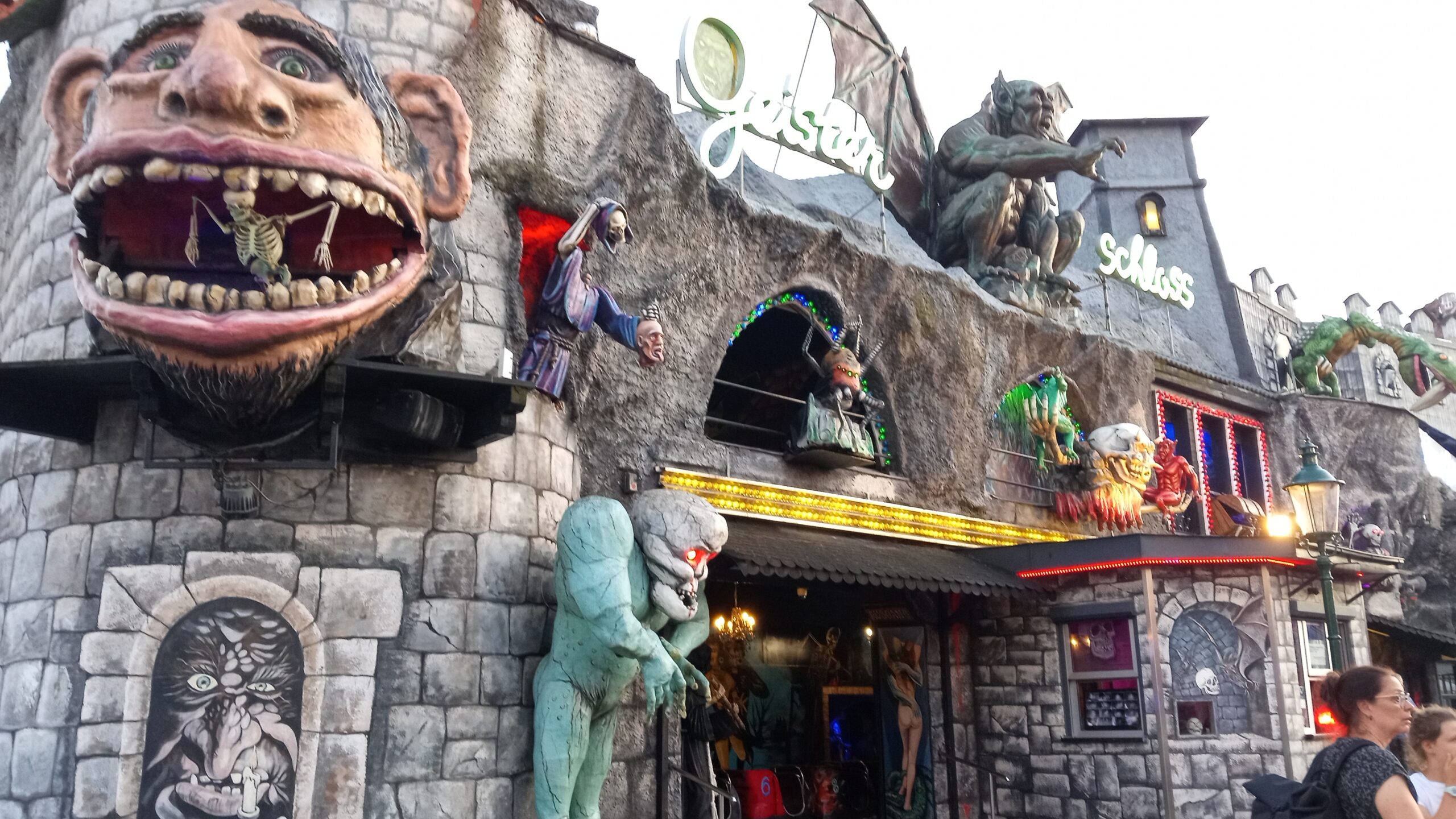
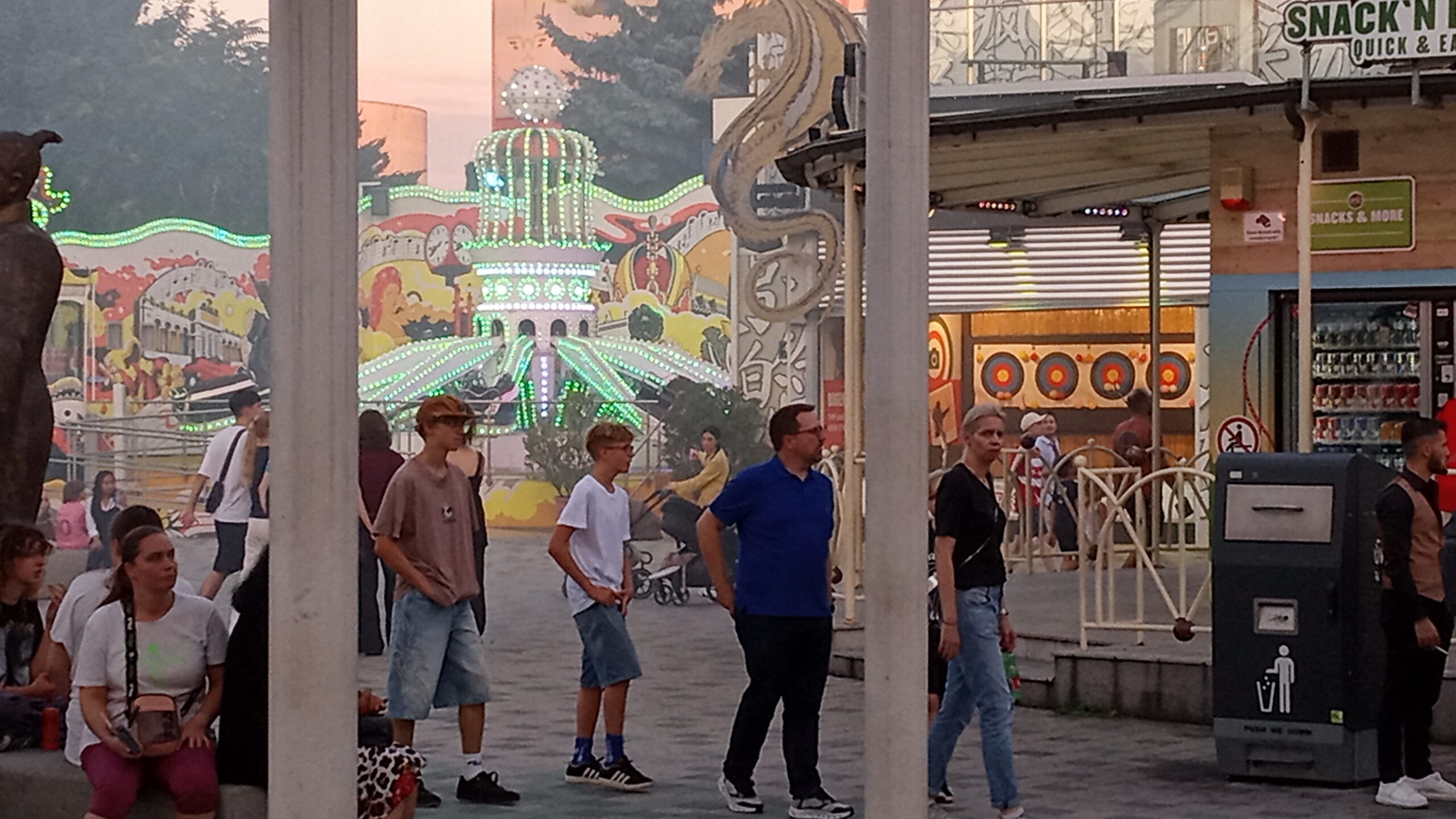
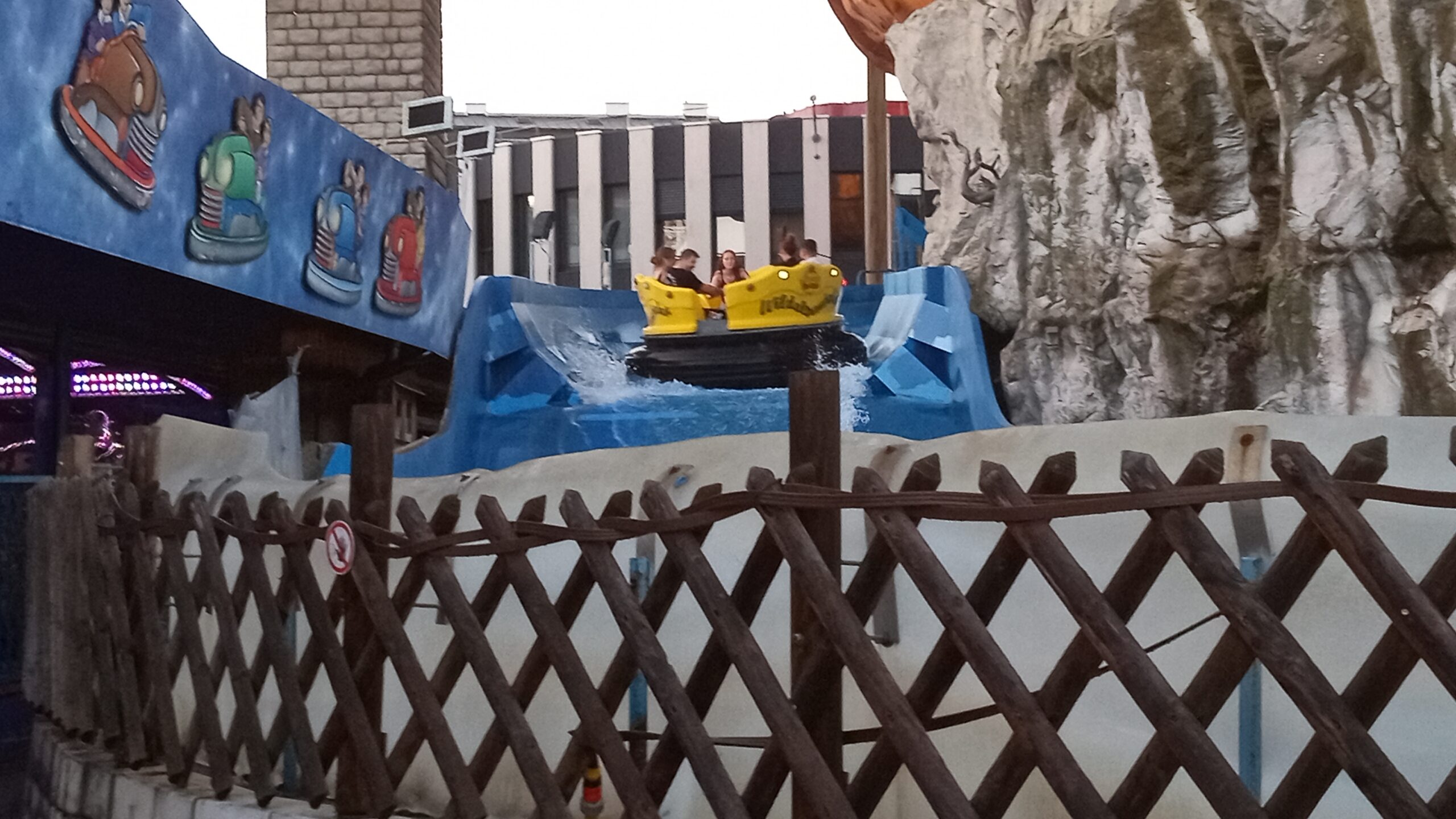
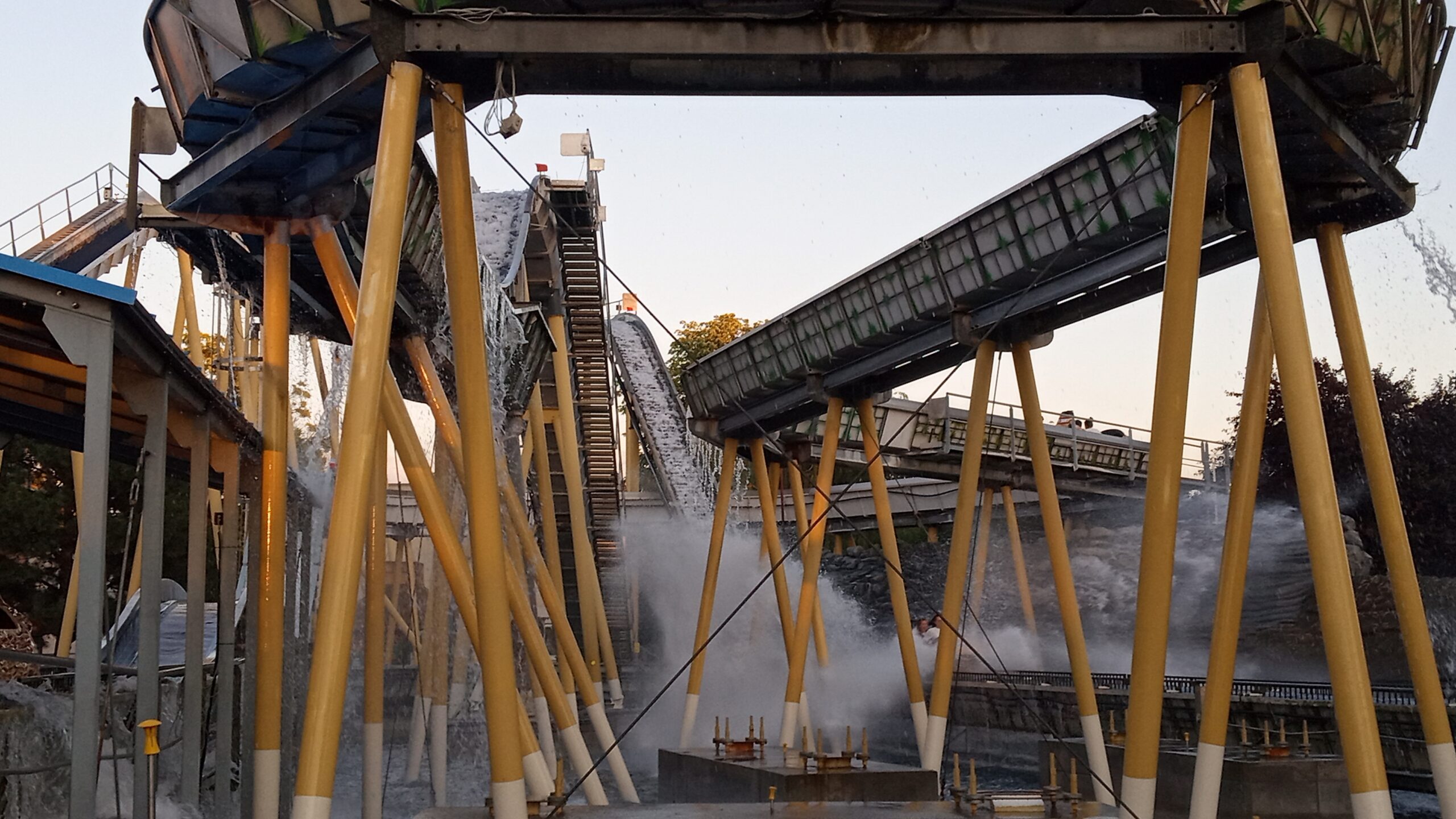
amusement park. It was crowded but full of carnival rides
for all ages. Families, teens and adults all were lining up
to take amusement thrill rides of all types – much like
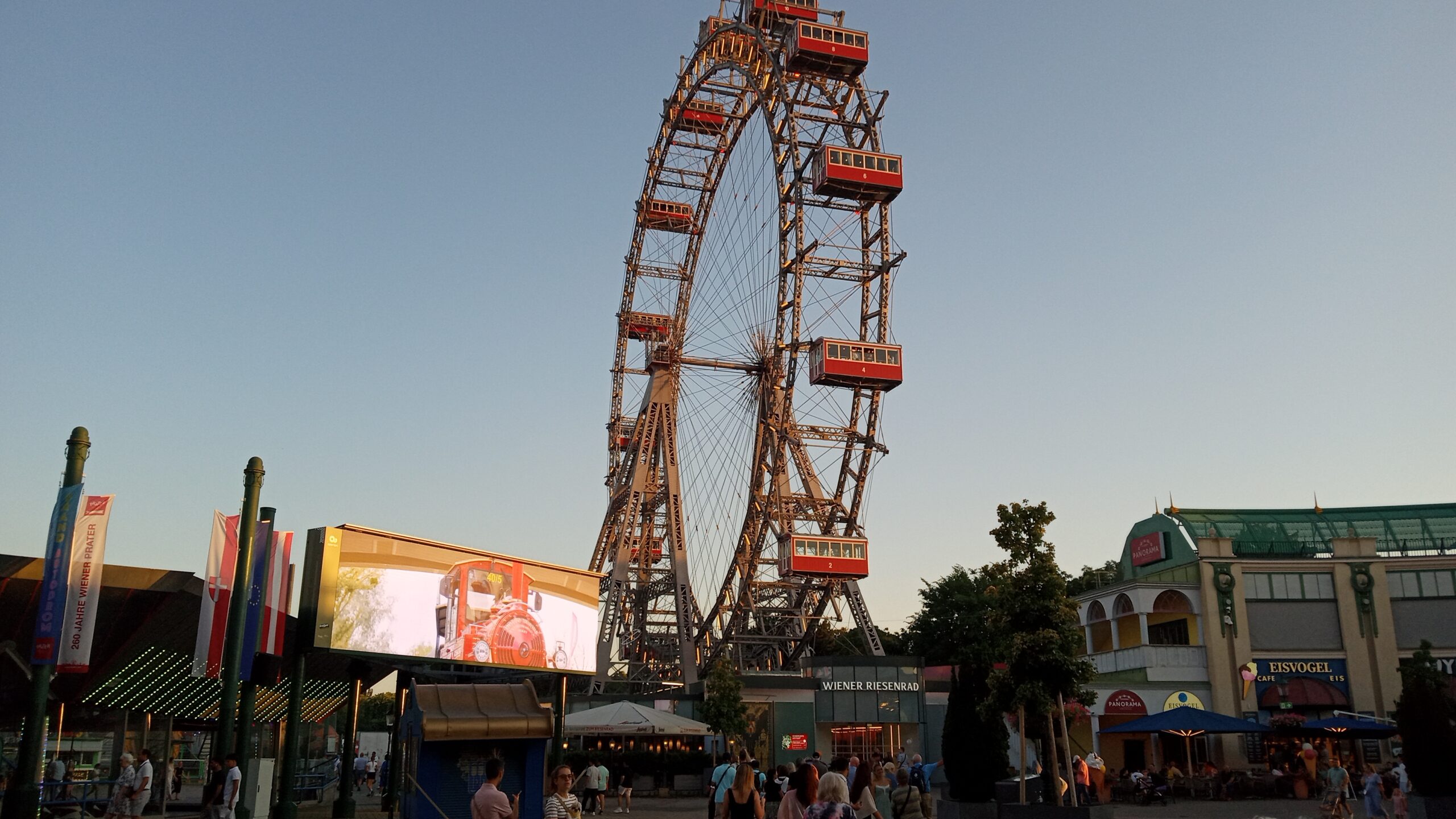
Disneyland – but more compact. With lights flashing, a
huge Ferris wheel, a house of horror, muliple roller
coasters of all types, water rafting rides, bumper cars,
rides that spun, lifted up and down, concession stands
and enough visual and noise stimulation to overload
anyone. We walked through it all.
We then took the subway back to our ship.
More of Vienna tomorrow.
Day 15
Vienna, Austria
Saturday, July 18
Panoramic Vienna
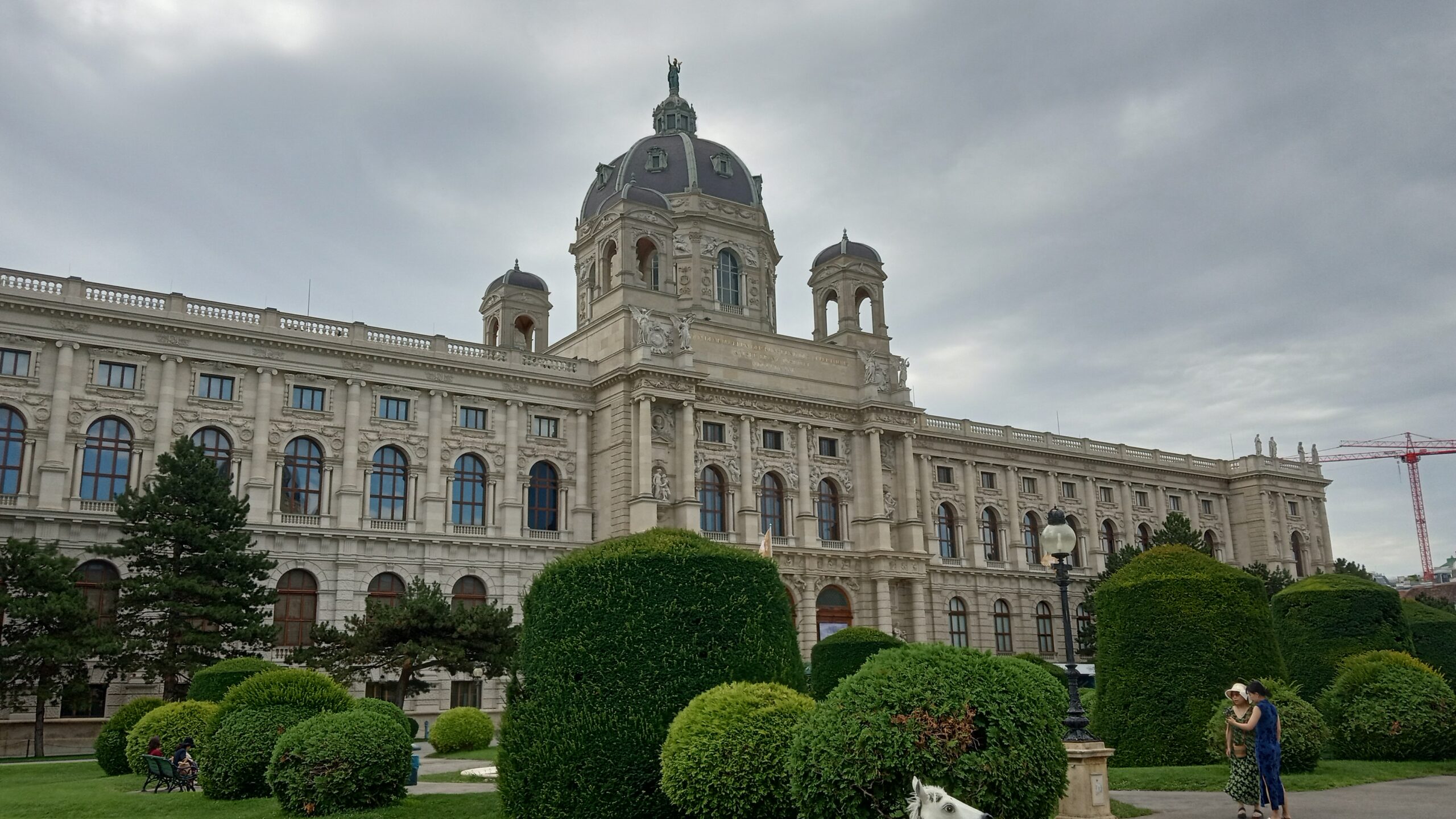
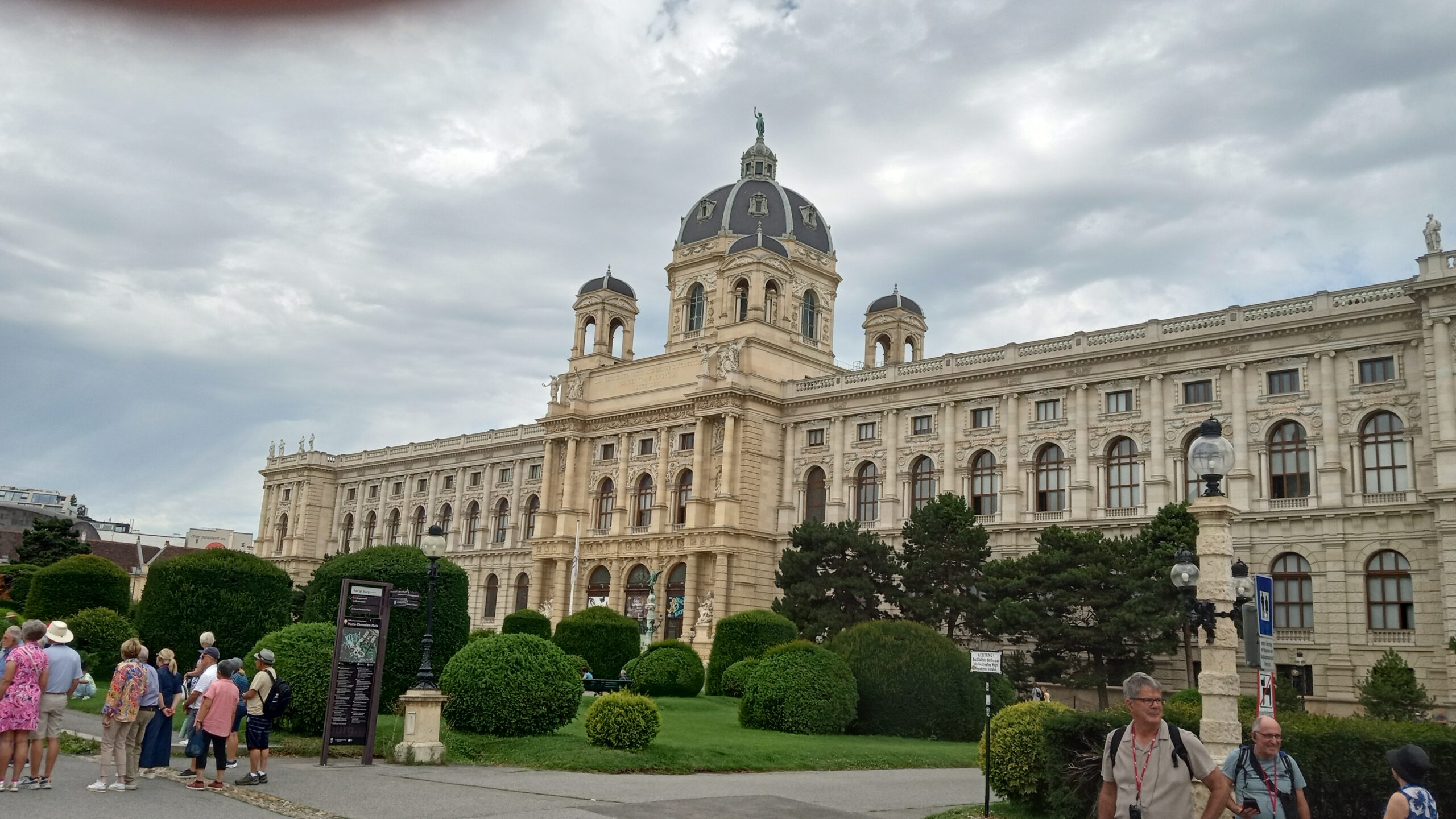
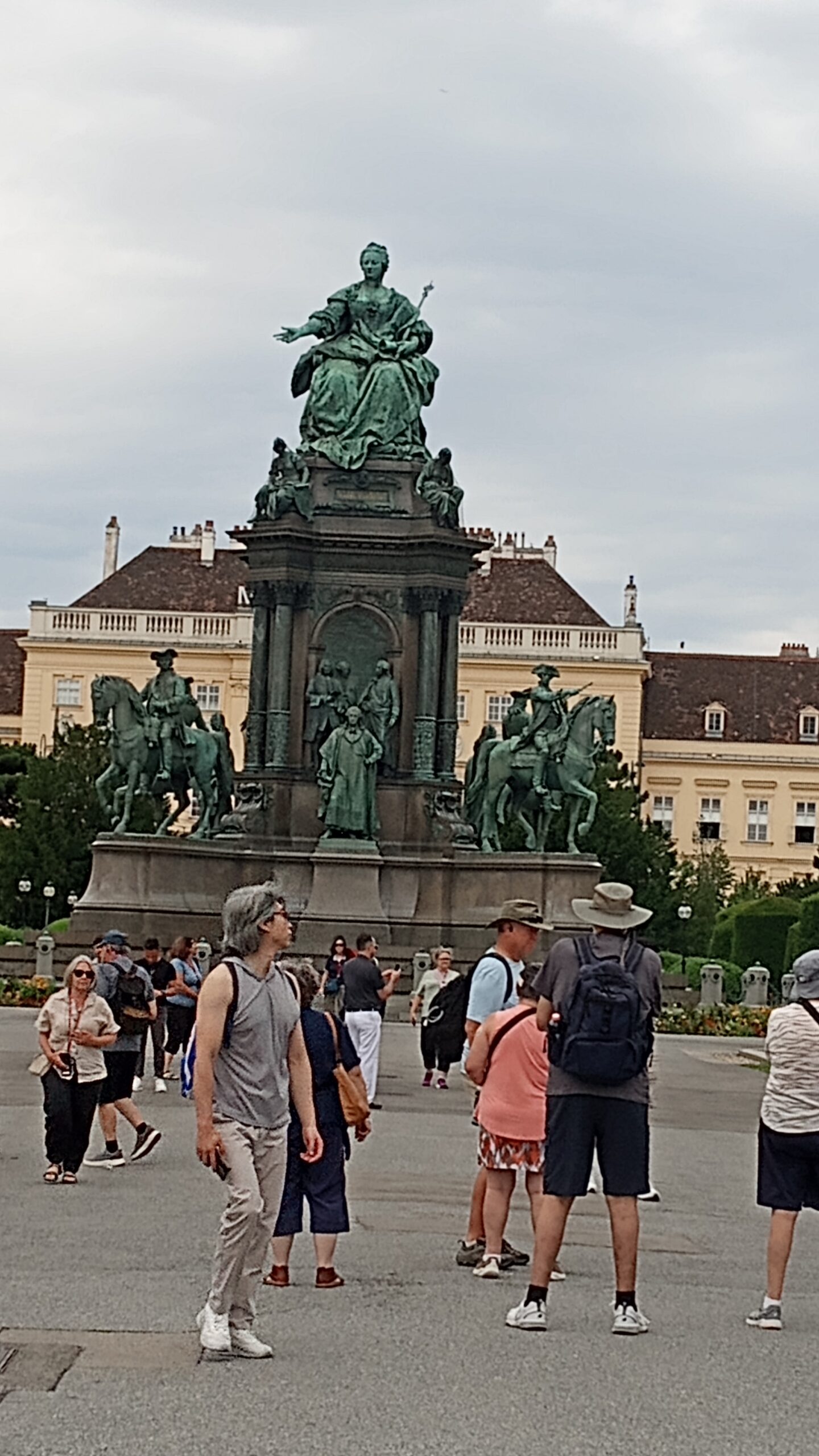
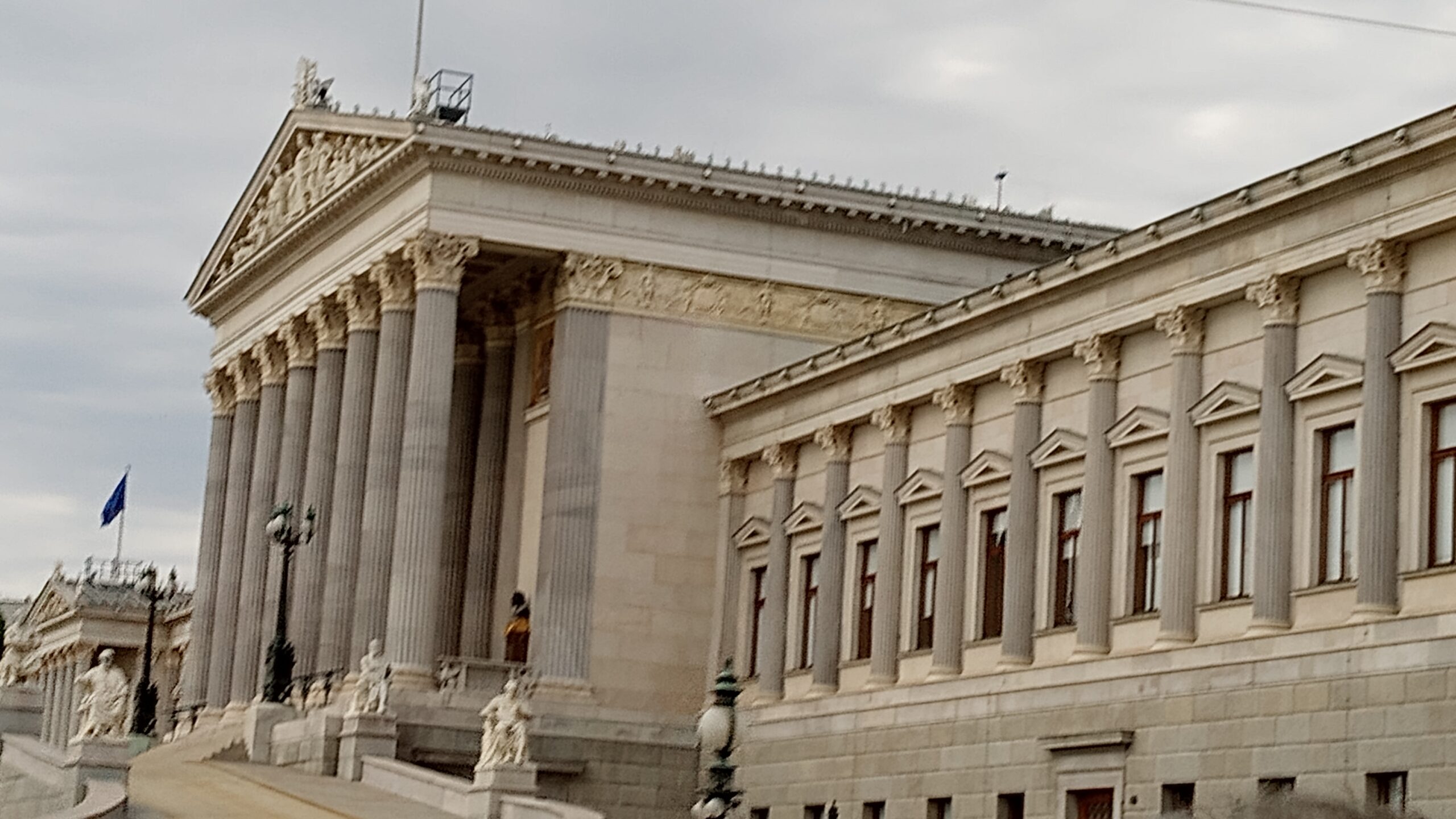
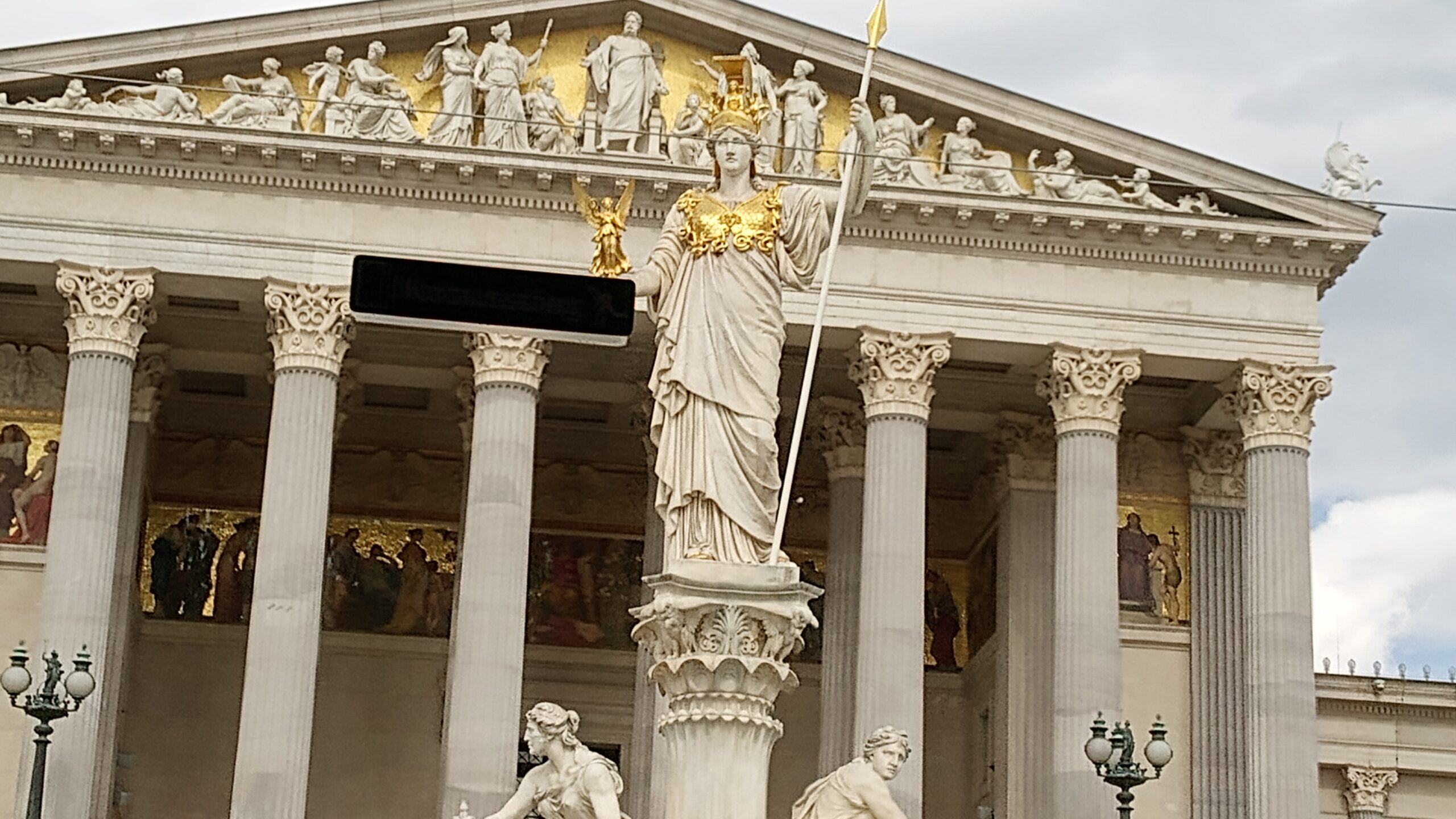
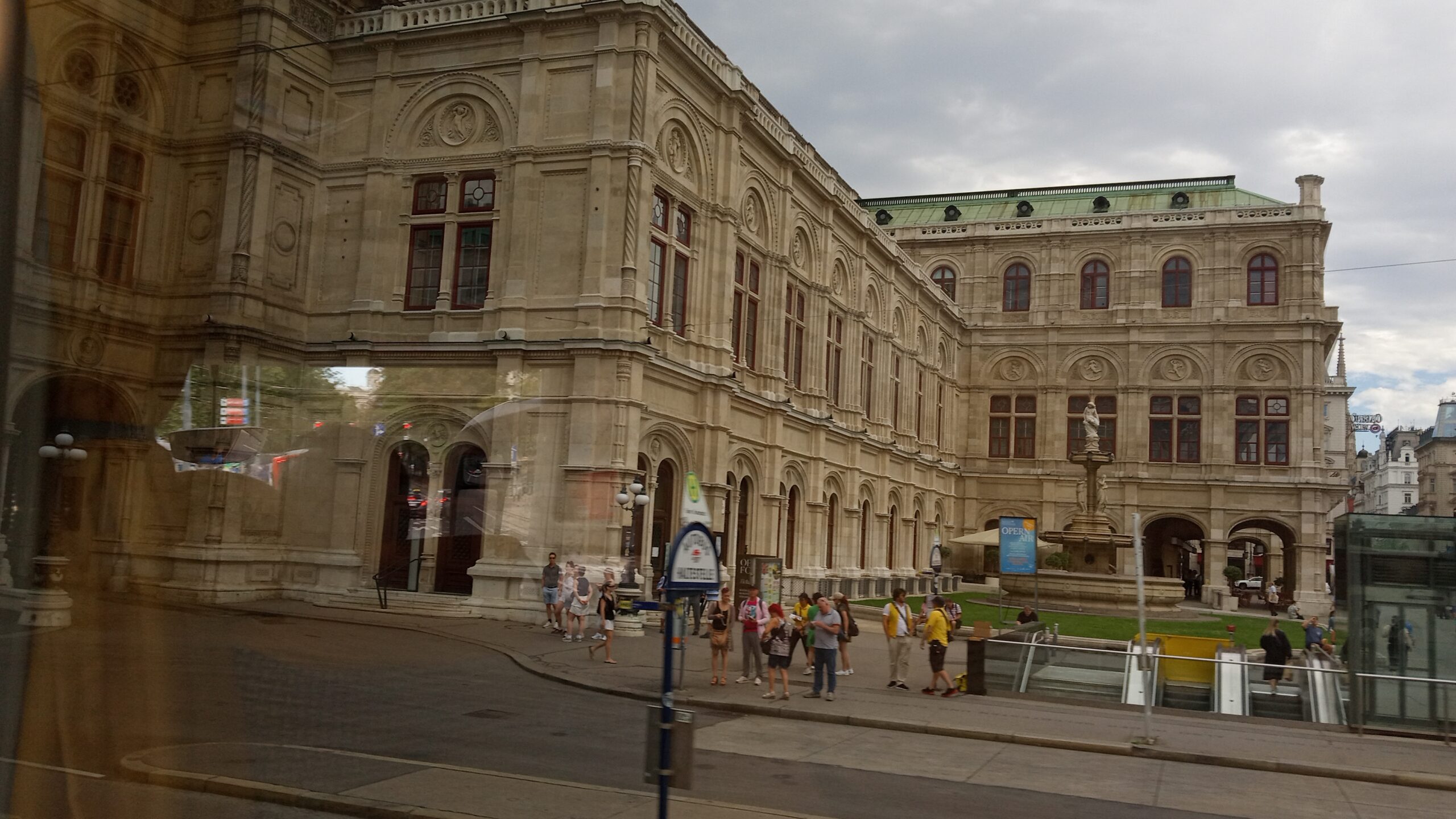
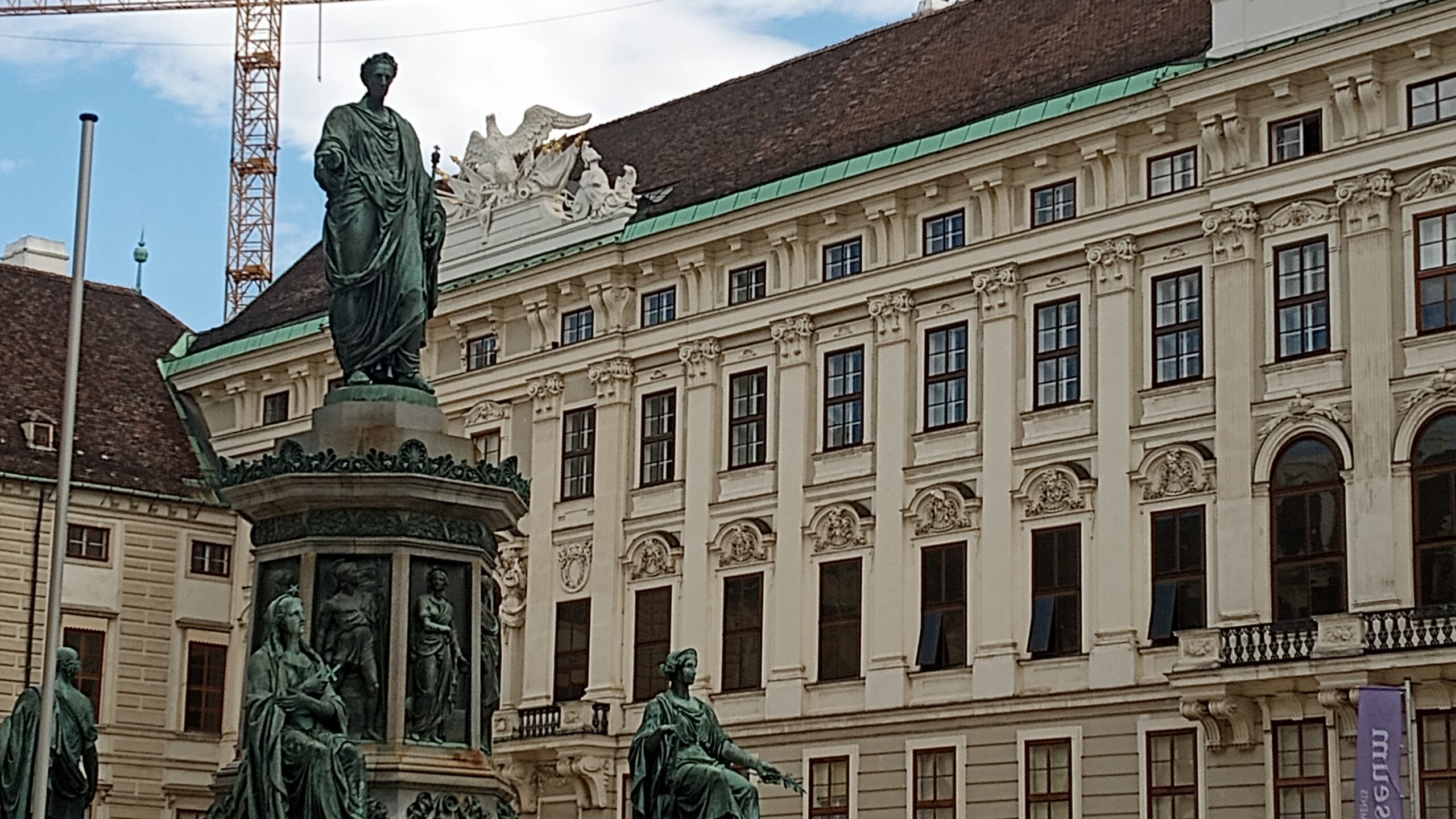
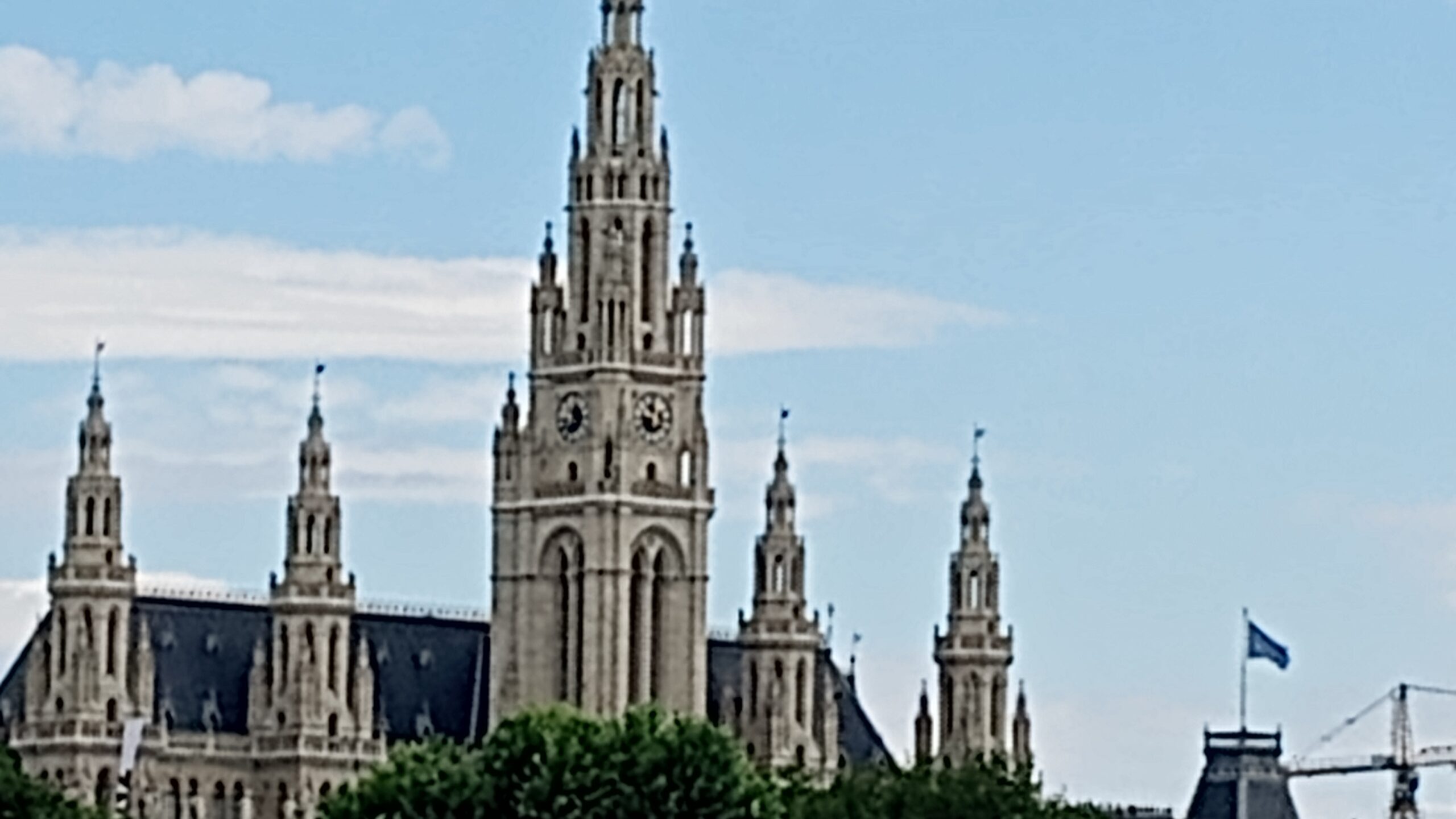
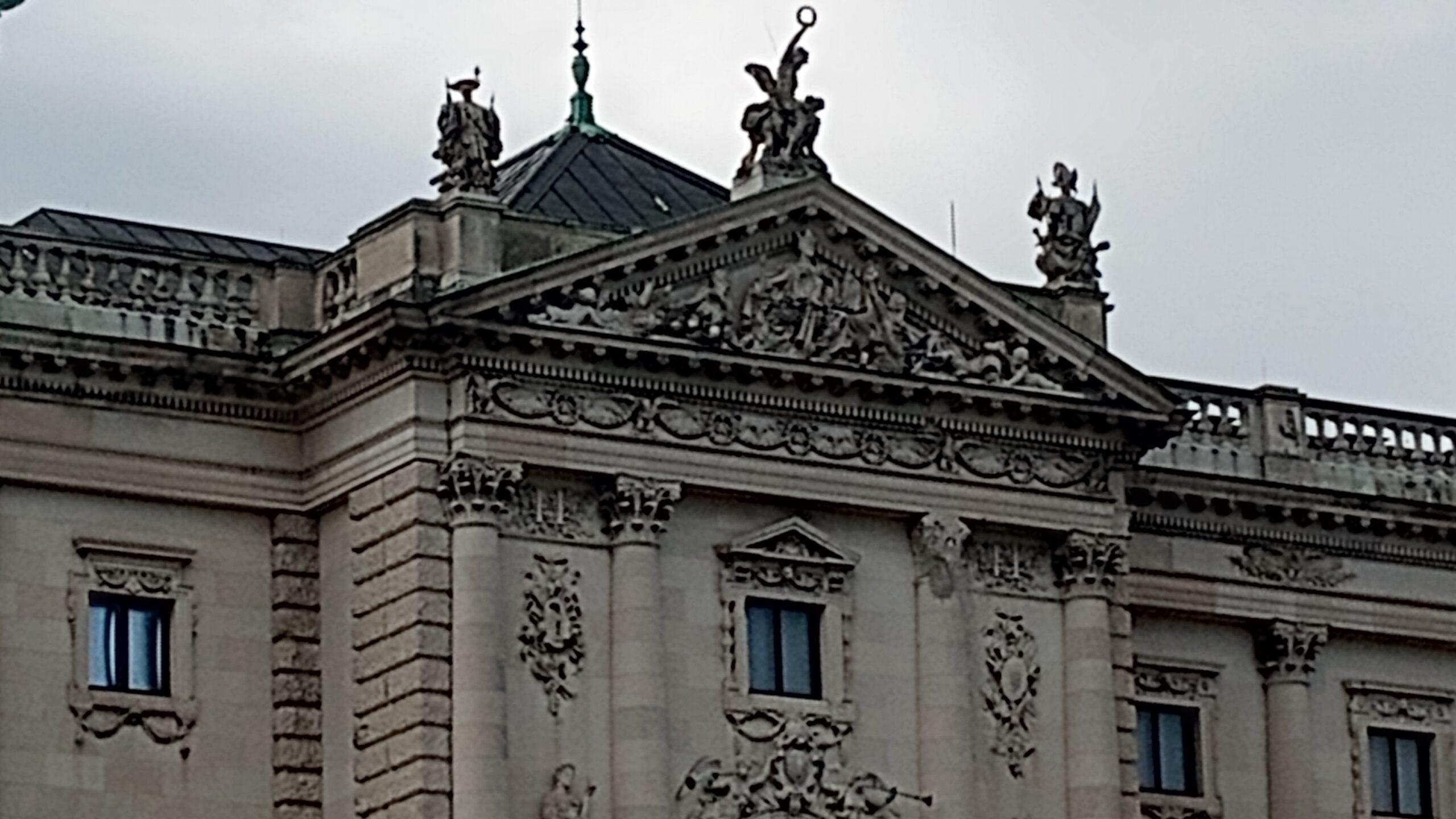
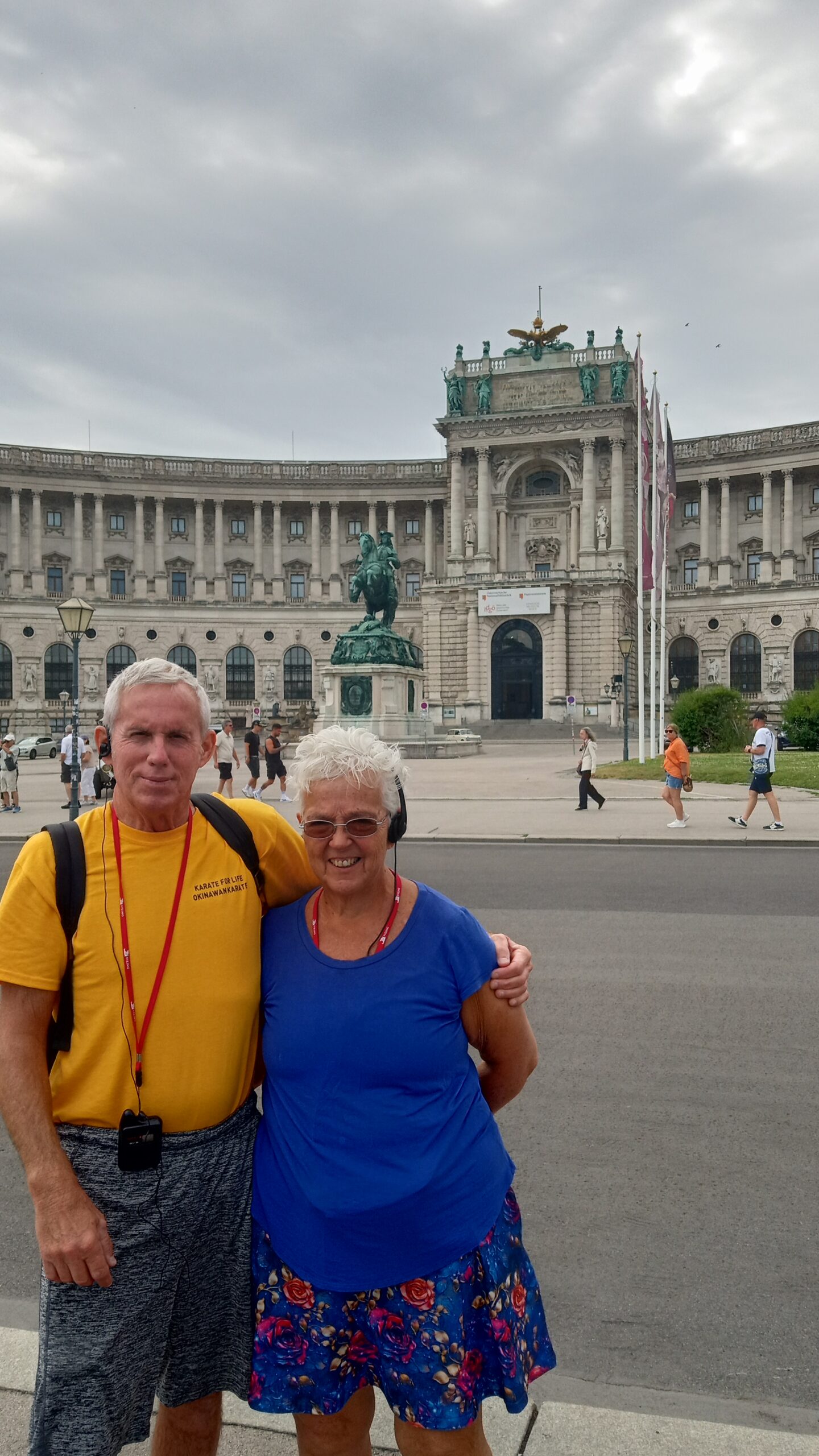
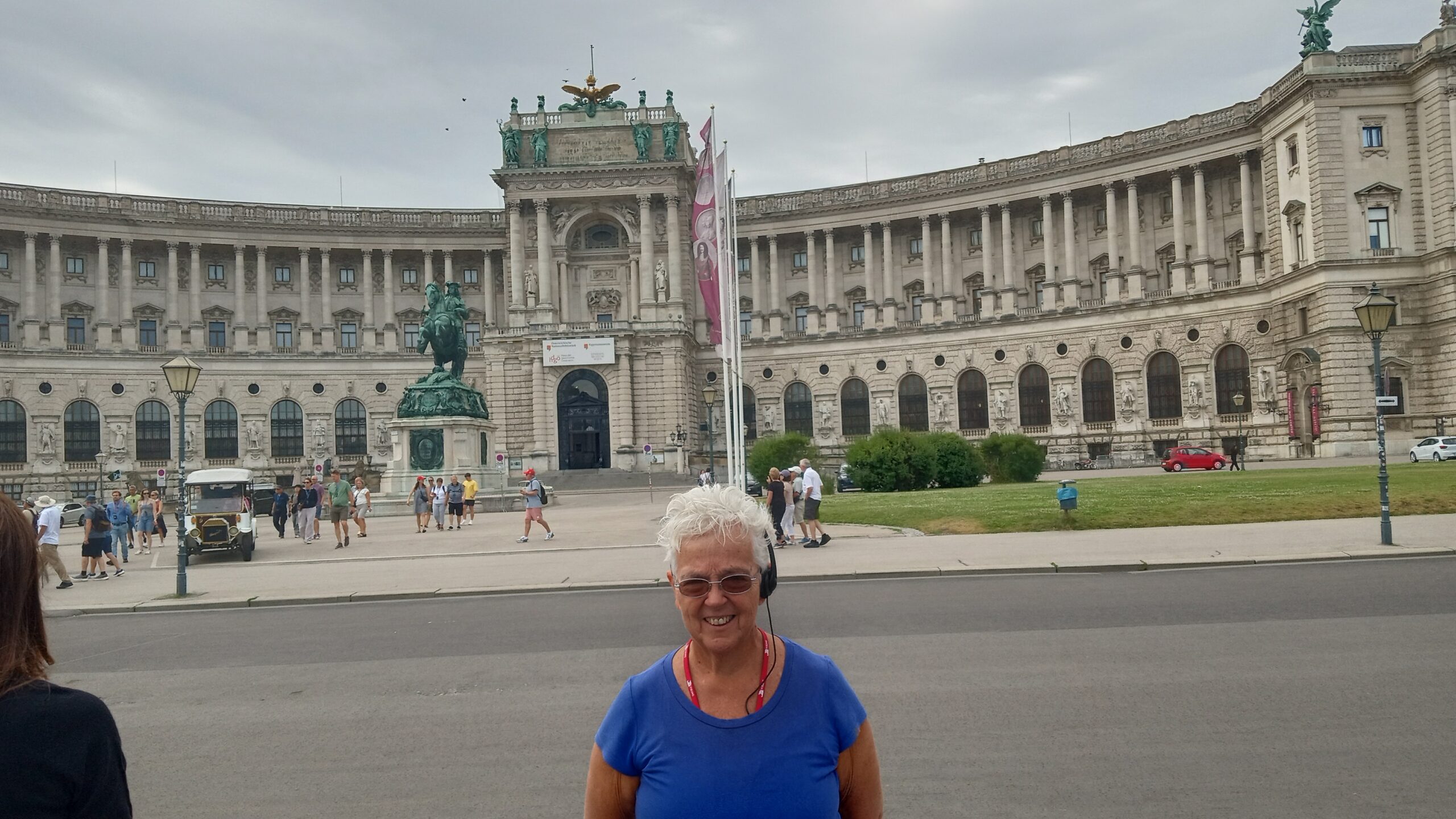
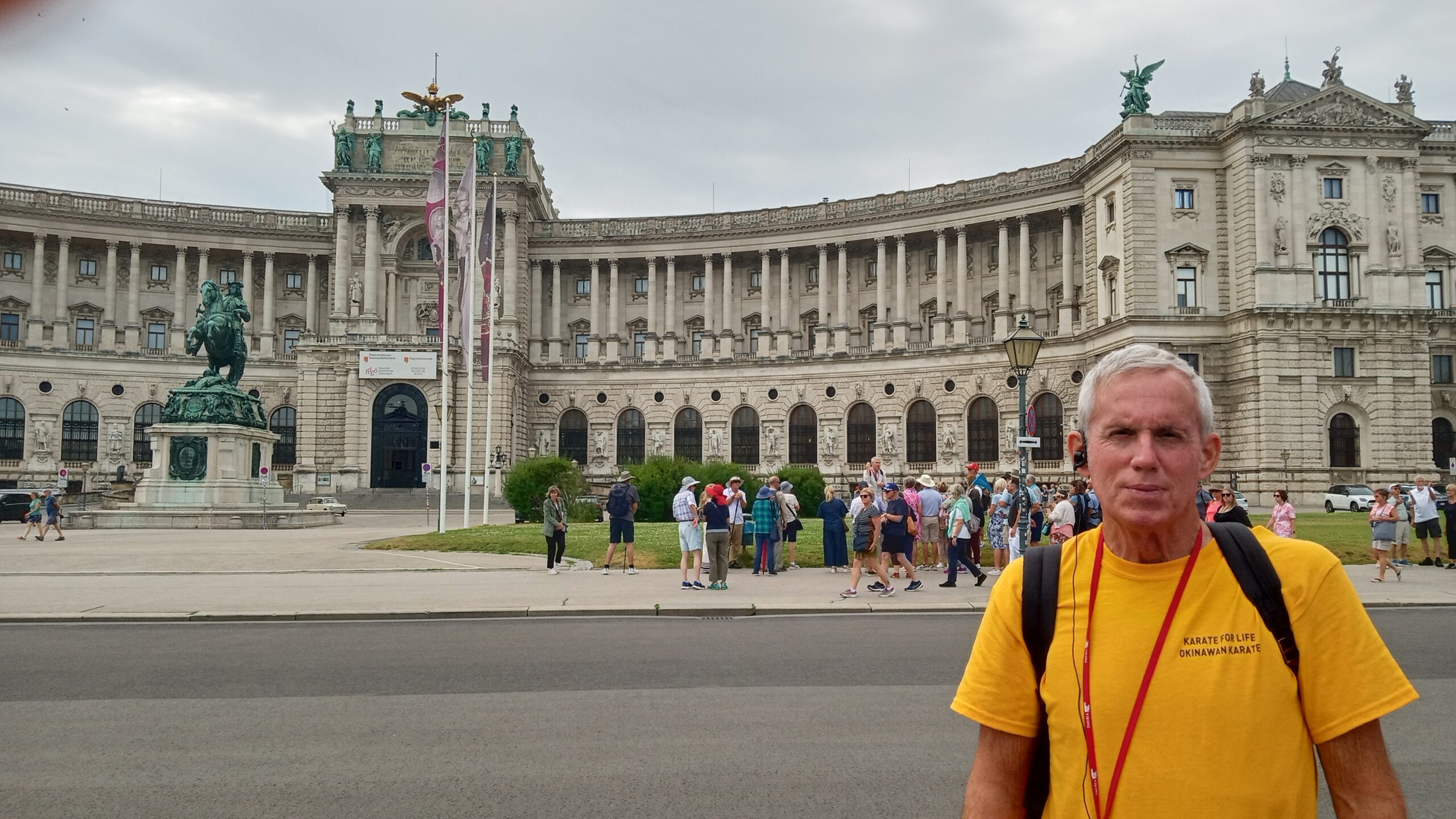
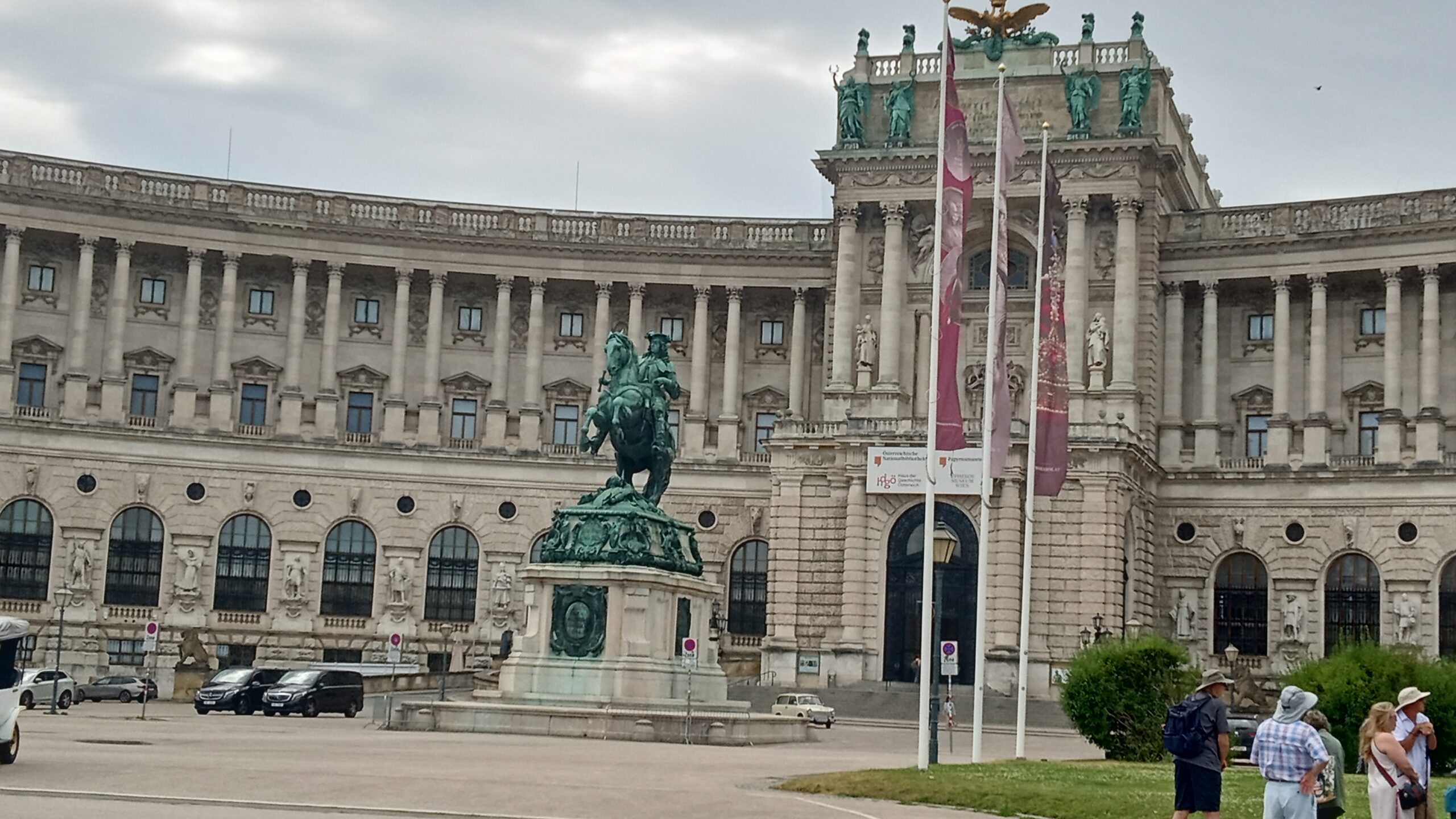
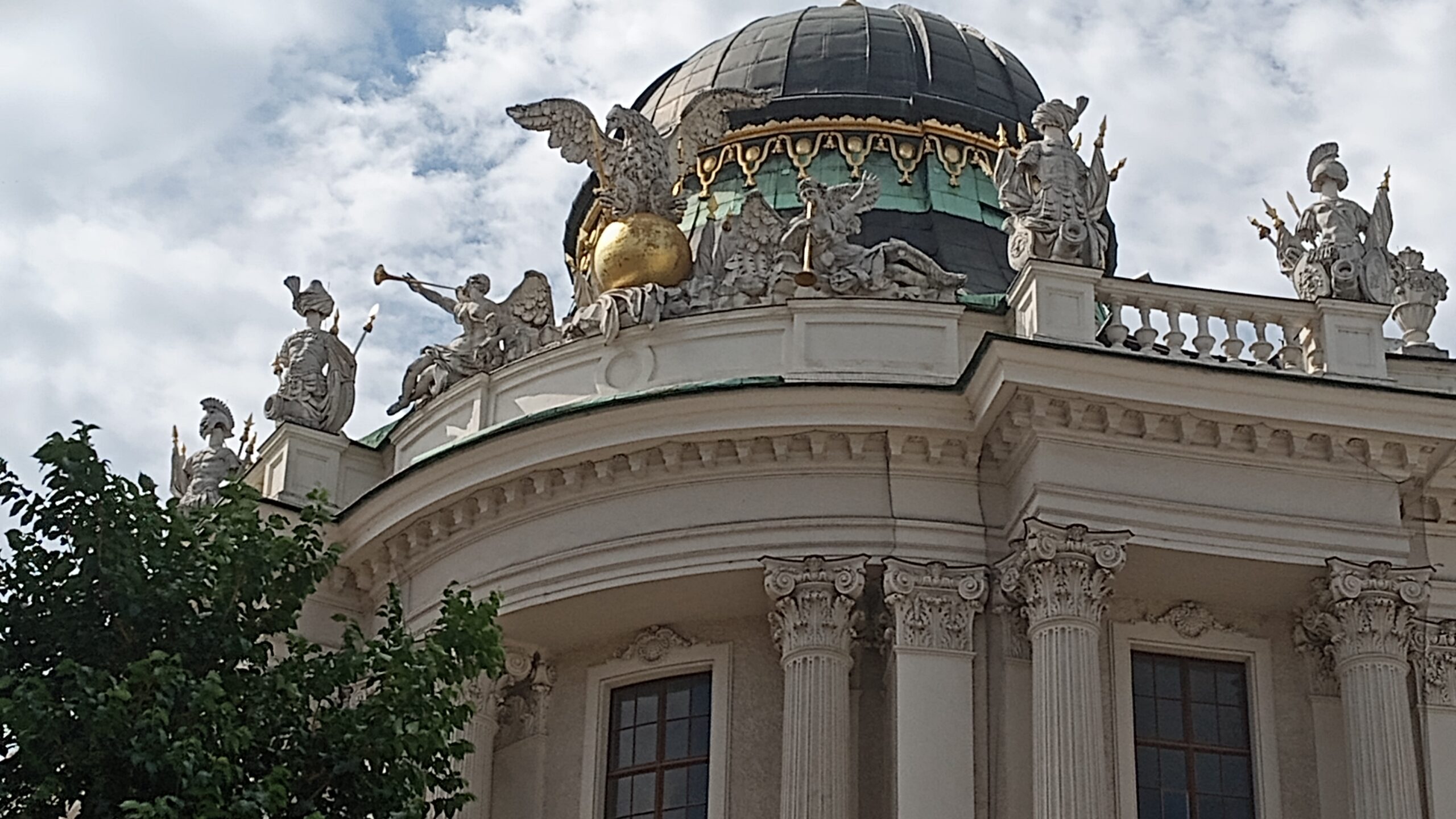
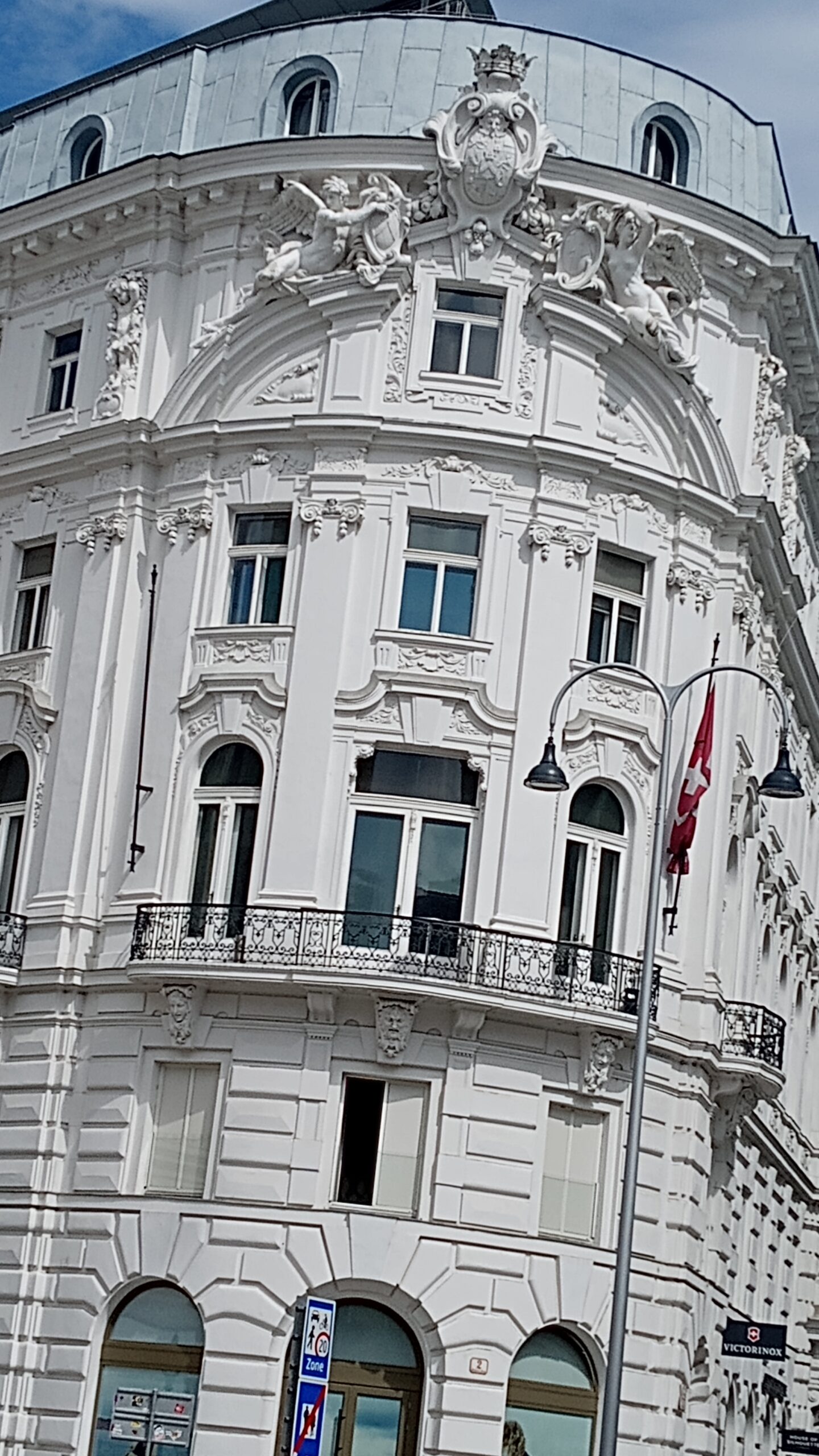
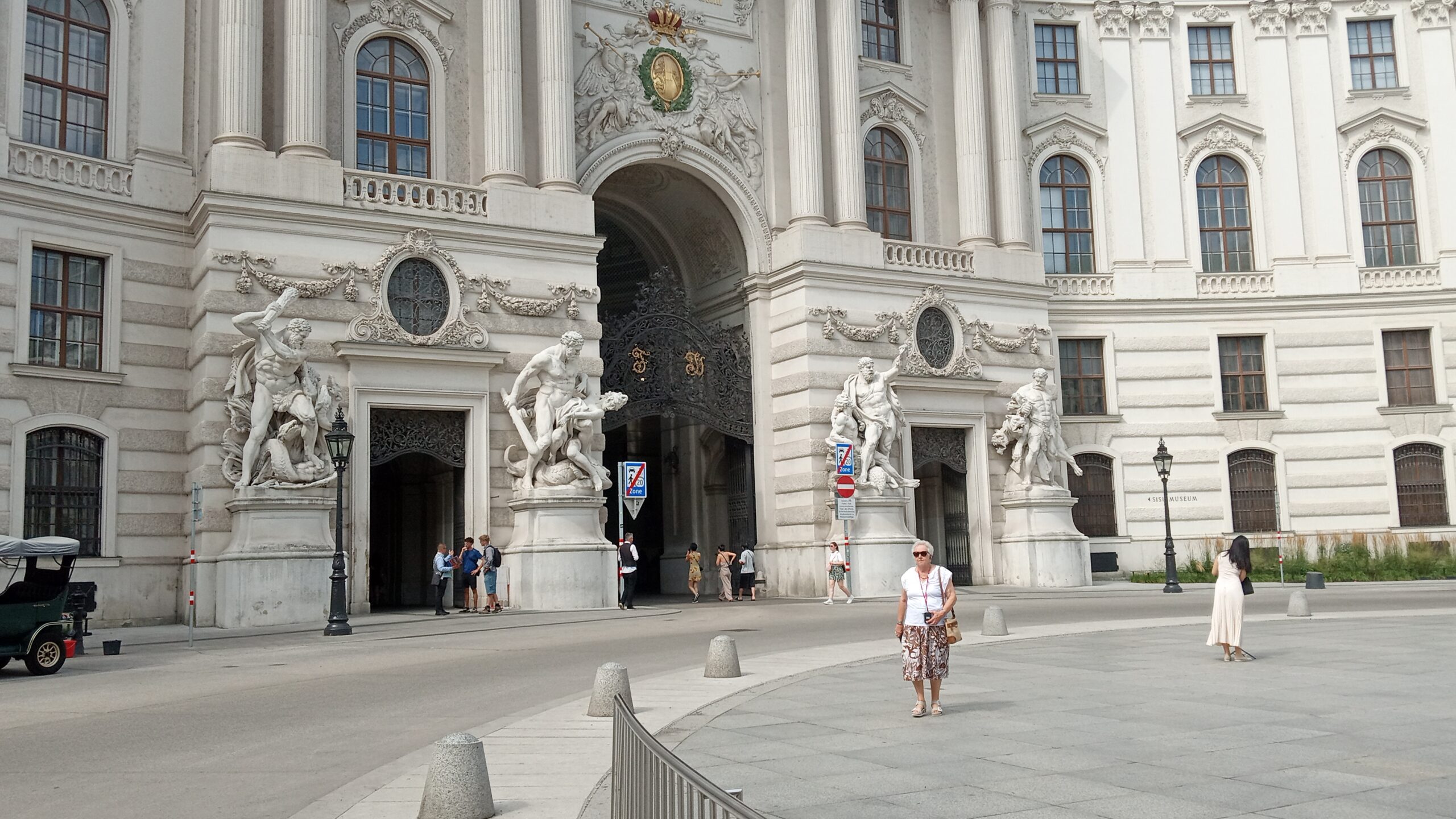
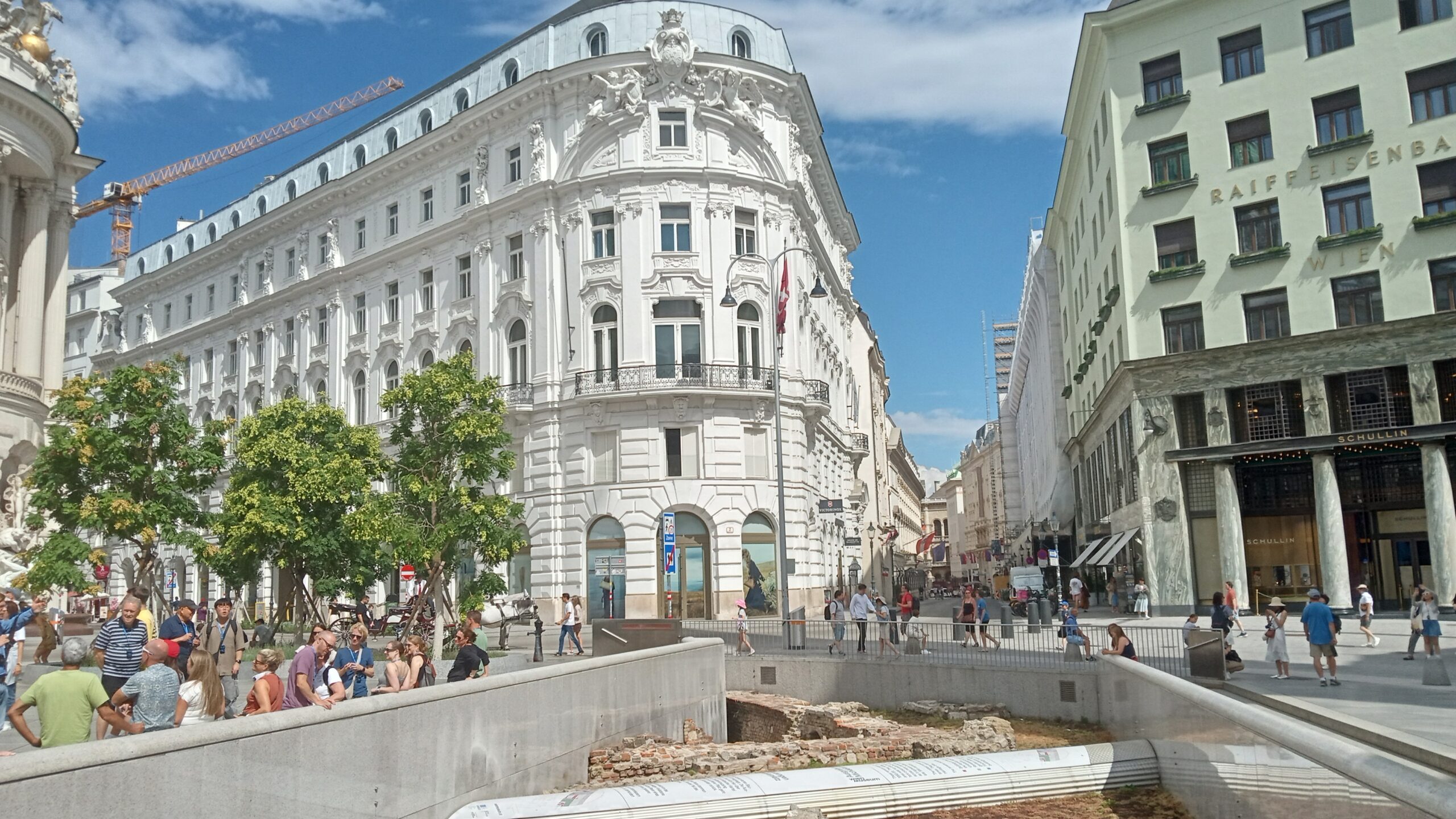
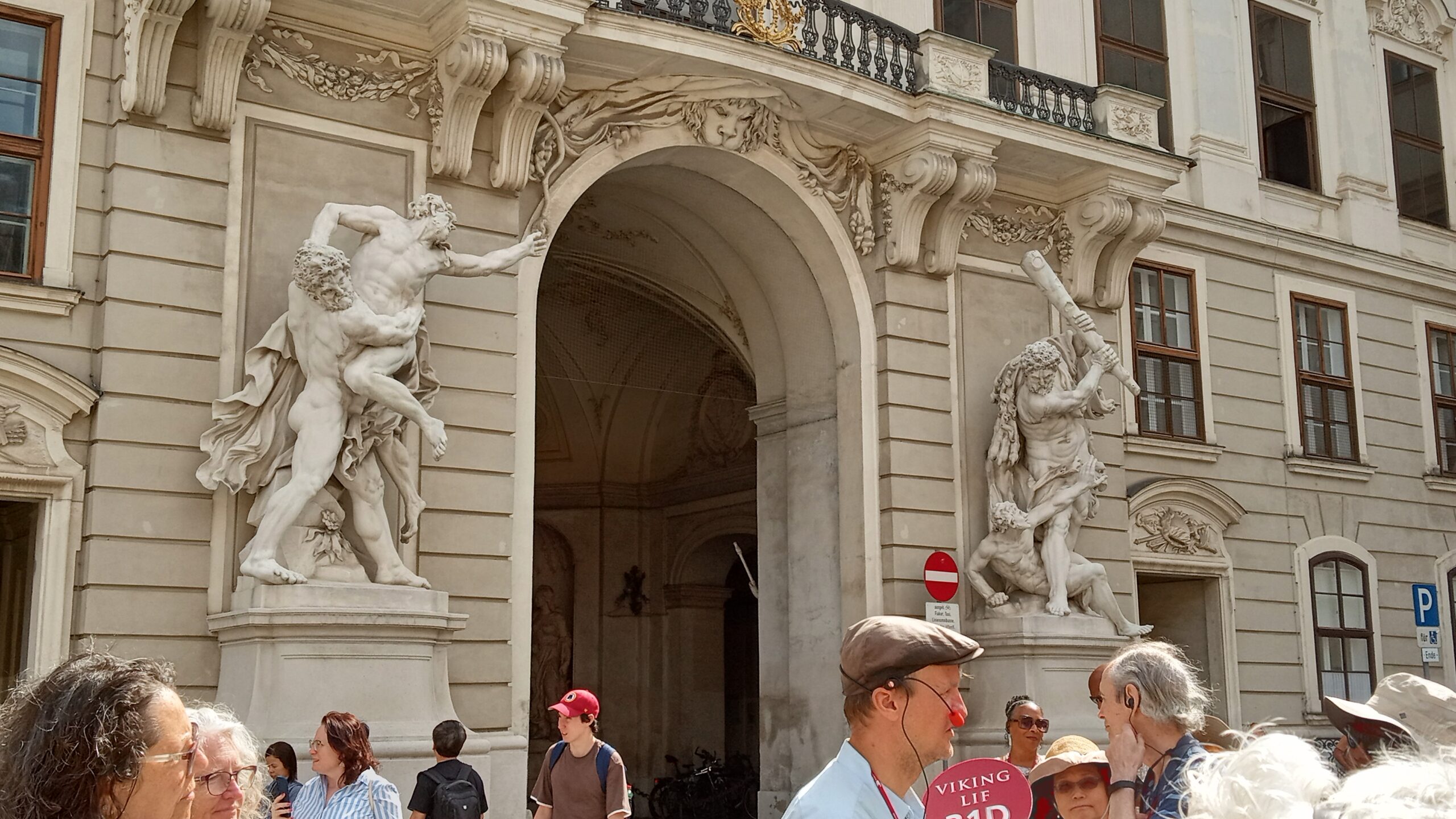
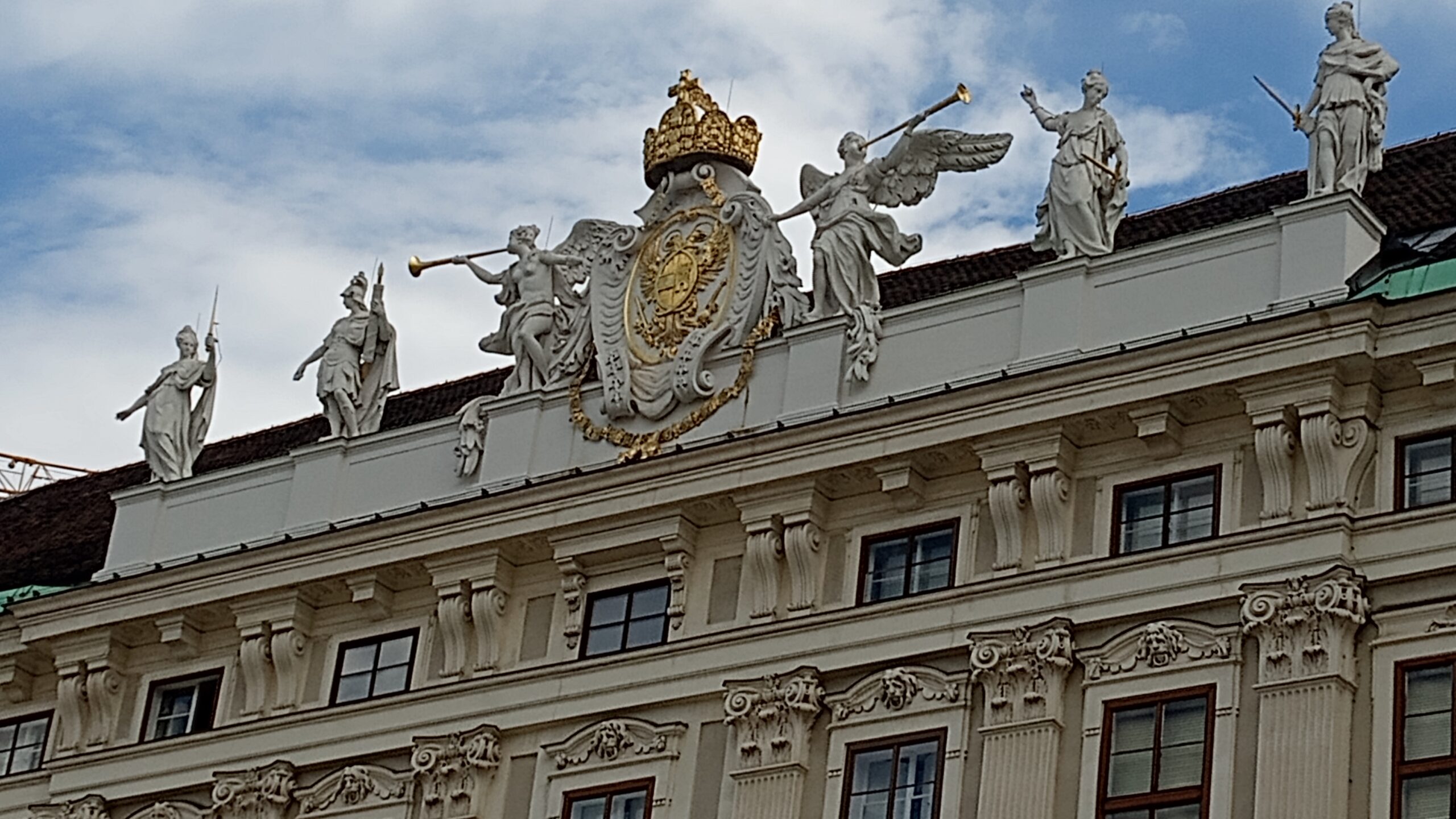
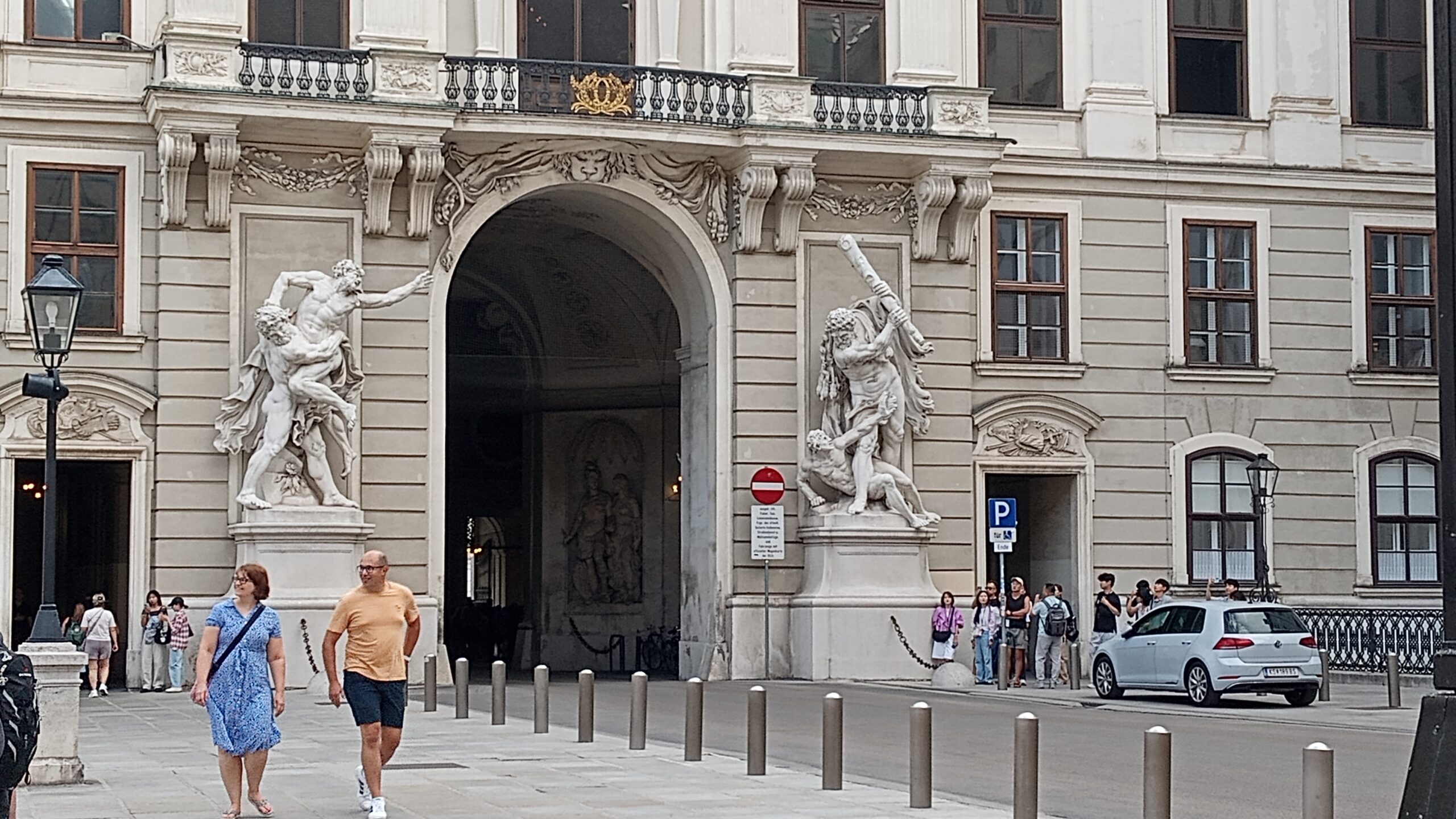
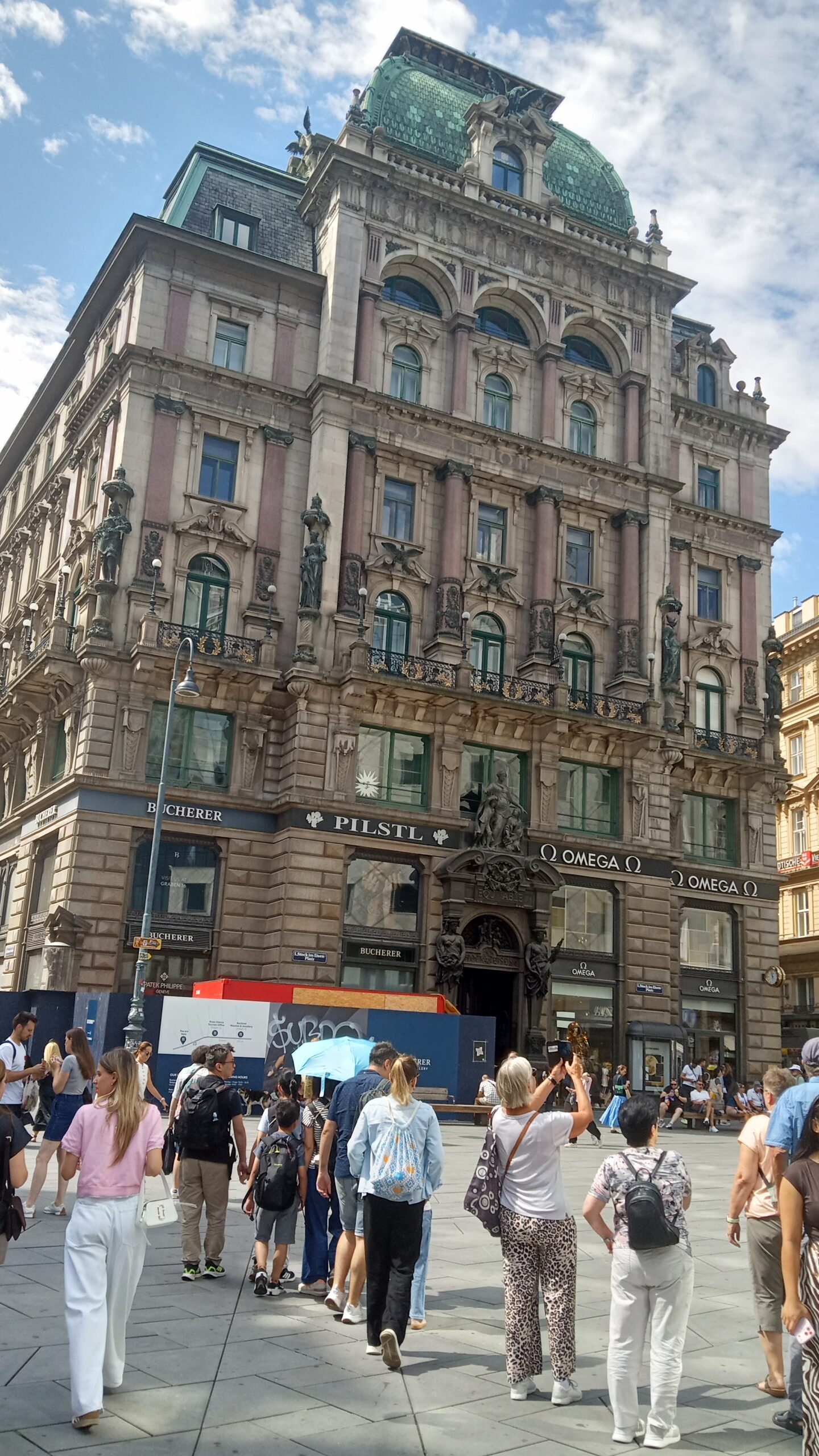
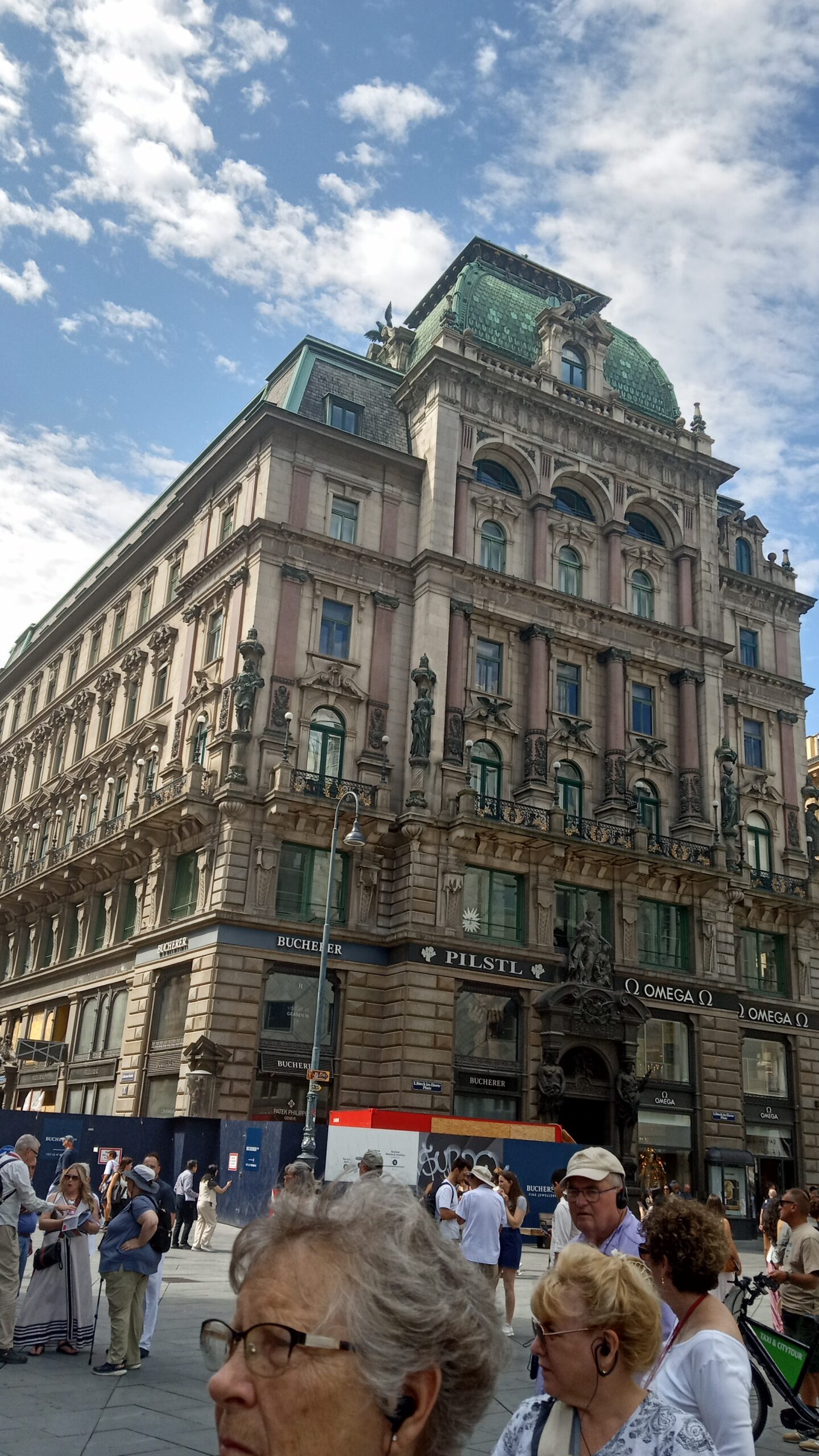
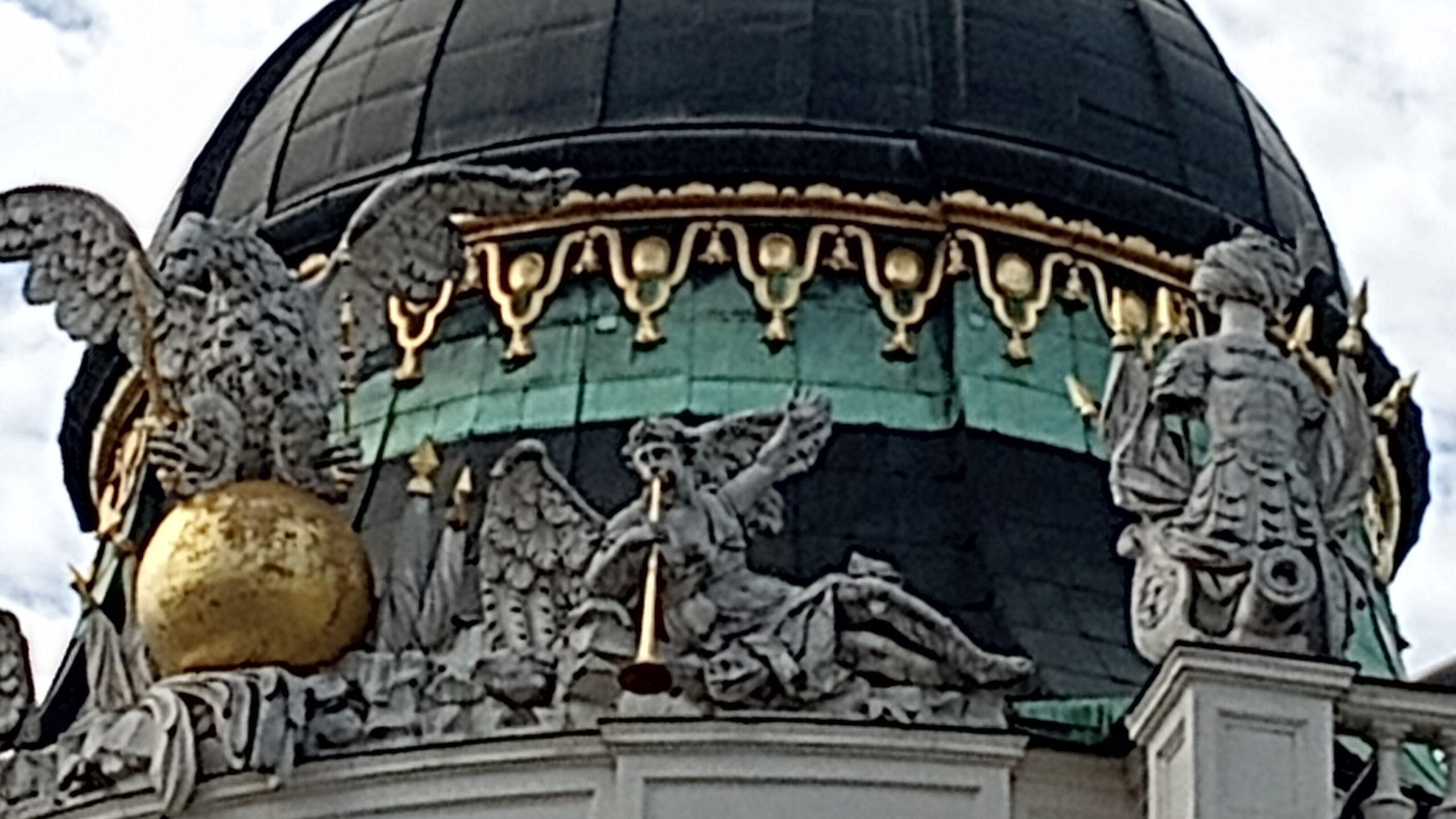
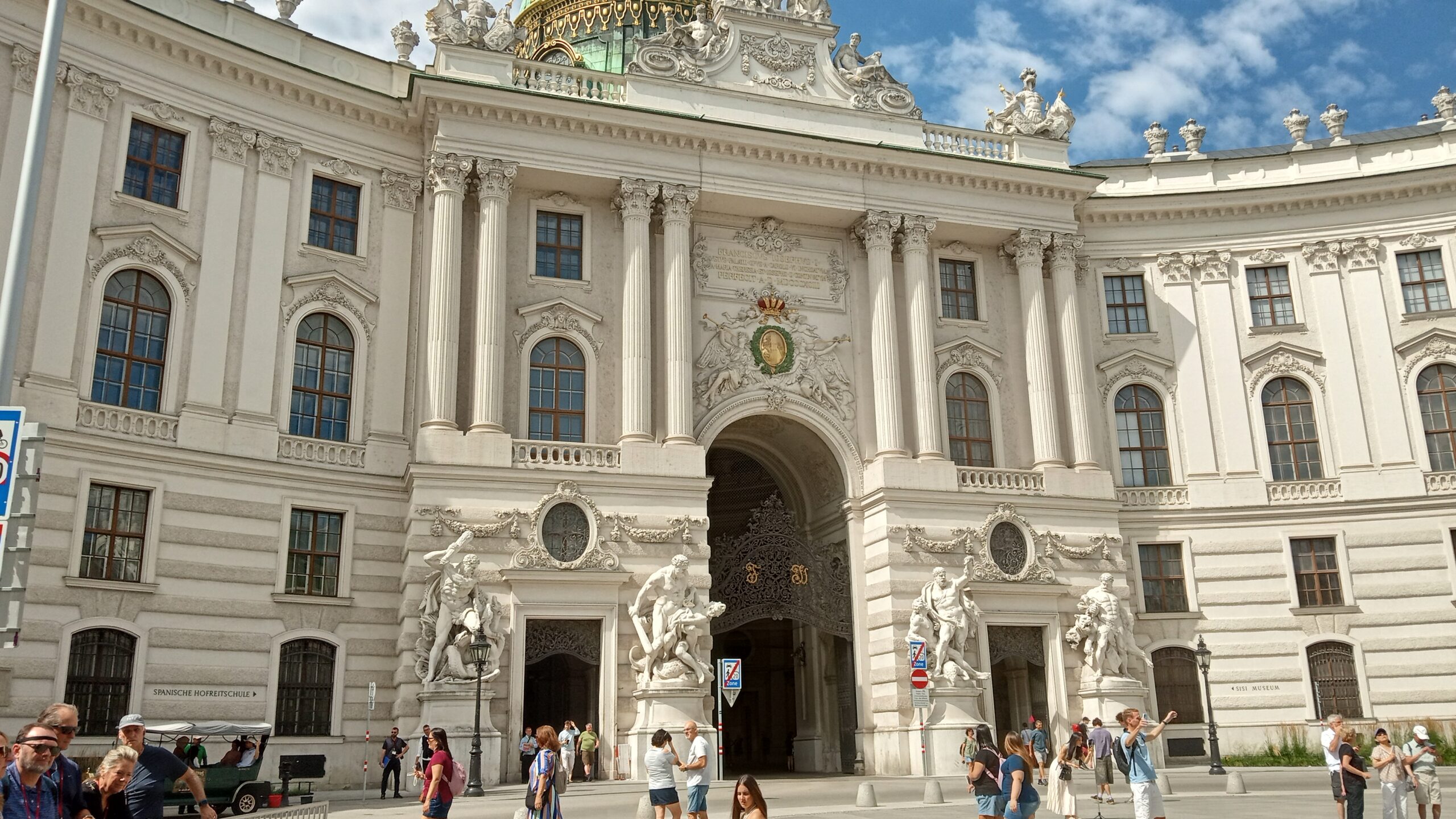
This morning started out with a bus tour of Vienna,
Austria. We marvelled at all the mid-19th century
buildings. All the buildings we saw on the main
boulevard had symetrical facades that were baroque,
neoclassical styles with ornate balconies, fancy window
treatments, statues of angels or Greek goddesses, scroll
type decorations, columns, pillars and do-dads.
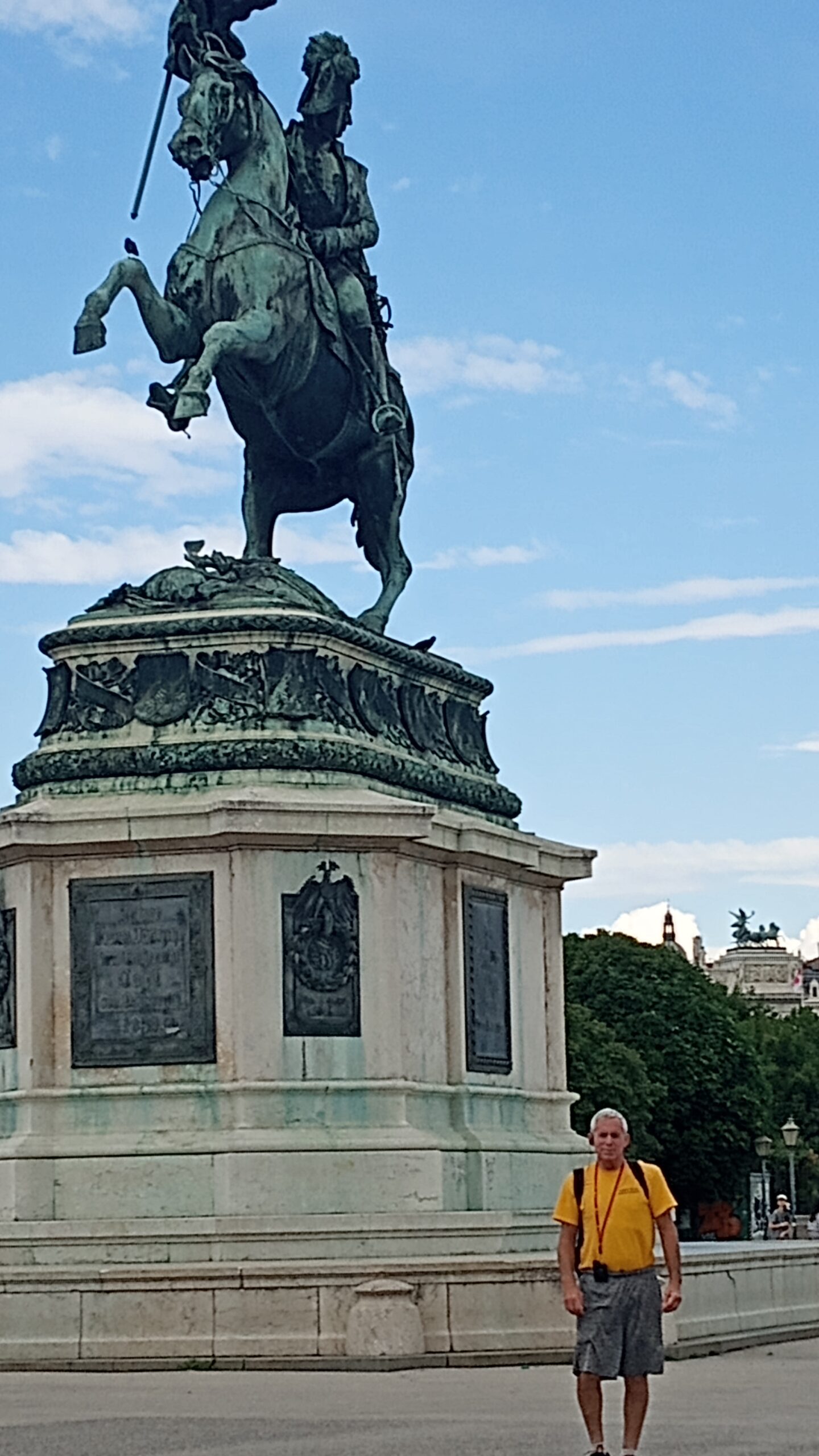
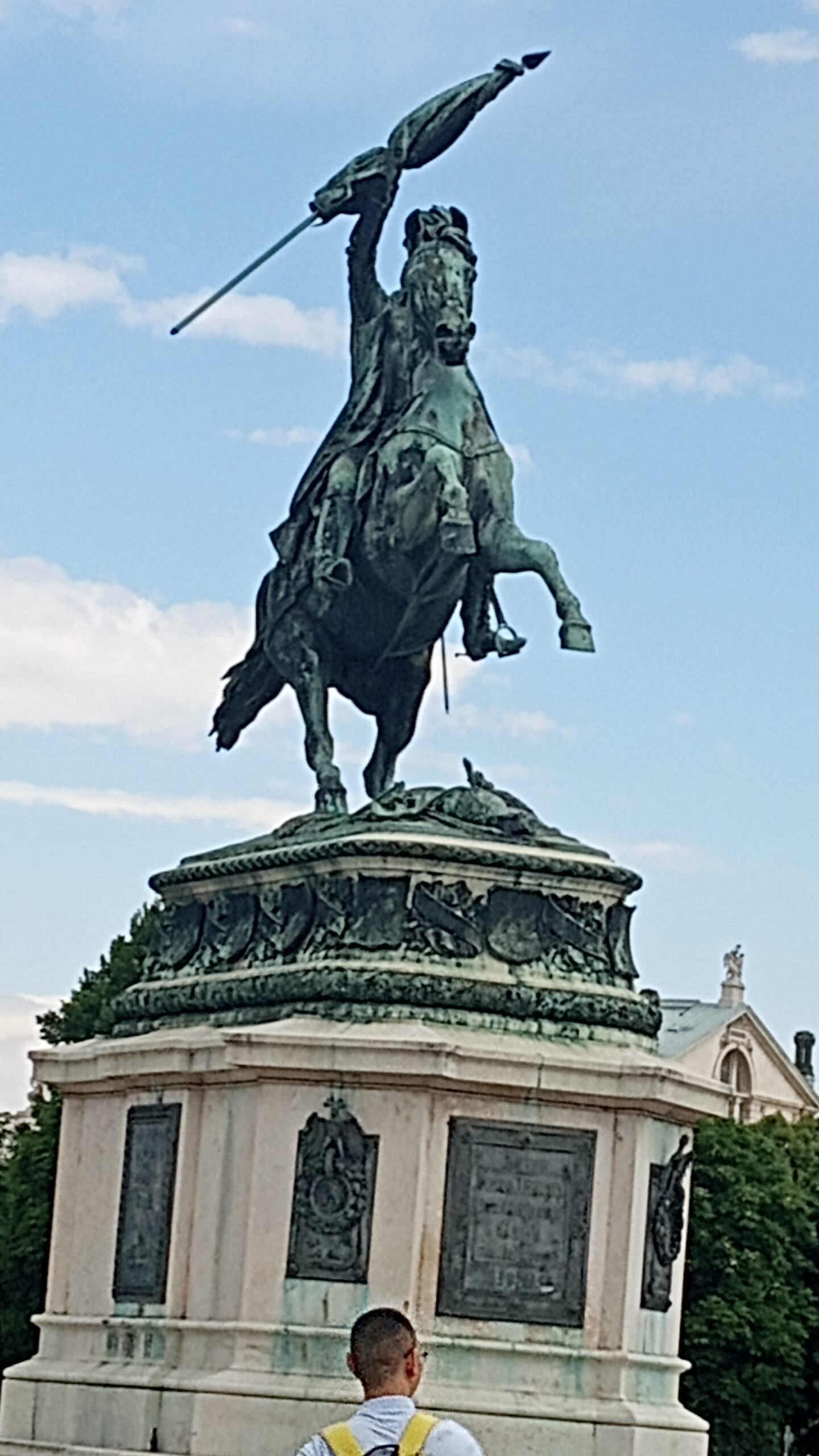
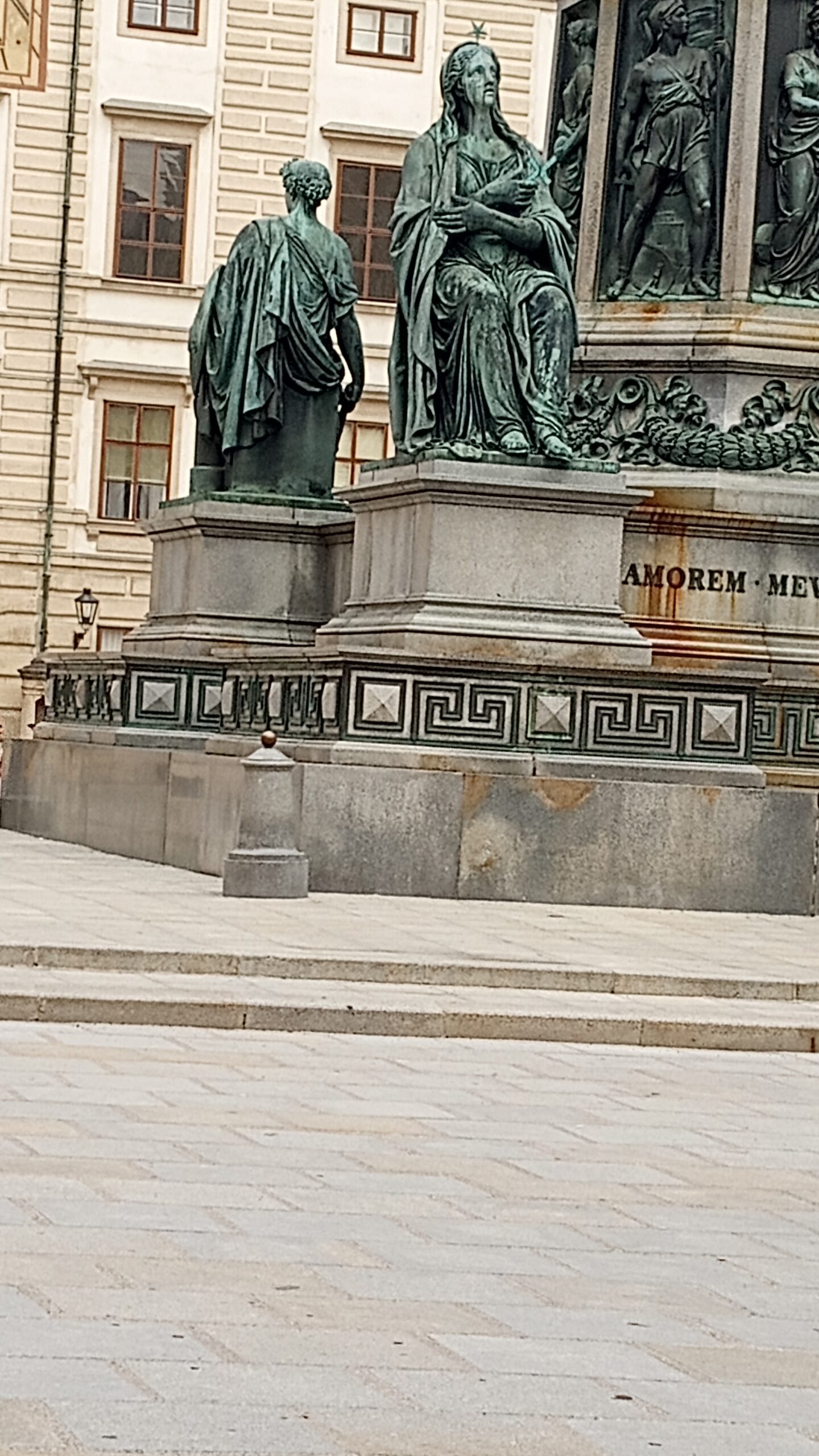
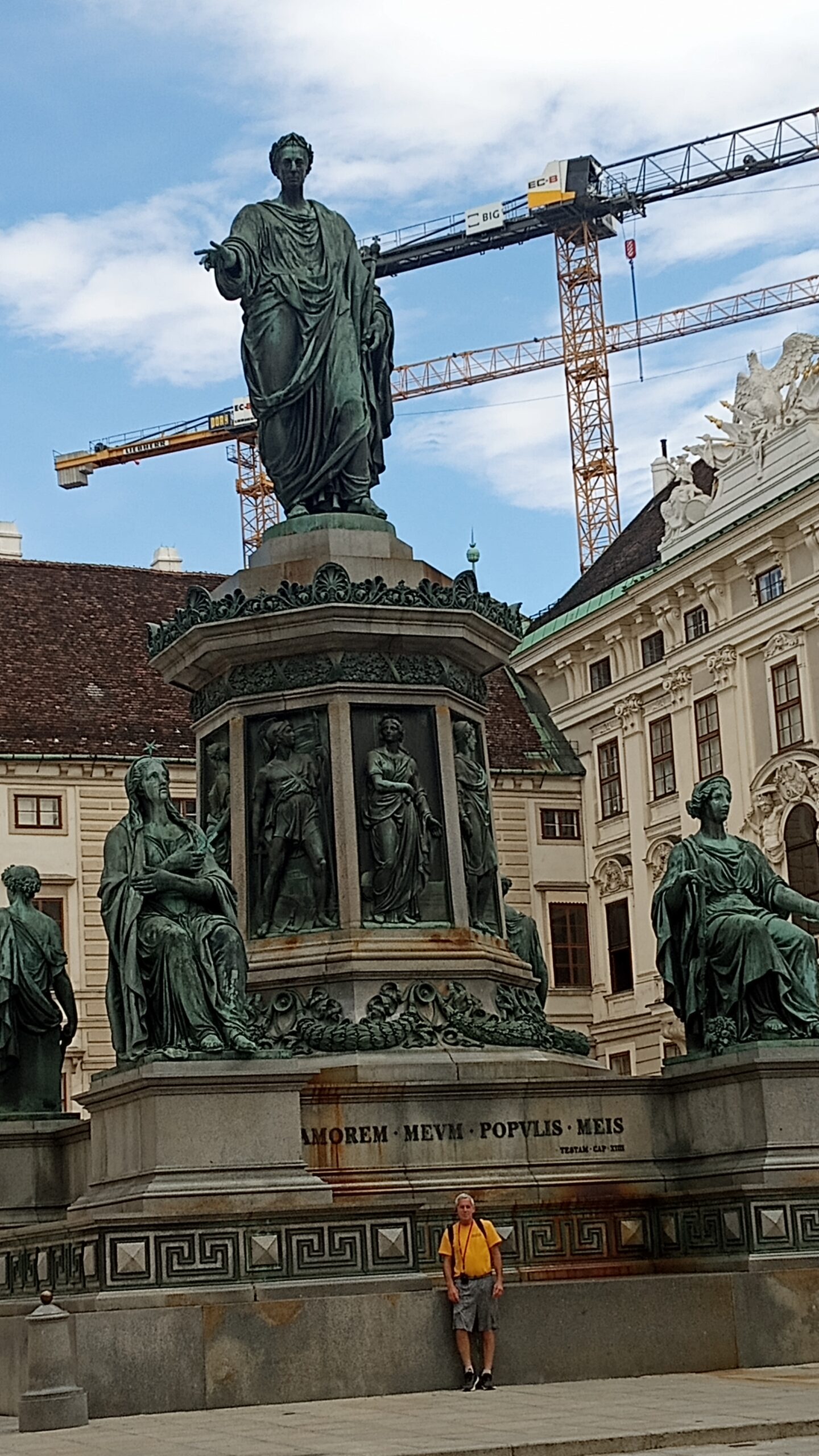
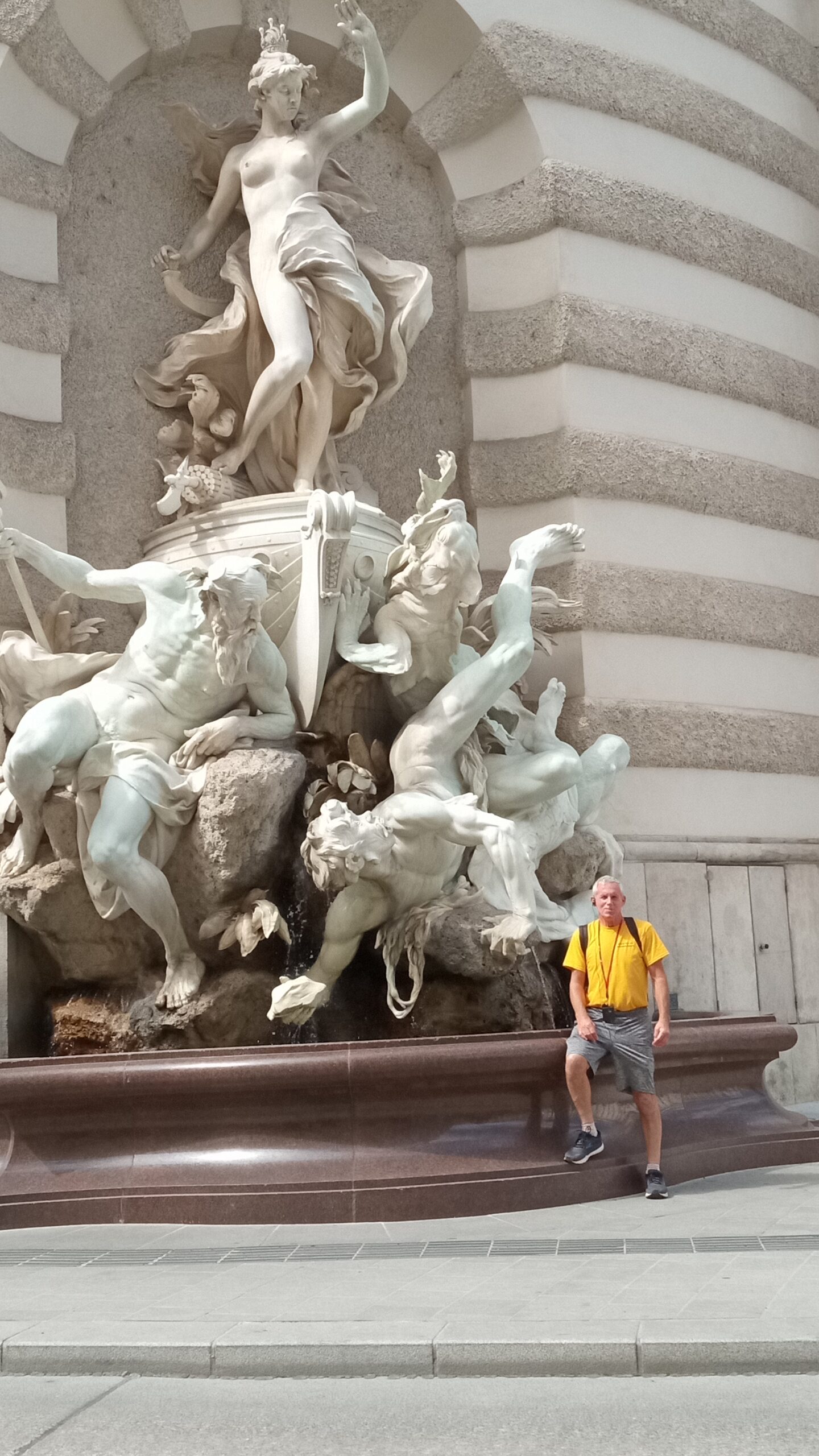
We then stopped and took a long walking tour of the
center of cutural Vienna. We first saw and were given
guided info on 2 massive arts and natural history
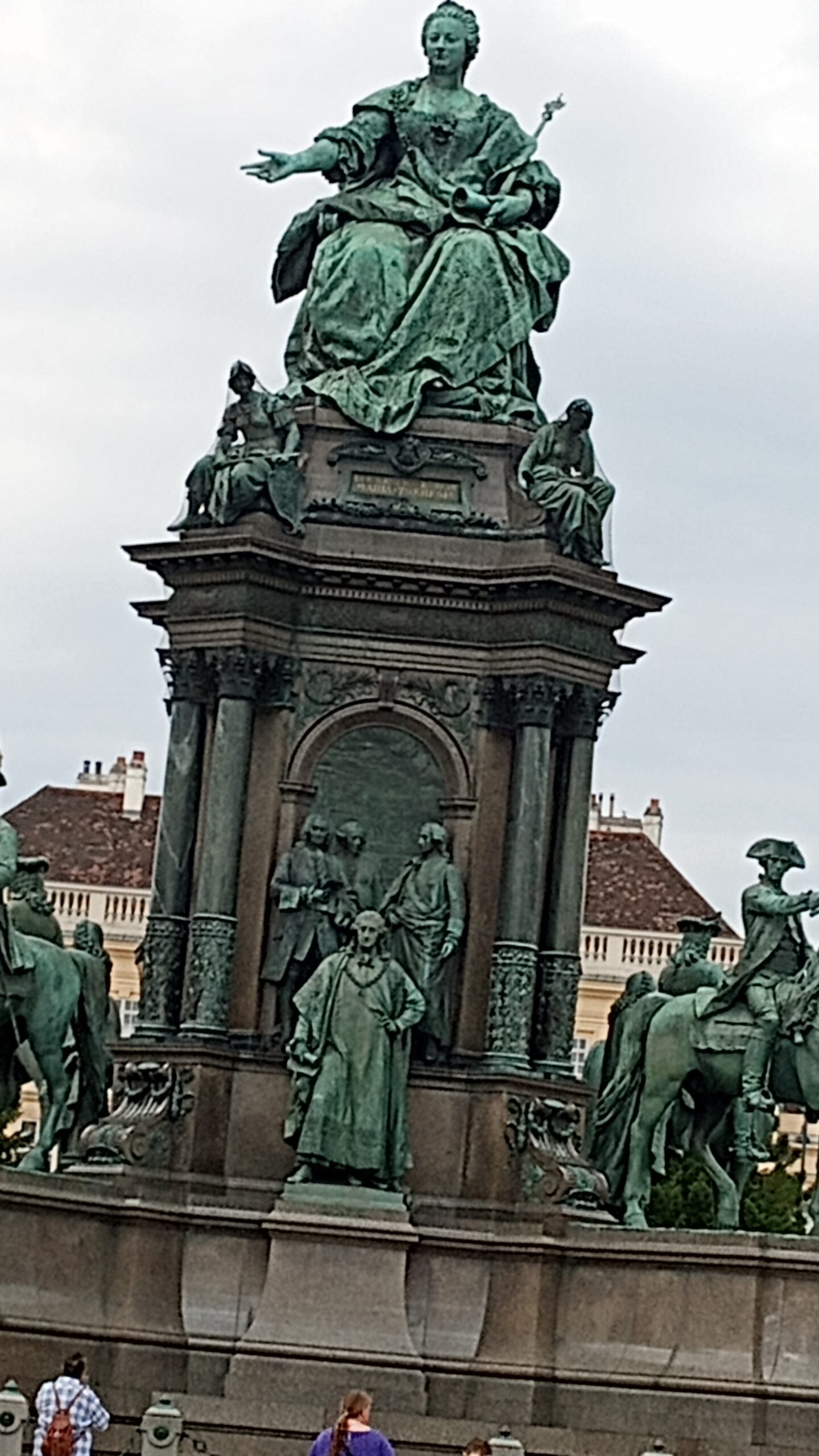
museums in a large public square called Ringstrasse,
complete with impessive statues. Walking across
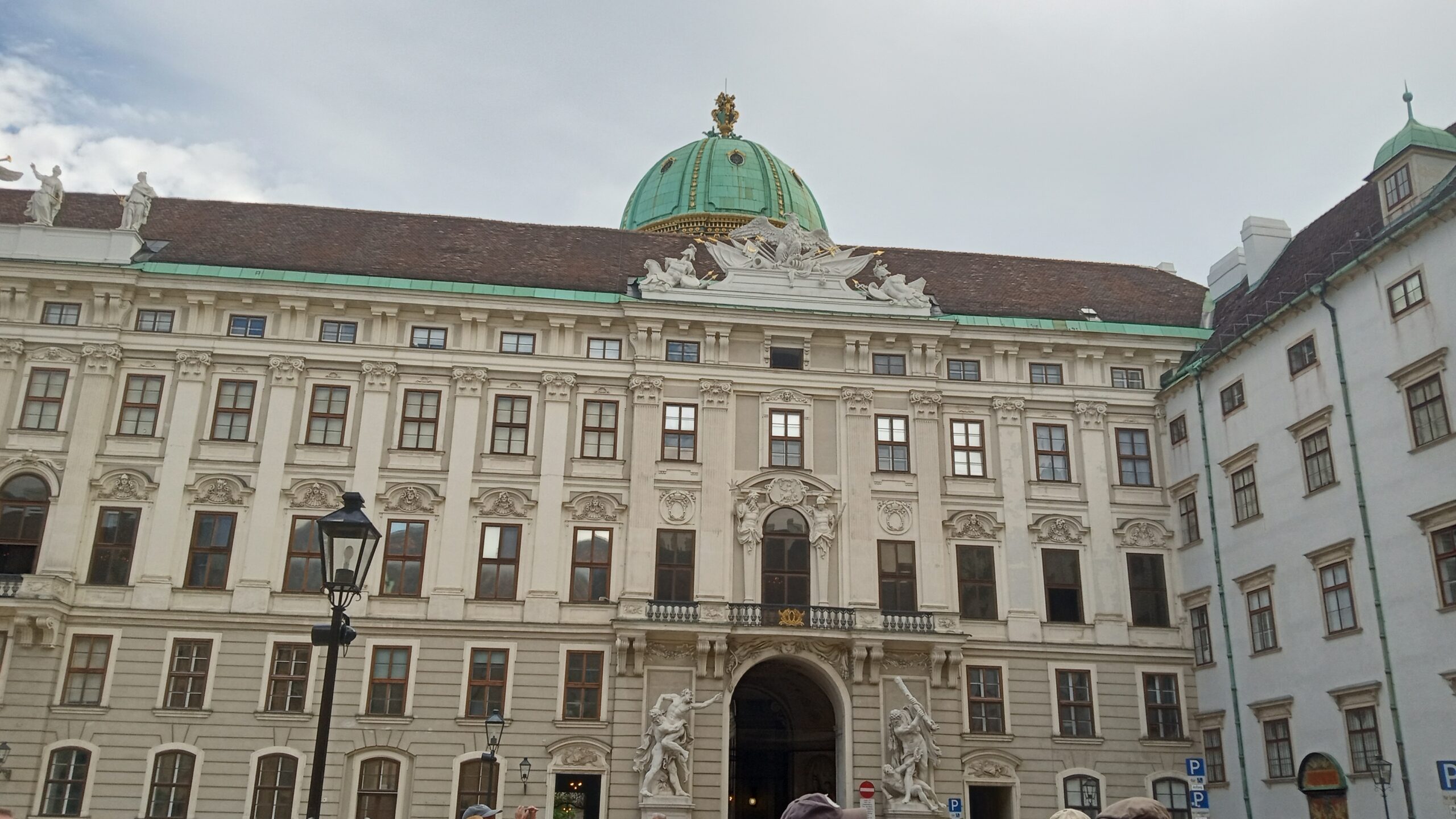
the street was another square called Heroes Square
surrounded by long administrative buildings all
done with large scale classical revival type style. This
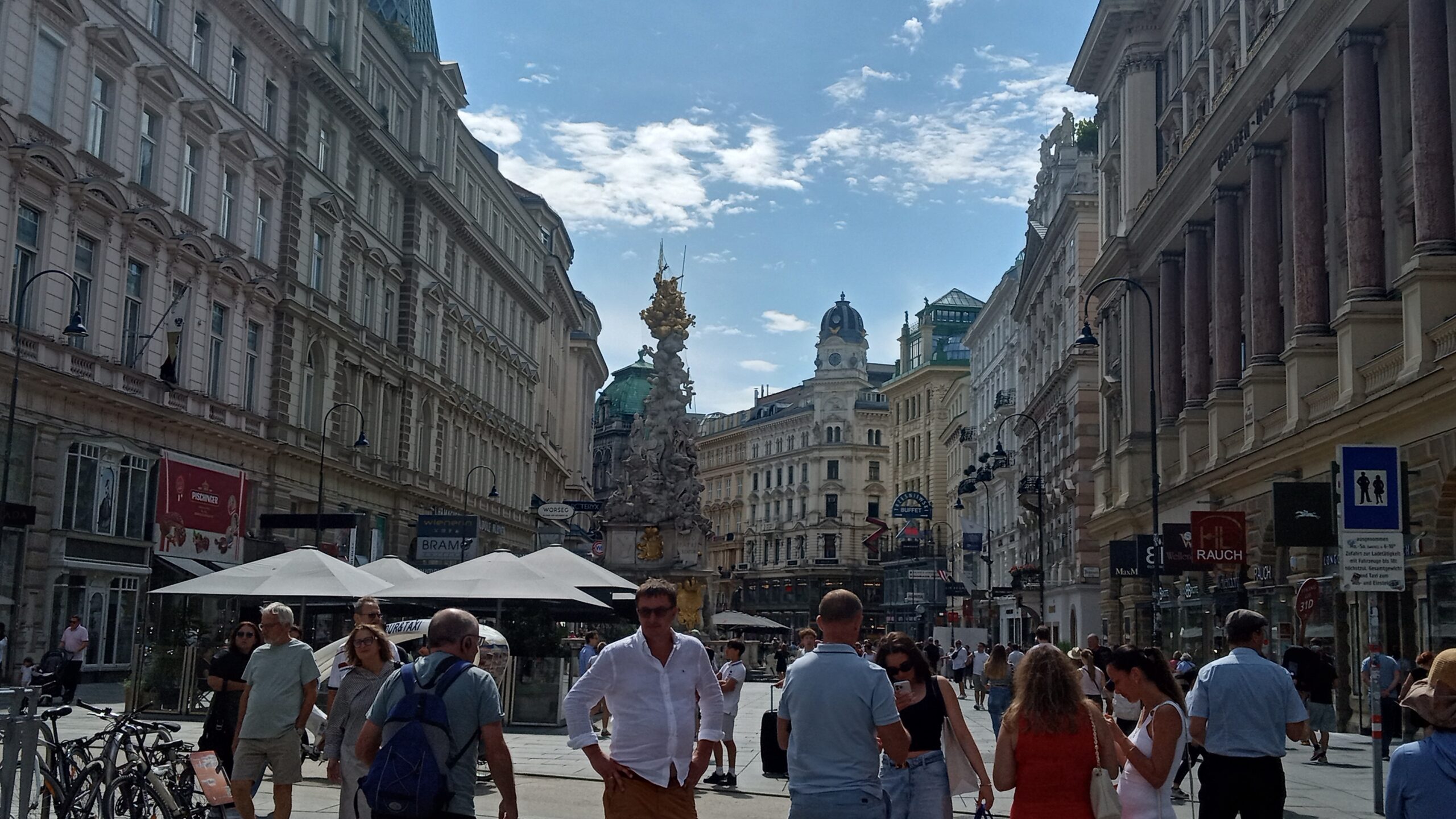
area then morphed into a large pedestrain open mall
area that was flooded with tourists of all ages
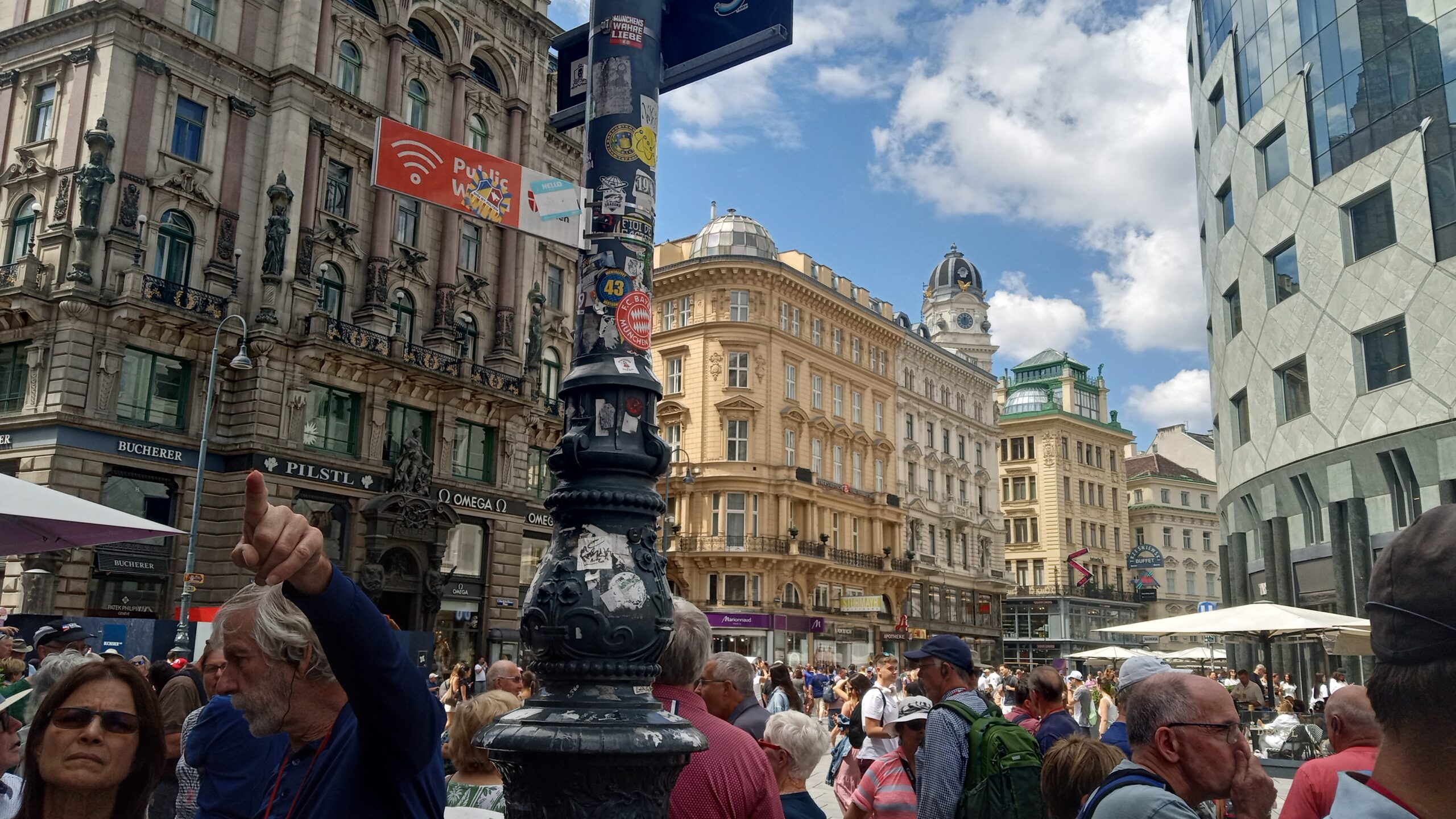
called St. Stephen’s Square.
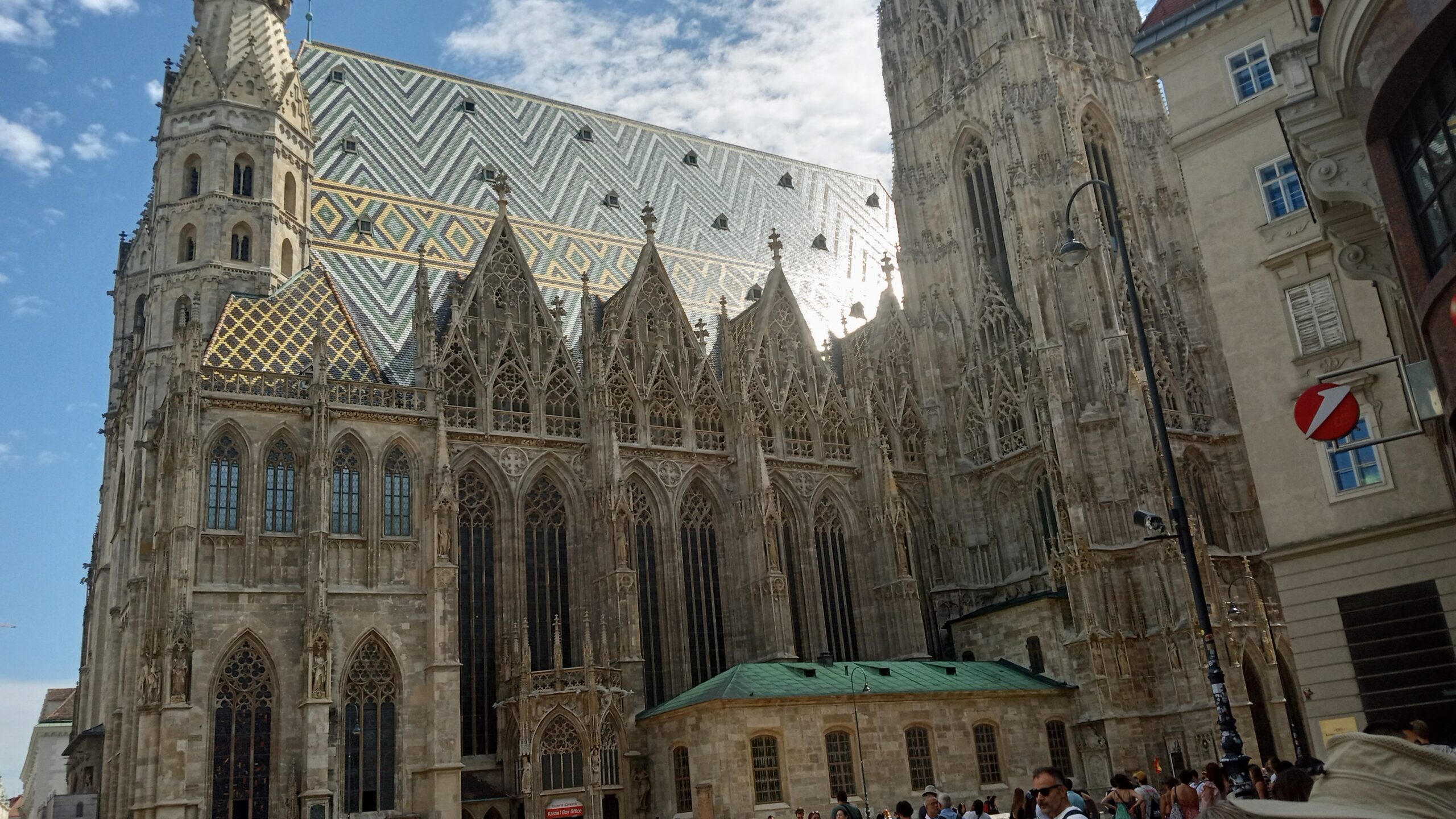
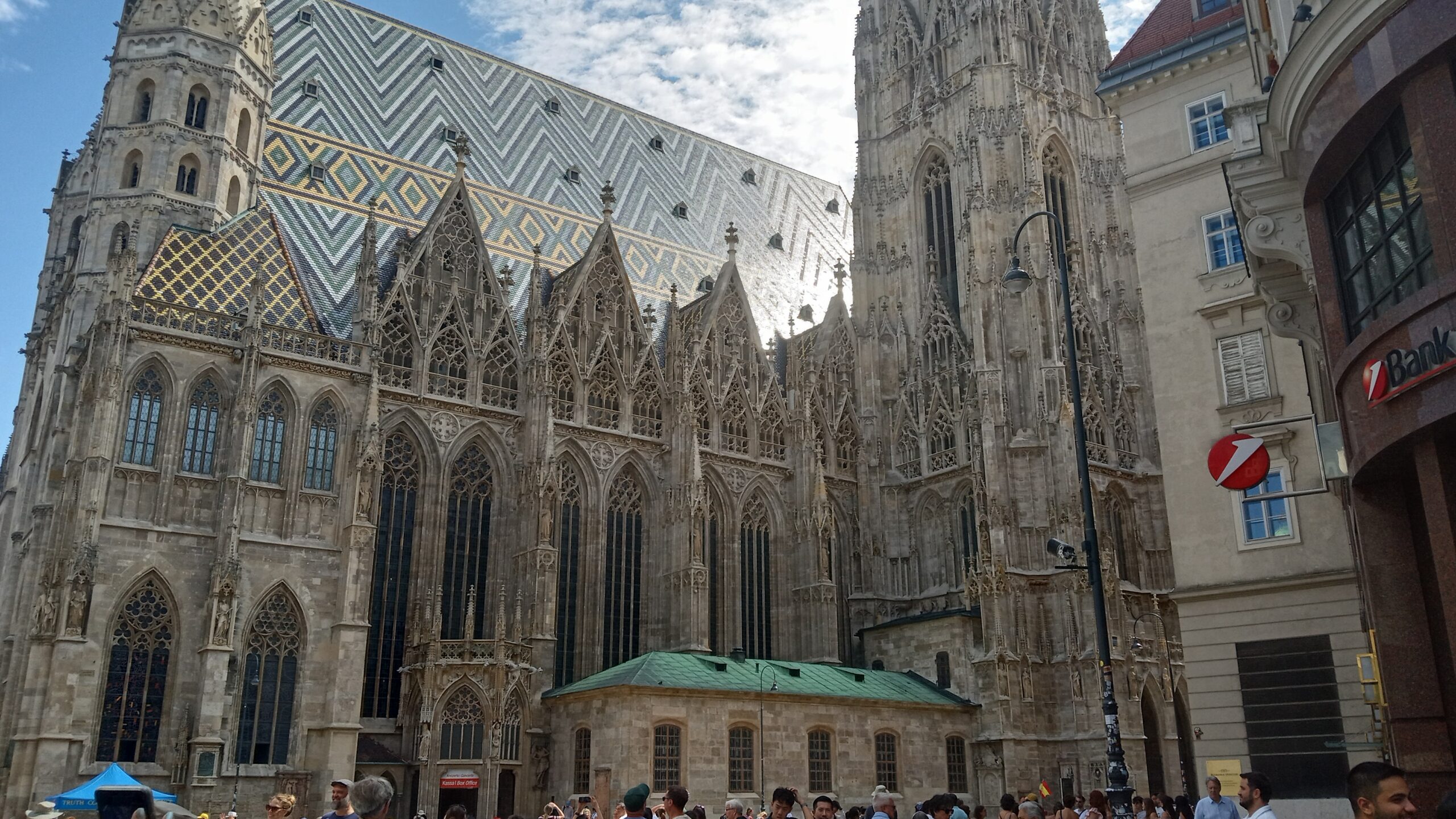
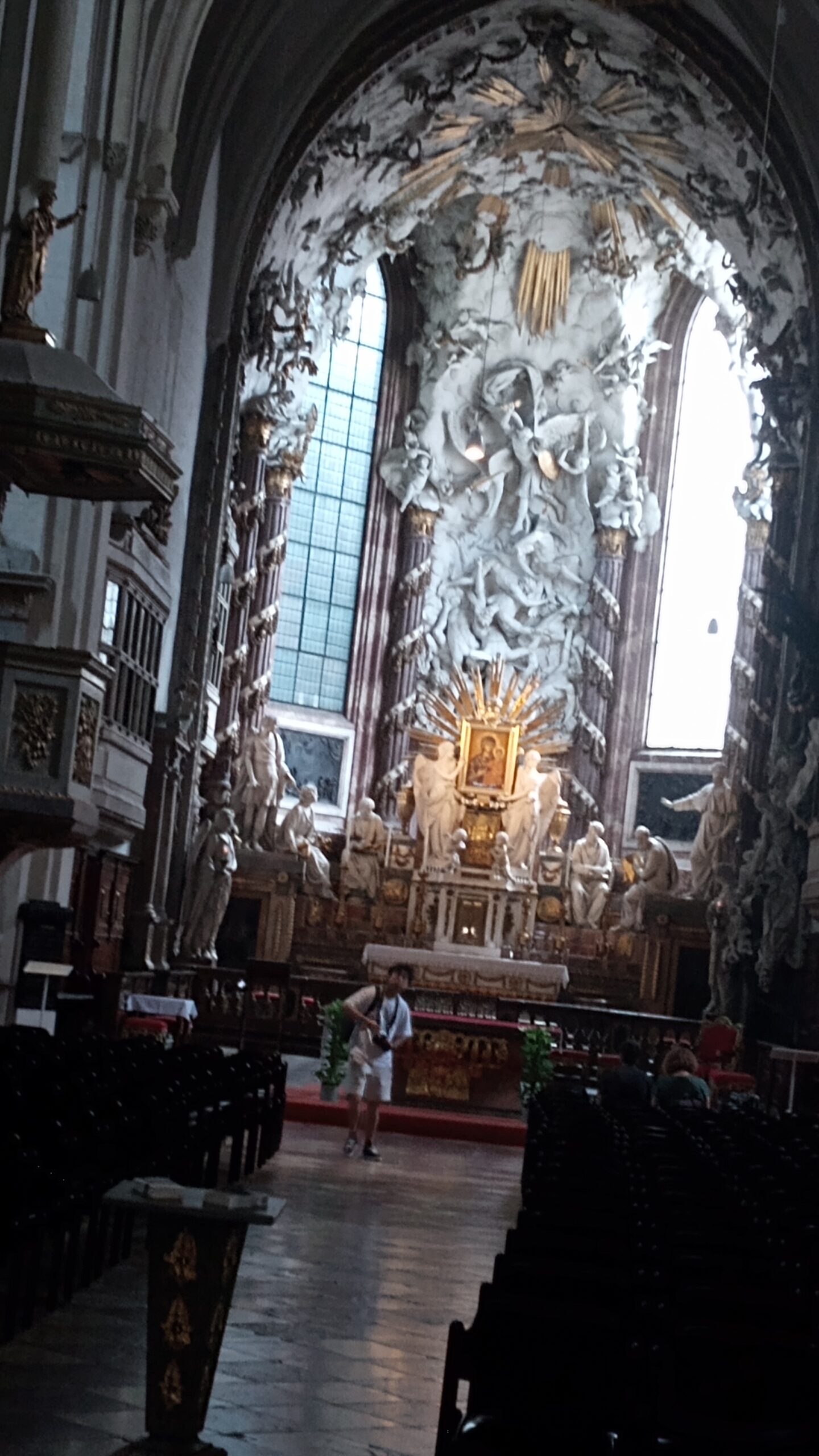
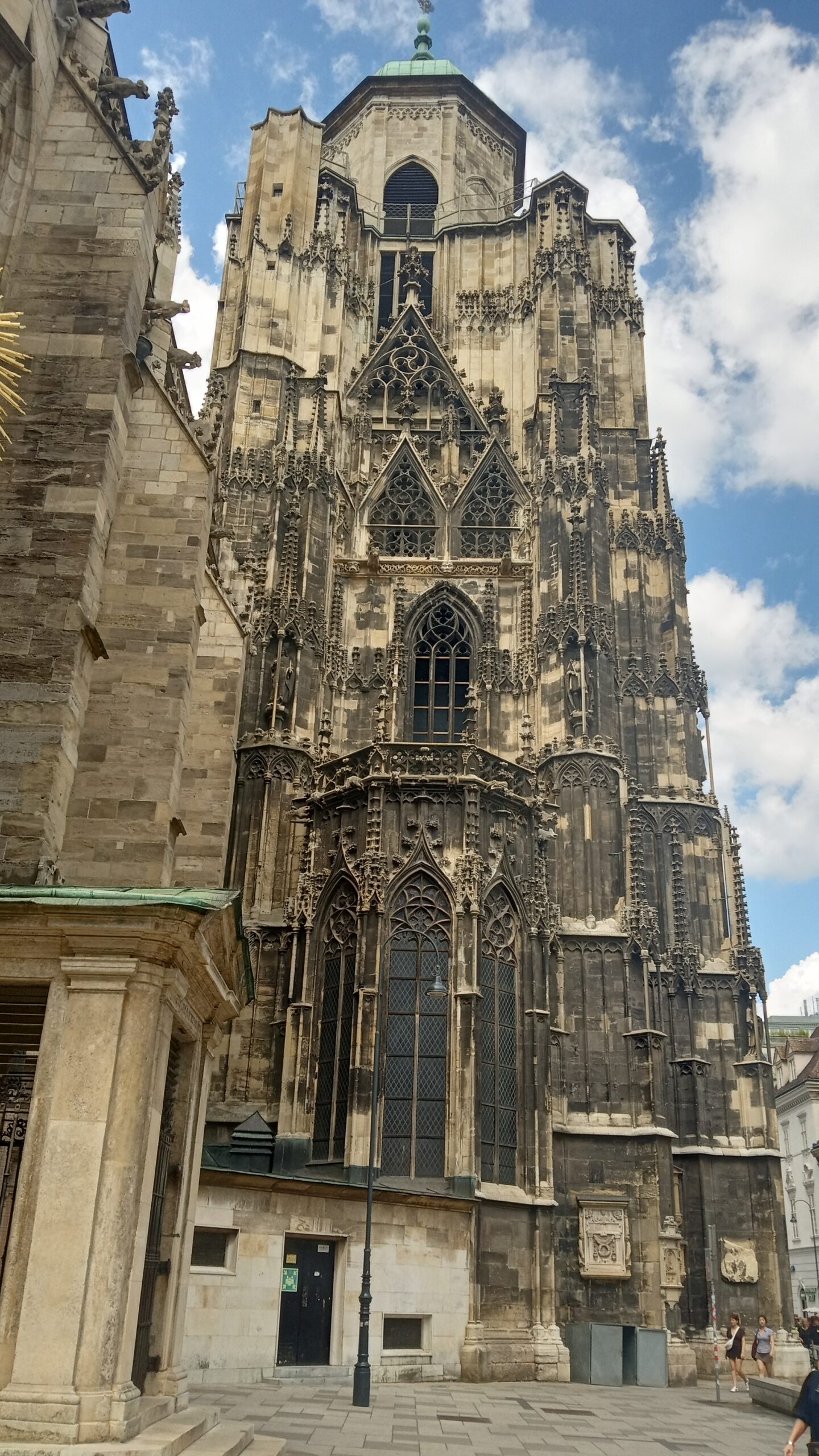
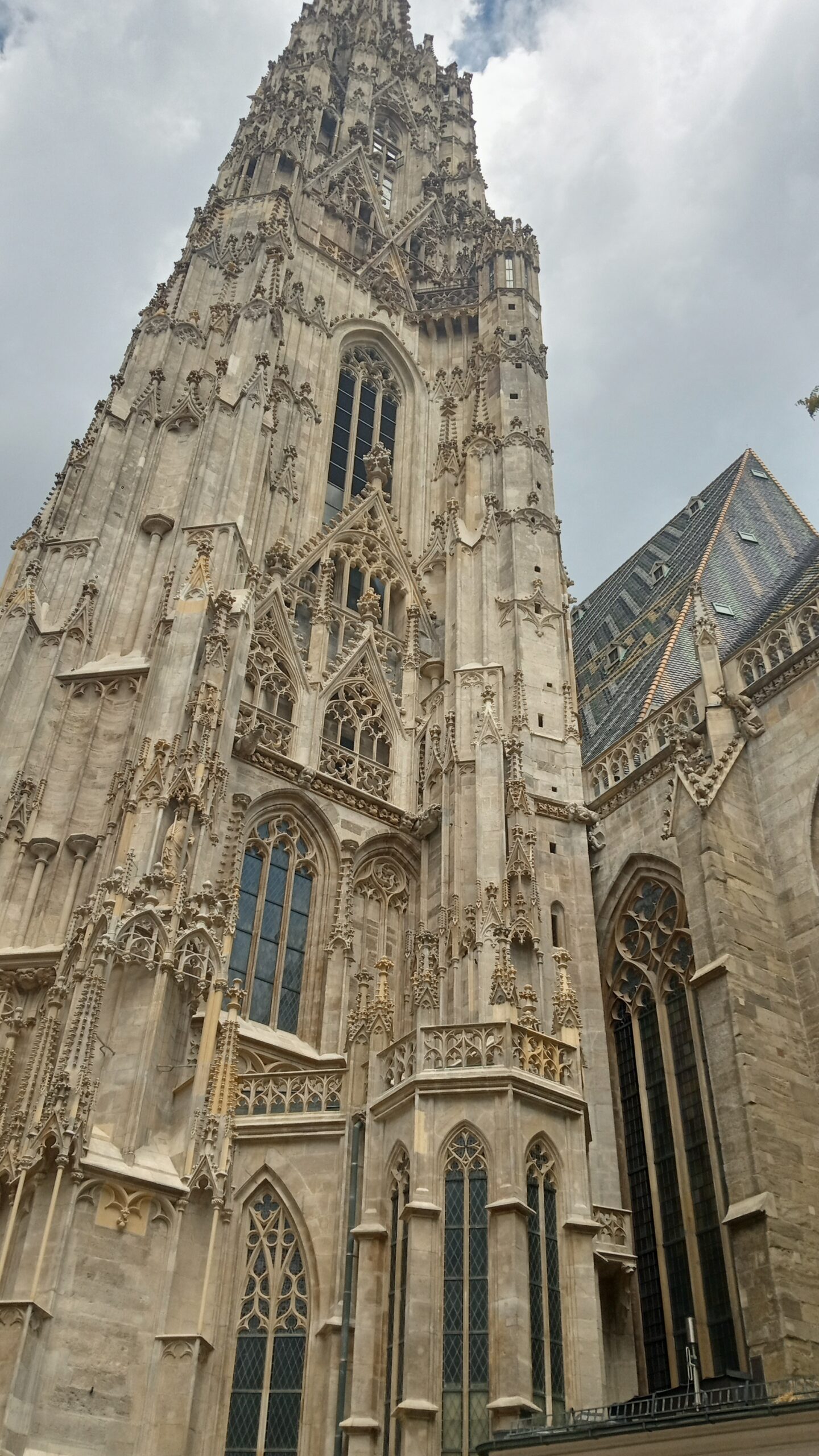
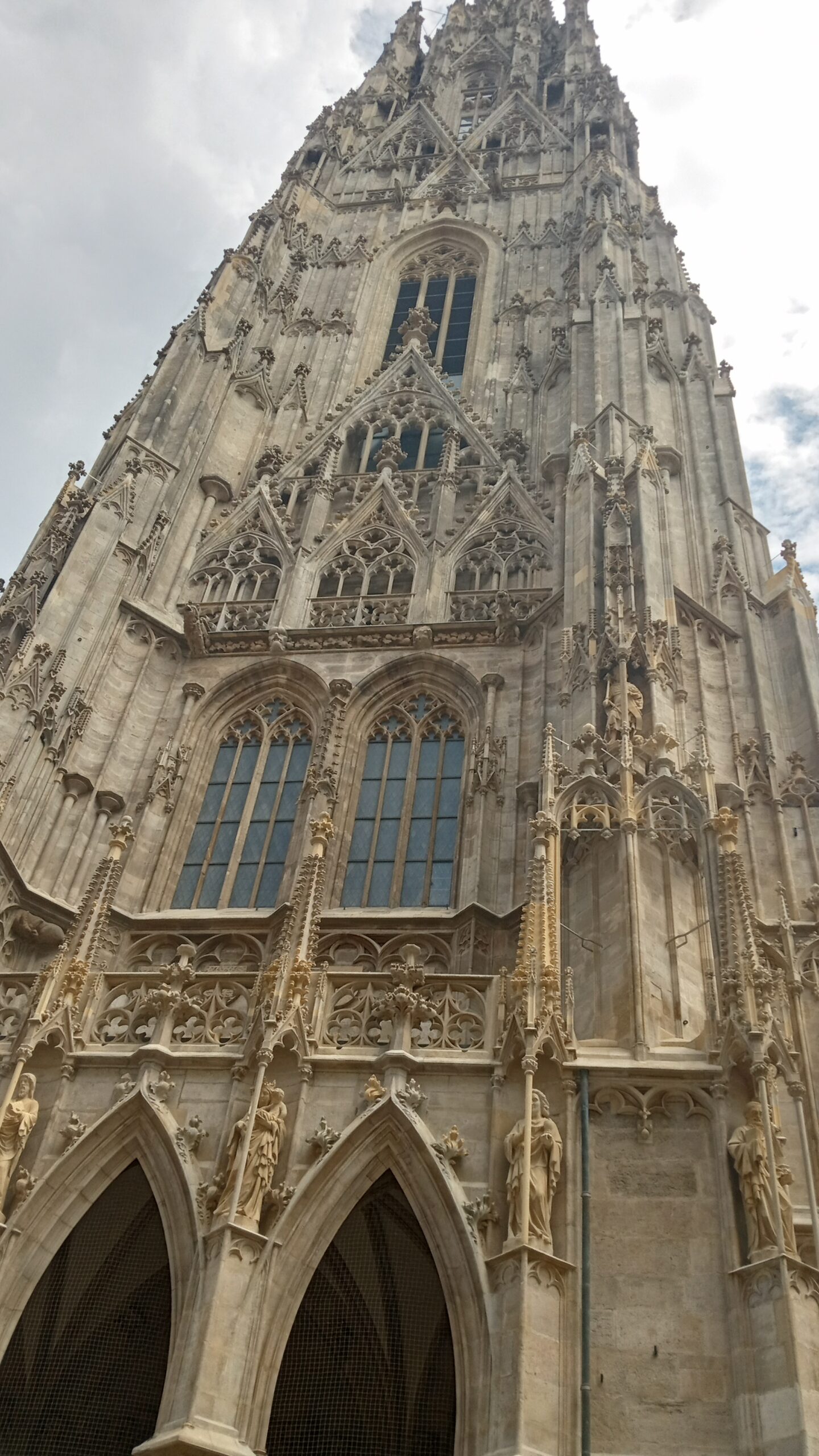
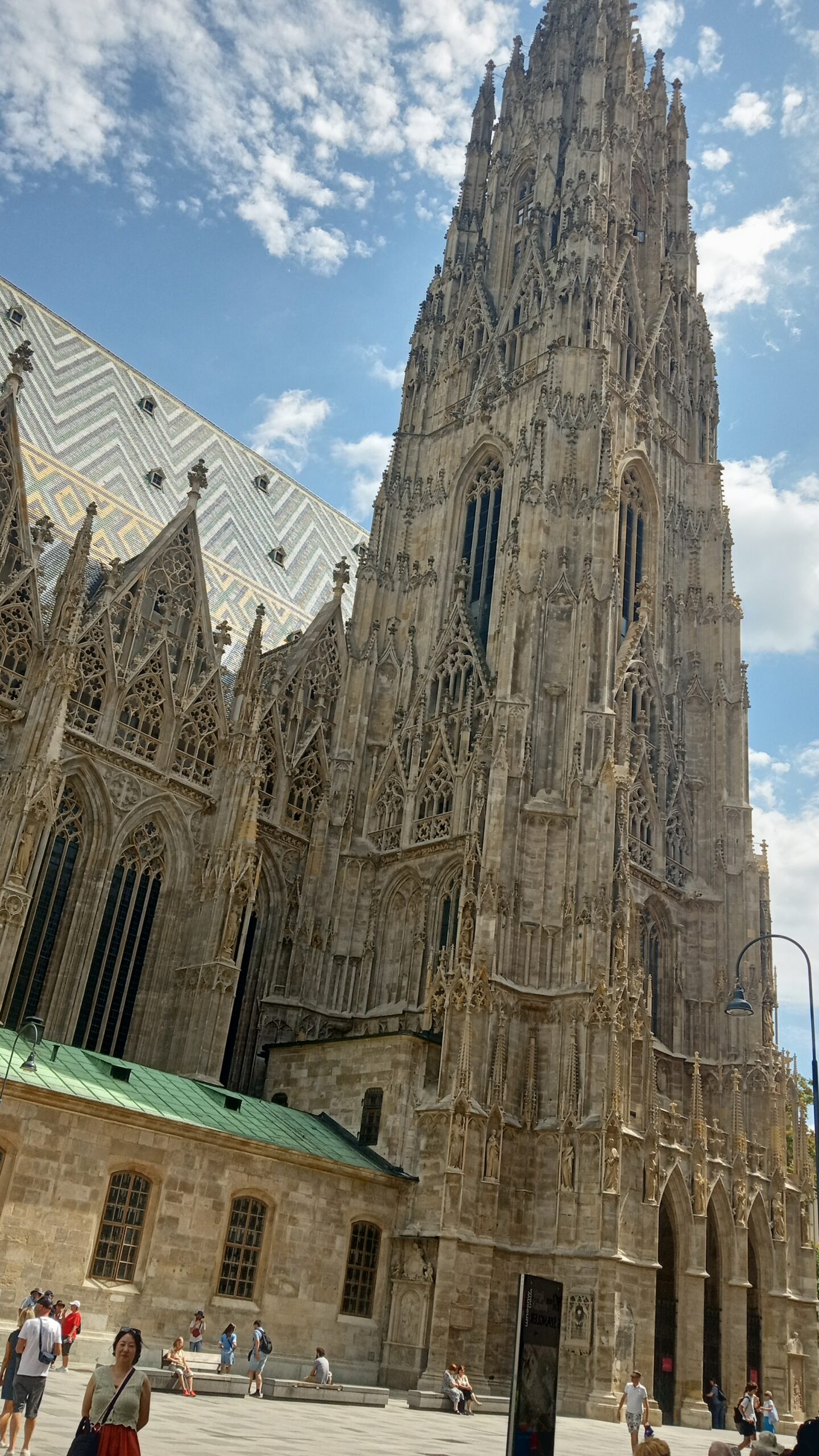
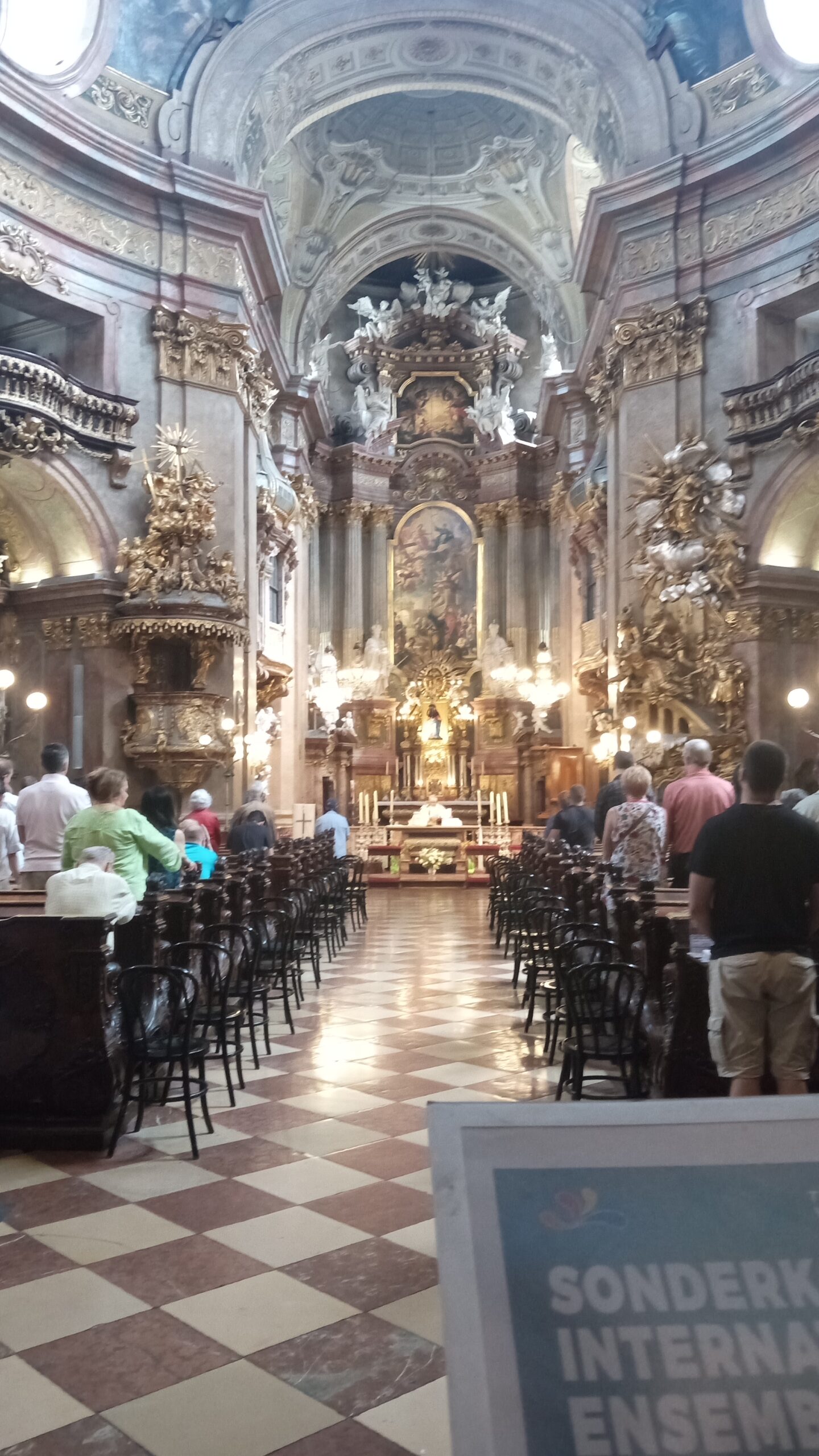
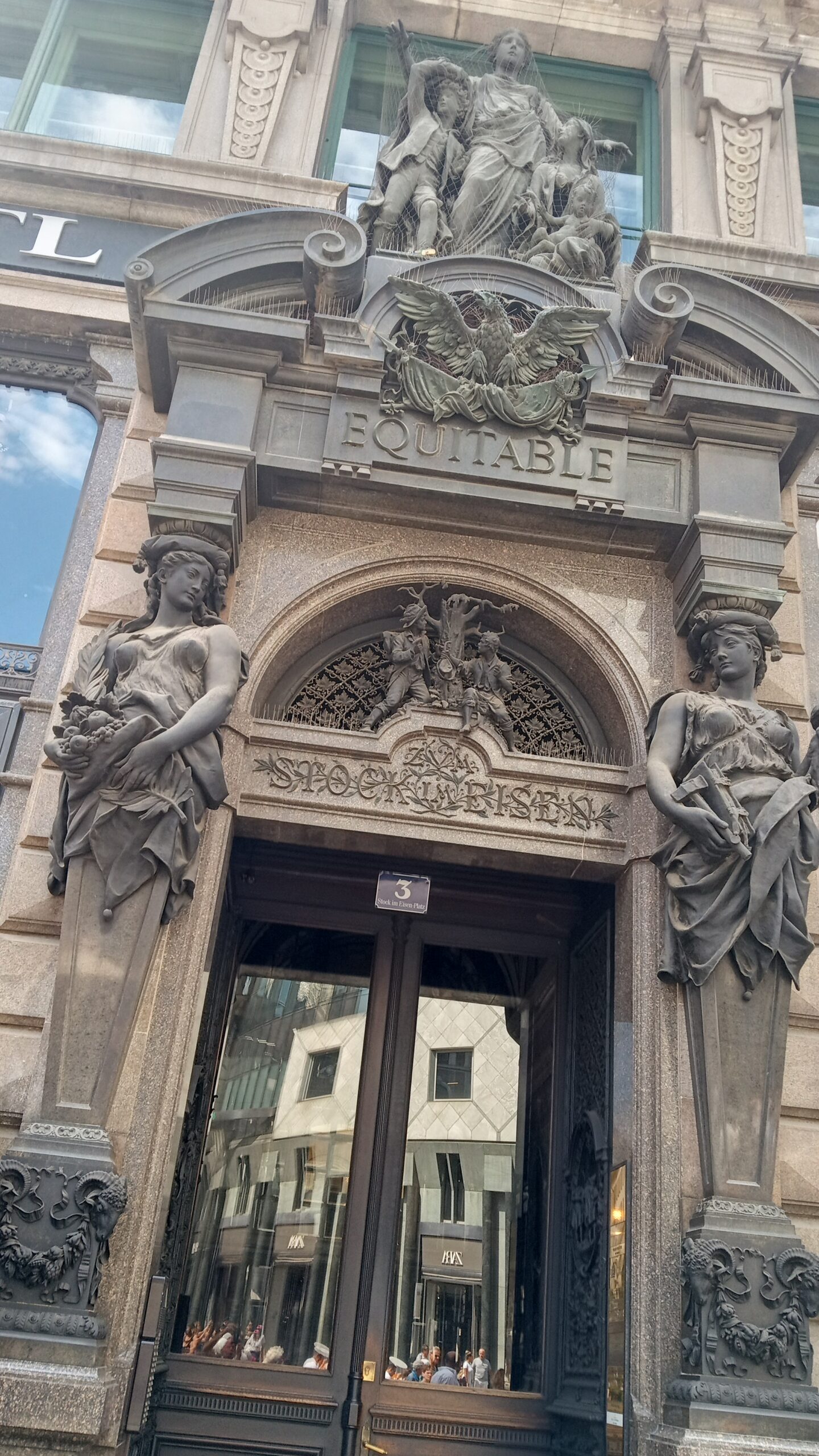
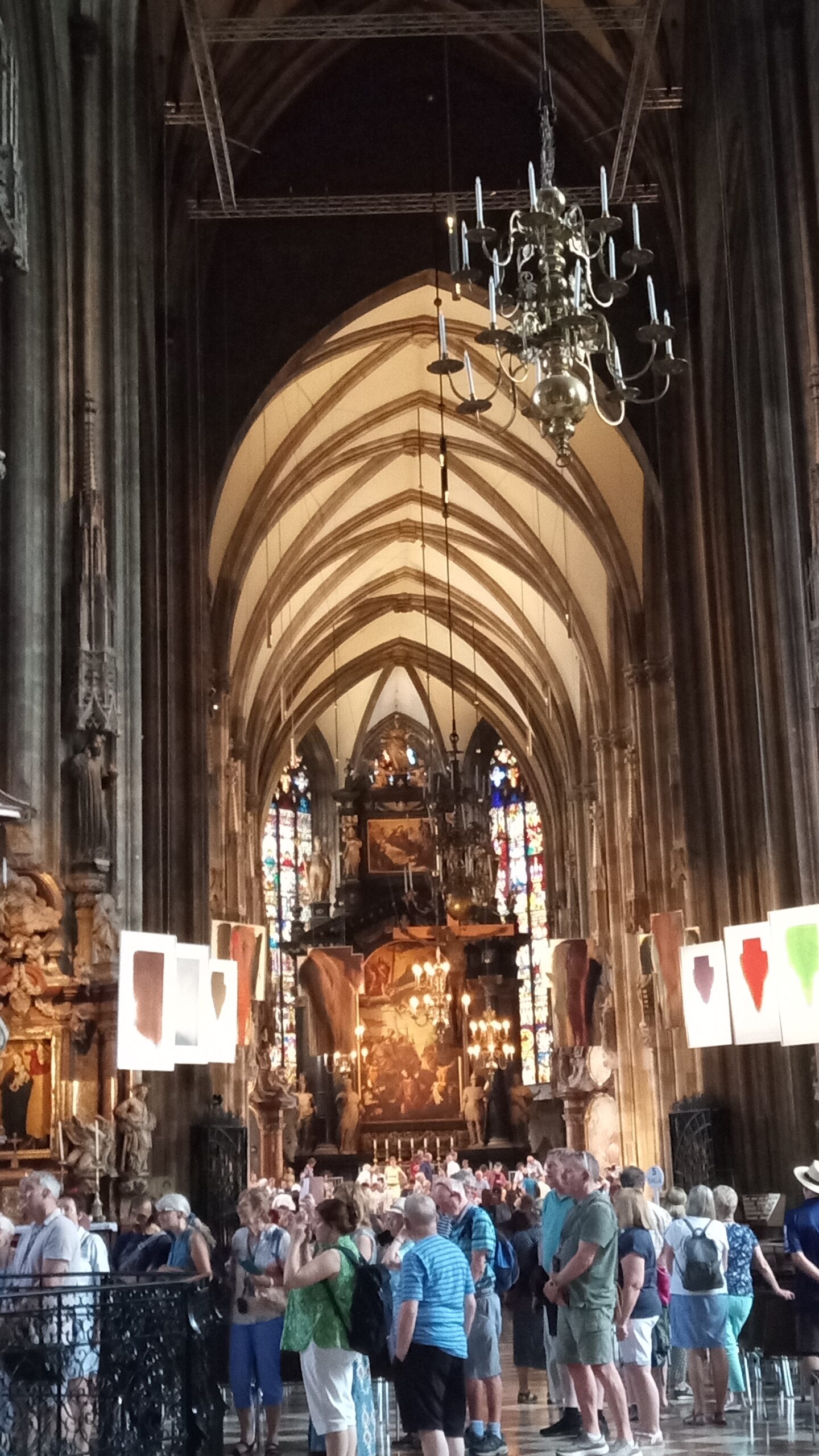
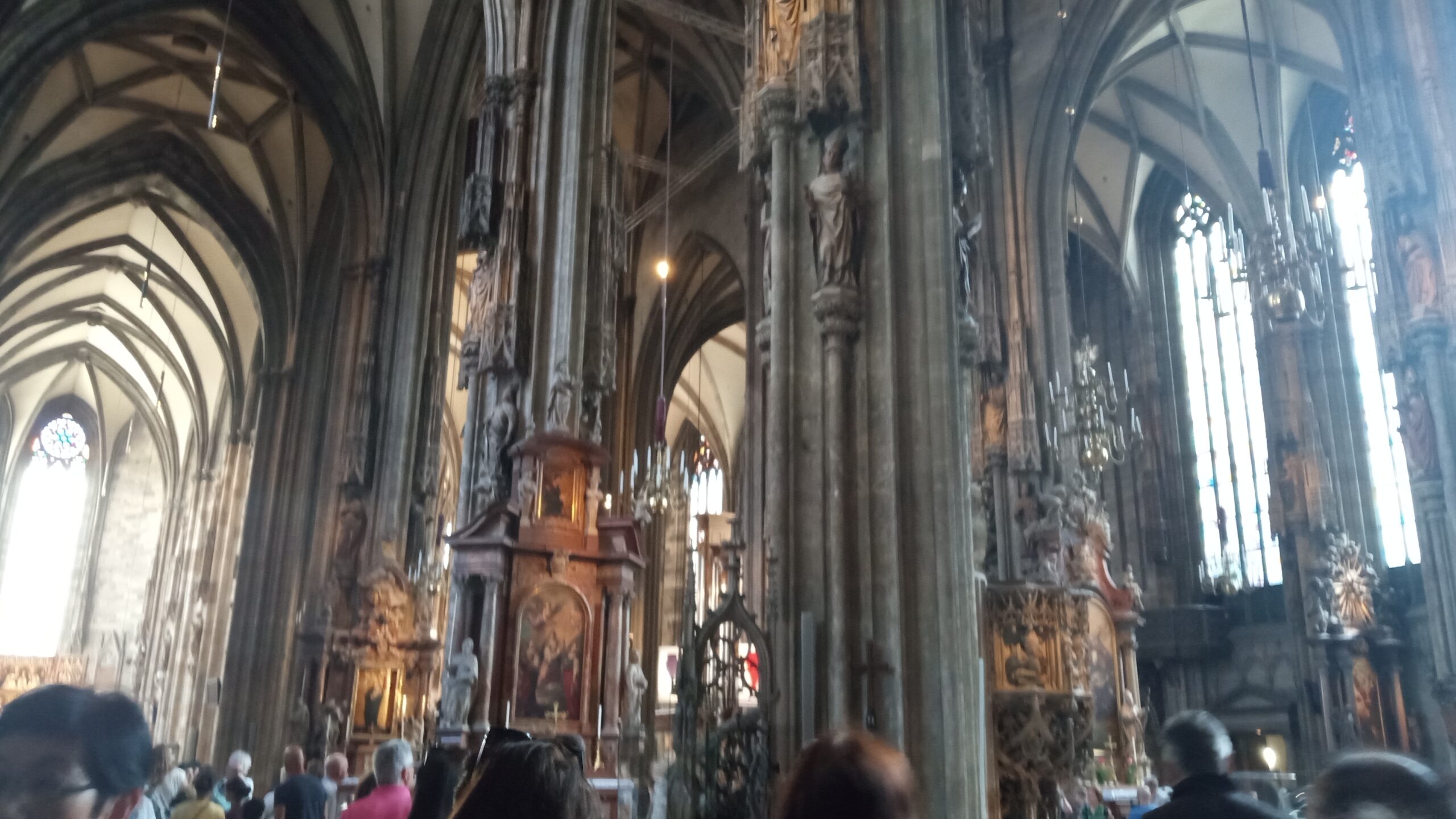
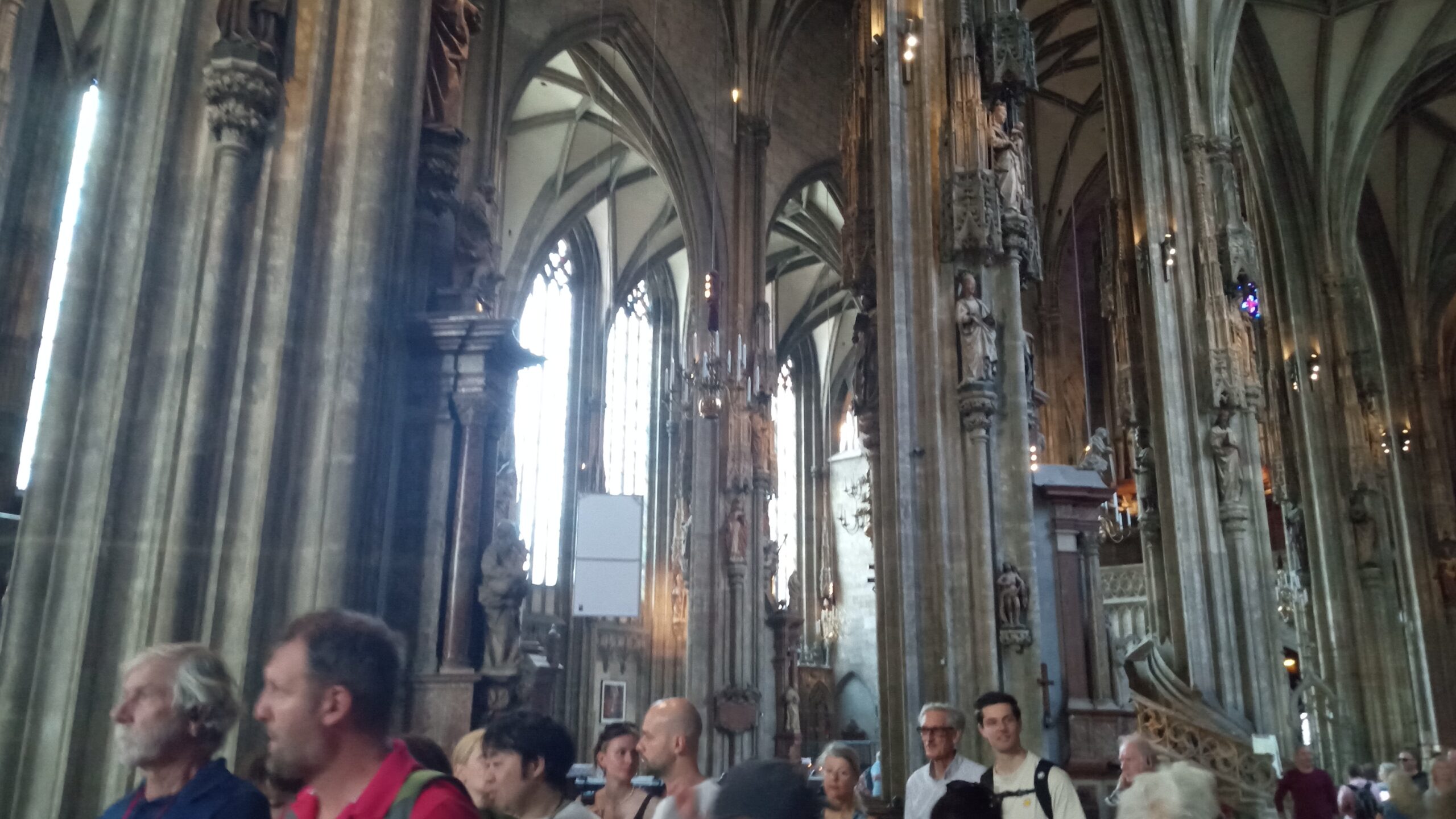
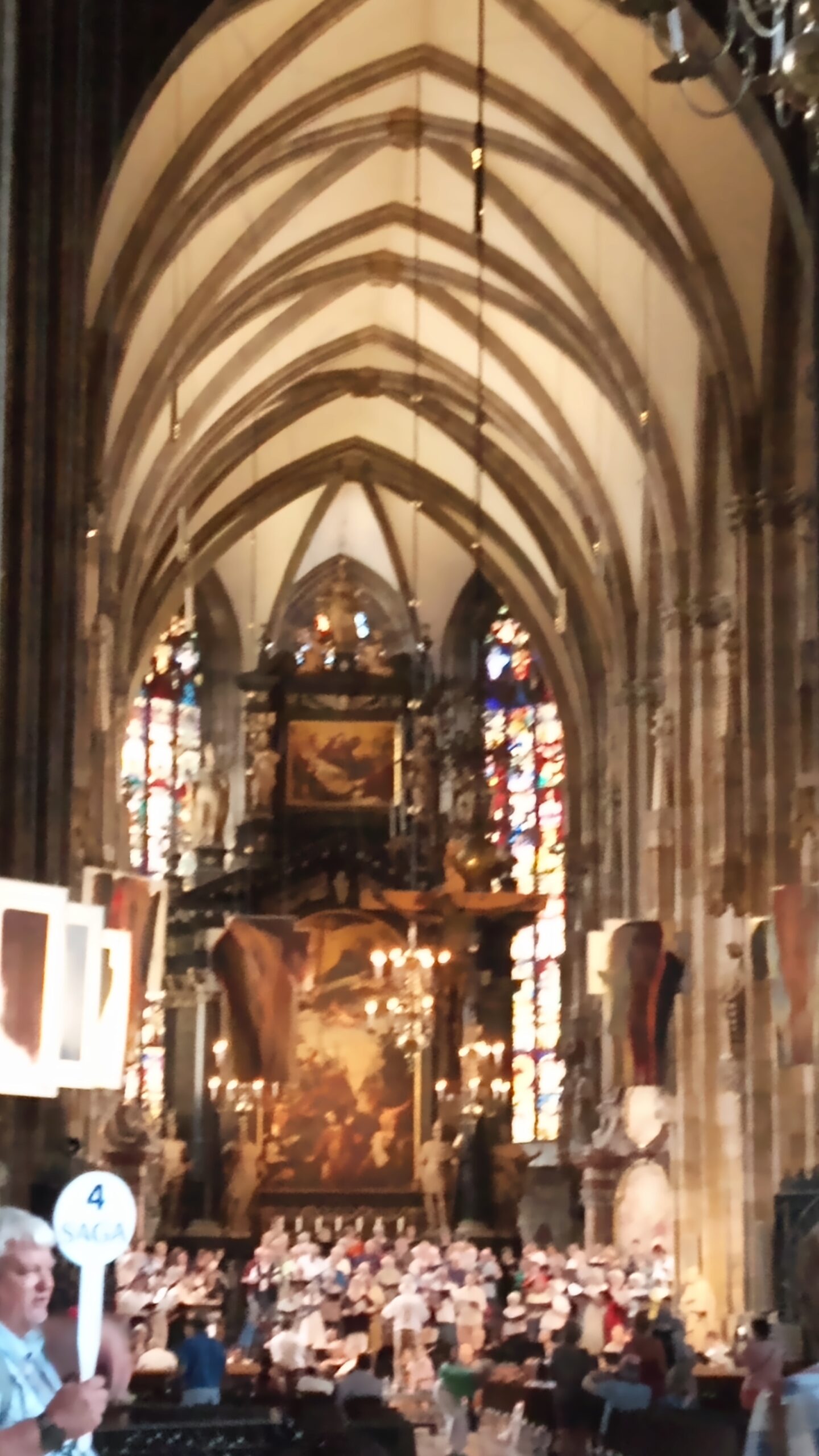
In this area we saw 2 gorgeous churches. We went inside
both and took pics of the alter. The main huge church,
St. Stephens was a stone Gothic masterpiece from the
1300’s with way over-the-top outside stone masonary,
spires, light airy grill work and was postcard perfect.
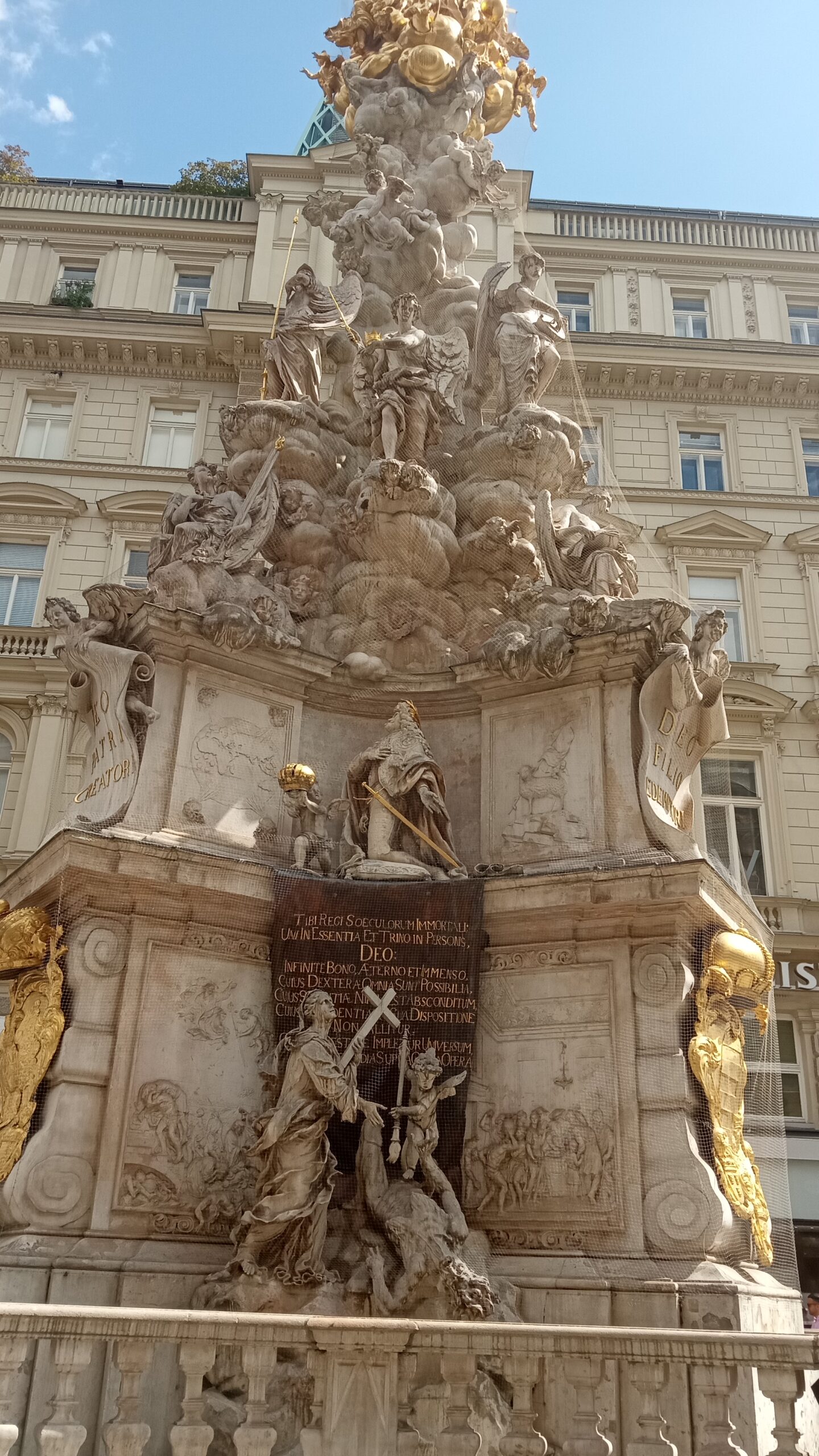
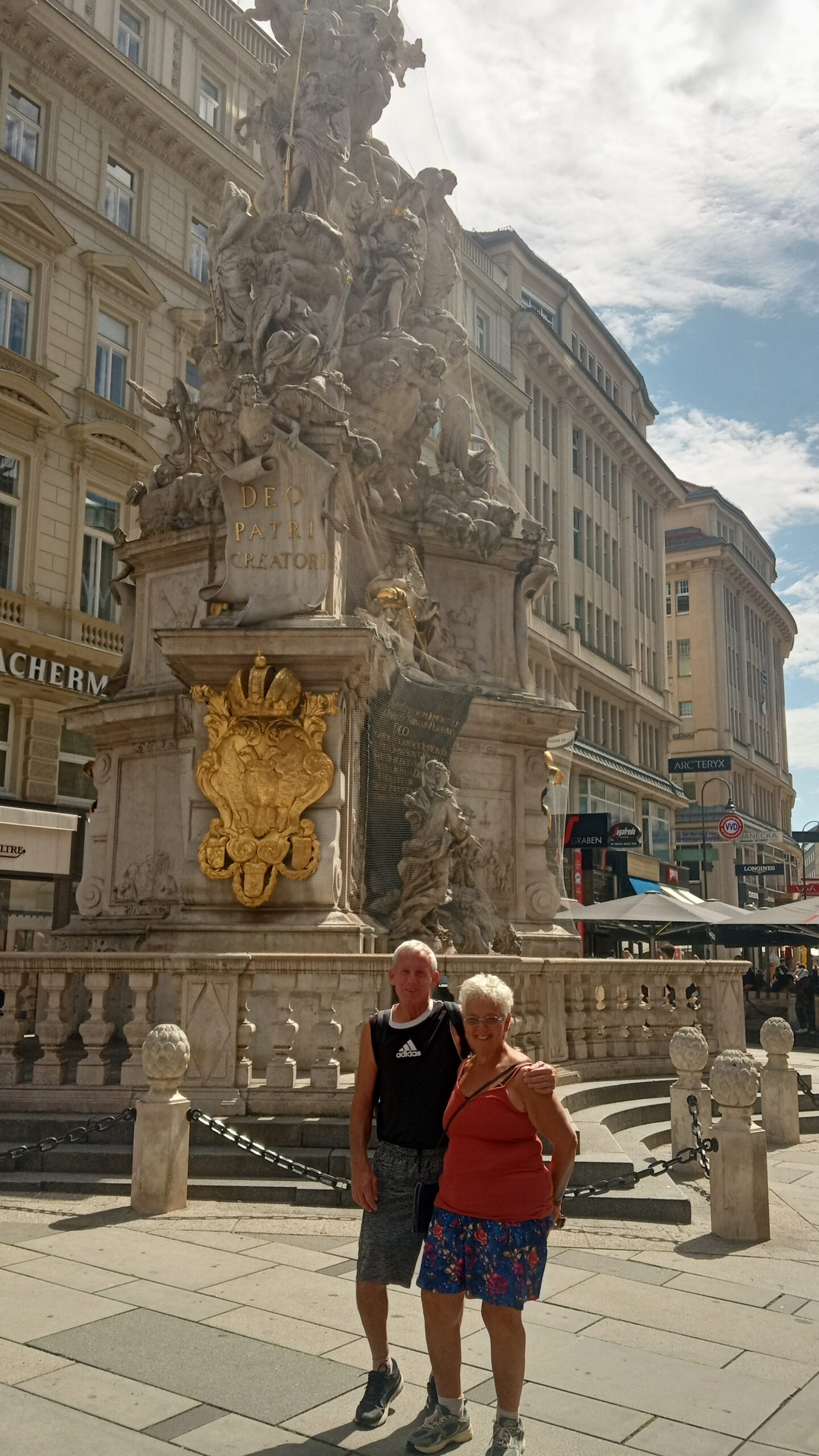
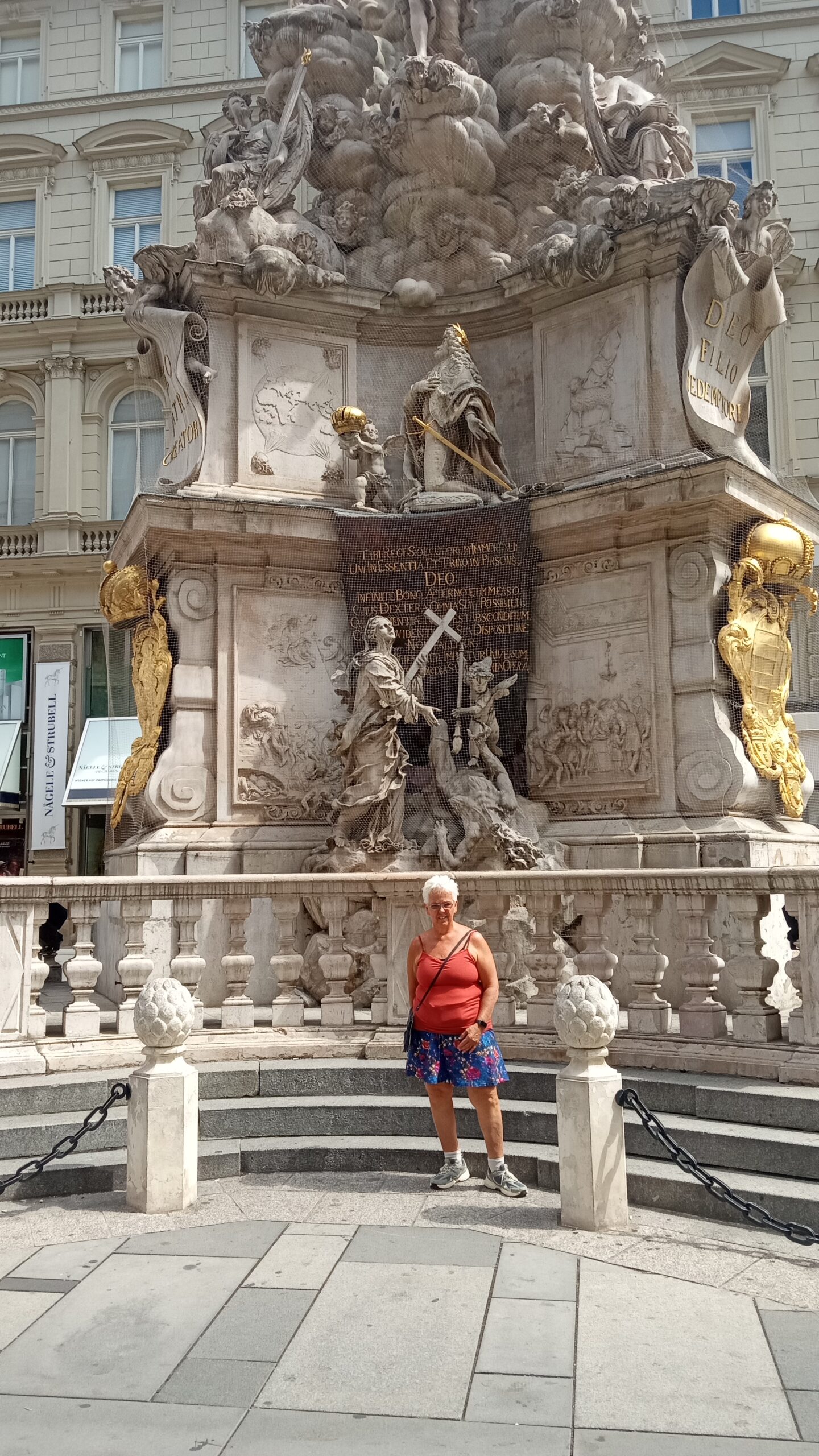
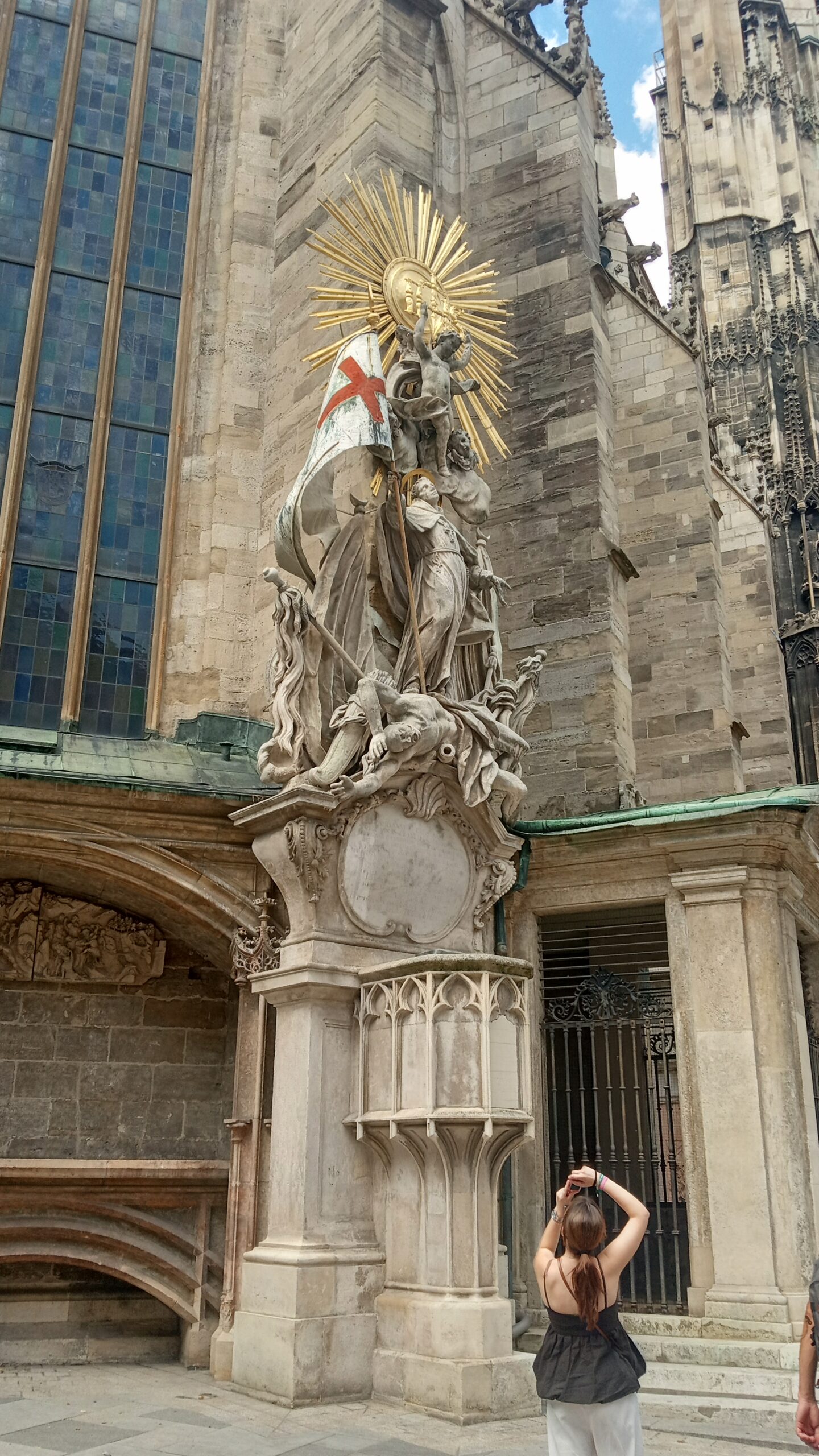
This whole mall area was filled with tall statues, shops,
classical facade buildings and tourists. We felt
transported to an older time as the integrity of the
area was perfectly preserved to fit into modern times.
We saw a joy that came forth from all this 150 plus year
old atmosphere. It was a celebration of life through
art that had been frozen in place for people to marvel at.
Day 15
Vienna, Austria
Saturday, July 18
Schönbrunn Palace
Splendid Residence of the Hapsburgs
Tour the magnificent home of the Hapsburg
Dynasty, built to rival the sprawling
Château de Versailles or Verssilles Palace
outside of Paris, France
This afternoon we has a small group excursion. 8 of us
went to Schonbrunn Palace in Vienna. This is a massive
17th century palace with over 1,000 rooms and is where
the royal family or Hapsburg ruled for 600 years with
the sprawling Austrian empire. This concerned mainly
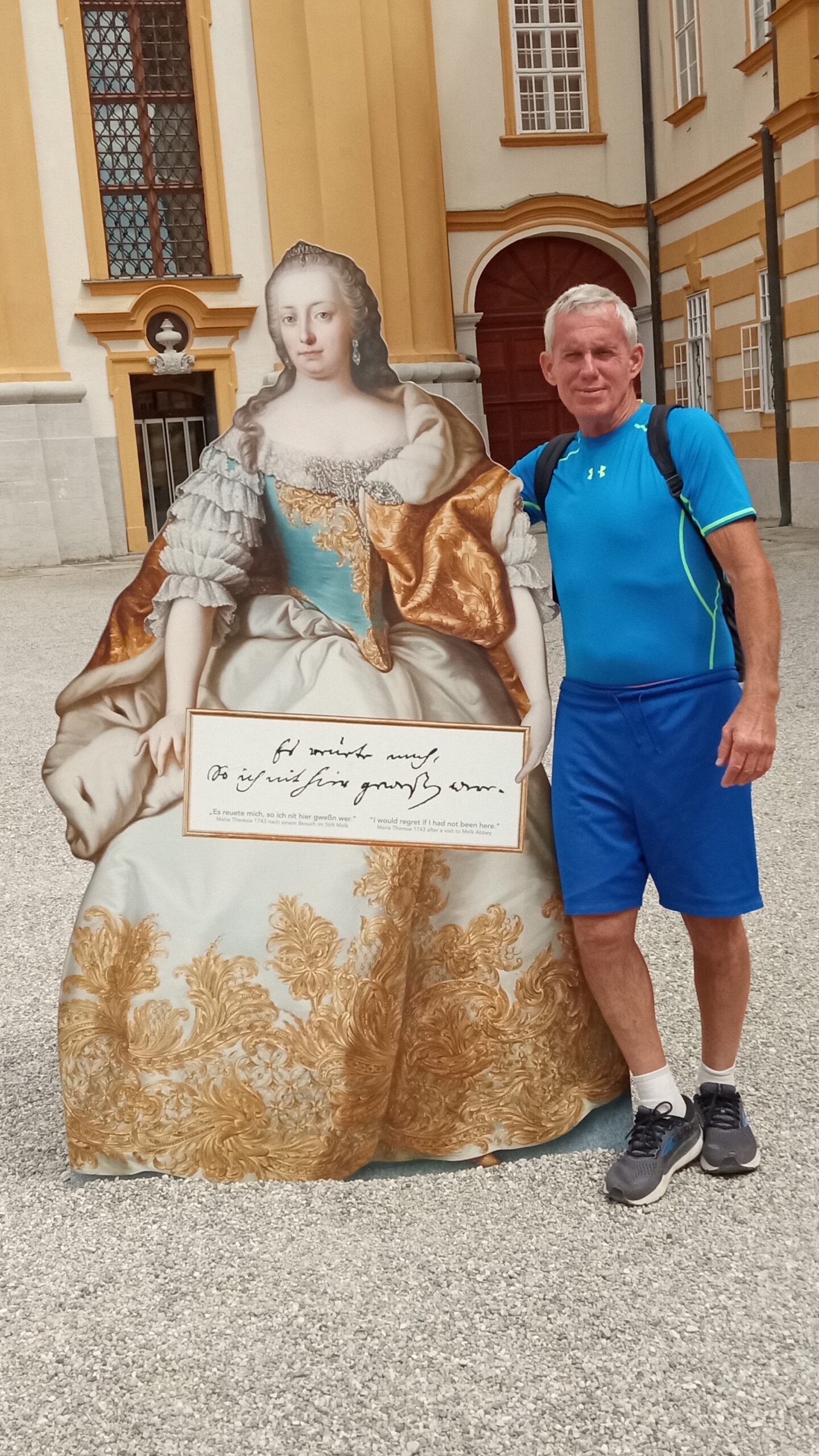
the Queen Empress Maria Theresa, the King and her
16 children.
The whole place was overwhelming to visit. Its size,
scope, extravagence, and sheer force was meant to
be a showcase of their power. We were very
impressed and in awe of its ambience.
We went into over a dozen rooms of this royal
residence. We first stepped into a large ballroom filled
with ceiling paintings of classical ancient Greek tales,
mirrors, chandeliers, parque flooring and wall
decorations. It was way overpowering to see, very
opulent in the Baroque style and was like the
hall of mirrors at Versailles.
We then went into other rooms that this royal family
once lived in. One was the royal bedroom of the king
and queen. Others were an office, or rooms of
large paintings, or rooms with Japanese influence,
and other rooms that were very overdone in baroque
guilding. We were overpowered by its lavish
style and grandeur.
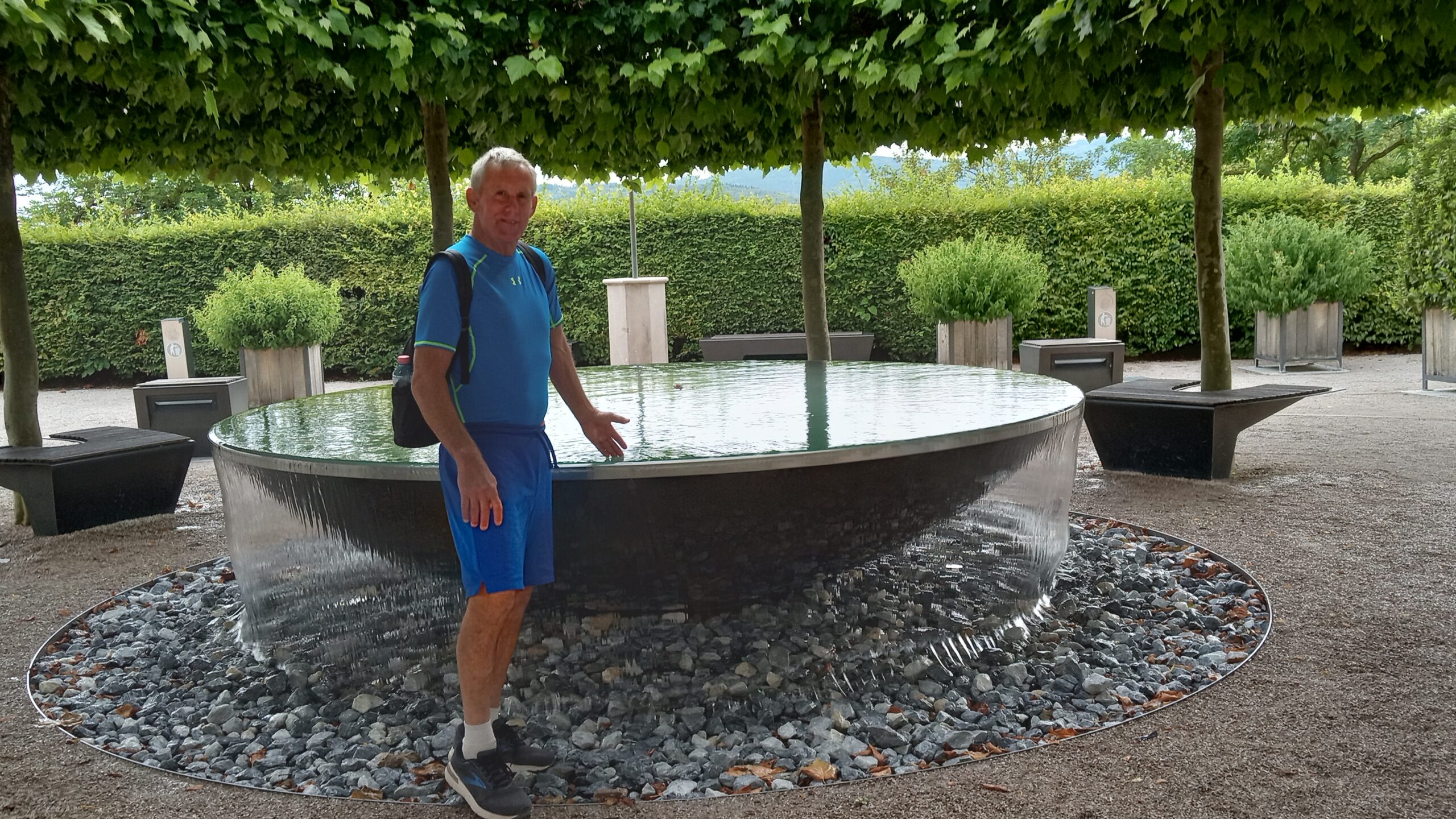
After this we went on a hike through 20 acres of the
royal gardens with a large fountain with statues at the
end of it. This then turned into 2 zig-zag paths that went
to the top of a tall hill at the very back of the property.
This had stairs, statues and columns that was very
classical. Many tourists were there walking up the paths
and touring the lavish gardens that adorned the
backend or backyard of this royal palace. The money it
took to build this rivaled the best palaces in the world.
Day 16
Melk, Austria
Sunday, July 19
Wachau Valley Highlights
on Danube River
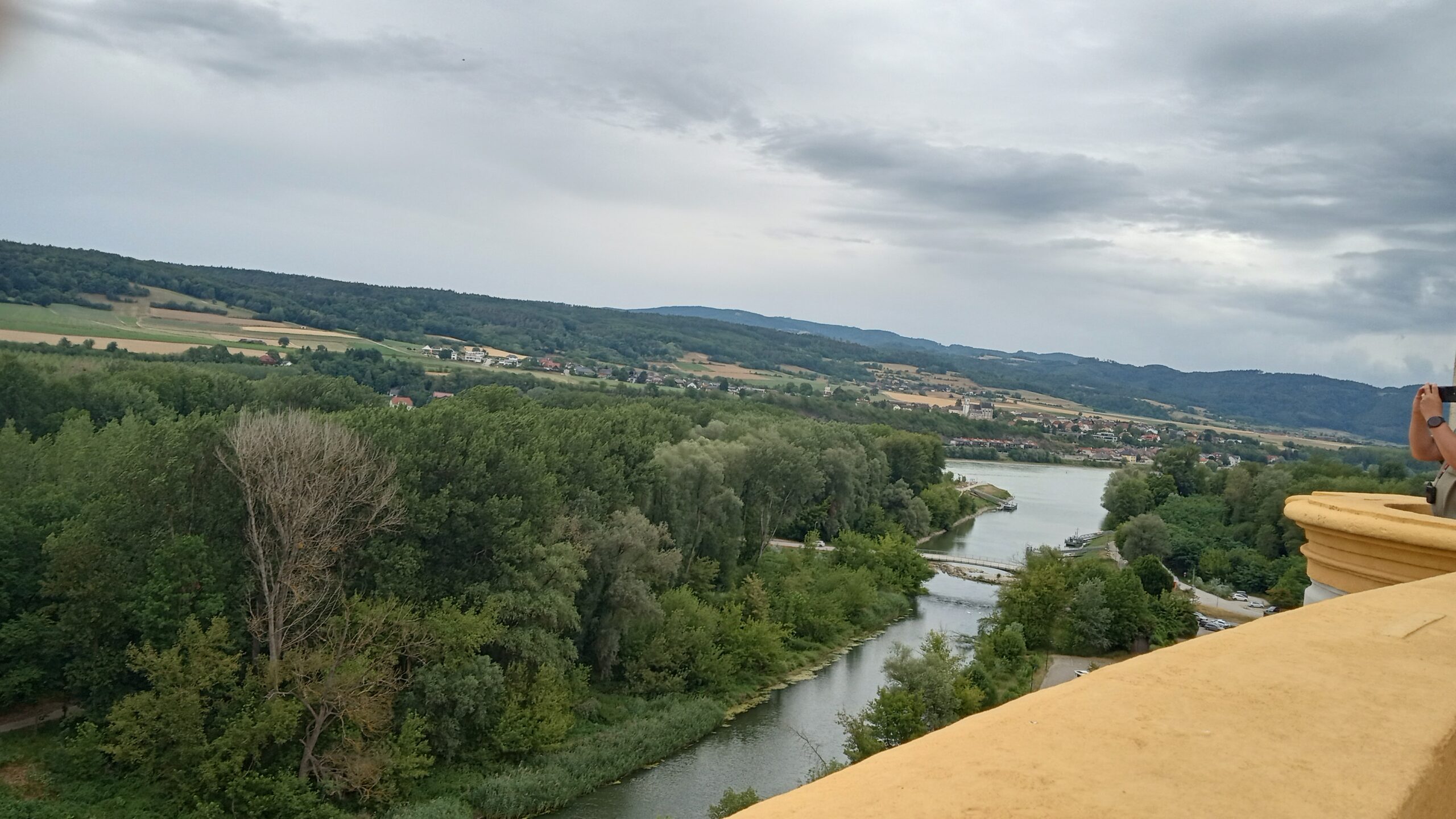
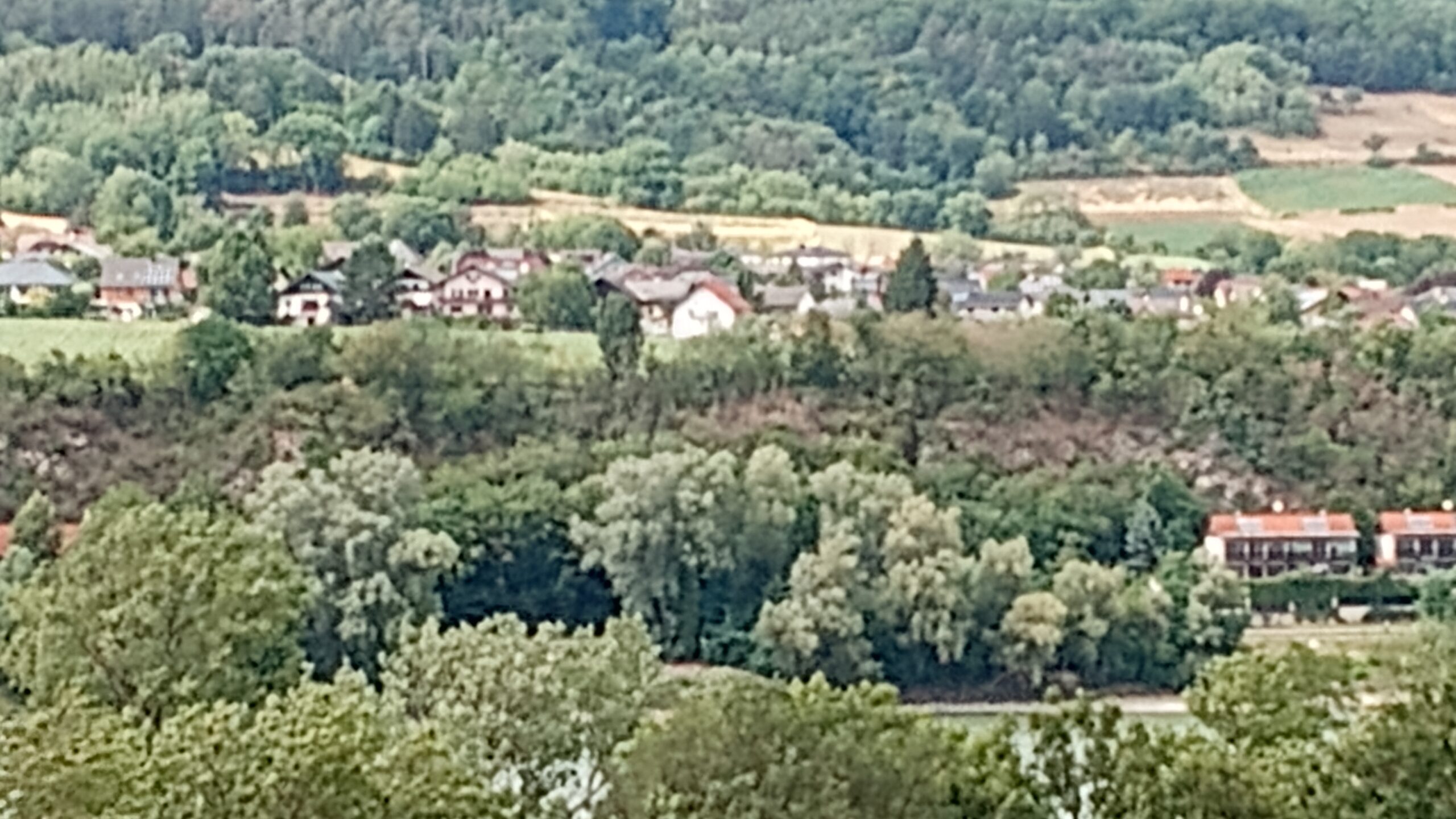
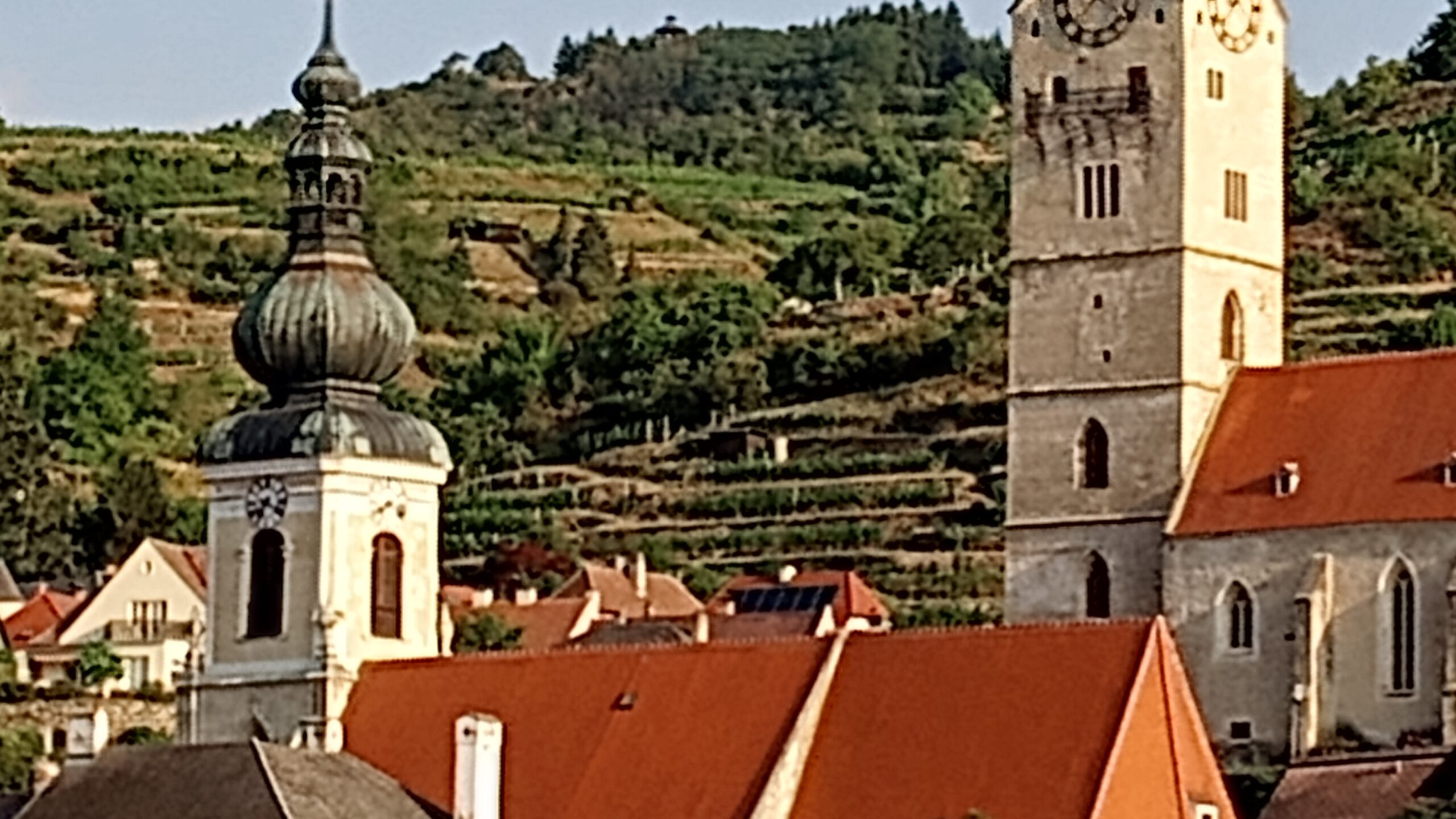
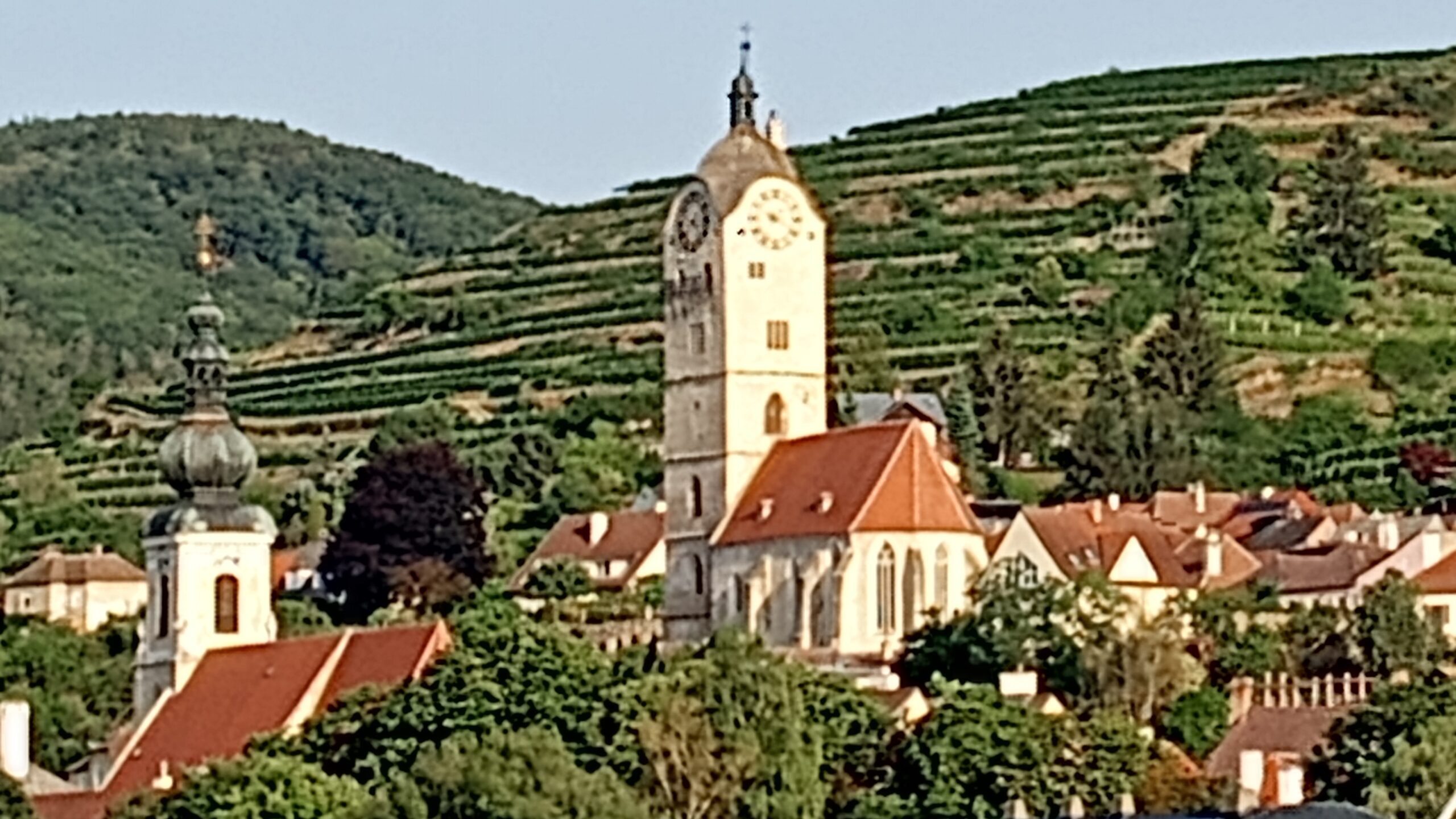
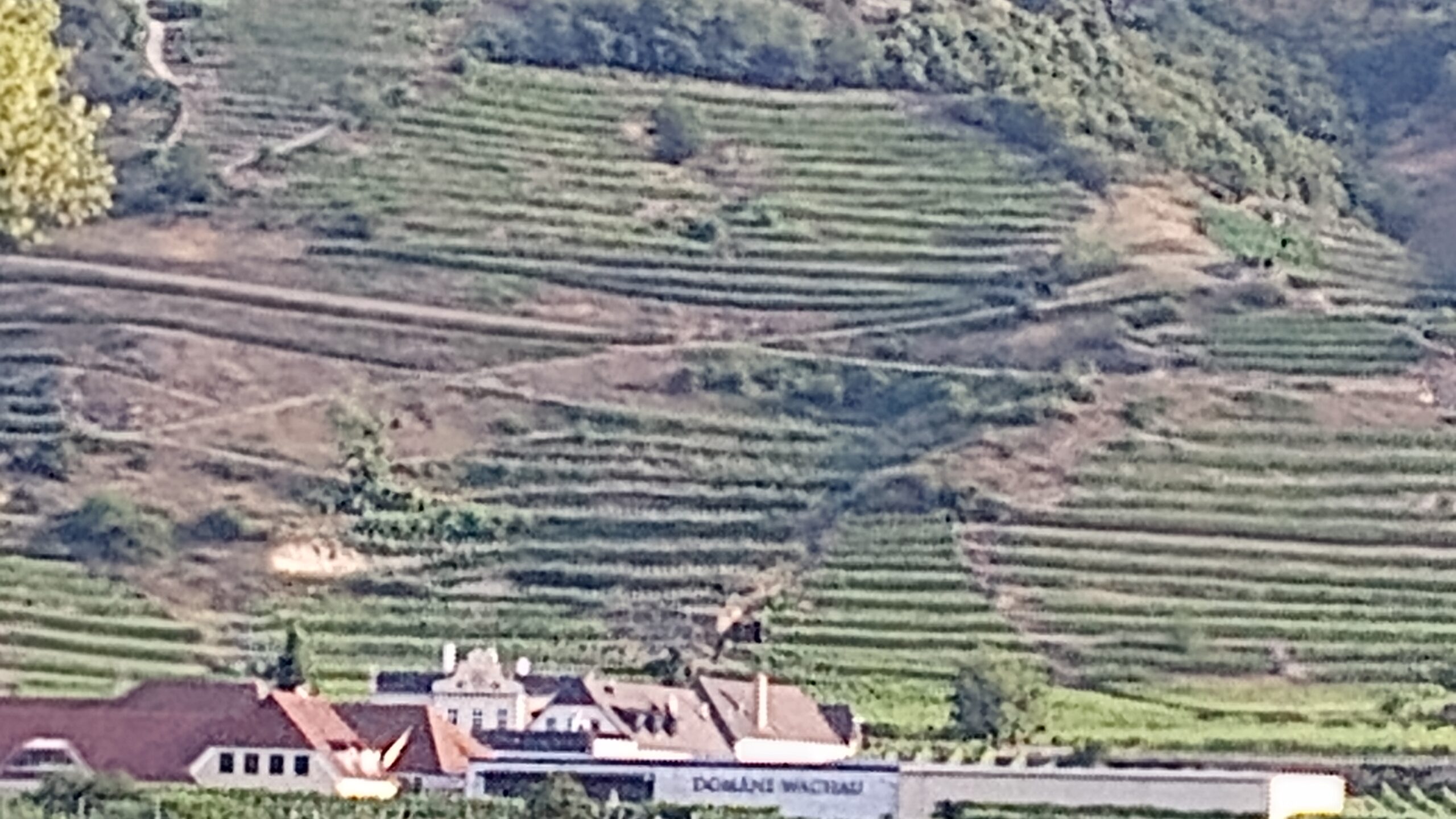
This morning our river boat took us through a section
of Danube called the Wachau Valley. Here we sailed a
picturesque, winding part of the Danube that was filled
with tall, whitish, grayish limestone cliffs, very small towns
with churches and houses on the riverbanks, terraced
vineyards, rolling hills covered with forests or farming areas
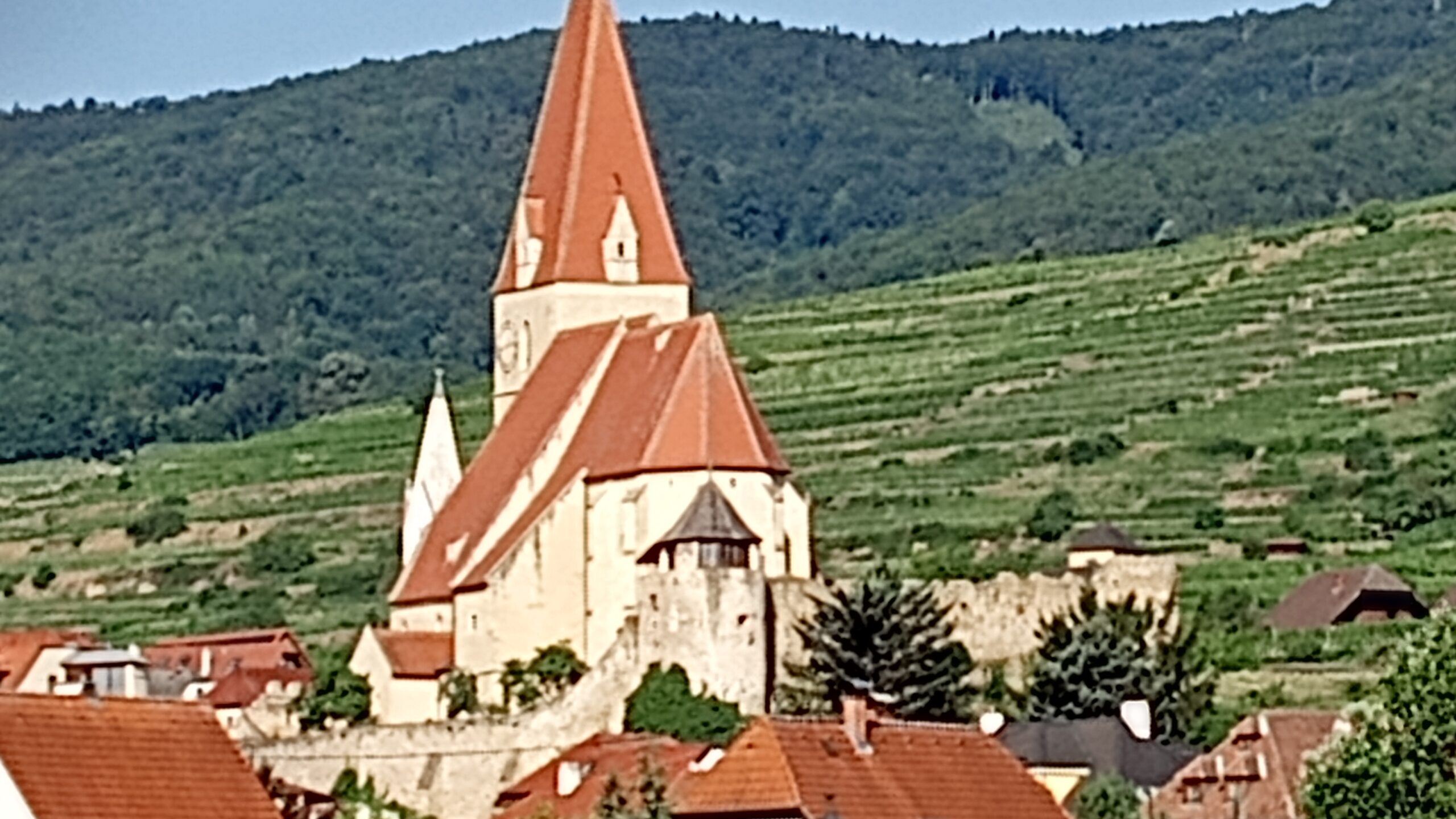
and of course castles.
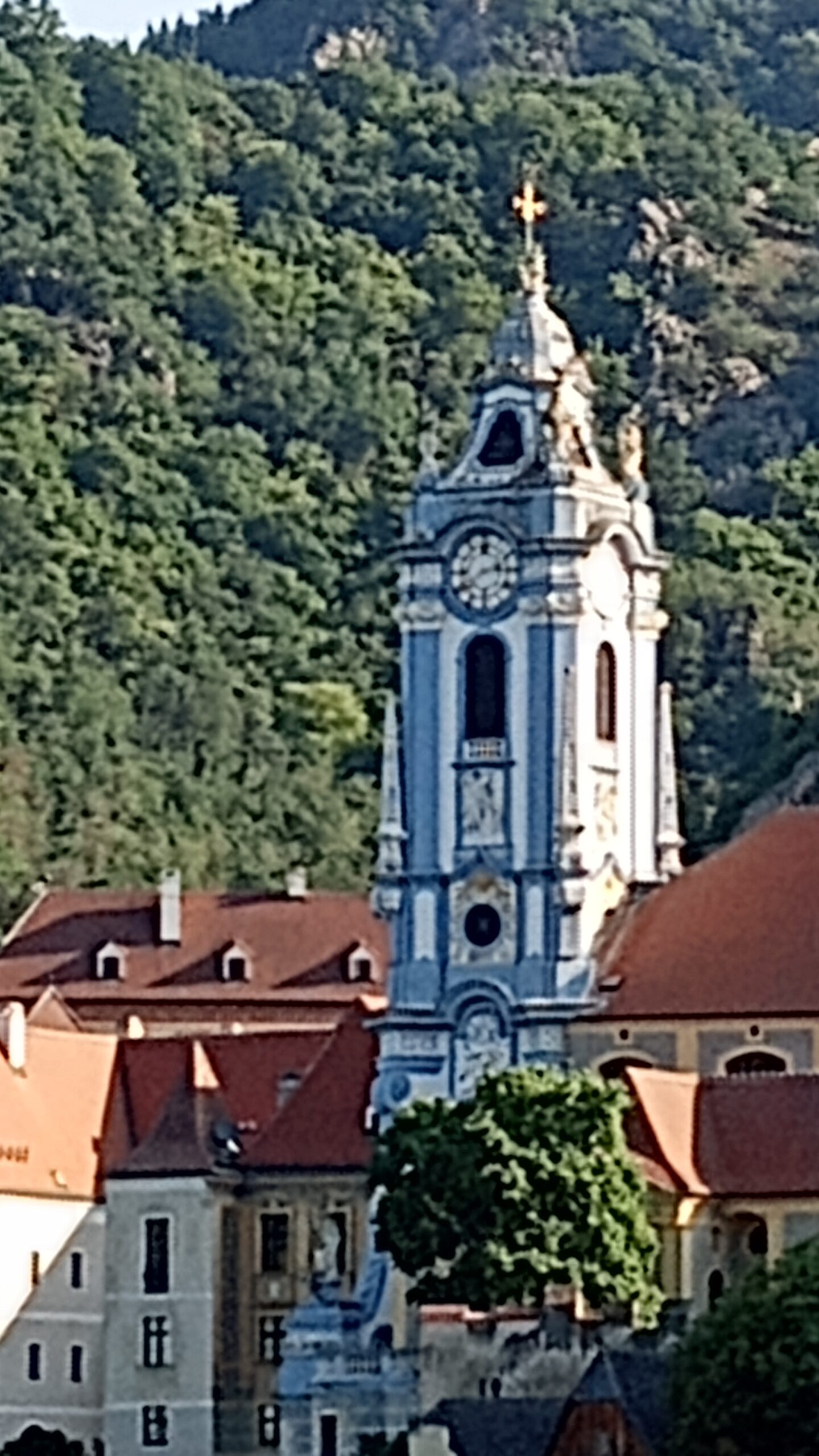
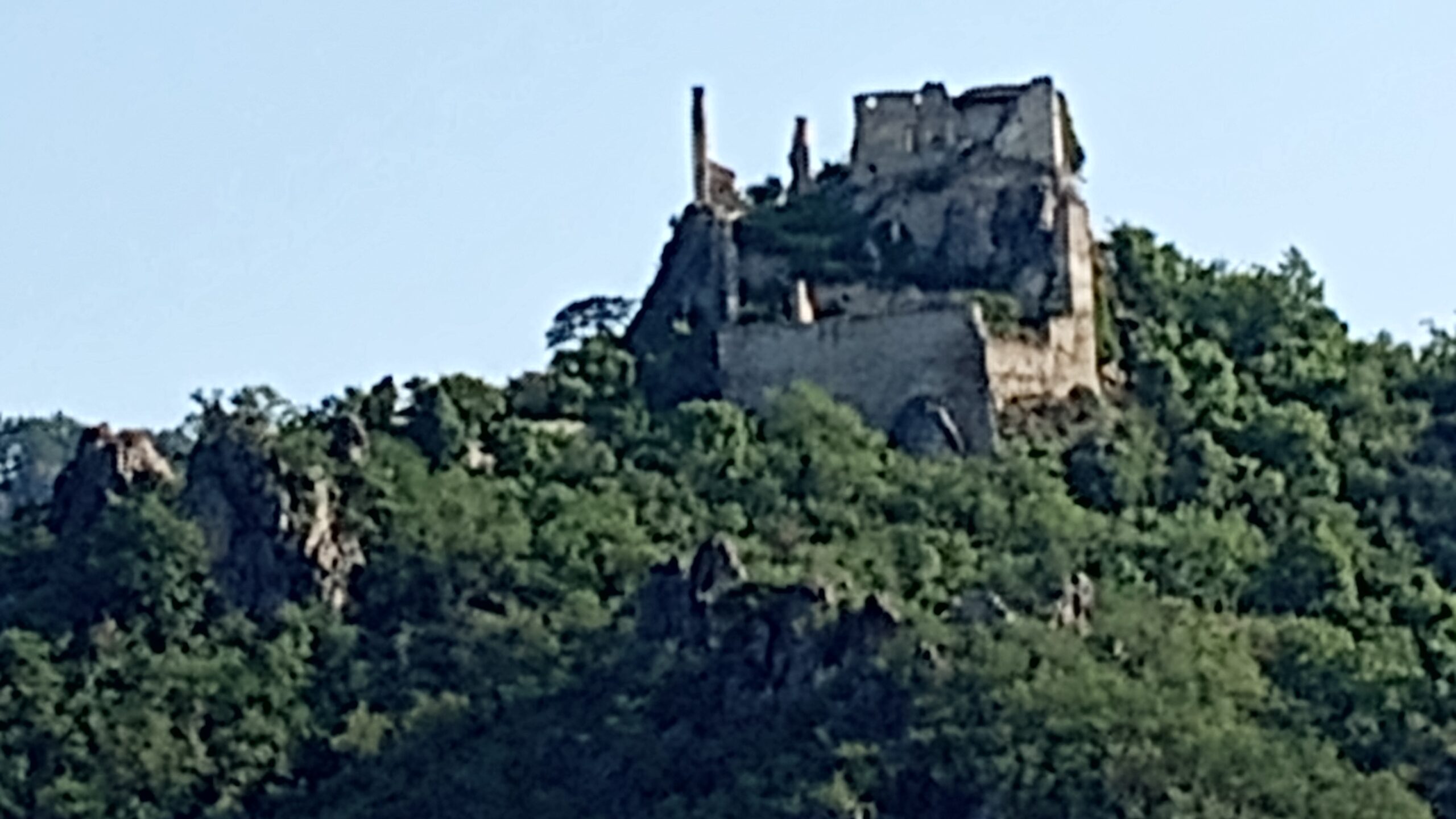
We sailed past at least 6 old stone castles, some abbeys,
and old churches nestled on cliff tops. Many were in ruins
with long walls built into the cliffs to protect them better.
Castles with quaint town areas named Spitz, Durnstein
and Aggstein dominated this curving banks of the Danube.
We had guided commentary for 2 hours on and off as we
passed by these historic sites. The whole area was pretty
and relaxing to go through as we are on the way to Melk
Abbey, which again was a fortified historic old monastary
that now produces an apricot schnapps and other
related apricot products.
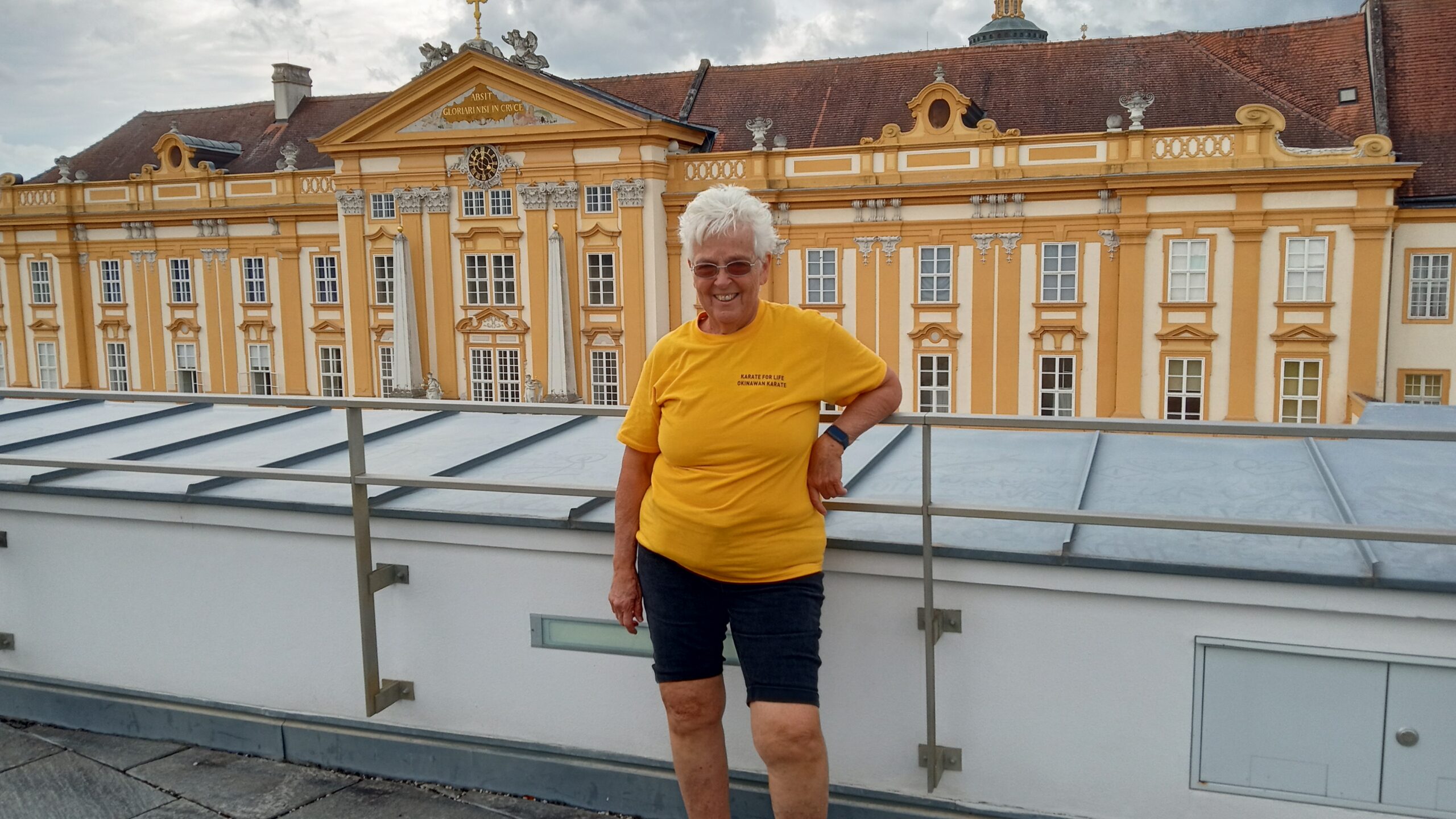
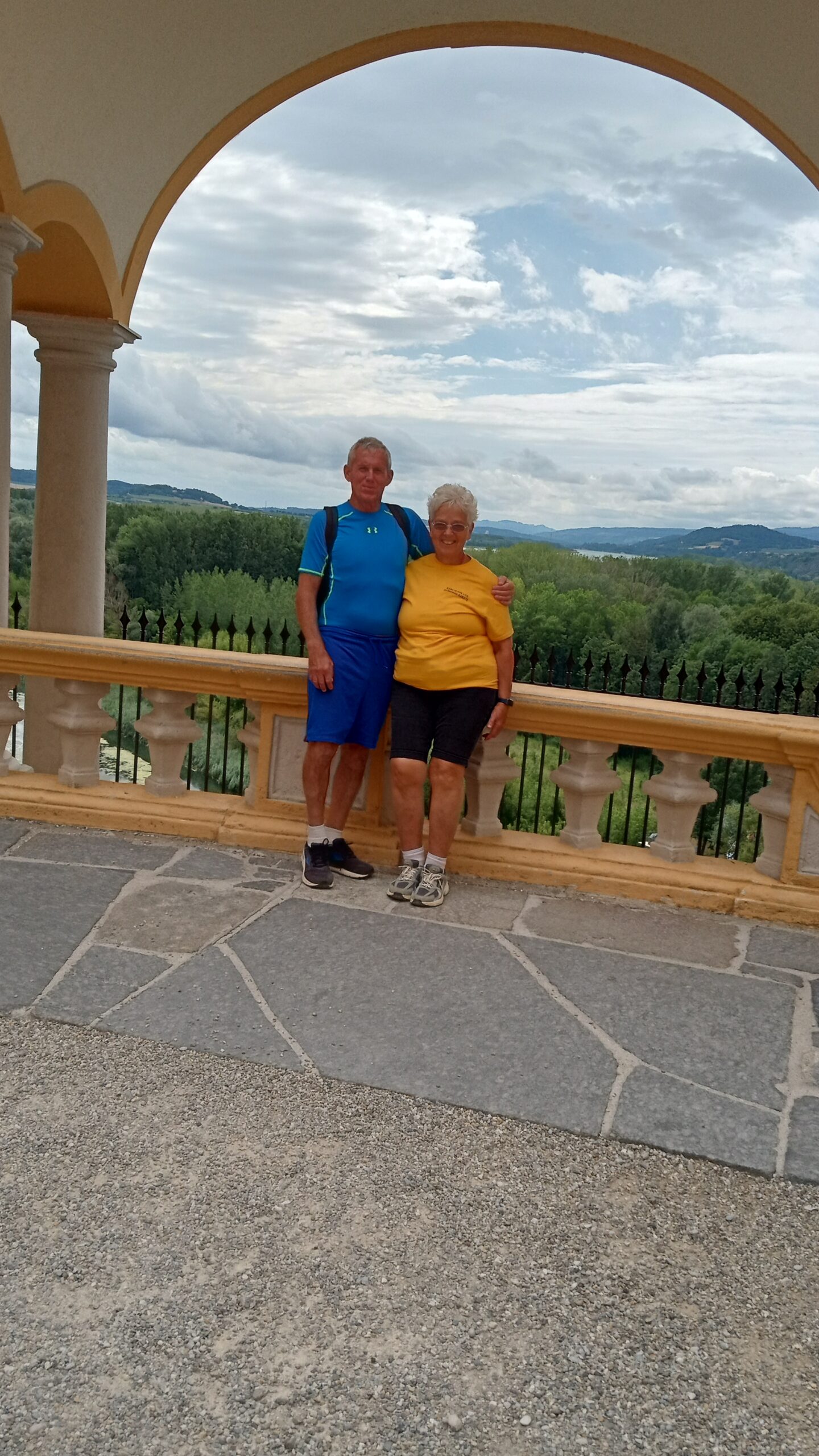
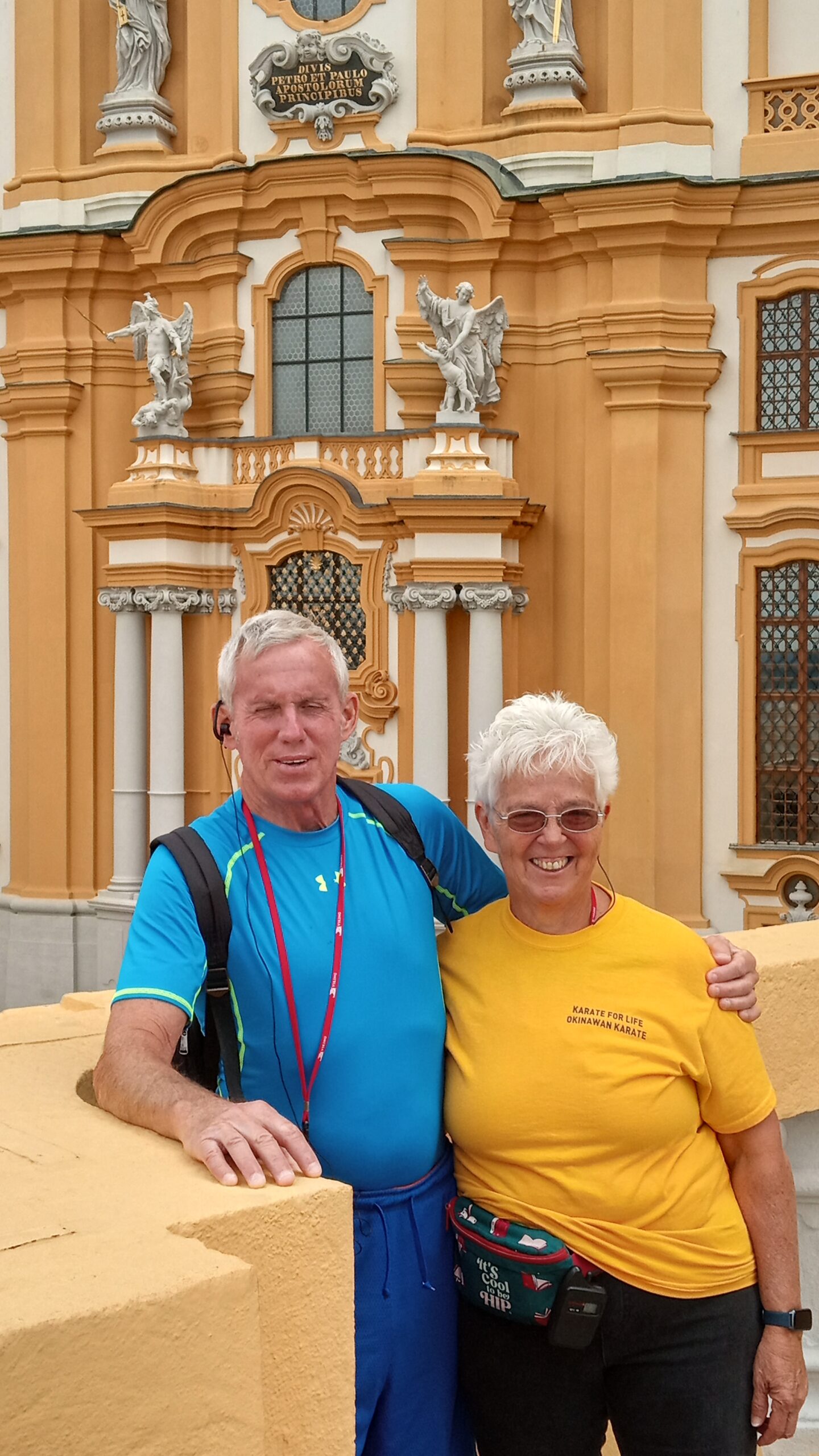
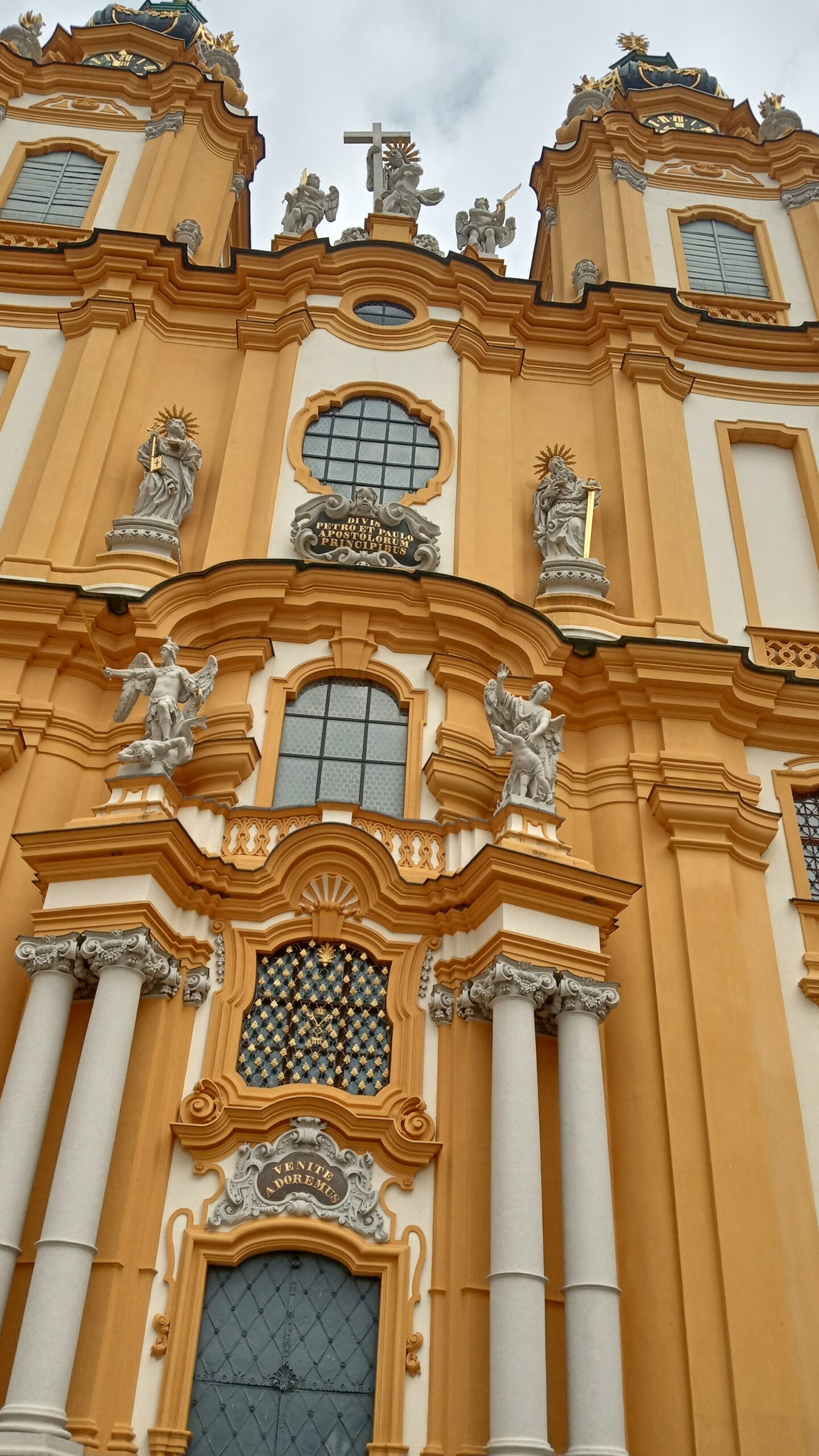
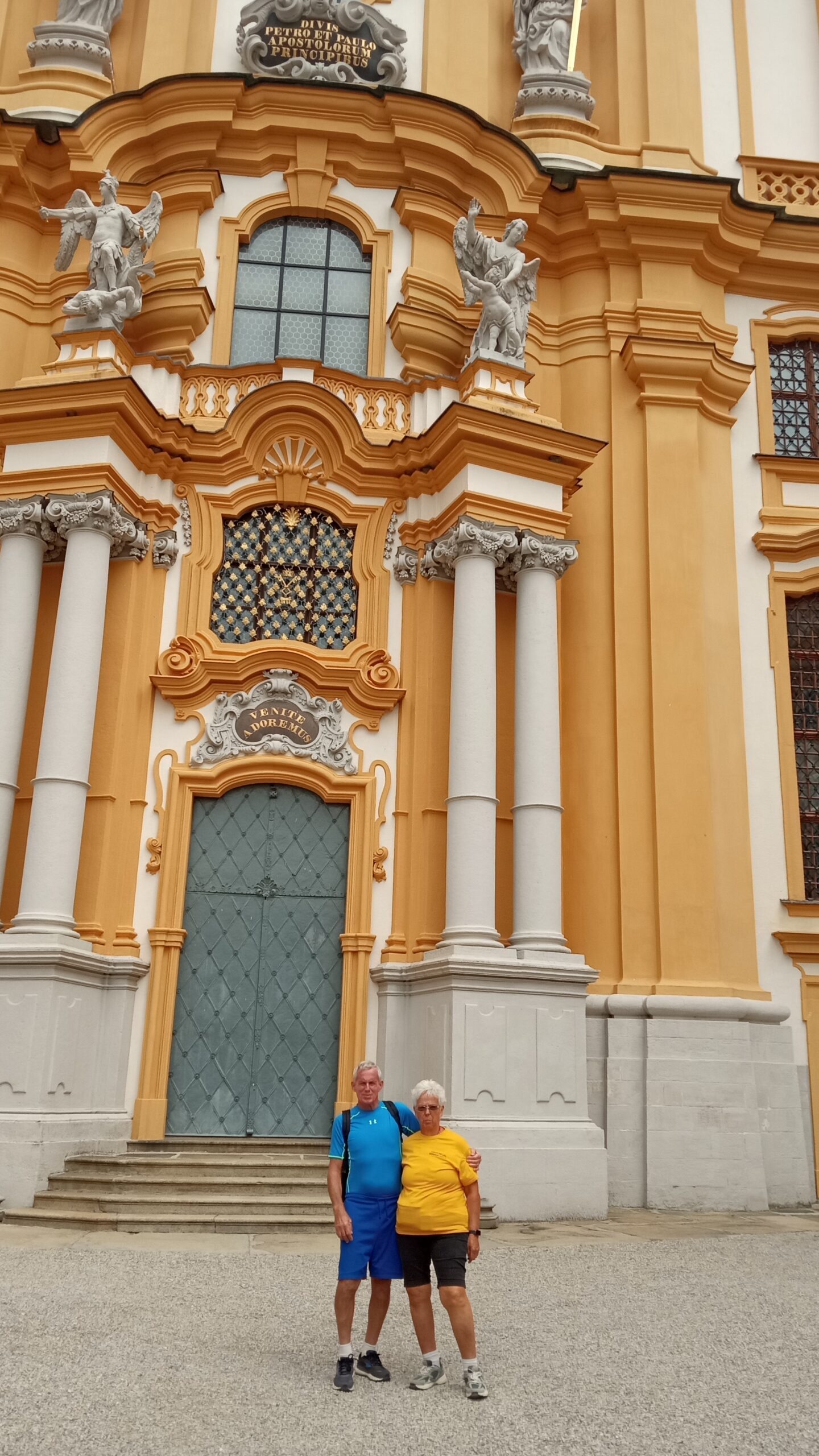
Melk Abbey
An Elegant Benedictine Treasure Sends the Spirit Soaring,
the renowned Melk Abbey, a masterwork of baroque brilliance.
Perched on dramatic cliffs high above the
Danube, this ochre-colored confection is perhaps the
most graceful landmark of the Wachau Valley.
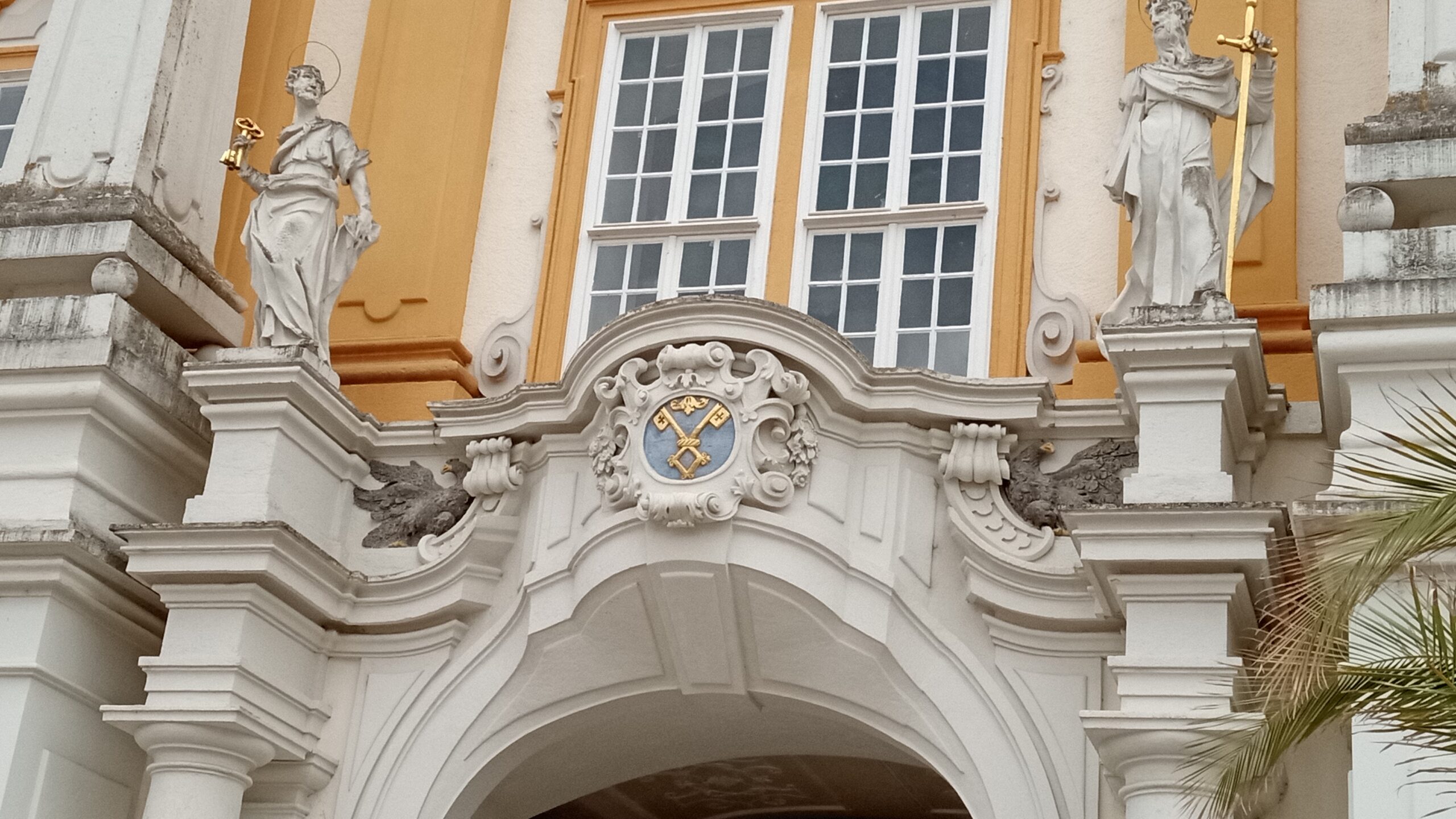
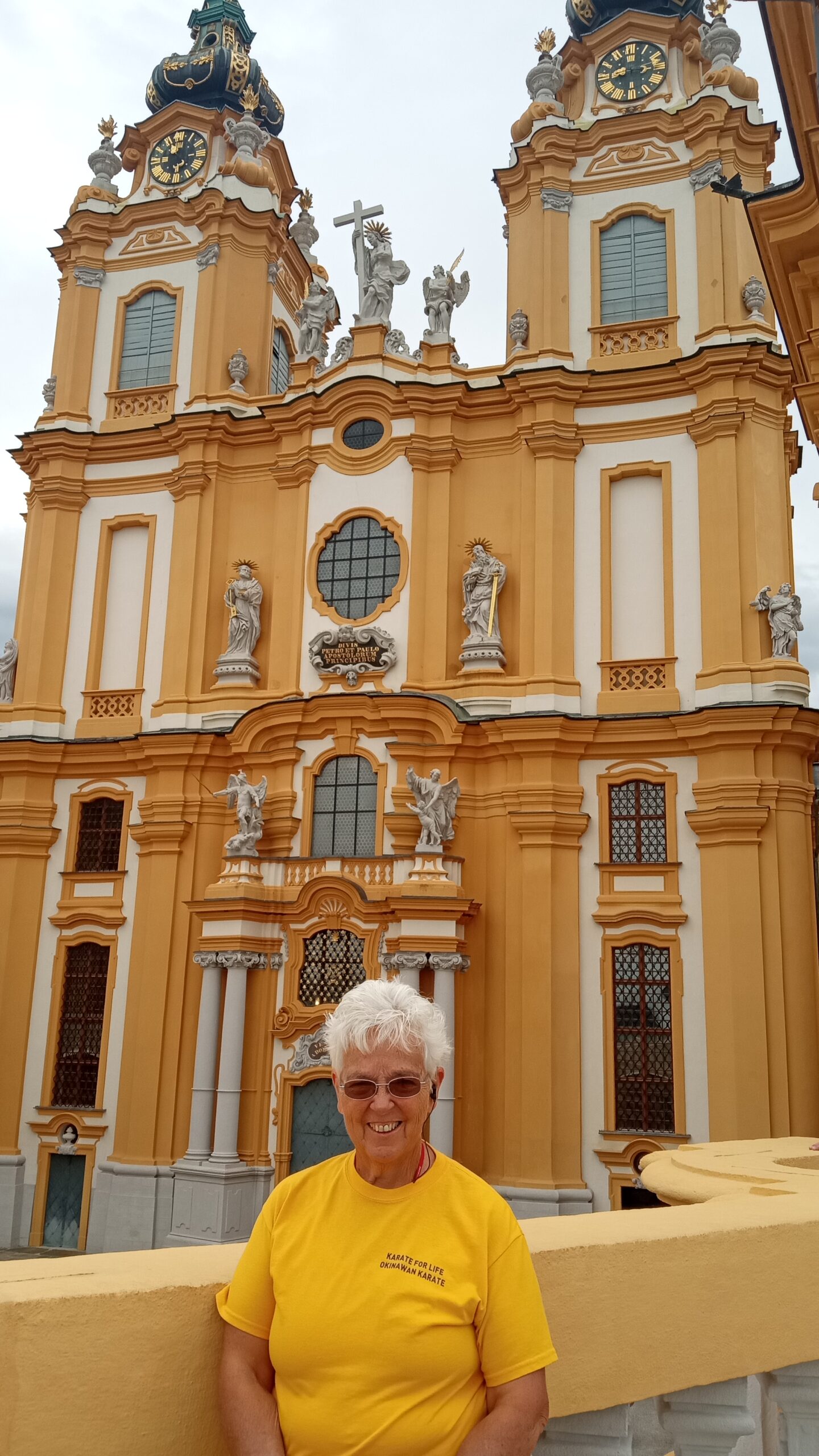
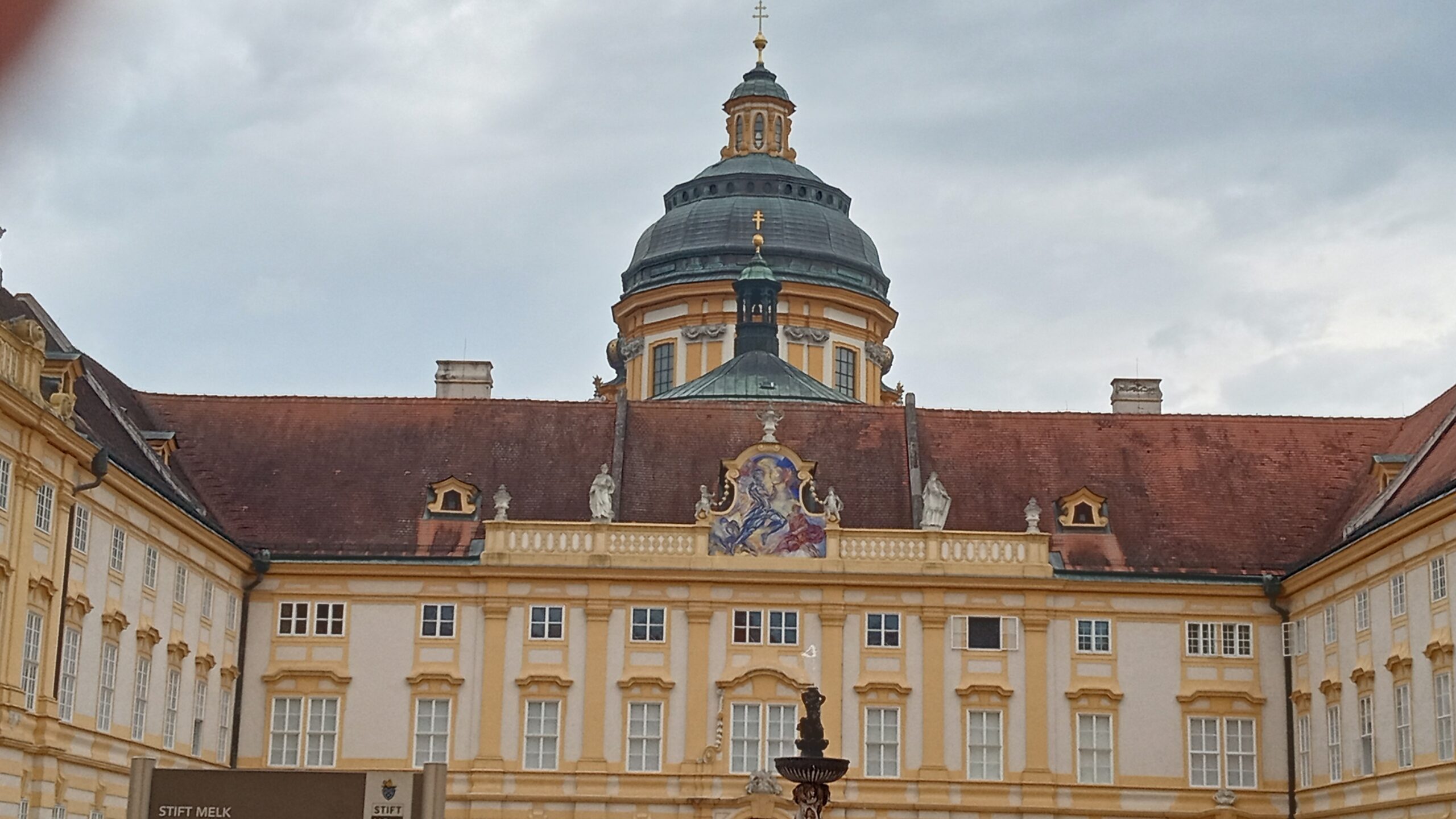
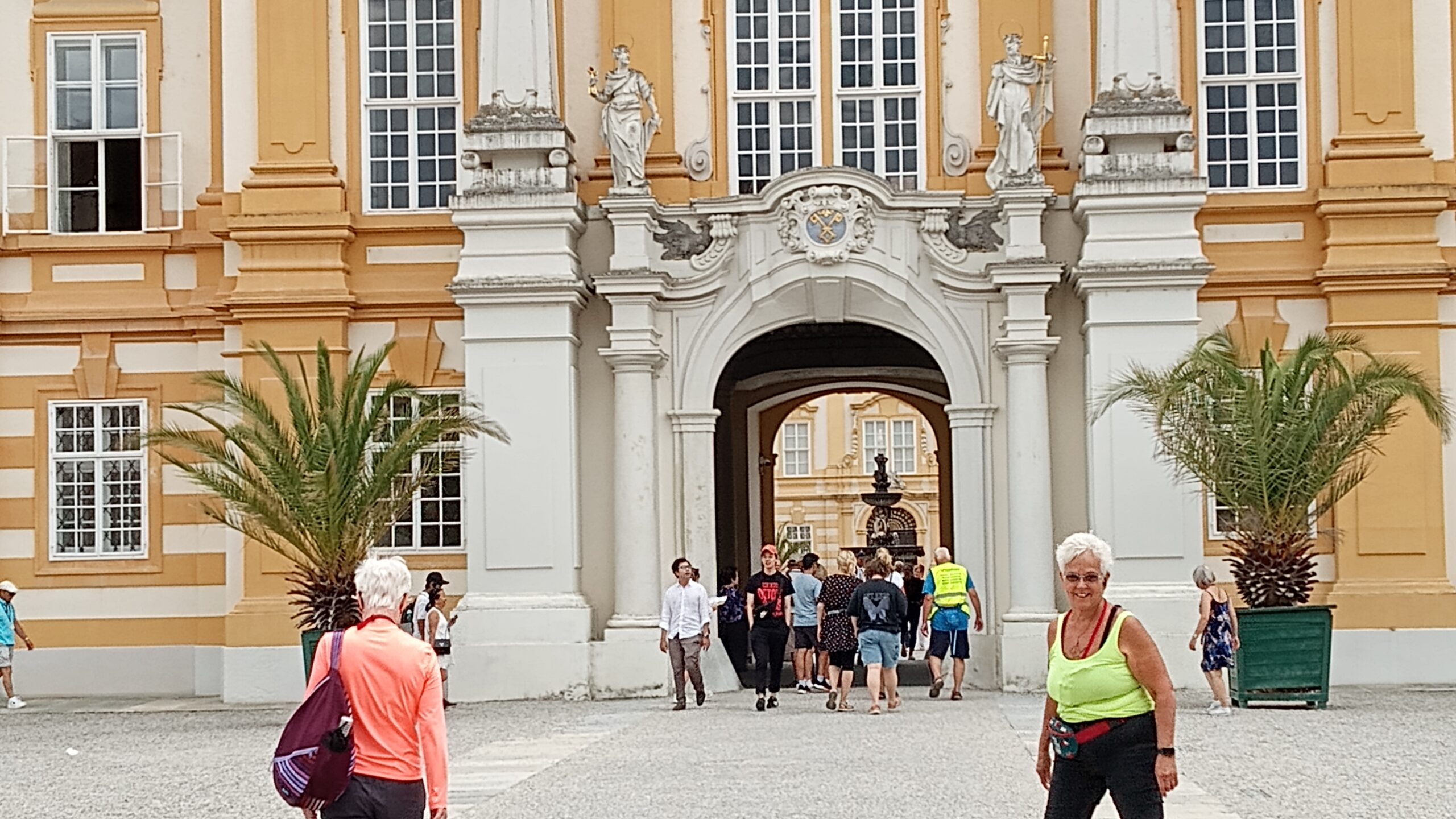
This afternoon we took a bus ride to the Melk Benedictine
Monastry. This is a 17th century restored old fortress with
a church that was the first Benedictine monastary. There
were monks living there then and now.
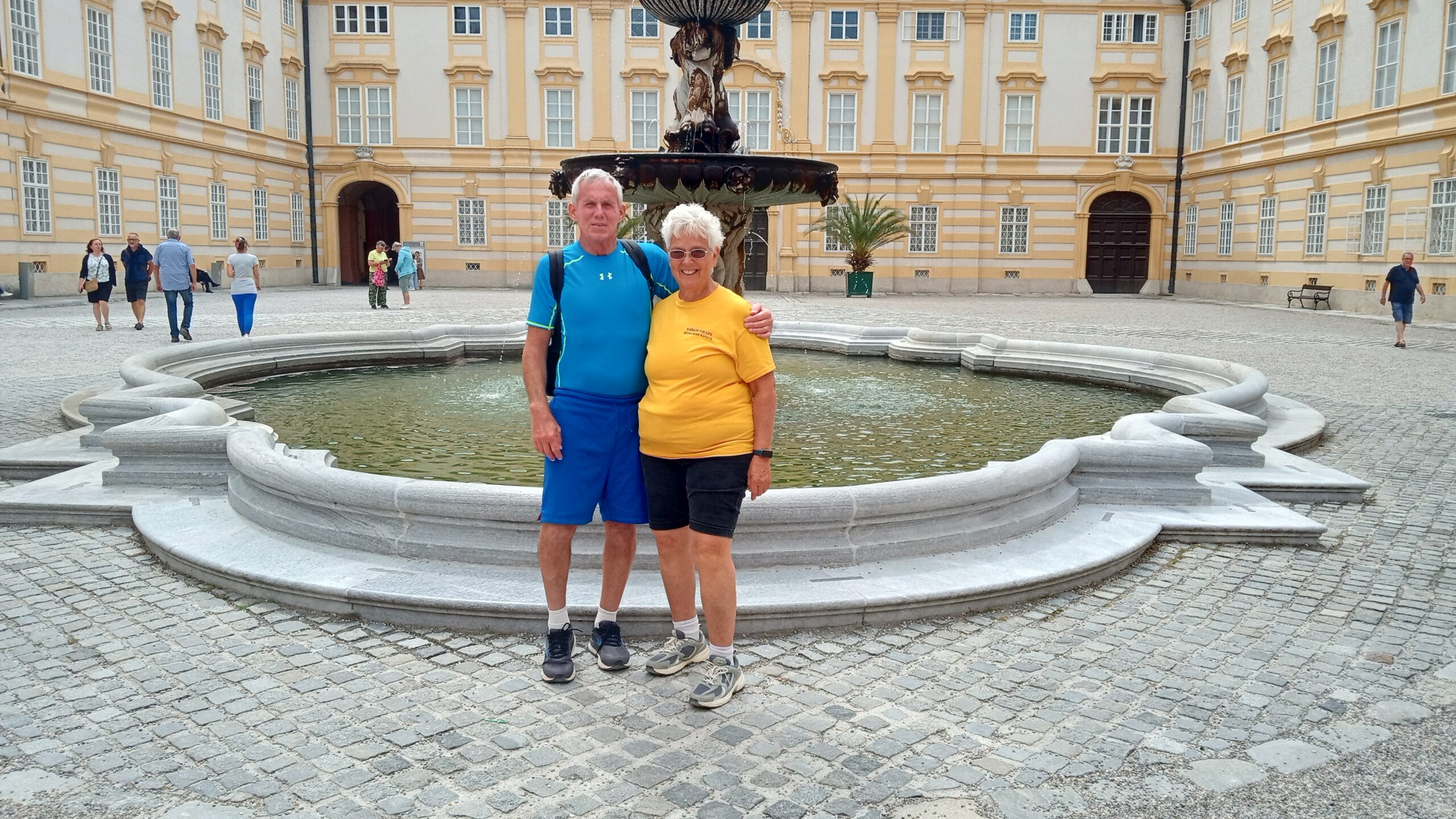
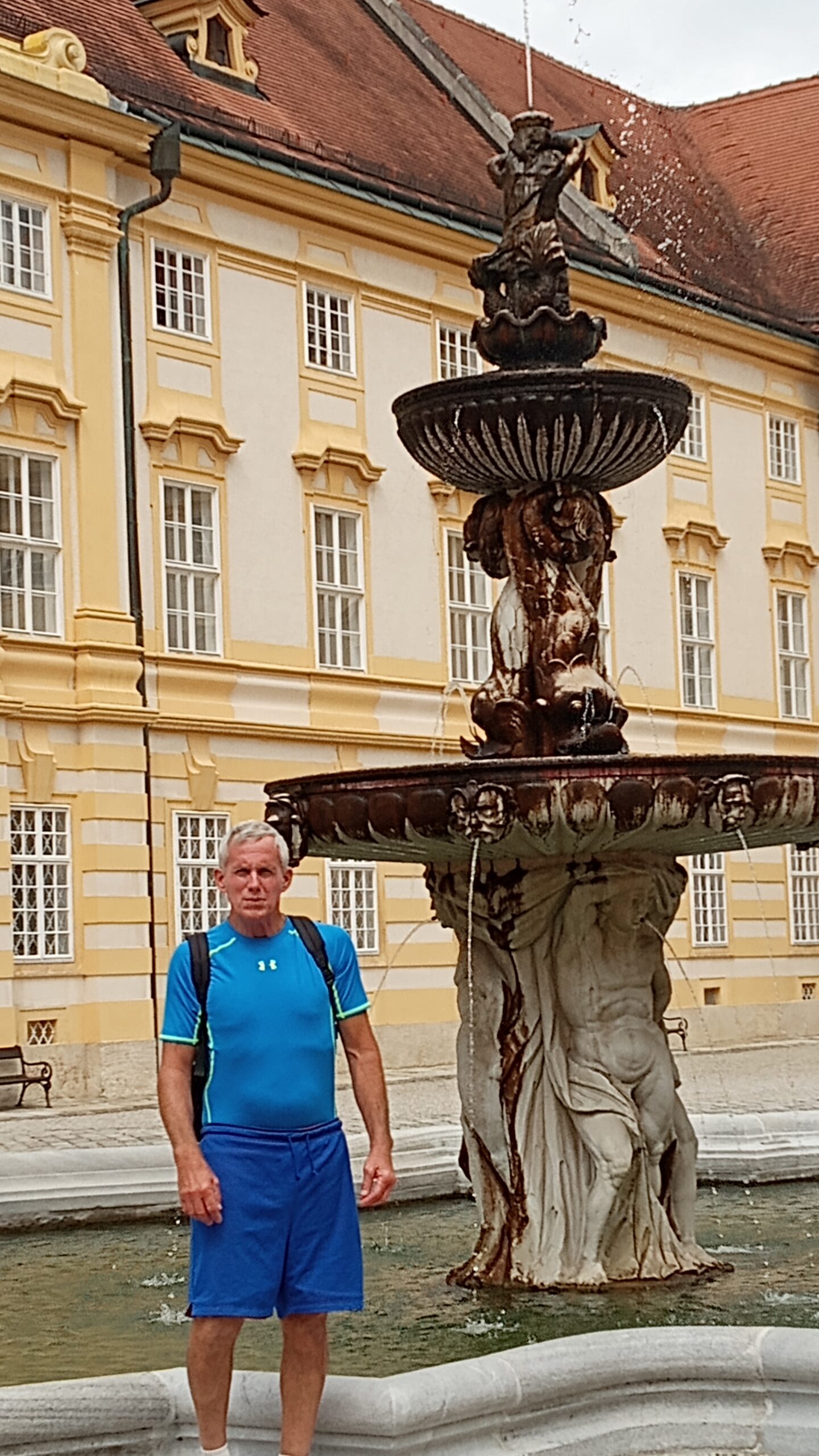
A courtyard with a fountain first greeted us. The buildings
were in a light yellow color, and had long corridors and
special rooms with precious objects in them. We saw a
library that once contained 80,000 books, relics of old saints
in special wall frames, and had intricate parque flooring.
Inside we saw some opulent treasures that were stored
there such as jeweled crosses, bishop robes, paintings and
ornate fixtures. We never saw how the monks lived.
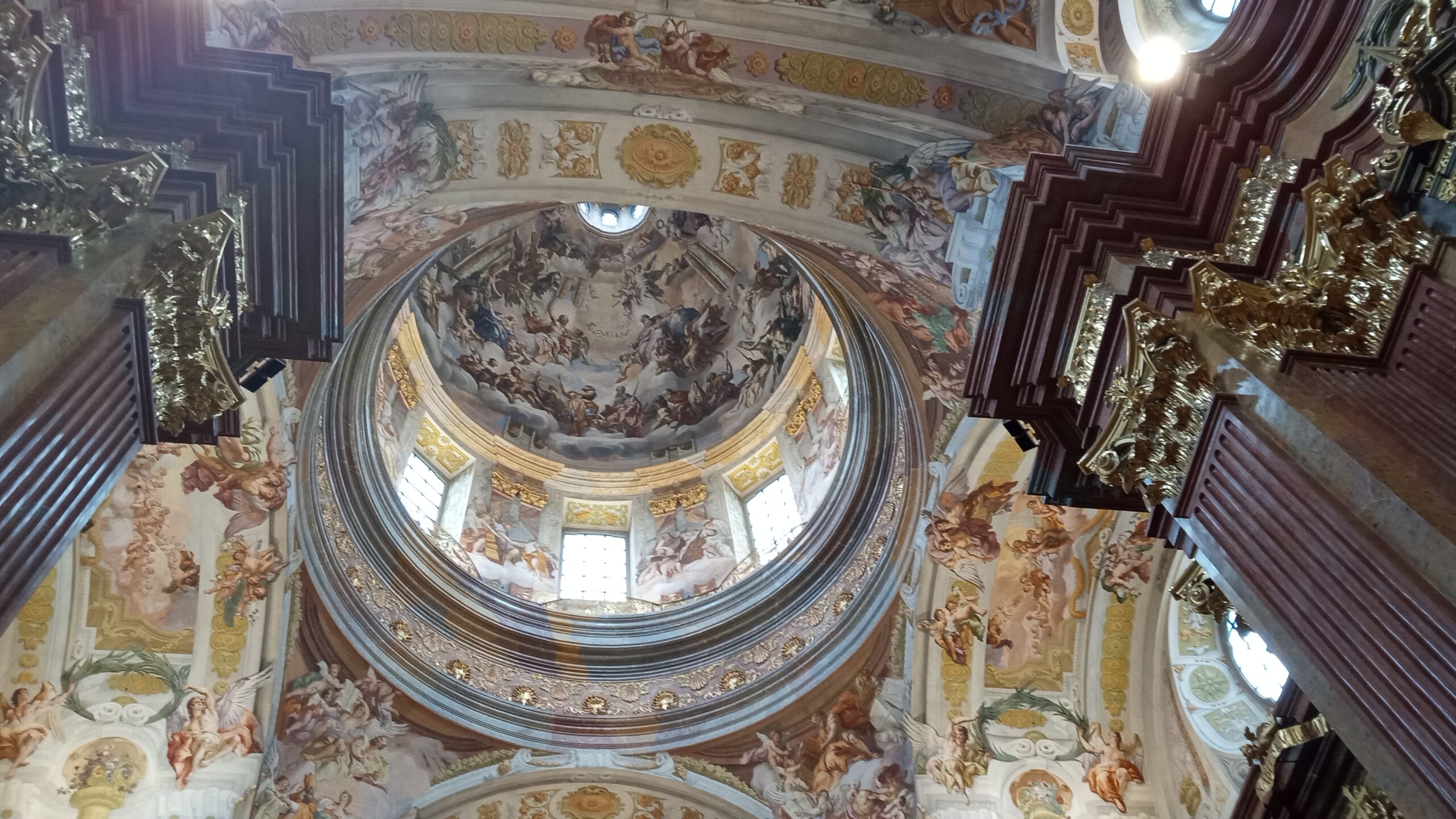
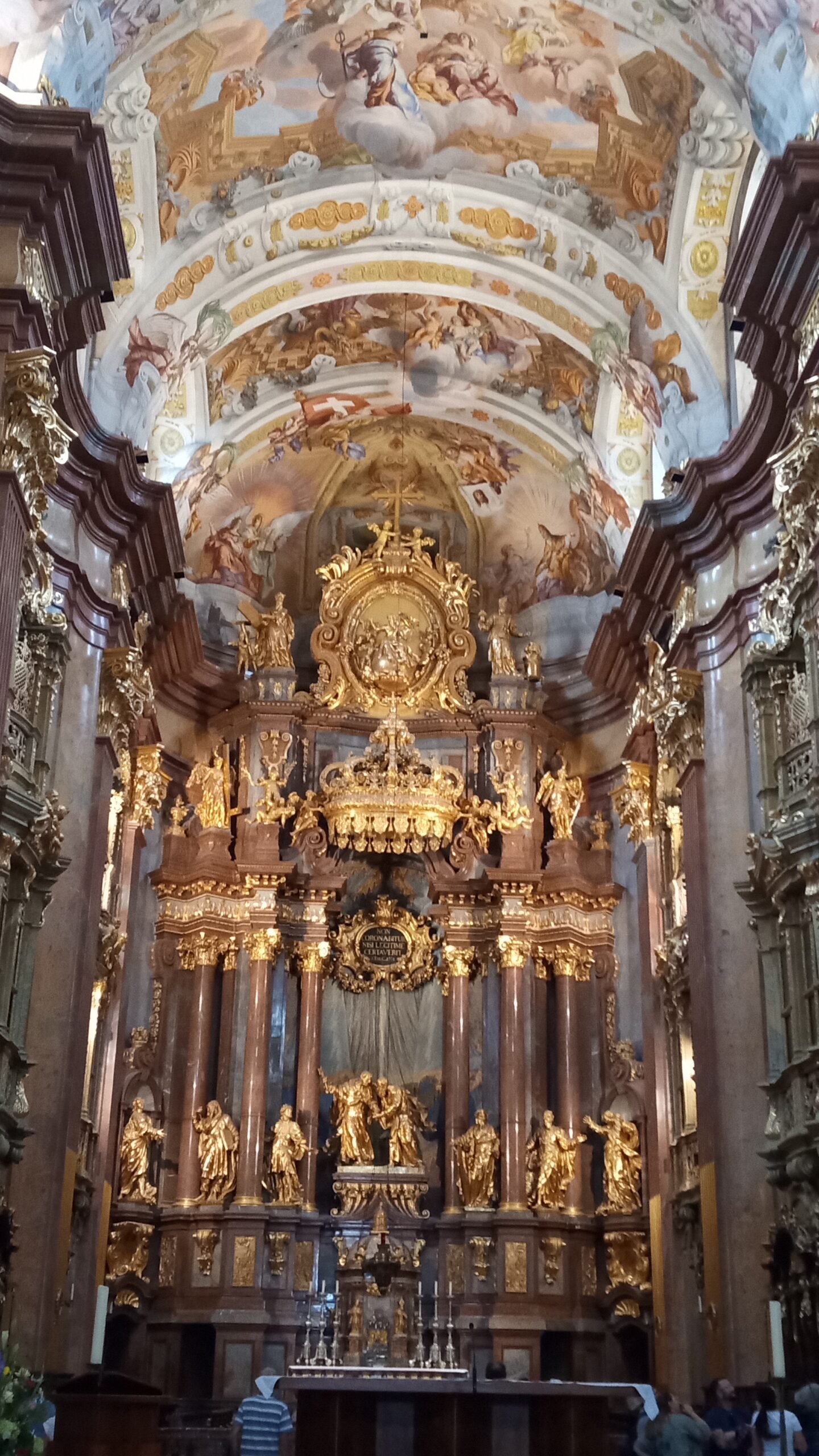
The highlight was the awesome stylized, Baroque church
complete with a fantastic guilded alter, organ, wooden pews
and highly decorated gold leafed embellishments
everywhere. This ornamentation concerned biblical story
telling and religious fever on a grandiose scale with cherubs,
swirling gold reliefs, paintings, 3D angels, marble columns,
polished vineer marble walls, crosses, Jesus doing this
and that, parables embellished in walls.
It was breathtaking in scope. A feast for the eyes. We have
never seen so many overdone religious decor pieces before!
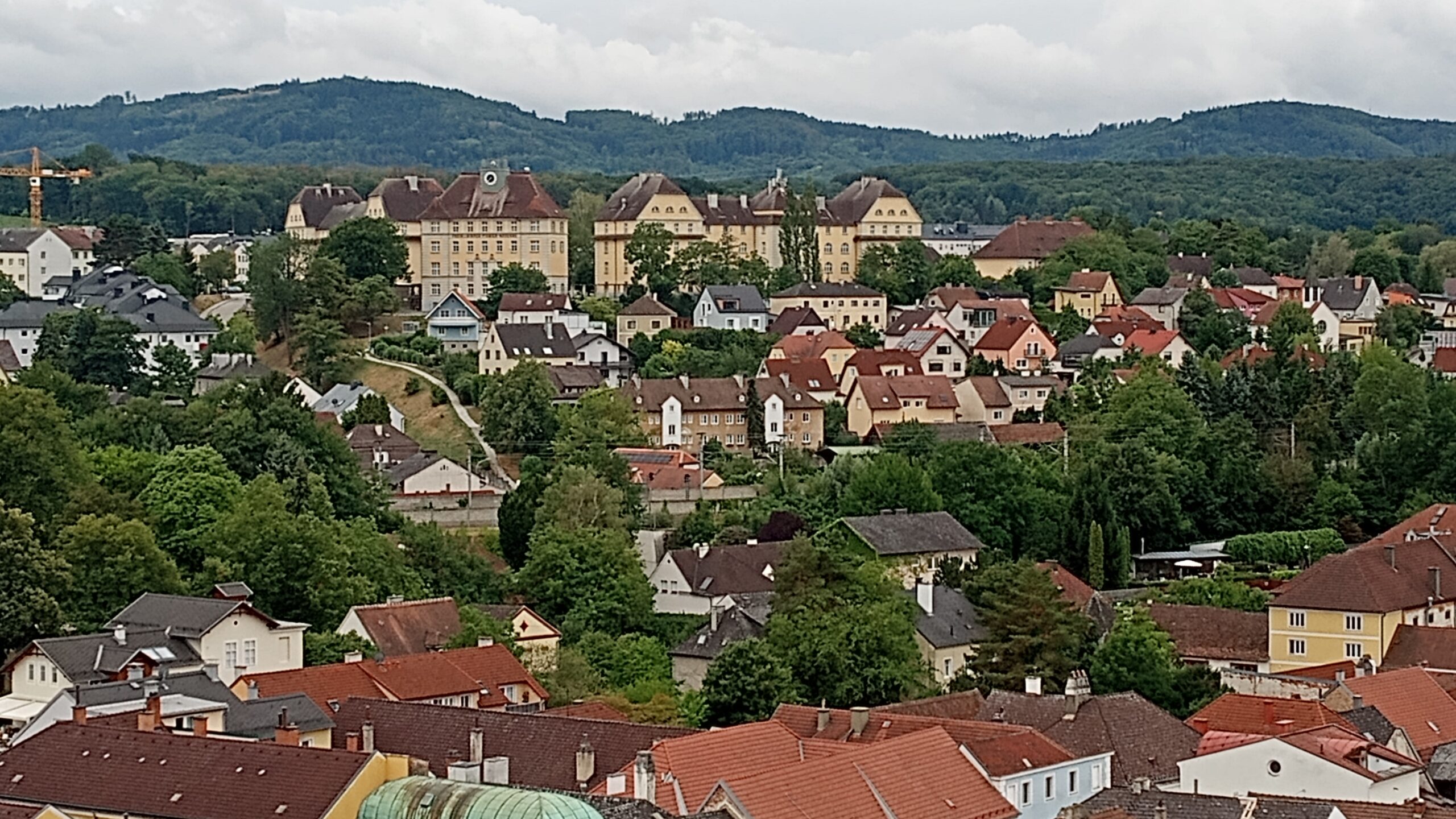
We then made it to their formal gardens where we took in
the views of the Danube. All of this area including the house
and palatial gardens reflected stylized symetry, order,
rational planning and perfect balance.
We took our bus ride back to the ship that had repostioned
itself further up stream to navigate another lock
immediately after we got back onboard.
Day 17
Passau, Germany
Monday, July 20
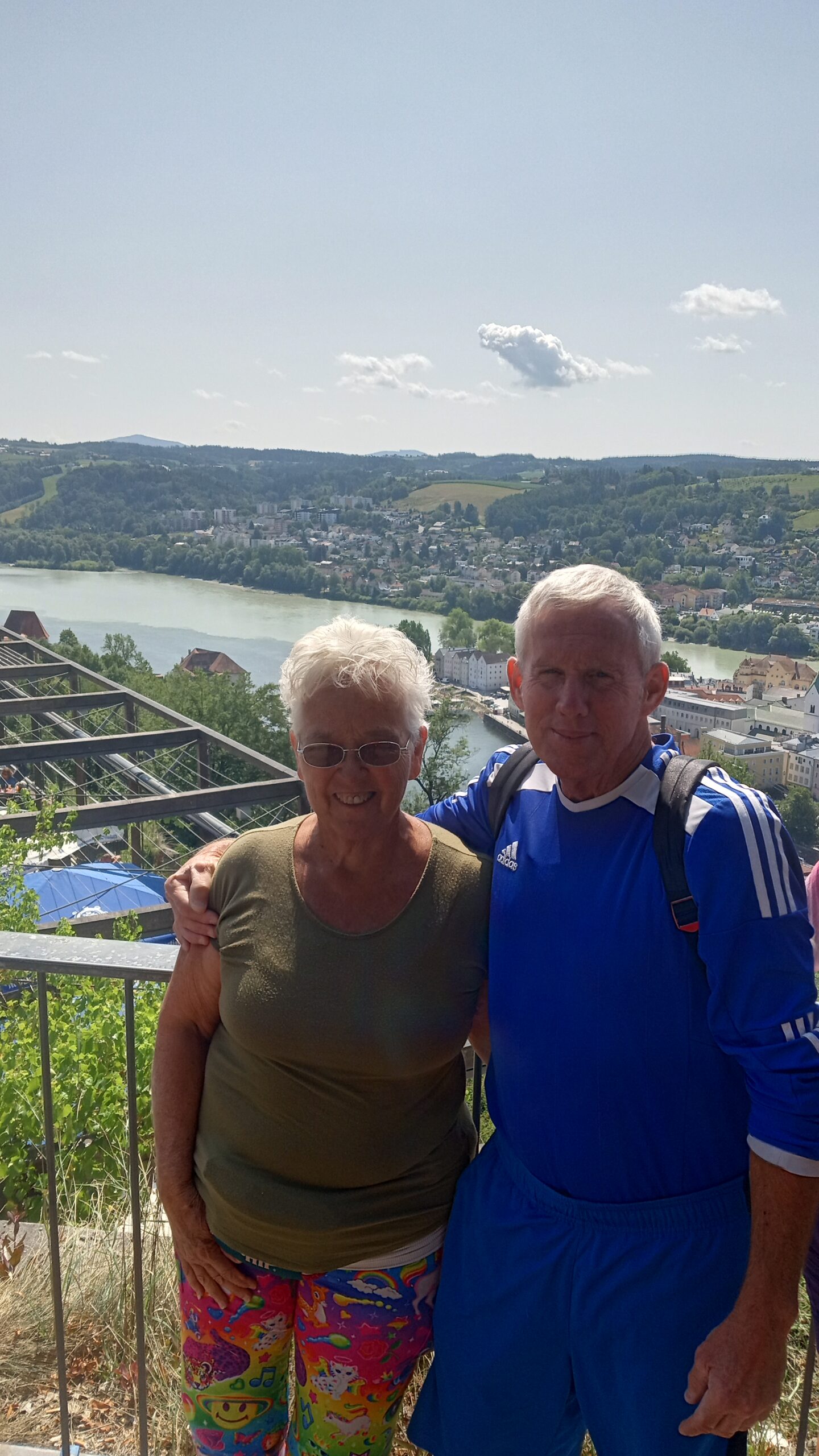
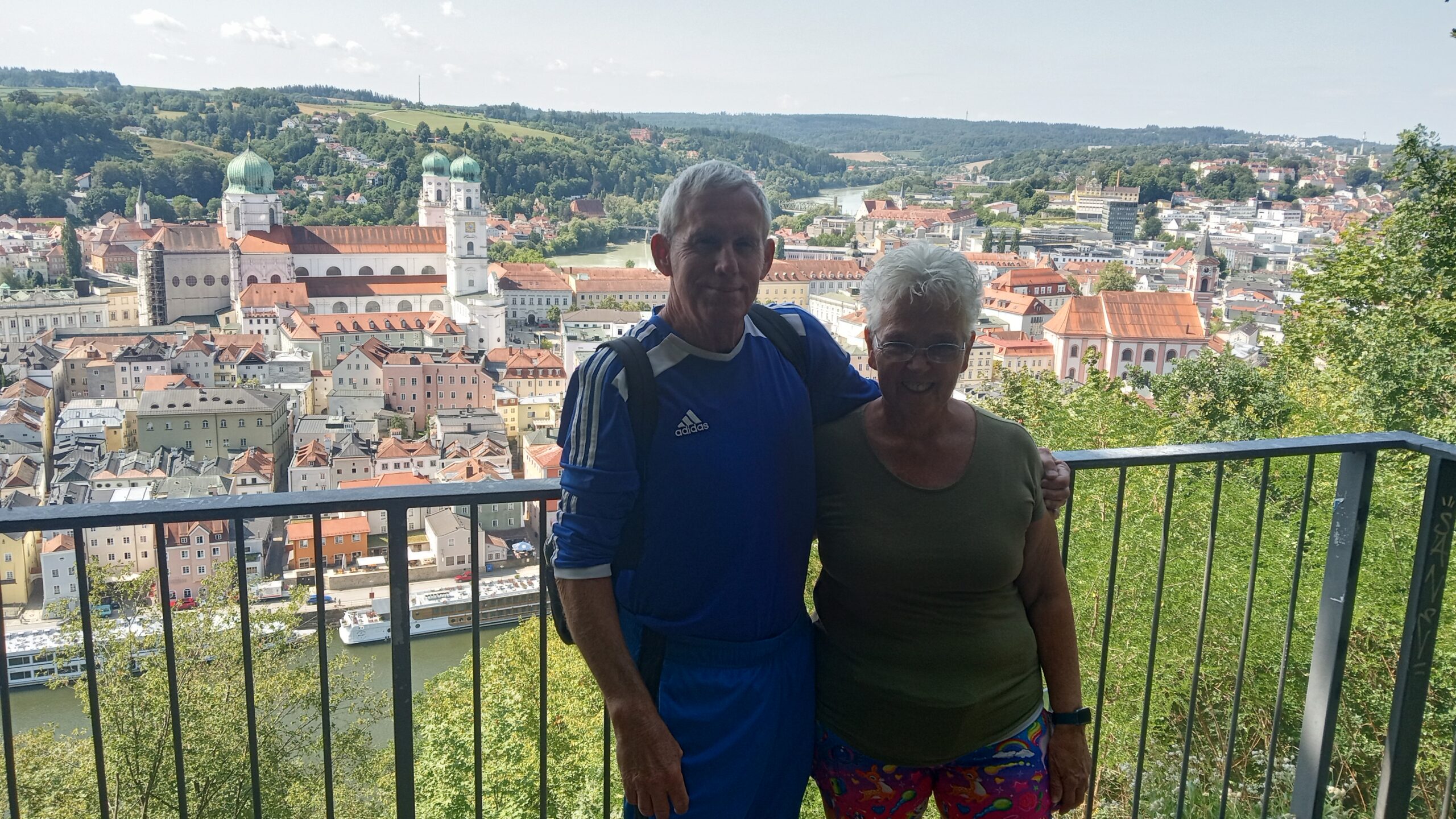
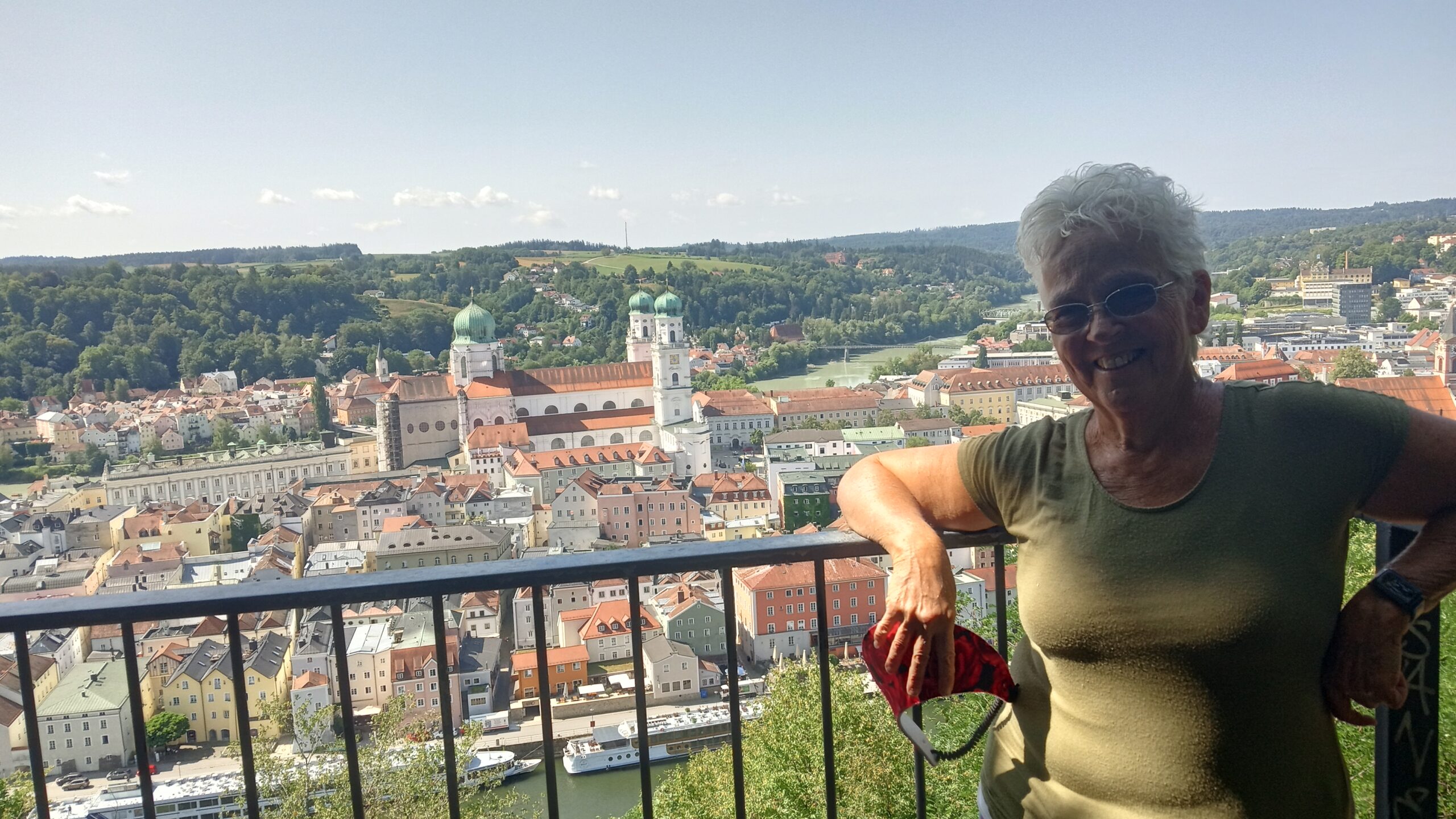
Hike the Passau Hills
Explore the City of Three Rivers On Foot
Take in Passau’s sublime setting at the confluence of
three rivers from the best vantage points in the city.
Meet our guide and set off on foot, along the left bank
of the Danube River, where you will climb to Veste Oberhaus.
This morning we started with a bit late due to a
congested lock we had to pass through to reach
Passau, Germany. However, we took a personalized
hiking tour from our boat of a close by majestic
fortress located high atop a rocky cliff overlooking
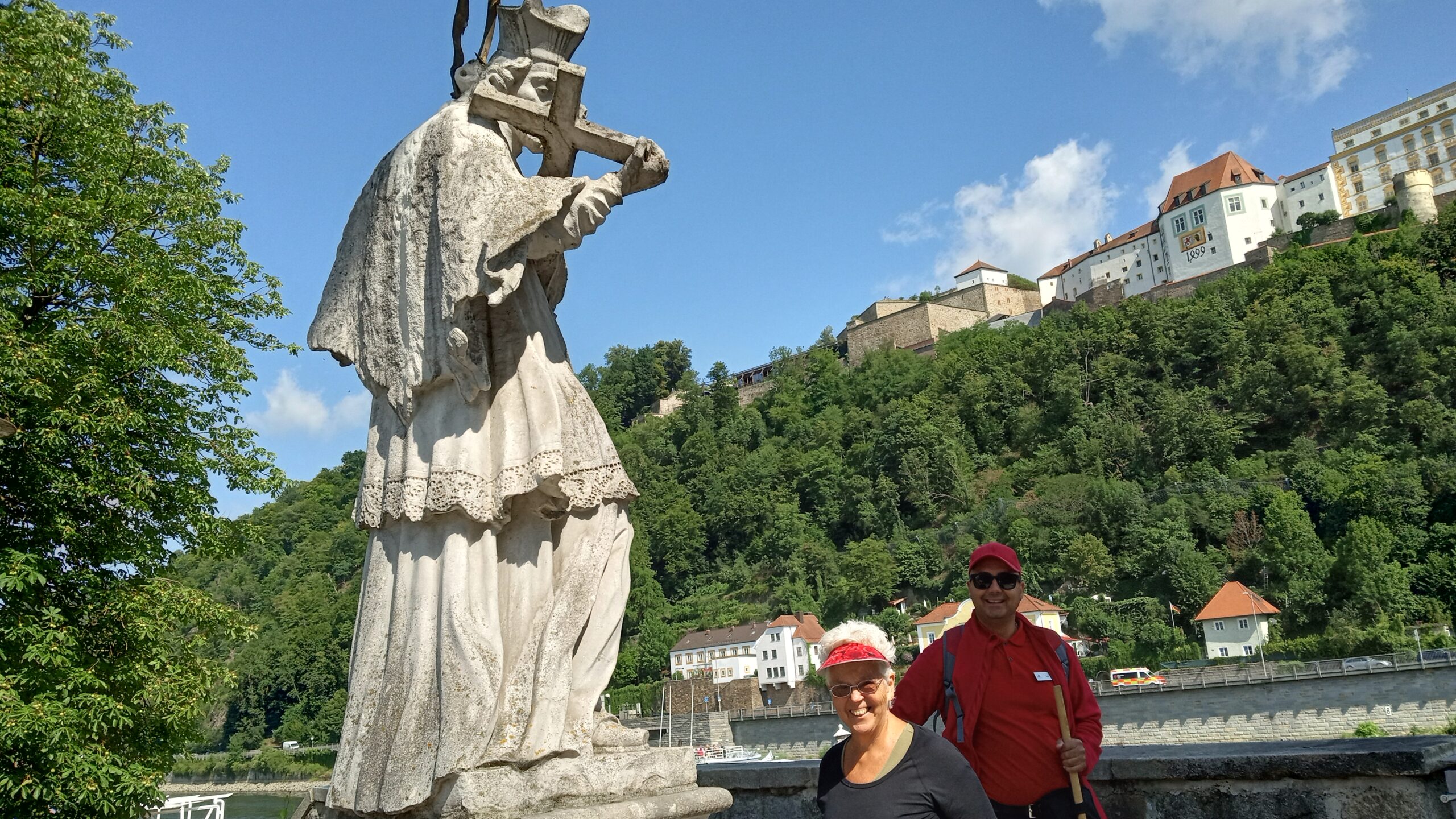
the Danube River. Perched up high the Veste
Oberhaus built in 1499 is accessable by climbing rocky
steps and steep walkways up St. George’s Hill.
Or else one can drive up.
Our guide took us to see the fantastic vistas at
the top. Once there we walked up a tall tower and saw
even better views. We took pics as we were 320 feet up.
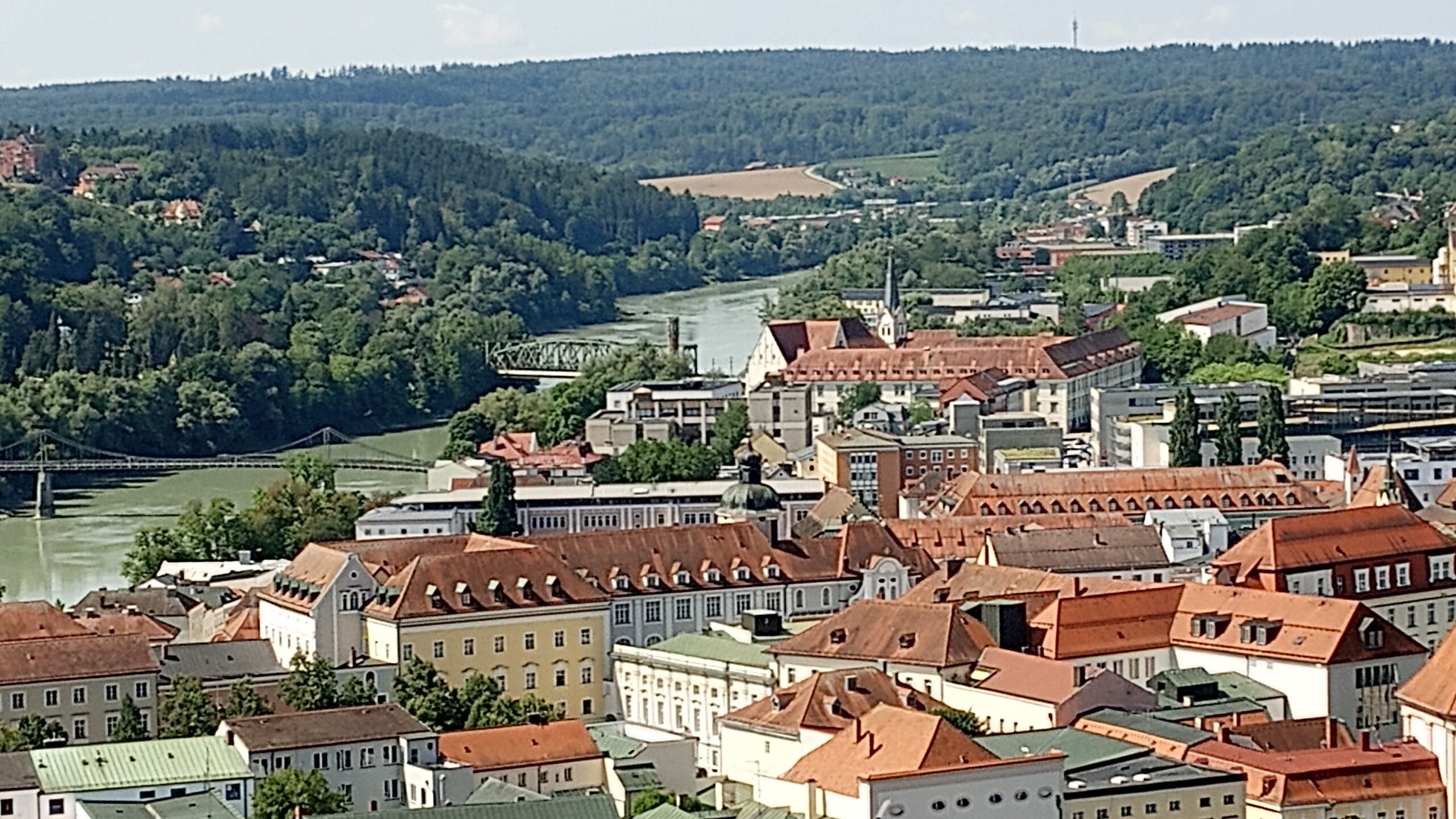
We saw the whole city from above and the wonderfully
colored pastel colors of yellow, green and light orange
houses complete with church steeples, and the
confluence of 3 rivers that intersect at this traditional
European town which is on a pennisula. The Danube,
Ilz and Inn all converge to showcase a pretty town that
was an important hub in the Middle Ages.
After descending a bit we came to cafe on this hill – had
a refreshing drink and went down.
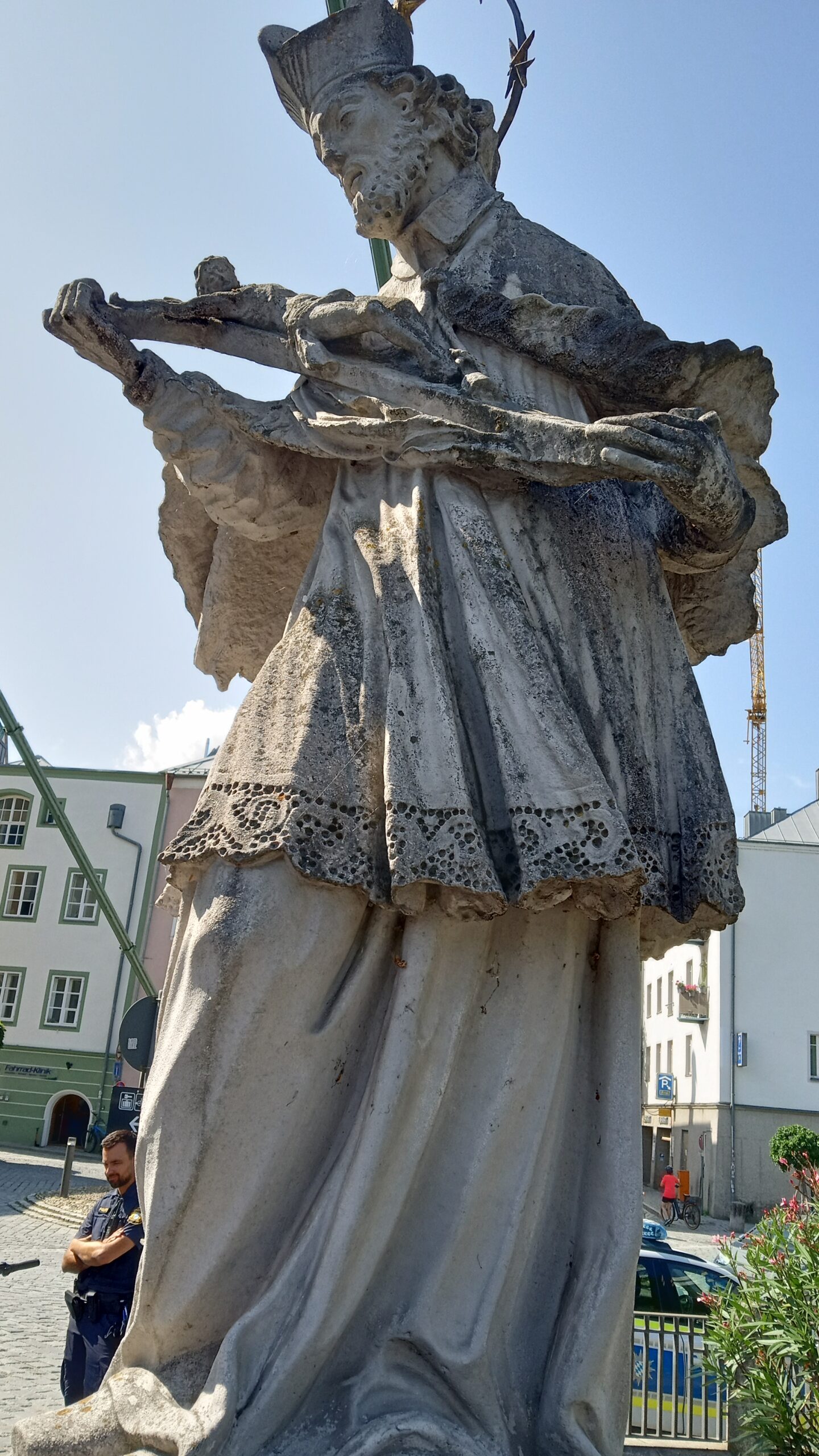
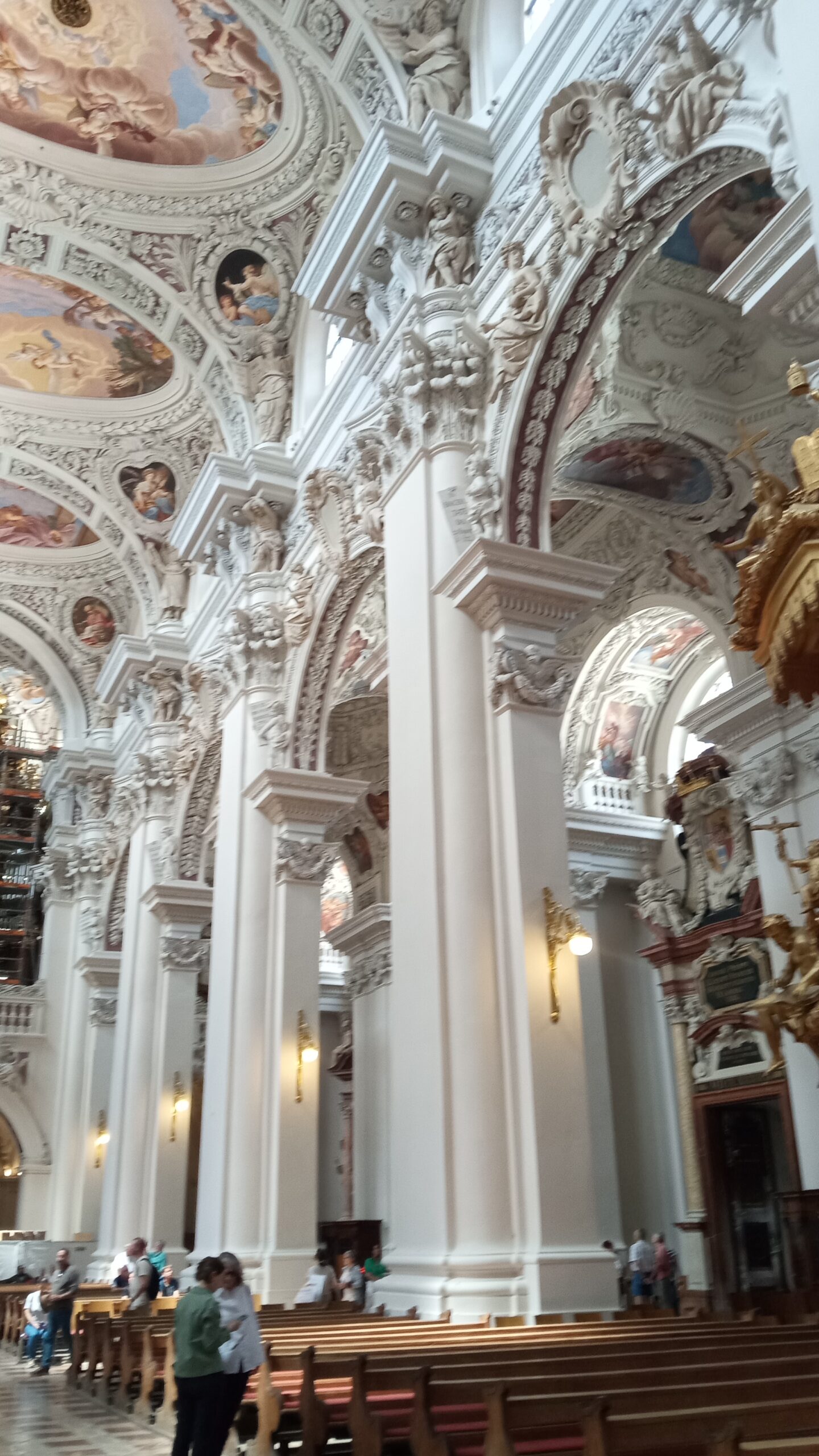
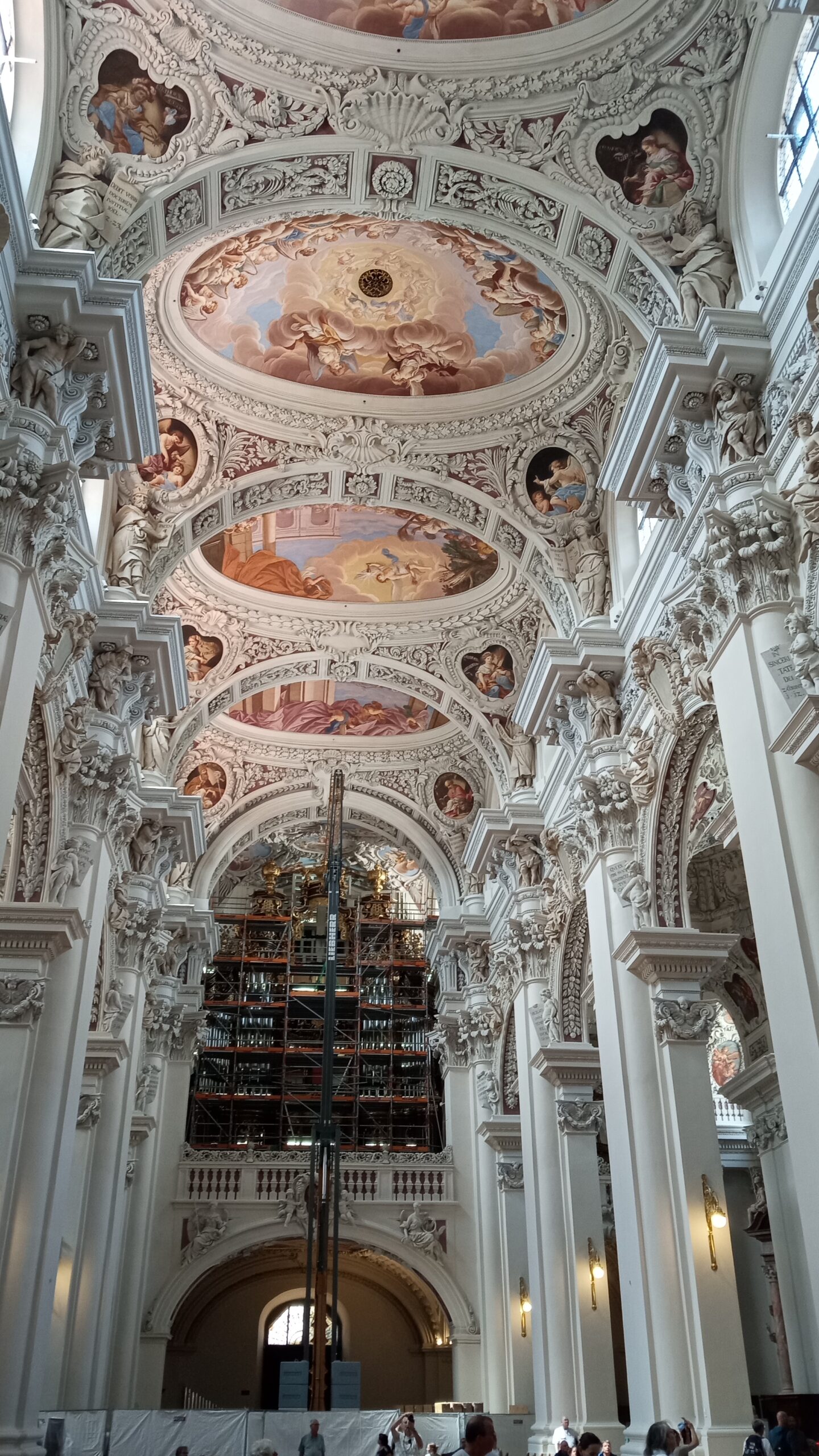
We then took a small walking tour of Passau with
some additional time we had. We walked on
cobblestone streets to another St. Stephens church
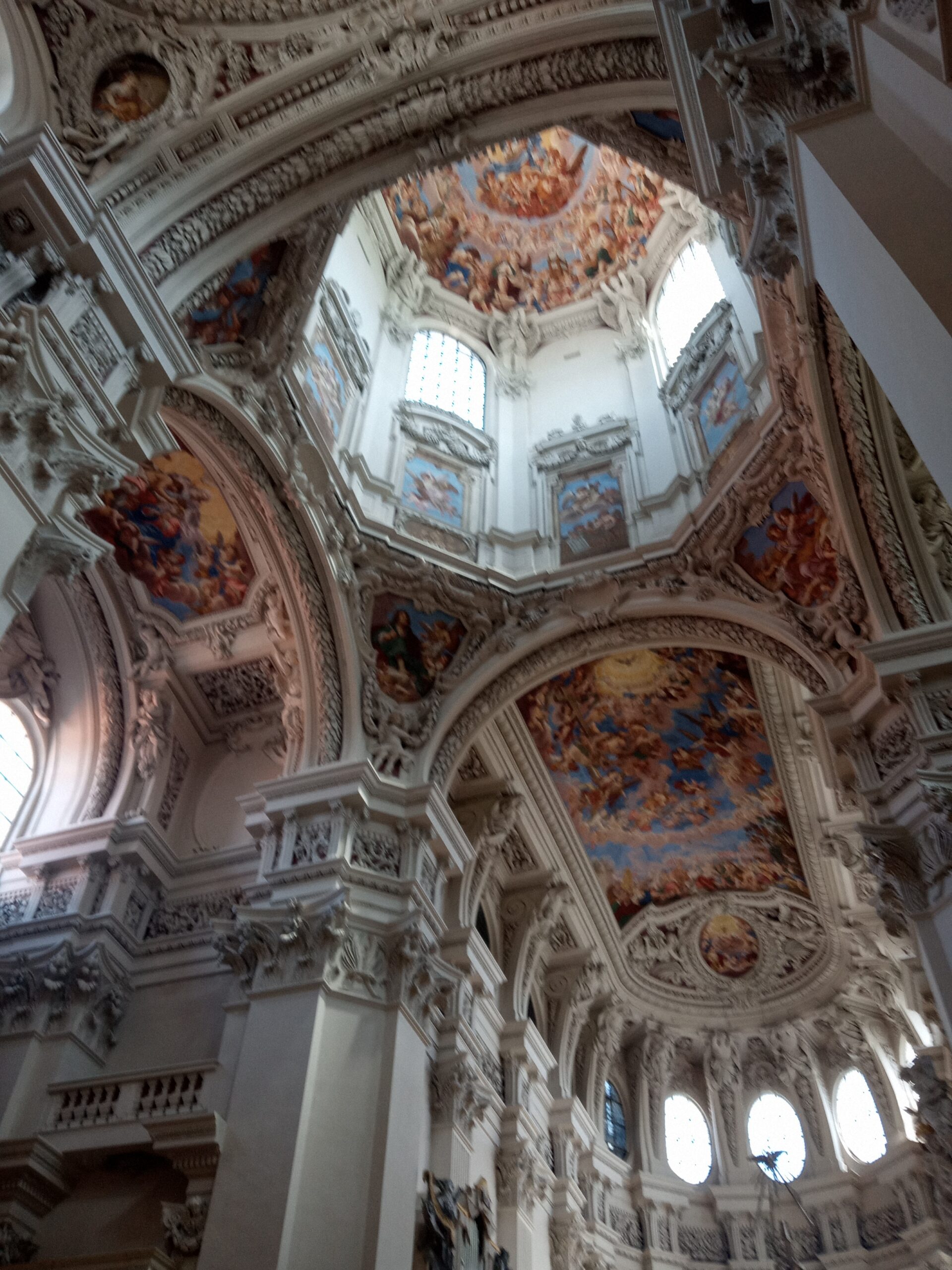
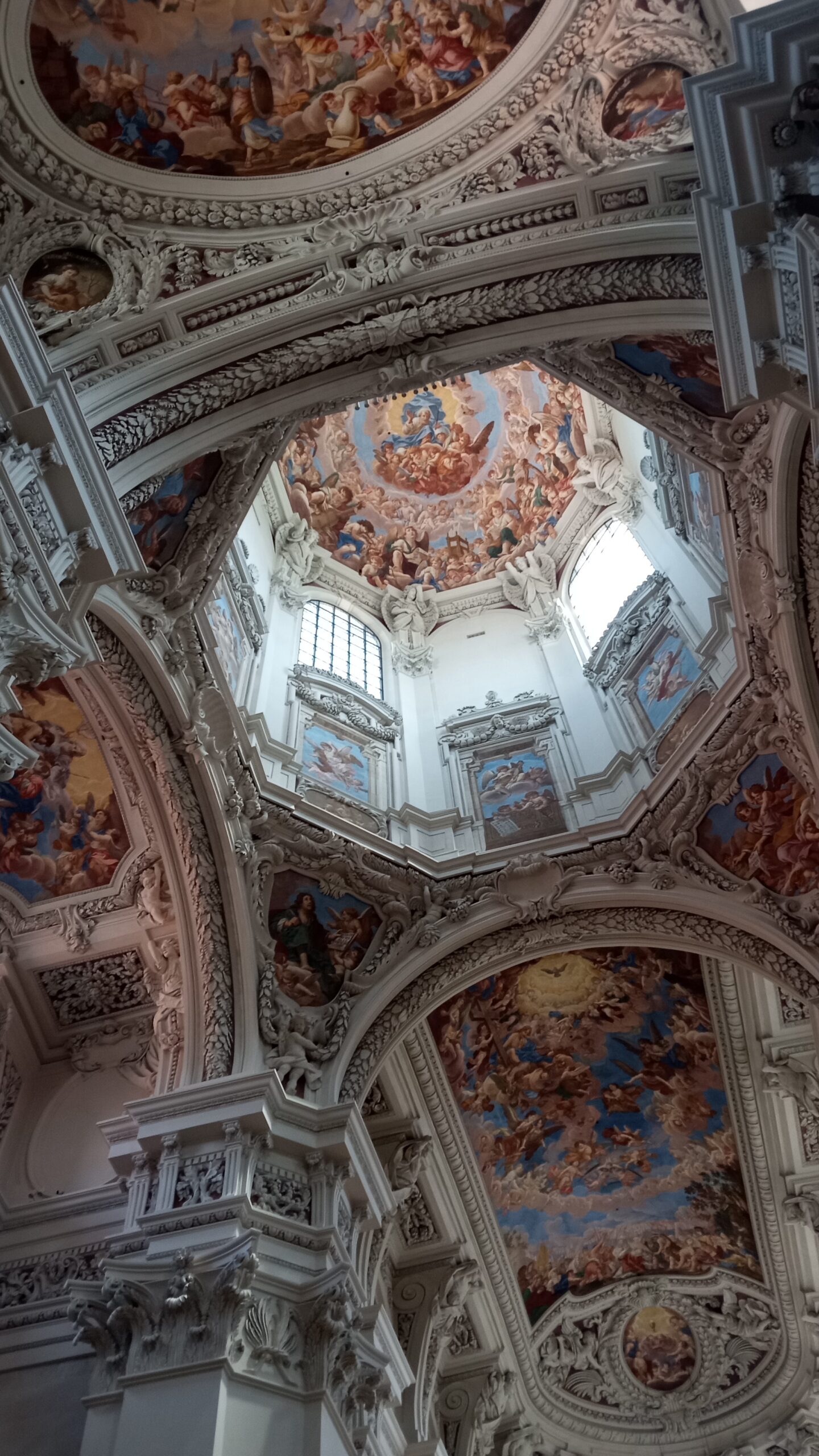
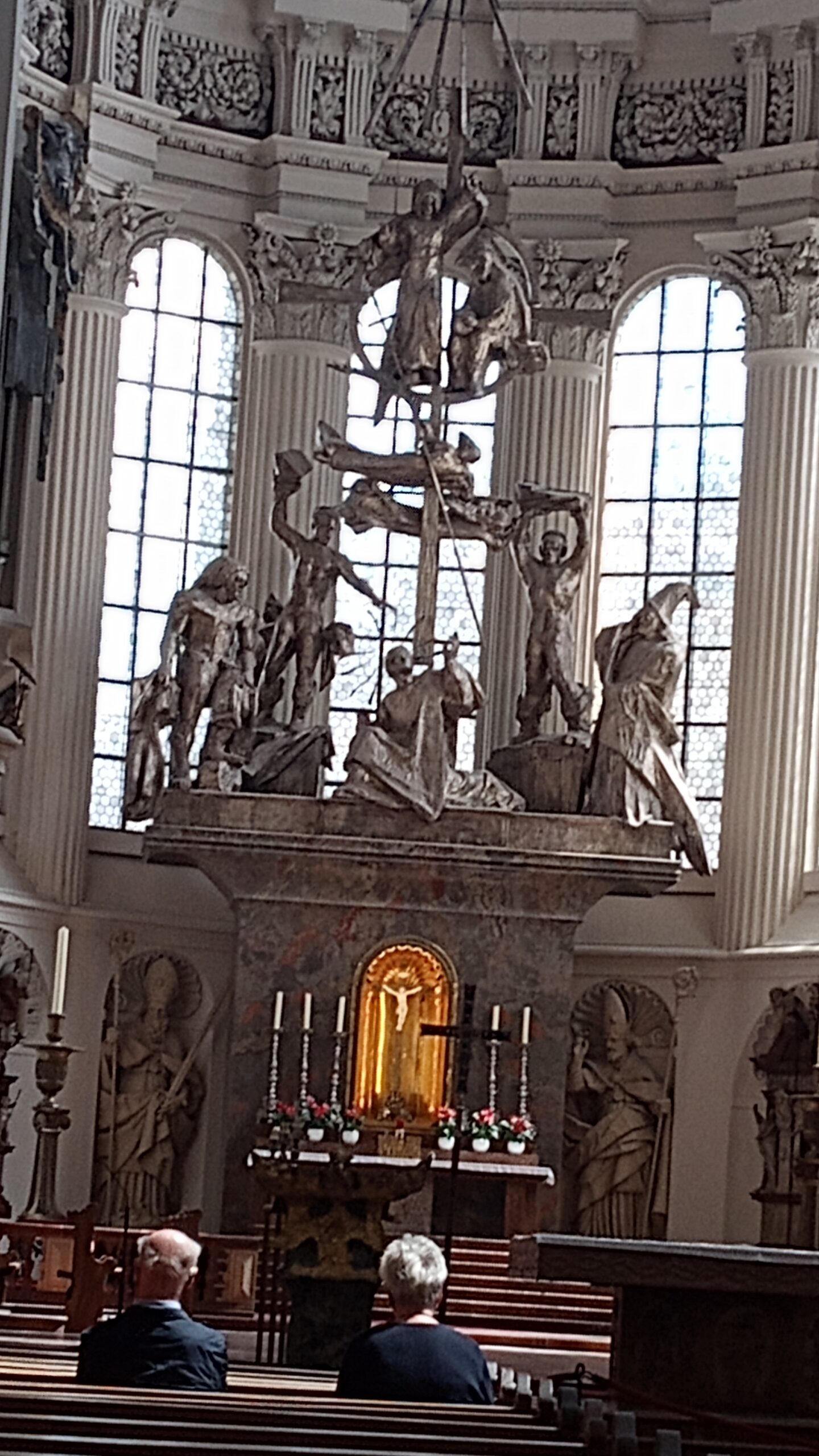
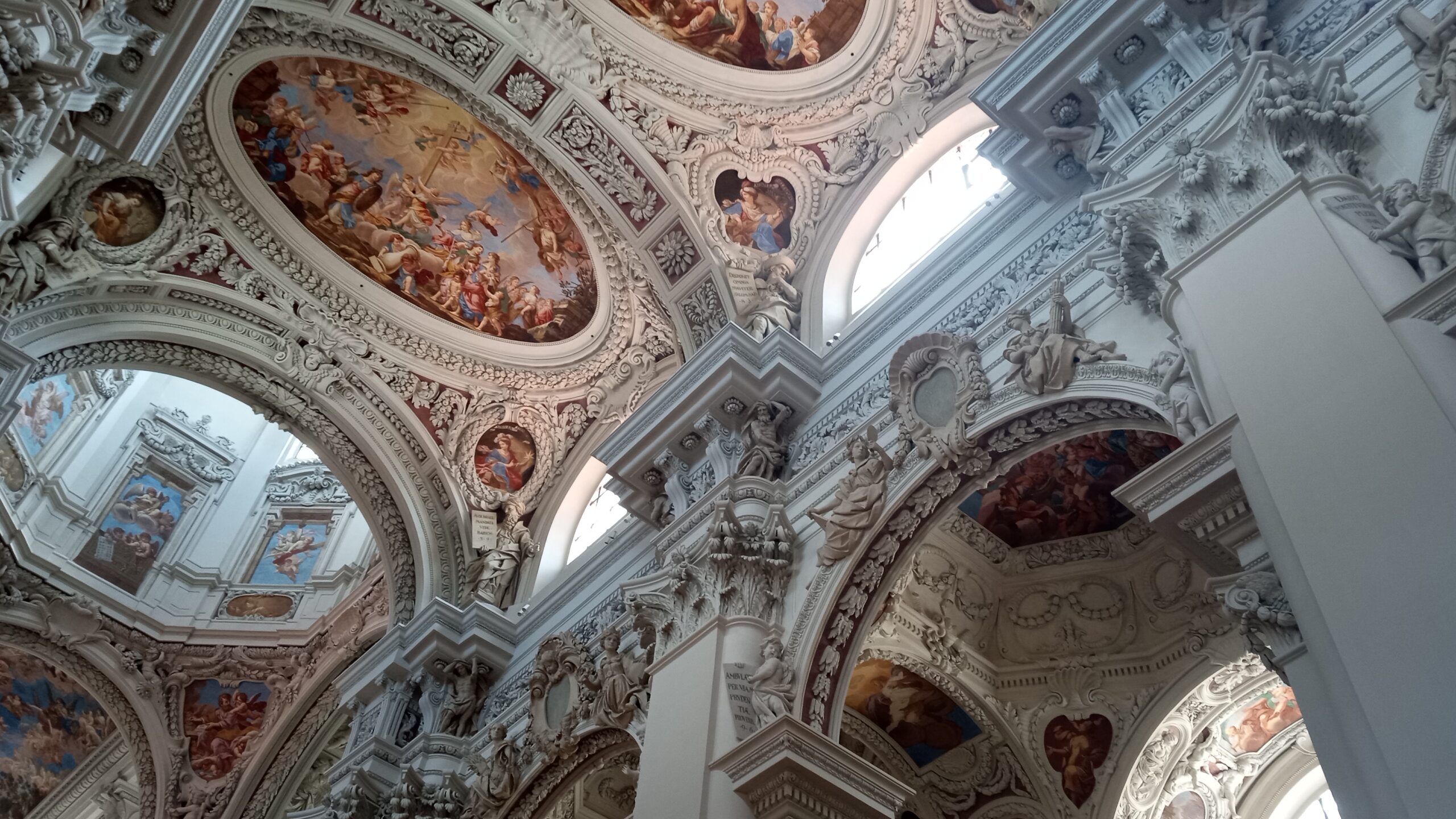
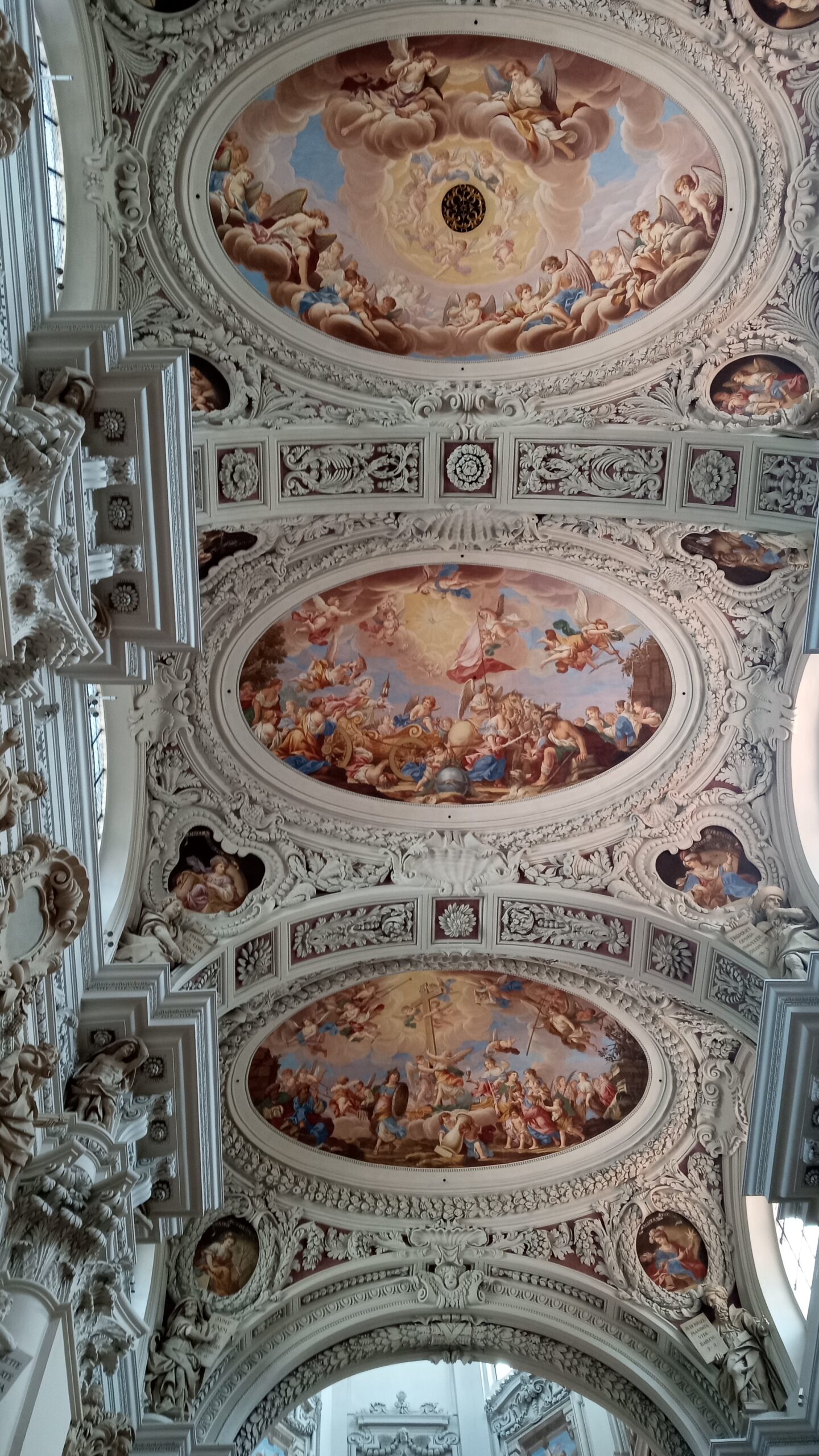
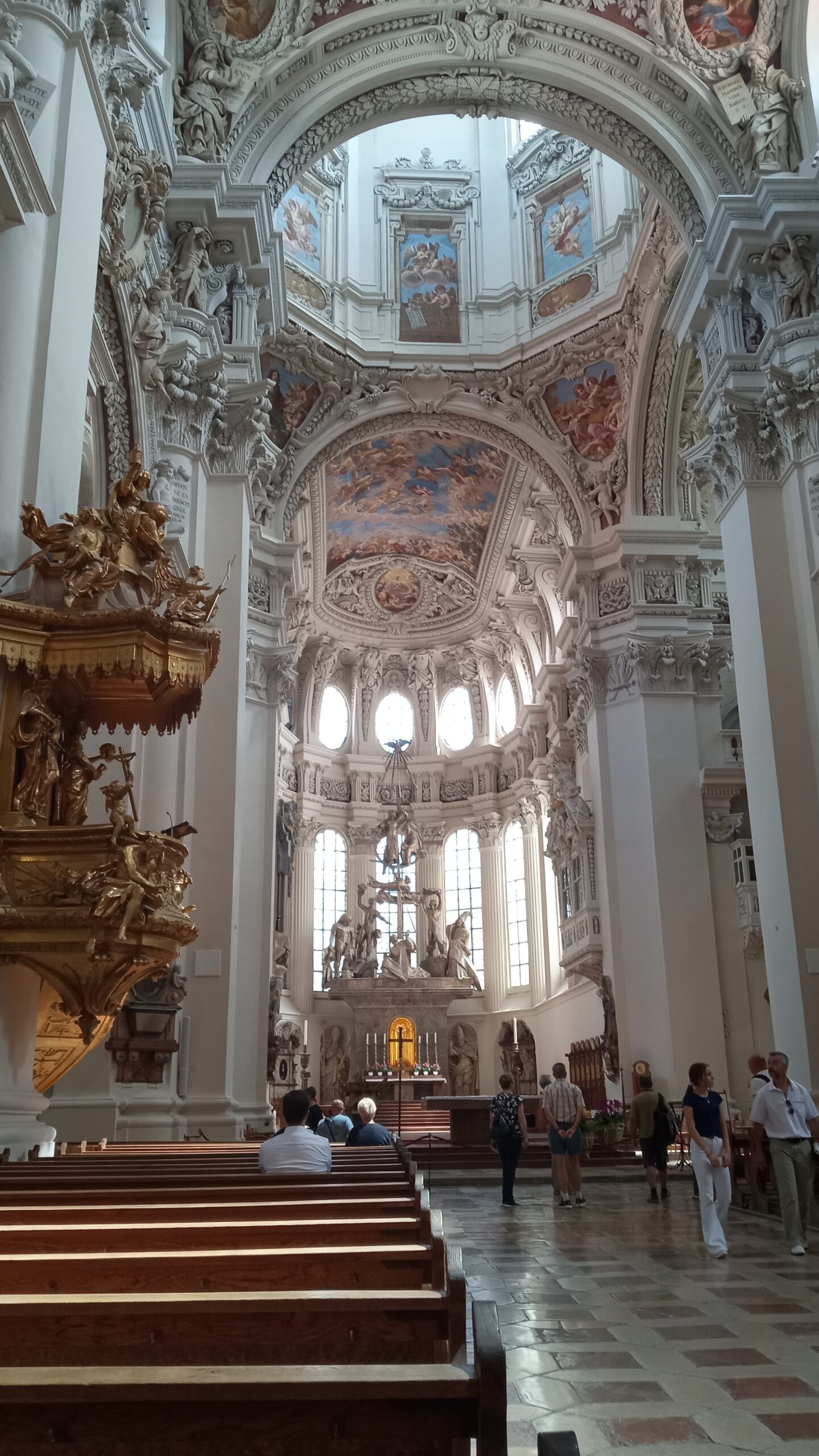
in town. This church was truly a Baroque masterpiece
complete with super ornate flourishes on the main
alter, ceiling paintings, side alcoves with overly
embellished everything. We were in awe of the
grandeur that overwhelmed our eyes.
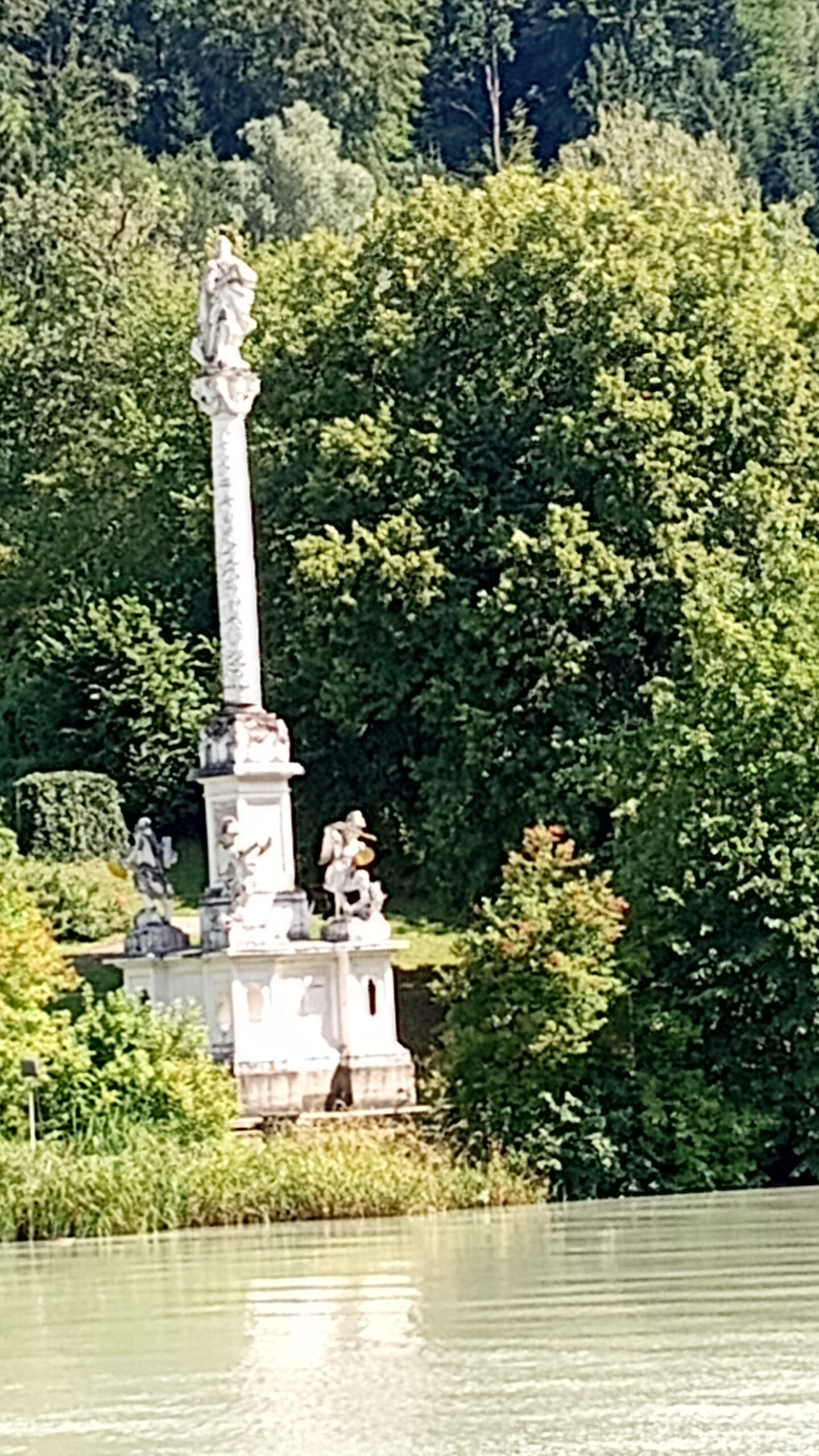
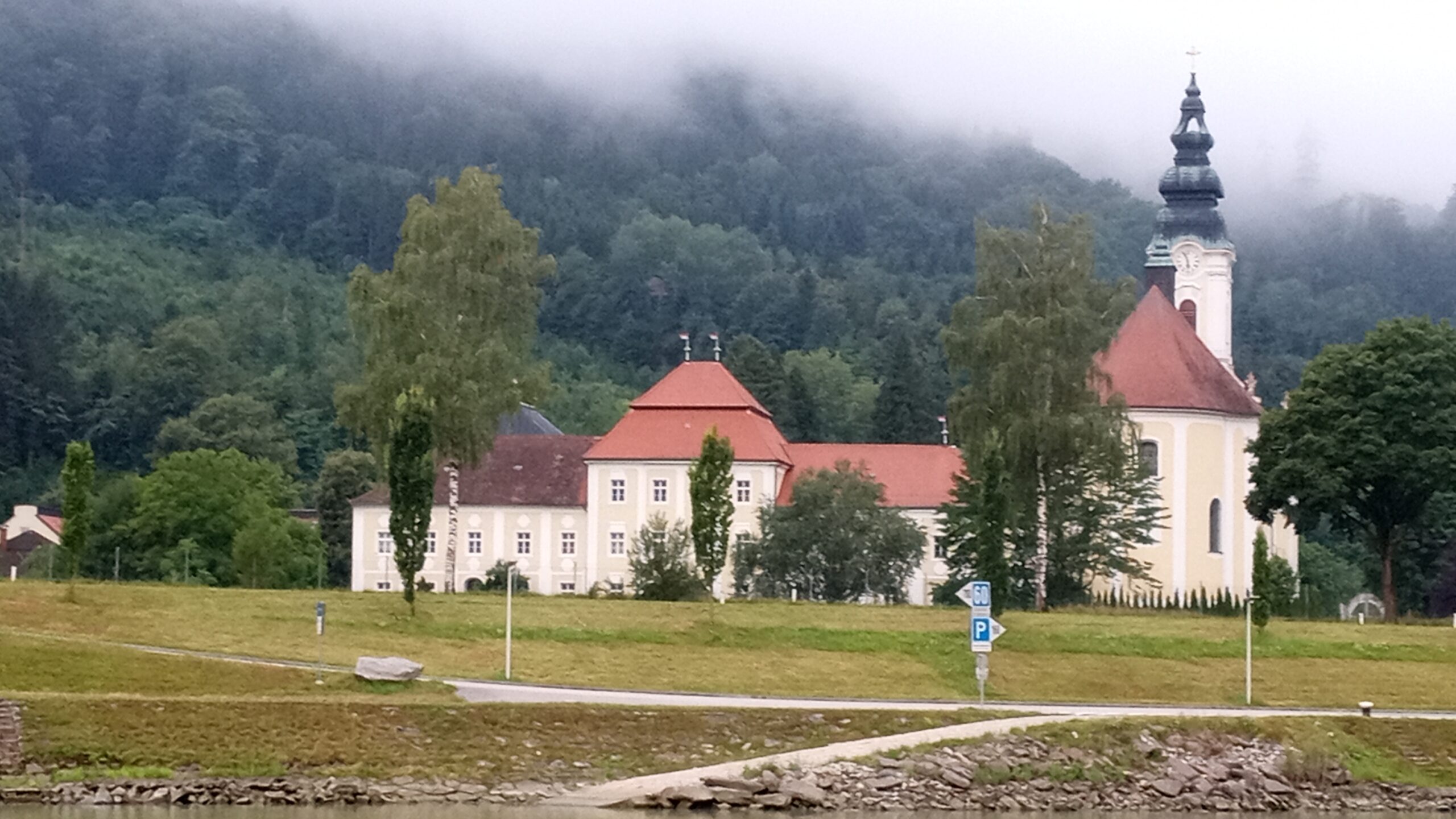
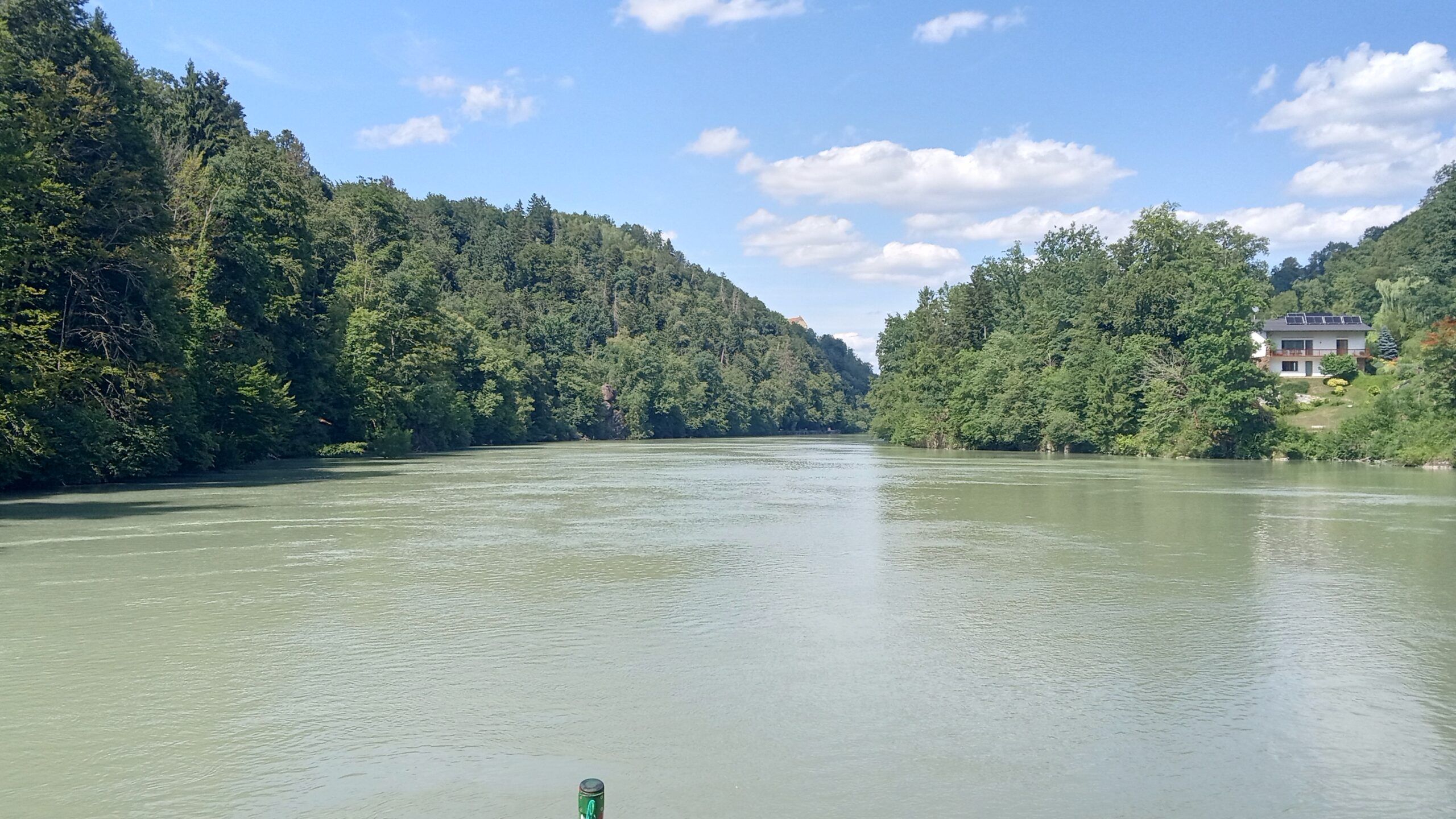
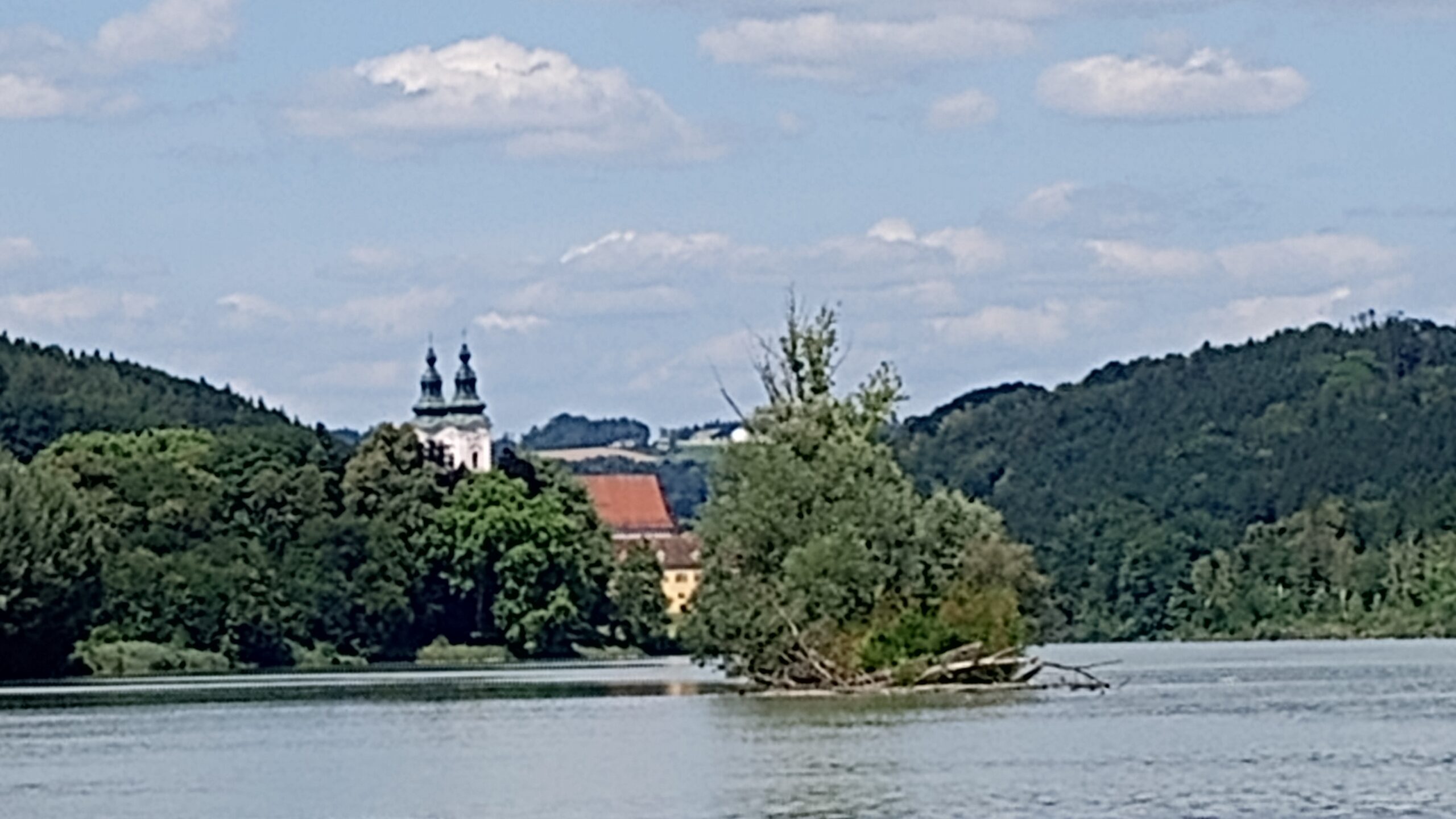
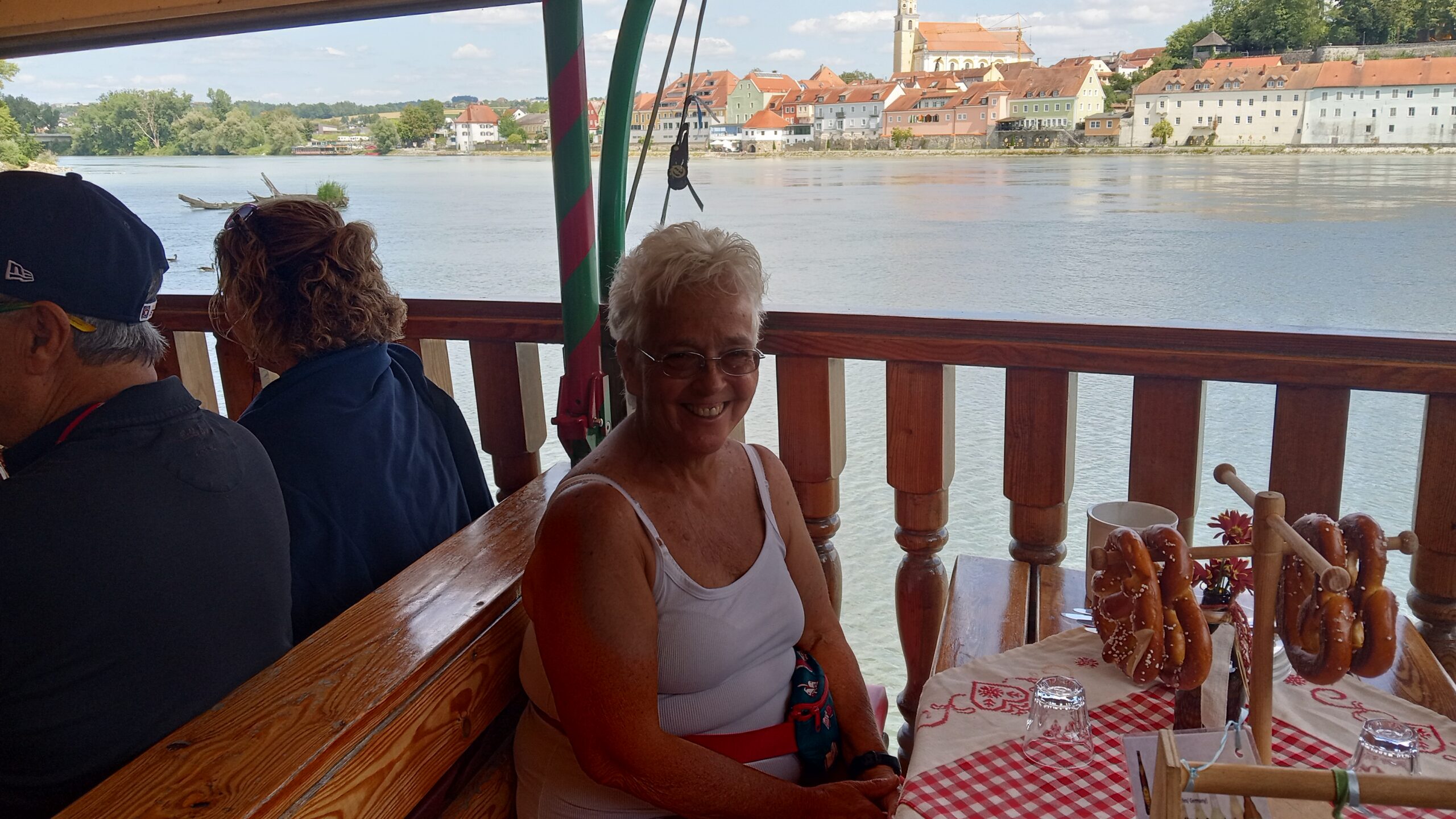
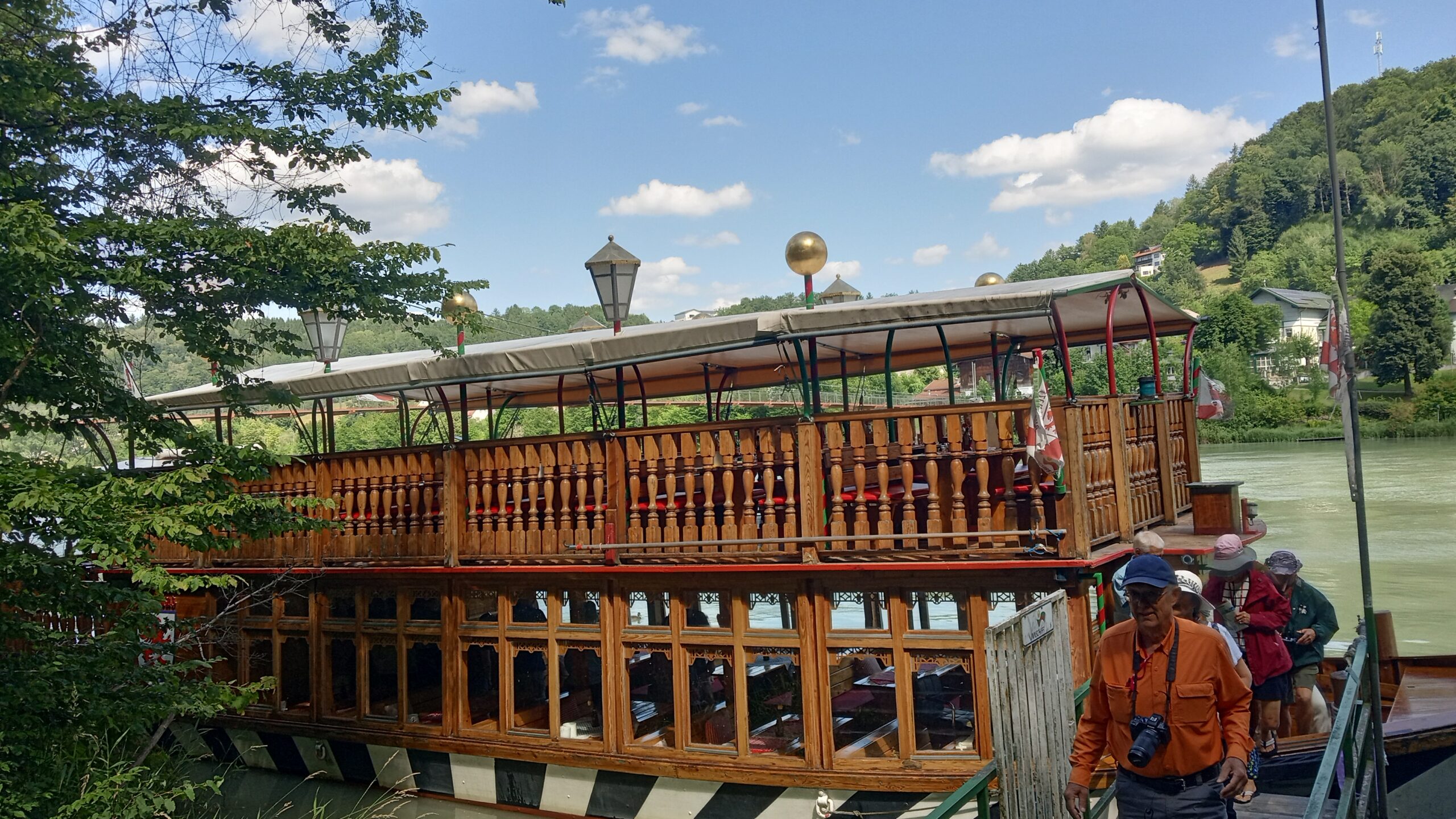
After lunch we took another tour, a bus ride out to the
Bavarain countryside and got on a boat. We travelled
down the Inn River at a leisurely pace sitting at tables
with cold drinks and soft pretzels.
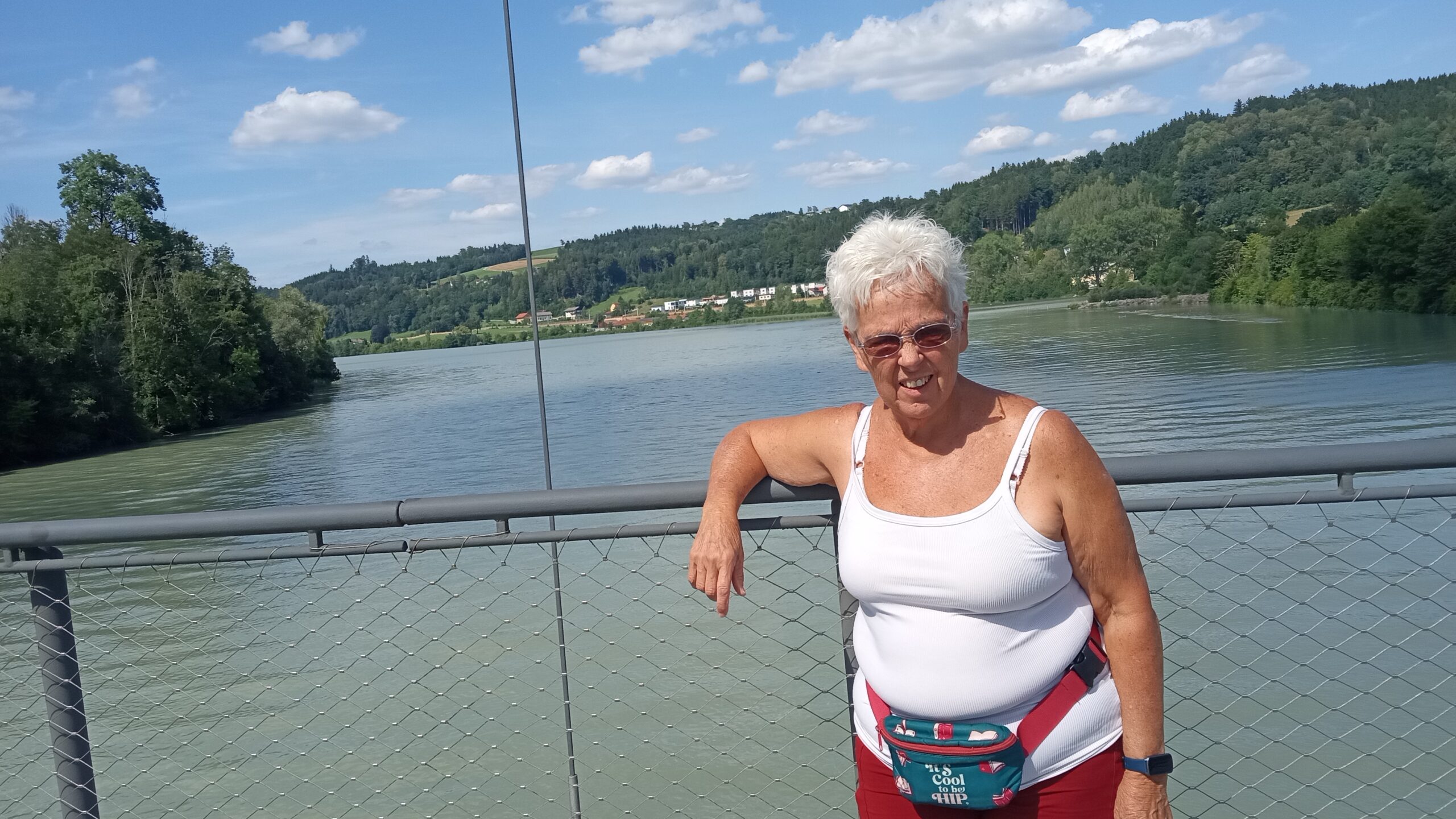
After this bucolic ride through Germany’s countryside
we stopped at a bridge that was in between Austria
and Germany. We walked across this border bridge,
got on a bus and headed to a town called Scharding,
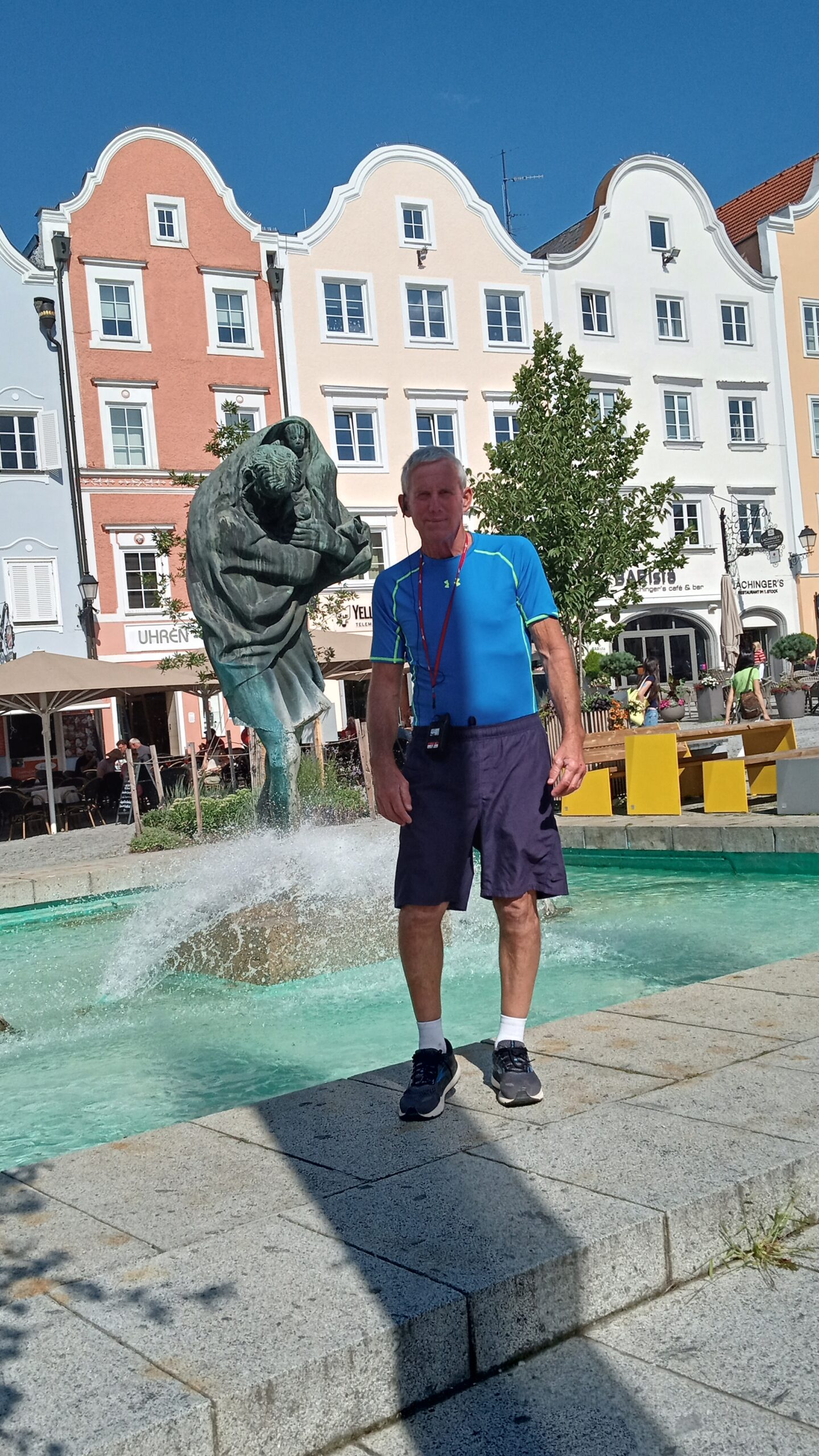
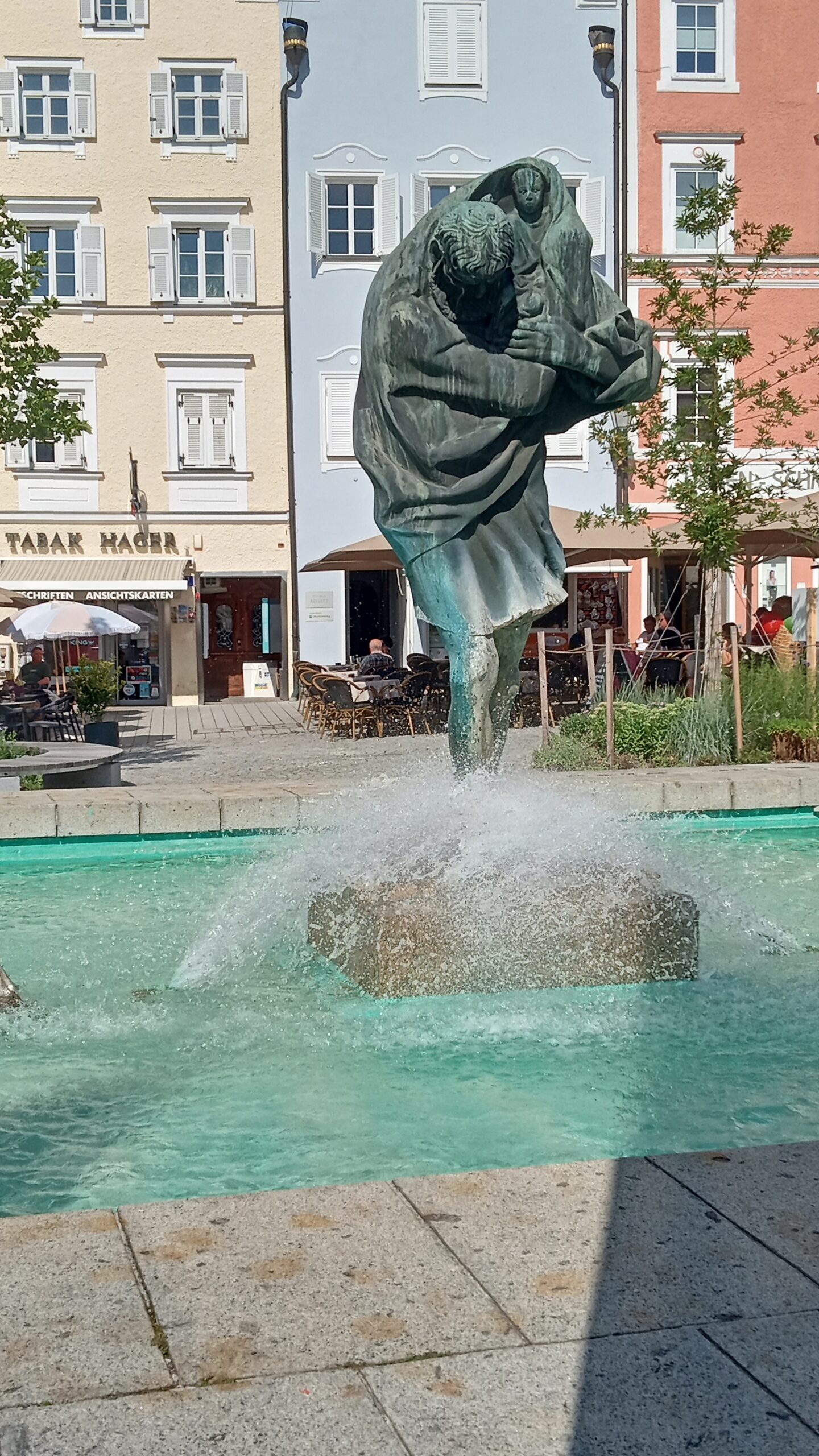
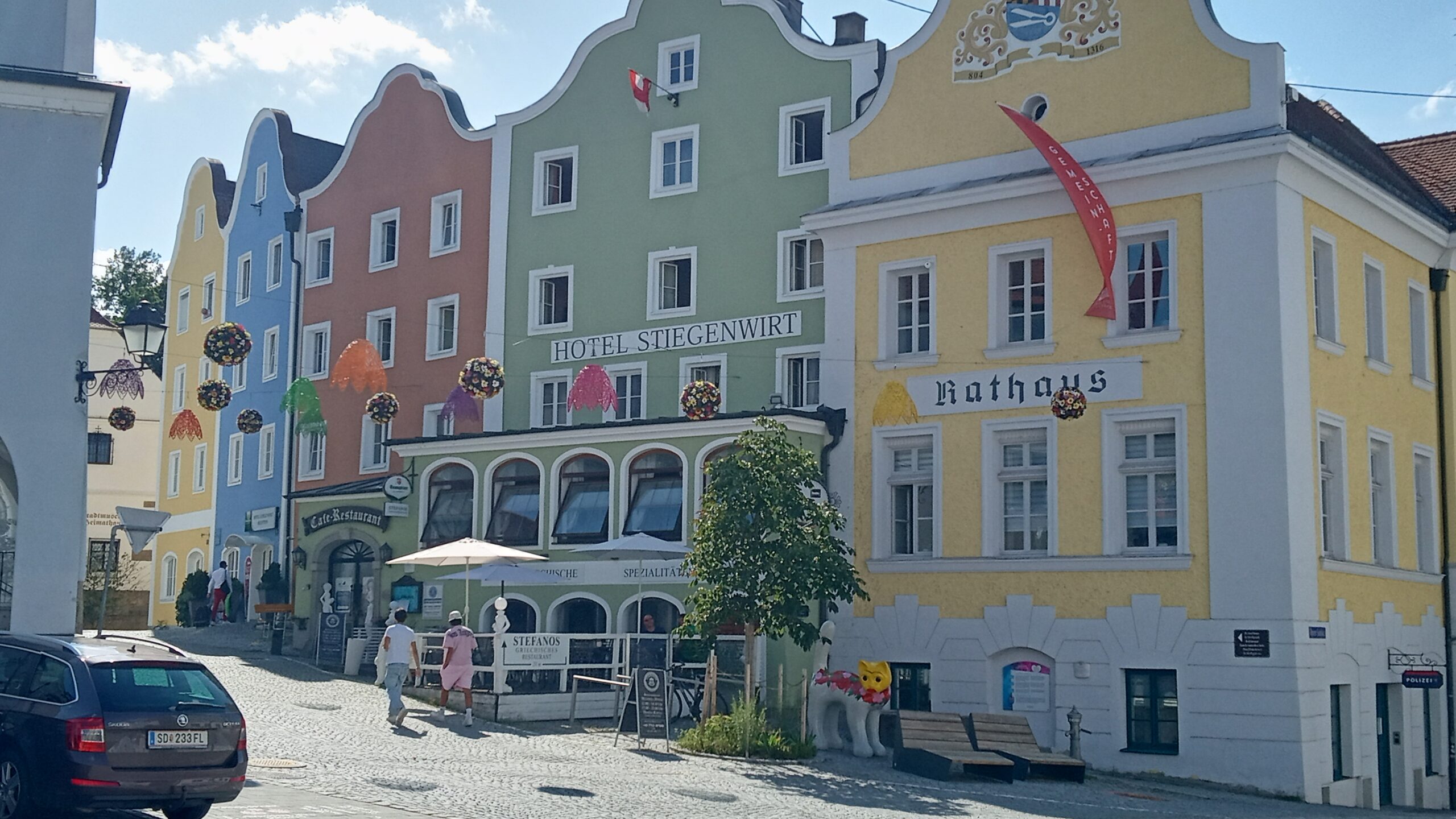
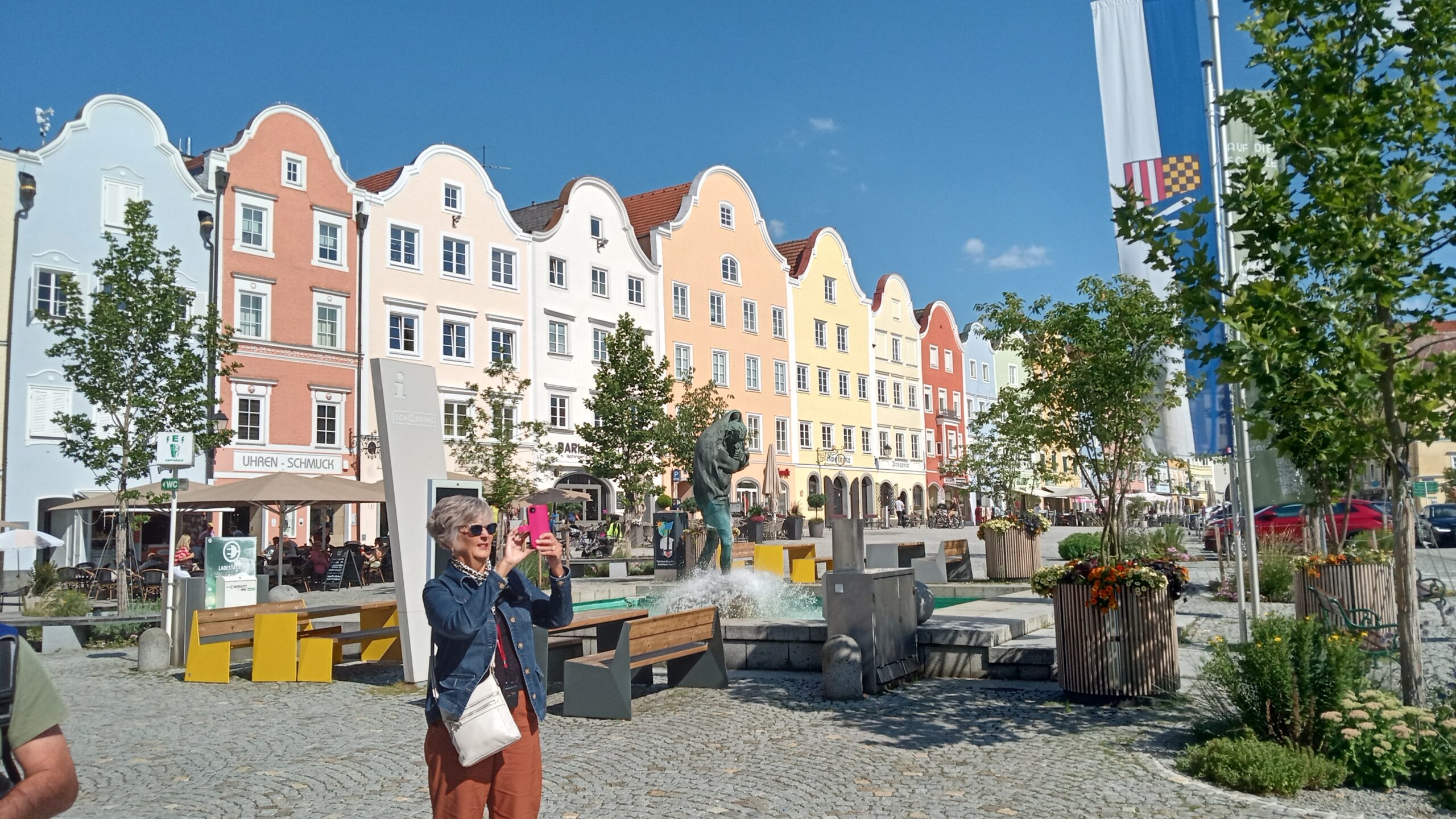
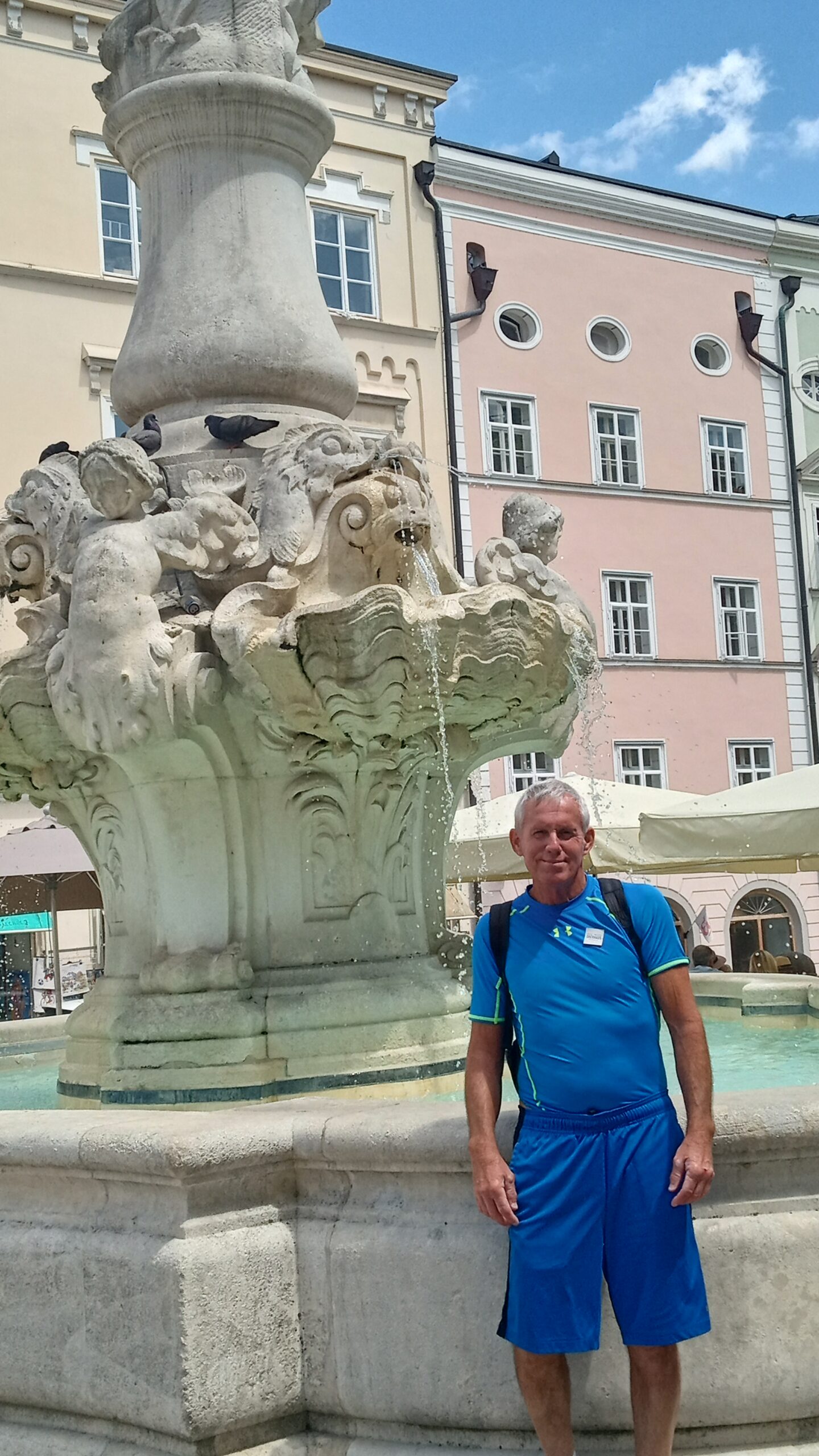
Austria. In Scharding we walked through the town
square with very nicely painted pastel buildings,
town square fountain and cobblestone streets with
an Old World feel to it. We then prodeeded to a
workshop in town to make seasoned salt. Using mortar
and pestol we all individually ground up salt and herbs
to make a tasty seasoning mix –
which we all kept to take home.
Our tour ended, we got back to the boat for dinner.
Day 17
Passau, Germany
Monday, July 20
Bavarian Cruise & Baroque Town of Schärding
Sail the Lesser-Known Waters of the Inn River
Board a boat, exploring the Inn River as the rolling hills of
Upper Austria and Lower Bavaria unfold around you.
Meet our guide for a drive upriver through
the Bavarian countryside.
Day 18
Regensburg, Germany
Tuesday, July 21
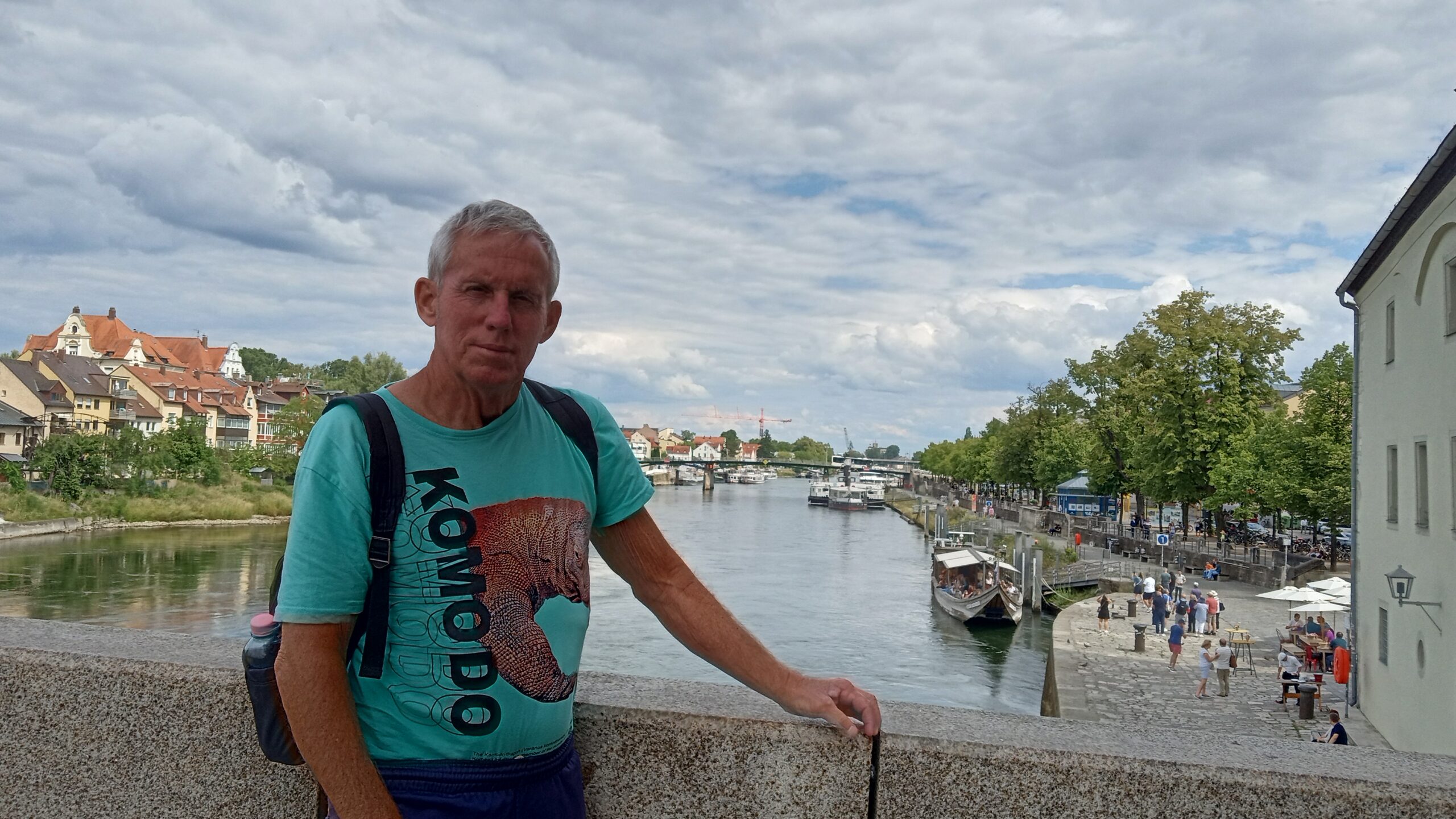
This morning we took a long bus ride to Regensburg,
Germany. There we were introduced to a fine
European city that was not bombed in WWII. On
our walking tour, we saw the famous stone bridge that
was built in the 1300’s. The bridge had many pilings
in the water to support itself and small ships could fit
into angled slots to get under the bridge.
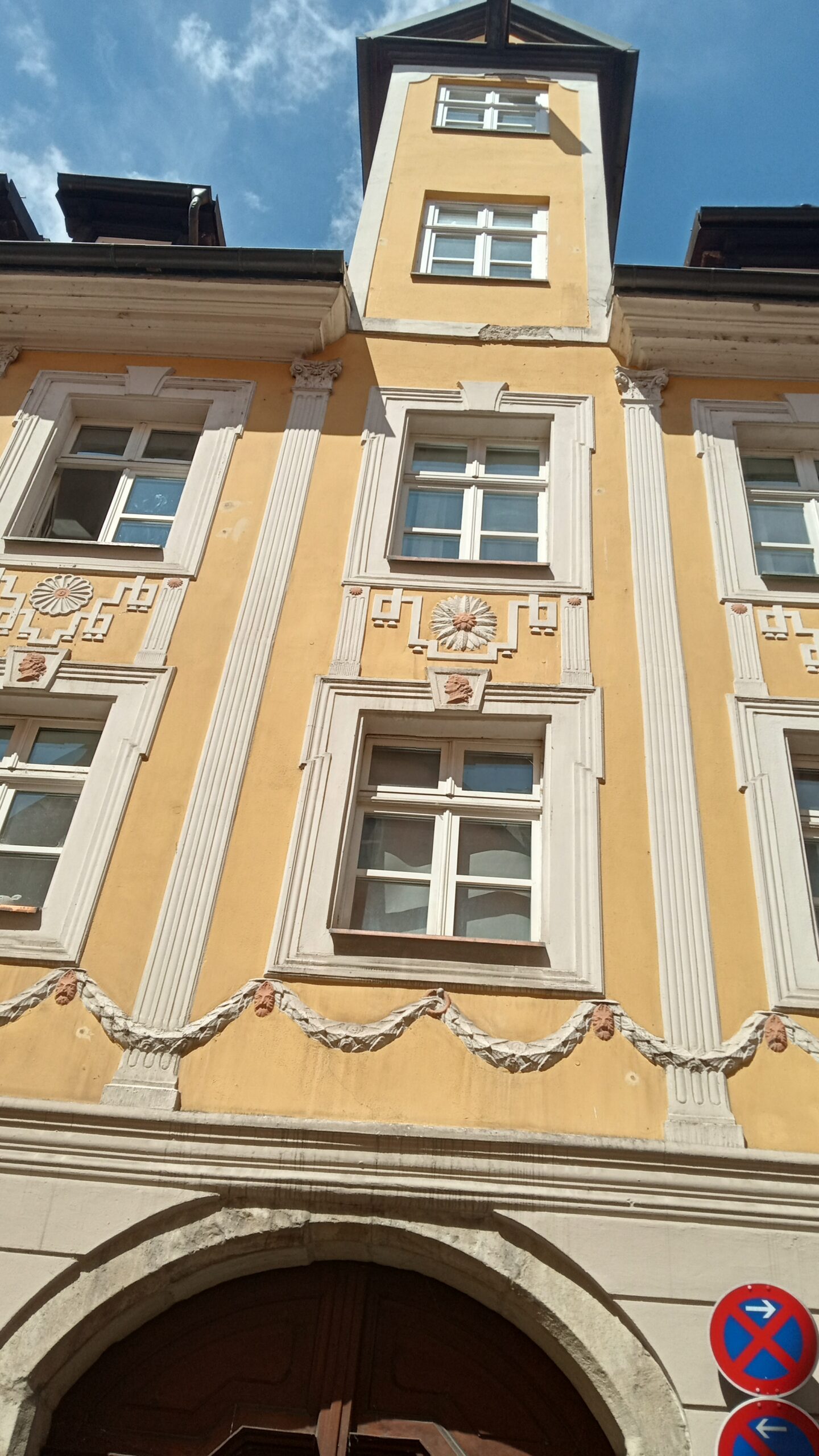
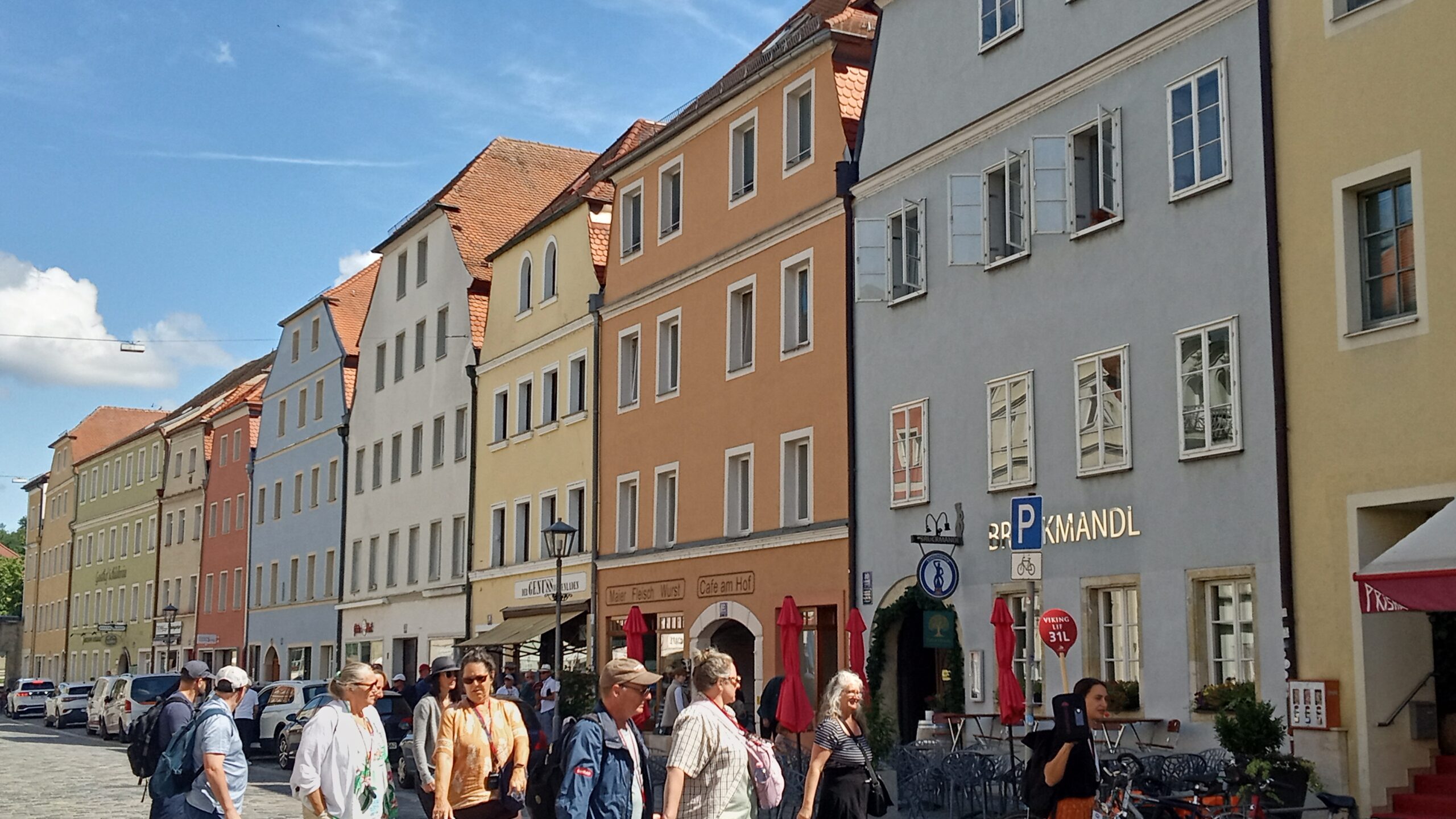
Other wonderful things we saw included cobblestone
pedestrian streets, small narrow streets filled with many,
many shops to browse through. Churches, stone buildings,
clock towers, pastel colored buildings, small town squares
with fountains, Baroque facade buildings plus a huge
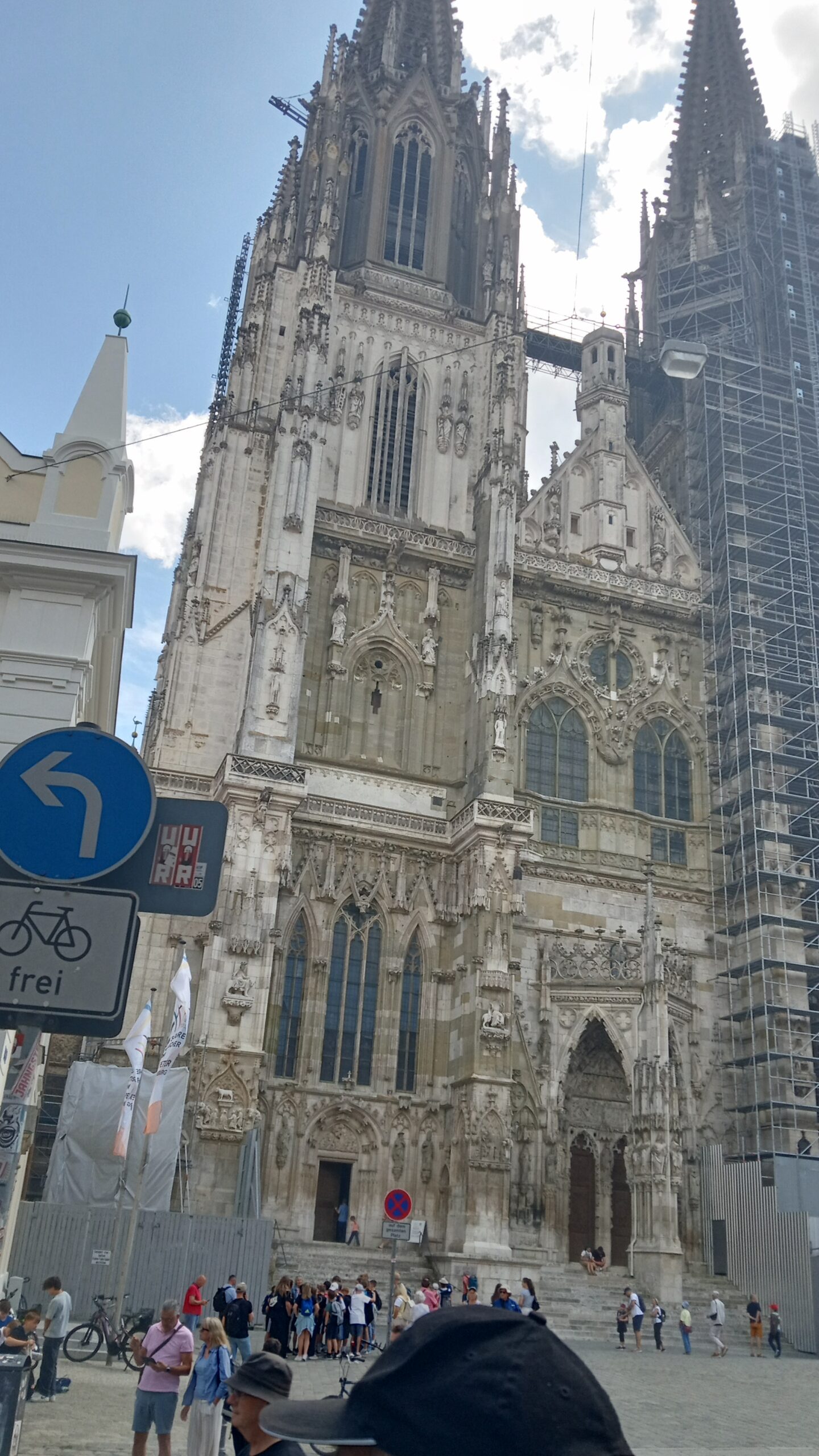
Gothic 13th century medieval Catholic church.
This church had a fantastic handcarved intricate facade
that extended 200 feet into the sky. The facade was a
work of art as it had symbolism on it depicting Biblical
events on every square foot of it. It had twin spires with
protruting stone detailing.
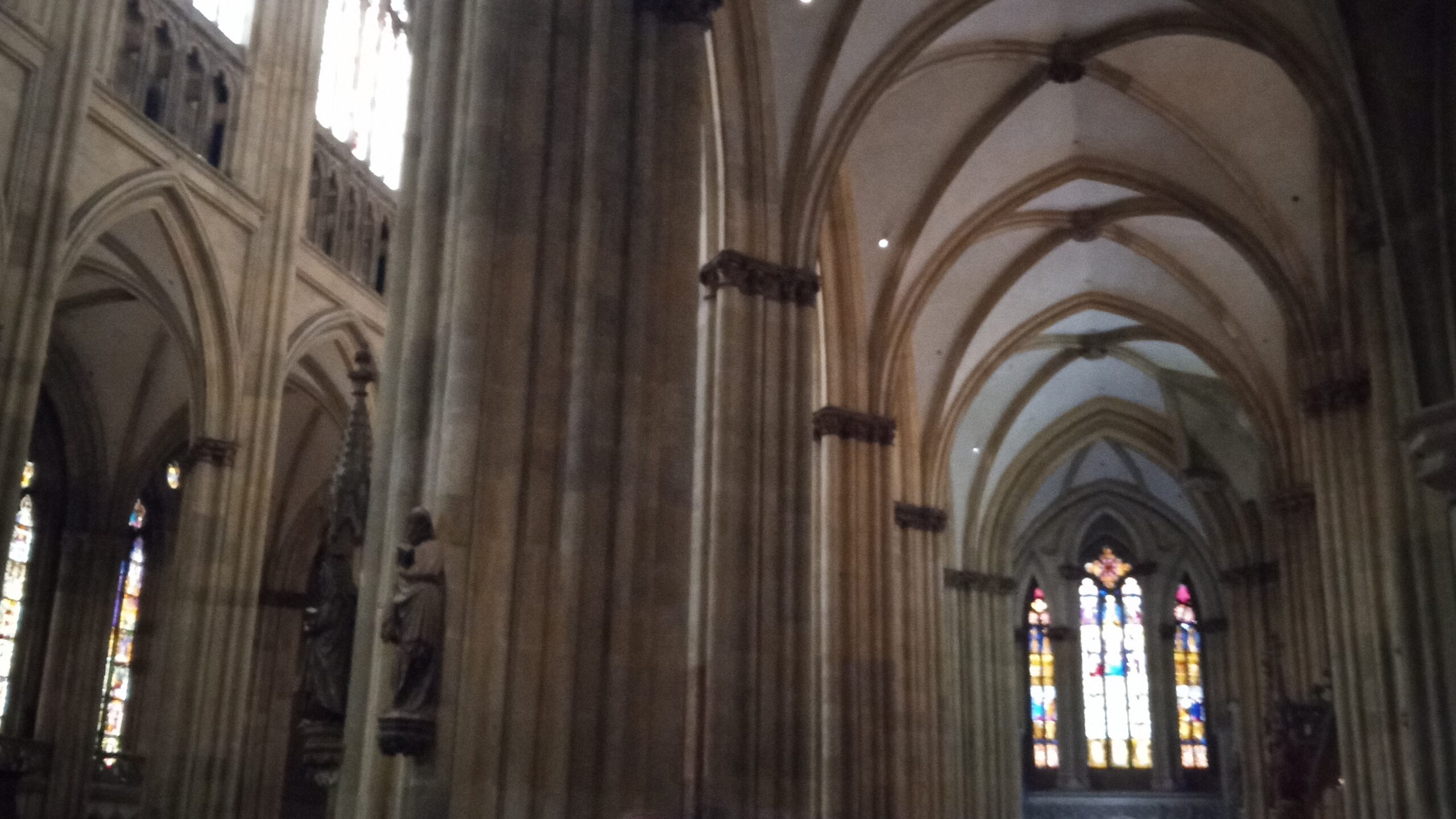
Inside this church was another Gothic masterpiece.
It was dark, massive and had dozens of intricate colorful
stained glass windows letting in diffused light. Although
there was no ceiling art and a lot less guilding than other
high Barouque churches we saw a few days earlier,
it’s sheer size, very thick supporting columns, interior
and exterior height showed us a medieval architecture
world we rarely get to see. It was a grand religious
statement that defined the time it was built.
After this we had lunch in front of this church. We
walked around the whole town going into hat shops, a
rock shop, large bookstores, stationery stores, and
souvineer shops. There were dozens of indoor and
outdoor cafes. We sat by the stone bridge, watching
tourists and got the feel of an
old type European medieval city.
07 21
IM (1)
IMG_07 14 17HDR (1)
IMG_07 21 1_HDR
IMG_07 21 2_HDR (1)
Day 19
Nuremberg, Germany
Wednesday, July 22
Surviving the War: Art in Nuremberg
Hidden Treasures of Old Nuremberg
We will see Nuremberg’s remarkable
underground chambers where priceless art was hidden
from harm during World War II.
After taking a 4 hour bus ride this morning because
of low water levels on the Dabube, we got to
Nuremberg, Germany.
Once there, we took a panoramic bus ride into town
and saw many fascinating places left over from
WWII. Actually much of the inner old historic city
was bombed by the Allies in the war. We saw the
massive stadium area Adolf Hitler made in the 1930’s
to stage his high profile and popular political rallies.
We saw a large round 4 story colosseum area Hitler made.
We then got off the bus and explored the old walled
area in the very charming, medieval town center. It had
a town square, fountain, cobblestone streets and
restored but nicely done business/cafe/shops and houses.
We then were taken to an underground museum to
check out where the citizens of Nuremberg were able to
hide famous artworks, statues, priest garments etc.
We saw the subterrainean vaults made to hide precious
artworks from the dreaded Nazis.The Monuments
Men discovered these vaults and the precious artifacts
that were contained there. This was shown in the movie
“The Monuments Men”. Many of these items were then
returned to the original owners.
It was a maze of tunnels that once held kegs of beer
for fermenting. They used these to keep things safe
and secure. All of this was explained to us by our guide,
complete with before and after pictures of cities in
the area being bombed by the Allies. This was quite
dramatic and was made back in the day to keep
valuables and treasures from others.
We then wandered around the main square of
Nuremberg with 2 nice churches we went into. One a
Gothic masterpiece complete with outside stone tall
spires, stone carved ornamentation on the facade,
arches, bric-a brac etc. Inside of this Gothic work
was tall ceilings, stained glass windows, thick stone
pillars holding it up, vaulted ceilings and inside
paintings on the side walls.
We spent time in the main squre taking pics checking
out the impressive, tall main water fountain and
admired the architecture. It was a great tour.
Day 20
Bamberg, Germany
Thursday, July 23
Bamberg Walking Tour
Explore an Old-World Franconian
City by Foot
Delve into the history of Bamberg
during an informative walk to view historic sights.
Last night our ship travelled through the Main/Danube
canal. This is a narrow canal with some easy-to-get-
through locks. Adjacent to the canal was the concrete
infrastructure of the canal complete with sidewalks and
pier-type settings. This then changes into the Rhine River.
The Sun Deck of the ship is now closed for a few days
due to the very low clearance for our ship under
dozens of older bridges.
This morning we awoke in Bamberg, Germany where we
took a 3 hour walking tour of this 13th – 14th
century medieval city. Our guide took us right into the
old town. We again were taken back in time to a 700 year
old well restored and preserved old town of a unique age.
Here we saw 3 separate main town squares – courtyards
with large buildings making U-shaped large areas where
people once congregated. Much centered around the
Regnitz River flowing right through town.
We saw another Gothic/Romanesque 11th century
cathedral with tall spires and great intricate stonework
on the outside. The inside was fairly well lit, with no stained
glass, a nice altar, vaulted ceilings, thick supporting
columns, pews, very tall ceilings, with no paintings. We
went down into the crypt where important bishops and a
Holy Roman Emperor were interred. There was also a
crpyt on display in the church itself showing the the
ruling king and queen of the day.
On our tour we passed by old Germanic houses,
house of important bishops down narrow cobblestone
streets. Over multiple bridges with fascinating houses
jutting out over the water on islands. Some manmade
waterfalls, statues all over, nice riverways, and Renaissance
type facades of buildings complete with impressive 3 layers
of dormers jutting out over roofs, frilly ascending facades,
and tourist shops. This had a quaint charm to it.
No wonder tourists come to this place.
Day 21
Würzburg, Germany
Friday, July 24
Würzburg Residenz & Walk
A Baroque and Shining Masterpiece
of the Archbishops
Tour Würzburg’s Bishops’ Residenz,
one of Germany’s ornate palaces
and a UNESCO World Heritage Site.
During last night’s port talk we learned we are sailing
northward upstream on the Danube/Main/Rhine canal.
We learned how this narrow navigation canal was
constructed, the many locks on it to get us to the
right water level and the efforts it took in the 1990’s
and thereafter to make it work for ships like ours
and other tourist long ships.
This morning we stopped at Wurzburg, Germany
and went on a short bus ride to get to an enormous
palace called the Wurzburg Residence. Many of
these former towns we were in had opulent palaces
built for the prevailing Bishop/Prince back in the 13th
and 14th centuries. This bishop controlled the whole
area: the money, the army and the church. He also
had palatial buildings made to live in. So in today’s
world we now tour these over the top stone mansions
as they attract hundreds of tourists and families a day.
At the Wurzburg Palace the whole place was
grandiose with a huge front cobblestone courtyard
and elaborate front fountains. It was a 3 sided
sandstone building 3 or 4 stories tall. Inside the
residence the bishop put on the ritz to impress his
guests with a very dramatic wide and tall staircase
with stone statues on the railings. At the top of the
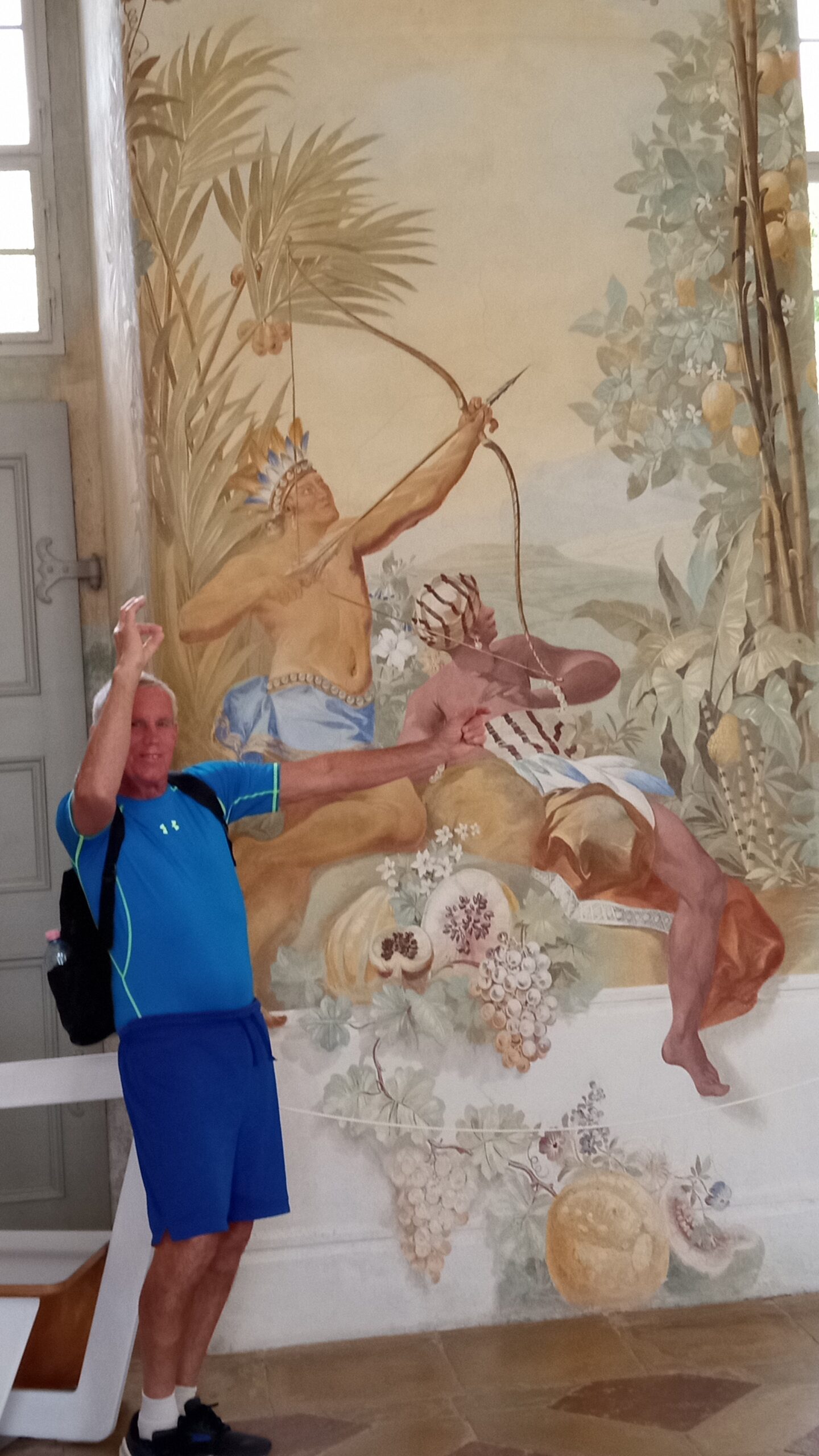
staircase was a 6,500 square foot mural fresco
painting in the ceiling depicting the continents
and stereotyped people they thought that
lived there at the time.
Entering the main rooms of the residence was chock
full of Baroque embellishments. On every square inch
of wall and ceiling were crystal chandeliers, painted
fresco ceilings, columns, painted ceilings depicting
stories and lavish scroll work everywhere. Everything,
every room, was Baroaque-isized. We saw whole
rooms of very large tapestries, some porcelain rooms,
mirrored rooms as every room screamed a Wow.
Some of this work was Roccoco, but all done tastefully
and was over-stimulating to take in. We went through
it twice to take pictures. Right out of a magazine!
From there we walked into the town square. And
again got caught up the Old World European style
and format. In this walking tour of the Old Town we
went into some Romanesque facade cathedrals,
market squares with fountains, fancy faced building
facades, half timbered houses churches with tall
Gothic spires and stone facade ornamentation– all
of this late 17th century. We crossed a few stone
bridges with stone statues on top. It was a fairy tale
city, full of wonder and impressive craftsmanship.
Day 21
Würzburg, Germany
Friday, July 24
Hike the Würzburg Hills
Käppele Church and Marienberg Fortress
Climb the Würzburg Hills to Marienberg
Fortress, rising above the Main River,
for impressive city views.
This afternoon our group of 10 went on a long hike
into other parts of Wurzburg. From our docked ship
we could see the high cliffs to be hiked. We took a
short bus ride to start our hike at a fortress called
Wertheim Castle. This castle has a massive stone wall
surrounding it, was hundreds of feet up and had
steep embankments. We walked above the slopes
where vineyards were planted.
We got up close to some onion domed church spires
as we were parallel to them on the cliff. We stopped
at a small church on a path dedicated to this historic
area. From there we walked down a series of stairs
that led to the stations of the cross that Jesus walked.
In all, seven different consecutive flat areas all being
complete with statues.
We then proceeded up to the main castle area on a
path being near the high stone wall protecting it.
We walked uphill for some time and at the top we were
rewarded with commanding views of the main town,
the surrounding areas of houses, the main river,
red tile roof tops, plus the castle. The castle had
stone archways to get in with nice decorated facades.
The castle was under renovation – however we walked
down into town seeing the stone bridges from our tour
earlier and walked back to our ship.
We logged in more 20,000 steps today.
Day 23
Kolbenz, Germany
Sunday, July 26
Medieval Marksburg Castle
Well-Preserved Portrait of Life in
Medieval-Era Castle
Visit Marksburg Castle, the only medieval-era
stronghold in the Rhine Valley to have
never been destroyed.
Day 22
Wertheim, Germany
Saturday, July 25
Wertheim Castle Hike
Picturesque Hilltop Ruins and
Charming Medieval Town
Admire the scenic vistas of
medieval Wertheim during a hike
to its namesake hilltop castle.
This morning we took the Wertheim Castle Hike along
with 25 other Viking guests. Without using a bus, we
walked uphill through streets to see 2 red sandstone
castles high atop the hill that overlooks the city of
Werthheim. Actually, this was a 12th century castle a few
hundred feet up– expanded into another next door castle
in the 16th century. Both were in ruins, had remaining
stone walls plus tall outside angled fortification walls,
stone and wood stairs to get to the top, a few tall stone
round turrets, great viewpoints at the top, small
interior courtyards, ramparts, a few stone arches, and
we saw their stone round hole toilet. It was pleasant to
walk through.
There was a crossfit training race going on at the same
time we were there with much younger people running
with weighted bags up hill on the elevated castle grounds.
The hike uphill was moderate and fun as were told how
these people back in the day lived.
We then walked into the old section of the city with the
usual small narrow winding cobblestone streets, street
cafes, beer gardens galore, shops, views of the Tauber
River, an old Lutheran church, half timber houses in good
condition, and sausage places.
There is always a surprise around every corner
of this medieval town.
After this tour ended we took a small tourist
train back to our ship.
Day 24
Cologne, Germany
Monday, July 27
Cologne Walking Tour
A Historic City Crowned by Northern
Europe’s Largest Cathedral
Learn about Cologne’s heritage and view
its iconic cathedral, towering over the city
in all its Gothic splendor.
Day 25
Kinderdijk, The Netherlands
Tuesday, July 28
Kinderdijk by Vintage Barge
Explore the Heart of Kinderdijk
on a Restored River Boat